Now that I am back at school, it’s time to start reading YA fiction again. I give it a little break in the summer so that I can tackle my own mammoth tbr pile. I started this year by reading Lauren Oliver’s highly praised book Vanishing Girls. It’s pretty un-put-down-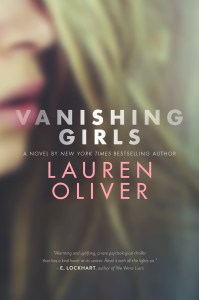 able, folks.
Nicole (Nick) and her younger sister, Dara, couldn’t really be more unalike. Nick is the responsible one; Dara is the wild child and for as long as Nick can remember, people have been comparing the sisters.
She’s not as pretty as her younger sister…shyer than her younger sister…not as popular as her younger sister.
But despite their differences, Nick and Dara are close. Dara recalls that they’d spent
practically our whole lives sneaking into each other’s rooms to sleep in the same bed, whisper about our crushes, watch moon patterns on the ceiling and try to pick out different shapes…cut our fingers and let them bleed together so we’d be bonded forever, so we’d be made not just of the same genes but of each other.
Parker is Nick’s best friend – the boy from the neighbourhood who has shared every single milestone in Nick’s life. Then he and Dara hook up and things get awkward. Dara goes off the rails – drinking and doing drugs – and then there’s the car accident.
Oliver has written a novel that is both an exciting page-turner (a young girl goes missing and then Dara disappears and Nick is convinced the two disappearances are somehow connected) and a moving family drama. Nick and Dara’s parents have separated and the accidents adds extra emotional weight to the already damaged family.
The narrative unfolds in dual first-person narratives, through diary entries and police reports and photographs and illustrations. Each sister has her own version of the truth of what happened on the night of the accident and the time-shifting narrative will yield important clues to careful readers, but the truth is that when all is revealed, you’ll probably still be scrambling to figure out how Oliver’s pulled it off.
Oliver is well-known in the YA world. She wrote the popular Delirium series and I have been looking forward to reading her adult novel, Rooms. After reading Vanishing Girls I think I’ll have to move Rooms up my reading list. That’s pretty much the highest praise I can give.

 Mabel Dagmar, the seventeen-year-old narrator of Miranda Beverly-Whittemore’s stunning novel Bittersweet is attending an upper-crust East Coast college on a scholarship. Her roommate, Genevra “Ev” Winslow is from an influential blue blood family. The two girls couldn’t be any more different and yet somehow Mabel finds herself invited to spend the summer at Winloch, the Winslow family compound in Vermont. Mabel has no interest in returning home to Oregon for the summer, so she gratefully agrees even though she has to help Ev prepare Bittersweet, Ev’s personal cottage, for her father’s “inspection”.
 y in the summer when I just want to give my brain a break from school. Publishers always want to draw comparisons to
 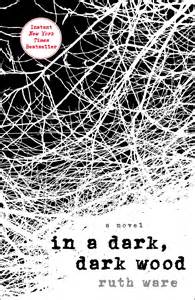 writer who lives in a small flat in London. One day she receives an email invitation to a weekend bridal shower (a “hen” night) for her once best friend, Clare. The invitation is puzzling to Nora because she hasn’t seen Clare in a decade and it seems as though they may have ended things on relatively awkward terms.
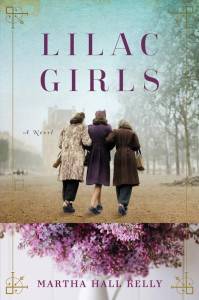 Kelly’s novel tells the story of three very different women: New York socialite Caroline Ferriday, Polish teenager, Kasia Kuzmerick and German doctor Herta Oberheuser. It is 1939 and the one thing these women have in common is Adolf Hitler.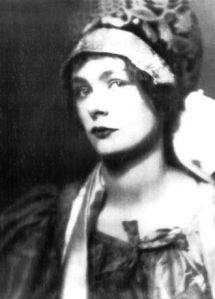
 are at all a fan of Canada’s funny man, it’s worth a look. Apparently the audiobook is narrated by Short and although I don’t listen to audiobooks, I might have made an exception in this case because he does all his characters. In any case, I enjoyed reading about Short’s early life in Hamilton and his start in show business. It’s a namedropping extravaganza.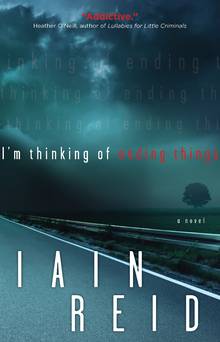
 The Giver takes place in a community that values Sameness. On the surface it might even appear like a Utopia. Eleven-year-old Jonas lives in a family unit lives with his younger sister, Lily, and his mother and father. None of them are biologically connected. His life is structured around school and volunteering and ceremonies that mark the important moments in the lives of the citizens. He is apprehensively waiting the next ceremony. His mother tries to calm Jonas’s nerves by telling him
 talk, too. The book is based on the true story of California history teacher Ron Jones’ social experiment. (He’s been renamed Ben Ross in this book.) The year was 1969 and Ross had just shown his senior class a film about the Holocaust. When one of his students asked how the Germans could have just sat back and let the Nazis do what they did, Ross tried to think of a way he could illustrate the power of a fascist movement. He came up with “The Wave” and began to teach his students about discipline, community and action. Although the experiment was meant to be short-lived, it grew to include a salute, slogans and even a secret police force before it was finally dismantled due to complaints from parents and colleagues.
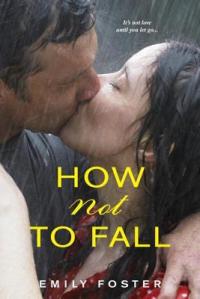 Enter How Not To Fall. Of course I’d seen this book at the book store, but I don’t think I even picked it up to read the blurb. Then I read a review – although I can’t remember where. The reviewer avoided comparisons with Fifty Shades, but did sing the book’s praises. Smart and hot — which is probably a pretty good combination. So, the next time I was at Indigo, I bought the book and now I’ve read it.
 The Ludic Reader