Consent – Nancy Ohlin

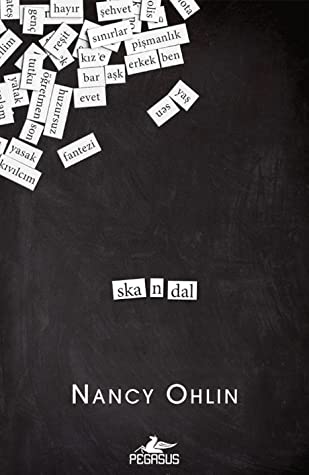
When Nancy Ohlin’s YA novel Consent opens, seventeen-year-old Bea is in an interrogation room at the local police station. Her goal is to “Stay as close to the truth as possible.”

The truth is a grey area, though.

Bea and her best friend Plum attend Andrew Jackson High School, a “Campus for Baccalaureate and Performing Arts”. The two girls are over-achievers with “the two highest GPAs in school.” They have their lives mapped out: graduation and then Harvard. That is, until Bea meets Dane Rossi, the new AP Music History teacher.

Mr. Rossi turns from the blackboard and scans the class. Oh my Godi, he’s cute. Chiseled features and sexy stubble…Are teachers allowed to be that good looking?

Mr. Rossi is more than cute, though. He sees Bea, and recognizes her talent, a talent she has kept hidden from everyone. For reasons. He encourages her to join two other students in an ensemble; he hooks her up with an audition at Julliard; he deflowers her. Because, of course he does.

Consent is problematic, but not for the reasons that you might think. Yes – it’s all sorts of wrong that a teacher enters into a sexual relationship with a student, but it’s more the way that. None of the characters feel fully fleshed out. Bea’s father, a lawyer, is basically absent – until he isn’t. Her older brother is a non-entity. Dane is too good to be true, and their insta-attraction to each other just doesn’t seem realistic. Before you can Schumann they are planning their lives together. Just, y’know, after she turns eighteen. When they get caught, Bea convinces Plum and another boy to lie for her.

It was easy to read, but I never truly felt invested in these characters. It was hard to see Bea as a victim or Dane as a predator and although there was certainly potential for something a bit more dramatic, it never really happened.
Breathless – Jennifer Niven

Oh, young love.

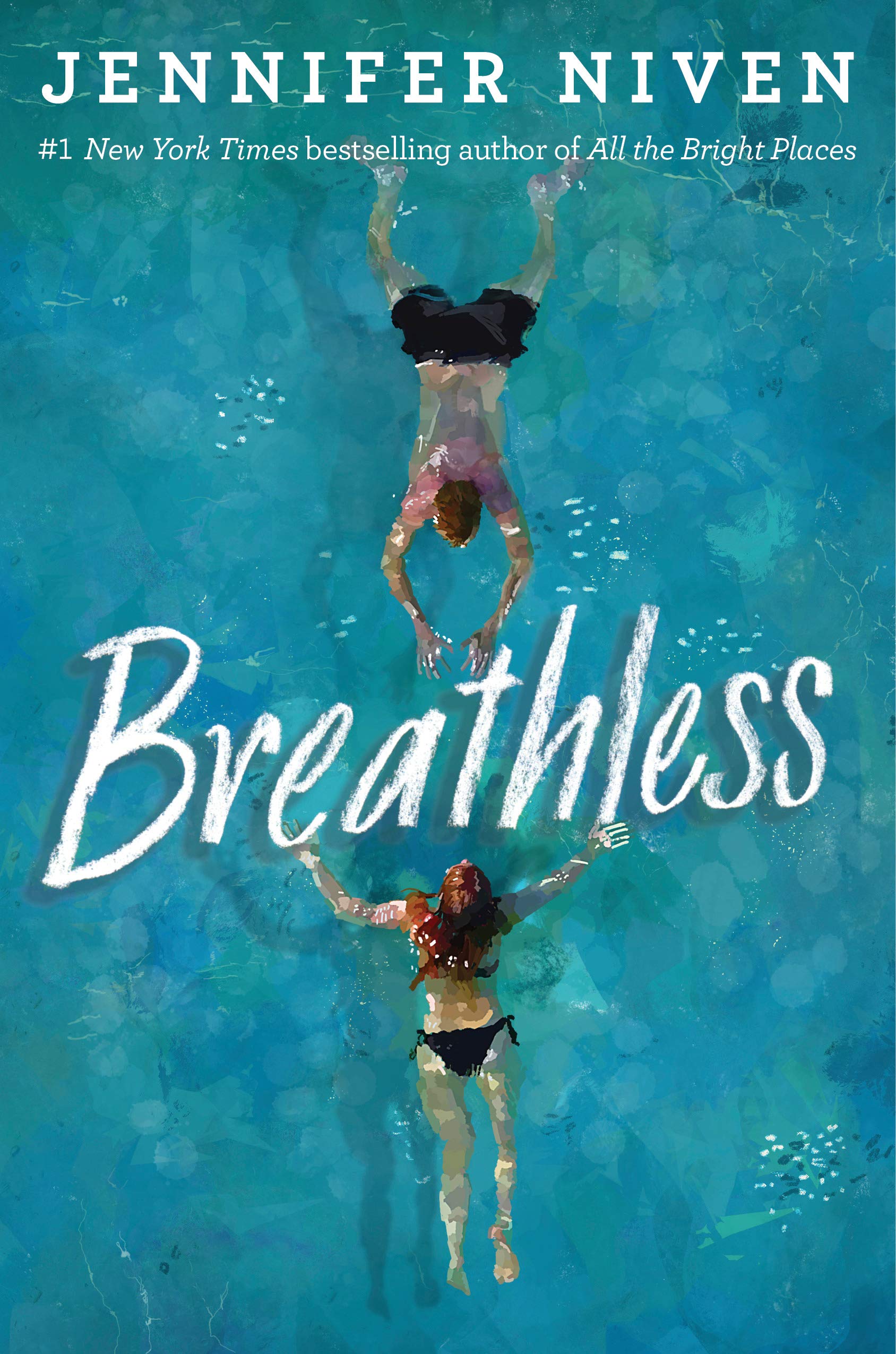
Jennifer Niven’s (All the Bright Places ) novel Breathless took me back, way back, to a very particular time in my life. You know, that time when you fall in love and you’re filled with both dread and delight.

Claudine Henry’s life is pretty sweet. She lives with her mother (an acclaimed writer) and her father (works at the local college) in small-town Ohio. She and her best friend, Saz, are about to graduate from high school and embark on a post-graduation road-trip before they head off to their respective colleges. Then her father drops a bombshell: “…your mom and I are separating, and she asked me to tell you because it’s not her idea; it’s my idea.”

Claude is devastated by the news, and it upends her plans and her life. Instead of heading off with Saz, she and her mother make their way to an island off the coast of Georgia. The island has ties to their family and Claude’s mom is going to use the time to do some research and some writing. Claude is going to spend her time being miserable.

That is until she meets Jeremiah Crew. He has a “resting wiseass face” and an easy charm that is almost irresistible. The island is small and it’s impossible for Miah and Claude to avoid each other and it’s clear pretty early they don’t want to anyway. He’s always around, barefoot and ready with some witty or caustic remark. I think I fell in love with him almost as quickly as Claude did.

As Miah and Claude start to spend more time together, Claude also starts to come to terms with her own life. Being away from Saz (there’s limited WiFi/cell service on the island) causes some tension, and miscommunication. And how is she supposed to navigate this new family dynamic? Her father was her person, the parent she shared morning rituals with, her protector, and now she doesn’t know who he is or how she’s supposed to feel about him. We forget at that age, that our parents are just trying to figure it out, too. Sometimes we get caught up in our own feelings and we forget that our parents have their own stuff to get through. Both Claude’s parents seemed like real people – which is often not the case in YA fiction. I loved Claude’s coming-of-age journey.

Ultimately, though, this is Claude and Miah’s story – and it is swoon worthy. They are eighteen, so this is slightly more NA than YA (and while the sex scenes aren’t particularly graphic, there are some in the book). Their banter is ::chef’s kiss:: awesome. I loved Miah so much.

“Here’s the thing,” Miah tells Claude. “I don’t want you getting too crazy about me, because I’m only here for the next few weeks.”

Trust me, resistance is futile.

Migrations – Charlotte McConaghy

In the not-too-distant-future Charlotte McConaghy imagines in her novel Migrations, “The animals are dying. Soon we will be all alone.”

When the novel opens, Franny Stone is in Greenland tagging Arctic terns. Now she needs a way to follow them. Enter Ennis Malone, captain of the fishing vessel Saghani. Franny just needs a way to convince him to let her come along. She tells him that the terns will lead him to the fish; all they have to do is follow them, and they can do that because of her electronic tags. This is a big deal because fish are scarce, but it’s a risk for Ennis because the birds are likely going further south than he normally sails and Franny has zero experience on a boat.

Franny is an enigma. Born in Australia to an Irish mother, Franny spends the first ten years of her life in Galway before her mother disappears and she is sent back to Australia to live with her paternal grandmother. Her father’s whereabouts are unknown. She spends much of her young adulthood trying to figure out what happened to her mother.

Then she meets Niall, a lecturer at the National University of Ireland, where Franny works as a cleaner.

My heart is beating too fast and I will myself to be calm, to breathe more slowly, to really take this in. To savor it and remember every detail because too soon I will be gone from the circle of his perfect words.

Their attraction is immediate and deep, and while Franny is on the Saghani, she writes letters to Niall to tell him of her progress. He is, she knows, as invested in her results as she is.

There is a lot going on in McConaghy’s novel: tracking the terns, Franny’s hunt for her mother, the complicated relationships which develop on the Saghani and, of course, Niall. Some might argue that there is too much going on and that the multiple, shifting timelines are unnecessary. But those shifting timelines unspool Franny’s complete story and keep you turning the pages. Franny is a complicated character. She is the sum total of all her experiences, plus also a victim of her own restless nature and readers must parse the information she provides.

I found Migrations almost unbearably beautiful. Although the Epilogue was a tad contrived, it didn’t spoil my overall reading experience. And sure, you could argue that McConaghy has never actually been to Newfoundland, but niggles like that are a waste of energy. This is a novel that asks some big questions: what are we doing to our climate? what does any of this mean? what will we take when we go?

Highly recommended.

The Lying Room – Nicci French

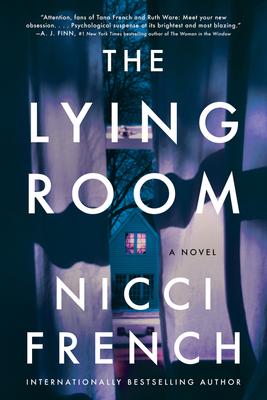
What starts as an interesting premise quickly devolves into oh no she didn’t territory in husband and wife team Nicci French’s 2019 thriller The Lying Room. I have a read a few of French’s novels (Catch Me When I Fall, Until It’s Over, Dark Saturday, and a handful of others that predate this blog) and for the most part I have enjoyed them, particularly Killing Me Softly.

In this story, married mother of three Neve gets a text from her boss and lover, Saul, to meet her at their Covent Garden love nest, but when she arrives she discovers him dead – his head bashed in with a hammer. I mean, the sensible thing to do is call the police, but Neve doesn’t do that. Instead she imagines the fallout if her betrayal is discovered, especially for her teenage daughter Mabel.

What would happen when she discovered that her mother had been having an affair, that her beloved father had been betrayed? Would everything unravel, the life that had been so painstakingly stitched back together?

In that instance, Never makes a decision. She decides to erase all trace of herself from the apartment and spends the next while scrubbing and cleaning and collecting any evidence that Saul was anything other than her boss. Yeah, that’ll end well.

It isn’t until later that she discovers that she left a piece of recognizable jewelry behind and when she returns to the scene of the crime…

There are a lot of characters in French’s book. There’s Neve and her immediate family, including her stay-at-home husband, Fletcher. There’s her three college besties (with whom she started a business called Sans Serif, which was purchased by Saul’s company); there’s the detective investigating Saul’s murder and Saul’s wife, Bernice, who comes to Neve – Lord knows why – to confide that she thinks Saul was having an affair. It’s not hard to keep track of them, but Neve (and presumably the reader) finds it increasingly difficult to know who to trust. People keep secrets, that’s a fact, and as Neve continues to lie about her involvement with Saul in an effort to protect – or, at least that’s what she tells herself she’s doing – her family, her life starts to unravel.

I mean, people love this book. Sure, pages were turned and I read it to the end. But – I didn’t care about any of these people, least of all Neve. It was, for me, a wholly unsatisfying read.

All the Things We Do in the Dark – Saundra Mitchell

One hot summer when nine-year-old Ava is outside riding her bike around the apartment complex where she lives, a man tells her “I have something that will keep you cool…” He leads Ava down a lane between the apartments and the trees and assaults her. This is the beginning of Saundra Mitchell’s YA novel All the Things We Do in the Dark.

Flash forward and Ava is now seventeen. Her parents are divorced. She has one best friend, Syd. She tries to be as invisible as possible, although she lives in small-town Maine where everyone knows who she is and what happened to her and if they didn’t, the scar the man left down the side of her face would certainly be cause for curiosity.

Ava has never really dealt with the trauma of her assault. Her mother keeps close tabs on her, but even she doesn’t know everything and Ava is prone to keeping secrets. This becomes evident when one day, walking home through the woods, she stumbles upon the body of a young girl.

She’s twisted like a Barbie doll at the waist. Her top half points forward, baring her face, her chest, those Vs. It takes me a minute to realize they’re stab wounds. Her bottom half faces down. Somehow both her breasts and her butt are exposed at the same time.

Human people, alive people, they don’t make that shape.

Ava makes a decision: she doesn’t tell anyone about the body. Chalk it up to shock or her own bad experience post-assault, but she decides to protect her. It’s a ridiculous decision to make — readers will know that — but Ava hasn’t ever really recovered from her own post-assault experience.

When Ava returns to the scene of the crime, she discovers someone else there, and convinced that she has stumbled upon the murderer, she gives chase. That’s where Mitchell’s book morphs from an examination of the trauma of assault to a straight-up mystery. I think I found this part of the book a little less successful, mostly because some of the decisions Ava makes (even though I could sort of understand why she was making them) seemed a little unrealistic.

Mitchell does do a wonderful job of crafting a character who has been through something horrific, something she still struggles with many years later as she tries to navigate relationships (with her bestie and a new friend, Hailey) and her own complicated feelings about her body and sexuality.

While I found the writing a bit choppy, a students in my class (who recommended the book) said that she liked the writing, that it felt like a conversation with her friends and that she related to some of the relationships in the book. That’s the true test of a YA book, I think: does it speak to its intended audience?

All Her Little Secrets – Wanda M. Morris

Ellice Littlejohn works in the legal department of Houghton Transportation Company. Her lover, Michael, is the executive vice president of the same company. When he asks her to meet him at the office early one morning, Ellice doesn’t find the request unusual. When she arrives though, she finds “a bright crimson spray of blood” and a “star-shaped hole in Michael’s right temple”.

This is how Wanda M. Morris’s debut novel All Her Little Secrets begins. And this is also the beginning of the issues that kept me from thoroughly enjoying the novel – although I certainly found it easy to read.

Ellice is a 50-something, Ivy-league educated lawyer, so clearly not an idiot. But what does she do when she discovers Michael’s body? Does she call the cops? Security? An ambulance? No. She “prayed to God for forgiveness, turned off the lights, and quietly closed the office door…”. Say, what?

We come to understand that Ellice has a complicated past and Michael is just one of those complications. First of all, he’s married and has children. Secondly, he’s a WASP and she’s Black and their relationship is a secret, one of many secrets Ellice has had to keep over the course of her life. And it’s these secrets – revealed slowly over the course of the novel – that prevent Ellice from making sensible decisions from the the moment she discovers Michael’s body until the end of the book.

Lots of writers gushed about this book. And I think, for a debut, it has lots to recommend it, but I also think the story itself – the part that was supposed to be ‘thrilling’ – was just sort of pedestrian. There are a lot of things going on in this book; perhaps too many to manage with real finesse. I wanted to really like Ellice because it was awesome to read about a smart, mature woman – except that she makes all sorts of ridiculous decisions. Honey, your life is in danger; you need to call the cops.

And it turns out the danger is a bunch of white supremacist asshats, which, yeah, awful, but it felt like a sort of convenient way to up the ante. I am white; let’s just get that out of the way. It feels uncomfortable for me to criticize a book because it plays the race card, but if there wasn’t rampant racism (and misogyny) in Morris’s novel, the mystery/thriller part of it would be sort of not-that-thrilling in my opinion. It has the requisite duplicitous characters, red herrings, car chases and covert meetings but it also has family drama and trauma (which is used to explain some of Ellice’s questionable decisions) and which felt vastly more authentic. We never get to see Ellice doing any lawyering, really (and Morris is a lawyer herself, so it would have been easy to include). Mostly she’s chasing after answers, but I just felt like the book was 100 pages too long.

Easy to read, but forgettable.

The Return – Rachel Harrison

When Elise’s best friend from college, Julie, disappears, Elise clings to the belief that she’s not really gone. Molly and Mae, their other besties, are not as optimistic as Elise. Neither is her husband, Tristan. And then “Two years to the day after she went missing, Tristan found her sitting on the porch swing. She was wearing the same clothes she’d had on when she disappeared. She did not seem confused or disoriented, but she had no memory of where she’d been for the past twenty-four months.”

Thus begins Rachel Harris’s debut novel The Return which is a weird hybrid: part horror novel and part novel about female friendships. Elise hasn’t been as successful as her friends post college. She dropped out of her Masters program and followed her married prof to Buffalo where she has a crap job and lives in a crap apartment. Mae is a fashion stylist in NYC; Molly lives on the West Coast and before she went missing, Julie and her husband were converting a farm house in Maine into a B & B.

Now that Julie is back, Mae plans a girls’ weekend in the Catskills at the Red Honey Inn – the kind of swanky spot that is totally out of Elise’s snack bracket, but how can she say no.

When they arrive, though, the Inn seems more sinister than swanky and Julie isn’t quite the girl they remember either.

She’s emaciated. She smiles and her skin pools like melted wax. Her teeth are chipped and discolored. Her eyes are bloodshot, and the green or her irises skews yellow. Her hair is string, simultaneously greasy and dry.

[…]

Her breath is awful. So awful I gag. I play it off like a sob but have to turn my head away.

Cue rooms that don’t heat up, labyrinthine halls, strange hotel staff and shadowy figures and a formerly vegetarian bestie who now loves meat. Um. I would not be sticking around. Like, at all. But Elise is nothing if not loyal. And her need to support her friend’s return to normal keeps her and Mae and Molly in the creepy hotel with their creepy friend way, way too long.

The Return is gruesome fun.

The Reading List – Sara Nisha Adams

Sara Nisha Adams’s debut The Reading List will probably appeal to booklovers everywhere, and although I would certainly consider myself one of those, this book didn’t really work for me.

Mukesh is a widower with three adult daughters. Aleisha is seventeen. Her parents are divorced and she lives with her older brother Aiden and her mother, a graphic designer, who spends most of her time curled up in a ball of misery. Aleisha works at a local branch library – a job she hates because she doesn’t really like to read. It is there that Mukesh and Aleisha first meet. It doesn’t exactly go well.

Mukesh is desperate to alleviate the sorrow he feels over his wife’s death. He’s lonely and has basically given up on life. He is hoping to find another book to help him as much as he feels that The Time Traveler’s Wife helped him, but he doesn’t know what to pick. His wife was the reader, not him. He is horrified when he visits the library and Aleisha tells him “I don’t read novels.”

Call it serendipity if you like (I call it contrived), but after Aleisha is reprimanded by her boss for being rude, she discovers a reading list entitled Just in case you need it which another library patron has apparently left behind. The lists consists of eight titles: To Kill a Mockingbird, Rebecca, The Kite Runner, Life of Pi, Pride and Prejudice, Little Women, Beloved, A Suitable Boy. Aleisha doesn’t really have anything better to do, (no friends/boyfriend) so she decides to start to read from the list and then she will have books to recommend to Mukesh when he returns to the library. This is, of course, the beginning of a beautiful friendship.

And all of that would be just fine with me, if it had been handled more deftly. I think Adams had a great idea. Book lovers pretty much universally love books about books and reading. Although I mostly enjoyed the two main characters, the inclusion of other random characters who also come across this reading list just felt convenient. You know from the outset that the library is in jeopardy of closing, and so you can also guess that all these people will band together to save it – and thus save themselves from the loneliness which it seems is part of the 21st century human experience. We have more and more ways to connect, and yet we are also more and more isolated. Yeah, so we get the whole idea that reading is one way to have a meaningful relationship with another person, which could potentially lead to something more.

In addition to the people, the discussion of the books felt cursory. For example, you wouldn’t even have ever had to read To Kill a Mockingbird to know that it’s important to see things from someone else’s point of view. The book discussions felt like Cliff’s notes, and as the novel went along, any talk of the books felt like an afterthought.

So, while many people will likely feel satisfied and heart-warmed by Adam’s book, I felt frustrated that it didn’t live up to its potential.

Fire Keeper’s Daughter – Angeline Boulley

Angeline Boulley’s debut Fire Keeper’s Daughter was my first read in 2022 and it’s a cracker. It’s almost 500 pages long, but it was so good I had a hard time putting it down. It’s nice to start a new reading year with a great book!

Eighteen-year-old Daunis Fontaine lives in Sault Ste. Marie, Michigan. Her white mother comes from a wealthy, important family – a building at the local college is named after her grandfather. Her Ojibwe father, who died when she was seven, lived on the Sugar Island reservation, the place Daunis calls her “favorite place in the universe.” Daunis has a brother, Levi, who is just three months younger than her. There’s complicated family history, but Levi and Daunis are close; they are both talented hockey players, and they both idolized their father, who himself was a superstar on the ice, destined for great things until he was injured in a car accident. Daunis is meant to be headed to the University of Michigan for pre-med, but when her uncle David dies and her maternal grandmother ends up in a nursing home, Daunis makes the decision to start her post-secondary education closer to home.

Then she meets Jamie. He’s a new recruit to the Supes, the local elite junior A team her brother captains. There’s an immediate spark between the two. Soon they are running together in the morning and Daunis finds herself sharing things with him that she’s never shared before.

There is so much to love about this book I don’t even know where to start. First of all, Daunis is a fabulous character: smart, resilient, capable, loyal. She aligns herself with her Ojibwe heritage even though she is an unenrolled member because her father isn’t listed on her birth certificate. Her best friend Lily is in the same boat and “We still regard the tribe as ours, even though our faces are pressed against the glass, looking in from outside.”

Boulley captures all the hardships of being a biracial teen, the casual racism Daunis experiences, the sexism; it’s all here, but none of it is didactic. The novel also weaves traditional beliefs as well as stories and language throughout the narrative, which as a white person with very little knowledge of these things, I found fascinating.

Something else that is encroaching on her life is the proliferation of meth, which seems to be coming from Sugar Island and which is starting to impact people she cares about. Her childhood friend, Travis, who has become a shadow of his previously charming, handsome and goofy self now has ” hollows under his cheekbones [that] are concave to the point of sickly. Any softness is gone.” Travis’s addiction is just the tip of the iceberg, though and when Daunis witnesses a murder and discovers that Jamie is not quite who he seems, she finds herself helping the FBI investigate the meth and the novel kicks into high gear.

It would be one thing if Fire Keeper’s Daughter was just a story about a girl trying to figure out how she fits into two very different worlds, but this ambitious novel is so much more than that. It’s a mystery, it’s a coming-of-age story; it’s a story about culture and family. It’s so good.

Highly recommended.