Thoughts for book clubs…

I recently answered questions for BookJourney, who is featuring book clubs in a Q and A at her blog.  I’ve been in my current book club for 11 years now and they’re a great group so it was fun to think about how my group works…and why it does. It also reminded me that I put together a little book club primer for people who wanted to start a book club, but weren’t sure how to get going. I thought I’d share it here with you.

Some thoughts for book clubs…

Book clubs work best if everyone is on the same page…so if you have two or three members who just want to get out of the house, never read the book, are more interested in talking about the last movie they saw than the book – maybe they’re in the wrong group…or maybe you are.  So once you have a group of like-minded readers, you’re good to go.

The keys to a successful book club are:

  1. Having a venue conducive to talking
  2. Having a designated leader or system for discussing the book.
  3. Choosing a great book- which doesn’t necessarily mean reading War and Peace

There are all sorts of ways to choose books for your book club and you have to find a way that works the best for your group. One piece of advice I have heard from other clubs, though, is to choose a book that is unknown to you- that is, if it’s your pick don’t choose your favourite book of all time because there are bound to be hurt feelings when someone in your group doesn’t like it.

Some of the ways to choose a book include:

Everyone come to the first meeting of the year with a couple of choices and put all of the choices into a hat and pick randomly. The group can decide out of all the picks what they want to read.

Everyone gets one pick per year. That person is then responsible for hosting the meeting (whatever that means for your book club). In our group it means the person who chose the book hosts at their house, provides the nibblies (or, as is often the case in our group a three course meal!) and leads the discussion.

Leading the discussion can take many forms…and again, there’s many ways to do it depending on your group. We have 11 really chatty women so the leader has to be a bit of a tyrant in order for everyone to have the opportunity to speak. Usually she’s prepared with a list of questions…but we’ve also done it other ways, for example, inviting everyone to make up their own question about the book, putting the questions in a dish and allowing everyone to answer one question and then, if anyone wants to add thoughts, they can.

Vigorous discussion comes from well-thought out questions and a little bit of planning on the part of the hostess. The questions need not necessarily be related to the book, either. Or at least not directly.

Here are my questions for the novel The Myth of You and Me – which was my choice, only mediocre, imho, but we had a great chat about it.
1. When Ruth and Cameron start to pack Oliver’s things up Cameron remarks: “It’s astonishing what a single life accumulates. These things we endow with a certain life- the possibilty that we might use them, the memory we attach to them- and then, when we die, they become just things again.”

What things do you save and what meaning do they have for you? Do you ever purge? What is something you own that is likely meaningless without the weight of your attached memory.

2. When we finally discover what ended the friendship- what is your reaction? How does it change your feelings about Cameron and Sonia? Is it enough of a reason to sever the ties between them?

3. While Cameron searches for Sonia she meets Suzette again and remarks: “All at once it strikes me that as well as I know Sonia, I only know one version of her- that all you know of a life are the places where it touches your own.” Do you think it’s true that we offer people different versions of ourselves? Why? Who has the clearest picture of you?

4. Oliver’s second letter to Cameron reveals the truth about his life and his story and, for me at least, offers the book’s most important lesson. Why do you think he waits to tell Cameron the story of Billie, the story of his life?

5. If you could track down one person from your past who would it be and why?

How do you choose your next book?

The Internet makes it easy to do research…but how do you find titles?

Some great blogs:

ReadySteadyBook

Bookgirl’s Nightstand

A Guy’s Moleskine Notebook

SavidgeReads

(generally if you find a blog you like, it’s easy to follow that person’s links to other similar blogs- trust me, there’s a HUGE network out there)


There’s a whole raft of book communities

Chapters/Indigo

Shelfari

Fantastic Fiction – info on over 300,000 books!

There are also lots of useful sites if you are looking for ways to keep your book club thriving…try this one:

I am always happy to talk bookclubs…and answer questions if you have them!

(Originally posted August 3, 2009)

The Story of Edgar Sawtelle by David Wroblewski

sawtelle

When B. pulled The Story of Edgar Sawtelle out of her bag at last month’s book club reveal there was a silent sigh of dismay. I know I felt it. Despite the fact that the book has garnered heaps of praise and was flying off the shelf at Indigo last summer, I had no desire to read it. When my friend said she was going to take it with her when she went to England with her mom I said: “Don’t do it; this book weighs a ton!”

As it turned out,  of the ten members of my book club I was (along with B.) the only person who read it. Er…finished it. One person got about half way through, a few others read 50-100 pages. The book is l-o-n-g…562 pages but lest you think I actually judge a book by its length, let me say that The Story of Edgar Sawtelle is very well written. I would have said that dog lovers would eat this book up- but this wasn’t the case with the dog lovers in my book club; none of them finished.

It’s hard to put my finger on exactly why I didn’t love this book in the way most others have- well, the critics at least, who have compared this book to Shakespeare, an “American Hamlet” even (Mark Doty). The book concerns the Sawtelle family, parents Trudy and Gar and their son, Edgar, who is born mute. They live on a farm in Wisconsin where they breed dogs known as the ‘Sawtelle’ dogs, remarkable because they can read Edgar’s signs. When Gar’s younger brother, Claude, returns to the farm Edgar’s idyllic life starts to unravel and when his father dies suddenly, Edgar’s grief is palpable. As Claude grows closer to his mother and assumes more of a role on the farm, Edgar becomes obssessed with proving that Claude had something to do with his father’s death.

Things don’t work out quite as Edgar plans though, and he leaves the farm, taking three ‘Sawtelle’ dogs with him. Eventually, though, he returns to the farm to confront his uncle – with dramatic results. (I actually thought the ending was spectacularly melodramatic.)

Why do some books work and others not so much? I can’t fault Wroblewski’s writing. In some ways I felt like he jammed the book with every possible theme, like maybe this debut might mark the beginning and end of his literary career. Ultimately, though, there was just too much ‘dog talk’ – sits and stays and day-to-day kennel business that just wasn’t of interest to me and, in some ways, diluted the book’s larger themes of revenge and love.  It wasn’t that I had a hard time reading the book…I just never really invested my heart in Edgar’s story.

The Book of Negroes by Lawrence Hill

arts_lawrence-hill2

Everyone has been talking about Lawrence Hill’s novel The Book of Negroes for the past few months. When I worked at Indigo, it flew off the shelf; everyone wanted to read it. It’s one of those books – topical, controversial, well-written, award-winning  and with a central character that it is impossible not to admire. And I did  admire her, but  I didn’t love this book. I finished The Book of Negroes a few days ago and I’ve been trying to figure out what it was exactly that failed to inspire me to talk about it in absolutely glowing terms.

I am a child of the 70s. By that I mean, I was a teenager when Roots hit the small screen. Every night for however many nights that mini-series was on the tube, my family and I would gather around the TV, mesmerized and horrified by Kunta Kinte’s story. I haven’t seen it since, so I have no idea whether or not it holds up, but that story devastated me and made me ashamed, for the first time in my life, to be white. The Book of Negroes failed to reach me on some level.  Does that mean in the years since I’ve seen Roots I’ve just gradually become desensitized? God, I hope not.

Aminata Diallo, born in Bayo, West Africa, in 1745, is captured by slave traders when she is just eleven. We have barely settled into the rhythm of her life as a ‘free-born Muslim’ adored by her parents, before they are killed and she is captured. What follows is her life story. No question, it makes for fascinating, accessible and easy reading. But there was something missing for me, some emotional centre.

Aminita reaches America  after a long, brutal journey across the ocean. She is sold and quickly learns a new language and a new way of life. It is impossible not to admire her: she’s smart and resilient and tough. She has to be as she endures one tragedy after another.

And perhaps this is where I feel let down by the book: despite knowing Aminita’s story, I never felt like I knew her. In telling the story of her life, she relays the facts, all but stripping the emotion from them. The slightly unbelievable denouement, therefore, had little impact on me.

Should you read this book? Absolutely. Is it worthy of all the praise?  Yes, of course it is, because we should always be reminded that the struggle for equality is ongoing, that people still suffer because of their race or religious beliefs. Let’s face it, the world hasn’t really come all that far since Aminita’s day.

There’s a part of me that feels slightly guilty that I didn’t love it.  But I am glad I read it.

At A Loss For Words by Diane Schoemperlen

lossforwords

It sometimes happens that a book that no one particularly likes generates an excellent discussion. This was the case with Canadian writer Diane Schoemperlen’s book At A Loss For Words.  One woman in my book club actually said: “I knew you wouldn’t want me to finish it.”

I didn’t actually have any trouble finishing the book, but not because it was the most original or beautiful or innovative book I’ve ever read about the nature of love. The story is rife with cliches and prose so purple you might think you’re scarfing grape jelly by the jar.

An unnamed woman rekindles a relationship with an old boyfriend. She and this guy (also unnamed) had a  fairly serious thing which, one gathers, ended rather badly 30 years ago. She’s a writer, but since renewing her relationship with this guy, she’s unable to write. The story (such as it is) consists mostly of her lists of writing prompts and her e-mail correspondence with the man a sort of he said, she said only in this case it’s I said, you said.

To say that I didn’t believe a word of what they said to each other would be harsh, but really who talks like this?

“I do appreciate these thoughts. I want to say how much I welcome and treasure everything you say. Your letters are too wonderful! You life my spirits immeasurably with all that you write. You warm me up on this gray damp day”  (59).

As soon as this relationship is consummated, it begins to unravel. The woman starts clinging and the man starts pulling away and the denouement is neither original or shocking. In addition, you sort of wanted to shake her a little; I mean, she’s a successful writer and she’s not 20- couldn’t she sort of see this coming?

Still, who hasn’t been in love with the wrong guy…maybe even the wrong guy on more than one occasion. Hands up! So, while none of us were enamoured with Schoemperlen’s rather writerly tale, we had lots and lots of fun talking about rekindled passion, first love and our very first (after 10 years in book club) discussion of orgasms.

Charlotte and Claudia Keeping in Touch by Joan Barfoot

charlotte

At the end of every book club year, the members choose their most and least favourite reads. We don’t call it ‘best’ and ‘worst’ book- we’re kinder than that. We call it “Book I enjoyed reading the most” and “Book I enjoyed reading the least”. That way, we assume, there will be no hurt feelings. Of course, the way our book club works, we’re not allowed to choose our most favourite book of all time as our pick, anyway. Ten years later, no one has left in a huff because the rest of the group didn’t love a book with quite the same fervor as the person who picked it did. Still, as each member only picks one book a year everyone is highly aware that if their book’s a flop they might be the recipint of ” the poopie prize.”

I deliberate endlessly over my book club choice. I read reviews and I spend a lot of time making my choice. Although I’ve had a few excellent choices over the years, I’ve only ever won favourite book once (with last year’s choice Fingersmith by Sarah Waters) I was afraid that I might win this year’s poopie award with At A Loss For Words. I think I was saved by providing a fabulous dessert on the night I hosted (review and dessert recipe are posted here). Also, despite the book’s limited scope, I had really great questions that generated excellent discussion.

Tonight we meet to discuss Joan Barfoot’s novel Charlotte and Claudia Keeping in Touch. While reading this book I couldn’t help but think, “well, at least I won’t win the booby prize this year.” The novel plods along without momentum and consists mainly of ruminations on the loss of youth, spouses, lovers, children, and perky boobs. I hated the title. I mostly disliked the two main characters: Charlotte an unmarried 70 -year -old retired social worker and Claudia, a 70 -year -old home maker whose philandering husband has just died of cancer. Their life-long friendship seems contrived especially given that we see it through the filter of their own personal stories and not much else.

And yet – I found the story strangely affecting. I mean, I’m not anywhere near 70, but I could somehow relate to these women. What have you got a the end of your life? Your children, in Claudia’s case, are grown with their own families and concerns. Your husband, (also in Claudia’s case) lying cheat that he is, is by turns loving and nasty as he dies a slow painful death in the bed you once shared. As for Charlotte, she’s taken to hiding in the hedge next to the house of her former, married lover. Former as in they parted ways 30 years ago. So there’s poor Charlotte wedged in the cedar trying to make sense of her feelings for this guy, who stayed with his wife and children after all.

The novel’s plot- such as it is- turns on a huge secret Claudia wants to reveal to Charlotte. It’s not really that great a secret and hardly worth the wait and the whole tidy ending is just sort of dull. Still.

So, while I have a feeling that I won’t be taking home any plastic flowers this year, I bet we’ll have lots to talk about tonight.

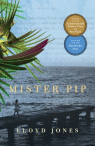
Mister Pip by Lloyd Jones

misterpip

Lloyd Jones’ Mister Pip won the Commonwealth Writers’ Prize for Best Book in 2007. Books with pedigree always make me nervous. What if I don’t like it? What does that say about me as a reader? No chance of not liking Mister Pip, though. This is a terrific book.

Thirteen-year-old Matilda lives on the tropical island of Bougainville in Papua New Guinea. Many of the island’s inhabitants have fled, including Matilda’s father, because of a brutal civil war. Redskins and rambos are fighting, and the island is all but cut off from civilization. The only white inhabitant left in the village is a man called Mr. Watts, also known as Pop Eye. It is decided that he will teach the children, as the school teachers have all fled.

As they clean up the building they will use as a school room, Mr. Watts tells the children “I want this to be a place of light, no matter what happens.”

Mr. Watts begins to read the children Great Expectations which he claims is “the greatest novel by the greatest English writer of the nineteenth century.” And as Pip’s story unfolds, so does Jones’ novel. Not everyone agrees with Mr. Watts’ estimation of Dickens’ worth. Matilda’s mother, Dolores, in particular thinks Mr. Watts should be teaching the children about God and the devil. She and Mr. Watts are adversaries, but there can be no mistaking the impact Watts is having on Matilda.

Mister Pip is a fantastic book about the power of reading and imagination. It is also a powerful and startling novel about bravery and sacrifice, love and forgiveness.

I can not recommend it highly enough.

On Chesil Beach by Ian McEwan

chesil1

Unlike the female protagonist of McEwan’s novel, On Chesil Beach I am not a virgin when it comes to McEwan’s work. This is the sixth book I’ve read by this author (Saturday, First Love, Last Rites, The Comfort of Strangers, The Cement Garden, Atonement), but I’d have to say it’s my least favourite.

Like his novel Saturday, McEwan compresses time and shows us Edward and Florence, a young couple dining together in a hotel on Chesil Beach on the evening of their wedding. They haven’t yet consummated their union and they are both approaching the idea of the event-to-come from vastly different vantage points. Florence is horrified at the thought of sex and Edward is both patient and anxious.

McEwan fills in the blanks in their personal stories as well as their history as a couple and does it well enough that you come to understand Edward and Florence very well. Whether or not you have any sympathy for them will depend on your patience.

As inexperienced as Florence is, I was left with the distinctly uneasy impression that her aversion to sex (and she really is repulsed by it: her description of a kiss made me reconsider kissing my husband ever again!) was the result of some traumatic event- although nothing is ever explicitly stated.   Edward’s own inexperience has its own unfortunate consequences and the repercussions are devastating.

But then McEwan does something I sort of hate in a novel- he flash forwards a few years and then many years and tells us what these people have been up to. That sort of ending never works for me.

No question, McEwan is a fabulous writer. This same story, in lesser hands, would be unbearable. As it was, I felt like I was laughing where I shouldn’t be and the climax, no pun intended, was a rather soggy affair.

The God of Animals by Aryn Kyle

godofanimals

Is there a litmus test for whether or not we like a book?  At book club last night, where we discussed our first book of 2009,  The God Of Animals by Aryn Kyle, we asked the question: would you recommend this book to a friend? The answers were varied and that’s even after we had a very lively discussion of the book’s merits (and there were a few.)

The God of Animals begins with the death of 12 year old Polly Cain. It’s a riveting scene in which we learn not only of Polly’s death but also several other important things about the novel’s narrator, Alice Winston. Alice returns to Polly’s death again and again throughout the novel, but we never learn exactly how the young girl died. Whether or not the information is relative will be entirely up to the reader, but some might find that never knowing Polly’s fate is just one of the ways Kyle leaves the reader dangling.

Alice Winston lives on the family horse farm with her father, Joe, and her mother, Marian. Alice’s older sister, Nona,  left the farm six months earlier, with her rodeo husband, Jerry. The Winston’s struggle to make ends meet on the farm and Alice’s family life is further complicated by the fact that her mother  retired to her room after giving birth to her and she’s never really gotten out of bed. Of course, that doesn’t mean she isn’t aware of what’s going on;  she watches the comings and goings (of rich women who board their horses at the farm) from her window.

The story unfolds during the crippling heat of one summer and climaxes during a snow storm- the first snow in Alice’s life. As Alice tests her boundaries and learns certain truths about the way the world works, she also navigates the tricky road of adult relationships. Then, of course, there are the horses: we see them give birth, we see the foals separated from their mothers, we see them being bred and broken, we see them maimed and killed.

Despite all this, The God of Animals is a quiet book. The prose is quiet- it never quite swept me along. The characters were interesting, but I was never wholly invested in them. I wonder what might have happened if the narrator had not been Alice?

So, back to my original question: would I recommend this book? My answer – maybe. *g

The Guernsey Literary and Potato Peel Pie Society by Mary Ann Shaffer and Annie Barrows

guernsey2

This book has had a lot of buzz- perhaps because of its title…which is almost impossible to remember:  The Guernsey Literary and Potato Peel Pie Society. The novel tells the story of writer Juliet Ashton, who is something of a minor celebrity in post World War Two.  A chance letter from the British Island of Guernsey changes her life.

The novel consists entirely of letters and cables sent back and forth between various characters: Juliet and her publisher, Sidney; Juliet and her best friend (and Sidney’s sister) Sophie and then Juliet and various members of this oddly named literary society. The second part of the novel finds Juliet on the island meeting with the people who will ultimately change her life.

The Guernsey Literary and Potato Peel Pie Society is a simple, pleasant novel- the perfect book to curl up with on a cold winter afternoon, cup of tea in hand. That said, it lacked a certain something. Perhaps it has something to do with the fact that the book wasn’t finished by the person who started it: Mary Ann Shaffer passed away before the novel’s completion and was finished by her niece Annie Barrows (writer of the children’s series Ivy and Bean).  I felt somehow let down by the novel’s denouement- it felt rushed and one section,  so-called “Detection Notes”, takes the place of the back and forth correspondence between the characters. It felt a bit like a cheat to me, especially as it reveals too much about two characters, thus allowing everything to be tied up in a neat bow.

The most compelling bits of the story, for me, were about the Nazi occupation on Guernsey and I was aching to know more about Elizabeth; she was, by far, the most compelling character.

Still, you could do a lot worse than this book.

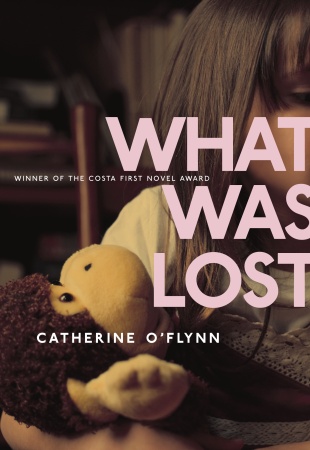
What Was Lost by Catherine O’Flynn

Catherine O’Flynn’s debut novel, What Was Lost, is as labyrinthine as the tunnels under the Green Oaks Shopping Centre. Ten year old Kate Meany is an amateur detective, raised (until his sudden death) by an older, single father. In the novel’s opening third, we travel with Kate and her stuffed monkey, Mickey, as they conduct stakeouts, deliberate over office stationary for Kate’s fledgling detective agency, and pal around with Adrian, the 22 year old son of the man who runs the store next to Kate’s house.

Flash forward almost 20 years and meet Kurt, a security guard at Green Oaks and Lisa, a manager at ‘Your Music’ a big-box music store in the same mall (and not incidentally, Adrian’s younger sister). One night, while sleepily watching the security moniter, Kurt sees Kate. It’s not possible: Kate disappeared the year she was ten and was never found. Adrian, suspected of wrong-doing, but never charged, disappeared and made no contact with his family except for a mixed tape he sent to Lisa every year on her birthday.

From these tangled threads, O’Flynn weaves an exceptionally good story about missed opportunities, luck, family and secrets. She even throws in a slightly gloomy (but fairly funny) picture of what it’s like to work in retail.

O’Flynn’s real strength is in her characters. Kate Meany is a wholly believable and totally enchanting little girl. Lisa and Kurt are flawed and likable. O’Flynn manages to tell us everything we need to know about a character with a line or two – whole back stories come to life with a few carefully chosen words. Even minor characters spring to glorious life and create a picture of small town-life which is ultimately eroded by progress aka big  impersonal malls.

The story had an extra layer of meaning for me because it took place in the West Midlands of England and I once lived there.  I am pretty sure that Green Oaks is actually Merry Hill, a huge shopping centre on the outskirts of Birmingham.

If I have one niggle about the book, it comes at the end. I didn’t like part 42- it felt extraneous to me, like an unnecessary bow on a beautifully wrapped present. Had O’Flynn quit at the end of part 41, I think this little gem of a novel would have been damn near perfect.