The Cuckoo’s Calling – Robert Galbraith

cuckooDespite the fact that my children, my daughter in particular, are over-the-top Harry Potter fans, I have only ever read the first book, Harry Potter and the Philosopher’s Stone. When my daughter was really little, say four or five, I had tried to read the book to her and I just couldn’t do it.  I did end up reading it out loud to a grade nine class a couple of years ago and they loved it; so did I.

That said, I wasn’t really looking forward to tackling J.K. Rowling’s massive post Potter novel, The Casual Vacancy, when it was one of last year’s book club selections. That book ended up being a really pleasant surprise, however,  and proved once and for all (as if being one of  the best-selling authors of all time wasn’t proof enough) that Ms. Rowling can write the hell out of a story.

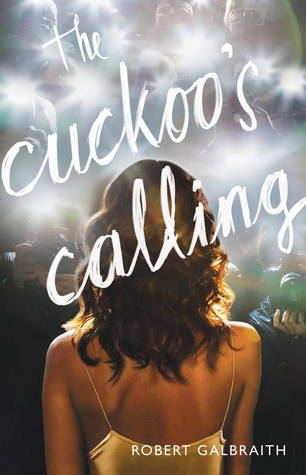
My book club recently met to discuss Rowling’s mystery novel The Cuckoo’s Calling, which Rowling wrote using the pseudonym, Robert Galbraith. (There’s an interesting article about her decision to do so here. ) By the time we got to the book, though, the gig was up and we already knew Rowling had penned the book.

Cormoran Strike, the novel’s protagonist, is a former soldier who lost a leg below the knee to a land mine in Afghanistan. Now he lives in London where he works – although not very successfully – as a private investigator.  His relationship with Charlotte has just ended badly – again. He’s broke and living in his office. And then John Bristow arrives with a case for him.

Bristow is the brother of Strike’s childhood friend, Charlie, who had died when they were kids. He’s also the brother of Lula Landry, the most famous model on the planet. Landry recently committed suicide, but John believes something more sinister happened and wants Strike to investigate.

Of course, it’s really impossible to say much more about the story without giving away important plot points. Suffice it to say that as far as the ‘detective’ part of the novel goes – there’s lots to keep mystery-lovers in the game.

Rowling’s real strength as a writer is characterization. And as I tell the students in my writing class – character is the most important thing anyway; they are what drives your plot.

The Cuckoo’s Calling is chock-a-block with characters of all sorts, the most important of which is Cormoran Strike himself.

The reflection staring back at him was not handsome. Strike had the high, bulging forehead, broad nose and thick brows of a young Beethoven who had taken to boxing, an impression only heightened by the swelling and blackening eye. His thick curly hair, springy as carpet, had ensured that his many youthful nicknames had included “Pubehead.” He looked older than his thirty-five years.

Although the women at book club couldn’t agree on whether we found Strike attractive or not (trying to cast him in a movie version was hysterical), we all agreed that he was super-smart and that’s always the sexiest thing anyway.

Strike and his office temp, Robin (who is pretty smart herself) work their way through the list of Lula Landry associates, turning over rocks in an effort to understand the model and the world she inhabited. It makes for a pretty compelling tale.

The best endorsement I can offer for The Cuckoo’s Calling is this: I bet we’ll be seeing Cormoran again and since he’s a character I can’t seem to stop thinking about, I welcome the opportunity to join him on his next case.

Popular Music from Vittula – Mikael Niemi

popularmusicI didn’t get this book – at all. Everyone from the New York Times to Entertainment Weekly waxed poetic about its beauty and prose that “buzzes with wonder, fearlessness and ecstatic ignorance.” Um. I didn’t get it.

Translated from the Swedish, Popular Music from Vittula is a “novel” that actually seems more like a memoir  – or a series of loosely connected short stories –  because if there was a narrative thread here, I wasn’t seeing it.

The main character and narrator is Matti and we meet him as an adult “in a fix in the Thorong La Pass” (which is on Mount Annapurna, Nepal) where  he finds himself 17, 765 feet above sea level, with his lips stuck to  a Tibetan prayer plaque. I am sure what happens next is meant to be comical but, sadly, I didn’t laugh. And I didn’t laugh at any of the other crazy escapades Matti finds himself embroiled in from the age of five straight through to his teenage years.

Matti and his friend, Niila, meet at the neighbourhood playground and their friendship is cemented during a nose-picking session. The rest of this story traces their frienship, particularly their love for music, for the next decade or so.  Their otherwise straightforward lives are touched by elements of magical realism. (Did these two five year olds really manage to get on a plane and fly all the way to Frankfurt?)

Matti’s story dips in and out of his life, giving the reader a chance to experience the first time he ever heard Elvis Presley sing (in his sister’s bedroom), the first time he goes to school, his first kiss. I wish I could say that the book was more than the sum of its parts, but for me I just didn’t get it.

Wild – Cheryl Strayed

WildTP_Books-330I am of the opinion that everyone has a story to tell – that doesn’t mean everyone should tell it, though. Cheryl Strayed’s memoir should have made for a compelling read, but ended up winning “Book I Enjoyed Reading the Least” at our final book club meeting. (Although in my mind, it was neck and neck with Death Comes to Pemberley for the position.)

When I teach memoir to students in my writing class, we talk a lot about the ‘why’? Why is this the story you are telling? What have you taken away from this experience? If you want to take a reader on the journey through your life, there has to be a pretty compelling reason.

Some memoirs are more successful than others. In order for a memoir to work — for me at least — it has to combine three elements: story, character, and writing. So, for example, Elizabeth Gilbert’s best selling memoir Eat, Pray, Love both worked and didn’t work for me. The writing was terrific; I loved the idea of her journey, but I didn’t like her very much. Let’s compare Eat, Pray, Love to another best-selling memoir, Julie & Julia. I loved the story, the writing, and Julie herself.

Then there’s Wild. At twenty-six Cheryl Strayed is still mourning the death of her mother, who died when she was 22,  the dissolution of her marriage, which ended soon after, and recovering from her addiction to a guy named Joe and their shared heroin habit. Good times. Impulsively, she decides to hike the Pacific Coast Trail. That’s 4268 km of therapy. With very little preparation (or at least it seemed that way to me — she bought a book and some ill-fitting hiking books and suddenly she was walking), Strayed embarks on a journey which she hopes will clear her head and/or mend her broken heart.

Pacific-Crest-TrailWhen the book opens, Cheryl has lost a boot over the edge of a mountain:

My boot was gone. Actually gone.

I clutched its mate to my chest like a baby, though of course it was futile. What is one boot without the other boot. It is nothing. It is useless, an orphan forevermore, and I could take no mercy on it. It was a big lug of a thing, of genuine heft, a brown leather Raichle boot with a red lace and metal fasts. I lifted it high and threw it with all my might and watched it fall into the lush trees and out of my life.                                         …

I looked south, to where I’d been, to the wild land that had schooled and scorched me, and considered my options. There was only one, I knew. There was always only one.

To keep walking.

I felt like Strayed’s journey had all sorts of potential. I mean, her life was a total mess and here was her opportunity to work out her issues and reset her course. But the more I read the less I cared. I can’t quite say what it was about her, but others in book club had the same sort of feeling: we just didn’t like Strayed.

Wild felt like a missed opportunity to me.  Regardless of whether your relationship is awesome or toxic, the death of a parent is a game-changer. Strayed’s brother and sister and her beloved step-father, Eddie, sort of scatter to the wind and it made me wonder why. When my parents died — first my mom and then a couple years later, my dad — my three younger brothers and I circled the wagons and became even closer. We understood that it was just us now and ‘us’ was important. Strayed’s brother doesn’t even visit his mother when she is dying in the hospital.

So, is Strayed ‘cured’ after her long walk.  I doubt it. While on the surface it would seem that her journey to the Bridge of the Gods (and oh, those heavy-handed metaphors!) delivers her back to herself, I’m not sold.

The Painted Girls – Cathy Marie Buchanan

paintedgirlsCathy Marie Buchanan has taken French Impressionist Edgar Degas’  famous statue, Little Dancer Aged Fourteen, and spun it into a piece of historical fiction that will probably really appeal to some people, but with which I had a love/hate relationship. The Painted Girls is the story of sisters Marie and Antoinette van Goethem, who live with their widowed, absinthe addicted mother and younger sister, Charlotte, in Paris in 1878.

The novel alternates between elder sister Antoinette’s story and Marie’s as they struggle to survive extreme poverty and a mother who just doesn’t seem capable of taking care of them. The only way out of their dire situation is if Marie makes it into the Paris Opera (Antoinette tried, but didn’t have the talent) as a ballet dancer.

With the news that Maman is sending us to the dance school, Charlotte threads her fingers together, knuckles whitening as she works to hide her joy. I keep my face still, my dismay to myself. The petit rats – the scrawny, hopeful girls, vying for the quickest feet, the lightest leap, the prettiest arms – are babies, like Charlotte, some as young as six. It puts my nerves jumping, the idea of me – a thirteen-year-old –  lost among them at the barre, rats who earn their name by scurrying along the Opera corridors, hungry and dirty and sniffing out crumbs of charity.

It is here that she comes to the attention of Mr. Degas, who hires her to model for him. Marie wants something more for her life and she is willing to do whatever it takes to achieve it. That is not to say that she consistently makes wise choices, only that the desire for a better life is what drives her.

Antoinette’s journey is slightly more bumpy. She has already been turned out of the ballet as she is too old and not talented enough. She understands Marie’s talents, though, and works to ensure she has the lessons she needs to progress and food in her belly. Then she meets Emile Abadie, a shifty boy who  “is not much to look at …with that scrub-brushy hair of his creeping low on his forehead and his black eyes sinking too deep beneath the weighty ridge of his brow and his jaw looking like the sort of those on dogs it is best to steer away from in the streets.” Emile is a charmer though and even when he abuses Antoinette, she stays by his side.

The Painted Girls evokes the Belle Époque  period in Paris, a period which is, ironically, characterized by optimism. Art, music, literature and scientific discoveries all flourished during the period and Buchanan makes the most of them including bringing Zola’s masterpiece L’Assommoir to the stage.

Despite the novel’s merits (and there are many) I found the book overwritten. Not badly written, the language is often quite beautiful, just over-written. The sisters’ journey was intriguing, I am a fan of both the ballet and Degas, but at times I have to admit that it was a bit of a slog.

The Last Weekend – Blake Morrison

Henry Sutton wrote an interesting article for The Guardian about fiction’s most unreliable narrators but he neglected to include Ian from Blake images_list_co_uk_blake-morrison-the-last-weeken-chatto-and-windusB-LST072324Morrison’s entertaining novel The Last Weekend. Although it isn’t obvious in the beginning, Ian’s narrative soon starts to unravel as he and his wife, Em, spend a weekend with his college roommate, Ollie and Ollie’s partner, Daisy.

Ian is a primary school teacher and Em a social worker and their marriage seems solid enough, although perhaps slightly lacklustre compared to Ollie and Daisy’s relationship. Of course, as seen through a series of reminiscences, we come to understand that Ian’s relationship with Ollie has always been fraught with jealousy and a certain prickliness.

“I met Ollie in my second term at university,” Ian remembers. He admits that he was something of a loner, that  he “didn’t really have a circle – my circle was me.” Ollie, on the other hand, was hard to miss  with his “brooding intensity. ” He was, Ian admits, “smart, sporty, funny, handsome and popular – the antithesis of me.” And yet chance throws the two young men together and a strangely co-dependent relationship is forged.

It’s a lopsided relationship, a fact that Ian is only too willing point out.

The essential contrasts, all to our disadvantage, go: large Georgian house in west London vs small modern semi in Ilkeston; Range Rover and BMW vs Ford Fiesta; Mauritius (Florence, Antigua, etc.) vs Lanzarote (if we’re lucky); The Ivy vs Pizza Express; Royal Opera House vs local Odeon; Waitrose vs Morrisons; golden couple vs pair of ugly toads. I exaggerate but not much.

So, off Ian and Em go, on a hot summer weekend at the end of August to visit with Ollie and Daisy. And it’s weird from the very start. First of all, Ian had been expecting “posh” accommodations instead of a dwelling which is a “serious disappointment.”  Secondly, there is a strange undercurrent in the house. At first I suspected that Ollie wasn’t all Ian had described, but as it turns out much of what happens during that weekend is not quite as it seems.

“As to the events of August,” Ian says near the beginning of the novel, “I don’t suppose I’ll ever get over them. I’m the kind of guy who feels guilty even when he’s innocent…” It’s only after I finished reading The Last Weekend that these words revealed their menacing underbelly. And much of the novel is strangely creepy and also deeply funny. Once it is revealed that Ian is not to be trusted, The Last Weekend becomes a wonderful maze of a book.

See You at Harry’s – Jo Knowles

seeyouh

I spend as much time reading about YA fiction as I do reading the books, it seems; I am always adding new titles to my list and often the same book will be recommended time and time again. That was the case with Jo Knowles’ book See You at Harry’s. It was waiting in my mailbox at school today – I’d ordered it from Scholastic before the March Break. I started reading it during my third period Grade Ten English class and just finished it a few minutes ago.

The happiest day of  Fern’s life was the day she “threw up four times and had a fever of 103 degrees.” It’s a day lodged in Fern’s (yes, she’s named after the little girl in Charlotte’s Web) memory because it’s the day she didn’t have to share her mother with her two older siblings Sarah and Holden (yes, he’s named after that Holden).

That day at home, my mom spent every minute with me. My older sister and brother were at school, and my dad was working at my parents’ restaurant. I was eight and had never been home alone with just my mom before, at least not all day and definitely not with her full attention.

Shortly after Fern’s recovery, her mom discovers she’s pregnant and instead of being the youngest, Fern suddenly has to contend with a new baby brother, Charlie.

When See You at Harry’s begins, Fern is twelve. Her sister is eighteen, Holden is fourteen and Charlie is three. Her world is chaotic because her family is chaotic…and while Fern might not always get the attention she craves, in that self-centered way all twelve-year-old’s crave attention, she is by no means neglected. She shares a close sibling bond with Holden and there is much to admire in their relationship. Things are little more complicated with Sarah and there’s Charlie.

“I wanna go to school,” he says.

“School is overrated.”

“Huh?”

“Look. All little kids want to go to school. And kindergarten is pretty great. But it just goes downhill from there.”

“Oh.”

“Enjoy your freedom, bud.”

Fern knows what she’s talking about, too. She’s just starting seventh grade and it starts to go downhill on day one. I think a lot of middle school kids will see themselves in Fern. She is, as her mother once told her, “a special soul.”

Fern’s parents run the family restaurant. Her mom is a little on the flaky side and her dad is always coming up with crazy  and embarrassing schemes to improve the business. In all the ways that matter, though,  this is a nuclear family. They aren’t perfect, but they are real. They’re distracted and selfish and  human and fragile.  It takes a  terrible  tragedy to  fill up their empty places.

While this book might not appeal to some of my  students (it is geared for middle school readers, after all), I think many of them will be quite moved by Fern’s family’s story. I was.


Our Daily Bread – Lauren B. Davis

ourdailybread

Picking a book for my book club  is serious business. The way our group works, we have one opportunity to pick and host per year and so you don’t want to choose a dud. The women in our group our merciless [cough] The White Iris [/cough] and it sucks to be on the receiving end of a book choice gone bad.  Usually I spend a lot of time choosing my book. This year I thought I would choose something from my own massive tbr  pile, but the problem was that every book I selected from my shelf was unavailable at local stores. In the end, I headed over to Indigo to peruse the shelves. The only criteria at that point was that there were enough copies on the shelf for the members of my club.

In the end, I chose a book I’d never heard of but which was plastered with accolades and a bright red sticker proclaiming that it had been longlisted for the Giller in 2012. Feeling confident of its pedigree, I brought home Lauren B. Davis’s novel Our Daily Bread.

Davis’s novel owes some of its gripping story to the real-life Golers from South Mountain, Nova Scotia. But Davis is quick to point out that Our Daily Bread is not ABOUT the Golers. While it’s true that Davis’s fictional Erskine family shares some similarities with the real-life family, that is only one small part of this mesmerizing and beautifully-written tale.

Albert Erskine is not like the rest of his violent, drug and alcohol addicted, sexually deviant family. He has already separated himself from the pack by building himself a small shack away from the main buildings on his family’s “compound”  on North Mountain.  His uncle Lloyd comments on Albert’s ‘otherness’ by saying: “You don’t act like the family at all now, do you? Don’t come visiting. Live in your little shack. Course maybe you have your own parties. That it? You have kids come to see you?”

It’s near impossible to trace the branches of  Albert’s family tree. Suffice it to say, there are a lot of younger kids with questionable DNA and Albert regards them with a mixture of annoyance and helplessness.  When ten-year-old Toots stops by his shack looking for food,  Albert ponders the sticky question: “What would she be like, if she’d been raised in some other place?” Albert often wonders how he might be different if his circumstances had been different. It’s a painful road for both Albert and the reader to travel.

Down in Gideon is another family with their own struggles: Tom and Patty Evans and their children Ivy and Bobby.  Tom is a good man. He grew up in Gideon and is well-liked and well-known. His wife, Patty, is another story. For starters, she’s from away. And although Tom seems desperately in love with her, she seems detached and unhappy. No matter what Tom does, it’s not good enough. As the tension in the household escalates, Ivy and Bobby seek shelter elsewhere. For Ivy, it is with the benign widow Dorothy Carlisle; Bobby’s new friend and confidant turns out to be  Albert Erskine. The intersection of these lives makes up the bulk of the narrative of Our Daily Bread.

I am guessing that some of the women in my group will have difficulty with the graphic (but never, imo, gratuitous) nature of the subject matter. As a mother, it’s certainly upsetting to see children in peril. The interesting thing about this book is that peril means different things to different people. Is Ivy’s falling-apart life any less horrible because she has a warm bed to sleep in? The impact Bobby and Albert have on each other’s lives is astounding and heart-breaking, too. Bobby is filled with a fifteen year old’s rage and angst and it isn’t until the novel’s powerful climax that he understands the value of his father’s love.

It truly is the mark of a great novel when you can empathize with so many of the characters. I loved Ivy’s resolute determination and Albert’s jaded hope and Dorothy’s refusal to bend to the will of small-town politics. And I loved Tom. A lot. As he copes with his unraveling marriage, as he asked himself the question, “How can I ever trust myself again?” I just saw so much of myself in him. But, ultimately, it all comes back to Albert. I so desperately wanted him to get in his truck and just go. I will be thinking about him for a long time.

Our Daily Breadisn’t ‘light’ reading, but this is a book that will stay with you long after the final page is turned.

As expected, our discussion of this book was lively and we were SO excited to be able to Tweet with Ms. Davis about her book. Here is some of our conversation:

Lauren B. Davis:  Oh, that’s wonderful, Christie!  If you have any questions, just send me a tweet! Thanks so much. #Ilovebookclubs

The Ludic Reader: Lively discussion about Our Daily Bread. @Laurenbdavis girls want to know if you think Albert ever contemplated a sexual advance towards Bobby?

Lauren B. Davis‏:  Not consciously, altho I do think the conditioned response of his childhood arose (pardon the pun) a few times, including that moment in the cabin the night Bobby came up to the compound with him.

@bitebymichelle wants to know where the wife went.

Lauren B. Davis‏: At the very end of the book?  Ah, who knows.  She is a lost soul, I fear.  I wonder if she’ll  ever come back and finally make that long walk up to the door.  What do you all think?

The Ludic Reader: Nobody is going to love her like Tom did, but we don’t think she’ll come back until her life is shit.

The Ludic Reader:  We all loved Albert so much – why did he have to die? (Altho we do know the answer.)

Lauren B. Davis‏: Can’t tell you how I tried not to kill him.  In the first draft he survived, but it just didn’t work.  I suppose it’s the symbolic sacrifice, but to be honest, I still grieve him. I found the final scene difficult to write.

The Ludic Reader: Some feel the trial was not necessary. Why did you decide to include it?

Lauren B. Davis:  It is rough, isn’t it?  But I felt readers would want to know what happened to the abusers, and since the courtroom  dialogue was taken from trial transcripts, I felt I was bearing witness to the children whose story inspired me. There was so much more of the Goler case which I did not include, because it was simply too horrible. But the response of the townspeople was important to the meaning of the book  I understand the squeamishness.  I felt I, too.  But yes, I think it’s important to be fearless in our gaze and to speak  truth to power even if our voice shakes.

Girl in Translation – Jean Kwok

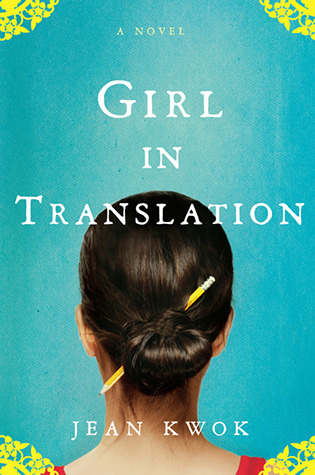
girlintranslation“I was born with a talent. Not for dance, or comedy, or anything so delightful. I’ve always had a knack for school.”

Kimberly is just eleven when she and her ‘Ma’ emigrate to the States from Hong Kong. It has long been a dream of theirs to live in America and chase that American dream. They arrive in New York with little more than the clothes on their backs and the promise of a new life.

Ma’s older sister, Paula, has been living in New York with Uncle Bob for several years and it is because of her sponsorship that Kimberly and Ma are able to come. But don’t get the idea that Paula is a benevolent soul; she’s not. She puts Ma to work in the clothing factory Bob manages – a sweat shop – and sets her sister and niece up in an apartment so filthy, cold,  and vermin infested that the building has all but been condemned. In fact, every other tenant has moved out in anticipation of the building’s eventual demolition.

Girl in Translation is the story of Kimberly’s adolescence. It’s about her tenacity. If she weren’t so intelligent, her story might have had a different conclusion, but she’s really smart and it’s those smarts that propel her past many of the obstacles poverty throws in her way.

Those of us who live a comfortable existence likely have very little notion of how incredibly difficult it must be for people who come to, let’s say, North America and try to start a new life. Immigrants often don’t speak the language. They don’t understand how anything works. They have no way of advocating for themselves. Kimberly and her mother also have to contend with Aunt Paula who is petty and stingy and jealous of Kimberly’s smarts.

There are moments of kindness in Kimberly’s story. She makes a true friend early on. She finds success academically. She makes her way. But there are significant sacrifices, too.

Like Kimberly, Kwok was born in Hong Kong and immigrated to New York City. She, too, worked at a sweat shop. She, too, was smart. At about the two third mark in the novel I started to feel a bit…I don’t know…disappointed. Kimberly’s story remained interesting, but I really felt as though this was a memoir dressed in a novel’s cloak. I can’t quite explain why, but I didn’t feel like I was living the story anymore, I felt like I was being told the story. And then…that thing I HATE. Flash forward twelve years and let’s see where all the characters are. Nothing about that epilogue – over-wrought and schmaltzy as it was – seemed to fit the rest of the novel.

That’s my own personal niggle, though. The novel has been praised all over the place and I suspect the vast majority of readers will really enjoy it.

Death Comes to Pemberley – P.D. James

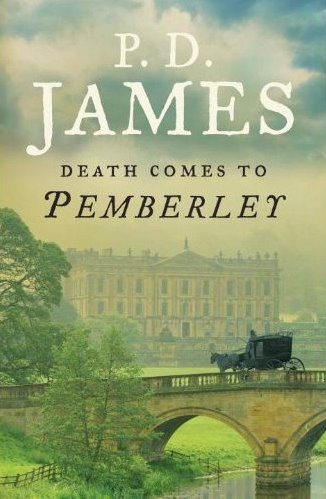
Death Comes to Pemberley by famous British crime novelist P.D. James is fan fiction. That’s right: P.D. James borrowed characters and settings made famous by Jane Austen and wrote them into a new story which takes place six years after Elizabeth and Darcy marry. That’s essentially what fan fiction is; writers (albeit, generally amateur writers) find new ways to breathe life into familiar characters. Because James is a crime writer, she wrote a mystery (although a relatively tame one, even by my standards.)

Fan fiction is (according to Wikipedia) “a broadly-defined term for fan labor  regarding stories about characters or settings written by fans of the original work, rather than by the original creator. Works of fan fiction are rarely commissioned or authorized by the original work’s owner, creator, or publisher; also, they are almost never professionally published.”  I would have agreed with that definition except for all the fan fiction that has found its way into bookstores recently (Fifty Shades of Grey, for example, literally started its life as Twilight fanfiction; Pride and Prejudice and Zombies and Android Kareninaare two examples from Quirk Classics). Perhaps I am misinterpreting the definition of fan fiction, but to me when you borrow another writer’s characters and just give them a new plot — that’s fan fiction. Yes, even if it’s a parody. (Fan fiction writers write parodies all the time.)

But, hey, I’m a huge fan of fan fiction and so pointing it out isn’t meant as a criticism. Even Pulitzer Prize winning author, Michael Chabon understands the merits of derivative fiction. In his book of essays Maps and Legends: Reading and Writing Along the Borderlands he says:

 …all literature, highbrow or low, from the Aeineid onward, is fan fiction. That is why Harold Bloom’s  notion of the anxiety of influence has always rung so hollow to me. Through parody and pastiche, allusion and homage, retelling and reimagining the stories that were told before us and that we have come of age loving – amateurs – we proceed, seeking out the blank places in the map that our favorite writers, in their greatness and negligence, have left for us, hoping to pass on to our own readers – should we be lucky enough to find any – some of the pleasure that we ourselves have taken  in the stuff we love to get in on the game. All novels are sequels; influence is bliss.

No matter the source material, all literature, ultimately, has to stand on its own two feet. Readers needn’t be a fan of Austen — or even know who she is — to read Death Comes to Pemberley because in the opening chapter James fills us in on the backstory. Once readers have the lay of the land, they can jump into the mystery which for me was only so-so. I like Austen fine, although I wouldn’t say I am a huge fan. I love a good mystery. I don’t have any problem with dense, old-fashioned prose (really good fan fiction mimics the original author’s style and recreates characters that are recognizable to readers of the original work). But Death Comes to Pemberley was a big YAWN. Seriously: nothing happens.

Elizabeth and Darcy are madly in love — although they spend virtually no time together. Elizabeth is preparing for Pemberley’s yearly Lady Anne’s ball when her younger sister, Lydia, arrives screaming that her husband George Wickham has been murdered in Pemberley Wood. Wickham is a bad apple and has been a constant source of embarrassment for Darcy. When it turns out it’s not Wickham who is dead but another male who was traveling with him, Darcy isn’t sure Wickham actually committed the crime.

It’s not much to make a mystery meal out of, but James fills page after page with lengthy descriptions of relationships and manners and protocol and the moon on the woods and it was so S-L-O-W. If it hadn’t been our first book club pick (and by a new member, no less) I would have abandoned it, for sure. I kept plodding along, but for me, the original charm of the Elizabeth/Darcy relationship was absent and the rest of the book just wasn’t my cup of tea.

The Sense of an Ending – Julian Barnes

I didn’t get a chance to write my thoughts about Julian Barnes’ Booker Prize winning novella, The Sense of an Ending, back when I actually finished it – which was in June.  The book deserves a much more thoughtful review than I am likely to give it here.

Narrated by Tony Webster, a divorced father with a grown daughter, The Sense of an Ending is a meditation on youth and the ways in which our memories are often skewed by our desire to remember ourselves differently from how we actually were.

“We live in time – it holds us and moulds us – but I’ve never felt I understood it very well,” Tony says. He also tells the reader that he is “not very interested in his schooldays, and don’t feel any nostalgia for them. But school is where it all began…”

It is at school that Tony and his friends meet Adrian Finn, “a tall, shy boy who initially kept his eyes down and his mind to himself.” Adrian is bright, clearly smarter than Tony and his friends – or perhaps just more thoughtful, more willing to question the subjects (particularly history) that he is being taught.

History is the certainty produced at the point where the imperfections of memory meet the inadequacies of documentation.

At the end of school, the four boys go their separate ways.  Tony  meets a girl, Veronica Ford, and it is this relationship which sets  the story in motion. Things with Veronica end badly and when she ends up dating Adrian, Tony is hurt and angry.

How this threesome plays out makes up the bulk of the story, but it isn’t a traditional love triangle. This is really a story about who we were, who we become and how we alter our memories to accommodate our own version of ourselves.

The Sense of an Ending is one of those books which would certainly benefit from repeat readings – and trust me, it wouldn’t be a hardship. Barnes’ prose is precise and devastating. The book reads like a mystery and in a way it is – we are often mysteries to ourselves and it is only when our memories are challenged that we see the person we have been.