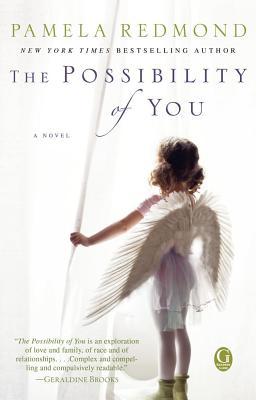
The Possibility of You – Pamela Redmond

Pamela Redmond admits in the  introduction to her novel The Possibility of You that she “had bookclubs in mind” when she wrote the book. And that’s exactly how this novel reads – like a book written to get women talking.

The novel tells the story of three women: Bridget, Billie and Cait and spans several decades. Cait’s present-day  story begins when she falls into bed with another journalist while they are on assignment to cover the story of a missing boy. Later, Cait discovers that she is pregnant and she decides she needs to locate her birth mother.

Bille’s story takes place in the 1970s. Orphaned after the death of her drug-addicted father, she heads to New York City with her best friend, Jupe. There she meets, for the first time, her eccentric and wealthy grandmother, Maude.

Going back even further is the story of Bridget, an Irish immigrant who works in Maude’s house caring for Maude’s young son, Floyd.

That these three women’s stories should be intertwined will come as no surprise to the reader. There isn’t actually anything surprising about that – or even all that original about their stories at all, actually. And I understand that that makes me sound sort of heartless. I think Redmond’s intent was that women of all stripes should find at least one of these women, and their stories of birth and death, to be compelling and relateable. The idea that women make sacrifices and mistakes isn’t riveting in and of itself, unless the characters are somehow sympathetic.

Maude was the most modern of the characters, a famous singer in her day, she married a much older man, had affairs which she openly bragged about and sent her maid, Bridget, to get birth control so she could sleep with her boyfriend without the complications of getting pregnant or having to get married. While she seems thoroughly forward thinking in 1915, at the end of the day, she is reprehensible and selfish.

The Possibility of You seemed like it should have added up to a lot more than the sum of its parts, but for me it just seemed like a cobbled-together story with all the talking points necessary for a good book club evening over a glass of wine.

My book club discussed the book last night and none of us were all that enamoured with it. In fact once we dispensed with the book’s central idea – how do women cope with giving up a child – we veered into a much more lively discussion of local politics. Despite the book’s positive reviews, we just weren’t moved by the novel or its characters.

The Slap – Christos Tsiolkas

If you are not easily offended, The Slap is one hell of a book. I just now randomly opened it and counted half a dozen raunchy references to sex and another half dozen expletives. Tsiolkas throws around the ‘c’ word like he’s talking about making a cup of tea. Yet, The Slap is a very human story, albeit one filled with polarizing characters.

At our book club discussion, our moderator (that’s the person who chooses the book) asked us to write the name of the most reprehensible character on a slip of paper. Then she asked us to name the most sympathetic character. She wanted our thoughts on paper before we began talking and were swayed by opposing opinions. Then we began to discuss the book, the premise of which is simple enough. A group of disparate characters gather at the Melbourne home of Hector and Aisha for a barbeque. Hector is a gorgeous Greek man and Aisha is from India and owns her own veterinary clinic. They have a couple young kids. There are cousins and parents and friends and co-workers in attendance. One of the guests slaps the face of four-year-old, Hugo, who was going to — so the slapper thought — bash his son with a cricket bat. Hugo’s parents press charges.

But The Slap isn’t really a book about what becomes of Hugo and his parents or how the trial plays out. Tsiolkas drops in and out of the lives of various characters (one at a time a la Jodi Picoult only WAY more sophisticated and profane), giving us snapshots of their lives and insight into their feelings about the slap. We don’t hear from every character at the bbq and, interestingly enough, some of the characters we do hear from seem like unusual choices. The beauty of the book, though, is that we do get to know the characters well, feeling empathy, admiration and repulsion in equal measure – sometimes all at once for the same character.

The Slap, as another member of our group pointed out, is quite unlike anything else our group has ever read…and that’s saying something considering we’ve been meeting for 13 years. It isn’t just the language — which takes some getting used to even for someone like me who has been known to drop the occasional ‘f-bomb.’ Several of us agreed that we had a visceral reaction to the book and the characters: hard drinking, racist, violent, irreverent and funny drug users – the whole lot.  The Slap is thrumming with energy. It is almost impossible to put down.

Tsiolkas has important things to say about love, though – not just the love between a man and a woman, but the love between friends,  and parents and children.

This, finally, was love. This was its shape and essence, once the lust and ecstasy and danger and adventure had gone. Love, at its core, was negotiation, the surrender of two individuals to the messy, banal, domestic realities of sharing a life together. In this way, in love, she could secure a familiar happiness.

The Slap is an excellent novel.

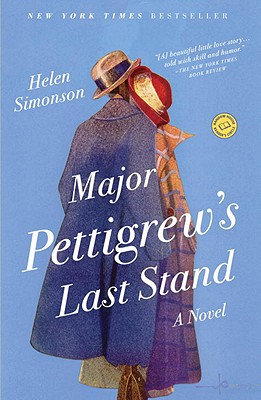
Major Pettigrew’s Last Stand – Helen Simonson

Helen Simonson’s debut novel Major Pettigrew’s Last Stand is the next best thing to spending a holiday in the English countryside. When we meet the title character, Major Ernest Pettigrew (retired), he’s just received the news that his younger brother, Bertie, has died. He’s trying, rather unsuccessfully, to cope with the news when Mrs. Ali, proprietress of the local village shop, appears at his door to collect the paper money. She takes note of his unsteady appearance and  offers to make him a cup of tea. Thus begins their relationship.

Mrs. Ali was, he half suspected, an educated woman, a person of culture. Nancy had been such a rare person, too, fond of her books and of little chamber concerts in village churches. But she had left him alone to endure the blunt tweedy concerns of the other women of their acquaintance. Women who talked horses and raffles at the hunt hall and who delighted in clucking over which unreliable young mother from the council cottages had messed up  arrangements for this week’s play group at the Village Hall. Mrs. Ali was more like Nancy. She was a butterfly to their scuffle of pigeons. He acknowledged a notion that he might wish to see Mrs. Ali again outside of the shop, and wondered whether this might be proof that he was not as ossified as his sixty-eight years, and the limited opportunities of village life, might suggest.

Major Pettigrew’s Last Stand is one of those little gems of a novel – beautifully written, with characters so remarkably authentic they seem to jump off the page. Pettigrew is a widower and Mrs. Ali, too, has lost a spouse. They are drawn together because of a shared love of Kipling, but they live in a small town – everysmalltown, really, where everyone knows your name and your business – and not everyone would have them together. Although Mrs. Ali was born in England, she’s Pakistani and therefore viewed by some as ‘unsuitable.’ I think Pettigrew’s feelings for her take him quite by surprise.  I suspect he thought that at 68, that part of his life was over.

In some ways, Pettigrew is a stuffed shirt. He likes things ‘just so.’ He desires attention and often  believes he’s entitled. The beautiful thing about him, though, is his willingness to change, and he does, too. His relationship with his son, a pompous banker who lives in London, undergoes a transformation. He starts to care less about tangible things, like a pair of shotguns that had once belonged to his father, and more about feelings and people.

To say that nothing much happens in Simonson’s novel is to miss the quiet patina of daily  life – much of which, at least as it’s written here, is laugh out loud funny. As people plan parties that can only go awry, as children squabble over their rightful inheritance, as the battle-lines are drawn between cultures, Major Pettigrew tries to find a way to navigate the messy business of living. He is proof that life does offer second chances, if we are brave enough to open our hearts to receive them.

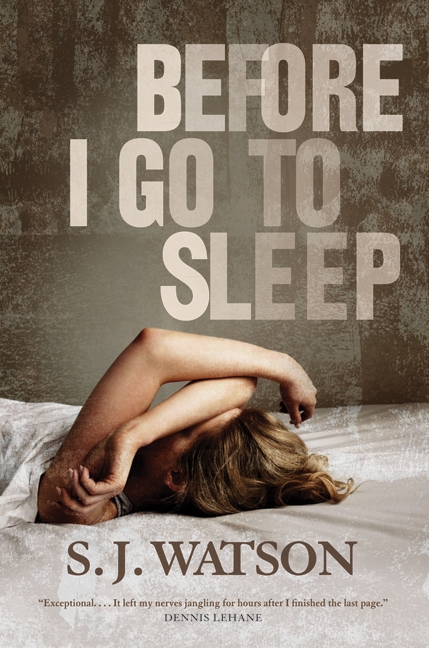
Before I Go To Sleep – SJ Watson

What are we, if not an accumulation of our memories?

Memories are a bit of a problem for the protagonist of SJ Watson’s debut novel Before I Go To Sleep. Twenty years ago, Christine was in a serious accident that left her without the ability to retain memories. That means every morning she wakes up in a room she doesn’t recognize, with a husband she doesn’t remember and in a body she’s troubled to discover is twenty years older than it should be. She muddles through the day, trying to piece her fractured life back together – with the knowledge that she’s going to have to do it all over again the next day. That’s right: she goes to sleep and her brain erases all the memories of the day.

Before I Go To Sleep was my book club’s first read for 2012 and was also my pick. We had a lively discussion about the book’s merits and I am happy to say that with a few minor caveats, the women in my group (except for one) generally enjoyed the book.

The general concensus was that Watson did an admirable job of writing a convincing female – not an easy task, I don’t think. We had a little bit of a debate about the novel’s structure. At least one person was put off by constantly having to re-read the story, rediscovering memories as Christine did. I actually think that it was deftly handled. If I am feeling frustrated by having to hear stuff over and over, imagine how trapped by her circumstances Christine must be feeling. 🙂

I alo think Watson was striving to write something more than just a thriller – although he did that quite handily. I think he was trying to say something about memory and how our memories shape us. It’s a fear of mine, really, to be old and not know my children or the other people who have been important to me. Christine’s situation means that she is forced to learn painful information over and over again – and it’s heartbreaking.

The book had me in its iron grip until the last 50 or so pages- when I have to say that it fell apart for me. It wasn’t that I didn’t buy a certain part of it (and, really, it’s  almost impossible to talk about without giving anything away), let me just say this: too much convenient exposition. Too neat.

That said, Before I Go To Sleep was a great way to kick off our 12th reading year.

SJ Watson talks about the book and his writing here.

21/365


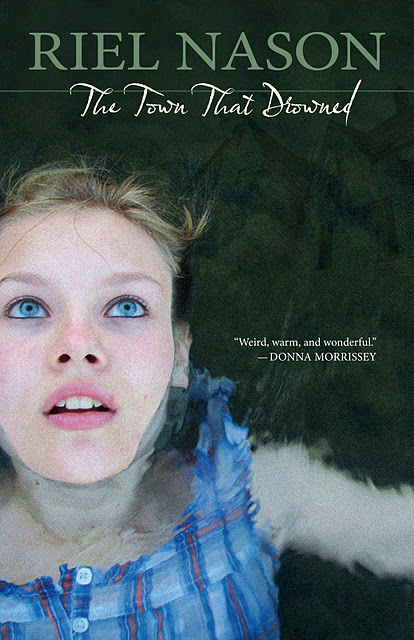
The Town That Drowned – Riel Nason

In all our years together, my book club has never been joined by the author of our chosen book. This month, as we met to discuss The Town That Drowned, we were fortunate to have the novel’s author, Riel Nason, with us. Riel and one of the members of my book club have known each other since university, so it made sense for Chrissy to choose this book and to invite Riel to join us while we discussed it.

The Town That Drowned is Riel’s first novel, but she has honed her skills writing a regular column on antiques and collectibles for the Telegraph Journal, is the author of a collection of short stories, some of which have been published, and blogs about quilting here. For the women who gathered for a discussion of the book, it was a real treat to get the inside scoop on the book’s development.

Narrated by 14-year-old Ruby, The Town That Drowned tells the story of what happens to a town when the government decides to build a dam. The narrative of the story is actually based on a true event, as Riel explained at our meeting and on her blog:

“In the late 1960s, before my friends and I were born, the area had been flooded when the Mactaquac Dam was built about 15 miles downstream. As a kid, I thought it was all pretty neat information.  Lots of great trivia. But, now if we fast forward to just a few years ago when I was possessed with the idea that I-Must-Write-A-Novel, I immediately knew that the flooding would be the background event.”

The Town That Drowned is a quiet story. Riel might have even admitted that nothing much happens, but I would disagree. I think Riel actually did a very nice job of capturing rural New Brunswick during the 1960s. My dad grew up just a few clicks further up the river from Riel’s fictional Haventon, in a small town called Perth-Andover and I spent a fair amount of time there as a kid, so I am intimately familiar with towns like that. You know the kind: everyone knows everyone, meaning everyone knows your business and there’s no escape from the town bullies. Ruby observes her neighbours and the events that transpire over the course of a couple of years through remarkably mature eyes.

My favourite character in the novel is Ruby’s younger brother, Percy. Although it’s never overtly stated, Percy has Asperger’s, a high-functioning form of autism. Every time he opens his mouth, he is a delight.

“Our mother says we should give you the message of her love,” he says to Mr. Cole – a much loved neighbour – on the occasion of a picnic he and Ruby share with him.

Percy thrives on structure and order and routine and the thought that his house might be moved is kept a secret from him for as long as possible. Ruby adores him and is embarrassed by him in equal measure. I just adored him.

The Town That Drowned will have special meaning to those readers familiar with the St. John River Valley and those who remember the Mactaquac Dam being built. But even if you aren’t from around here, the story offers up plenty of  treasures: first love, the importance of family, and what it means to have a place to call home.

Every Last One – Anna Quindlen

Sometimes I feel as though the entire point of a woman’s life is to fall in love with people who will leave her. The only variation I can see is the ones who fight the love, and the ones who fight the leaving.  It’s too late for me to be the first, and I’m trying not to be the second.

Anna Quindlen’s 6th novel Every Last One is  filled with the quiet detritus of every day life.

“This is my life: the alarm goes off  at five-thirty…” thinks Mary Beth Latham, the novel’s narrator. Wife to Glen, mother to daughter Ruby, 17, and twins Max and Alex, 14, Mary Beth spends her days spinning the every day plates that keep families in motion and trying to carve out a little time for herself, something to remind her that she is more than just a wife and mother.

Mary Beth loves her family, but she doesn’t gloss over the difficulties of raising kids or trying to keep a marriage afloat. Ruby, an aspiring writer,  is just about ready to leave home. The twins are as different as night and day and as Mary Beth finds herself focusing more and more on Max’s moodiness, she fails to acknowledge that Ruby’s ex-boyfriend, Kiernan, is trying too desperately to win Ruby back.

Quindlen does a masterful job of leading the reader towards a climax that – even if you see it coming – shocks the hell out of you. It’s her careful layering of life’s little details – the slights, the carelessness, the mistakes we make, family dinners, blow-ups and meltdowns, reconciliations – that add power to the book. Mary Beth isn’t a saint.  And just like the rest of us, she’s forced to put one foot in front of the other and keep on walking, even when it doesn’t seem possible to take another step.

Anna Quindlen has the distinction of being the first author my book club ever read twelve years ago. We read Black and Blue for our first ever meeting and despite the subject matter (domestic abuse), we all really enjoyed it. A few years ago we read Rise and Shine, but I have to say I didn’t enjoy that one at all. Every Last One, while often difficult to read, confirms what I always thought about Quindlen’s talents though. It’s definitely worth a read.


One Day – David Nicholls

One Day was the first book of our book club’s 2011-12 reading season (and our 12th year together!) After last year’s (mostly) snooze-a-palooza, it was terrific to come back to some current fiction. One Day comes with a little bit of hype, but I think it totally delivers on its promise.

Emma and Dexter  meet on the eve of their graduation from the University of Edinburgh in 1988. Although Emma has admired Dex from afar, this is their first real encounter and she is totally smitten. Although they come from different worlds (Emma is working class and Dexter comes from money) their one (unconsummated) night begins a friendship that we see in snapshots over twenty years. The beauty of Nicholl’s novel is that we revisit Dex and Emma on the same day, July 15th, and sometimes threads of their lives are left dangling.

In the beginning, both Emma and Dexter suffer from post-college malaise. What are we going to do with our lives? Dexter travels and Emma writes him long letters. He falls into a plum job in TV production. Emma works at a crappy tex-mex restaurant, then becomes a teacher. Through it all they prop each other up and tear each other down in the manner of friends who might be more if only they could get their act together.

This is one of the things Nicholls handles so beautifully in this novel. He juggles their lives – their various liaisons and miscommunications- with such finesse. Even when Dexter is acting like a complete prat we see exactly what Emma sees in him. When Emma is perhaps too serious, we just want to shake her. They are beautifully realized characters, flawed and heartbreakingly fragile.

But Nicholls has even more in store for the reader. The book’s denouement adds a layer of richness to the story, bringing us full circle and allowing the reader to consider the infinite possibilities inherent in just one meeting. Oh, the difference a day makes.

I loved this book.

The Prime of Miss Jean Brodie – Muriel Spark

When I was in grade seven, a million years ago, we watched The Prime of Miss Jean Brodie  on television. I have a clear memory of it.  I distinctly remember  Maggie Smith’s portrayal of the slightly aristocratic, strangely compelling school teacher, Jean Brodie. She’s remained in my memory just as the character herself remained in the memories of the students she taught, the creme de la creme.

Miss Jean Brodie’s class of twelve year olds are impressionable, inquisitive and sensitive.  The ‘Brodie set’ as they are known to the other students at the Marcia Blaine School are enjoying their final year with Miss Brodie before they move to the senior school. Miss Brodie is ‘shaping them’ and her notion of the curriculum isn’t exactly approved of by the other teachers of the school.

If anyone comes along in the course of the following lesson, remember that it is the hour of English grammar. Meantime I will tell you a little of my life when I was younger than I am now…

 Muriel Spark’s novella is interesting because Miss Brodie herself in interesting. Her girls were discovered to have

heard of the Buchmanites and Mussolini, the Italian Renaissance painters, the advantages to the skin of cleansing cream and witch-hazel over honest soap and water…

Of course, one begins to suspect that Miss Brodie might be a little bit of a fake and it is her complcated relationship with the girls who adore her and mock her in equal measure that makes up the bulk of this not altogether easy to read novella.

The House of Mirth by Edith Wharton

Edith Wharton’s novel, The House of Mirth, seems every bit as relevant now, some 105 years after it was first published. The novel follows the fortunes (and misfortunes) of Miss Lily Bart, a stunningly beautiful woman about town. The town in question: New York City.  Despite her attractiveness, Lily is without a husband and without a fortune. In order to maintain her lifestyle – which up until now has depended on the kindness of her rich friends – Lily must marry…soon and to her financial advantage.

Wharton’s novel trails after Lily and her consorts, following them to the Hamptons and Monte Carlo, in and out of fabulous homes where words are carefully chosen and one small misstep can cost someone their standing in society. This is a novel about class and entitlement. Lily has nothing but her beauty and although it is clear from the beginning that she is in love with someone else, and he her, marrying is out of the question.

Lily is a wonderful creation and Wharton’s novel is filled with the minutia of the time. My copy even had footnotes to help me navigate some of the more unfamiliar terms of the day. For that reason, the novel certainly isn’t a quick read. The prose is dense and often seems artificial; surely people didn’t speak this way?

As a heroine, Lily might be hard to sympathize with. Modern women might find her quest to marry for money reprehensible. She uses her looks to her advantage, spends money she doesn’t have and seems impossible naive for someone who is pushing 30. But then, really, I know lots of women who play the very same games nowadays, always looking for an advantage and willing to climb the ladder (social or otherwise) by any means necessary.

I thoroughly enjoyed Wharton’s novel and am glad it was chosen as one of our ‘classic’ reads for this year’s book club.

My copy of the novel is one of Penguin’s Product Reds, an imprint where 50% of the profits from sales go towards  the Global Fund to help eliminate Aids in Africa. About bloody time, don’t you think?

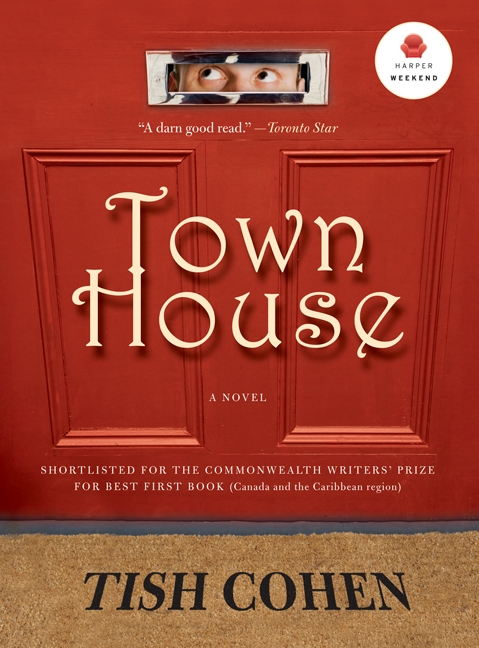
Town House by Tish Cohen

You can’t help but think that Tish Cohen is going for Hollywood with her novel Town House. There’s the wacky ensemble cast: Jack Madigan, son of deceased rock legend Baz Madigan; Jack’s son, the eccentric stuck-in-the-70’s teen, Harlan;  Jack’s ex-wife, Penelope, and her soon- to- be new husband, Yale; the strangely mature girl-next-door, Lucinda and Dorrie, the real estate agent so inept and adorable you just know she and Jack will end up together. (It will come as no surprise that Town House is, in fact, destined for the big screen.

As for the plot, well, Jack’s agoraphobic; he can’t leave the house without having a meltdown – so he doesn’t leave.  He rigs up a ‘groper’ to retrieve the paper and the mail; Harlan looks after the groceries and Jack lives quite happily in the huge (albeit, slightly decrepit) Boston town house his father left for him. The hilarity starts when the money stops and the bank decides that the house must be sold.

Town House isn’t all that funny, though. Sure, it ticks along, but the characters didn’t really interest me. And some of the plot twists just seemed contrived and unrealistic. I absolutely hated the ending. Cue music, already.

Sometimes the plot seems to be pointing in one direction – for example Jack is apparently a master paint mixer. He has discovered (and understands) the perfect white. A subplot involving that goes nowhere.  Also, I thought his love-interest was spineless. And, despite his illness, of which, I admit, I know nothing, Jack isn’t all that likable. How is he, after all, able to bust free of his illness when Lucinda needs him, but can’t do the same for his own son?

So – I didn’t love this book. It was moderately entertaining, and might make an amusing film, but it wasn’t my cup of tea.