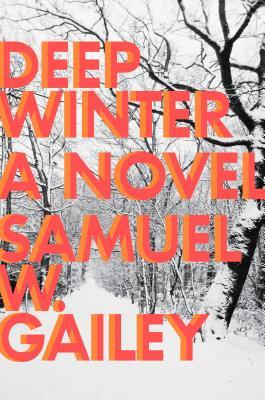
 My son actually purchased this Samuel W. Gailey’s novel Deep Winter because he liked the cover. In my experience, this isn’t generally a great way to choose a book, but when he was doing a purge this book ended up off his bookshelf and on mine because I thought it sounded good.
This is the story of Danny Bedford, a man who, when he was a kid, suffered brain-damage after a near drowning that cost him the lives of both his parents. Since then he has been raised by an abusive uncle and now lives a solitary life over the laundromat where he works. His only friend is a waitress named Mindy.
Danny lives in Wyalusing, a backwater town in Eastern Pennsylvania. When the novel opens, Danny has trekked the three miles out to Mindy’s trailer to deliver a carved bird he’s made for her birthday. He comes across a scene of horror: Mindy is dead.
Her body sprawled out on the trailer floor next to Danny like a discarded rag doll. He knelt beside her with his hands folded and clenched together in his lap, like he was praying at her bedside. Blood soaked into the faded carpet from an open wound on the back of her head, and a few pieces of jagged glass were still stuck in her scalp.
Because Danny intellectually impaired, it’s easy to pin Mindy’s death on him, and that’s exactly what happens. What follows is the story of that death, and the malevolent tendrils that reach out into the community because of it. The story is told from multiple points of view, which probably helps things move along.
Gailey’s novel is populated by a relatively unpleasant cast of characters, most notably Sokowski, the Deputy, and his side-kick, Carl. In fact, the villains are so awful they’re almost caricatures. It takes place in the dead of winter, during a storm, and is almost relentlessly grim.
Gailey has written for film and TV and that’s how Deep Winter reads. There’s not a lot of literary bells and whistles, here. That’s not a criticism, really, although I didn’t love the book. It’s a straightforward, nuance-free crime thriller and I doubt you’d have any trouble turning the pages.

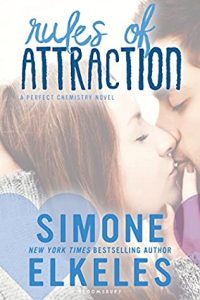 years ago. (Yikes!!!) Since then, I have recommended the book countless times to students looking for a romantic, fast-paced story. I have never had a single student tell me they didn’t like it. It’s a great book and even boys enjoy the story of Alex and Brittany. And if they like that book, well, Alex has two brothers and they each get their own novel. I hadn’t read either of the follow -ups, so I grabbed Rules of Attraction to bring home to read during this strange time of quarantine.
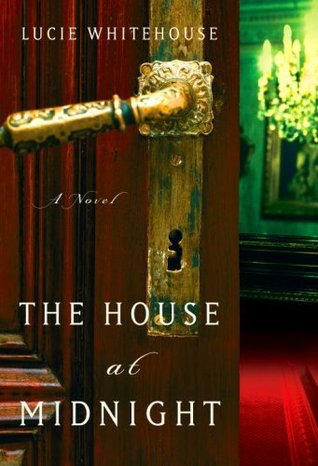 Lucie Whitehouse’s debut novel The House at Midnight tells the story of Joanna and her close-knit circle of friends who spend weekends at Stoneborough Manor in Oxfordshire. Her dearest friend, Lucas, has recently inherited Stoneborough from his Uncle Patrick, a well-known art dealer. On their first visit there, Joanna observes that the house is “Three storeys high, [and] it reared up out of the night as if it were facing the darkness down.” The house gives Joanna a “pang of anxiety.” She wonders “How could it not change things between us.”
 figure out whether I liked it — not the book, exactly, the whole family drama thing. Am I really interested in life’s ups and downs? Do I care about people’s children and marriages? Well, if every book was as good as this one, the answer would be yes.
 Nico is just thirteen when her seventeen-year-old sister Margaret drowns. Nico tells us “We lived on the shore of Mirror Lake, and for many years our lives were as calm and transparent as its waters.” Margaret is the poet in the family, the beautiful daughter about to graduate from high school and head off to study music. She was named for Gerard Manley Hopkins’ poem “Spring and Fall: To a Young Child.”
 It’s 1958 and 22-year-old British student Adam Strickland has been given the opportunity to study a Renaissance garden at the Villa Docci in Tuscany. Of course, he jumps at the chance. Signora Docci will soon be leaving her home in the care of her son, Maurizio, but until she goes she knows the garden has some secrets to give up.
 was too late to abandon it even though I didn’t like any of the characters. I just don’t get why this book garnered so much praise. Geesh, Parade
  come to terms with the unexpected death of her twin sister, Anna. Although the sisters were identical, they were also complete opposites. Anna was outgoing and popular; Jess is solitary and, some might say, a bit strange.
 And then there’s The Roanoke Girlsby Amy Engel. Can’t remember when I bought it or how long it’s been languishing on my tbr shelf, but I started reading it and finished reading it in just a few hours because it has ALL THE THINGS I love in a book. (Lots of other reviewers loved all the things, too, because this book received lots of well-
 The Ludic Reader