Topping From Below – Laura Reese

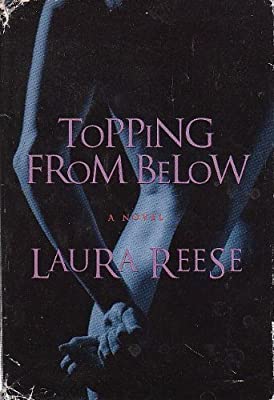
In the world of BDSM, topping from below means that the submissive partner is actually toppingtrying to control the scene, aka control the top (dominant person). That’s exactly what Nora Tibbs is attempting when she pursues a relationship with Michael (referred to as M.) the music professor she’s convinced murdered her younger sister, Franny,  in Laura Reese’s novel Topping From Below.
It’s reasonable that a reader’s first question might be why in the hell she would get involved with the dude she thinks tortured and killed her sister. Is it because “He is swarthy, good-looking, if you like that type, slimly muscled and dark-complected, with an angular face that could have been sculpted….”  Or is it because Nora feels like she can control any situation?

Whatever the case, the cunning M. knows who Nora is from their meet cute and, says the spider to the fly, come on over and I’ll make you dinner and tell you stories about how I degraded your sister, but whom I most certainly did not kill, and in exchange, you’ll let me tie you up, and abuse your body in numerous other ways and trust me, you’ll like it.

The thing is, Nora does  like it.  She likes it even when M. hurts her, which I suppose is one of the tenets of BDSM: pain and pleasure combined under controlled circumstances. She tries to make sense of it but “My feelings are paradoxical: I hate him, fear him, yet at the same time his dominion over me, however brief, is intoxicating.”

She likes it so much that she no longer feels anything remotely like sexual desire towards her bland, blond, dependable boyfriend, Ian. M. sucks her further and further into his world and reveals to Nora, bit by by, her sister Franny. He also encourages Nora to reveal parts of her own life that she’s kept buried for many years, to try to get to the underlying reasons for why she seems to lack the ability to get truly close to anyone. Despite the fact that there’s a ten-year age gap between Franny and Nora, they are similar on that front.

Obviously, readers will have to suspend disbelief to reconcile how a seemingly intelligent woman (she’s a bloody science journalist, for goodness sake) would allow herself to pursue the guy she thinks killed her sister. It’s not the kinky sex that’s at issue here, really, because you’ll find no judgement from me on that front.  There are some instances of “Really? Um, a world of no,” but Reese writes it all like she means it and I have to admire that. Lots of people would find the sex in this book unpalatable.  Let me put it this way; Topping from Below is NOT your garden-variety Fifty Shades of Grey

 

Olive Kitteridge – Elizabeth Strout

shoppingbuzz1I don’t know how much readers actually care about the awards books win, but Elizabeth Strout’s novel Olive Kitteridge won the Pulitzer in 2009 and the book has been languishing on my tbr shelf since about then. It was June’s #bookspin choice on Litsy and I just managed to get it finished. Well, I shouldn’t say “managed” — that sounds like it was a book I had to force myself to read and it most certainly was not.

Truthfully, though, I wasn’t quite sure what to make of the titular character or the novel’s structure when I first started reading. The novel is written as a collection of short stories in which Olive Kitteridge often figures only peripherally. In the first story “Pharmacy” we meet her husband, Henry, a kind and patient man who owns the pharmacy of the title. He seems quite capable of managing Olive’s prickly personality.  When he suggests they invite his new employee Denise to dinner Olive responds that she is “Not keen on it.”

Olive’s relationship with her son, Christopher, is also strained.  She loves him, but she is not, it seems, a mother given to the warm fuzzies. When adult Christopher, a podiatrist, marries Suzanne, Olive fights “the sensation of moving underwater – a panicky, dismal feeling…”. When she overhears Suzanne making unkind remarks about her, she exacts a small revenge.

…there is no reason, if Dr. Sue is going to live near Olive, that Olive can’t occasionally take a little of this, a little of that — just to keep the self-doubt alive. Give her a little burst. Because Christopher doesn’t need to be living with a woman who thinks she knows everything.

Olive comes across as rigid and unsympathetic. As a former school teacher she was feared. One of her former students, whom we meet in the story “Incoming Tide”  says that “He’d been scared of her, even while liking her.” It turns out, though, that our initial assessment of Mrs. Kitteridge couldn’t be further from the truth. The humanity bursts out of her in ways that are, quite frankly, breathtaking.

In “Starving” a chance encounter with a young girl suffering from anorexia shows us one of the first cracks in Olive’s steely exterior.

Olive Kitteridge was crying. If there was anyone in town Harmon believed he would never see cry, Olive was that person. But there she sat, large and big-wristed, her mouth quivering, tears coming from her eyes. She shook her head slightly, as though the girl needn’t apologize.

[…]

Olive shook her head again, blew her nose. She looked at Nina, and said quietly, “I don’t know who you are, but young lady, you’re breaking my heart.”

This is just one instance of Olive demonstrating a tremendous amount of compassion and empathy. There are many more in this novel, and the cumulative effect of all these elliptical moments in a life is stunning. Each story is perfection and each character is fully realized. There are moments of tragedy and hope, of humour and despair; that is, there all the moments that make up a life.

Although I am sorry that I waited so long to read this novel, I am also thrilled that I got to discover it for the first time. I loved it and highly recommend it.

I Will Judge You By Your Bookshelf – Grant Snider

I Will Judge You By Your Bookshelf by Grant Snider was a recent impulse buy because judgeit was too cute to pass up. And, let’s face it, I probably do judge people by their bookshelves – well, I am more likely to judge people who don’t have any.
This book is a collection of comics about books and bookshelves, but also about writing and reading in general. There were several comics that I thought “Hey, I could use this in my writing class.” It’s all very accessible and whimsical and would make a lovely gift for a book-lover.

Snider is a life-long drawer who also happens to be an orthodontist. He can be found at Incidental Comics.

judge1

A Friend of the Family – Lauren Grodstein

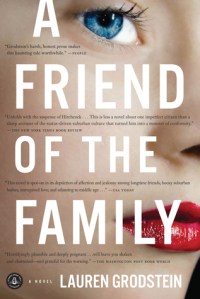
friendfamilyThe Washington Post named Lauren Grodstein’s novel A Friend of the Familyone of the best books of 2009. In fact, just about every major media outlet lauded this tale of  Dr. Pete Dizinoff who lives in suburban New Jersey with his wife, Elaine and their son, Alec.

Dr. Pete tells his story– and I have to admit that it wasn’t at all the story I thought he was going to tell– from some point in the future.  If people ask him how he’s doing these days his reply is “Listen, life goes on. And I’m not just feeding them formula, pap. Life really does go on. That’s what I’ve learned. It goes. You’d be surprised.”

Dr. Pete’s life is pretty perfect, although he is certainly not immune to life’s trials and tribulations. He loves his wife. He adores and is frustrated by his son in equal measure, especially since Alec recently dropped out of college “after three semesters and almost sixty thousand dollars of tuition, books, board, and other proofs of parental esteem.” Now Alec is living at home and creating art in the studio his parents have built above the garage. Well, that’s not exactly true, since the studio above the garage is where Dr. Pete is currently sleeping. The reasons for this are alluded to but never really revealed until much later in the book.

Pete and Elaine’s best friends Joe (also a doctor) and Iris live in the same neighbourhood, and the two families spend lots of time together. In the past, their close bond is tested when Joe and Iris’s daughter, Laura, commits a horrible crime, and when Laura reappears many years later the residual feelings of horror colour  Pete’s feelings towards her.

I hadn’t seen her since the week they took her to Gateway House thirteen years ago, and Christ, the girl had changed in a million beautiful ways. Back then she had been hollow-eyed, eviscerated by the trial and the confinement and everything that had preceded it. A criminal, a teenager, depressed and hidden in oversized shirts. But now-

For Pete, Laura’s arrival back in their lives reminds him of the latent feelings he has for her mother and also draws his son further away from him. A Friend of the Family  is a domestic drama at its finest: well-written, fraught with tension and, ultimately, devastating.


Child 44 – Tom Rob Smith

Child 44, Tom Rob Smith’s 2008 debut, likely would have languished on my tbr shelf indefinitely if it hadn’t been for Litsy  Every month, a Litsy member, Sarah,  hosts a book spin. We choose 20 books from our TBR shelf and she chooses two random numbers, a #bookspin and a #doublespin. It’s our opportunity to clear some books from our shelves. Even if you end up abandoning the books (which I did the first couple months), at least they’re off your shelves.

child44Leo Demidov is a member of MGB, Russia’s State Security Force under Stalin. It’s 1959 and everyone is suspicious of everyone else. Leo has arrived at his position by way of a decorated stint in the army. He’s good at his job. He
enjoyed the independence of his operations, although he was careful to keep that observation to himself. […] He’d flourished. As a result he’d been awarded the Order of Suvorov Second Class. His levelheadedness, military success, good looks and above all his absolute and sincere belief in his country had resulted in him becoming a poster boy …

Things get dicey for Leo, though, when he is asked to check in with a colleague who insists that his four-year-old son has been murdered. The authorities have called the death an accident, though, and Leo is tasked with convincing the family that no further investigation is needed. This event is the beginning of the cracks in Leo’s life and his belief in a state where Stalin’s “well-known aphorism Trust but Check” actually means “Check on Those We Trust.” It is almost impossible to determine who is trustworthy because everyone seems to have something to hide.

When an operation Leo is in charge of goes awry, he’s demoted and sent to work in a backwater town. That’s when the bodies start piling up, bodies of kids. Leo convinces his new boss that there’s a serial killer on the loose and the two men start investigating – no easy task when the authorities aren’t really willing to share information, even with each other.

Child 44 is a thriller and there were certainly some exciting moments. Leo is a great character, and I was invested in his growth from rule-follower to renegade truth-seeker. I think this books, which is the first in a series, would likely appeal to many readers, but I felt sort of ambivalent about it. Perhaps it was all the Russian names, or the fact that we got just about every character’s backstory and so the plot dragged a little.

Still, I had no trouble reading it. It’s a solid book.

College Girl – Patricia Weitz

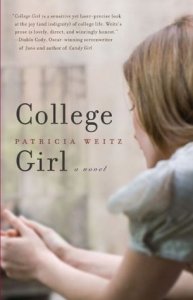
There’s a scene in Patricia Weitz’s debut novel College Girl, when the protagonist, 20-year-old college senior Natalie Bloom cuts off all her hair. I don’t know if the scene was inspired by J.J. Abram’s character, Felicity, but it was the first thing I thought of when I read it.

Natalie makes the decision to cut off her hair after she loses her virginity.

…I wanted my reflection to be as ugly as I felt, but it wasn’t and it angered me. I was vile. Base. Life was traveling in a direction I had never wanted it to go in. I hd to stop it. I had to regain control. It scared me where this slippery slope might lead.

I am probably not the demographic for Weitz’s novel or Abraham’s show (which I love collegeand have watched straight through on more than one occasion.) Still, Natalie Bloom’s story resonated on so many levels for me. It shot me straight back to my university days; not the rose-coloured view I have now, but the awkward, muddled, feeling-my-way experiences I actually lived.

Natalie is the youngest of six; she has five older brothers, one of whom killed himself when she was just ten. On top of navigating her final year of college, it seems like the residual grief over her brother’s suicide is just now catching up to her. She has questions, but the answers are not forthcoming. Her older brothers mostly make fun of her; her father is a taciturn man; her mother, kind but flustered by talk of feelings.

Her family life definitely contributes to Natalie’s personality. She has difficulty articulating what she wants and people tend to walk over her. At school, she rooms with Faith, a “twenty-five-year-old college senior who looked like an eighties chick straight out of a Poison video.” The only person she is nominally friendly with is Linda who “liked everyone […] because she took it for granted that people were generally nice.”

Then Natalie meets Patrick Dunne. He figures larger-than-life in Natalie’s fantasies, but the reality of him is far less appetizing. This tentative first-relationship pushes Natalie firmly away from the shores of adolescence. It was frustrating to watch Patrick capitalize on her insecurities from this vantage point, but it also reminded me so much of my own experiences in my early 20s. I wanted to be liked, but I didn’t always know whose attention was sincere. I never trusted my own instincts.

I would certainly recommend this book to any young woman in her early 20s, but I also enjoyed this book. If nothing else, it made me happy that that part of my life is but a distant memory.


Where All Light Tends to Go – David Joy

alllightI was invested in Jacob McNeely, the narrator of David Joy’s novel Where All Light Tends to Go,  by the end of the first chapter. The eighteen-year-old high school drop out has climbed to the top of the water tower to smoke a joint and watch what should have been his graduating class leave the school. From his perch, he can see Maggie, the girl he has loved for as long as he can remember.
…Maggie was different. Even early on I remember being amazed by her. She’d always been something slippery that I never could seem to grasp, something buried deep in her that never let anything outside of herself decide what she would become. I’d always loved that about her. I’d always loved her.

Jacob knows that once Maggie breaks free of their backwater Appalachia town, she’ll make something magnificent of her life. He also knows that his fate is set. His mother is  addicted to crack; his father makes his living selling it. All Jacob has ever known is a life of violence and hardship.

The senior McNeely is a scary dude. He’s got eyes everywhere in town, including with the police. He’d kicked Jacob’s mother out years before, but kept her in a shack on his property, a house that “was truly unfit for any sort of long-term living.” Jacob visits her sometimes, mostly when he “just needed a place to kill a few hours and a safe spot to dodge the law while [he] got stoned.”

When Jacob’s father instructs him to murder an informant, and Jacob botches the job, it sets in motion a violent chain of events. His father thinks he’s soft and it is perhaps only the fact that Jacob is his son that he doesn’t kill him.

The only light in the darkness is Maggie, and Jacob wonders if perhaps there might not be a way to escape the only life he’s ever known. Maggie is going to leave and maybe he can go with her.

I could not put this book down. It is a chilling and violent and yet there is something tender about Jacob. It is this tenderness that causes him to push Maggie away, but it is that same softness that allows him to see a glimmer of the life he might have if only he were able to crawl out from under the rock of his father. I literally read the last 50 pages with my heart in my throat.

None of Jacob’s experience is my experience. I don’t know anyone who lives the way he lives, and yet that universal yearning for something better is something anyone can relate to. I can’t remember the last time I wanted to reach through the pages and just yank a character to safety. Jacob joins a list of other characters I will never forget including My Absolute Darling‘s Turtle and Our Daily Bread‘s Albert Erskine.

Highly recommended.

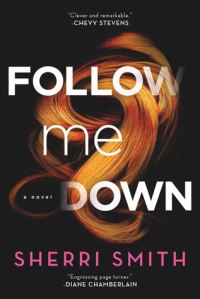
Follow Me Down – Sherri Smith

When Mia’s twin brother Lucas goes missing after being linked to the death of one of his followstudents, Mia has no choice but to return to her small North Dakota hometown. Sherri Smith’s debut novel Follow Me Down plumbs the depths of sibling ties, and uncovers the slimy underbelly of a town that seems to be filled with dark secrets and duplicitous characters.

Mia isn’t exactly living her best life in Chicago when the Wayoata Police Chief calls her asking if she’s heard from her brother. (She hasn’t.) She works the night shift at a corner pharmacy, lives alone and is generally a prickly character. Lucas was always the golden child.

Lucas was already showing signs of how annoyingly good-looking he was going to be.[…] Blond, startling blue eyes, and movie star bone structure. […] As an adult, I’d actually witnessed women going slack-jawed over him, like, unable to speak for a few seconds as they took him in.

Mia is convinced that her brother is innocent of any wrongdoing; he just doesn’t have it in him to hurt anyone. He is a beloved English teacher and hockey coach at the local high school. The local police, including her childhood friend Garrett Burke, seem to have their sights set on Lucas, though, and Mia is sure that she has to a) find her brother and b) prove his innocence.

To say Follow Me Down is jam packed is an understatement. Mia ignores Garrett and turns over every rock possible trying to figure out what might have happened, not only to her brother but to the teenager he is accused of killing. The rumour mill is working overtime, and people in the community seem to think that Lucas and Joanna Wilkes were having an affair. Mia’s amateur investigation seems to stir up a hornet’s nest. A black truck keeps following her and trying to run her off the road; someone seems to be sneaking into her brother’s apartment and taking things; there are more shady characters than you can shake a stick at.

The whole time Mia is sleuthing, she’s self-medicating from her own personal stash of prescription meds. On more than one occasion, I wondered whether she was a reliable narrator. I can’t say that I warmed to her, really.

Still, by about the half-way mark there was no turning away from this story. I needed to know what happened to Lucas, and even if Mia didn’t exactly endear herself to me, I was still invested in her quest for answers.

A solid read.

Deep Winter – Samuel W. Gailey

deepwinter-3My son actually purchased this Samuel W. Gailey’s novel Deep Winter because he liked the cover. In my experience, this isn’t generally a great way to choose a book, but when he was doing a purge this book ended up off his bookshelf and on mine because I thought it sounded good.

This is the story of Danny Bedford, a man who, when he was a kid,  suffered brain-damage after a near drowning that cost him the lives of both his parents. Since then he has been raised by an abusive uncle and now lives a solitary life over the laundromat where he works. His only friend is a waitress named Mindy.

Danny lives in Wyalusing, a backwater town in Eastern Pennsylvania. When the novel opens, Danny has trekked the three miles out to Mindy’s trailer to deliver a carved bird he’s made for her birthday. He comes across a scene of horror: Mindy is dead. 

Her body sprawled out on the trailer floor next to Danny like a discarded rag doll. He knelt beside her with his hands folded and clenched together in his lap, like he was praying at her bedside. Blood soaked into the faded carpet from an open wound on the back of her head, and a few pieces of jagged glass were still stuck in her scalp.

Because Danny intellectually impaired, it’s easy to pin Mindy’s death on him, and that’s exactly what happens. What follows is the story of that death, and the malevolent tendrils that reach out into the community because of it.  The story is told from multiple points of view, which probably helps things move along. 

Gailey’s novel is populated by a relatively unpleasant cast of characters, most notably Sokowski, the Deputy, and his side-kick, Carl. In fact, the villains are so awful they’re almost caricatures. It takes place in the dead of winter, during a storm, and is almost relentlessly grim. 

Gailey has written for film and TV and that’s how Deep Winter reads. There’s not a lot of literary bells and whistles, here. That’s not a criticism, really, although I didn’t love the book. It’s a straightforward, nuance-free crime thriller and I doubt you’d have any trouble turning the pages. 

Another Brooklyn – Jacqueline Woodson

When August returns to Brooklyn after the death of her father, she is catapulted back in time to her childhood and it is these memories which fuel Jacqueline Woodson’s novel Another Brooklyn.

Twenty years have passed since my childhood. This morning, we buried my father. My brother and I stood shoulder to shoulder at the grave-site, willows weeping down around us, nearly bare-branched against the snow.

Riding the subway, she spots an old friend, Sylvia, and it reminds her of when they (along with Gigi and Angela) “were four girls together, amazingly beautiful and terrifyingly alone.”

Woodson’s novel is an elliptical, poetic examination of what it is to be a young, black woman growing up in the 70s. I also came of age in the 70s, and I suppose in that regard I have something in common with August. Not only does August find herself in an unfamiliar world, one that she watches from a window for the first few months she lives there, but she is also grappling with a missing mother, the shifting landscape of friendships, poverty, and her own growing awareness of the power of her body.

But as she says “This is memory.”

Another Brooklyn isn’t really a novel with a plot. That doesn’t mean that nothing happens. It’s just that the story unfurls like a long, dreamy reminiscence. August remembers her childhood in Tennessee; she remembers the trio of girls she befriends before they were hers.

They called to each other across the yard. They linked arms and laughed. They curled into each other to whisper when the teacher’s back was turned. Before I knew their names, I knew the tiny bones at the back of their necks, the tender curve of their hairlines.

She remembers the “kind of poverty we lived in.” She remembers the music they listened to, the summer the lights went out in New York and Jerome, the boy who, when she was nine “Looked up at my window and winked at me from where he and his friends were playing in the streets.”

This is a beautiful coming-of-age novel, that is very specific but feels universal.