 The characters in Joanne Proulx’s second novel We All Love the Beautiful Girls are so perfectly imperfect that you can’t help but fall in love with them.
At the centre of this finely crafted family drama is the Slate family, Mia and Michael, and their seventeen-year-old son, Finn. Then there’s Jess, Finn’s former babysitter who now sneaks into his bedroom at night to…you know. Frankie is the daughter of Michael’s business partner, Peter. Peter’s wife, Helen, is Mia’s best friend. Frankie and Finn have grown up together.
Mia and Michael’s perfect life starts to unravel when they get a visit from Stanley, the company accountant (I’m not sure that’s his actual his title, but it doesn’t really matter; he’s only the messenger). He’s discovered that Peter has restructured the company and written Michael out. Michael has, it turns out, been pretty lax about the financials of the company because he and Peter have “known each other since high school.”
On the same night that Michael finds himself screwed out of his own company, Finn finds out that Jess won’t be leaving her boyfriend, Eric, for him. She can’t even though Finn is “So gorgeous and so nice.” Finn is just a kid. (She’s 23.) Eric’s a total douche and happens to be the older brother of Finn’s best friend, Eli. Finn’s at a party at their house, drunk, and after an encounter with Jess he makes a couple of bad choices. First, he hooks up with Frankie. Second, he passes out in the backyard. It’s January. In Canada.
These two incidents are game-changers for the Slate family and their repercussions propel Proulx’s story along like a thriller. I literally could not put this book down. I finished it well past my bed-time. On a school night.
The novel flips between characters. We watch Finn’s heart break. We watch Mia and Michael’s marriage topple. We watch friends become enemies. Proulx toggles between these perspectives masterfully, the blame and the shame carefully shared. And if there is redemption or peace to be had, it’s hard won.
No one makes it through life unscathed, but perhaps the key to surviving is understanding. As Finn tells his mother: “I’m not the same as I was….I’m different now….But it’s good, you know? I’m good. Like I understand things I didn’t understand before.”
The boy becomes a man. The parents – well, I guess they do what all parents do. The best they can.
I LOVED this book.
 Eleanor Oliphant, the titular character of Gail Honeyman’s debut novel Eleanor Oliphant is Completely Fine, is not like anyone else you have likely met before. She has worked in the same office for the last nine years, she has no friends and she lives on a diet of vodka and pizza or pasta and pesto. Her life is structured and predictable, right down to her weekly calls from “Mummy.”
 I don’t think I have ever read a book quite like Frances Hardinge’s YA novel Cuckoo Song. I am not much of a fantasy fan, you know – word building and that sort of thing, but I was totally enchanted by Hardinge’s story, which is as much about grief and loss, as it is a creepy story about…well, I can’t really tell you.
 Greene is dead.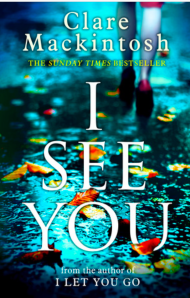
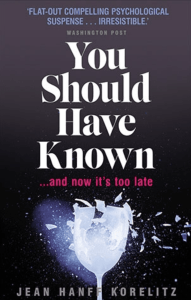 Grace Sachs, the protagonist in Jean Hanff Korelitz’s compelling domestic thriller You Should Have Known, is an outspoken marriage counsellor who believes that women know from the very beginning if their partners are duds.
 When I was a kid, I had pen pals. Lots of them. I think I started writing letters when I was about seven. We moved away from Winnipeg where we had been living for a couple years. I had to leave my best friend, Lynne, behind and we kept exchanging letters for many years – up until recently when my Christmas card to her was returned ‘address unknown.’
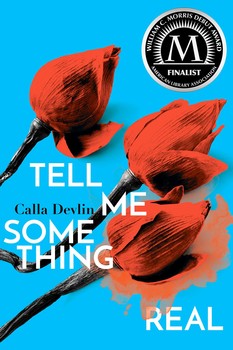 her younger sister, Marie, in San Diego. Their mother, Iris, has leukemia, and Vanessa and her sisters often accompany her to a clinic in Mexico where she is treated with the controversial drug, Laetrile.
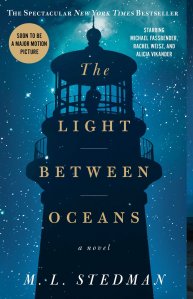 I feel heartless for saying it – but I didn’t particularly like M.L. Stedman’s first novel The Light Between Oceans. I’ve had the book for a while, but it was last month’s book club pick, so I finally had occasion to read it. [insert long-suffering sigh]
