Dark Saturday is the sixth book in Nicci French’s mystery series featuring London- 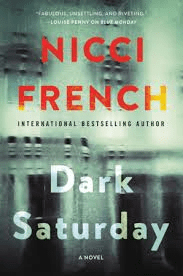 based psychotherapist Frieda Klein. Although I was at a (slight) disadvantage having not read any of the previous novels in this series, I have read (and enjoyed) several other novels by French (actually the husband/wife writing team of Sean French and Nicci Gerrard) so I knew what I was in for.
There will always be a slight disconnect when reading a single book from a series, but I didn’t find it particularly problematic. It was clear that I was missing some back story, but there were enough salient details to aid my understanding and allow me to get on with the business at hand – which is the case of Hannah Docherty.
Hannah was just eighteen when she was arrested for brutally murdering her mother, stepfather and thirteen-year-old brother, Rory. Since then she’s been incarcerated at Chelsworth Hospital which was “not a prison [but an institution where] its inmates were patients and the doctors’ job was to treat them and make them better.” However, when Frieda goes to visit Hannah for the first time “it felt like all the other high-security prisons she’d been to over the course of her career.”
Hannah has been incarcerated for 13 years and it’s immediately clear to Frieda that there has been no attempt to help her during that time. And why is Frieda visiting Hannah? She’s been asked by the police (who have clearly had five books’ worth of dealings with her) to look into Hannah’s case to see if, perhaps, there’s the possibility that she is innocent. The lead investigator on the case has recently had another conviction overturned and the police department simply want to cross their T’s and dot their I’s. They aren’t really expecting Frieda to find anything because Hannah is clearly crazy and the evidence against her is compelling.
I suspect that readers who have been reading along with Frieda over the series will already know what I quickly discovered: Frieda is tenacious. She isn’t satisfied with one meeting with Hannah. She asks for the case files and pores through documents and photographs in an effort to better understand Hannah’s story. If Hannah didn’t kill her family, who did and why?
That’s pretty much the main story in Dark Saturday. As a straight-up mystery, there’s plenty to keep readers turning the pages. For someone who isn’t familiar with all the back-story, I found some of it to be a distraction. Was I really interested in sitting in on her therapy sessions with a middle-aged woman who is suffering from panic attacks? Um. No. Did I especially care about a colleague’s cancer diagnosis? Not really because I haven’t had the chance to really know him or understand his relationship with Frieda.
I don’t know how this novel stacks up to the others in the series. Frieda isn’t the most compelling sleuth I’ve ever encountered, but I will chalk that up to having missed out getting to know her in previous novels. She’s smart and careful…although I often wondered how safe it was for her to be walking around London alone in the middle of the night. Still, I enjoyed watching her attempt to create a new narrative for Hannah. Whether the re-written story is ultimately satisfying will likely depend on how it compares to Frieda’s previous cases. I wasn’t wholly satisfied, but I suspect that fans of this series will be anxiously awaiting the next book.
Visit Harper Collins for more info about this and other excellent titles.
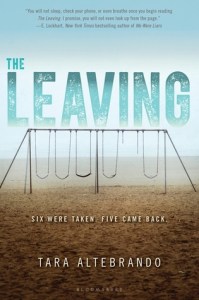 Tara Altebrando’s YA novel, The Leaving, will give readers lots to chew on. It’s the story of six kindergarten-aged kids who disappear from their small Florida town only to turn up – minus one – eleven years later. The kids are dropped off at a playground with maps tucked into their pockets to help them find their way home. They have no memory of where they were and their arrival back home sends ripples through their lives, the lives of their families and the community.
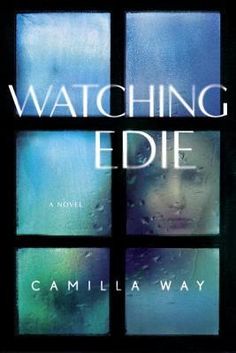 be amenable to reading more. Told by two characters Heather (who narrates ‘Before’) and Edie (who narrates ‘After’), Watching Edie is about the adolescent friendship between the two girls, their subsequent estrangement and what happens when Heather re-enters Edie’s life many years later.
 deftly that you hardly notice the machinations. Her novel Commonwealth, the story of the intersecting lives of two families, might have crashed and burned in less talented hands, but Patchett moves these people backwards and forwards in time without seeming to break a sweat.
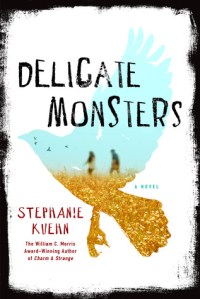 Monsters are hard to spend time with. From the moment we meet Sadie, and Emerson and his brother, Miles, we embark on a journey that is both awful and strangely – redemptive. In any case, these train-wreck teens are hard to look away from.
 Beth is sort of a hippie. She and her ex-husband, Paul, had “run a business together buying and selling ginseng and specialty teas.” Paul, after leaving the marriage, has been a relatively absent father and his relationship with Beth is strained mostly because he has a new, much-younger girlfriend.
 Their lives intersect when Louise meets David at a bar and they share a ‘moment’ and then she discovers he’s her new boss and then she bumps into Adele (literally) in the street. Louise is charmed by Adele who seems wholly glamorous and somehow innocent. Adele takes Louise on as a project, encouraging her to quit smoking and join the gym. Soon the women are sharing a close friendship which is complicated by the fact that Louise is in love with David and pretty soon the two have moved from the ‘moment’ to a full-on relationship.
 Olivia is beautiful and outgoing, but she’s one of those girls who doesn’t really know it – or, if she knows it, she doesn’t flaunt it. She’s a good girl. She’s obedient. All she wants- all she can ever remember wanting – is to be a writer. When she wins the first annual Emerging Writers High School Fiction Prize she admits “I’ve always loved writing but I didn’t really think it would amount to anything.” The prize is substantial: a ten thousand dollar scholarship towards the college of Olivia’s choice, publication of her story and a spot in Father Mark Brendan’s prestigious summer fiction seminar.
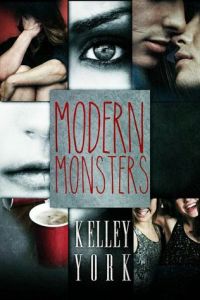 aftermath of a sexual assault. This is my second novel by York and while there is certainly nothing wrong with it, I preferred
  I have been in a bit of a reading slump this year – which seems like a ridiculous thing to say considering we are only two months in. The first couple of books I read at the start of 2017 were lackluster at best, and I just haven’t been able to find my reading groove. Peter Swanson’s The Kind Worth Killing may have actually changed all that.
