I’m Thinking of Ending Things – Iain Reid

Um. WTF? So, I saw I’m Thinking of Ending Things at the book store. Sounded good. Bought it. Read it straight through. Listened to author Iain Red talk about it on CBC Radio. You were no help at all, by the way, Iain, so I am going to work on the premise that I know what happened. Kinda. Sorta.
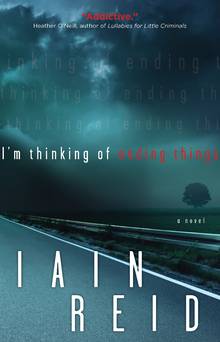
Im+Thinking+of+Ending+ThingsThe unnamed narrator and her boyfriend, Jake, are on their way to visit Jake’s parents for the very first time. Their relationship is new, but already the narrator is “thinking of ending things.”  It’s not that she doesn’t like Jake. They met at a party and she tells us “He wasn’t the first guy I noticed that night. But he was the most interesting.”

On the long, snowy drive to Jake’s family home Reid’s characters exchange awkward conversation about, among other things,  secrets, space, and memory. She remarks, “Part of everything will always be forgettable. No matter how good or remarkable it is. It literally has to be. To be.”

The journey also gives her an opportunity to catalogue her relationship with Jake. She mentions the way he chews, the toothpaste lingering on the corner of his mouth, his “jagged cheekbones.”  The narrator comments that “Individually, we’re both unspectacular.” But that isn’t exactly true.

When the narrator and Jake finally arrive at the family farm, it’s isolated and creepy. A tour of the outbuildings reveals dead lambs “Limp and lifeless, stacked  up outside against the side of the barn.” They visit empty pigpens and the chicken coop before the narrator catches a glimpse of a “gaunt figure, standing, looking down at us.” Don’t go in that house is probably what you’re thinking. You wouldn’t be wrong because from this point on I’m Thinking of Ending Things takes a turn off awkward street onto sinister avenue.

Jake’s parents are strange. His dad is “reserved, borderline standoffish.” Jake’s mom smiles a lot and is wearing “so much makeup I find it unsettling.” Dinner conversation is bizarre. Jake contributes nothing; “I have never seen Jake so singularly focused on his plate of food.”

A surreptitious tour of the house reveals a basement that Jake had claimed was not used, but which the narrator reveals is “not true at all.”  She discovers a disturbing painting and a bookshelf filled with pages and pages of equally disturbing drawings.

And all this would be enough to make your skin crawl, but Reid’s novel is not nearly as straightforward as this. For instance, the narrator has been receiving strange phone calls from someone she refers to as “The Caller.”  When she doesn’t answer, he leaves her strange, cryptic messages: “I feel a little crazy. I’m not lucid” says the first. The narrator also refers to a childhood memory of being watched through her bedroom window. Trying to figure out how these elements play into Reid’s narrative is half the fun of this puzzle of a book. Or half the frustration, depending on how you look at it.

By the novel’s conclusion, I thought I’d figured out what was going on. I actually thought I’d figured it out by page 88. If I’m right, I’m Thinking of Ending Things is a trippy, creepy thriller that pushes lots of suspense-thriller boundaries. It also has something to say about  identity and memory. Even if I’m not right – and we’ll never know because, hello – spoilers – it’s still a great book.

Highly recommended.
 

Still Mine – Amy Stuart

I haven’t read a book quite as weird as Amy Stuart’s Still Mine  in a long time and I still can’t decide whether it was good weird or just weird. It reminded me a little of Go With Me – a quirky, but affecting novel by Castle Freeman Jr.

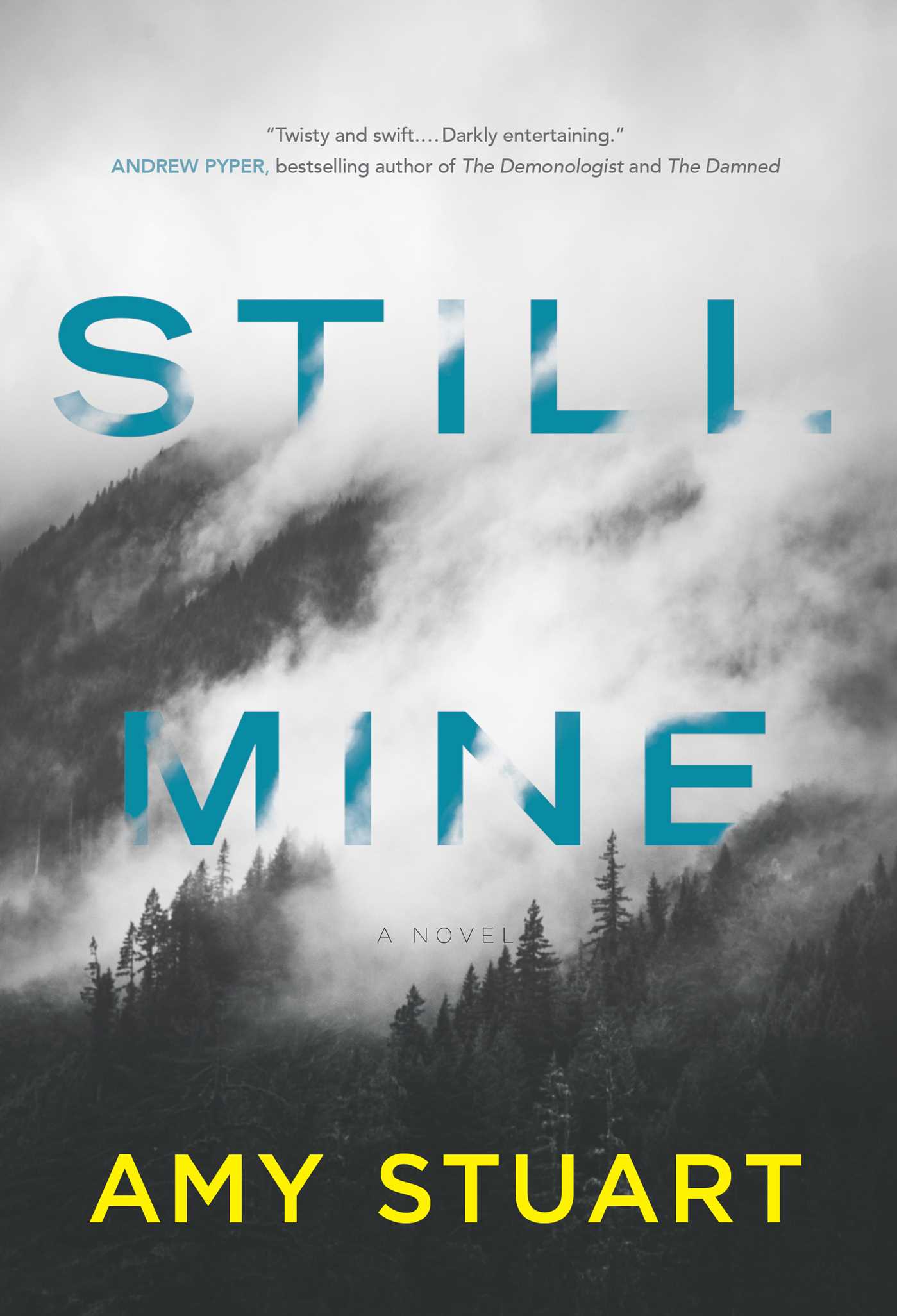
still-mine-9781476790428_hrClare O’Dey has run away from her abusive husband, Jason. In an unusual twist, the man Jason sends to find her, Malcolm Boon,  hires Clare to go to Blackmore, a remote mining town in the mountains, to look for another missing woman, Shayna Fowles.  For reasons that won’t be immediately clear, Clare invests wholeheartedly in the search for Shayna, a woman whose past is as tricky and messed up as Clare’s.

Blackmore is a shriveled up nothing of a town. “A blast at the Blackmore Coal Mine five years ago killed thirty-two men and trapped  eighteen others underground for three weeks,”  Malcolm’s notes tell Clare. She pretends to be a photographer in town to take pictures, but it’s a ruse no one buys. The only hotel in town is closed and so Clare rents a trailer on Charlie Merritt’s property. Charlie is the town drug dealer and his property (his father and brothers were killed in the mine) butts up against Shayna’s parents’ place.  Clare figures it will be a good place to snoop.

Blackmore is filled with broken people: Jared, Shayna’s ex-husband; Sara, her friend; Derek, the town’s only doctor and Shayna’s parents, Louise (who is suffering from early onset Alzheimer’s) and Wilfred, her father, the man responsible for saving the eighteen men who did make it out of the mine alive (but also the man Charlie holds responsible for the deaths of his father and siblings). None of them seem to know what happened to Shayna and with no police in town, no one is looking for her.

As Clare attempts to find out what has happened and which of the town’s odd assortment of outcasts might be responsible for Shayna’s disappearance, her own past is revealed; her own frailties are exposed. Like Shayna, Clare has a penchant for drugs and alcohol, making Charlie particularly dangerous to her. She also finds herself strangely attracted to Shayna’s ex-husband, Jared. She forges a bond with Louise, replacing the mother she recently lost to cancer. In many ways, Clare steps into the life Shayna has abandoned. Even so she realizes

These people in Blackmore, they are not Clare’s friends. Derek and Jared and Sara and Charlie. They are not even one another’s friends. They are only characters in Shayna’s story and Shayna is not here.

Still Mine is an unusual, albeit strange, psychological mystery. Apparently there is a sequel on the way, but I was quite content with how the book ended.

Definitely worth checking out.


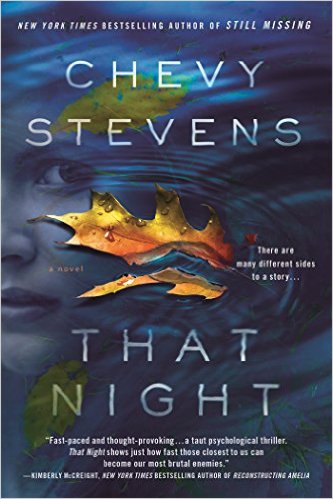
That Night – Chevy Stevens

I suppose that some fans of psychological suspense might call BC-based Chevy Stevens the Canadian Gillian that nightFlynn – except that, in my opinion, Flynn takes the prose prize and the plotting prize and, well, all the prizes, really. Sorry, Chevy.

This is the second novel I’ve read by Stevens. The first, Still Missing, won the International Thriller Writers Award for Best First Novel in 2011. I liked Still Missing, actually, though – if memory serves – I wasn’t keen on its ending. I didn’t like anything about That Night, although I wanted to. I didn’t abandon it to my Book Graveyard, though,  and I guess that’s saying something. Maybe it’s because Stevens is Canadian.

Toni Murphy and her boyfriend, Ryan Walker,  are in prison for the murder of Toni’s younger sister, Nicole. They maintain their innocence and while the evidence against them is circumstantial at best, they’ve both been locked away for fifteen years. (Not in the same institution, obviously.) The novel weaves between the events leading up to Nicole’s horrific murder, Toni’s incarceration and ultimate release (after serving her full sentence) and her attempts to reintegrate herself into society in her hometown of Campbell River, a town on Vancouver Island.

Toni is the problem child and Ryan is the son of a drunken criminal – so a bad boy by blood. Everyone seems to be waiting for them to get into trouble even though Toni seems more like a victim than a victimizer. She and Ryan are just waiting for high school to be over so they can get on with their lives together. Toni is especially anxious to get out of Dodge because of Shauna McKinney. “Most of the girls in our class either feared her or desperately wanted to be her friend, which I guess was kind of the same thing in the end,” Toni observes. Toni and Shauna used to be friends, but a misunderstanding over a boy changed all that and now Shauna does whatever it takes to make life living hell for Toni. Clearly, Toni is not as bad-ass as people think she is.

Nicole is the golden girl, the  mom’s favoured daughter because of her grades and sunny disposition. Until she starts hanging out with Shauna and her hench-women. Then she’s sneaking out of the house, coming home drunk and acting all weird.

Stevens’ first person narration allows us to see Toni’s journey through her final months in high school and then a sped up fifteen years in the big house where we watch Toni negotiate her way through a system that is bound to fail her. She makes friends; she makes enemies, and finally she is paroled. One of the conditions of her parole is that she has no contact with Ryan, who has also been released and who has also headed back to Campbell River. Despite the no contact rule which, if broken, has the potential to send them back to jail,  Toni and Ryan are determined to find out what really happened to Nicole.

Mostly I didn’t like That Night because I didn’t care about any of the characters. Toni’s parents were particularly irksome. Yes, it’s true that they’ve lost one daughter at, supposedly, the hands of another. But she swears she didn’t do it. How about a little faith, people?

When the true story of what happens is finally revealed, all the pieces click into place with precision, but ultimately this is less a mystery and more a story (sort of) of redemption. I found the writing a bit clunky – lots of exposition – and the characterizations superficial. For me, That Night wasn’t all that.


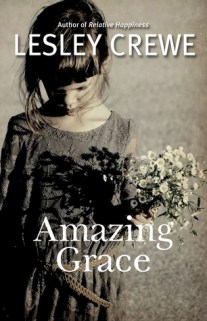
Amazing Grace – Lesley Crewe

Holy ol’ Jesus, Amazing Grace is awful. So awful that if it hadn’t been chosen for book club, I would have abandoned it right around the time that Amazing Grace Willingdon, 60, flies off to New York City from her trailer in Baddeck, Namazingova Scotia, to help her estranged millionaire son, Jonathan, rescue her teenage granddaughter, Melissa, from making bad decisions. You know, the kind that you make because you are sixteen.
We are to understand that Grace is a firecracker because she doesn’t suffer fools easily,  the church women give her indigestion and she yells “asshole” at drivers who speed past her. It’s not her fault that she’s curmudgeonly; Grace has had a hard life including a duel with cancer (which she won), a sham marriage and a childhood as a member of a religious cult where she and her sister (Ave Maria – not a joke) and their mother, Trixie,  were repeatedly raped by the cult leader. I wish I could say that these are the only difficulties that Grace endures, but amazingly (see what I did there) they are not.

That’s at least part of the problem with Amazing Grace. When I tried to explain the story to my son, Connor, I found that I could not adequately convey the number of ridiculous things that happened to this character or the number of times she was saved by her inheritance or her son’s private jet or just old-fashioned serendipity. But the bigger problem in Nova Scotian writer Lesley Crewe’s book is the writing itself.  It’s just…bad.

I point my finger in his face. “You are going straight to hell, Ed Wheeler. You have the devil inside you and we all know what happens to evil people. They burn forever. The very thought of it makes me giddy. You tried to destroy me, but you didn’t. You tried to possess me but you couldn’t. I am the powerful one now. The tables have turned, you creep. You have no one. You are a big nobody. You will never cross my mind again, because I win, you bastard. I win.

I live in New Brunswick – right next door to Nova Scotia – so this landscape and these people should at least be familiar to me. On top of that, I am just a few years shy of Grace’s age; she’s my contemporary. But she’s not even remotely believable to me. I have never once overslept and yelled “Holy macaroni.” I can’t imagine being a grandmother and chasing my granddaughter down the hall, grabbing her from behind and then hauling her “squirming and yelling” back to the kitchen to apologize for a snotty comment because words are “the most powerful force of all.” It’s all so melodramatic and over-the-top.

Ultimately, this is a book about family – our biological family and the family we choose. But the book is so overstuffed and the writing so pedestrian that I just couldn’t have cared any less for these people.


The Troop – Nick Cutter

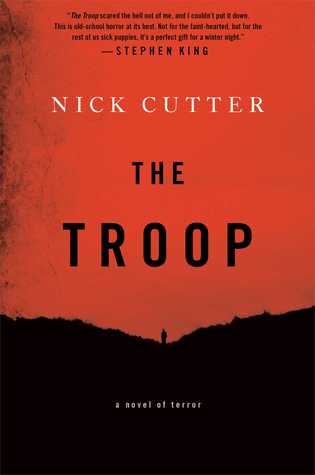
troopNick Cutter is a pseudonym for Canadian writer Craig Davidson, author of Rust and Bone and Cataract City. I haven’t read anything by Davidson, but The Troop ended up on my reading radar because it was on pretty much everyone’s  radar when it was released in 2014. Even Stephen King, master of all things macabre claimed The Troop “scared the hell out of [him]…This is old-school horror at its best.”

Scoutmaster Tim Riggs takes his troop of five fourteen-year-olds (Kent, Ephraim, Max, Shelley and Newt)  to Falstaff Island, which is located fifteen miles off the northern coast of Prince Edward Island. (Trust me, there is not even a whiff of Anne Shirley here.)  It’s October and it’s time for the annual camping trip – something that Tim (who is also the local doctor) and the boys (as varied an assortment of teenagers as you can get including the alpha male, the nerd and the psychopath) look forward to. Tim is “everything they could possibly want in a leader: knowledgeable and serene, exuding confidence while bolstering their own.”

They’ve only just settled in when a boat arrives at the island   and a man disembarks.

A quivering string of drool spooled over his lip, hung, snapped. His skin was stretched thin as crepe paper over his skull. Capillaries wormed across his nose, over his cheeks and down his neck like river routes on a topographical map. His arms jutted from his T-shirt like Tinker Toys. The skin was shrink-wrapped around the radius and ulna bones, giving his elbows the appearance of knots in a rope.

The man is starving. So hungry, in fact, that Tim watches in amazement as the man “picked up a handful of coarse soil and stuffed it in his mouth.”

A day later, the man is dead and all hell has broken loose on the island.

The man has brought a bioengineered threat with him and it doesn’t take very long for the chaos to begin. The boys, who are loosely divided into factions anyway, start to crumble under the weight of their own terror. Shelley, who is clearly a psychopath, uses the circumstances to “play.” He is, by far, the most horrifying character to spend time with. I could barely read the words on the page.

The other boys are equally well-drawn and you’ll want them all to be safe (well, except for Shel) even when you realize it’s just not possible.

I’m going to say it up front: The Troop isn’t a book for the squeamish. I’m talking skin-crawling, page-skimming squick here. I’ve got a pretty strong stomach when it comes to the written word (I’m less brave when the violence is on the screen) but there were seriously parts of this book that were just….awful.

Cutter includes newspaper articles, courtroom depositions and interviews to help fill in some of the narrative blanks – information the boys and Tim would not be privy to in the circumstances. It all makes for page-turning, gloriously icky fun.

Paris Letters – Janice MacLeod

parisI was attracted to Janice MacLeod’s memoir, Paris Letters, mostly because of its cover. I don’t often indulge myself  – book buying via aesthetics – although I do admit that I am a sucker for books with creepy houses on the front. Still, Paris Letters is a pretty book and when I read the blurb on the back I thought it sounded familiar. I used to keep track of all the books I want to read in a little notebook which I carted around with me. Then I lost the book and now I am flying solo. It’s kind of freeing, I have to admit, but I still wonder about all those titles I have logged over the past decade and think about the reading experiences I might have had. Oh well.

Paris Letters tells the story of MacLeod’s journey from exhausted copywriter to “someone who could make a great living creating something lovely.” Originally from Ontario, MacLeod lives in Los Angeles when the book opens where she admits to being “thirty-four, single, lonely, feeling unfulfilled by my job and on the brink of burnout.”

MacLeod knows she has to make a change and so, inspired by Julia Cameron’s book The Artist’s Way,  she starts to keep a journal. She also created a blog –  a more visible way to make herself accountable. It doesn’t take MacLeod very long to figure out that what she really wants to do is quit her job, which is creatively unfulfilling.

I wrote true junk mail. I mucked up websites with ads, stuffed bills with flyers, and inundated the public with information on products they probably didn’t care about and likely never asked for. That was me. Mailing out perfect forest after perfect forest of perfectly useless messages from Fortune 500 companies. I was directly involved with the noise of daily life.

MacLeod decides that she is going to save enough money to take a year off to travel, an activity that has always given her pleasure in the past. So, with great determination, she pares down her life. She sells unused items, she gives up eating lunch out with her colleagues, she gives up cable and sells her TV. (MacLeod shares 100 things she did to save money at the back of the book.)

MacLeod’s plan was to start in Paris and end in Rome, but what she doesn’t factor into her plans is Krzysztof (Christophe), the cute butcher who “bore a striking resemblance to Daniel Craig.” Turns out, Krzysztof is one of the good ones and their relationship is the reason why Paris Letters isn’t Roman Letters.

Paris Letters isn’t so much of a story as it is a lovely meditation on what it is to live a simpler life. It’s a bit of a fairy tale, too. I mean, MacLeod is in Paris after all. She strolls around the city, visiting famous landmarks, writing in and about her favourite cafes and gardens and when her money starts to dwindle, she thinks about what she can do to supplement her income. That’s where the idea of the Paris letters comes from.

I would create a painted letter, copy it, personalize each copy, and mail them off to people who love fun mail….I listed the product on Etsy as a subscription service. For twelve months, people would receive a painted letter from me.

This is when I realized I had heard of MacLeod and her Paris letters, perhaps in a magazine like Canadian Living or Chatelaine. As a person who loves snail mail, I was intrigued by MacLeod’s concept. It’s cool, right?

Paris Letters is a love letter. To Paris. To Krzysztof. To living the life you want. You could argue that since MacLeod was unencumbered because she had no real ties to L.A. – no children or spouse or property –  leaving it all behind was easy. I still think it was an act of bravery. She didn’t know anyone; she didn’t really speak the language well; she was on her own. There are some days when I imagine shaking my own life up in exactly the same way.

Paris Letters is a quick read and, if nothing else, it will make you want to visit Paris. But for me, it made me consider the possibility of doing something other than.

The Gargoyle – Andrew Davidson

gargoyleI bought my copy of Andrew Davidson’s book, The Gargoyle when it was first published in 2008. I was working at Indigo at the time and this book had a lot of buzz. It actually sounded like a book I would be interested in, too – the story of lovers separated by hundreds of years. I started reading and about fifty pages in I just put the book down and never picked it up again…until last month when it was chosen for my book club.

We’ve all had the experience, I’m sure. A book doesn’t appeal to you, but a few weeks/months/years later you dive in again only to be swept away. Yeah, not so much. The impetus for finishing this book was definitely because it was a book club selection and as I said when we met a few nights ago, I can’t really decide what it was about the book that just didn’t work for me, but the sum of its parts just didn’t add up somehow.

The unnamed narrator is driving on a twisty mountain road, a bottle of bourbon wedged between his legs, when he loses control of the car, smashes through a guard rail and the car lands on its roof at the bottom of a steep embankment.

“A car crash seems to take forever, and there is always a moment in which you believe that you can correct the error,” our narrator thinks as he flies, weightless, through the air. He does survive, but he and his life are changed forever.

Our narrator is burned so badly that he “plumped up like a freshly roasted wiener, [his] skin crackling to accommodate the expanding meat.”  What follows is a graphic description of his burn injuries, perhaps too much information for the squeamish. I read a lot of horror/serial killer fiction, but even I found the catalogue of his injuries TMI at times. There’s a reason why he’s burned, though, and I get that.

Prior to his injury our narrator was a porn star. Yep – you read that right. By the time he graduated from high school, he had two skills: smoking drugs  and screwing his counselor. He didn’t figure he could make any money smoking dope, but he discovered he could earn some cash posing naked and “from there it was a short jump to $150 for photos involving sexual activity and – since you’re already for posing for stills, anyway- it makes a lot of sense to double or triple your income by acting in videos.”  Is this guy a likable character? Not particularly.

While recovering in the hospital, our narrator is visited by Marianne Engel who tells him that this is the third time he’s been burned. Thus begins their strange relationship. She visits him the hospital and tells him stories of lovers who have made great sacrifices for each other while also revealing to him, bit by bit,  how they first met – seven hundred years ago when she was a nun and he was a mercenary.

There’s a lot going on in Davidson’s book – perhaps too much. Whether you believe in Marianne’s tale or not, the book is overstuffed and could do with, I think, some judicious editing. I am all about  love that crosses time and space, but I just didn’t believe it here.

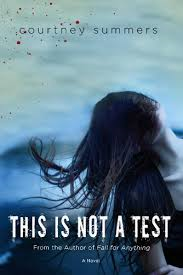
This Is Not A Test – Courtney Summers

testThis is my second book by Canadian YA writer Courtney Summers and, that’s it:  I am a fan. I previously read Some Girls Are and I was totally taken with its unflinching look at what it is to be a teenage girl. It isn’t pretty, people.

This Is Not A Test has won a slew of awards including being named a  2014 OLA White Pine Honour Book, 2013 ALA/YALSA Top Ten Quick Pick for Reluctant Readers, 2013 ALA/YALSA Best Fiction for Young Adults, and  a  Kirkus New & Notable Books for Teens: June 2012. Trust me, the book delivers on every possible level.

Sloane lives in with her father  in Cortege. Her older sister, Lily, has left home and taken a piece of Sloane with her. It won’t take the reader very long to figure out that Sloane’s father is abusive. She tells us he burns the toast because she deserves it and when he reaches out to examine her face, Sloane flinches before she can catch herself. It’s no wonder that Lily has left, but the plan was that they were supposed to go together.

Based on the first couple of pages, it would be reasonable  to think that This Is Not A Test is a story about abuse, but you’d be so wrong. As Sloane is contemplating the burnt toast and the note her father has written to explain her absence from school, their front door starts to “rattle and shake.”  Someone is screaming for help and it is such a creepy event that as Sloane’s father heads to the door to investigate Sloane notes that he hesitates and she has “never seen him hesitate” in her life.

When Sloane’s father returns to the kitchen he’s screaming that they have to leave and he’s covered in blood. And then all hell breaks loose, literally.

Seven days later Sloane finds herself barricaded in Cortege High School with five other students: student body president, Grace, and her twin brother, Trace; Rhys, a senior;  some-time drug dealer and some-time boyfriend to her sister Lily, Cary and Harrison, a freshman who can’t seem to stop crying. The high school offers the six teens sanctuary while they wait for the help the feel sure will come. Unfortunately, the only announcement on the radio proclaims that “This is not a test.”

As the days drone on, Sloane and the rest of the trapped teens struggle to stay calm. They jockey for position, alliances are formed and they wonder what has happened to the rest of the world. It all makes for a riveting psychological drama because Summers has an ear for how teens speak and she doesn’t shy away from the fact that this scenario is relentlessly grim. It’s the end of the world as we know it. Except for the feeling fine part.

Sloane narrates this story and she is a sympathetic character. Even if she could get back home, what does she have to return to? No one knows about the abuse she suffered and without Lily she feels as though she has very little to live for. Thus, she has nothing to lose.

This Is Not A Test is my very first zombie novel. I’ve pretty much avoided them until now because, truthfully, they don’t really interest me all that much. If they were all as good as this one, though, I’d be a fan.

Apparently there is an e-sequel available, but truthfully, I thought the ending to This Is Not A Test was pretty damn perfect.

Highly recommended.

Through the Woods – Emily Carroll

throughwoodsJust in time for Hallowe’en comes Canadian author Emily Carroll’s book, Through the Woods, a collection of chilling short stories. The stories would be quite enough on their own, but Carroll ups the ante with amazing art work. As far as graphic literature goes, Through the Woods goes to eleven. (Yes, yes I did just use a Spinal Tap reference.)

There are five stories in Carroll’s collection and each one of the stories feels vaguely old-fashioned. The monsters that live on these pages have been around for a very long time.

In the first story “Our Neighbor’s House,” Mary is left in charge of her two younger sisters, Beth and Hannah, while her father goes off to hunt. Their father tells them “I’ll be gone for three days…but if I’m not back by sunset on the third day, pack some food, dress up warm, and travel to our neighbor’s house.” When their father fails to return, things go from bad to worse in short order.

In the final story, “The Nesting Place, ” Bell, short for Mabel,  spends her school holidays with her older brother, Clarence, and his wife, Rebecca, at their isolated country house. Bell is a solitary child and she takes little interest in socializing with her brother. The only other person at the house is the housekeeper who warns Bell not to venture into the woods because she could easily become lost as Rebecca once had, “found three days later at the bottom of a cave…three days all alone in the dark drinking water out of a fetid pool to stay alive.” Rebecca, as Bell is soon to find out, has been deeply changed by that experience. And not in a good way.

woods

The stories between the first and last are every bit as unsettling. Dreams and teeth and blood and beasts loom large in this collection.Carroll’s illustrations are saturated with primary colours: blood-red moons and sapphire blue rivers. I don’t know much about art, but Through the Woods is a beautiful book to look at – if slightly macabre.

See more of Carroll’s work at her website.


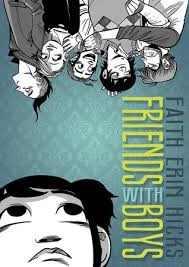
Friends with Boys – Faith Erin Hicks

friends I didn’t know that the author and illustrator of the graphic novel Friends with Boys, Faith Erin Hicks, was  from Halifax until I finished the book. I am not going to let the fact that we are practically neighbours (well, by Canadian standards we actually are!) influence my thoughts about Friends with Boys.

…which overall I liked (although I am by no means an authority on graphic novels and have really only started to read them in any number since I started building my classroom library.) I did feel the novel missed some great opportunities and had some structural problems – but, yeah, liked it.

So, Maggie is starting grade nine. This is a pretty big deal because she has been homeschooled her whole life. She’s super nervous about it. When her dad asks how she’s feeling she says  “It’s only my first day of high school. Nothing to be nervous about. I’m not nervous. I’m not.”

Maggie’s three older brothers, twins Lloyd and Zander and Daniel have already made the transition to high school and as Daniel admits to Maggie, he likes being at school better than learning at home. Of course he’s been there a few years, and is well-known and liked.

School isn’t the only thing complicating Maggie’s life – her mother has left home. Her father says “It’s exactly seventeen years since your mom started homeschooling you lot,” to which her brother Zander replies “Yeah and to celebrate she took off.” There is all sorts of unspoken angst in this situation, which is never satisfactorily dealt with.

And she has a ghost. An actual ghost that she met when she was a kid and whom occasionally follows her around. We never quite find out what the deal is there, either.

Then there’s Lucy and Alistair, the brother and sister who befriend Maggie.  At least we learn why Alistair is a social piranha.

That’s a lot of stuff on the plate of a fourteen-year-old and any of it would could have made a rich and compelling story on its own. I was intrigued by the ghost, loved Maggie’s older siblings and wondered what had happened to the mom. Ultimately, though, I felt like Hicks only scratched the surface of all these stories.