Born a Crime – Trevor Noah

Although I knew that U.S. based comedian Trevor Noah was from South Africa, I knew nothing other than that about him. Noah’s 2016 memoir, Born a Crime was named one of the best books of the year by just about everyone including The New York Times, CBC and NPR. The accolades don’t stop there, and nor should they, because Born a Crime is the immensely readable, inspirational, and funny story of Noah’s extremely humble beginnings.

Noah was raised mostly by his mother, Patricia Nombuyiselo Noah. His father, a white man, is of Swiss/German descent. “During apartheid, one of the worst crimes you could commit was having sexual relations with a person of another race. Needless to say, my parents committed that crime,” Noah explains. The book’s title refers to Noah’s birth.

…on February 20, 1984, my mother checked into Hillbrow hospital for a scheduled C-section delivery. Estranged from her family, pregnant by a man she could not be seen with in public, she was alone. The doctors took her up to the delivery room, cut open her belly, and reached in and pulled out a half-white, half-black child who violated any number of laws, statutes, and regulations – I was born a crime.

Noah guides us through the early years of his life, years that were marked by trips to church, “at least four nights a week”, poverty, and his mother’s no-nonsense but loving approach to parenting. From her, Noah learned that language is power (and because of this Noah learned to speak several languages.) “It became a tool that served me my whole life,” he explains. Once, when he was being followed by a group of Zulu guys, he heard them say in their own language that they were going to mug him. He was able to diffuse the situation when he spoke to them in Zulu.

That, and so many other smaller incidents in my life, made me realize that language, even more than color, defines who you are to people.

No surprise, then, that Noah goes on to make his living with words.

Noah hustles his way through his adolescence — making money by getting people what they want, everything from treats from the school canteen to bootlegged CDs to DJ services for events. He tells these stories with charming self-deprecation. I can only imagine that the audio book would be so much fun to listen to.

Although this memoir doesn’t tell us how Noah got his big break, I think it’s clear how, out of necessity, determined and resourceful he was. The book is dedicated to his mother, and it’s easy to see why: her faith in her son is unwavering and fierce.

This is a really excellent book.

Here’s a bit of Noah from a stand up show in 2015.

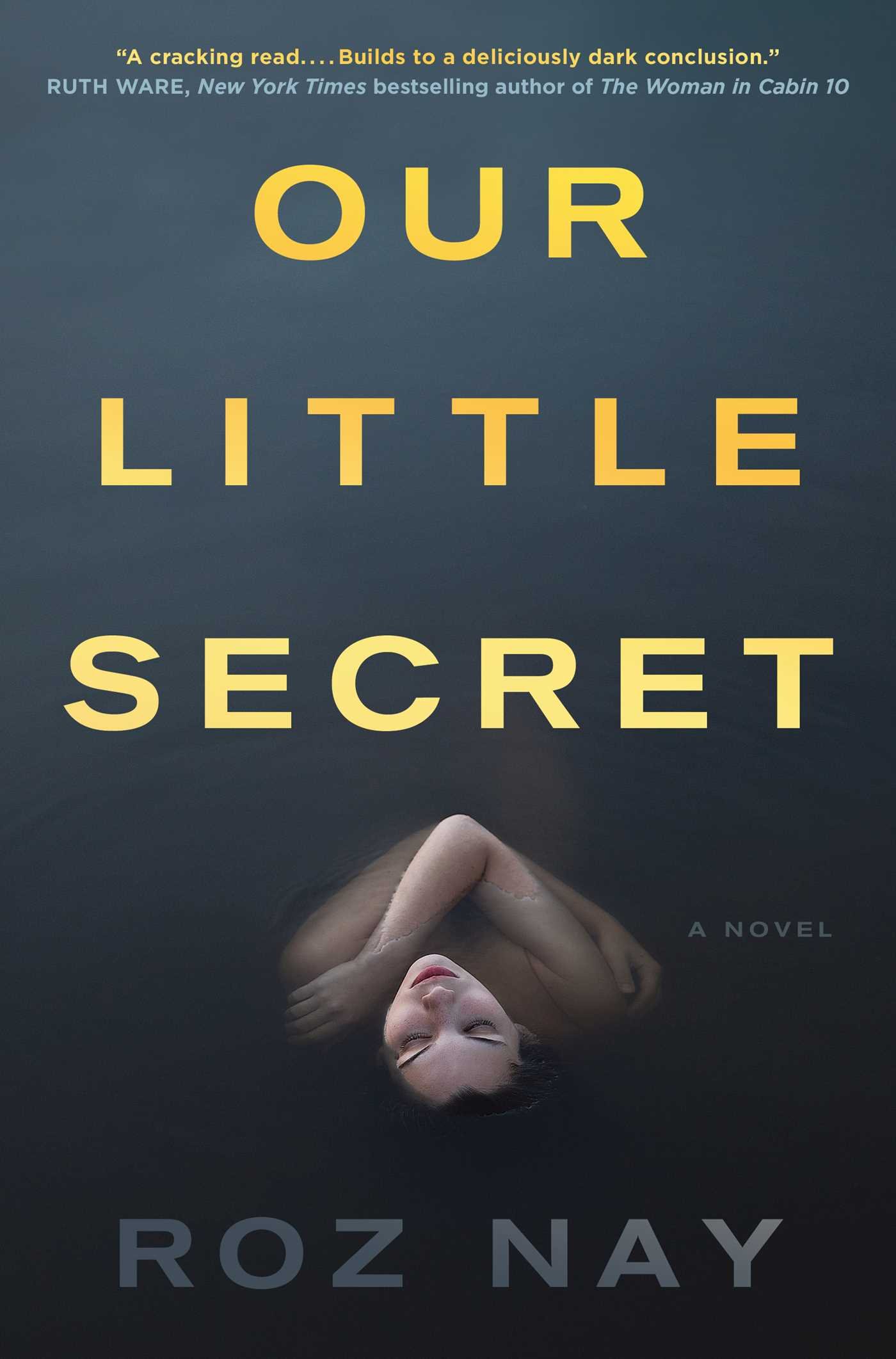
Our Little Secret – Roz Nay

New-to-me Canadian writer Roz Nay’s debut, Our Little Secret, delivers the goods. I couldn’t put this book down.

Our Little Secret is Angela Petitjean’s story, and it unfurls in an interrogation room at the local police station. Detective Novak is asking questions about a missing woman, Saskia Parker.

That’s the thing: they sound like they’re asking about Saskia, but all roads lead to Mr. Parker and me. The police want to know if I’m in love with him, and they ask it like it’s the simplest explanation rather than the most complicated. My definition is nothing like theirs, though.

Angela meets HP, (the Mr. Parker in question) when they are in Grade 10. This is a new school for Angela and she tells the detective that “Moving when you’re fifteen is terrifying.” Angela is immediately targeted by the mean, cool girls until HP comes to her rescue. That moment forges a bond between the two teens. Over the course of the next two years, Angela (or “Little John” as he calls her) and HP are inseparable, but not romantically linked.

I never understood why HP had chosen me as his friend, or how I’d gotten an all-access pass to him. It was like having a key to the White House. He told me everything he thought and felt and wanted, and I don’t think he told anyone else in the world…

By the end of high school, though, their relationship shifts gears. And then, Angela gets an opportunity to spend a year at Oxford, but HP stays behind. The distance complicates their new status. Enter Saskia, an effusive Australian HP meets while visiting Angela in England..

Our Little Secret garnered a lot of praise when it was published in 2017. I find thrillers are hit and miss. They sound good, but they ultimately disappoint. Not this one.

I felt terrific sympathy for Angela, who claims and maintains her innocence after Saskia goes missing. Her friendship and then romantic relationship with HP is believable and complicated. There’s angst here and I love me some angst. It’s only as her story unravels, that we start to see that her version of events might be just a tad unreliable. But we all revise our histories to a certain degree, don’t we?

If you’re looking for an addictive, well-written, smart thriller, look no further.

Highly recommended.

The Lies They Tell – Gillian French

Pearl Haskins lives with her alcoholic father on the wrong side of the tracks in Tenney’s Harbor, Maine. (For the record, I am spelling harbour that way because, USA.) Pearl works at the local country club, where the wealthy summer folk flaunt their, well, wealth. It was here, at Christmas, that Pearl last saw the Garrisons: David, the patriarch; Sloan, his beautiful wife and two of their children, seventeen-year-old Cassidy and ten-year-old Joseph. Tristan, the oldest Garrison child, is not present. Later that night, while Pearl’s dad sleeps in the Garrison’s gatehouse, someone broke into the house and shot the Garrisons in their sleep, then set their mansion on fire.

Gillian French’s impossible-to-put-down YA mystery The Lies They Tell picks up the story the following summer. Pearl has graduated from high school and she’s still working at the country club, still impossibly in love with her best friend, Reese, and still trying to manage her father’s drinking, which hasn’t really improved because most of the summer elite blame him for what happened at the Garrison’s – even though he is clearly not to blame. In fact, the culprit was never caught and the main suspect, Tristan, has an ironclad alibi.

And now here he was “with his entourage, the boys of summer, owning the place.” For reasons Pearl can’t quite understand, she is drawn to Tristan, “gripped by the physical and emotional recoil she – and almost everyone else – felt in his presence.” She feels a kinship to him because she senses he is “so alone, even in a room full of people….”

When one of Tristan’s friends, Bridges, takes a romantic interest in Pearl, she suddenly finds herself drawn into a world which she has only ever watched from the outside. Bridges seems nice and seems to genuinely like Pearl, but is he to be trusted? The third boy in the group, Akil, seems to openly disapprove of her. And Tristan, he doesn’t seem to know she exists, until he turns his laser focus on her.

I really enjoyed this novel. For one thing, it’s very well-written and the characters are believable. You know how characters in mysteries and thrillers sometimes do stupid things? Not here. Pearl is smart. She wants to figure out what happened to Tristan’s family, on the surface so that the blame can be shifted away from her father, but also because Tristan just seems like a whipped puppy to her. As she sifts through the gossip and tries to make sense of Tristan himself, she comes closer and closer to danger.

Like Pearl, I kept changing my mind about whodunnit and by the time I got to the book’s final pages my palms were sweating.

Highly recommended.

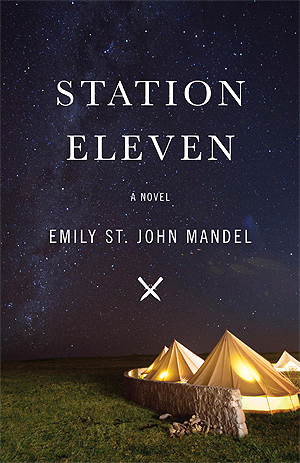
Station Eleven – Emily St. John Mandel

Emily St. John Mandel’s award-winning novel Station Eleven, published in 2014, is about as prescient a novel as one might expect to read during these world-wide pandemic times. In her book, the world succumbs to the Georgia Flu in record time, leaving behind a landscape inhabited by only a few hopeless (and hopeful) survivors.

The novel’s main characters, Arthur Leander, a famous Hollywood actor; Jeevan, the man who tries to save Arthur when he collapses onstage in a Toronto theatre; Clark Thompson, Arthur’s friend; Kirsten, a young actress with a troupe of musicians and actors, collectively known as the Symphony, who travel around the post-apocalyptic landscape performing works by Shakespeare, and Miranda, Arthur’s first wife, have, in many respects, a tenuous connection, but their stories intertwine over many years.

Jeevan is the first to learn of the flu’s ferocity. After the incident in the theatre, Jeevan finds himself walking through the Toronto streets and his friend Hau calls him. “You remember the SARS epidemic?” his friend asks?

“We’ve admitted over two hundred flu patients since this morning,” Hua said. “A hundred and sixty in the past three hours. Fifteen of them have died. The ER’s full of new cases. We’ve got beds parked in the hallways. Health Canada’s about to make an announcement.” It wasn’t only exhaustion, Jeevan realized. Hua was afraid.

St. John Mandel’s story skips back and forth in time. We learn about the characters’ backstories, how they survived (or didn’t) and the one person they all have in common: Arthur Leander.

Although, on the surface at least, this might seem like a survival story, Station Eleven is also a story about art, friendship, family, fanaticism and fame. When the end of the world comes, it comes with a vengeance, leaving these people to question their own lives, their pettiness, and their attachment to things.

Station Eleven is our first book for the 2020-21 season of my book club. I am not certain it was the most uplifting choice given that we are still in the clutches of Covid 19.

I live in one of the safest places on the planet, but that doesn’t mean I am immune to the fraught state of the world. Nevertheless, I found this book to be rather beautiful and hopeful. It is possible, the books posits, to be sustained by art and nature and friendship and these, it seems, are worthwhile things to care about. What did I miss when the world shut down back in March? Not shopping. Not dining out. I missed hugging my family and seeing my friends. What will we care about when the end truly comes, as it must for all of us?

The pink magnolias in the backyard of the house in Los Angeles

Outdoor concerts, the way the sound rises up into the sky.

Tyler in the bathtub at two, laughing in a cloud of bubble bath.

Miranda’s eyes, the way she looked at him when she was twenty-five and still loved him.

Any book that requires me to think about my life and its meaning, is worth my time. This book was worth my time.

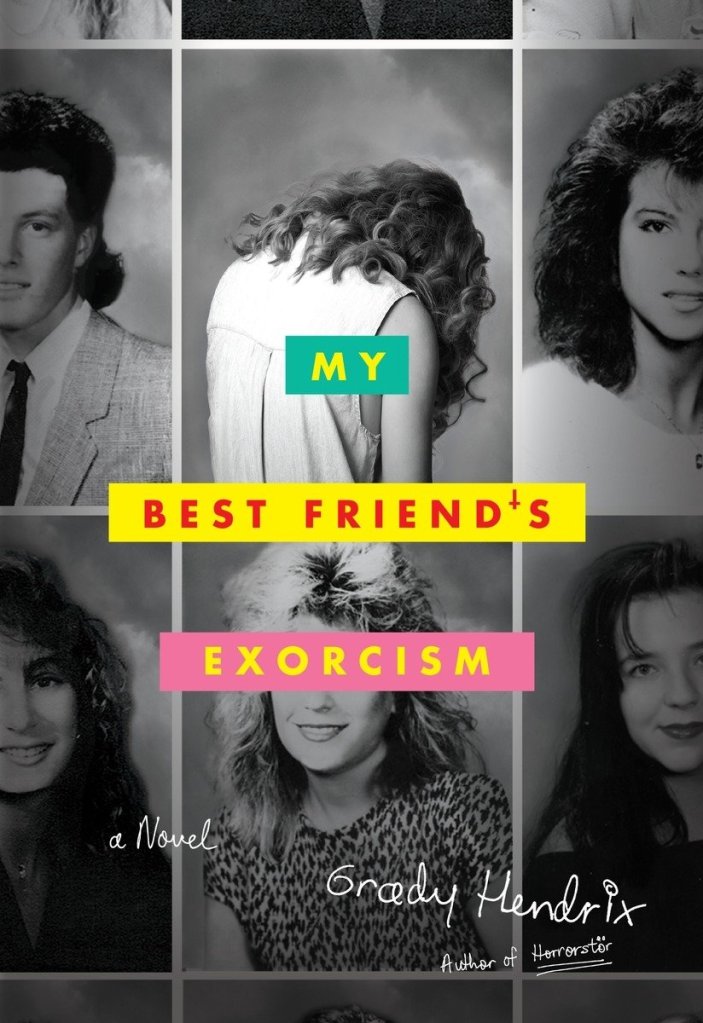
My Best Friend’s Exorcism – Grady Hendrix

In the way that the monsters and demons in Buffy the Vampire Slayer are a metaphor for the horrors of high school, Grady Hendrix’s page-turner My Best Friend’s Exorcism works on a both a figurative and literal level. Or, at least, it did for me.

Abby and Gretchen have been besties since the day that Gretchen, a new kid in school, turns up to Abby’s tenth birthday party. She’d invited the whole class to the roller rink for an E.T. themed party (it’s the 80s), but Gretchen is the only one who shows up. All the others accepted an invitation to Margaret’s polo plantation (the novel takes place in South Carolina, where apparently there are such things) for a day of horse-back riding. When Abby asks Margaret why she didn’t go to that party, Gretchen replies “You invited me first.” It is from this awkward beginning that the two girls become best friends.

My best friend story has a similar beginning. When Michelle arrived at the country school I attended at the beginning of grade eight, I didn’t like her. And she didn’t like me. At least that’s how I remember it. Her hair was too blonde, her jeans were too tight and she hung out with the older kids. I was about as geeky as they came. We both imagined being writers and I remember that the Prize for English was a hot commodity; I won. Then in grade nine, more than half of the students in our class went on an exchange to Marathon, Ontario. Neither of us went, and that meant that we were without our usual friend groups. One afternoon, we found ourselves talking at the back of a classroom. Turns out, we had way more in common than not and that afternoon cemented a friendship that is now 50 years strong.

Abby and Gretchen have the best friend short-hand. They bond over movies and music. They trade secrets and commiserate about their families; “Everything happened over the next six years. Nothing happened over the next six years.” When Abby’s home life starts to crumble, Gretchen’s family is there to pick up the pieces.

And then. Abby, Gretchen, Margaret (same one, now a friend) and Glee are in high school and one afternoon, they decide to take acid. Just to try it out, not because they’re druggies. It’s 1988. The incident kicks off a descent into a hellscape that causes friendships to fracture. Gretchen disappears that night, and when Abby finds her the next morning she can’t remember anything about her night lost in the woods.

Things take a decided turn for the worst over the coming weeks, and the beauty of this novel (and there are many of them) is that I couldn’t decide whether Gretchen’s possession was literal or just a function of being a high school sophomore. People change, right, especially at this point in their lives. They’re always trying on new personas, shedding one skin to try out another. Abby never gives up on her friend, even when Gretchen behaves horribly; even when her own sanity and safety are threatened.

The nostalgia is a river running through Hendrix’s book: the chapters titled after popular songs, the allusions to the TV shows and pop culture of the era. The book is packaged like a high school yearbook. And I was sent hurtling back to my high school days, when friendships are the most important things in your life. About fifty pages in, I couldn’t put the book down.

And for the record, I would fight the devil for you, too, Michelle.

Highly recommended.

Darius the Great Is Not Okay – Adib Khorram

It is impossible to count all the accolades Adib Khorram’s debut novel Darius the Great is Not Okay accumulated, but let’s just say if there is a “best” list, this YA book is likely on it.

In this compelling coming-of -age story, seventeen-year-old Darius Kellner feels like an outsider. Even in his own family he feels “other”. His mother is from Iran and his father is, as Darius calls him, an “Ubermensch.”

I did not inherit any of Dad’s good looks.

Well, people said I had his “strong jawline,” whatever that meant. But really, I mostly looked like Mom, with black, loosely curled hair and and brown eyes.

Standard Persian.

His looks aren’t the only thing that sets him apart from the other kids at his school. Darius is a bit of a geek, too. He loves Star Trek – it’s the one thing he and his father have in common and they rewatch an episode together every night – and Tolkien. He’s a tea aficionado. He also has a special relationship with his younger sister, Laleh.

…guys are not supposed to love their little sisters. We can look out for them. We can intimidate whatever dates they bring home, although I hoped that was still a few years away for Laleh. But we can’t say we love them. We can’t admit to having tea parties or playing dolls with them, because that’s unmanly.

And, the most damning thing of all: Darius suffers from clinical depression.

When Mrs. Kellner learns that her father back home in Iran is terminally ill, the family decides to visit. She hasn’t been home in seventeen years, and Darius and Laleh haven’t ever seen their grandparents except via a computer screen. It is to be a life-changing trip.

As much of an outsider as Darius is at home, he feels just as much on the outside in Iran. Unlike his sister, he doesn’t speak Farsi. He is a “Fractional Persian” at best, and the customs and culture are almost as alien to him as they might be for someone without any ties to the country. Luckily, he meets Sohrab almost as soon as he arrives, and this new friendship teaches him not only about his heritage, but about himself as a person. Their unfolding friendship is truly a thing of beauty to behold.

There is a real sense of place in Khorram’s novel. What I know about Iran would likely fill a teaspoon, and most of that is likely negative. Not sure why. This novel is full of history and culture and food and family. It is brimming with life, even with the shadow of political and religious unrest simmering beneath the surface. But that is not what this book is about. This book is about finding your place, accepting your perceived flaws, belonging.

Darius is a complex character, a teen you want to hug. As he taps into all the things that make him who he is, his notion of who he might be shifts, too. And that is a joy to behold.

Highly recommended.

Sweet Sorrow – David Nicholls

Because I have such a backlog of books on my tbr shelf, I rarely make impulse purchases these days. If I buy a new book, it’s usually because I’ve heard of it somehow and even if I do buy it, that doesn’t necessarily mean I will read it straight away. David Nicholls’ (One Day) new book, Sweet Sorrow, was irresistible, though. I bought it and read it immediately.

Charlie Lewis, our narrator, is recounting his post GCSE summer. His life is kind of a mess. His parents have recently split; his mother and younger sister, Billie, have gone off to live with his mom’s new man and Charlie has been left to look after his father, who spends his days in the gloom, listening to jazz albums and drinking or sleeping on the sofa. Of his three best mates from school, Harper, Fox and Lloyd, only Harper seems to understand what a grim time this is for Charlie. When he’s not working his part-time job at a local petrol station, Charlie spends most of his time riding his bike around. That’s how he comes across Fran Fisher.

Fran is part of the theatre troupe Full Fathom Five. They’re rehearsing Romeo and Juliet at Fawley Manor, a country estate owned by senior thespians, Polly and Bernard. The troupe is in desperate need of more males, and so Fran agrees to have coffee with Charlie if he comes back on Monday and participates.

I did go back, because it was inconceivable that I would not see that face again, and if doing so meant a half day of Theatre Sports, then that was the price I’d pay.

Thus begins a summer of Shakespeare and first love for Charlie. “When these stories – love stories – are told, it’s hard not to ascribe meaning and inevitability to entirely innocuous chance events,” Charlie says. But the truth is that Charlie thinks Fran is “lovely” and despite their differences (Fran attended the much posher Chatsborne Academy and is clearly destined for great things; Charlie lives on a council estate with streets named after famous writers and is pretty sure flunked his GCSEs so won’t be going on to college), they fall in love.

The ache of that love — and, trust me, it aches — is heightened because the pair are rehearsing literature’s most famous tragedy, a play Charlie comes to understand and appreciate because he and Fran spend endless lunch hours talking about it, and because Charlie is telling this story twenty years in the future. C’mon – who doesn’t look back at their first love with a certain degree of nostalgia? Y’know, “misty water-coloured memories” and all that.

Not gonna lie, I love Romeo and Juliet. I know what you’re going to say, but I don’t care. I love the language and the heightened emotions and when I first encountered the play, 40 odd years ago, I thought it was the most beautiful thing I’d ever seen. Do I believe in love at first sight? Kinda.

Nicholls has written a book that is both laugh-out-loud funny and also deeply moving. How we ever survive those fraught teen years, I’ll never know, but somehow we do. I wouldn’t hesitate to recommend the book to mature teens in my class, but this is not a YA novel. The tears I shed at the end of the book came from understanding something I could never really know at sixteen: that first love doesn’t last, but it stays with you forever anyway.

Highly recommended.

Daisy Jones & The Six – Taylor Jenkins Reid

I feel like I am probably the last person on the planet to succumb to Daisy Jones & The Six’s considerable charms, but fall I did. And hard. Taylor Jenkins Reid’s novel about the rise and fall of Daisy Jones and Billy Dunne, two uber-talented musicians in the 1970s, is the PERFECT book for a summer afternoon. I read it straight through, start to finish; I couldn’t have put it down, even if I wanted to.

Told in the style of an oral history, (so basically there’s no real exposition, it’s just people talking, as if they were being recorded and their words then transcribed,) the story follows Jones and Dunne’s separate journeys up the musical food chain until they meet and their fortunes become entwined.

This novel is so nostalgic — especially if you were around in the 70s, which I was. I graduated from high school in 1979 and while Billy and Daisy’s experiences certainly bear no resemblance to mine, I nevertheless appreciated some of the allusions. For instance, Daisy is introduced to the hedonistic and drug-fueled club scene when she is just fourteen by flirting with a roadie at Whiskey a Go Go. The concierge of the Continental Hyatt House (preferred hotel of touring rock bands) remembers that some of the girls who hung around hoping to meet band members were young “but they tried to seem older. Daisy just was, though. Didn’t seem like she was trying to be anything. Except herself.”

Then there’s Billy Dunne. Gifted with a guitar for his fifteenth birthday, Billy and his younger brother Graham start a band while they are still in their teens. Billy is everything a lead singer should be: charismatic, sexy, beautiful and talented. The band’s manager says “Billy Dunne was a rock star. You could just see it. He was very cocksure, knew who to play to in the crowd. There was an emotion that he brought to his stuff.”

Both Billy and Daisy have their demons. In many ways, they are loners and they depend on a variety of substances to get them through the days and nights. Billy, though, has a wife, Camila, and a vested interest in getting his shit together. When Daisy and Billy meet, it catapults the two of them to super-fame. Their chemistry is off-the-charts. They record a song together that leads to a more permanent collaboration.

This novel is the bomb. I don’t claim to be an aficionado, but I do love music. Billy and Daisy start writing songs together and their creative partnership is both a blessing and a curse. Every song is fraught (Jenkins Reid has written all these songs and they are found at the back of the novel) and reminds us how incredibly powerful music (and art in general) can be in tapping into our souls.

…what we all want from art…When someone pins down something that feels like it lives inside us? Takes a piece of your heart out and shows it to you? It’s like they are introducing you to a part of yourself.

The creative partnership between Daisy and Billy cannot be sustained, for reasons that will be readily apparent. The push-pull between these two damaged, yet wholly likeable characters is so full of longing and angst, I just couldn’t bear it. (Truthfully, the angst is off the charts and I loved every wretched minute of it.)

Daisy Jones & The Six is pure entertainment. It’s beautiful, funny, human, nostalgic, heart-breaking awesomeness. I can’t WAIT for Reese Witherspoon’s adaptation.

Highly recommended.

How To Be a Good Wife – Emma Chapman

In 1955, Housekeeping Monthly published an article called “The Good Wife’s Guide.” The article detailed all the ways a wife could keep her husband happy, including such gems as “Be a little gay and a little more interesting for him. His boring day may need a lift and one of your duties is to provide it” and “Listen to him. You may have a dozen important things to tell him, but the moment of his arrival is not the time. Let him talk first – remember, his topics of conversation are more important than yours.”

These are the tenets by which Marta Bjornstad, the narrator of Emma Chapman’s debut novel How to Be a Good Wife, lives. Married for many years to the much older, Hector, a school teacher, and mother of one adult son, Kylan, Marta’s life somewhere in a remote Scandinavian village is structured and isolated.

Twelve fifteen. By this time, I am usually working on something in the kitchen. I must prepare supper for this evening, the recipe book propped open on the stand that Hector bought me for an early wedding anniversary. I must make bread: mix the ingredients in a large bowl, knead it on the cold wooden worktop, watch it rise in the oven. Hector likes to have fresh bread in the mornings. Make your home a place of peace and order.

Things in Marta’s life are starting to unravel, though. For one thing, Marta has stopped taking the pills she has been taking for years. The last time she stopped, Kylan was twelve and Marta “wanted something to happen.” Back then, without the medication came “the heavy darkness”; this time is different. Marta starts seeing someone: a little blonde girl.

She stares without blinking, her grey eyes wide and glossy. Her hair is very messy: dirty, almost grey, though the broken ends are blonde. She is wearing grimy white pyjamas, her thin arms wrapped loosely around her bony knees.

There’s no question that something is off in the Bjornstad house and Chapman does a terrific job of unsettling the reader. Marta makes a compelling narrator because although she might seem unreliable, (is she a woman suffering from empty-nest syndrome, menopause, a mental break-down? These are all plausible scenarios.) as the mist lifts things take a decided turn in a horrifying direction.

I read How to Be a Good Wife in one sitting and thoroughly enjoyed it.

One of Us is Lying – Karen M. McManus

Nate and Bronwyn 4eva! Yeah, sure, there are other characters in Karen M. McManus’s super fun YA page-turner One of Us is Lying, but as we all know I am a sucker for a misunderstood bad boy. (At my age, I should really be over that. ) Okay, let’s not get off track here.

Bronwyn (super-smart), Nate (known drug dealer), Cooper (star athlete), Addy (beauty queen) and Simon (outcast) are all sent to detention for having phones in class. (Cue The Breakfast Club soundtrack.) Yes, these are the stereotypes you’d expect to find in a YA novel, but McManus manages to make each of these characters way more than they appear on paper.

Each character is given their opportunity to speak, so the narrative clicks along really quickly. (I read this novel in about one sitting – mostly because I couldn’t put it down.) Before detention is over, Simon is dead and the four remaining students find themselves prime suspects in his death. (Murder?)

Simon wasn’t actually a very nice guy. He ran a blog called About That which reported high school gossip and revealed dark secrets, secrets students would certainly rather not share. And it turns out that the four remaining teens all have something to hide. As Bronwyn says: “As a general rule, and especially lately, I try to give Simon as little information as possible.”

As some of these secrets come to light, suspicion shifts from one student to the other. And all the while, someone is still posting on Simon’s blog. So whodunnit is definitely a big part of the fun with this book.

Additionally, though, McManus makes you care about each of the four main characters. They are fully realized individuals, with back stories which will likely speak to many teen readers. There are a slew of equally compelling secondary characters and even the parents (who are often remote, shadowy creatures in YA) are not static.

The fun of this novel is not only trying to figure out who might have a motive to kill Simon (they all do), but how this supposed murder might have taken place. And that would have made for a great book all on its own. but McManus makes this novel about so much more than that. She tackles bullying, the weight of expectations, friendships, toxic relationships, the rumour mill and its devastating consequences, and trust without making any of it instructive.

I loved these characters and I had so much fun reading this book. Can’t wait to read the sequel.

Highly recommended.