Because I have such a backlog of books on my tbr shelf, I rarely make impulse purchases these days. If I buy a new book, it’s usually because I’ve heard of it somehow and even if I do buy it, that doesn’t necessarily mean I will read it straight away. David Nicholls’ (One Day) new book, Sweet Sorrow, was irresistible, though. I bought it and read it immediately.

Charlie Lewis, our narrator, is recounting his post GCSE summer. His life is kind of a mess. His parents have recently split; his mother and younger sister, Billie, have gone off to live with his mom’s new man and Charlie has been left to look after his father, who spends his days in the gloom, listening to jazz albums and drinking or sleeping on the sofa. Of his three best mates from school, Harper, Fox and Lloyd, only Harper seems to understand what a grim time this is for Charlie. When he’s not working his part-time job at a local petrol station, Charlie spends most of his time riding his bike around. That’s how he comes across Fran Fisher.
Fran is part of the theatre troupe Full Fathom Five. They’re rehearsing Romeo and Juliet at Fawley Manor, a country estate owned by senior thespians, Polly and Bernard. The troupe is in desperate need of more males, and so Fran agrees to have coffee with Charlie if he comes back on Monday and participates.
I did go back, because it was inconceivable that I would not see that face again, and if doing so meant a half day of Theatre Sports, then that was the price I’d pay.
Thus begins a summer of Shakespeare and first love for Charlie. “When these stories – love stories – are told, it’s hard not to ascribe meaning and inevitability to entirely innocuous chance events,” Charlie says. But the truth is that Charlie thinks Fran is “lovely” and despite their differences (Fran attended the much posher Chatsborne Academy and is clearly destined for great things; Charlie lives on a council estate with streets named after famous writers and is pretty sure flunked his GCSEs so won’t be going on to college), they fall in love.
The ache of that love — and, trust me, it aches — is heightened because the pair are rehearsing literature’s most famous tragedy, a play Charlie comes to understand and appreciate because he and Fran spend endless lunch hours talking about it, and because Charlie is telling this story twenty years in the future. C’mon – who doesn’t look back at their first love with a certain degree of nostalgia? Y’know, “misty water-coloured memories” and all that.
Not gonna lie, I love Romeo and Juliet. I know what you’re going to say, but I don’t care. I love the language and the heightened emotions and when I first encountered the play, 40 odd years ago, I thought it was the most beautiful thing I’d ever seen. Do I believe in love at first sight? Kinda.
Nicholls has written a book that is both laugh-out-loud funny and also deeply moving. How we ever survive those fraught teen years, I’ll never know, but somehow we do. I wouldn’t hesitate to recommend the book to mature teens in my class, but this is not a YA novel. The tears I shed at the end of the book came from understanding something I could never really know at sixteen: that first love doesn’t last, but it stays with you forever anyway.
Highly recommended.

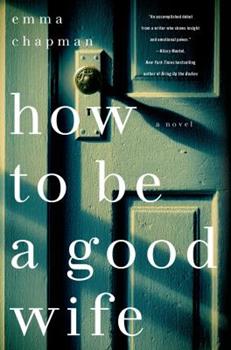

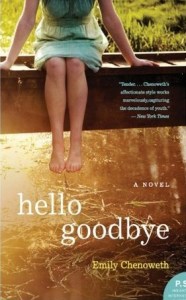 Emily Chenoweth’s debut novel Hello Goodbye was inspired by the author’s life. Her mother was diagnosed with a brain tumour when Chenoweth was in her first year of college. Instead of writing a memoir, though, the author decided to use her experiences as fodder for a work of fiction because she could “explore the feelings and experiences that I did remember, but I could also craft a story that had a different arc than my own.”
 Seventeen-year-old Eddie and her mother have recently suffered a tremendous loss. Eddie’s father, a once-renowned photographer, has taken his own life and neither of the Reeves women are coping very well. Eddie’s mother drifts, ghost-like, around the house wearing her father’s housecoat being fussed over by her best friend, Beth, who drives Eddie “fucking crazy.” Eddie avoids her house as much as possible, choosing instead to hang with her best friend, Milo.
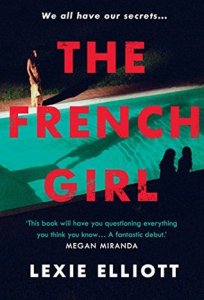 Oxford. That’s where they meet Severine, the girl next door.
 I don’t know how much readers actually care about the awards books win, but Elizabeth Strout’s novel Olive Kitteridge won the Pulitzer in 2009 and the book has been languishing on my tbr shelf since about then. It was June’s #bookspin choice on
 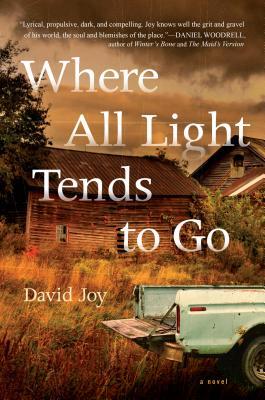 I was invested in Jacob McNeely, the narrator of David Joy’s novel Where All Light Tends to Go, by the end of the first chapter. The eighteen-year-old high school drop out has climbed to the top of the water tower to smoke a joint and watch what should have been his graduating class leave the school. From his perch, he can see Maggie, the girl he has loved for as long as he can remember.
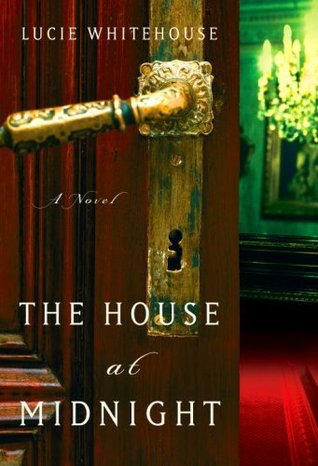 Lucie Whitehouse’s debut novel The House at Midnight tells the story of Joanna and her close-knit circle of friends who spend weekends at Stoneborough Manor in Oxfordshire. Her dearest friend, Lucas, has recently inherited Stoneborough from his Uncle Patrick, a well-known art dealer. On their first visit there, Joanna observes that the house is “Three storeys high, [and] it reared up out of the night as if it were facing the darkness down.” The house gives Joanna a “pang of anxiety.” She wonders “How could it not change things between us.”
 The Ludic Reader