Paper Towns – John Green (with a shout out to John Hughes)

If you are a person of a certain age, you probably have fond memories of John Hughes’ films. Even though I was already in my early 20’s when he started producing arguably the best teen movies ever – I was still young enough to see myself in the characters he committed to celluloid.

Sixteen Candles is my all-time favourite Hughes film, for reasons which will be apparent to anyone who has ever seen the film. I still watch it occasionally and it still makes me laugh and it breaks my heart a little now that Hughes has died.

Yes, you can argue that Jake Ryan isn’t perfect – he did let an underage, unlicensed driver take his very drunk girlfriend home in his father’s Mercedes, but it was the 80’s and, come on,  Jake Ryan is pretty damn dreamy. Also, who didn’t see some part of themselves in the other characters on the screen: Molly Ringwald’s slightly awkward Samantha Baker, Anthony Michael Hall’s loveable dork. Everyone you ever went to high school with is lovingly represented in this flick and in Hughes’ other teen masterpieces, Pretty in Pink, The Breakfast Club,  and Ferris Bueller’s Day Off. 

I would posit that John Green is this generation’s John Hughes and I hope Mr. Green will consider that a compliment because it is certainly meant as one.

Last year because everyone and their dog was reading The Fault in Our Stars I did, too. That was a reading experience I will never forget – curled in the fetal position on my bed at 2 a.m., laughing then crying, then laughing again. That is the experience I want my students to have.

PaperTowns2009_6AThe only other John Green book I have in my classroom library is Paper Towns and I just finished it yesterday. (Trust me, I’ll be rectifying the lack of Green books post-haste.) Paper Towns received rave reviews and the Edgar Award (a prize awarded by the Mystery Writers of America) and it’s totally deserving of both.

Quentin Jacobsen is just weeks away from graduating from high school when his next door neighbour Margo Roth Spiegelman shows up at his window in the middle of the night. Although Quentin and Margo had been childhood friends, they’d drifted apart as they’d gotten older and now, in Quentin’s eyes at least, Margo is this exotic and beautiful creature, but not necessarily his friend.

Margo Roth Spiegelman, whose six-syllable name was often spoken in its entirety with a kind of quiet reverence. Margo Roth Spiegelman, whose stories of epic adventures would blow through school like a summer storm: an old guy living in a broken-down house in Hot Coffee, Mississippi, taught Margo how to play guitar. Margo Roth Spiegelman, who spent three days traveling with the circus – they thought she had potential on the trapeze.

The stories, when they were shared, inevitably ended with, I mean, can you believe it? We often could not, but they always proved true.

Quentin’s best friend, Ben, describes Margo as “the kind of person who either dies tragically at twenty-seven, like Jimi Hendrix and Janis Joplin, or else grows up to win, like, the first-ever Nobel Prize for Awesome.”

Anyway, Margo needs Quentin’s help. She also assures him that this will be the best night of his life. Quentin is a guy who generally plays by the rules, so his decision to help Margo is slightly out of character for him. Nevertheless, he helps Margo carry out a list of tasks, some of them vengeful and some of them contemplative and he is indeed changed by the experience. Which is why when Margo suddenly disappears, he is compelled to follow the breadcrumb trail of clues she’s left behind.

Paper Towns is a clever mystery for sure, but that’s not the only reason to admire the heck out of it. What I love about John Green is the way he writes dialogue. His characters are smart and funny and honest-to-goodness people. In the same way that John Hughes made his characters painfully awkward or awesome or self-deprecating or ironic, Green’s teens are whole and fragile and super smart and laugh-out-loud funny.

And they think thinky-thoughts. The fact that Paper Towns is set in Orlando, Florida (John Green’s hometown) is significant. Margo says “you can see how fake it is…It’s a paper town. I mean, look at it Q: look at all those cul-de-sacs, those streets that turn in on themselves, all the houses that were built to fall apart.”

Quentin’s journey to find Margo makes him question not only everything he thought he knew about her, but also everything he believes about himself and Green does a great service to his characters (and the young adults who will be reading this book) by not giving us pat answers.

So – read John Green. Watch John Hughes. Through their eyes you’ll see teenagers at their worst…and their best. And it’s all beautiful.

Story of a Girl – Sara Zarr

storyofagirlSara Zarr’s debut novel Story of a Girl kept me turning the pages far past my bedtime – a sure indicator of its quality. I read before bed and most nights I’m lucky if I manage a couple dozen pages, but last night I settled in early and once I started, I couldn’t stop.

Story of a Girl begins with sixteen-year-old Deanna Lambert’s admission that she “was thirteen when my dad caught me with Tommy Webber in the back of Tommy’s Buick, parked next to the old Chart House down in Montara at eleven o’clock on a Tuesday night. Tommy was seventeen and the supposed friend of my brother, Darren. I didn’t love him. I’m not even sure I liked him.”

Deanna had been parking with Tommy for a year before she’s finally caught, but her dad’s discovery of her in a compromising position casts the reality of her life in a harsh light. Now her dad can barely look at her. And when the novel opens, at the end of sophomore year (that’s grade ten here in Canada), it’s clear that the story of her tryst with Tommy is still the topic du jour in her small hometown of Pacifica, a sea-side suburb of San Francisco. At least pretty much everyone at Deanna’s high school knows about it – or some version of it. The only people who don’t care are her two best friends: Jason, a boy she’s known forever and Lee, a girl who moved to Pacifica after the incident.

Story of a Girl takes place during the summer between sophomore and junior year. Deanna’s strained relationship with her dad causes her to daydream about leaving home and living with her older brother Darren, his girlfriend, Stacy and their infant daughter, April. Currently they live in the basement. Stacy and Deanna’s dad don’t get along. In fact, Deanna’s household is pretty dysfunctional and so Deanna quickly finds work at a local pizza dive…where, it turns out, Tommy also works.

What I loved about this book was how realistic it seemed. Everyone judges Deanna for a decision she made when she was thirteen, but it isn’t until she comes into contact with Tommy again that she figures out why she always went off with him. And forgiving him – and herself – also allows her to empathize with her father.

…I imagined us through his eyes – his family, sitting in a pink kitchen: his tired wife, who never complained; his son who looked exactly like him; his daughter, who used to be the baby, his baby girl; and now April, his grand-daughter, who had a whole life in front of her, with no real mistakes in it yet. Could he look at us someday, I wondered, maybe today, and not be disappointed? Could he see us, and himself, for who we really were?

Story of a Girl is a beautiful book because, although it is Deanna’s story, no one’s life is lived in isolation. This is a book about family – the family given to us by  biology and the family we choose. The path to adulthood is thorny and it’s good to have some people who are on your side.  There are no villains in this book. Even Tommy, douche that he is, is probably trying to fill in the gaps in his own life. The thing is, we carry our mistakes with us and as Deanna’s boss at the pizza place, Michael, tells her: “…don’t mistake a new place for a new you.”

Big love for this book.

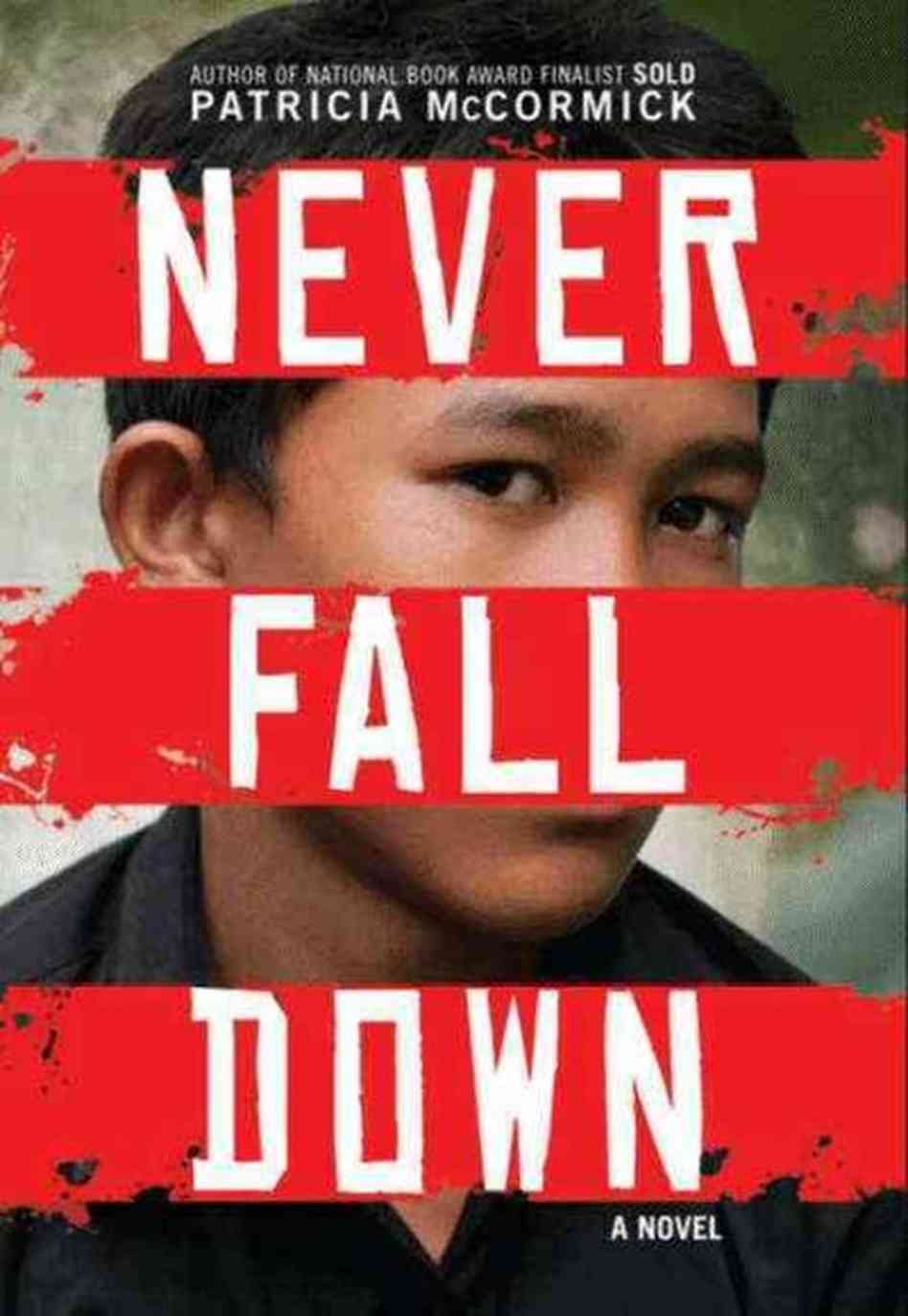
Never Fall Down – Patricia McCormick

neverfalldown Arn Chorn-Pond, the young narrator of Patricia McCormick’s novel Never Fall Down, finally escapes Cambodia and  makes it to the safety of Thailand sometime in the spring of 1979.  At the very same time, I was getting ready to graduate from high school. I knew nothing of the Khmer Rouge and their violence – or if I did, I don’t remember. Reading Arn’s story has reminded me again of the priviledged life I’ve lead and of the absolute power of literature to crack open the insulated world in which we often live.

Arn is just eleven when the Khmer Rouge, a radical Communist regime, and an offshoot of the Vietnam People’s Army, sweeps through Cambodia displacing people and separating families. Arn has lived a relatively happy life up until then. He says, “At night in our town, it’s music everywhere. Rich house. Poor house. Doesn’t matter. Everyone has music.”

When the army blows through town, it’s exciting. Arn says, “…I think this is the most exciting thing to happen here. Real Americans coming. Real airplane.” But that excitement doesn’t last. Soon Arn, his aunt and his siblings (four sisters and one brother) are marching out of town with everyone else. And then the real horror begins.

And this book is horrific.

McCormick spent two years interviewing Arn and then  made the choice to tell his story as a novel because “like all trauma survivors, Arn can recall certain experiences in chilling detail; others he can only tell in vague generalities.”  It’s no wonder his mind has decided to compartmentalize; the atrocities he’s witnessed are almost unbearable.

But Arn does bear them. He survives the separation from his family, the endless work in the rice fields, the starvation, illness, walking miles and miles through the heat. He makes himself indespensible by learning to play an instrument, but even that doesn’t save him from witnessing the Khmer Rouge’s atrocities against men, women and children.

And then, even more horrible, Arn suddenly finds himself with a gun in his hand, fighting with the very people who have held him captive for more than three years. Never Fall Down is a survival story because Arn surely does that.

McCormick makes the decision to tell this story in Arn’s distinctive sing-song voice and it’s a wise choice. We see everything though his eyes and he is a truthful and unflinching narrator.

One night the girl next to me at dinner, she dies. She dies just sitting there. No sound. Just no breathing anymore. All of us, we eat so fast, no one even see this girl. Very quick, I take her bowl of rice and keep eating.

I guess we can never really know what we’re capable of until we are put in the situation where our limits might be tested. Arn was a remarkable boy and he has turned into a remarkable man, a champion for humanitarian causes around the world and the winner of many international prizes. Never Fall Down is a must read book.

This video explains  what happened during that period.

I also highly recommend the movie, The Killing Fields.

Every Day – David Levithan

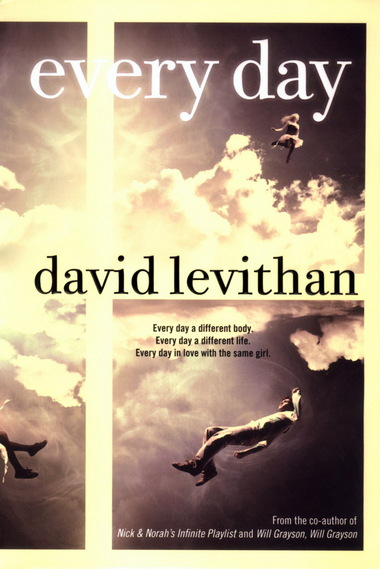
16BLEVITHANWhat if every day you woke up in someone else’s body? You are you, but also them; you have access to their memories, but also retain your own. This is A’s predicament in David Levithan’s clever and emotionally resonant YA novel, Every Day.

I don’t know how this works. Or why. I stopped trying to figure it out a long time ago. I’m never going to figure it out, any more than a normal person will figure out his or her own existance. After a while, you have to be at peace with the fact that you simply are. There is no way to know why.

Dispensing with the prickly question of how this works (or doesn’t) early on, Levithan dumps the reader into A’s life on Day 5994. He is 16.  Today he is in Justin’s body.  Justin’s not a particularly likeable guy and A figures that out pretty quickly. He admits: “I know I am not going to like today.”

A’s ability to access information from each person he inhabits allows him to live each day with relative ease, plus he always has an escape hatch because he knows that he will wake up as someone else the next day. Even if he wakes up in the body of an idiot, he knows it’s not forever.  Justin is a bit of an idiot and that wouldn’t be such a big deal if it weren’t for Rhiannon. She’s Justin’s girlfriend.

…there’s something about her – the cities on her shoes, the flash of bravery, the unnecessary sadness – that makes me want to know what the word will be when it stops being a sound. I have spent years meeting people without ever knowing them, and on this morning, in this place, with this girl, I feel the faintest pull of wanting to know. And in a moment of either weakness or bravery on my own part, I decide to follow it. I decide to find out more.

Thus begins A’s relationship with Rhiannon. And as you might imagine, there’s nothing typical about it. There’s nothing typical about Every Day period.

A has spent his entire existence trying to keep himself separate from the person whose body he inhabits. His feelings for Rhiannon complicate his life in ways too numerous to mention; suffice it to say that every day becomes a challenge to see her, but first he somehow has to convince her of the truth of his strange reality.

In one sense, Every Day works as a terrific page-turner: will A and Rhiannon find a way to be together despite their terrific obstacles? After all one day A could be in the body of a hunky football player and the next he could be an overweight teenage girl. Will Rhiannon love him back despite his outward appearance? What is love anyway?

But I think this novel also works hard to be something more and in that way I think it will probably speak to teenagers everywhere. It allows us to inhabit the bodies of confident, beautiful teens and also depressed teens who wish themselves harm. We hang with straight teens and gay teens, teens with parents who smother them and parents who trust them. Each scenario allows Levithan the opportunity to show the reader his tremendous capacity for empathy. And it also allows us to see A  – despite his lack of corpreal form – as the embodiment of what it means to be human.

A Monster Calls – Patrick Ness

Monster-calls_shadow“Are you crying, Mom?”

My daughter was settled in at the foot of my bed playing on her iPhone and I was  reading the last few pages of Patrick Ness’s remarkable novel, A Monster Calls.

And, yeah, I was crying. Hard by the end of it.

Damn you, Patrick Ness.

Siobhan Dowd is credited for the idea for A Monster Calls, but sadly Ms. Dowd died  – at the age of 47 – before she ever had the chance to see her idea through to the end. As Ness acknowledges in his Author’s Note, “the thing about good ideas is that they grow other ideas. Almost before I could help it, Siobhan’s ideas were suggesting new ones to me, and I began to feel that itch that every writer longs for: the itch to start getting words down, the itch to tell a story.”

A Monster Calls is the story of thirteen-year-old Conor O’Malley who lives with his mom in a little house in a little town in England. His parents are divorced and his dad now lives in the States with his new wife and a baby daughter. Conor rarely sees him.

Conor’s mom is ill. Readers will figure out early on that she has cancer and that Conor is doing his level best to cope, with varying degrees of success.  Then the monster shows up “just after midnight. As they do.”

Conor isn’t particularly afraid of this monster. Despite its “great and terrible face”, Conor tells the monster he’s “seen worse.” And even though he claims not to be frightened of the monster, the monster replies that he will be “before the end.”

The monster continues to visit at night with stories that make no sense to Conor. The monster also claims that there will come a time for the fourth tale – that is Conor’s story. Conor knows what the monster is talking about: a recurring nightmare which terrifies him and which he insists he will not be sharing. In the meantime, his mother grows weaker, his grandmother steps in to help out (much to Conor’s dismay) and his father visits from America – a sure sign of the Apocalypse.

The monster drives Conor to action, but also to irrefutable truths. The monster says,      “Stories are important. They can be more important than anything. If they carry the truth.”

Conor’s truth is one that he is unwilling to face, but which comes barreling towards him anyway. And as a reader, I have to say, I was unprepared for its impact.

A Monster Calls reminded me a little bit of John Connolly’s brilliant novel The Book of Lost Things. Connolly’s story is also about a boy on a journey from innocence to experience. You should definitely check it out.

As for A Monster Calls – I cannot recommend it highly enough.


Master of the Delta – Thomas H. Cook

masterofthedeltaI always say Thomas H. Cook is a mystery writer and he is…but I think he is also so much more than that. Master of the Delta is my 8th outing with Cook and it didn’t disappoint, even though some of the themes were familiar. The novel has the propulsive energy of a mystery, a book with a thread of whodunit twined with a ribbon of ‘is this going to end like I think it’s going to end?’ And of course – nothing is ever quite what it seems. But Cook operates on another level and this is where I think he excels.

Master of the Delta is Jack Branch’s story. Branch is a twenty-three year old teacher who has returned to his hometown to teach at Lakeland High School. Branch has had a priviledged upbringing: he grew up at Great Oaks, one of the town’s massive plantation homes.  It is 1954.

As a boy I’d sat with my father on just such a veranda, evenings that despite all that has happened since still hold a storied beauty for me. There was something calm and sure about them, and it would never have occurred to me that anything might shatter the sheer stability of it all, a father much admired, a son who seemed to please him, a family name everywhere revered and to which no act of dishonour had ever been ascribed.

Branch is a fussy young man – no, fussy isn’t the right word. He’s cocky. He believes his own hype. I don’t mean to say that he is without merit, but his youthful arrogance is partly to blame for events that haunt him for the rest of his life.

And that’s one of the cool things about Master of the Delta (and Cook’s novels in general). Cook always manages to weave past and present together seamlessly so Branch’s story is told as it unfolds, but also from the vantage point of Branch as a much older man – someone who is, from this vantage point at least, able to see his own character flaws.

Branch is teaching a course on evil through the ages and he discovers that one of his students, Eddie Miller, is the son of Luke Miller, the Coed Killer – a man who had killed a local girl and subsequently been killed in jail. Branch encourages Eddie to write a paper about his father. He feels it will help Eddie get out from under the weight of his awful heritage. So Eddie starts to research the father he barely remembers, but when this research reaches into his own life, Branch’s age and inexperience begin to show.

Really, Master of the Delta is a book about fathers and sons, about the part luck plays in how our lives turn out, about kindness and cruelty.  It is a book that has something to say about teachers and books and as a teacher who loves books, I enjoyed that. I truly believe Cook is a masterful observor of human life – our weaknesses and our strengths.  He might wrap it all up in a mystery, but I can’t think of anyone who does it better than he does.

In the Woods – Tana French

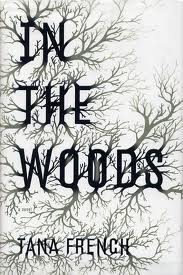
in the woodsWhen Tana French’s first novel In the Woods was published in 2007, critics and mystery lovers went wild. The book was an Edgar Award winner (no small feat for a debut novelist) and for a while everyone was talking about it. It’s been on my TBR list for ages…and I finally picked up a copy at the library book sale this year.

In the Woods is Rob Ryan’s story. Ryan is a Murder detective in Dublin, Ireland. He and his partner, the spunky Cassie Maddox, have been given the task of determining who killed twelve-year-old Katy Devlin and left her body in Knocknaree Woods. As with all good police procedurals, In the Woods offers readers plenty of red herrings and plot twists – all of it anchored by the relationship between Ryan and Maddox.

But there’s more.

In 1984, three other children went missing in Knocknaree. Two of the children were never found. Ryan was the third.

When I was found I was wearing blue denim shorts, a white cotton T-shirt, white cotton socks and white lace-up running shoes. The shoes were heavily bloodstained, the socks less heavily. Later analysis of the staining pattern showed that the blood had soaked through the shoes from the inside outwards; it had soaked through the socks, in lesser concentrations,  from the outside in. The implication was that the shoes had been removed and blood had spilled into them; some time later, when it had begun to coagulate, the shoes had been replaced on my feet, thus transferring blood to the socks. The T-shirt showed four parallel tears, between three and five inches in length, running diagonally across the back from the mid-left shoulder blade to the right back ribs.

Ryan doesn’t remember a thing. Nothing from the moment he left the house with the friends to go into the woods – where they had played all the time – until he was found and being examined in the hospital.

So when he has to return to Knocknaree, it opens the proverbial can of worms. Are there any parallels between the Devlin case and his own? Will he finally remember what happened all those years ago?

The Devlin case is interesting and as Maddox and Ryan knock on doors, ask questions and try to piece together who would have killed Katy, Ryan also wrestles with his own complicated past. All of it makes for page-turning goodness.

And the icing on the cake: Tana French can write. I mean, a great mystery doesn’t really depend on stellar writing to be entertaining and fun to read, but French gives you more bang for the buck: a compelling mystery times two, characters who are complicated and human, and writing which forces you to slow down.

As you know, I am a huge fan of Thomas H. Cook – a mystery writer who cares about the writing, too. I’d definitely stick French in that category and I look forward to reading more of her work.

The Sky is Everywhere – Jandy Nelson

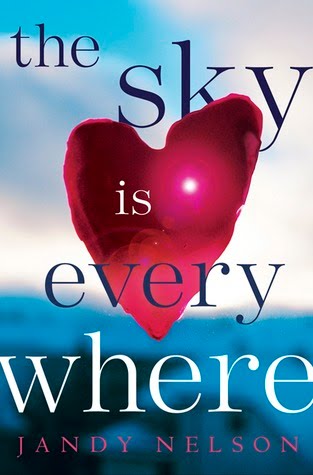
The Sky is EverywhereJandy Nelson has written a debut novel which will resonate with anyone who has ever lost someone they’ve truly loved.  The Sky is Everywhere is seventeen-year-old Lennie Walker’s journey through the grief of losing her nineteen-year-old sister.

My sister Bailey collapsed one month ago from a fatal arrhythmia while in rehearsal for a local production of Romeo & Juliet. It’s as if someone vacuumed up the horizon while we were looking the other way.

The loss of her sister isn’t the first significant loss of Lennie’s young life. She lives with her grandmother and her uncle ‘Big’ (yes, he is indeed) because her mother abandoned her and her sister when Lennie was only one. Despite the fact that Gram and Big are awesome, Lennie is finding it difficult to cope. Lucky for her, Bailey’s boyfriend, Toby, is on hand to share her grief.

“How will we do this? I say under my breath. “Day after day after day without her…”

“Oh, Len.” he turns to me, smooths the hair around my face with his hand.

I look into his sorrowful eyes and he into mine, and I think, He misses her as much as I do, and that’s when he kisses me –

There isn’t a thing I didn’t love about Lennie. She’s lived, thus far, in her sister’s shadow; Bailey was the outgoing, beautiful one.  Now, suddenly, Bailey is gone and Lennie is lost. Perhaps that’s what makes Toby so desirable. They can share their grief, but also their memories of someone they both loved.

But, then it gets complicated.

“Even in the stun of grief, my eyes roam from the black boots, up the miles of legs covered in denim, over the endless torso, and finally settle on a face so animated I wonder if I’ve interrupted a conversation between him and my music stand.

Meet Joe Fontaine, the “gypsy,” “rock star,” “pirate,” who arrived at school while Lennie was away. Suddenly Lennie finds herself in a precarious predicament: she is  impossibly drawn to Toby even as she crushes hard on Joe. Those feelings are compounded by her guilt because she’s supposed to be sad. And she is.

Make no mistake, The Sky is Everywhere is not a romantic comedy; it’s a beautifully written novel about loss, about being left behind and about what it means to be alive. All the characters are fully realized; even the adults have interior lives, a fact Lennie only begins to understand months after her sister’s death. She also comes to understand that grief is a living thing. Lennie thinks, “I don’t know how the heart withstands it.”

I’m not a fan of eReaders, but I can’t imagine reading this book on one would offer as satisfying an experience as reading the book the traditional way. The novel is filled with poetry written on scraps of paper and found in various places which are named on the back of the found object.  How they came to be collected is revealed at the end of the story. The poetry itself is beautiful (Nelson herself is a poet) and I loved its inclusion in the book.

This is a novel I will really look forward to passing on to and talking about with my students.

Our Daily Bread – Lauren B. Davis

ourdailybread

Picking a book for my book club  is serious business. The way our group works, we have one opportunity to pick and host per year and so you don’t want to choose a dud. The women in our group our merciless [cough] The White Iris [/cough] and it sucks to be on the receiving end of a book choice gone bad.  Usually I spend a lot of time choosing my book. This year I thought I would choose something from my own massive tbr  pile, but the problem was that every book I selected from my shelf was unavailable at local stores. In the end, I headed over to Indigo to peruse the shelves. The only criteria at that point was that there were enough copies on the shelf for the members of my club.

In the end, I chose a book I’d never heard of but which was plastered with accolades and a bright red sticker proclaiming that it had been longlisted for the Giller in 2012. Feeling confident of its pedigree, I brought home Lauren B. Davis’s novel Our Daily Bread.

Davis’s novel owes some of its gripping story to the real-life Golers from South Mountain, Nova Scotia. But Davis is quick to point out that Our Daily Bread is not ABOUT the Golers. While it’s true that Davis’s fictional Erskine family shares some similarities with the real-life family, that is only one small part of this mesmerizing and beautifully-written tale.

Albert Erskine is not like the rest of his violent, drug and alcohol addicted, sexually deviant family. He has already separated himself from the pack by building himself a small shack away from the main buildings on his family’s “compound”  on North Mountain.  His uncle Lloyd comments on Albert’s ‘otherness’ by saying: “You don’t act like the family at all now, do you? Don’t come visiting. Live in your little shack. Course maybe you have your own parties. That it? You have kids come to see you?”

It’s near impossible to trace the branches of  Albert’s family tree. Suffice it to say, there are a lot of younger kids with questionable DNA and Albert regards them with a mixture of annoyance and helplessness.  When ten-year-old Toots stops by his shack looking for food,  Albert ponders the sticky question: “What would she be like, if she’d been raised in some other place?” Albert often wonders how he might be different if his circumstances had been different. It’s a painful road for both Albert and the reader to travel.

Down in Gideon is another family with their own struggles: Tom and Patty Evans and their children Ivy and Bobby.  Tom is a good man. He grew up in Gideon and is well-liked and well-known. His wife, Patty, is another story. For starters, she’s from away. And although Tom seems desperately in love with her, she seems detached and unhappy. No matter what Tom does, it’s not good enough. As the tension in the household escalates, Ivy and Bobby seek shelter elsewhere. For Ivy, it is with the benign widow Dorothy Carlisle; Bobby’s new friend and confidant turns out to be  Albert Erskine. The intersection of these lives makes up the bulk of the narrative of Our Daily Bread.

I am guessing that some of the women in my group will have difficulty with the graphic (but never, imo, gratuitous) nature of the subject matter. As a mother, it’s certainly upsetting to see children in peril. The interesting thing about this book is that peril means different things to different people. Is Ivy’s falling-apart life any less horrible because she has a warm bed to sleep in? The impact Bobby and Albert have on each other’s lives is astounding and heart-breaking, too. Bobby is filled with a fifteen year old’s rage and angst and it isn’t until the novel’s powerful climax that he understands the value of his father’s love.

It truly is the mark of a great novel when you can empathize with so many of the characters. I loved Ivy’s resolute determination and Albert’s jaded hope and Dorothy’s refusal to bend to the will of small-town politics. And I loved Tom. A lot. As he copes with his unraveling marriage, as he asked himself the question, “How can I ever trust myself again?” I just saw so much of myself in him. But, ultimately, it all comes back to Albert. I so desperately wanted him to get in his truck and just go. I will be thinking about him for a long time.

Our Daily Breadisn’t ‘light’ reading, but this is a book that will stay with you long after the final page is turned.

As expected, our discussion of this book was lively and we were SO excited to be able to Tweet with Ms. Davis about her book. Here is some of our conversation:

Lauren B. Davis:  Oh, that’s wonderful, Christie!  If you have any questions, just send me a tweet! Thanks so much. #Ilovebookclubs

The Ludic Reader: Lively discussion about Our Daily Bread. @Laurenbdavis girls want to know if you think Albert ever contemplated a sexual advance towards Bobby?

Lauren B. Davis‏:  Not consciously, altho I do think the conditioned response of his childhood arose (pardon the pun) a few times, including that moment in the cabin the night Bobby came up to the compound with him.

@bitebymichelle wants to know where the wife went.

Lauren B. Davis‏: At the very end of the book?  Ah, who knows.  She is a lost soul, I fear.  I wonder if she’ll  ever come back and finally make that long walk up to the door.  What do you all think?

The Ludic Reader: Nobody is going to love her like Tom did, but we don’t think she’ll come back until her life is shit.

The Ludic Reader:  We all loved Albert so much – why did he have to die? (Altho we do know the answer.)

Lauren B. Davis‏: Can’t tell you how I tried not to kill him.  In the first draft he survived, but it just didn’t work.  I suppose it’s the symbolic sacrifice, but to be honest, I still grieve him. I found the final scene difficult to write.

The Ludic Reader: Some feel the trial was not necessary. Why did you decide to include it?

Lauren B. Davis:  It is rough, isn’t it?  But I felt readers would want to know what happened to the abusers, and since the courtroom  dialogue was taken from trial transcripts, I felt I was bearing witness to the children whose story inspired me. There was so much more of the Goler case which I did not include, because it was simply too horrible. But the response of the townspeople was important to the meaning of the book  I understand the squeamishness.  I felt I, too.  But yes, I think it’s important to be fearless in our gaze and to speak  truth to power even if our voice shakes.

Wonder – R. J. Palacio

wonder

R. J. Palacio’s debut novel Wonder is wonderful. It tells the story of ten-year-old August (Auggie) Pullman who was born with “a previously unknown type of mandibulofacial dysostosis caused by a autosomal recessive mutation in the TCOF1 gene,” or, in other words, he’s not “normal” looking.  Auggie has already had twenty-seven surgeries in an effort to correct some of the problems, but he has  come to terms with the way he looks. He doesn’t like it, but he accepts it.

August lives with his parents and 14-year-old sister Olivia (Via) in North River Heights, which is located at the very top of Manhattan. His parents have decided to take the very brave step of enrolling August in school for the first time. Until now his mom has been home schooling him. They are all hyper-aware of August’s stare-inducing face, but  his mom and dad also understand that they can’t protect him forever.

Wonder follows August through fifth grade, not only from his point of view, but from the perspective of some of his classmates and his sister, too. One of his new friends, Summer, says:

I sat with him that first day because I felt sorry for him. That’s all. Here he was, this strange-looking kid in a brand-new school. No one was talking to him. Everyone was staring at him. All the girls at my table were whispering about him. He wasn’t the only new kid at Beecher Prep, but he was the only one everyone was talking about. Julian had nicknamed him the Zombie Kid, and that’s what everyone was calling him.

August’s favourite day of the whole year is, you guessed it, Hallowe’en.  He says it’s “the best holiday in the world. It even beats Christmas. I get to dress up in a costume. I get to wear a mask. I get to go around like every other kid with a mask and no one thinks I look weird. Nobody takes a second look. Nobody notices me.” If that doesn’t break your heart, I don’t know what will.

Olivia is also spreading her wings and her fierce love for her brother is  tinged, realistically, with some adolescent id. For example, she doesn’t want her parents to attend a school play because they’ll bring August and she doesn’t want her new high school friends to see him.  Despite understanding the extreme nature of Auggie’s problem  – she would never call it deformity, but there you have it – she is starting to want some of her mother’s very  August – focused attention for herself. Still, she is a good sister.

August is  smart and funny and well-supported by parents who love him and understand that they cannot shield him from life’s cruelty forever. He is beginning to make his way in a world that may not always show him kindness and yet he is so buoyed by the love of his family and the support of friends, one can only imagine that he will be just fine.

If  the ending is perhaps just the teensiest bit instructional, the proffered lesson is one I can get behind. We must be kind to each other. Cynical readers might also argue that Wonder‘s ending is a bit saccharine. I disagree. Instead, I agree with Auggie’s mother when she  tells him: “You really are a wonder.” And so is this book.

A must read.