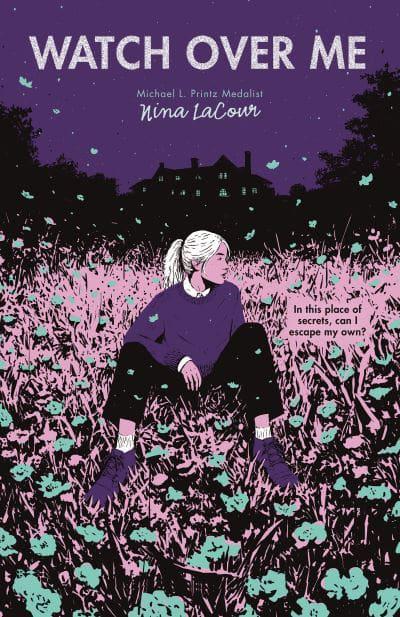
Watch Over Me is quiet – which is exactly what I said about Nina LaCour’s book We Are Okay In this award winning YA novel, LaCour tells the story of eighteen-year-old Mila who has recently aged out of the foster care system, but is offered the opportunity to remake her life as an intern at a farm in Northern California. She’s told
“Quite a few people have turned it down. And some people haven’t known what they were getting into and it hasn’t worked out. You need to want it. It’s a farm. It’s in the middle of nowhere – to one side is the ocean and in every other direction is nothing but rocky hills and open land. It’s almost always foggy and cold and there’s no cell service and no town to shop in or meet people…”
The farm is owned by Terry and Julia, an older couple who have fostered dozens of young people including Nick Bancroft, a former resident who now interviews prospective residents and who tells her that the farm “becomes home if you let it.”
It sounds sort of perfect to Mila, though, a place to take a breath and think about what might happen next. She will be teaching a nine-year-old with a traumatic past and helping out with the farm’s booth at the local farmer’s market.
Once at the farm, she meets her fellow interns, Billy and Liz, and her new student, Lee, with whom she forms an immediate bond. Mila finds comfort in the farm’s structure and in Terry and Julia, who are patient and kind. There is a kind of magic in working hard and being with these people.
But there are also ghosts – figurative and literal.
The ghost hovered in place on the moonlit field. It lifted its arms to the sky and spun in a slow circle. A girl, I thought, by the way she moved. And, in spite of myself, I was mesmerized.
This is not the first ghost Mila has ever seen, and it’s not the only ghost on the property. But Watch Over Me isn’t a ghost story, per se. It is a story about one girl’s path to healing, the memories which haunt her, and finding a place to belong in the world. It’s a beautifully written book and, strangely, a page-turner, too. (Not that those two things are mutually exclusive.) And that cover!
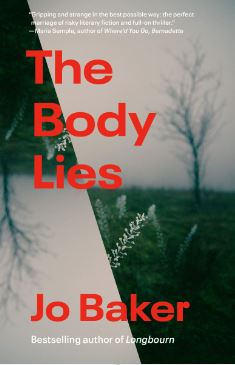
Jo Baker’s novel The Body Lies opens with two acts of violence, a body curled up in the snow “her skin blue-white, dark hair tumbled over her face” and then our unnamed narrator being attacked on her walk home, a man telling her “what he’d like to do to me” and then attempting to do it. These two seemingly unrelated events do click together eventually, but Baker’s novel goes beyond straight-up thriller.
Three years after the attack, the narrator, a novelist with one published book, has taken a job as a creative writing instructor at a small university in the north of England; London is a city where she no longer feels safe. She believes she and her son, Sammy, with whom she was pregnant when the man assaulted her, can have a more peaceful life outside of the city. Her husband, Mark, doesn’t want to give up his teaching job, so they decide to maintain two households until they can work out a better arrangement. She and Sammy rent a little house, Gill House, with a “view of open fields, a derelict barn, pylons, woodland and sky.”
The narrator feels slightly overwhelmed at work where she is offering a graduate writing class, as well as being tasked to do other jobs left by the professor who’d previously taught writing but who was now on sabbatical in Canada. She is, as it turns out, the sole creative writing instructor.
There are six students in her graduate class, including “the good-looking almost-ugly guy with the cigarettes and the scar through his eyebrow.” That’s Nicholas Palmer, a young writer who is “interested in pushing the form, pushing [his] writing as far as it will go.” Nicholas is talented and problematic. He claims to only write the truth, and soon the narrator starts to recognize herself in some of the pages Nicholas turns in.
The Body Lies has elements that make it very much a thriller: a man lurking outside of Gill House in the dusk, Nicholas’s murky past and suspect mental health, the isolated locale including lack of cell service. The novel is more ambitious than that, though, offering commentary on university politics, the way women are used as props in fiction, and how violence against them is often used as entertainment. This is a literary novel that is both beautifully written and unputdownable.
When Tyler Feder was nineteen, her much-adored mother died of cancer. Feder recounts her relationship with her mother, her mother’s brief illness and death, and the stages of guilt that follow in her beautiful graphic memoir Dancing at the Pity Party.
A mother-daughter relationship is special. I was very close to my mother and felt bereft when she died of lung cancer in 2006. I was 45 and had two young children and a flailing marriage. My mom was always in my corner. I am the oldest of four kids and being the only girl made our relationship extra special. (I know my brothers would all say they had a special relationship with mom — she was that kind of mother.)
Me -in the ugly sweater – with my brothers (L-R) Tom, James and Mark, and my parents Ed and Bobbie circa 1974. My mom did that weird “faux wood” look on the cupboards behind us.
My mom, Bobbie, was a tiny woman – 96 pounds soaking wet – who loved AM radio, instant coffee, really bad white wine, sappy movies, cooking, cheap shoes, and Tai Chi. You only had to meet her once to be considered part of the family. She loved to laugh and didn’t mind being the butt of the joke, and she often was. She made and kept friends easily because she was thoughtful and kind and generous with her time. She was a wonderful grandmother for the short time my children had her in their lives. We lived close enough to each other that my kids could go down to her house on their own from a very young age. She’d drop anything to make cookies or watch a show or go for a walk. Having her so close was handy because I am squeamish and she was a nurse. On more than one occasion she’d come running after I called and said “There’s blood.” She fixed scraped knees, and torn clothes, and broken hearts. She made perfect poached eggs and lasagna and chocolate cake with boiled icing. Following in the tradition of her mother, Sunday dinner was usually at Mom’s. There could be six people or sixteen or twenty-six; it never mattered because she could cook for all of us and never break a sweat. I miss her wise counsel, her steadfastness, and her unwavering support, even when I screwed up.
So, Feder’s memoir about her mother resonated with me. Her mom is carefully rendered, a warm and complete human being with a crazy fixation on eyebrow maintenance, distinctive spiky handwriting and “smiley brown eyes.” Feder herself is the oldest of three girls and, as I well know, being the oldest comes with both perks and hardships. By the time her mom’s health problems announce themselves, her prognosis is dire. Like my mom, Mrs. Feder died very quickly. There is hardly any time to process the illness, let alone the loss.
I found Dancing at the Pity Party to be funny and heart-wrenching in equal measure. Other than the fact that Feder is Jewish and so the customs surrounding grief and mourning are different from my own essentially atheist views, there was little in this memoir that wasn’t familiar to me. Her mother’s physical decline, the spread of the disease, the toll chemo took, the often inappropriate jokes and laughter contrasted with the grief and despair: all of it is part and parcel of what cancer steals from us, and weirdly, gives to us.
I think Feder’s memoir will certainly speak to anyone who has lost someone they’ve loved to cancer. Although it has been many years since my mom died, I found Dancing at the Pity Party cathartic, humourous, and honest. I think anyone who has ever been in Feder’s shoes will find something of themselves in these pages.
It is also a wonderful reminder that our loved ones never really leave us. I send Christmas cards by the dozens because I watched my mother do it year after year, including a little family update with each card she sent to the many people she knew from the many moves we’d made as I was growing up. I now host Sunday dinner – though not nearly as often as my mom did – and I feel her with me every time I pull a turkey from the oven or make Washington Pie. I love the family stories we tell around the dinner table, each of us remembering something different about our mom/sister/grandmother. I love sappy movies, (I can’t watch Dirty Dancing without thinking abut her), and Gordon Lightfoot. I get my work ethic from her. Whenever I say “Age is just a number” I think of her. She used to say that energy couldn’t be created or destroyed. She had the most positive energy of anyone I ever met, even when life was serving her a shit sandwich.
She is with me, I know. I hope Feder feels like her mother is with her, too. In any case, she has written a beautiful tribute to her and I highly recommend others read it.
I can’t remember the last time I read a book with a protagonist as distinctive as Cricket Cherpin, the seventeen-year-old narrator of Scott Blagden’s debut YA novel Dear Life, You Suck. Some reviewers have compared Cricket to Holden (Caulfield, The Catcher in the Rye) and I guess I can see it, but I found Cricket less navel-gazey and more sympathetic than Holden, although I guess that might just be a function of context.
Cricket has lived at the Naskeag Home for Boys in Maine since he was eight. The way Cricket describes it, “It was a minimum-security facility, so the joint looks more like a mansion than a penitentiary, but you’ll never catch me calling this jailhouse home.” More often than not, Cricket refers to it as “Prison.” The Home is run by Mother Mary, a formidable figure; “She’s a presence. A planet. She has her own gravity.” Cricket has a million names for Mother Mary: Mother Mary Mockery. Mother Mary Mushroom Cloud. Mother Mary Mafia. You get the picture.
Cricket’s mouth often gets him into trouble. So do his fists. Caretaker, the actual caretaker at the home, has been teaching Cricket to box for years, but he only uses his fists to protect the Little Ones — the younger boys who live at the home — and the weaker students at school. Cricket won’t start a fight, but he is certainly capable of ending it.
There are clues that Cricket has had it tough. When his flakey English teacher, Moxie Lord, asks her students to write a letter to anyone they “have beef with but ain’t ever had the nads to tell”, Cricket writes a letter to life. When Ms. Lord actually takes Cricket’s letter seriously, it compels him to dig a little deeper and in doing so he starts to unearth his trauma.
What are the prospects for a foul-mouthed, quick-tempered, irreverent teenager? Cricket might not think he has much going for him or much to look forward to beyond taking a more active role in his BFF’s drug business, but there are more people in Cricket’s corner than he realizes.
Sure, the story isn’t new, but Cricket’s distinctive voice, and good heart make Dear Life, You Suck, a total winner in my book.
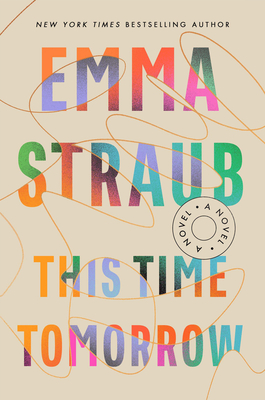
I am not even going to try to hide the fact that I loved Emma Straub’s novel This Time Tomorrow. Never mind that it takes place in New York City, a city I adore, never mind that it references all the great time travel movies (Peggy Sue Got Married, 13 Going on 30, Back to the Future), never mind that Sarah Michelle Gellar is mentioned, this novel would be fantastic even without those things.
Alice Stern is turning 40. She likes her life just fine, even if it hasn’t turned out exactly as she might have imagined. She has good friends, a sweet apartment, a boyfriend, a decent job in admissions at her old school. But her father, Leonard Stern, is currently ailing in the hospital “heavily pregnant with death” and because they are close – her mother skipped out early after “she’d had a self-actualized visit from her future consciousness” – Alice spends as much time with him as she can.
Leonard is the author of the cult classic Time Brothers, “a novel about two time-traveling brothers that had sold millions of copies and gone on to become a serialized television program that everyone watched”. She and her father had lived on Pomander Walk “a straight dash through the middle of the block, cutting from 94th to 95th Street between Broadway and West End […] with two rows of tiny houses that looked straight out of “Hansel and Gretel” locked behind a gate.”
On her 40th birthday, Alice gets drunk and ends up heading back to Pomander where she passes out in the little guardhouse and wakes up the next morning back in 1996, on the morning of her 16th birthday. It’s disconcerting because Alice was “herself, only herself, but she was both herself then and herself now. She was forty and she was sixteen.” And her father was young, “forty-nine years old. Less than a decade older than she was.”
This is an opportunity for a do-over. Perhaps she can convince Leonard to make healthier choices; perhaps she can treat herself a little more kindly because “Every second of her teenage years, Alice had thought that she was average. Average looks, average brain, average body[…] But what she saw in the mirror now made her burst into tears.”
Okay, a book about time travel logistically seems ridiculous so I didn’t spend too much time worrying about the physics/magic/science fiction of it. Instead, I paid attention to the things that Alice noticed as if for the first time. Like Emily in Thornton Wilder’s play Our Town, Alice begins to appreciate “every, every moment.”
In her acknowledgements, Straub thanks her father, acclaimed novelist Peter Straub, who died the same year this book was published – making the book just that much more poignant. She writes “thank you to my dad, for showing me what fiction could do, and for knowing that the real story is both here and not here, that we are both here and not here”.
This Time Tomorrow is full-hearted, life-affirming, and heartbreaking and I highly recommend it.
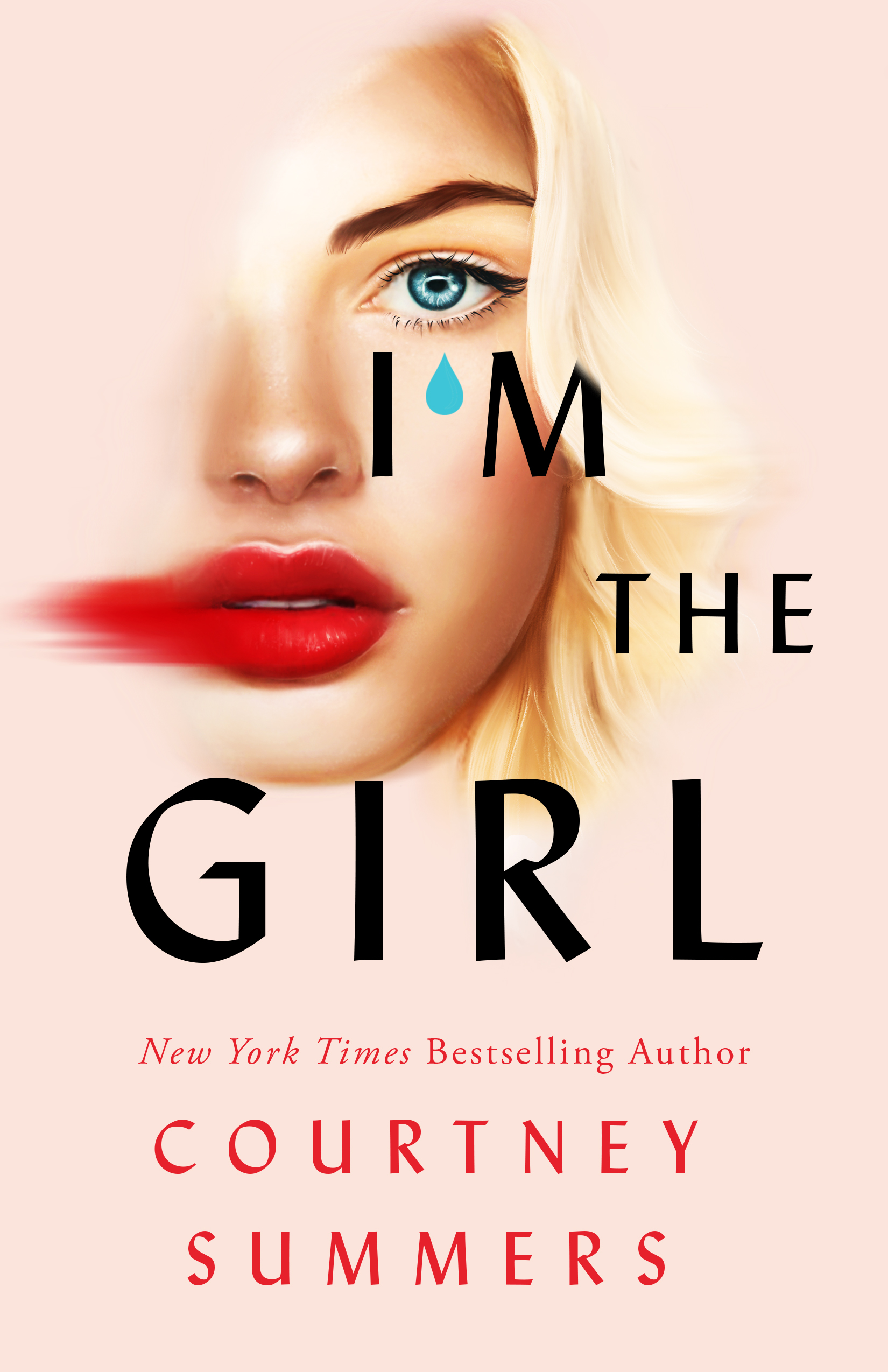
Canadian author Courtney Summers is an auto-buy for me. I know that I am guaranteed a terrific story with compelling, albeit often prickly, characters and excellent writing. I’m the Girl is Summers’ latest novel and the story treads somewhat familiar ground, but as always Summers scratches beneath the surface offering up a timely story about power, abuse, and privilege.
Sixteen-year-old Georgia Avis is untethered. She lives with her brother Tyler in a rinky-dink town called Ketchum. Their mother has died of cancer and Tyler, 30, has moved home to take care of her.
At the beginning of the novel, Georgia is hit by a car. When she comes to, her eye catches a flash of pink in the field beside her. It’s the body of 13-year-old Ashley James, daughter of a local deputy sheriff. “At first I wonder if we both got hit by the same car.” But it is clear that something much worse has happened to Ashley.
The accident happens out near Aspera, a private members-only club. It is actually Cleo Hayes, owner with her husband Matthew, who finds her on the side of the road. For as long as Georgia can remember, she’s wanted to be an Aspera girl, “moving through the resort, turning heads like I was meant to”. Instead, when the Hayes’ agree to hire Georgia, despite the fact that her mother, who had worked at Aspera before her death, had betrayed them, she discovers that she is going to be nothing more than a “glorified fetch.”
Aspera values beauty and Georgia is beautiful, but she doesn’t quite believe it. That makes her a target. There is something decidedly unsavoury, sinister even, about Aspera, although Georgia doesn’t see it as quickly as readers will.
As Georgia tries to navigate her new reality at Aspera, she begins a tentative friendship with Ashley’s older sister, Nora. Nora is determined to find out who killed her little sister and all the clues seem to point back to Aspera.
I’m the Girl is a thriller, for sure, because you’ll certainly turn the pages in an effort to discover who killed Ashley. But this is also a book that explores our relationships to our bodies and image. Georgia comes to understand that she is beautiful enough to wield a certain power over the men she encounters even though, as she tells Matthew, “I like girls.” But Georgia is too young not to realize when she is being manipulated and the consequences of her naiveté are often brutal and heartbreaking.
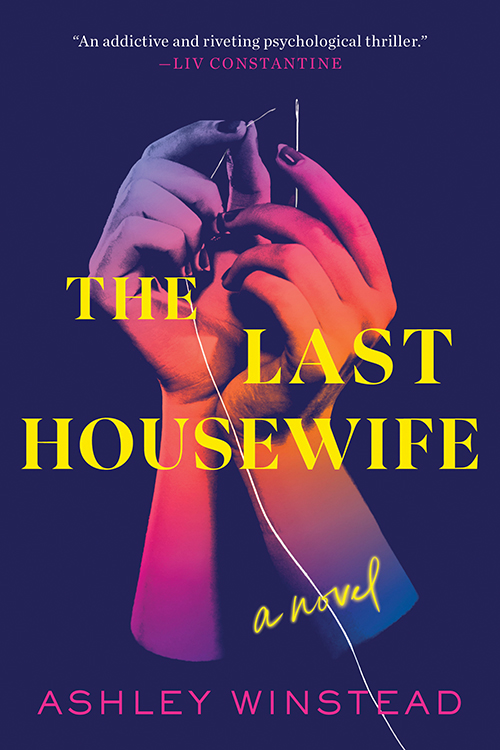
The Last Housewife, Ashley Winstead’s follow-up to her debut In My Dreams I Hold a Knife, fulfills the promise of that book and then some. Although I enjoyed some of the ride when I read her first book, ultimately I felt let down. That was definitely not the case with The Last Housewife, which was riveting from start to finish.
Shay Evans lives in luxury in Texas with her husband, Cal. She’s recently quit her job so she can concentrate on writing her book, but it isn’t going so well. When her favourite true crime podcaster, Jamie Knight, introduces his latest subject, it catapults Shay back eight years to her time as a student at Whitney College. The victim of the crime is Laurel Hargrove, Shay’s best friend from college. She’d been found “hanging from a tree on the edge of the De Young Performing Arts Centre.”
Shay and Jamie were childhood friends, but they’d lost touch over the years. Now Shay hears Jamie reaching out to her through his podcast because she “has dropped off the face of the planet.” Why? Because Laurel isn’t the only person from Shay’s past who has been found dead and Jamie sees a pattern.
Shay makes her return to the Hudson Valley and the Whitney campus and there is just no way to stop the floodgate of memories. Seeing Jamie for the first time in eight years brings back even more memories.
The last time I’d seen Jamie was senior year of college, when there’d only been a glimmer of the man who walked toward me now.
Laurel’s death forces Shay to confront some deeply traumatic memories. She agrees to tell her story to Jamie in an effort to find out the truth about what happened to Laurel. The secrets she’s been keeping for all these years are difficult and painful and concern the father of one of her roommates.
I thought he was the most beautiful man I’d ever seen. And then immediately I felt guilty because he was Rachel’s father. But he looked nothing like her. He was tall, and so…solid. His shoulders were so broad they spanned the width of the chair. He was wearing a suit, a dark one, and he was just…powerful.
Don’s power extends beyond the physical, though. Soon, Shay and her roommates, Laurel and Clem, are spending all their time with Don, listening as he expounds on the way college is not empowering young women. He encourages them to take their power back, but at the same time – as an outsider – you can see how he is manipulating the girls. And this manipulation exerts a terrible power over Shay and her friends. Unpacking it for Jamie forces Shay to see the ways she was manipulated, but even she doesn’t realize how deep and dark Don’s power and control extends. That is until she and Jamie start to investigate Laurel’s death, an investigation which takes them to a series of underground BDSM clubs.
The Last Housewife comes with all sorts of trigger warnings for suicide, rape, physical and sexual violence etc. Sensitive readers might be shocked by the book, but I wasn’t. Considering the subject matter, you might expect the book to be more graphic, but it really isn’t gratuitous at all. It’s definitely dark and uncomfortable, but it also asks lots of intriguing questions about power dynamics, the patriarchal society we find ourselves living in, and control and giving that control up – both willingly and without realizing we are doing it. It is a page-turner that is well-written, fast-paced and smart.
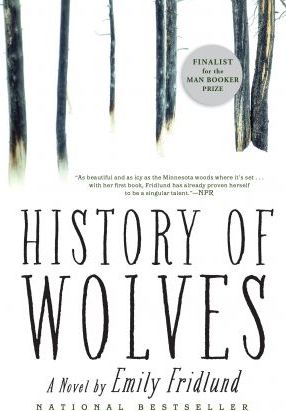
Emily Fridlund’s debut, History of Wolves, was shortlisted for the Man Booker Prize in 2017 and was the winner of the McGinnis-Ritchie Award for its first chapter. Awards generally mean very little to me because an award is no guarantee of my enjoyment. Just because someone is a NY Times best selling author doesn’t mean they can actually write. cough::Colleen Hoover::/cough
Linda lives with her parents on a lake in northern Minnesota. Once a part of a commune, Linda and her parents are all that remain.
I knew from stories how my parents had ridden in a stolen van to Loose River in the early eighties, how my father had stockpiled rifles and pot, and how, when the commune fell apart, my mother traded whatever hippie fanaticism she had left for Christianity.
The first thing to upend Linda’s life is a new teacher, Mr. Grierson, who “arrived a month before Christmas with a deep, otherworldly tan [and] wore one gold hoop earring and a brilliant white shirt with pearly buttons.”
Friendless and an outsider, Linda watches and “I wanted him to know that I saw how he looked at Lily Holburn.” The scandal about Mr. Grierson breaks in the fall of Linda’s grade nine year when he is accused of “pedophilia and sex crimes at his previous school and was promptly fired at ours.”
Then she meets four-year-old Paul and his mother, Patra, who have moved in across the lake. Thus begins a long, strange relationship which Linda recounts both as she lives it, but also from an adult perspective several years after the events take place.
At the trial they kept asking, when did you know for sure there was something wrong? And the answer was probably: right away.
History of Wolvesis beautifully written, slow-moving novel about family, memory, faith and what it is to leave your childhood behind. Highly recommended.
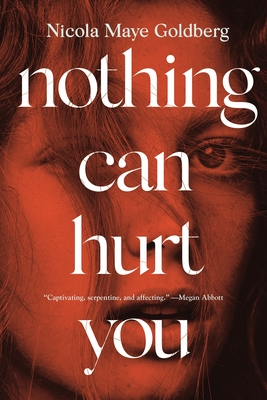
Sara Morgan, a student at a liberal arts college in upstate New York is violently killed by her boyfriend Blake Campbell. He admits to the crime straight away and pleads temporary insanity. Nicola Maye Goldberg’s beautifully written novel, Nothing Can Hurt You, follows how this violent crime affects the people in the community where Sara lived, as well as her family and friends.
Goldberg’s novel is not linear; instead, it reads like a series of short stories that don’t even necessarily connect to each other other than the fact that the character in each one is somehow connected to Sara.
Marianne, for example, has recently moved to Rhinebeck with her husband. Marianne is fragile. She suffers from episodes.
At first it was just nausea. Then came images, as clear as if I were watching them on television. They were so violent. I saw myself stretched out on a piece of wood. Then the wood snapped in half, and so did I.
It is these episodes that have driven Marianne and her husband out of NYC, where they both hope that the fresh air and slower pace of life will help Marianne heal from her trauma. It is Marianne who discovers Sara Morgan’s body.
Katherine meets Blake Campbell at Paradise Lake, a tranquil Recovery Centre.
If she’d met Blake at a party, or a bar, Katherine would have liked him a lot. It helped that he was movie-star handsome, the kind of handsome that shifted the air in the room when he walked in.
Then there’s Luna, Sara’s half sister. Luna was just two when Sara was killed so she has no real memories of her. Twenty years later she takes a job as a nanny to Blake’s daughter, Ruby.
Nothing Can Hurt Youasks you to consider our fascination with violent crime, with the perpetrators and the victims. It is not a thriller per se, but it is a thrilling read. And while you don’t come to know any of the characters very well, especially not the victim, and although there isn’t a traditional resolution or structure, this is a book that is thoughtful, intelligent and well-written.
Martha Friel, the protagonist of Meg Mason’s widely praised novel Sorrow and Bliss, is in the middle of a crisis: her marriage is imploding. Things have gotten so bad that, on their way home from the last party they attend as husband and wife, she says to him “When you do that pointing thing it makes me want to shoot you with an actual gun.” Patrick’s response? “How about we don’t talk until we get home.”
Things weren’t always so vitriolic between the pair. Once upon a time, they were each other’s most favourite person and Martha felt as though “we had been melted down and made into another thing. […] It was the happiest I have ever felt.”
Happiness, as it turns out, is a rare commodity for Martha. She and her younger sister, Ingrid, comes from a relatively dysfunctional family. Her father, Fergus Russell, is a failed poet; her mother, Celia Barry, a sculptor. Fergus and Celia still live in the family home in Shepherd’s Bush (a district in West London), but they can only afford their lives because of Celia’s sister, Winsome, who at first seems like a rich snob, but in the end turns out to be the rock in the lives of these fragile, broken people. Patrick was childhood friends with Winsome’s son, Oliver, and Martha has known him since she was sixteen.
It is around the same time that Martha meets Patrick that she wakes up with “no feeling in [her] hands and arms.” It is the beginning of a long period of ill (mental) health for Martha. No one seems able to diagnose the problem, and her family reacts with varying degrees of sympathy. Her mother “no longer came into [her] room, except once with the vacuum cleaner. She pretended not to notice [her], but made a point of vacuuming around [her] feet.” Her father “stayed up with [her] in the night, sitting on the floor, leaning against [her] bed.” Ingrid tells her “You’ve basically turned into Mum.”
Sorrow and Blisstraces Martha’s journey through this unnamed mental illness (Mason uses dashes — instead of naming it, and a nurse in my book club said it sounded like schizophrenia), but Mason herself says that the book is not really about mental illness. In an article in The Guardian, Mason said “It’s not the schizophrenia book, the bipolar book, the borderline personality book, it’s a book about what it feels like to have X or to look after someone with X and what it does to the extended family and the marriage.”
By the time the book begins, Martha has been — with varying degrees of success –managing her mental health issues, the myriad dysfunctions of her family, her own stalled career aspirations and for the last eight years, her marriage to Patrick; one woman tells her that she should feel so lucky to be “married to a man like that.” The truth of the matter is that life and relationships are complicated and Martha’s life sometimes spins itself into a deep, dark hole from which there is often no escape. Strangely, it is a tattoo artist who puts things into perspective for Martha
Everything is broken and messed up and completely fine. That is what life is. It’s only the ratios that change. Usually on their own. As soon as you think that’s it, it’s going to be like this forever, they change again.
I loved this book. I loved Martha’s family, particularly Winsome. I loved Martha’s relationship with Ingrid – which was often laugh-out-loud funny. I loved Patrick, who somehow didn’t come across as a martyr even though he was self-sacrificing. And I loved Martha, in all her messy glory.




 The Ludic Reader