The Handyman Method – Nick Cutter & Andrew F. Sullivan

I hadn’t heard anything about The Handman Method when I picked it up at the bookstore a couple weeks ago. I have an endless tbr list and so usually when I am buying books, I am choosing from that list. It’s very rare these days for me to buy books based on a cover or a blurb – unless I am familiar with the author. Nick Cutter (The Troop) aka Craig Davidson (Cascade, Cataract City, The Saturday Night Ghost Club) is a writer I really like, so when I saw this book, I bought it.

In this haunted house story, Trent and his wife, Rita, and their nine-year-old son, Milo, buy a new house in an unfinished subdivision. The house is spectacular but it “sat in moody isolation, a single unit in an otherwise uninhabited vista.” Still, it’s a dream house, the rooms “pristine, as if they had been finished with a jeweler’s attention to detail.”

It’s not perfect, though. Nick finds a crack in the master bedroom closet and it doesn’t take very long for things to start to get very weird.

Nick, a former lawyer (former because he’s on leave from his law firm after a strange incident), decides to tackle the crack on his own and that leads him to The Handyman Method, a YouTube channel where a man called Hank Trent offers his two subscribers advice on how to fix a crack in a wall and “Trent was immediately comfortable with Hank; the video was the equivalent of slipping into a comfy wool sweater.”

But Hank soon becomes an insidious force in Trent’s life and he’s not the only Internet personality who infiltrates the Saban household. Milo has his own YouTube obsession, Little Boy Blue, “a felt-limbed, Muppet-y creature [with a] toolbelt strung around its furry blue waist.”

The house starts to reveal its sinister underbelly, and I won’t spoil that for you. In many ways, it works as a haunted house story – and the backstory is …interesting. It’s hard to read a book with two authors and although Cutter explains in the notes the trajectory of the story, I’m still not quite sure how the whole thing went down.

I will say this, though: The Handyman Method didn’t really have the same emotional heft as Cutter’s other books (I am lumping all the books by Cutter/Davidson into this category.) I didn’t really care about this family as I probably should have and I am not sure if that is a flaw in the story or a flaw in me. There’s definitely some ick and some creepy moments, but I wasn’t blown away.

Brother – Ania Ahlborn

Ania Ahlborn’s novel Brother is like getting throat punched. Well, I haven’t actually ever been throat punched, but I can imagine what it’s like.

Michael Morrow is nineteen and lives with his older brother Rebel, younger sister Misty Dawn, and their parents, Wade and Claudine in a remote part of Appalachia. Another sister, Lauralynn, no longer lives at home. It is clear from the book’s opening lines that life at the Morrow house is not normal.

Michael twisted in his bed, the threadbare blanket he’d used all his life tangled around his legs. A girl was screaming bloody murder outside….Those girls usually went quiet fast. They’d yell so hard they ended up making themselves hoarse. Them’s the perks of livin’ in the wilderness, Momma had once said. You scream and scream and ain’t nobody around to hear.

It’s hard to talk about this book without spoiling the dark and sinister things that happen in this house, but I think you’ll get the idea pretty quickly. And trust me when I say – this book goes there, all the way there. And even though Michael is a part of it all, he is also an incredibly sympathetic character. His life cracks open a little bit when he meets Alice, a girl about his age who works at a local record store.

She looked like Snow White from Lauralynn’s old book of fairy tales, except a hundred times more beautiful and wearing all black, looking about as modern as the music sounded.

Meeting Alice gives Michael a sense of hope. She reminds him that the world is big and full of possibility, if he can only find a way to escape his family. But that is easier said than done. The major problem is his brother Reb, a quick-tempered drunk who is impossibly cruel and cunning. Reb easily manipulates Michael and it isn’t until the novel’s unbelievable climax that you realize just how evil he truly is.

There are no moments of levity in Ahlborn’s book; it’s as black as pitch. And that makes it sort of odd to admit that I loved it, but I really did. Despite the atrocious acts committed by Michael, I just wanted him to find a way to escape. I watched him struggle to make sense of his life and if anyone was deserving of a redemptive ending, it was certainly him.

He was starting to see how he could separate himself from the responsibility of the things he’d done in his life. The fear. The manipulation. The sense of duty that had been beaten into him.

In the sections focused on Reb, we are provided with a glimpse into how his own experiences have shaped him. It doesn’t actually make him any more likeable, though. Claudine, the book’s most reprehensible character, has a horrifying backstory, too, but I really didn’t like her.

Brother is a pulse-pounding, emotionally resonate and horrifying novel and I highly recommend it…if you have a strong stomach and aren’t prone to nightmares.

The Taking of Jake Livingston – Ryan Douglass

Jake Livingston, the sixteen-year-old protagonist of Ryan Douglass’s debut novel The Taking of Jake Livingston, can see ghosts. Mostly ghosts are harmless, at least in Jake’s experience. They live inside death loops and can’t really interact with the world of the living.

There are several theories for why death loops happen. Mine is that the people who end up trapped just didn’t see it coming, so their minds got stuck in a glitch. As opposed to some people who did see it coming, because they brought it on themselves. Maybe ghosts who killed themselves get more autonomy when they cross over.

For Jake, an outsider and one of the only Black kids at St. Clair Prep, real life is more problematic than what’s going on in the afterlife. His only friend is Grady, who is nothing more than a “long lasting accident,” and his single-mother is a pilot who is often away for two weeks at a time, leaving Jake at home alone with his older brother, Benji.

Then there’s Chad, the school bully and “one of those rugby dudes who can’t mind his own business. Chews his gum extra loud and throws his voice in your face when he speaks. Just to be heard.”

When the boy who lives next door to Jake, Matteo Mooney, turns up dead, Jake’s life gets more problematic than it already is. That’s because Jake knows who is responsible for killing Matteo. It’s Sawyer Doon, a student who had gunned down several students at Heritage High. Doon is unlike any ghost Jake has ever encountered; he can make things happen in the living world.

Douglass wisely allows readers a glimpse into Sawyer’s life by way of diary entries and by doing so he becomes less a malevolent ghost and more of a troubled teenager who is bullied and traumatized until he can’t take it anymore. While little glimpses into his life in no way excuse the violence he commits, at least they offer some explanation.

I can’t say that I really loved The Taking of Jake Livingston as far as reading experiences go. That said, Jake was an interesting character and I was really rooting for him as he started to make some new friends, one a potential romantic interest. I do think the book has insightful things about friendship, bullying, school violence and as it’s a debut, I would certainly say Douglass is a young author to watch out for.

Harrow Lake – Kat Ellis

Lola Nox is the daughter of acclaimed horror film director Nolan Nox. It’s just been the two of them since Lola’s mother, Lorelei, disappeared without a trace. Lola likes to think that nothing can spook her, but one night she comes home and discovers her father lying in a pool of blood. As he recovers, Lola is sent to Harrow Lake to stay with her maternal grandmother.

Harrow Lake is where her parents met and also the place where Nolan filmed his most famous movie, Nightjar. It’s a weird town which depends on its celebrity for revenue, hosting a week-long festival each summer to give fans of the film the opportunity to check out the locations. The man who picks Lola up at the airport tells her to “never go into Harrow Lake woods on a moonless night, or the trees might mistake you for one of their own.”

All sorts of weird things start happening to Lola in Harrow Lake. First her suitcase disappears and she has to go around town dressed in the costumes her mother wore in the movie. There’s no cell service or working landline. The townsfolk are strange, although she does meet Cora and Carter, a brother and sister whose mother was once friends with Lorelei. If things are off-kilter for Lola, they’re even more wackadoodle for readers.

Harrow Lake is haunted by Mister Jitters. Cora tells Lola that

Mister Jitters lived alone out in the woods with no family, no friends – kind of an outcast nobody wanted to know unless they were in the market to buy what he was selling, you know? He hid his moonshine in the underground tunnels that run all around the lake, but he got caught in a cave-in when the land shifted in twenty-eight.

Apparently Mister Jitters survived by eating human flesh “so he started hunting for people to drag back to his lair to eat.” This legend is legitimized by the fact that every so often, people go missing in Harrow Lake.

There’s a lot going on in Kat Ellis’ book. Family drama and secrets, repressed memories, and imaginary friends who may not be all that imaginary are just a few of the elements that ramp up the tension. It’s a lot, I have to admit, and some of the time I wasn’t even sure I knew exactly what was going on. Lola is a character to root for, though, and the book is definitely a fun read if you are a fan if things that literally go bump in the night.

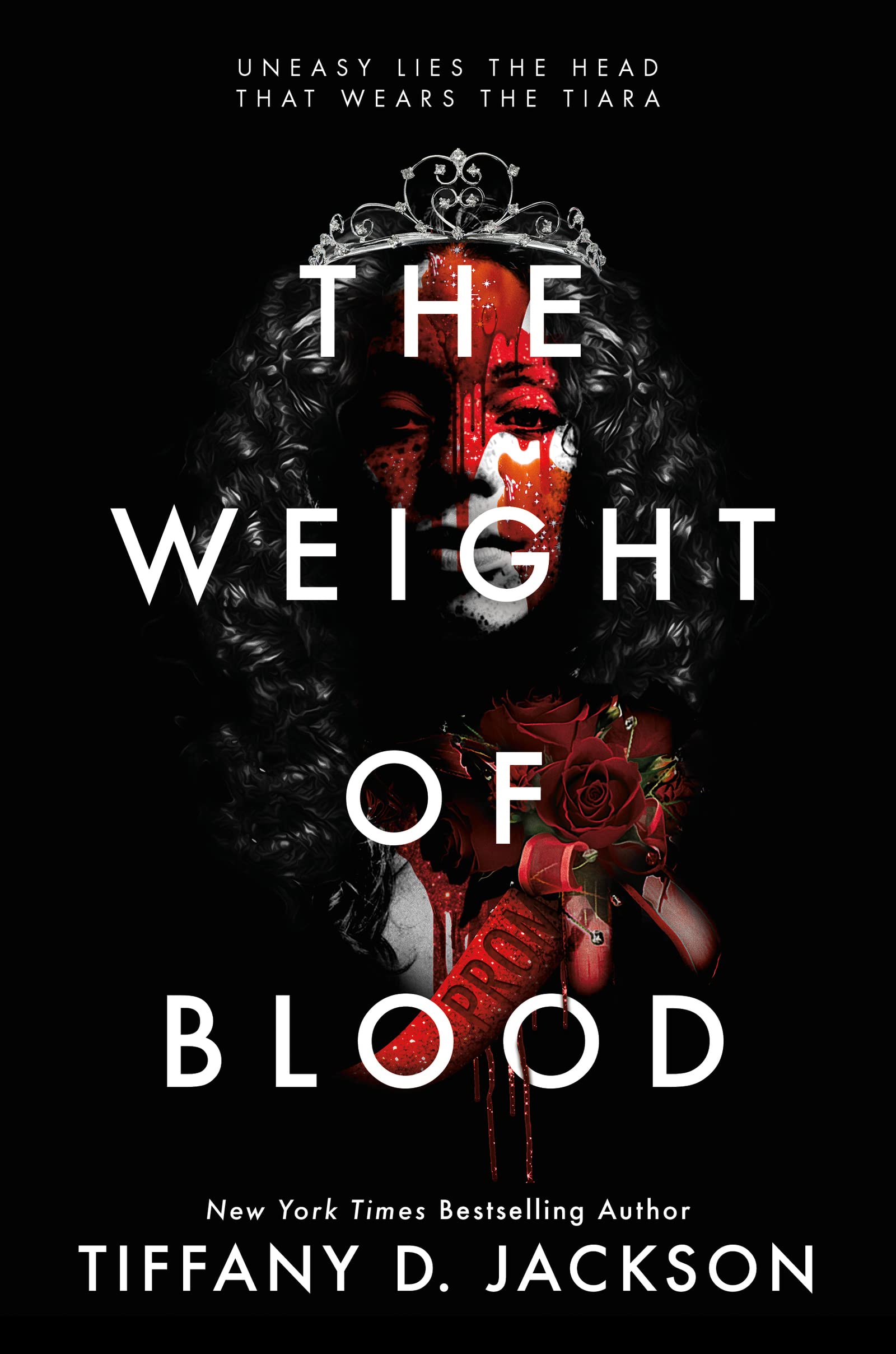
The Weight of Blood – Tiffany D. Jackson

The Weight of Blood is my third novel by Tiffany D. Jackson. (Allegedly, Monday’s Not Coming). It’s the story of Maddy Washington, a high school senior with a big secret: she’s biracial. Her father insists that she do everything possible to keep this a secret, but one day in gym class, an outdoor run catches her in the rain and soon everyone knows.

It’s not like Maddy had friends anyway; she’s odd. She wears poodle skirts and musty old sweaters, doesn’t have a cell phone and only watches old black & white movies. But when the secret that she’s been hiding her ethnicity from others gets out, the bullying ramps up. In a town that is already racially divided, the pot gets stirred even more.

Wendy decides that in order to calm things down two things should happen. 1. Instead of having a Black prom and a white prom, there should be one integrated prom and 2. her Black boyfriend, Kenny, the school’s star football player, should take Maddy to the prom. Her intentions seem sincere, but she doesn’t count on her best friend Jules’s plans for revenge after a video of her throwing pencils into Maddy’s hair goes viral and she gets into trouble.

Maddy is a sympathetic character who longs for the mother she believes died in child birth and who does her best to make her father happy, even though nothing she does seems to satisfy him. Kenny is counting the days until he can get away from his father’s relentless demands. Wendy is counting on Kenny to take her away from her impoverished life. What no one is counting on is for Kenny to develop feelings for Maddy.

If any of this sounds even remotely familiar it’s because The Weight of Blood is essentially Stephen King’s Carrie with a racism twist. I think if you aren’t familiar with Carrie you’d probably enjoy Jackson’s book, but I kept seeing Brian DePalma’s movie in my head.

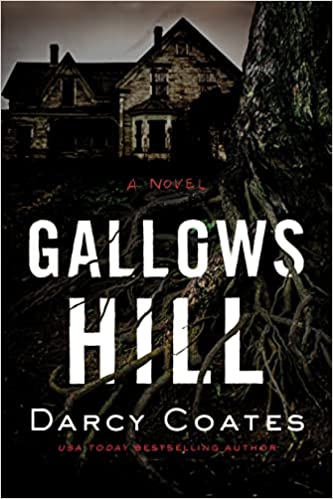
Gallows Hill – Darcy Coates

When Margot Hull’s parents, owners of Gallows Hill Winery, die suddenly, they leave their estate to their only daughter, Margot. She hasn’t been to Gallows Hill in over a decade, and has, in fact, not had any contact with her parents in many years. Raised by her maternal grandmother, Margot knows nothing about wine and very little about the property that has been in her family for generations. Now it’s hers and she has to decide whether or not she wants to keep it.

Her parents’ manager, Kant, takes her to Gallows Hill after the funeral and thus begins a very long, very slow story about the house and its bloody history. Gallows Hill “rose above her, broad and dark and heavy with shadows” and Margot feels nothing when she first sees it again. She has no memories of the place and there is nothing personal inside that connects her to its many rooms.

Darcy Coates’ Gallows Hill is what I would call an old-fashioned ghost story. It doesn’t take very long for things to start to go awry, but Kant doesn’t bother to tell her about the house’s menacing history that first night. He makes her a cup of coffee, tells her that he was the one who discovered her parents and that’s about it.

Margot’s first night in the house is marked by a few creepy discoveries: a strange life-sized effigy in the living room, a house with many halls and rooms, a lock on a window in what she assumes had once been her room, a mirror which reveals her face with

“skin [that] had shrunken and puckered. Swollen wrinkles spread over the cheeks and forehead. The eyelids had peeled back. Her eyes were swollen round orbs, barely fitting inside the sockets, bulging and bloated and swallowed in a sick gray tinge. Her lips were shrunken away from the teeth, exposing grimacing yellow bone and gray, pulpy gums.”

It takes a long time for Gallows Hill to reveal its secrets, and for patient readers who like a slow burn…good enough. But for me, the story wasn’t scary, the house wasn’t scary and Margot – a sort of mousey character to begin with – just wasn’t all that believable. Because the action doesn’t really ramp up until the last third, the first two thirds is a lot of Margot creeping around using her phone’s flashlight, being scared of just about every sound she hears.

It’s too long, but I think many readers would likely enjoy it.

Near the Bone – Christina Henry

Mattie and William live in a remote cabin on a mountain. It is clear early on that Mattie is afraid of her husband; she can easily read his “ice-chip” eyes and anticipate when he’s going to hit her. There are rules to their existence on the mountain and Mattie knows not to break them. It is also clear, early on, that something is not quite right in their marriage. Mattie is having flashes of another life and she is staring to contemplate escape.

William is not the only threat in Christina Henry’s novel Near the Bone. One day, while out checking the snares, Mattie finds a dead fox. A closer investigation reveals strange tracks – bear, maybe – in the snow, almost “like the bear was walking on its hind legs like a person.”

William and Mattie set out to find and kill the bear, but it is clear that whatever is out in the woods is not any normal predator. It’s also when they come across a hiker in the woods, the first person besides William that Mattie has seen for as long as she can remember. Even more disconcerting, the man indicates that Mattie looks familiar to him.

Near the Bone is a straightforward story of one woman’s desperate attempt to escape the monster she lives with and the monster that lives on the mountain. We don’t ever really get to know enough about either of them for the story to feel high-stakes. The book is marketed as horror, but it isn’t scary. At all. And it’s not really a thriller, either.

It tells you something when all the praise included on the book jacket and inside pages is for other books by the same author. This is a story where the faceless monster is more sympathetic than the human monster.

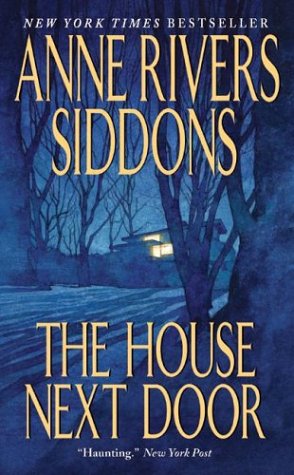
The House Next Door – Anne Rivers Siddons

When Anne Rivers Siddons’s 1978 novel The House Next Door begins, Colquitt Kennedy tells us that she and Walter are not the sort of people who you’d find in People magazine. Colquitt and her husband, Walter, are a couple of 30-something yuppies who live on a tony street in suburban Atlanta.

We have a good house, but not a grand one, in a better neighborhood than we can really afford, because the down payment was a wedding gift from my parents. We have two cars, which is all we need since there are only two of us.

Walter is the president of an advertising agency and Colquitt does free-lance public relations. By her own estimation they are “fairly ordinary people,” but all this is about to change because Colquitt and Walter have decided to tell their story to People.

The house next door is haunted, and I am the one responsible for all the publicity.

For the longest time, there was no house next door to the Kennedy’s – just an odd pie-shaped lot which seemed impossible to build on.

In our midtown neighborhood it was an oasis of wild, dark greenness, luminous in the spring with white dogwood and honeysuckle and rhododendron blooms, giving one the feeling of being cloistered away in a mountain retreat even though our street is only one block off one of the city’s main thoroughfares.

When news spreads that someone has bought the land and is intending on building, no one on the street can quite believe it. The newly married Harralsons, Buddy and Pie, (I know – what’s with the names? But, it is the South), and their young, brilliant and handsome architect Kim Dougherty do build there, though, and the house is magnificent: everyone says so. But then stuff starts to happen: dead animals around the property, Pie has a devastating mishap and then, at their housewarming party – well…

Then the Sheehans move in. Anita is emerging from a long convalescence, her husband Buck tells the Kennedys. Things don’t go all that well for them, either. Colquitt has a niggling fear that the house is sinister and that fear is confirmed by Kim, who seems to have lost his designing mojo and tells Colquitt that he believes the house is responsible.

And so it goes. More owners: more troubles, until Colquitt feels that the only thing she can do is warn people.

By today’s standards, The House Next Door isn’t particularly scary and there are some references that certainly haven’t aged well. In his introduction, Stephen King calls the book “well planned and brilliantly cast” and I would have to agree. The book has elements of the southern gothic, which include “the presence of irrational, horrific, and transgressive thoughts, desires, and impulses; grotesque characters; dark humor, and an overall angst-ridden sense of alienation” (Oxford).

I wasn’t scared reading this book, or even creeped out, but it is well-written and wholly enjoyable.

The Return – Rachel Harrison

When Elise’s best friend from college, Julie, disappears, Elise clings to the belief that she’s not really gone. Molly and Mae, their other besties, are not as optimistic as Elise. Neither is her husband, Tristan. And then “Two years to the day after she went missing, Tristan found her sitting on the porch swing. She was wearing the same clothes she’d had on when she disappeared. She did not seem confused or disoriented, but she had no memory of where she’d been for the past twenty-four months.”

Thus begins Rachel Harris’s debut novel The Return which is a weird hybrid: part horror novel and part novel about female friendships. Elise hasn’t been as successful as her friends post college. She dropped out of her Masters program and followed her married prof to Buffalo where she has a crap job and lives in a crap apartment. Mae is a fashion stylist in NYC; Molly lives on the West Coast and before she went missing, Julie and her husband were converting a farm house in Maine into a B & B.

Now that Julie is back, Mae plans a girls’ weekend in the Catskills at the Red Honey Inn – the kind of swanky spot that is totally out of Elise’s snack bracket, but how can she say no.

When they arrive, though, the Inn seems more sinister than swanky and Julie isn’t quite the girl they remember either.

She’s emaciated. She smiles and her skin pools like melted wax. Her teeth are chipped and discolored. Her eyes are bloodshot, and the green or her irises skews yellow. Her hair is string, simultaneously greasy and dry.

[…]

Her breath is awful. So awful I gag. I play it off like a sob but have to turn my head away.

Cue rooms that don’t heat up, labyrinthine halls, strange hotel staff and shadowy figures and a formerly vegetarian bestie who now loves meat. Um. I would not be sticking around. Like, at all. But Elise is nothing if not loyal. And her need to support her friend’s return to normal keeps her and Mae and Molly in the creepy hotel with their creepy friend way, way too long.

The Return is gruesome fun.

Later – Stephen King

I was a total SK stan back in the day, and while I no longer read everything he writes, I do still read him. I picked up Later yesterday morning, and didn’t stop reading until I finished the book. Like Joyland, Later is part of the Hard Case Crime series, which reissues classic crime stories for today’s audiences and also allows current writers to try their hand. While not strictly a crime story, Later does nicely slot into this series.

Jamie Conklin sees dead people.

As far as I can remember, I always have. But it’s not like in that movie with Bruce Willis. It can be interesting, it can be scary sometimes (the Central Park dude), it can be a pain in the ass, but mostly it just is

The way this works is that Jamie sees the dead soon after they have died, wearing what they were wearing, and hanging out in a place where they spent a lot of time. Jamie can ask them questions, and the dead must tell him the truth. Eventually, usually within a week, the dead start to drift away from him until they finally disappear forever.

Jamie’s mom, Tia, knows about her son’s strange ability and, more importantly, she believes in it. For a long time, it is their secret, but then she tells her girlfriend, an NYPD officer. That’s when things start to get tricky for Jamie. After the relationship between Tia and Liz goes sideways, Liz has one last favour to ask of Jamie, and it concerns a guy called Thumper. Jamie tells us at the beginning that he thinks “this is a horror story”, and he’s not wrong.

I don’t want to say too much more than that because I don’t want to spoil any of the novel’s myriad pleasures. Jamie is a terrific narrator, and Later is vintage King. The story cracks along, there are plenty of creep-a-licious moments, and a couple of surprises, too. Whenever I do read King, I am reminded of why he is loved by so many. Reading him is like sliding into your most comfortable sweats on a cold winter night. He always delivers a great tale and Later is a worthy addition to your King collection.