A Gentleman in Moscow by Amor Towles was our May book club pick and it really 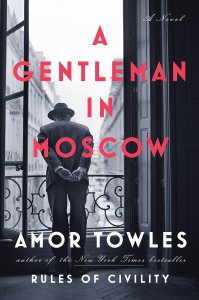 divided our group. It’s the long-winded story of Count Alexander Rostov, an aristocratic Russian in Moscow, who is sentenced to house arrest for writing the long poem Where Is It Now? which is deemed by the authorities as “a call to action”. The tribunal determines that Rostov has “succumbed irrevocably to the corruptions of his class – and now poses a threat to the very ideals he once espoused.”
Instead of being executed, though, Rostov is sentenced to house arrest. Since he currently lives at the luxurious Metropol Hotel, that hardly seems like a hardship, but Rostov is told that if he “should ever set foot outside of the Metropol again, [he] will be shot.”
Turns out that Rostov will not be returning to his luxurious apartment on the third floor. He is moved to a small space in the attic, which was
“originally built to house the butlers and ladies’ maids of the Metropol’s guests; but when the practice of traveling with servants fell out of fashion, the unused rooms had been claimed by the caprices of casual urgency – therefore warehousing scraps of lumber, broken furniture, and other assorted debris.
Rostov, as is his nature, finds a way to make the best of his new circumstances. He coasts along over the next several decades, making friends with the hotels guests and employees with ease. That’s because, we are to understand, he is charming, self-effacing and genuine. People – most people anyway – gravitate towards him.
I was in the group of people who didn’t enjoy A Gentleman in Moscow. My friend, Michelle, chose the book and she thought it was the best book she’d read in the last decade. She thought the novel was filled with meaningful observations about life; I thought the novel was an elliptical, superficial ride to nowhere. I kinda love that about literature, how it can mean different things to different people.
It’s necessarily character-driven because except for flashbacks to his childhood, Rostov is trapped in the Metropol. The novel depends on other characters to give the plot momentum. The characters are, therefore, suitably colourful: a precocious little girl, a college friend who visits, the seamstress and barber, the chef. There’s a lot of talk of food and wine.
For me, A Gentleman in Moscow is like a souffle. All show, no real substance.
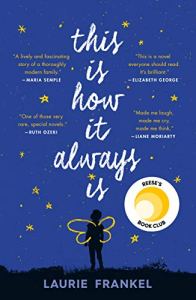 Penn is a writer-cum-stay-at-home- dad. They have five sons: Roo, Ben, the unfortunately named twins, Rigel and Orion, and finally, Claude. In almost every way the Walsh-Adamses seem to have life figured out.
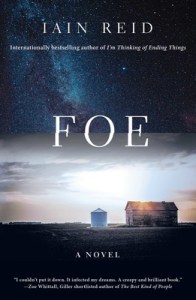 Foe is my second novel by Canadian writer Iain Reid. I read
  write about – not only because the subject matter is contentious, but because I don’t have an adequate vocabulary to express just how truly astounding this novel is. (I guess he gets the extra ‘l’ in his last name because when they were handing out talent, he got more than his share. Seriously.)
 adults…although the distinction hardly matters, really. Rooms is the story of the Walker family, alcoholic mother Charlotte; twenty-something Minna, her single-mother daughter, and Amy, her granddaughter; and Trenton, her awkward teenage son. They’ve returned to the house they once called home to pack things up. Richard, Charlotte’s ex and the children’s father, has died and now it’s been left to them to pick up the pieces. They aren’t alone. The house is inhabited by two ghosts: Sandra and Alice.
 It’s probably every parent’s worst nightmare: your child just doesn’t come home one day. That’s the premise of Jane Shemilt’s debut The Daughter.
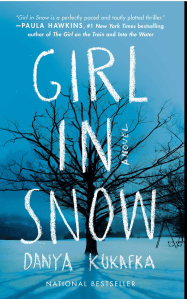 Danya Kukafka’s debut novel, Girl in Snow, earned copious praise from anybody who’s anybody in the book world and it’s easy to see why everyone was hyped up.
 The characters in Joanne Proulx’s second novel We All Love the Beautiful Girls are so perfectly imperfect that you can’t help but fall in love with them.
 Although I didn’t lead the life of debauchery that Tess, the first-person narrator of Stephanie Danler’s novel Sweetbitter lives, I did spend most of my twenties working in the service industry. Those were the best of times and the worst of times. For Tess, too.
 The Ludic Reader