The Swimming Pool – Holly LeCraw

swimmingHolly LeCraw’s novel The Swimming Pool was well-reviewed when it was published in 2010 and so my lackluster feelings about the book make me feel like I must have missed something. I kept thinking it was ultimately bound for my Book Graveyard but I kept at, mostly because LeCraw’s writing was quite lovely even though the characters were mostly irritating.

Marcella Atkinson and her husband, Anthony, and daughter, Toni, spend a summer at Cape Cod. There, they meet the McClatcheys, Cecil and Betsy and their children, Jed and Callie. Marcella is an exotic Italian goddess, somehow separate from all the other women on the Cape and Cecil is drawn to her.

Flash forward a handful of years: Cecil and Betsy are dead and adult Jed finds an old bathing suit in the family home. He knows it belongs to Marcella, so he tracks her down. He’s at loose ends – he’s taken a leave of absence from his job as a lawyer to spend time with his sister, Callie, who has just given birth to her second child and is clearly super-depressed. Everyone in this book is depressed – maybe that’s why it seemed like such a slog. Geesh, people, you’re on the Cape, you clearly have pots of money for which you don’t have to work, some of you are having sex…on the floor…lighten up already!

Marcella welcomes Jed into her world like she’s been waiting for him all her life. After their first night together (nothing happened, btw) he watches her in the kitchen.

She was barefoot. Her feet on the wooden floor were narrow, with a high, delicate arch. Her legs were slender – he’d noticed that already, but in this morning light they were not like a young girl’s legs – the skin was different, looser, not taut and smooth. He didn’t care.

It’s hard to say whether Marcella’s feelings for Jed blossom out of all those babies she lost or the fact that he’s the son of the man she had an affair with, but before you can say strudel, those two are at it like rabbits.

All the people in The Swimming Pool have angst to spare and perhaps that’s one of the main reasons I found the book so slow. Where’s the narrative center? Is this a story about Callie and her post-partum depression? Is it the story of Marcella’s estranged relationship with her daughter? Is it a love story? Is this a story about the power of secrets to destroy families? There’s all this and more crammed into the book, but at the end of the day, the pretty writing doesn’t make up for the listless plot.

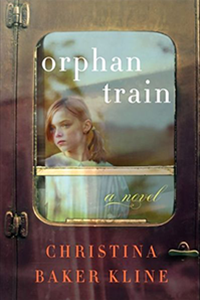
Orphan Train – Christina Baker Kline

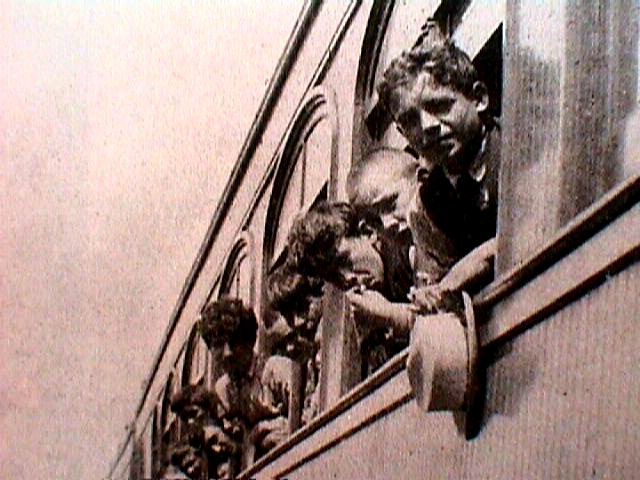
orphan2I was unaware of the history which inspired Christina Kline Baker’s novel Orphan Train. According to the notes found at the back of the book “between 1854 and 1929, so-called orphan trains transported more than two hundred thousand orphaned, abandoned, and homeless children – many of whom, like the character in this book, were first-generation Irish Catholic immigrants – from the coastal cities of the eastern United States to the Midwest for “adoption,” which often turned out to be indentured servitude.”

In a nutshell, Orphan Train is the story of one such girl.

But it is also the story of another girl, someone who is also without a home and has spent much of her childhood bouncing between foster homes. The lives of these two people (one just seventeen, the other ninety-one) intersect, but that is actually the least interesting part of this novel.

Niamh Power is a little girl when her parents decide to leave their impoverished lives in Western Ireland and make the arduous journey across the Atlantic to America.

People all around us were fleeing to America: we heard tales of oranges the size of baking potatoes; fields of grain waving under sunny skies; clean, dry timber houses with indoor plumbing and electricity. Jobs as plentiful as the fruit on the trees.

Of course, the reality is something quite different and Niamh finds herself living in a four-room apartment with her parents and three younger siblings. The landlord tells them “I have no trouble with the Irish, as long as you stay out of trouble.”  Still, Niahm is hopeful for a new start because her father “had the promise of a new job. We could pull a chain for light; the twist of a knob brought running water…”

Sadly, Niamh’s hopes for the future soon turn to despair and she finds herself alone and on one of the orphan trains bound for childrenontrainthe west. She is only nine when she is taken on a journey to find her a new family.

They call this an orphan train, children, and you are lucky to be on it. You are leaving behind an evil place, full of ignorance, poverty, and vice, for the nobility of country life.

Not so much, really.

Molly is the other character in this book. She works hard at being different in an attempt to push people away, mostly in an effort to protect herself. She had “liked the distance her persona created, the wariness and distrust she saw in the eyes of her peers.” Just lately, though, Molly has found that maintaining her ‘look’ was making her “impatient.”

When she tries to steal a copy of Jane Eyre from the local library, she is assigned community service and it is that sentence which brings her into Niamh’s world. From a prickly beginning, a real bond is formed between the two disparate women – which is both lovely and problematic for the novel.

I read Orphan Train in an afternoon; the pages literally turned themselves. I loved reading Niamh’s story. I knew nothing about these orphan trains and Niamh’s tale was fascinating and heartbreaking. Molly was also likeable. Despite her attempts at pushing people away, she is clearly smart and resilient. C’mon, her favourite book is Jane Eyre! It would be impossible for an avid reader not to like her.

For about two-thirds of the book I was all-in. Then, things started to speed up a little too much. Characters made decisions  that I just didn’t buy and things happened that made me go “oh no you didn’t!” and even though I kept turning the pages I can’t say that I enjoyed the book quite as much at the end as I did at the beginning.

Nevertheless, Orphan Train is an entertaining and well-written novel about a relatively unknown part of American history and many readers would certainly enjoy it.

Off the shelf – Books with buzz

Listen here.

There are always books which are hotly anticipated by the reading public. Avid readers know, for example, when their favourite authors will be releasing their next book. Publishers generate a lot of pre-publishing buzz and of course books that win major literary awards also garner extra attention. I think book buying has changed a lot in the forty years I’ve been buying books with my own money. I remember when the Scholastic book flyer was my only real opportunity to purchase books – and then all you had was this teensy picture of the cover and the equivalent of a tweet’s worth of description. When you could actually go into a book store and hold the books, well, that was heaven. I have books on my shelf that literally cost 60 cents. Can you believe that? Social media wasn’t even a twinkle in someone’s eye – so word of mouth or checking out top ten lists was really the only ways to hear which books were hot and which books were not.

goldfinchThen you have to wonder if all books with buzz are created equal. Even books that have won big prizes are often mired in controversy. A huge portion of my summer reading time was taken up with reading Donna Tartt’s Pulitzer Prize winning magnum opus The Goldfinch. That book is close to 800 pages long and, for me at least, was thrilling and infuriating in equal measure. Not everyone agreed that it should have won the Pulitzer. In fact, The Washington Post called it “the disappointing novel that just won a Pulitzer”  Lady Vowell Smith, a professor of literature and book blogger, wondered about the book’s merits in her post “Did the Goldfinch Deserve the Pulitzer?” The UK’s Sunday Times said “”no amount of straining for high-flown uplift can disguise the fact that The Goldfinch is a turkey”. Newsweek’s review said that “The Goldfinch neither sings nor flies.”  Ouch.

I am not much of a follower when it comes to reading, but I have read both of Tartt’s previous novels: The Secret History, which is my favourite and The Little Friend. Plus, my son, Con, read this book and really liked it – so I had to give it a go.

Okay – so what’s this book about?

Theo Decker is thirteen and lives with his mother in New York City. They are on their way to a meeting at Theo’s school when they duck into the Metropolitan Museum of Art to take a look at an exhibit of Dutch paintings, including that of The Goldfinch. Theo’s mom wanders off to the gift shop; Theo is entranced by a girl of about the same age, who is in the museum with her grandfather…and then there’s an explosion and Theo’s life is irrevocably altered. The old man, as he’s dying, encourages – insists – that Theo make off with the painting of the goldfinch and that’s certainly central to the book’s story – but that’s really only a part of it. Tartt wrestles with a lot of themes here: family – both biological and the family you choose, art, beauty, addiction. Theo isn’t necessarily the most likable character, even though lots of bad things happen to him he also makes a lot of poor decisions. This book is chock-a-block with characters – Boris, the friend Theo meets while living in Vegas; Hobie, a furniture restorer, the Barbours, family friends who care for Theo when his mom first dies. A lot of people, lots of stuff happens and it’s up to the reader to decide whether any of it matters. Does it add up to something worthy of praise in the form of the Pulitzer – that is if you think prizes matter at all. It probably mattered to Tartt to the tune of $100,000.

Another book that everyone is talking about is Harper Lee’s Go Set a Watchman. When this manuscript was “discovered” it Watchmanexploded the publishing world – but really: discovered? Everyone knows Harper Lee for To Kill a Mockingbird. Other than Mockingbird she is best known for helping Truman Capote (her childhood friend) with research for his book In Cold Blood. She published a handful of essays – but that’s it. She’s notoriously private and always maintained she’d never publish another book. So, it’s  kinda suspicious that this one turned up after all these years. It’s essentially an early draft of Mockingbird. Lee is 89, lives in assisted care and I think the publication of this book has something to do with the fact that her sister, Alice, sort of her gatekeeper, passed away. There’s an awesome series of articles about the discovery of Watchman and a look back at Mockingbird in The New Republic. The first article, “The Suspicious Story Behind Go Set a Watchman” is particularly interesting for anyone who wants to read the whole story behind the birth of Watchman.
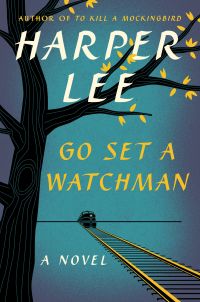
Personally, I’ve resisted buying the book. I love Mockingbird. I’ve read it multiple times. Since I believe I know the story of how Watchman came to be, I’m reluctant to hand over my $30 for a book which has pretty much been panned. And of course it has – it’s unedited because Lee is blind and deaf and perhaps even the teensiest bit senile. The book’s a cash grab. I hate that.

In any case – if you are looking for something to read, something that will guarantee you something to talk about at the water cooler or dinner or with your book club, it’s easy to find those books.

If you are interested in  books that generated buzz, check out some of these titles.
girlontrain

The Girl on the Train – Paula Hawkins

This is this year’s Gone Girl. It’s on my tbr shelf, but I haven’t read it yet. I’m probably just about the last person who hasn’t.
purity

Purity – Jonathan Franzen

Famous for dissing Oprah, there’s no arguing with Franzen’s talent. His newest book hits the shelves Sept. 15.
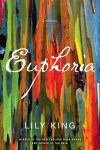
Euphoria

Euphoria – Lily King

Inspired by the life of Margaret Mead and almost universally praised.
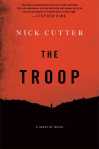
troop

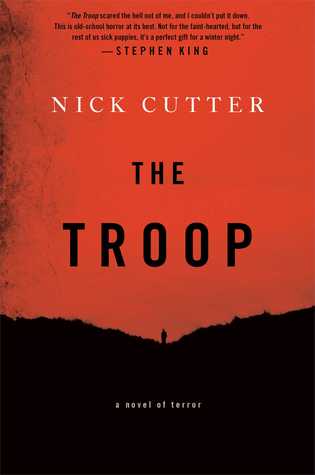
The Troop – Nick Cutter

Unless you love horror novels, you might not have heard of this one…but trust me, everyone was talking about it.
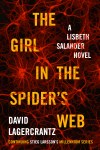
spider

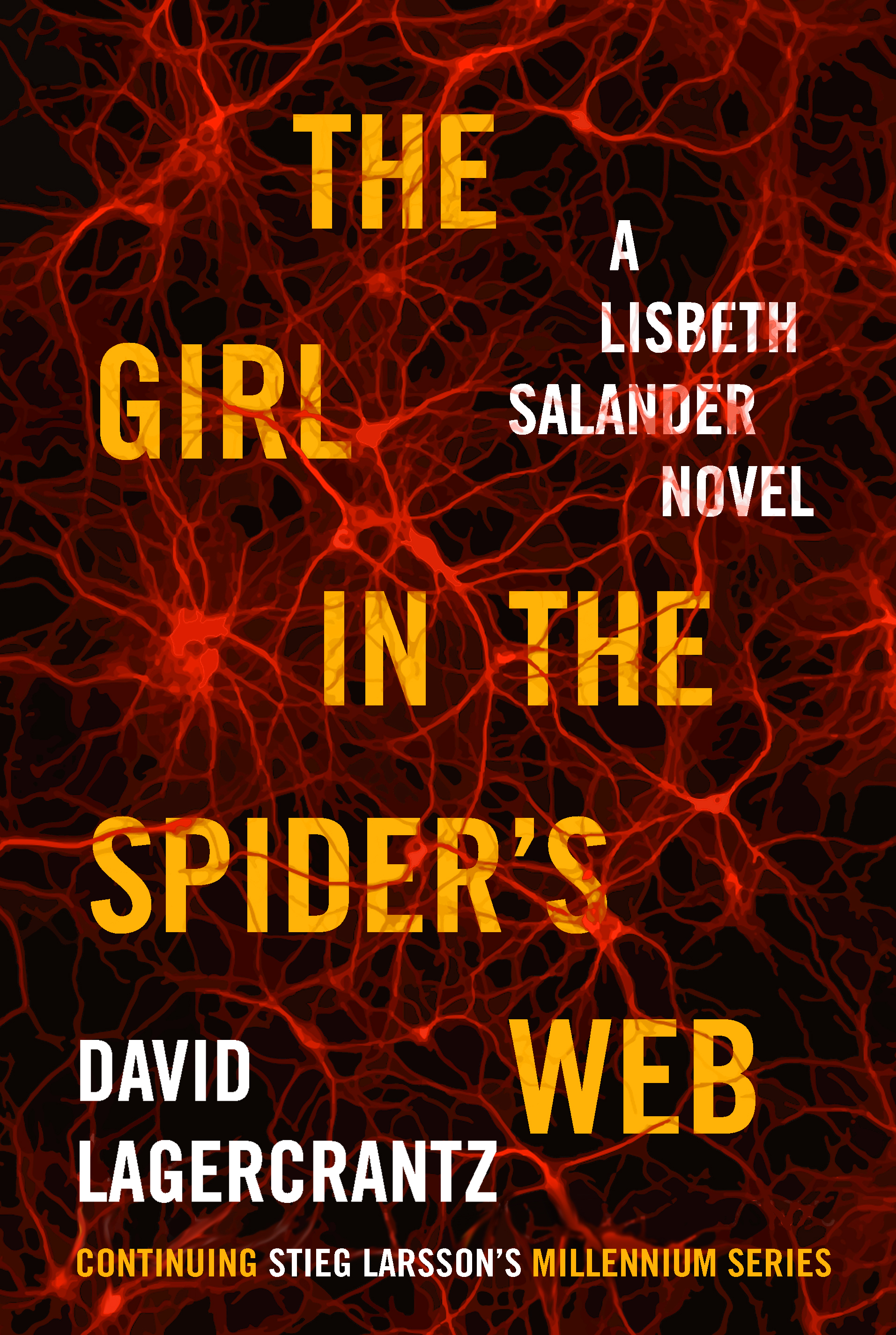
The Girl in the Spider’s Web – David Lagercrantz

Stieg Larsson, the creator of the Millennium series, died of a heart attack in 2004, but that apparently won’t stop Lisbeth Salander, the series’ prickly computer genius. Hotly anticipated and hitting the shelves Sept 1st.
Some Girls – Kristin McCloy

somegirlsWhat’s a reader to do when the author of her favourite book of all time, Velocity, encourages her to read another of her books. Said book, Kristin McCloy’s second novel, Some Girls, has been languishing on my tbr shelf for at least four years and clearly I intended to read it at some point – I wouldn’t have purchased it otherwise. The stakes are higher now, though. Not only have I recently re-read Velocity, but I’ve struck up a sort of email friendship with Ms. McCloy and I was terrified to read this book (I have her third book, Hollywood Savage also waiting to be read) for a variety of reasons – not the least of which is that I LOVE Velocity and nothing could ever be as good as that. Also, what happens if I don’t like this book or the next one. Gah!

Ok, I have my reader-angst out of the way.

Some Girls is the story of twenty-three-year-old Claire Stearn who flees Alamogordo, New Mexico for the bright lights of NYC circa  1989. She leaves behind her divorced and bitter mother, Ginny, her older sister, Paula, and her boyfriend, a rancher called Tommy. In many ways, Claire isn’t different from  any other young person who, desperate to escape the confines of their lives,  makes their way to a big city. Claire is “aware of her spine, the strength of her pelvic bones, the arches of her feet. It was all she needed to support her.” She’s ready to become herself.

New York City is very much a character In Some Girls. The 1989 version depicted in the novel isn’t the NYC of 2015.  As Claire rides into the city from the airport she describes it as “a terror, glossy buildings rising out of a slum, a place of anarchy, crooked and lawless, impenetrable.” I remember that New York because I spent some time in the city in the 1980s. It was a little rough around the edges, but for a small-town girl like me still spectacular.

For that reason, I related to Claire’s assimilation. Those first few days, when Claire had “nothing but the speed with which she walked and her sunglasses to protect her” reminded me of me. I was so desperate to blend in, to not look like I knew nothing.  I’m sure, in the early days,  you could smell my terror from twenty paces. And like, Claire, I was constantly pinching myself and thinking “I’m here, I’m in New York City, a shock each time.”

McCloy captures the frenetic energy, the heat and the smells, the blast of icy cold, the patchwork quilt of humanity that is New York City and I liked revisiting the city through her lens very much.

Claire meets Jade the day she moves into her little downtown apartment. (I sort of imagine it in the area of Soho, but I wasn’t familiar with White Street so I had to look it up on the map.)  Jade is, to Claire’s innocent eyes, “a woman of the city.”  When they finally spend a little time together Claire feels “the crushing sense of anonymity that had dogged her ever since she had arrived suddenly turned to reveal its other face.” There is erotic tension between the two women from the start.

This relationship was a little harder for me to relate to than Ellie’s relationship with Jesse in Velocity. I am worldly enough now to know that sexuality is vastly more fluid than I might have viewed it when I was Claire’s age. I think my unease has more to do with the fact that I didn’t particularly care for Jade. She seemed self-centered and reckless and I never felt as though I knew her well enough to understand Claire’s attraction to her. She was startlingly beautiful, but surely there was more to it than that? That said, I felt as though Claire’s feelings – about Jade, about her life, about what she was leaving behind when she said good-bye to Tommy – were authentic. Complicated and messy, but certainly true.

Some Girls does a fine job of capturing a young adult on the precipice of figuring her life out, making choices that are both difficult and blindingly simple. While I may not have been able to relate to Claire’s relationship with Jade, I did love her journey and ultimately, isn’t that the point?

I also loved the writing in this novel. It was different from Velocity, which demonstrates the depth of McCloy’s talents, but still a pleasure to read.

Beautiful Ruins – Jess Walter

ruinsBeautiful Ruins was our last book club read before our summer hiatus. It was also the winner of ‘Best book’ or, because we don’t want to hurt anyone’s feelings when we vote, ‘book we enjoyed reading most.’ (Thus, ‘worst’ book becomes ‘book we enjoyed reading least.’) It was a close race between Beautiful Ruins and The Children Act, but Walter’s fantastic novel won out in the end.

I think I am going to have a hard time articulating how I feel about this book because it hit a lot of my sweet spots. First of all, part of the novel is set in Italy and anyone who knows me knows that Italy is my dream place. I’ve been twice and often say that some day I will live there…even if it’s just for a few months. The other part of the novel takes place in Hollywood and, okay, I admit it – I love the movie stars. Just ask anyone who was around during the David Boreanaz days…or go further back…the Robby Benson days. Ask my students how often I work Ryan Gosling into the conversation.

Beautiful Ruins follows the fortunes of Pasquale Tursi in Porto Vergogna, a tiny village near the Cinque Terre region of Italy only “it was smaller, more remote and not as picturesque.”

Port Vergogna was a tight cluster of a dozen old whitewashed houses, an abandoned chapel, and the town’s only commercial interest – the tiny hotel and café owned by Pasquale’s family – all huddled like a herd of a sleeping goats in a crease in the sheer cliffs.

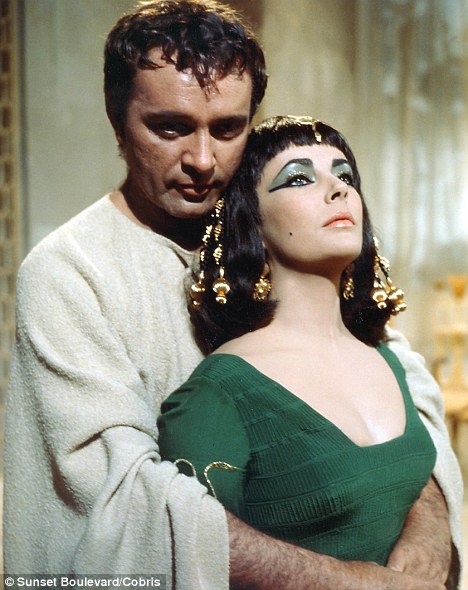
Pasquale has come back to Porto Vergogna to care for his dying mother and the Hotel Adequate View, and it is there he meets actress Dee Moray, who has come, by mistake, to the Adequate View to rest. She is in Italy to make Cleopatra, the notoriously bad film starring Richard Burton and Elizabeth Taylor.

richard and elizabeth

The title’s phony – her job’s all assisting, no developing, and she’s nobody’s chief. She tends Michael’s whims. Answers his calls and e-mails, goes for his sandwiches and coffee.

It is not the life she dreamed of when she gave up her doctoral film studies program to make movies. Now she is on the cusp of leaving her job and going to work as a curator for a private film museum.

If you’re wondering how Walter is going to dovetail these two eras, all I can say is “masterfully.” We flip back to 1960’s Italy and recent-day Hollywood and neither story (or character) gets short-shrift. In fact Claire and Pasquale aren’t the only characters who populate this story – even minor characters are fully realized including Pasquale’s elderly aunt Valeria (who provides comic relief), Shane (a screenwriter who comes to Hollywood to pitch the story of cowboy cannibals), Alvis (the failed American writer who comes to Porto Vergogna once a year to work on his novel) and even Daryl, Claire’s hunky porn-addicted boyfriend. Even Michael Deane, slimy as he is, is fun to spend time with.

And what are these Beautiful Ruins? Well, I think that’s probably the reason everyone and their dog was praising this book when it came out in 2012. This is a great story – funny and heartbreaking in equal measure – about big ideas. The people that you meet and the choices that you make are at the very center of this book. But as Alvis says to Dee, “No one gets to tell you what your life means.”

I loved this book so much.

Highly recommended.

Help For The Haunted – John Searles

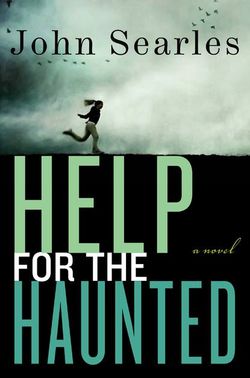
helpforthehauntedIn some ways, John Searles reminds me of Thomas H. Cook, an American mystery writer I greatly admire. Neither of them seem to have any interest in racing through plot points to the story’s denouement. Instead, like Cook, Searles lets us get to know the characters and takes his time layering the narrative. Help For The Haunted  is the story of Sylvie Mason and her unusual family. It is part mystery, part ghost story and part family drama.

“Whenever the phone rang late at night, I lay in my narrow bed and listened,” says 14-year-old Sylvie, the narrator of the story. Late night phone calls are a common occurrence in the Mason household. That’s because Sylvie’s parents, Sylvester and Rose, have a very unusual occupation: they help the haunted. People who feel they may be themselves, or have family members who are, possessed by demons seek them out and the Masons help with prayer. It’s not a lucrative business, people ” only occasionally enclosed a check to cover gas or airline tickets” but it is work that the Masons, particularly the father, feel strongly about.

The phone call that opens the novel is of a more personal nature, though. The Mason’s eldest daughter, also named Rose, has asked her parents to meet her at the church in town.  Rose has always been difficult and on this occasion she has been missing for three days. The Masons don’t want to miss this opportunity to reconcile with their daughter so, despite the blizzard, they head to the church, Sylvie in tow.

When Sylvie’s dad disappears inside the church Sylvie admits to “a prickly feeling of dread” and when her mother ventures inside to see what is taking so long, Sylvie drifts off to sleep only to be awoken by the sound of gun shots.

Searles manages a tricky narrative here. The present blends seamlessly with the past as Sylvie tries to unlock some of her family’s most closely guarded secrets. There is a compelling cast of secondary characters including her father’s estranged older brother, Howie; Sam Heekin, the reporter who wrote a book about her parents; Albert Lynch, the man currently sitting in jail for the murder of her parents.

Sylvie herself, despite her young age, is tenacious and resourceful. A year after the death of her parents, as the police put the finishing touches on their case against Albert Lynch, Sylvie starts to doubt what she saw in the church on that fateful night. New evidence shows that Lynch might, in fact, be innocent and it makes Sylvie question her earlier statement. But if Lynch isn’t the killer, who is?

Help For The Haunted is a literary page-turner. The whodunit isn’t actually as important as Sylvie’s journey from adolescent to adult and the demons, ultimately, are more human than you might think. Great book.

The Storied Life of A. J. Fikry – Gabrielle Zevin

zevin_firky_hcThere are  winks and nudges galore in Gabrielle Zevin’s novel The Storied Life of A. J. Fikry. This was my book club’s first read in 2015 and we gathered last night to discuss its merits. Okay, mostly everyone discussed its merits; I acted like Mr. Fikry himself before the magical arrival of Maya: grouchy.  I didn’t like the book. It was easy to read and I wanted to like it and I should have liked it, given the subject matter – bookstores and the importance of reading…but, nope, just fell flat for me.

A. J. owns a bookstore on the fictional island of Alice which is located somewhere off the coast of Hyannis. He’s a cranky guy, but I guess it’s understandable because his wife, Nic, was killed in a car accident just under two years ago and A.J. hasn’t recovered. The book store was a joint venture, dreamed up when he and Nic were in grad school. They took her trust fund money and opened Island Books, but A.J. is sort of the antithesis of everything you’d expect in a book store owner.

In fact, we meet first meet him when Amelia Loman arrives at his store to discuss Knightley Press’s winter catalogue. A.J. tells her:

I do not like postmodernism, postapocalyptic settings, postmortem narrators, or magical realism. I rarely respond to supposedly clever formal devices, multiple fonts, pictures where there shouldn’t be – basically, gimmicks of any kind. I find literary fiction about the Holocaust or any other major world tragedy to be distasteful  – non-fiction only please. I do not like genre mash-ups a la the literary detective novel or the literary fantasy. Literary should be literary and genre should be genre, and crossbreeding rarely results in anything satisfying. I do not like children’s books, especially ones with orphans, and I prefer not to clutter my shelves with young adult. I do not like anything over four hundred pages or under one hundred fifty pages. I am repulsed by ghostwritten novels by reality television stars, celebrity picture books, sports memoirs, movie tie-in editions, novelty items, and – I imagine this goes without saying – vampires. I rarely stock debuts, chick lit, poetry or translations.

Island Books sounds like an inviting place, eh? Luckily for A.J. it’s the only game in town and Alice Island is a popular summer destination, so he makes a decent living off the tourists. He’s not popular with the locals, but no wonder; he has the personality of a prickly pear.

Then, someone leaves a baby in the bookstore and A.J.’s paternal instincts kick in. In short order, much like the Grinch, A.J.’s heart grows in size and everything in his life changes. Of course it does.

The Storied Life of A.J. Fikry should have been right up my alley. Island Books inhabit a purple Victorian cottage. Be still my heart. A.J. has my dream job in my dream building. The novel is peppered with references to short stories and plays and novels, most of which I am intimately familiar (thus the nudging and winking). It celebrates the value and power of books.

Yet.

I just didn’t believe it. There was something hokey and almost to-good-to-be-true about the book, about the characters and their journeys. I won’t go so far as to say that it was a waste of time, but I have to admit to being disappointed when I finished.

Heading Out to Wonderful – Robert Goolrick

wonderfulI was a big fan of Robert Goolrick’s novel, A Reliable Wife, but I turned the last page of his second novel, Heading Out to Wonderful, this morning with le sigh. And not a good sigh.

Brownsburg, Virginia, 1948 is the setting of Goolrick’s novel. It was

the kind of town that existed in the years right after the war, where the terrible American wanting hadn’t touched yet, where most people lived a simple life without yearning for things they couldn’t have

Into this town comes Charlie Beale. He arrived in “a beat-up old pickup truck. On the seat beside him were two suitcases. One was thin cardboard and had seen a lot of wear and in it were all of Charlie Beale’s clothes and a set of butcher knives as sharp as razors.” The other suitcase is full of money.

Turns out that Charlie is not as dicey as he sounds, though. He quickly gets a job at the town butcher shop and soon ingratiated himself with the people of Brownsburg.

He cut the meat and charmed the ladies, one by one, but, more than charm, he treated every one, black and white, from the richest to the shoeless poorest, from dollars and dimes, with the same deference and shy kindness, and he won their hearts…

He makes good friends with Will, the man who owns the butcher shop, and Will’s wife, Alma, a school teacher. He becomes especially close to Will and Alma’s five-year-old son, Sam.

Charlie tells Will that he is ready to settle down, that he has been looking for “something wonderful.” Brownsburg, apparently, is it.

Or maybe the something wonderful is Sylvan. She’s the young wife of the town’s richest man, Boaty Glass. Sylvan is an uneducated girl who comes from the country (the reader will eventually find out how the repulsive Boaty landed such a beautiful wife) and dreams of being a movie star.

…she looked as though she had stepped into the shop from another part of the world…Her lips were a crimson slash, her hair pulled up in gleaming blonde waves on top of her head, held with tortoise-shell combs studded with rhinestones. Se wore dark sunglasses, a thing no other woman in town even thought to own, and espadrilles, tied with grosgrain ribbons around her ankles…

None of the other women speak to her, but Charlie can’t take her eyes off her and “she went off in his head and his heart like a firecracker.”

It is Charlie’s illicit relationship with Sylvan that makes up the bulk of the story. Sam, although only a child, plays a pivotal role.

Heading Out to Wonderful should work. I can’t quite figure out why it doesn’t. Perhaps it is because I never really felt like I understood either Charlie or Sylvan. The reader is never privy to Charlie’s past and so never clearly understands what motivates him. Where did all his money come from, for example? Why does he prefer to sleep outside on the ground?

Sylvan is, I think, something of a cold fish. Her only friend is Claudie, a black seamstress in town. Sure, I could chalk up her behavior to youth, but I just didn’t  like her and so it was hard to root for the relationship between her and Charlie.

Goolrick is a great writer and for that reason, Heading Out to Wonderful was easy enough to read, but lots of things about this book irked me (Charlie’s younger brother turning up out of the blue, for example)  and so I can’t wholeheartedly recommend it. Loads of other people/critics loved it, though.

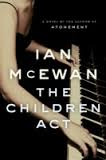
The Children Act – Ian McEwan

children's actYou can always count on Ian McEwan to bring on the controversy. This is the fourth of the prolific British novelist’s books we’ve read in my book club and it prompted a loud and lively discussion.

The main character in The Children Act is Fiona Maye, a High Court judge in London. She’s about to turn 60 when her husband, Jack, a professor, announces that he wants to have an affair (this is not a spoiler, really; the revelation comes pretty much on page one). She’s been married for thirty years and until the moment her husband tells her that he needs this because it is his “last shot” and he’s “yet to hear evidence of an afterlife” she’s been pretty smug about her life. While it is true that they don’t have children, they have had a good life together: enough money, a nice home, friendship and, Fiona admits ” she had always loved him.”  To say that Jack’s confession throws Fiona for a loop is an understatement, but she does not intend to “manage the rest of her life alone.”

Into Fiona’s fractured world comes the Henry family. Adam Henry is seventeen and he and his family are refusing the blood transfusion that may save his life because they are Jehovah’s Witnesses. According to their beliefs, “Mixing your own blood with the blood of an animal or another human being is pollution, contamination. It’s a rejection of the Creator’s wonderful gift. That’s why God specifically forbids it in Genesis and Leviticus and Acts.”

Fiona’s actually quite adept at sorting through these complicated and potentially incendiary cases, but even she is not quite sure what compels her to reserve judgment so she can visit Adam in the hospital. She calls the decision “a sentimental error,” but she goes anyway and discovers that seventeen – year – old Adam is , despite his illness, “beautiful.” It’ll be obvious to careful readers that Fiona is smitten. In fact, during the first few moments of their meeting she “caught nothing.” The visit that follows is charged – not sexually, really, although there is an element of that, too – with the kind of energy that happens when two people discover a shared passion. For Adam and Fiona it is music and poetry. Ultimately, Fiona’s decision sets Adam on a path that has profound consequences for them both.

I really liked The Children Act. McEwan is a smart writer and he’s adept at spinning a narrative that is tightly focused. Fiona isn’t a particularly likeable character, but that doesn’t mean it’s impossible to relate to her. This is a great book to get people talking.


Love Remains – Glen Duncan

loveremains Despite the fact that Glen Duncan’s novel Love Remains is only 277 pages long, it took me about a month to finish because I could never read any more than a few pages at a time before my head started to swim. But I mean that as a compliment rather than a criticism.  Duncan is a well-known and much-praised British author who was new to me when I purchased the book. Love Remains, Duncan’s second novel, is almost relentlessly grim. Again – it’s a compliment, honest. There’s no way you could tackle the topic Duncan does in this book without being a skillful craftsman, and Duncan really is an amazing writer.

Nick and Chloe meet in university.

The possibility of love revealed itself to Chloe immediately, in a shock. When they sat opposite each other that first Wednesday, with rain streaking the steamed windows and the delicious reek of frying bacon in the air, she felt (thinking, stunned, of the billions who had felt it, down the long bloodied canvas of history) the first murderous utterance of romance: It’s him.

Nick’s feelings for Chloe are slightly more ambivalent, although he does concede that “he was so curious about what was going on inside her that lust only followed along afterwards, like an obligatory bit of luggage.”

The trajectory of Chloe and Nick’s love story is mostly straightforward. They get married, start jobs,  eventually move into “their first proper home” in Clapham and then, as with many marriages, the romantic impetus drains from their lives as they deal with life’s mundane and often inane decisions: “Do you think we should get a futon, Nick.”  As their marriage closes in around them, “They suffered, periodically, the ache of familiarity.” Chloe feels “suffocated by the sound of his breath escaping through his nostrils” and Nick “hated her for having finished the shape of him.”

Duncan masterfully builds a marriage from the ground up and then, just as masterfully, wrenches it apart in the most violent way possible.  In some ways, it’s almost as though Duncan has written two different, but equally compelling, novels.

When the novel opens, Nick has already left London because that’s what you do “when the future ended.” He is on a journey, it seems, of self-destruction comprised of smoking, drinking and having sadomasochistic sex. None of it makes sense until we learn what has happened to Chloe and, even then, it’d difficult to wrap your head around. Is Nick reprehensible for having abandoned his wife? That’s just one of the moral questions Duncan asks you to consider in this book.

Chloe is on a journey of her own. It is equally compelling, although perhaps more heartbreaking. The random and horrific experience she has endured has sharpened her: “Her face in the mirror, barely recognizable, rewritten.”

What was once a path traveled together, has now been cleaved. I commend Duncan for resisting the urge to offer a tidy ending, but the ending, nonetheless, is remarkable.

Highly recommended.