Falling Under – Danielle Younge-Ullman

fallingunderMara, the twenty-something narrator of Danielle Younge-Ullman’s debut novel, Falling Under,  is a hot mess.  An artist who can barely leave the house except to have violent sex with a guy called Erik, Mara is clearly suffering from the cumulative effects of a troubled childhood, a stalled career, and a tragic love affair.

Love always starts out well. There’s the chemistry, the lust, the gushy, dizzy, cuddly, branch-eating phase, the wonder, the miracle of togetherness. And then familiarity creeps in, followed by disappointment, disillusionment, fear. Inevitably there is silence, screaming, betrayal, the wrenching ugly truth when you look at each other and know that your love has turned to disgust, despair, boredom, hate.  All happiness gone, all rotten, all rotting.

Good times.

Younge-Ullman employs two narrative perspectives in the novel. When Mara is reliving her childhood, her parents’ messy divorce and its fallout, she speaks in the second person: “When you reach out to touch your shiny new bike, Mommy might start yelling at Daddy about how dare he spend their money and how you’re only five and what do you  need a new bike for anyway?”  The second person works really well here because Mara’s childhood, although not abusive per se, scars her emotionally and clearly hinders her ability to form healthy attachments to people as she grows up.  The second person narration is both intensely personal and somehow distancing at the same time.

The rest of the novel is first person narration and Mara’s black humour, self-doubt, and neurosis is on full display. The reader will traipse though Mara’s life, often unwillingly, as she negotiates the thorny relationship with her mom, her co-dependent relationship with her dad and, miraculously, a new relationship with Hugo. But none of it is easy for Mara. She just doesn’t have the skills. She is sure, as was Chicken Little, that the sky is about to fall.

He would never understand how being happy makes you sad. How the happier you are the more you know the sky is about to explode into tiny, sparkling shards of glass that will pick up speed as they fall to the earth and slice right through you leaving your skin with little holes in it, leaving your heart bleeding.

Mara is, despite her quirks, a likable character. And Falling Under is a good book. But I can’t say that I finished it feeling wholly satisfied. Was it really necessary to make all the dangling and complicated threads of Mara’s life into a beautiful cat’s cradle in the end? Maybe — but given her problems, I wouldn’t have minded a little less happily-ever-after.
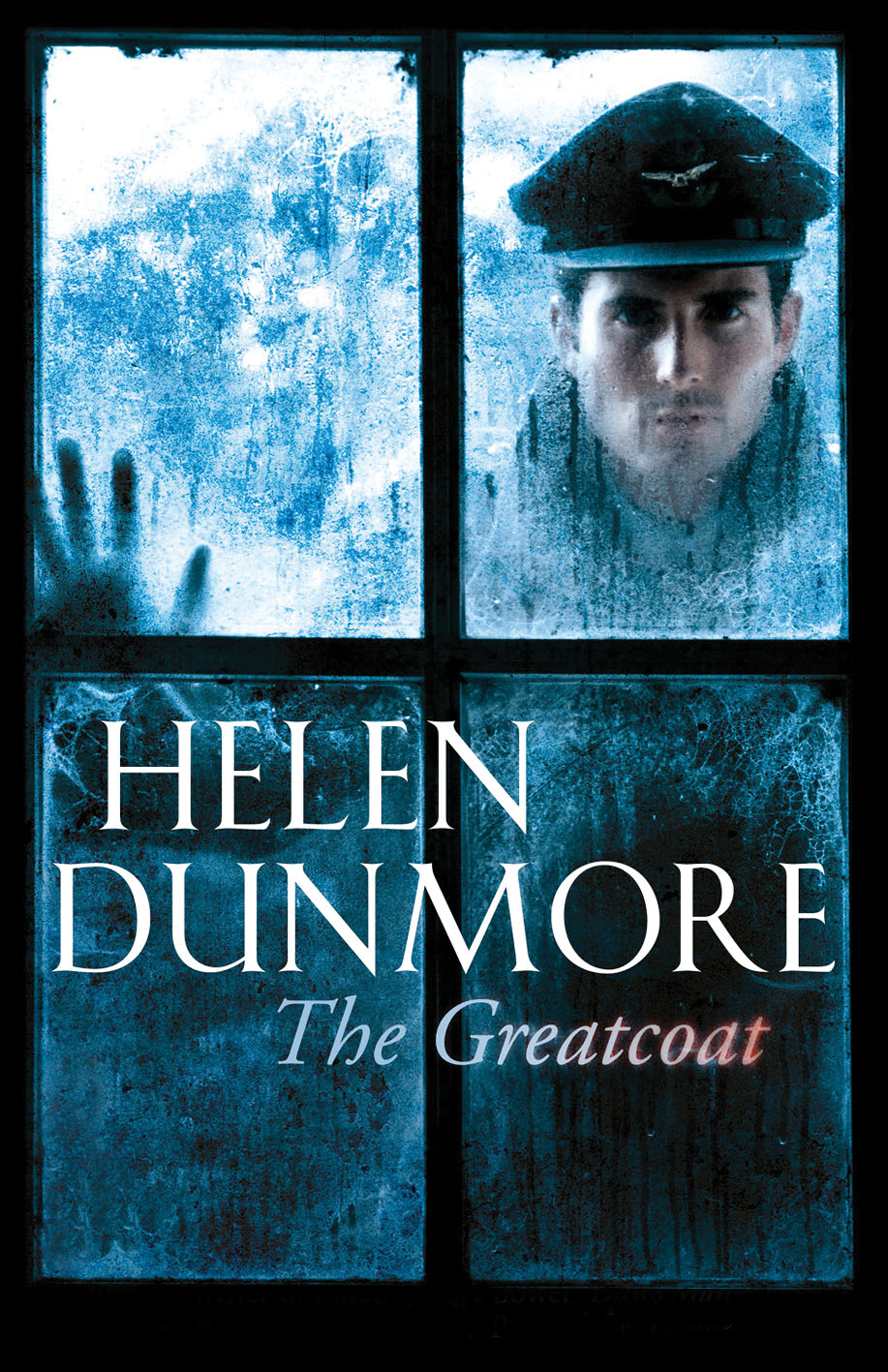
The Greatcoat – Helen Dunmore

The-Greatcoat-Helen-DunmoreI am a Helen Dunmore fan, no doubt about it. Although her novels aren’t especially propulsive, I still find her work compulsively readable. She is particularly gifted when it comes to creating believable and sympathetic characters and her novels are moody and atmospheric. Her latest novel, The Greatcoat, caught my eye in the horror section – of all places.

Isabel Carey is a young bride who has moved to Yorkshire with her husband, Philip, a doctor.  They’ve been married just two months and this move to Kirby Minster is isolating: it’s a small town where they are clearly outsiders, Isabel is somewhat socially awkward and “bookish” and although she considers finding some work, Philip doesn’t think it would be acceptable for the wife of the town’s newest doctor to be employed. It is 1952. Although the war is over, both Isabel and Philip “had been children of wartime and all they asked of food was that it should fill them up.”  Good thing: Isabel is a terrible cook and food is still scarce and often unpalatable. Isabel is clearly out of her depth. She is “a little girl pretending to be her mother.”

Isabel and her husband take a flat in the home of Mrs. Atkinson, a woman Isabel dislikes on sight.  The flat is cold and grey and their landlady is constantly pacing the floor over their head. There is something decidedly menacing about her.

One particularly cold night, Isabel roots around in a closet looking for something extra to put on the bed and discovers an old greatcoat.

It was a coat. An RAF   officer’s greatcoat, she saw at once, recognising it with a thud of memory. There was the heavy, slatey grey-blue  wool, the buttons, the belt with its heavy brass buckle. It had been folded up a long time, she thought.

The coat does provide warmth, but it also brings a visitor. A man comes to her window:

She saw the pallor of his face first, as it seemed to bob against the glass, too high up to belong to a man who had his feet on the ground. The street lamp lit him from the side, throwing the sharp shadow of his cap over his face. He was too close, inside the railings that separated the house from the pavement. Of course, the level of the ground there was higher than the level of the floor inside. That was why he seemed to float in middair. A man in a greatcoat.

From this point in the novel, Dunmore elegantly weaves past and present as Isabel succombs to loneliness and the thrall of the past.

The Greatcoat was published under the Hammer banner (horror aficianados will recognize Hammer as the British production company behind  films like The Woman in Black and Let Me In.  They’ve entered the world of publishing in partnership with Arrow, a subsidiary of Random House. It’s nice to read a “horror” story that is less about blood and guts and more about the kind of chills which prickle your skin and send a shiver up your back. There are no mosters here, but The Greatcoat is deliciously creepy nonetheless.

The Painted Girls – Cathy Marie Buchanan

paintedgirlsCathy Marie Buchanan has taken French Impressionist Edgar Degas’  famous statue, Little Dancer Aged Fourteen, and spun it into a piece of historical fiction that will probably really appeal to some people, but with which I had a love/hate relationship. The Painted Girls is the story of sisters Marie and Antoinette van Goethem, who live with their widowed, absinthe addicted mother and younger sister, Charlotte, in Paris in 1878.

The novel alternates between elder sister Antoinette’s story and Marie’s as they struggle to survive extreme poverty and a mother who just doesn’t seem capable of taking care of them. The only way out of their dire situation is if Marie makes it into the Paris Opera (Antoinette tried, but didn’t have the talent) as a ballet dancer.

With the news that Maman is sending us to the dance school, Charlotte threads her fingers together, knuckles whitening as she works to hide her joy. I keep my face still, my dismay to myself. The petit rats – the scrawny, hopeful girls, vying for the quickest feet, the lightest leap, the prettiest arms – are babies, like Charlotte, some as young as six. It puts my nerves jumping, the idea of me – a thirteen-year-old –  lost among them at the barre, rats who earn their name by scurrying along the Opera corridors, hungry and dirty and sniffing out crumbs of charity.

It is here that she comes to the attention of Mr. Degas, who hires her to model for him. Marie wants something more for her life and she is willing to do whatever it takes to achieve it. That is not to say that she consistently makes wise choices, only that the desire for a better life is what drives her.

Antoinette’s journey is slightly more bumpy. She has already been turned out of the ballet as she is too old and not talented enough. She understands Marie’s talents, though, and works to ensure she has the lessons she needs to progress and food in her belly. Then she meets Emile Abadie, a shifty boy who  “is not much to look at …with that scrub-brushy hair of his creeping low on his forehead and his black eyes sinking too deep beneath the weighty ridge of his brow and his jaw looking like the sort of those on dogs it is best to steer away from in the streets.” Emile is a charmer though and even when he abuses Antoinette, she stays by his side.

The Painted Girls evokes the Belle Époque  period in Paris, a period which is, ironically, characterized by optimism. Art, music, literature and scientific discoveries all flourished during the period and Buchanan makes the most of them including bringing Zola’s masterpiece L’Assommoir to the stage.

Despite the novel’s merits (and there are many) I found the book overwritten. Not badly written, the language is often quite beautiful, just over-written. The sisters’ journey was intriguing, I am a fan of both the ballet and Degas, but at times I have to admit that it was a bit of a slog.

The Last Weekend – Blake Morrison

Henry Sutton wrote an interesting article for The Guardian about fiction’s most unreliable narrators but he neglected to include Ian from Blake images_list_co_uk_blake-morrison-the-last-weeken-chatto-and-windusB-LST072324Morrison’s entertaining novel The Last Weekend. Although it isn’t obvious in the beginning, Ian’s narrative soon starts to unravel as he and his wife, Em, spend a weekend with his college roommate, Ollie and Ollie’s partner, Daisy.

Ian is a primary school teacher and Em a social worker and their marriage seems solid enough, although perhaps slightly lacklustre compared to Ollie and Daisy’s relationship. Of course, as seen through a series of reminiscences, we come to understand that Ian’s relationship with Ollie has always been fraught with jealousy and a certain prickliness.

“I met Ollie in my second term at university,” Ian remembers. He admits that he was something of a loner, that  he “didn’t really have a circle – my circle was me.” Ollie, on the other hand, was hard to miss  with his “brooding intensity. ” He was, Ian admits, “smart, sporty, funny, handsome and popular – the antithesis of me.” And yet chance throws the two young men together and a strangely co-dependent relationship is forged.

It’s a lopsided relationship, a fact that Ian is only too willing point out.

The essential contrasts, all to our disadvantage, go: large Georgian house in west London vs small modern semi in Ilkeston; Range Rover and BMW vs Ford Fiesta; Mauritius (Florence, Antigua, etc.) vs Lanzarote (if we’re lucky); The Ivy vs Pizza Express; Royal Opera House vs local Odeon; Waitrose vs Morrisons; golden couple vs pair of ugly toads. I exaggerate but not much.

So, off Ian and Em go, on a hot summer weekend at the end of August to visit with Ollie and Daisy. And it’s weird from the very start. First of all, Ian had been expecting “posh” accommodations instead of a dwelling which is a “serious disappointment.”  Secondly, there is a strange undercurrent in the house. At first I suspected that Ollie wasn’t all Ian had described, but as it turns out much of what happens during that weekend is not quite as it seems.

“As to the events of August,” Ian says near the beginning of the novel, “I don’t suppose I’ll ever get over them. I’m the kind of guy who feels guilty even when he’s innocent…” It’s only after I finished reading The Last Weekend that these words revealed their menacing underbelly. And much of the novel is strangely creepy and also deeply funny. Once it is revealed that Ian is not to be trusted, The Last Weekend becomes a wonderful maze of a book.

April & Oliver – Tess Callahan

april and oliverApril Simone is the damaged character at the centre of Tess Callahan’s first novel, April & Oliver. She’s the sort of twenty-something girl you want to shake and hug because her decision-making skills have been compromised. (I was going to say  somewhere along the road to adulthood, but once you know her story – you know exactly where it happened). We meet her younger, much adored, brother Buddy, first. But we don’t get to spend much time with him because he’s killed in a car accident:

He wishes he could let her know that what’s happening now doesn’t hurt at all. He’s fine. A veil of snow shrouds the windshield. Buddy feels a growing pause between each breath, like a stride lengthening, an aperture opening by increments, until at last he slips through.

And then we meet Oliver, her cousin – although they are not linked by blood. (They sort of share a grandmother because their fathers had been step-brothers through Nana’s second marriage. I think.) April and Oliver had been best friends as children and teenagers, but they have been estranged for the last several years. Oliver moved away and they just lost touch. Buddy’s funeral brings them back together – but their reunion is anything but happy.

Every conversation between April and Oliver is barbed and sexually charged. While Oliver  certainly seems like the one who has it all together (he’s a law student, engaged to the beautiful and selfless, Bernadette), the longer he spends with April the more his carefully constructed life seems to unravel.

April tells him: “I know your problem, Oliver. In your head is a girl who doesn’t exist.”

Bernadette is all too aware of April’s magnetic pull. “Is there anything else I should know about?” she queries. “It was never like that,” Oliver answers. But it’s a lie because between April and Oliver it’s always been like that and denying it is perhaps part of the problem.

But April is a mess. She’s recently invoked a no contact order against her boyfriend, TJ – a man with a horrific past who is both scary and somehow sympathetic. She lives in a dump of an apartment, has a crap job and has so many skeletons in her closet, it’s no wonder she pushes Oliver away. He knows her too well.

They know each other too well, and their ability to peer into each other’s dark corners both antagonizes and comforts them.

April & Oliver is beautifully written; I’ll give it that. And when I finished the book I did feel satisfied  despite its ambiguous ending.  Sometimes, I admit, I did find the book frustrating – but perhaps I was meant to. I am a sucker for angst, though,  and April & Oliver has that in spades.

The World More Full of Weeping – Robert J. Wiersema

worldCanadian writer Robert J. Wiersema packs a punch with his novella, The World More Full of Weeping. On the day before going to spend a week with his mother in the city, eleven-year-old Brian disappears in the woods behind his father’s house. Wiersema manages to capture both the frantic search, and Brian’s journey in the forest in 77 short pages.

Part of the novella’s success can be attributed to Wiersema’s split narrative. Beginning in present day, Brian shares breakfast with his father who explains to him that his mother will be picking him up at four. Brian clearly doesn’t want to go, but lacks the ability, it seems, to articulate his feelings. Instead, he tells his father, Jeff, that “Carly said you wouldn’t understand.”

Carly’s true identity is just one of the mysteries of The World More Full of Weeping. Who is  Carly? At first she just seems like a girl Brian meets in the woods. But after Brian goes missing  and Jeff calls over to his neighbour John’s to see if he’s seen him, the mention of her name causes John to encourage Jeff to call “Chuck Minette at the Search and Recuse…call him right now.”

Many years ago, Jeff also went missing in the woods only to turn up the next day. When men from the community come to help look for Brian, it’s clear everyone thinks his disappearance might be a case of “like father, like son,” with the same happy outcome.

While the search for Brian continues, we see him in the woods with Carly, who is always in the same thin dress despite the uncertain March weather, her cheeks “pink and rosy.” Carly knows secret places in the woods, places Brian has not ever seen.  She asks him if he wants to “see more hidden things” and promises she can show him “a whole hidden world in the forest.”

There are no concrete answers in The World More Full of Weeping. The only certainty is that when given the opportunity Jeff and Brian made different choices. Perhaps some readers will take comfort in Brian’s decision, but for me I can’t quite get the picture of Jeff on his knees, crying for what is lost,  out of my head.

A magical and profoundly moving story.

The White Devil – Justin Evans

whitedevil

SHE WALKS IN BEAUTY

SHE walks in beauty, like the night

Of cloudless climes and starry skies;

And all that’s best of dark and bright

Meet in her aspect and her eyes:

Thus mellow’d to that tender light

Which heaven to gaudy day denies.

One shade the more, one ray the less,

Had half impair’d the nameless grace

Which waves in every raven tress,

Or softly lightens o’er her face;

Where thoughts serenely sweet express

How pure, how dear their dwelling-place.

And on that cheek, and o’er that brow,

So soft, so calm, yet eloquent,

The smiles that win, the tints that glow,

But tell of days in goodness spent,

A mind at peace with all below,

A heart whose love is innocent!

Justin Evans has written an intriguing and creepy novel inspired partly, I’m sure, by the year he spent at Harrow School. That’s right, the Harrow school in The White Devil  is a real place situated about 40  minutes from London’s West End. From the look of its website, it’s  prestigious and slightly stuffy.

The White Devil cashes in on verisimilitude of another sort: Lord Byron was once a pupil at Harrow. Byron (George Gordon Byron 1788-1824) was quite notorious, even in his own life time and not just for his Romantic poetry. He was sexually voracious and had several lovers including his half-sister. It has long been speculated, although likely not by Byron’s peers, that he was bisexual.

header-overview-11

Andrew Taylor, the novel’s 17-year-old protagonist, has been sent to Harrow in a last ditch effort to make him agreeable to American universities. He’s been turfed from his own school back home for drug-related crimes and this is his last chance to get his shit together – so to speak. From the moment he arrives at Harrow, though, Andrew feels out of place. He doesn’t understand the humour or the customs or how he’s going to survive a year in this place that is “dank, cramped and old.”

header-overview-03

When Andrew’s first friend at Harrow is found dead under somewhat suspicious circumstances, things start to go a little hairy at Harrow.  For one thing, Andrew is the person who found the dead boy. For another, he thinks he saw the person who did it. And he’s been having these dreams. Because there’s apparently a ghost at Harrow. And for some reason the ghost seems focused on Andrew. By lucky or rather unlucky (as it turns out) coincidence, Andrew is a dead ringer for the dead poet.

As the ghost at Harrow becomes more menacing, Andrew tries to figure out who it is and what it wants. He’s not alone. Helping him are Piers Fawkes, the school’s tortured poet-in-residence; Judith Kahn, a crisp librarian and Persephone, the headmaster’s daughter and the only female student at Harrow.

The White Devil is delightfully twisty and I’ll tell you one thing, it made me very curious about Byron’s life. I have read other novels featuring Byron: the YA novel  AngelMonster by Veronica Bennett and Tom Holland’s excellent Lord of the Dead, but The White Devil really brought its A game: it’s well-written, smart and a lot of gothic fun.

Evans talks about the book here.

Girl in Translation – Jean Kwok

girlintranslation“I was born with a talent. Not for dance, or comedy, or anything so delightful. I’ve always had a knack for school.”

Kimberly is just eleven when she and her ‘Ma’ emigrate to the States from Hong Kong. It has long been a dream of theirs to live in America and chase that American dream. They arrive in New York with little more than the clothes on their backs and the promise of a new life.

Ma’s older sister, Paula, has been living in New York with Uncle Bob for several years and it is because of her sponsorship that Kimberly and Ma are able to come. But don’t get the idea that Paula is a benevolent soul; she’s not. She puts Ma to work in the clothing factory Bob manages – a sweat shop – and sets her sister and niece up in an apartment so filthy, cold,  and vermin infested that the building has all but been condemned. In fact, every other tenant has moved out in anticipation of the building’s eventual demolition.

Girl in Translation is the story of Kimberly’s adolescence. It’s about her tenacity. If she weren’t so intelligent, her story might have had a different conclusion, but she’s really smart and it’s those smarts that propel her past many of the obstacles poverty throws in her way.

Those of us who live a comfortable existence likely have very little notion of how incredibly difficult it must be for people who come to, let’s say, North America and try to start a new life. Immigrants often don’t speak the language. They don’t understand how anything works. They have no way of advocating for themselves. Kimberly and her mother also have to contend with Aunt Paula who is petty and stingy and jealous of Kimberly’s smarts.

There are moments of kindness in Kimberly’s story. She makes a true friend early on. She finds success academically. She makes her way. But there are significant sacrifices, too.

Like Kimberly, Kwok was born in Hong Kong and immigrated to New York City. She, too, worked at a sweat shop. She, too, was smart. At about the two third mark in the novel I started to feel a bit…I don’t know…disappointed. Kimberly’s story remained interesting, but I really felt as though this was a memoir dressed in a novel’s cloak. I can’t quite explain why, but I didn’t feel like I was living the story anymore, I felt like I was being told the story. And then…that thing I HATE. Flash forward twelve years and let’s see where all the characters are. Nothing about that epilogue – over-wrought and schmaltzy as it was – seemed to fit the rest of the novel.

That’s my own personal niggle, though. The novel has been praised all over the place and I suspect the vast majority of readers will really enjoy it.

A Spell of Winter – Helen Dunmore

I read Helen Dunmore’s novel With Your Crooked Heart many years ago and I’ve been a fan ever since. Dunmore’s prose is like poetry, every sentence a perfect balance between beauty and truth. Winner of the 1996 Orange Prize, A Spell of Winter is the fourth novel I’ve read by her, and I have also read her collection of short stories, Ice Cream.

A Spell of Winter concerns the lives of Cathy and Rob, siblings who live in a crumbling manor house in England.  Their guardian is their maternal grandfather, “the man from nowhere”, and through Cathy’s eyes he is seen as stern and unsympathetic.

When A Spell of Winter begins Rob is nine and Cathy, our narrator, is seven. They are on their way, with Miss Gallagher, to visit their father in the sanatorium. It’s a traumatic visit –and also marks the last time the children will see their father alive.

The children’s lives are isolated and insular. Cathy remarks:

I look at the house, still and breathless in the frost. I have got what I wanted. A spell of winter hangs over it, and everyone has gone.

Perhaps it is isolation, perhaps it is abandonment, but eventually Cathy and Rob cross the line. Their story reminds me of another pair of British siblings who become lovers: Cathy and Christopher, protagonists of Carolyn Slaughter’s magnificent novel Relations (also published as The Story of the Weasel.) With a huge house to creep around in and no one to pay attention to them except Kate, their trusted servant, Cathy and Rob fall into a strange spell of their own.

A Spell of Winter has many of the gothic hallmarks: the gloomy dwelling, a sense of mystery, a distressed heroine. As long as Cathy and Rob are isolated, they manage to sustain their relationship. But like winter, it can’t last. Eventually, the real world seeps in in ways both expected and unexpected.

I loved A Spell of Winter. It’s not a ‘love’ story in the way Relations is. I wasn’t rooting for Cathy and Rob. I was rooting for Cathy. She is abandoned many times during her life, but her resilient nature, whether through necessity or tenacity, keeps her going.  The language is beautiful. And the story despite its dark subject matter, is brimming with the promise of spring.


Death Comes to Pemberley – P.D. James

Death Comes to Pemberley by famous British crime novelist P.D. James is fan fiction. That’s right: P.D. James borrowed characters and settings made famous by Jane Austen and wrote them into a new story which takes place six years after Elizabeth and Darcy marry. That’s essentially what fan fiction is; writers (albeit, generally amateur writers) find new ways to breathe life into familiar characters. Because James is a crime writer, she wrote a mystery (although a relatively tame one, even by my standards.)

Fan fiction is (according to Wikipedia) “a broadly-defined term for fan labor  regarding stories about characters or settings written by fans of the original work, rather than by the original creator. Works of fan fiction are rarely commissioned or authorized by the original work’s owner, creator, or publisher; also, they are almost never professionally published.”  I would have agreed with that definition except for all the fan fiction that has found its way into bookstores recently (Fifty Shades of Grey, for example, literally started its life as Twilight fanfiction; Pride and Prejudice and Zombies and Android Kareninaare two examples from Quirk Classics). Perhaps I am misinterpreting the definition of fan fiction, but to me when you borrow another writer’s characters and just give them a new plot — that’s fan fiction. Yes, even if it’s a parody. (Fan fiction writers write parodies all the time.)

But, hey, I’m a huge fan of fan fiction and so pointing it out isn’t meant as a criticism. Even Pulitzer Prize winning author, Michael Chabon understands the merits of derivative fiction. In his book of essays Maps and Legends: Reading and Writing Along the Borderlands he says:

 …all literature, highbrow or low, from the Aeineid onward, is fan fiction. That is why Harold Bloom’s  notion of the anxiety of influence has always rung so hollow to me. Through parody and pastiche, allusion and homage, retelling and reimagining the stories that were told before us and that we have come of age loving – amateurs – we proceed, seeking out the blank places in the map that our favorite writers, in their greatness and negligence, have left for us, hoping to pass on to our own readers – should we be lucky enough to find any – some of the pleasure that we ourselves have taken  in the stuff we love to get in on the game. All novels are sequels; influence is bliss.

No matter the source material, all literature, ultimately, has to stand on its own two feet. Readers needn’t be a fan of Austen — or even know who she is — to read Death Comes to Pemberley because in the opening chapter James fills us in on the backstory. Once readers have the lay of the land, they can jump into the mystery which for me was only so-so. I like Austen fine, although I wouldn’t say I am a huge fan. I love a good mystery. I don’t have any problem with dense, old-fashioned prose (really good fan fiction mimics the original author’s style and recreates characters that are recognizable to readers of the original work). But Death Comes to Pemberley was a big YAWN. Seriously: nothing happens.

Elizabeth and Darcy are madly in love — although they spend virtually no time together. Elizabeth is preparing for Pemberley’s yearly Lady Anne’s ball when her younger sister, Lydia, arrives screaming that her husband George Wickham has been murdered in Pemberley Wood. Wickham is a bad apple and has been a constant source of embarrassment for Darcy. When it turns out it’s not Wickham who is dead but another male who was traveling with him, Darcy isn’t sure Wickham actually committed the crime.

It’s not much to make a mystery meal out of, but James fills page after page with lengthy descriptions of relationships and manners and protocol and the moon on the woods and it was so S-L-O-W. If it hadn’t been our first book club pick (and by a new member, no less) I would have abandoned it, for sure. I kept plodding along, but for me, the original charm of the Elizabeth/Darcy relationship was absent and the rest of the book just wasn’t my cup of tea.