Fierce by Hannah Holborn

fierce

Truthfully, I wasn’t optimistic about Fierce when I started it. This Canadian collection of shorts stories and a novella features more emotionally and physically damaged people than it should be humanly possible for one writer to conjure. Doesn’t the author, Hannah Holborn, know anyone even remotely normal?

But then a strange thing happened during ‘The Indian Act’.  I sort of fell in love.  Suddenly these crazy, damaged, sad people started making sense to me. ‘The Indian Act’ follows the fortunes (and misfortunes) of Liam, a kid who is shuffled from one foster home to the next until he finally finds a family who is decent and loves him and his best friend, Callie, whose mother just up and leaves her.

‘We Danced Without Strings’ tells the heartbreaking story of a mother coming to terms with her daughter’s diagnosis of Angelman’s Syndrome; a condition which includes an absence of speech, facial abnormalities, a protruding tongue, hand-flapping, jerky gait and, strangely, a permanent smile and easy laughter.  “If we let her,” the mother muses, “she would be happy.”

‘Ugly Cruising’ gives us a glimpse at another kid, Elvin, with another horrible condition: Treacher Collins syndrome.  “He has a torso and all the usual appendages,” Elvin’s younger sister, Cricket, notes “but what he does lack is a nose and a chin and a voice to confront others with.”  Cricket’s family deals with with Elvin’s condition in various ways: his mother, Wanda, drinks; his father, Bing, makes lame jokes and Cricket and her teenage friends apply horrible theatrical makeup and go Ugly Cruising.

The book’s novella, ‘River Rising’ is a beautiful conclusion to this book.  The story follows the lives and fates of the people of a small northern town called Everlasting. Central to this story is River, a teenager who has spent her life mourning the mother she barely knew.  The choices she makes are both inevitable and heartbreaking and, ultimately, hopeful.

Although there were a couple stories I just didn’t warm up to, by the time I closed the book on Holborn’s strange cast of misfits I felt sort of sad to be leaving their company.

The God of Animals by Aryn Kyle

godofanimals

Is there a litmus test for whether or not we like a book?  At book club last night, where we discussed our first book of 2009,  The God Of Animals by Aryn Kyle, we asked the question: would you recommend this book to a friend? The answers were varied and that’s even after we had a very lively discussion of the book’s merits (and there were a few.)

The God of Animals begins with the death of 12 year old Polly Cain. It’s a riveting scene in which we learn not only of Polly’s death but also several other important things about the novel’s narrator, Alice Winston. Alice returns to Polly’s death again and again throughout the novel, but we never learn exactly how the young girl died. Whether or not the information is relative will be entirely up to the reader, but some might find that never knowing Polly’s fate is just one of the ways Kyle leaves the reader dangling.

Alice Winston lives on the family horse farm with her father, Joe, and her mother, Marian. Alice’s older sister, Nona,  left the farm six months earlier, with her rodeo husband, Jerry. The Winston’s struggle to make ends meet on the farm and Alice’s family life is further complicated by the fact that her mother  retired to her room after giving birth to her and she’s never really gotten out of bed. Of course, that doesn’t mean she isn’t aware of what’s going on;  she watches the comings and goings (of rich women who board their horses at the farm) from her window.

The story unfolds during the crippling heat of one summer and climaxes during a snow storm- the first snow in Alice’s life. As Alice tests her boundaries and learns certain truths about the way the world works, she also navigates the tricky road of adult relationships. Then, of course, there are the horses: we see them give birth, we see the foals separated from their mothers, we see them being bred and broken, we see them maimed and killed.

Despite all this, The God of Animals is a quiet book. The prose is quiet- it never quite swept me along. The characters were interesting, but I was never wholly invested in them. I wonder what might have happened if the narrator had not been Alice?

So, back to my original question: would I recommend this book? My answer – maybe. *g

The Enchantment of Lily Dahl by Siri Hustvedt

lilydahl1

Despite early reservations,  I kept reading The Enchantment of Lily Dahl, but I wouldn’t necessarily say that I loved the novel in the end. It’s a strange book populated by a cast of characters so odd it seems impossible that they should all end up in the same story.

There’s Lily, the 19 year old waitress who worships Marilyn Monroe and dreams of becoming an actress. There’s Mabel, her elderly next-door-neighbour, who  can’t sleep and spends her time writing  the story of her life. There’s Dick and Frank, two elderly men who are so filthy they leave a black cloud wherever they go. There’s Hank, Lily’s beau-hunk of an ex-boyfriend. There’s Edward, the artist who lives in the building across the street. And then there’s Martin, an oddly menacing boy Lily has known her whole life. This wild assortment of characters live in a small town, Webster Minnesota, where Lily works as a waitress at the Ideal Cafe.

The story Hustvedt is trying to tell seems to be one about secrets and memory, youth and old age, dreams lost and realized. The whole middle section of the book, though, reads as though Lily is crazy and it’s hard to say whether this is a triumph (and I am just too dense to see it) or a failing.

In between waiting tables and sleeping with the painter from the building across the road, Lily is rehearsing her part in A Midsummer Night’s Dream. She also seems to be, to some degree, coming apart at the seams- although I think this is supposed to be the character navigating the tricky road from innocence to experience.

For me, though, while her coming-of-age-journey was nicely written, I never felt connected to Lily or what was happening to her. Both the real and the imagined obstacles were off-kilter…as odd as Lily and the people she spent time with.

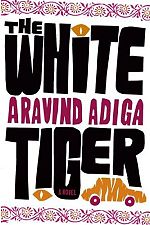
The White Tiger by Aravind Adiga

Adiga’s debut novel was the 2008 winner of the Man Booker Prize. There’s a certain cachet that comes attached to that especially if the author is relatively unknown. Adiga was, at one time, a correspondent for Time magazine- so he may actually be known to some people, but I’d never heard of him.

Truthfully, despite the accolades, I probably wouldn’t have picked up The White Tiger, but it was the choice for the book group I lead at a local book store.

In a series of missives written to His Excellency Wen Jiabao, Premier of China,  Balram Halwai recounts the details of his life, from his modest beginnings in the small village of Laxmangarh to his rise as a successful entrepreneur. His tale is an interesting one and paints a picture of India quite unlike any we have seen in the recent spate of books by Indian authors. Balram’s India isn’t swirling pink saris and saffron-infused food, it’s cockroaches, abject poverty and a system that stifles creativity and social advancement.

Balram condemns this India – the country which failed his dying father, was not able to deliver to him a meaningful education and is so filthy dirty, unless you drive in an air conditioned car, living in Delhi will take ten years off your life.

Balram grows sick of living in the muck, though, and decides he wants something more for his life than cleaning the floors in a tearoom. He learns to drive and then, through a weird twist of fate, ends up being the driver for Mr. Ashok and his wife Pinky Madam. Ashok is one of the new breed of Indians. Schooled in America, he is kind and fair to Balram but even as Balram grows fond of him, he is looking for ways to advance himself. He’s not content to be a slave forever; he aspires to be the master.

The White Tiger has been universally praised by critics. Adiga has created a wonderfully complex character in Balram. It is hard not to sympathize with him even as he goes from being underdog to monster.

The book is worth the read.

The Guernsey Literary and Potato Peel Pie Society by Mary Ann Shaffer and Annie Barrows

guernsey2

This book has had a lot of buzz- perhaps because of its title…which is almost impossible to remember:  The Guernsey Literary and Potato Peel Pie Society. The novel tells the story of writer Juliet Ashton, who is something of a minor celebrity in post World War Two.  A chance letter from the British Island of Guernsey changes her life.

The novel consists entirely of letters and cables sent back and forth between various characters: Juliet and her publisher, Sidney; Juliet and her best friend (and Sidney’s sister) Sophie and then Juliet and various members of this oddly named literary society. The second part of the novel finds Juliet on the island meeting with the people who will ultimately change her life.

The Guernsey Literary and Potato Peel Pie Society is a simple, pleasant novel- the perfect book to curl up with on a cold winter afternoon, cup of tea in hand. That said, it lacked a certain something. Perhaps it has something to do with the fact that the book wasn’t finished by the person who started it: Mary Ann Shaffer passed away before the novel’s completion and was finished by her niece Annie Barrows (writer of the children’s series Ivy and Bean).  I felt somehow let down by the novel’s denouement- it felt rushed and one section,  so-called “Detection Notes”, takes the place of the back and forth correspondence between the characters. It felt a bit like a cheat to me, especially as it reveals too much about two characters, thus allowing everything to be tied up in a neat bow.

The most compelling bits of the story, for me, were about the Nazi occupation on Guernsey and I was aching to know more about Elizabeth; she was, by far, the most compelling character.

Still, you could do a lot worse than this book.

The Flying Troutmans by Miriam Toews

troutmans

When Hattie gets a frantic phone call from her eleven year old niece, Thebes, to “come quick”, Hattie leaves her life in Paris and flies home to Manitoba.

Min was stranded in her bed, hooked on the blue torpedoes and convinced that a million silver cars were closing in on her (I didn’t know what Thebes meant either), Logan was in trouble at school, something about the disturbing stories he was writing, Thebes was pretending to be Min on the phone with his principal, the house was crumbling around them, the black screen door had blown off in the wind, a family of aggressive mice was living behind the piano, the neighbours were pissed off because of hatchets being thrown into their yard at night (again, confusing, something to do with Logan) … basically, things were out of control. And Thebes is only eleven.
Thebes’s mother, Min, is Hattie’s older sister. Theirs is a complicated relationship fraught with sibling rivalry, of course, but also touched by Min’s mental illness. Their parents are almost non-existent in this story: we learn only of their father’s tragic death.  Still, Hattie loves her niece and nephew- even though she hasn’t seen them in quite a while and even if she seems ill-equipped to care for them.

What she decides to do is take them on a road trip to find their father- who has been out of the picture for several years. Hattie remembers him fondly and thinks he’d be the perfect person to care for the kids while their mother recovers in hospital.

What follows is a road trip quite unlike any other as the Troutmans travel first south and then across country to California.

These are damaged people:  fragile and angry and resilient. As they make their way closer to the kids’ Dad, they form a bond built on trust and love. They’re kooky, no question, but they’re most definitely family.

I read Toews’ novel A Complicated Kindness a couple years ago- and really enjoyed it. I liked this even better. It was laugh-out-loud funny and the ending was full of hope and these characters, particularly Thebes, were some of the most enchanting (albeit nutty) people I’ve had the pleasure of spending time with in recent memory.

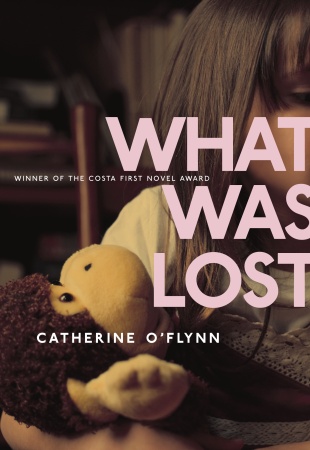
What Was Lost by Catherine O’Flynn

Catherine O’Flynn’s debut novel, What Was Lost, is as labyrinthine as the tunnels under the Green Oaks Shopping Centre. Ten year old Kate Meany is an amateur detective, raised (until his sudden death) by an older, single father. In the novel’s opening third, we travel with Kate and her stuffed monkey, Mickey, as they conduct stakeouts, deliberate over office stationary for Kate’s fledgling detective agency, and pal around with Adrian, the 22 year old son of the man who runs the store next to Kate’s house.

Flash forward almost 20 years and meet Kurt, a security guard at Green Oaks and Lisa, a manager at ‘Your Music’ a big-box music store in the same mall (and not incidentally, Adrian’s younger sister). One night, while sleepily watching the security moniter, Kurt sees Kate. It’s not possible: Kate disappeared the year she was ten and was never found. Adrian, suspected of wrong-doing, but never charged, disappeared and made no contact with his family except for a mixed tape he sent to Lisa every year on her birthday.

From these tangled threads, O’Flynn weaves an exceptionally good story about missed opportunities, luck, family and secrets. She even throws in a slightly gloomy (but fairly funny) picture of what it’s like to work in retail.

O’Flynn’s real strength is in her characters. Kate Meany is a wholly believable and totally enchanting little girl. Lisa and Kurt are flawed and likable. O’Flynn manages to tell us everything we need to know about a character with a line or two – whole back stories come to life with a few carefully chosen words. Even minor characters spring to glorious life and create a picture of small town-life which is ultimately eroded by progress aka big  impersonal malls.

The story had an extra layer of meaning for me because it took place in the West Midlands of England and I once lived there.  I am pretty sure that Green Oaks is actually Merry Hill, a huge shopping centre on the outskirts of Birmingham.

If I have one niggle about the book, it comes at the end. I didn’t like part 42- it felt extraneous to me, like an unnecessary bow on a beautifully wrapped present. Had O’Flynn quit at the end of part 41, I think this little gem of a novel would have been damn near perfect.

The Box Children by Sharon Wyse

Lou Ann Campbell is an extremely sympathetic character. She’s the eleven-year-old narrator of Sharon Wyse’s debut novel The Box Children.

“What you are reading is my diary,” Lou Ann writes. Lou Ann’s  diary is a secret she keeps from her Mother, Father and older brother, Will. She lives with her family on a farm in rural Texas and it is her diary that acts as her confessor, confidante,  and friend.

Despite the novel’s pastoral setting: “I can put my eyes just to the top of the wheat and see the world stretch out flat to the sky,” Lou Ann says, this is a coming of age novel that is, at its core, a novel about abuse and neglect.

Lou Ann’s parents are, for the most part, reprehensible. Her mother walks a fine line between disinterest and cruelty and her father is a handsome philanderer. Even the relationship between Lou Ann and her brother disintegrates (after Lou Ann rats him out over a dirty song he’s sung to her) and that leaves Lou Ann pretty much on her own.

‘The Box Children’ of the novel’s title refers to the five babies Lou Ann’s mother has lost due to miscarriage or still birth. When the novel opens, we learn that she is pregnant again. Instead of making Mother a sympathetic character, she is abhorrent. One story of how she toilet trains babies in the community is paraticularly disturbing. Additionally, it is heart-wrenching to see how Lou Ann strives to be good for her mother, to earn her love, and yet never quite manages.

The Box Children is the story of a dysfunctional family but it is not without humour or hope. Lou Ann is a smart girl with a talent for music and a kind soul and one suspects that, eventually, she’ll leave the farm and go on to great things.

This is a lovely book.

Late Nights on Air by Elizabeth Hay

“Psychologically astute, richly rendered and deftly paced. It’s a pleasure from start to finish.” – Toronto Star

Canadian author Elizabeth Hay won the Giller Prize for her novel, Late Nights on Air. Obviously, you begin a book like this- one with a certain pedigree already attached- with a little trepidation. I mean, what if you hate it?

I am happy to report that this is a beautiful book.

Set in Yellowknife in 1975, the novel tells the story of the intersecting lives of Harry (a CBC radio station manager), Dido (a beautiful announcer who has fled to the North to escape a complicated, but profound, relationship), Eleanor (the station’s secretary), Eddy (the station’s technician), Ralph (a local photographer and on-air book reviewer) and Gwen (a newcomer, who had come to the North inspired by the tragic story of an explorer named John Hornby.) Although Gwen is clearly the central character of the book, Hay deftly manages the interior lives of all the characters and, in doing so, makes us yearn to know more.

The last third of the book takes four of the characters on a tremendous canoe trip, inspired by the life of Hornby. That trip and the consequences of it forever change the lives of these characters.

I have always said that I hate a book that flashes us forward in time and shows us where the characters are now. Hay employs this device, but it seems almost organic. And at the book’s conclusion, I felt truly sad to be parting company with these people.

Ultimately, though, this book is about silence, longing, isolation, community and what love looks like.

I highly recommend it.

Sweet Ruin by Cathi Hanauer

Cathi Hanauer’s book takes an age-old theme, adultery, and turns it into a gripping page-turner of a novel. Sweet Ruin introduces us to 35 year old Elayna, a work-at-home editor who is just crawling out of a two-year depression after the death of her infant son, Oliver. Her husband, Paul, is a benign, but absent figure, someone who is clearly burying his own grief in his work as a lawyer. Their six-year-old daughter, Hazel, is intelligent and demanding.

“…that brilliant April, after rain had soaked us all March, it felt to me as if the earth and the plants, the insects and trees just couldn’t stay in their pants,” Elayna observes. And from the ruin of her life, Elayna begins to emerge and just as she does she meets, Kevin, a much younger boy-man who lives across the street.

It would be easy to find fault with Elayna- after all, she loves her husband and her daughter and has, what appears to be a perfect life. But Hanauer asks us to imagine Elayna as a woman who has lost more than a child; she’s lost, in a life filled with bossy caregivers and schedules dictated by a busy child and workaholic husband, some essential part of herself. It’s almost impossible not to relate to her.

And as Elayna’s relationship with Kevin skirts closer and closer to something from which there will be no turning back, it’s hard not to be swept along. Partly it has to do with Hanauer’s beautiful prose and partly it has to do with how carefully she builds Elayna’s world. Either way, it was impossible to put this book down because even though the it tells an age-old story, it felt new and heartbreaking to me.

Gorgeous.