Mister Pip by Lloyd Jones

misterpip

Lloyd Jones’ Mister Pip won the Commonwealth Writers’ Prize for Best Book in 2007. Books with pedigree always make me nervous. What if I don’t like it? What does that say about me as a reader? No chance of not liking Mister Pip, though. This is a terrific book.

Thirteen-year-old Matilda lives on the tropical island of Bougainville in Papua New Guinea. Many of the island’s inhabitants have fled, including Matilda’s father, because of a brutal civil war. Redskins and rambos are fighting, and the island is all but cut off from civilization. The only white inhabitant left in the village is a man called Mr. Watts, also known as Pop Eye. It is decided that he will teach the children, as the school teachers have all fled.

As they clean up the building they will use as a school room, Mr. Watts tells the children “I want this to be a place of light, no matter what happens.”

Mr. Watts begins to read the children Great Expectations which he claims is “the greatest novel by the greatest English writer of the nineteenth century.” And as Pip’s story unfolds, so does Jones’ novel. Not everyone agrees with Mr. Watts’ estimation of Dickens’ worth. Matilda’s mother, Dolores, in particular thinks Mr. Watts should be teaching the children about God and the devil. She and Mr. Watts are adversaries, but there can be no mistaking the impact Watts is having on Matilda.

Mister Pip is a fantastic book about the power of reading and imagination. It is also a powerful and startling novel about bravery and sacrifice, love and forgiveness.

I can not recommend it highly enough.

The Cellist of Sarajevo by Steven Galloway

cellist

Heather Reisman, CEO of Canada’s largest bookstore chain (Chapters/Indigo/Coles) chose The Cellist of Sarajevo as one of her Picks. A Heather’s Pick is a guaranteed read: if you read it and don’t like it, bring it back to the store for a refund. The thing is, though, Heather has pretty good taste. This book, by Canadian author Steven Galloway,  is immensely readable and despite its depiction of the desolation and horrors of war, the book is ultimately hopeful.

Interestingly the premise of the book is simple, so simple in fact that in less skilled hands it might have been a bit of a dog’s breakfast.  The cellist of the title  (as a character) features only nominally in the novel. The book is actually concerned with the fortunes of three people: Arrow, a young female sniper; Kenan, a father who goes out to get water for his wife and children and an elderly neighbour and Dragan, an older man on his way to the bakery where he works. The novel alternates between characters, allowing the reader to spend time with and get to know each of them.

Truthfully, despite the fact that I am certainly old enough, I know very little about the conflict in Sarajevo. I guess I tend to bury my head in the sand when any sort of conflict takes place. I want the world to be a shiny, happy place where people get along.

I guess my desire for a conflict-free world is why I found this book so moving. Spend a few hours with Kenan as he braves the streets, making a treacherous journey to the brewery to collect fresh water for his family. He’s a father who only want to keep his children safe, feed and clothe them. As a mother, I can relate to that. But I live in Canada. When I want water I turn on the tap. I don’t risk death to visit a market where, if I’m lucky, I might score a bag of over-priced rice. I am not elated when the elecrticity comes on, allowing me the ability to charge my radio so that I can listen to the news. Galloway’s book allows us a glimpse into these hardships which happened not fifty years ago…but in the last decade! What kind of world do we live in that we allow this to happen? (That’s a rhetorical question, of course, impossible to answer.)

Each of Galloway’s characters is fully realized- complicated, angry, depressed, determined, and hopeful. Although he plays a minor part in the drama, the cellist of the title is actually the thread that binds these characters who are, otherwise, unknown to each other. The cellist plays Adagio in G Minor every afternoon at 4pm for 22 days to mark the deaths of 22 people who  were killed while waiting in line to buy bread. It is his music that lifts the spirits of the three main characters and the others who come to hear him play.

Perhaps Galloway is saying that our appreciation of  music, art of any sort, is what makes us human. While war certainly brings out the worst in people, it also allows us the opportunity to appreciate what we often take for granted. For 22 days, the cellist was able to remind the people struggling to get by in a city they no longer recognized as their own that they were alive.

It’s a beautiful novel.

Fantastic  photos of Sarajevo during the conflict can be found here. You would almost think Galloway was inspired by some of these photos.

How To Be Lost by Amanda Eyre Ward

howtobelost

My copy of Amanda Eyre Ward’s novel How To Be Lost came with an unusual guarantee: the publisher promised to  refund your money if you didn’t like How To Be Lost as much as The Lovely Bones . I suppose at the time of its publication, comparison to the juggernaut that was The Lovely Bones would seem like high praise indeed. But I won’t be writing to collect my refund, thanks very much. I loved How To Be Lost and, in fact, I think I liked it even more than The Lovely Bones which, in my opinion, started off with a bang and ended with a whimper.

Ward’s novel concerns the Winters family, specifically the Winters daughters: Caroline, Madeline and Ellie. We meet the eldest, Caroline, first. She’s a hard-drinking cocktail waitress in New Orleans trying to figure out how she’s going to tell her mother, Isabelle, that she’s not coming home for Christmas.

Home isn’t a happy place for Caroline. Home brings back horrible memories of her alcoholic father, her miserable mother and the disappearance of her youngest sister, Ellie. Still, duty calls.

It’s on this visit home that Caroline’s mother shows her a picture in a People magazine. As soon as Caroline sees it, she knows. It’s her baby sister.

How To Be Lost really is a story about people trying to find their way in both extraordinary circumstances (a potential love interest for Caroline has lost his wife in the 9/11 attacks and he is trying to move on with his life) and mundane circumstances (the novel is peopled with characters who spend their lives hunched over beer or whiskey in a variety of scummy bars).

Some people don’t like first person narrative, but I do, especially if the narrator is honest. Caroline is self-destructive and selfish and afraid. Her journey to find the woman in the picture is ill-advised and necessary because by making the journey she is making her first real attempt to leave the past behind.

One of the things I hated most about The Lovely Bones was Sebold’s decision to flash forward into the future. That rarely works for me. Ward doesn’t do this. Her ending, if anything, is a dangling thread. Her ending, for me, was perfect.

This is a gem of a book.

Now You See Him by Eli Gottlieb

nowyouseehim

I’m not quite sure how Now You See Him ended up on my radar; I’d never heard of its author, Eli Gottlieb, before. Ann Patchett declared that the book is a “true literary page-turner in which a string of startling revelations unfolds within the constructs of lush and beautiful prose.  It is at turns both heartbreaking and breathtaking.”

Now You See Him depicts the mid-life crisis (although I think the character is only in his mid 30s) of of its narrator, Nick Framingham. Things might not have been so complicated and devastating for Nick if his childhood best friend, Rob Castor, hadn’t murdered his girlfriend and then killed himself. Rob’s death, however, is the catalyst from which Nick begins that horrible self-examination which seems to usher in middle age. Rob was, in Nick’s eyes, the golden child: beautiful, charming, funny, irreverent, talented (he attained celebrity for writing a book of well received stories and then seemed to drop off the literary map).

Rob’s mystifying death – how could someone who seemed to have it all, kill someone and then themselves? – sets in motion Nick’s own journey. It’s a significant one because he has a wife and children and his grief pushes him away from them. He loves his wife, but no longer feels connected to her. Instead, he laments what might have been with Belinda, Rob’s vibrant, kooky, beautiful sister.

This is a book, it seems to me, about loss and losing oneself. Nick is so full of anger and regret and sadness, it tears at the very thing that should sustain him in this time of crisis: his family.  There are dark secrets in Now You See Him and as those secrets are revealed one at a time, instead of freeing Nick they seem to anchor him more firmly to the past.

Gottlieb is a beautiful writer, Patchett got that right. This story is layered and moving and, at times, difficult to read. An early sex scene between Nick and his wife, Lucy, is devastating – especially difficult to read, I suspect, for those readers who are married.

Now You See Him is a well-written, intelligent book on the nature of friendship, family and love.

On Chesil Beach by Ian McEwan

chesil1

Unlike the female protagonist of McEwan’s novel, On Chesil Beach I am not a virgin when it comes to McEwan’s work. This is the sixth book I’ve read by this author (Saturday, First Love, Last Rites, The Comfort of Strangers, The Cement Garden, Atonement), but I’d have to say it’s my least favourite.

Like his novel Saturday, McEwan compresses time and shows us Edward and Florence, a young couple dining together in a hotel on Chesil Beach on the evening of their wedding. They haven’t yet consummated their union and they are both approaching the idea of the event-to-come from vastly different vantage points. Florence is horrified at the thought of sex and Edward is both patient and anxious.

McEwan fills in the blanks in their personal stories as well as their history as a couple and does it well enough that you come to understand Edward and Florence very well. Whether or not you have any sympathy for them will depend on your patience.

As inexperienced as Florence is, I was left with the distinctly uneasy impression that her aversion to sex (and she really is repulsed by it: her description of a kiss made me reconsider kissing my husband ever again!) was the result of some traumatic event- although nothing is ever explicitly stated.   Edward’s own inexperience has its own unfortunate consequences and the repercussions are devastating.

But then McEwan does something I sort of hate in a novel- he flash forwards a few years and then many years and tells us what these people have been up to. That sort of ending never works for me.

No question, McEwan is a fabulous writer. This same story, in lesser hands, would be unbearable. As it was, I felt like I was laughing where I shouldn’t be and the climax, no pun intended, was a rather soggy affair.

Fierce by Hannah Holborn

fierce

Truthfully, I wasn’t optimistic about Fierce when I started it. This Canadian collection of shorts stories and a novella features more emotionally and physically damaged people than it should be humanly possible for one writer to conjure. Doesn’t the author, Hannah Holborn, know anyone even remotely normal?

But then a strange thing happened during ‘The Indian Act’.  I sort of fell in love.  Suddenly these crazy, damaged, sad people started making sense to me. ‘The Indian Act’ follows the fortunes (and misfortunes) of Liam, a kid who is shuffled from one foster home to the next until he finally finds a family who is decent and loves him and his best friend, Callie, whose mother just up and leaves her.

‘We Danced Without Strings’ tells the heartbreaking story of a mother coming to terms with her daughter’s diagnosis of Angelman’s Syndrome; a condition which includes an absence of speech, facial abnormalities, a protruding tongue, hand-flapping, jerky gait and, strangely, a permanent smile and easy laughter.  “If we let her,” the mother muses, “she would be happy.”

‘Ugly Cruising’ gives us a glimpse at another kid, Elvin, with another horrible condition: Treacher Collins syndrome.  “He has a torso and all the usual appendages,” Elvin’s younger sister, Cricket, notes “but what he does lack is a nose and a chin and a voice to confront others with.”  Cricket’s family deals with with Elvin’s condition in various ways: his mother, Wanda, drinks; his father, Bing, makes lame jokes and Cricket and her teenage friends apply horrible theatrical makeup and go Ugly Cruising.

The book’s novella, ‘River Rising’ is a beautiful conclusion to this book.  The story follows the lives and fates of the people of a small northern town called Everlasting. Central to this story is River, a teenager who has spent her life mourning the mother she barely knew.  The choices she makes are both inevitable and heartbreaking and, ultimately, hopeful.

Although there were a couple stories I just didn’t warm up to, by the time I closed the book on Holborn’s strange cast of misfits I felt sort of sad to be leaving their company.

The God of Animals by Aryn Kyle

godofanimals

Is there a litmus test for whether or not we like a book?  At book club last night, where we discussed our first book of 2009,  The God Of Animals by Aryn Kyle, we asked the question: would you recommend this book to a friend? The answers were varied and that’s even after we had a very lively discussion of the book’s merits (and there were a few.)

The God of Animals begins with the death of 12 year old Polly Cain. It’s a riveting scene in which we learn not only of Polly’s death but also several other important things about the novel’s narrator, Alice Winston. Alice returns to Polly’s death again and again throughout the novel, but we never learn exactly how the young girl died. Whether or not the information is relative will be entirely up to the reader, but some might find that never knowing Polly’s fate is just one of the ways Kyle leaves the reader dangling.

Alice Winston lives on the family horse farm with her father, Joe, and her mother, Marian. Alice’s older sister, Nona,  left the farm six months earlier, with her rodeo husband, Jerry. The Winston’s struggle to make ends meet on the farm and Alice’s family life is further complicated by the fact that her mother  retired to her room after giving birth to her and she’s never really gotten out of bed. Of course, that doesn’t mean she isn’t aware of what’s going on;  she watches the comings and goings (of rich women who board their horses at the farm) from her window.

The story unfolds during the crippling heat of one summer and climaxes during a snow storm- the first snow in Alice’s life. As Alice tests her boundaries and learns certain truths about the way the world works, she also navigates the tricky road of adult relationships. Then, of course, there are the horses: we see them give birth, we see the foals separated from their mothers, we see them being bred and broken, we see them maimed and killed.

Despite all this, The God of Animals is a quiet book. The prose is quiet- it never quite swept me along. The characters were interesting, but I was never wholly invested in them. I wonder what might have happened if the narrator had not been Alice?

So, back to my original question: would I recommend this book? My answer – maybe. *g

The Enchantment of Lily Dahl by Siri Hustvedt

lilydahl1

Despite early reservations,  I kept reading The Enchantment of Lily Dahl, but I wouldn’t necessarily say that I loved the novel in the end. It’s a strange book populated by a cast of characters so odd it seems impossible that they should all end up in the same story.

There’s Lily, the 19 year old waitress who worships Marilyn Monroe and dreams of becoming an actress. There’s Mabel, her elderly next-door-neighbour, who  can’t sleep and spends her time writing  the story of her life. There’s Dick and Frank, two elderly men who are so filthy they leave a black cloud wherever they go. There’s Hank, Lily’s beau-hunk of an ex-boyfriend. There’s Edward, the artist who lives in the building across the street. And then there’s Martin, an oddly menacing boy Lily has known her whole life. This wild assortment of characters live in a small town, Webster Minnesota, where Lily works as a waitress at the Ideal Cafe.

The story Hustvedt is trying to tell seems to be one about secrets and memory, youth and old age, dreams lost and realized. The whole middle section of the book, though, reads as though Lily is crazy and it’s hard to say whether this is a triumph (and I am just too dense to see it) or a failing.

In between waiting tables and sleeping with the painter from the building across the road, Lily is rehearsing her part in A Midsummer Night’s Dream. She also seems to be, to some degree, coming apart at the seams- although I think this is supposed to be the character navigating the tricky road from innocence to experience.

For me, though, while her coming-of-age-journey was nicely written, I never felt connected to Lily or what was happening to her. Both the real and the imagined obstacles were off-kilter…as odd as Lily and the people she spent time with.

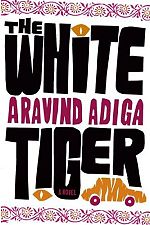
The White Tiger by Aravind Adiga

Adiga’s debut novel was the 2008 winner of the Man Booker Prize. There’s a certain cachet that comes attached to that especially if the author is relatively unknown. Adiga was, at one time, a correspondent for Time magazine- so he may actually be known to some people, but I’d never heard of him.

Truthfully, despite the accolades, I probably wouldn’t have picked up The White Tiger, but it was the choice for the book group I lead at a local book store.

In a series of missives written to His Excellency Wen Jiabao, Premier of China,  Balram Halwai recounts the details of his life, from his modest beginnings in the small village of Laxmangarh to his rise as a successful entrepreneur. His tale is an interesting one and paints a picture of India quite unlike any we have seen in the recent spate of books by Indian authors. Balram’s India isn’t swirling pink saris and saffron-infused food, it’s cockroaches, abject poverty and a system that stifles creativity and social advancement.

Balram condemns this India – the country which failed his dying father, was not able to deliver to him a meaningful education and is so filthy dirty, unless you drive in an air conditioned car, living in Delhi will take ten years off your life.

Balram grows sick of living in the muck, though, and decides he wants something more for his life than cleaning the floors in a tearoom. He learns to drive and then, through a weird twist of fate, ends up being the driver for Mr. Ashok and his wife Pinky Madam. Ashok is one of the new breed of Indians. Schooled in America, he is kind and fair to Balram but even as Balram grows fond of him, he is looking for ways to advance himself. He’s not content to be a slave forever; he aspires to be the master.

The White Tiger has been universally praised by critics. Adiga has created a wonderfully complex character in Balram. It is hard not to sympathize with him even as he goes from being underdog to monster.

The book is worth the read.

The Guernsey Literary and Potato Peel Pie Society by Mary Ann Shaffer and Annie Barrows

guernsey2

This book has had a lot of buzz- perhaps because of its title…which is almost impossible to remember:  The Guernsey Literary and Potato Peel Pie Society. The novel tells the story of writer Juliet Ashton, who is something of a minor celebrity in post World War Two.  A chance letter from the British Island of Guernsey changes her life.

The novel consists entirely of letters and cables sent back and forth between various characters: Juliet and her publisher, Sidney; Juliet and her best friend (and Sidney’s sister) Sophie and then Juliet and various members of this oddly named literary society. The second part of the novel finds Juliet on the island meeting with the people who will ultimately change her life.

The Guernsey Literary and Potato Peel Pie Society is a simple, pleasant novel- the perfect book to curl up with on a cold winter afternoon, cup of tea in hand. That said, it lacked a certain something. Perhaps it has something to do with the fact that the book wasn’t finished by the person who started it: Mary Ann Shaffer passed away before the novel’s completion and was finished by her niece Annie Barrows (writer of the children’s series Ivy and Bean).  I felt somehow let down by the novel’s denouement- it felt rushed and one section,  so-called “Detection Notes”, takes the place of the back and forth correspondence between the characters. It felt a bit like a cheat to me, especially as it reveals too much about two characters, thus allowing everything to be tied up in a neat bow.

The most compelling bits of the story, for me, were about the Nazi occupation on Guernsey and I was aching to know more about Elizabeth; she was, by far, the most compelling character.

Still, you could do a lot worse than this book.