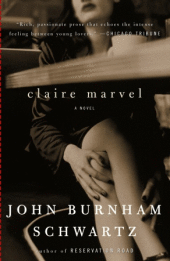
Claire Marvel by John Burnham Schwartz

A few year’s back I read Jonathan Burnham Schwartz’s devastating novel Reservation Road and was really impressed. So I was really looking forward to reading Claire Marvel. The book’s opening lines: “There was before her and now there is after her and that is the difference in my life” promised great things– but I’m not sure Schwartz actually delivers.

The book is narrated by Julian Rose, a grad student at Harvard who meets and falls immediately in love with Claire Marvel during a rainstorm. The book traces their relationship through all the requisite romantic obstacles and I suppose I can fairly say that the only thing that prevents this book from being totally been there, done that is the quality of Schwartz’s prose.

As Julian chases and abandons and chases and abandons the love of his life, we are never really certain of her and, in fact, even though the book is named after her– we really come to know very little about Claire as a person.

Members of my book club loved this book…but I found it somehow unsatisfying.

Breakheart Hill by Thomas H. Cook

“You’ll think you know who (and maybe you do) and you’ll think you know why (and I suppose it’s possible); but trust me, you won’t have guessed everything. “Breakheart Hill” is one of the best written and most marvelously crafted books I’ve read in a long, long time. It’s dark and it’s sad and it’s very, very good. Read it.” – Mystery NewsI picked up Thomas H. Cook’s 1995 novel Breakheart Hill at the second hand store. On the cover was the tagline “a mesmerizing tale of love and betrayal” and I thought, okay, good Sunday afternoon book and bought it. The opening line is one of the most intriguing I’ve read in recent memory: “This is the darkest story that I have ever heard, and all my life I have labored not to tell it.”

The narrator of this dark tale is Ben Wade, a respected doctor in Choctaw, Alabama. As a teenager, Ben grows to love the beautiful Kelli Troy who has moved to Choctaw from the north. It is 1962. The story expertly weaves Ben’s memories of high school with present day, dropping ominous clues about just what happened the afternoon Kelli’s battered body was discovered on Breakheart Hill.

I suppose in some ways, I’ve been spoiled by mystery/thriller/suspense novels which unfold at breakneck speed; I was often impatient reading this book. Sometimes it seemed to take forever to get anywhere, but ultimately that’s one of the book’s many charms.

Breakheart Hill is a leisurely southern gothic novel, filled with a real sense of place and time. The characters are interesting and flawed and I was 100% surprised by the ending, which wasn’t a cheat even though it felt like it should have been.

If you like an intelligent mystery that will break your heart, this is the book for you.

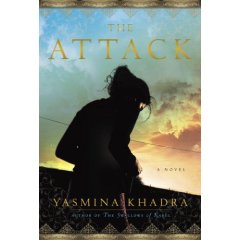
The Attack by Yasmina Khadra

Yasmina Khadra’s novel The Attack set off a firestorm of debate at book club. The novel follows the journey of Muslim surgeon Amin Jaafari, a naturalized citizen of Tel Aviv. He shares his life with the love of his life, Sihem. It isn’t giving anything away to say that Amin’s wife turns out to be a suicide bomber, detonating herself in the middle of a restaurant filled with school children. The novel then follows Amin’s journey from denial and disbelief to acceptance, if not of his wife’s actions then at least of the motivation behind the attack.

I didn’t like the book. The problem for me is that the character of Sihem is never humanzied. She is “the creature I loved most in the world.” Anything we learn about her, we learn through the eyes of the extremists with whom she had aligned herself behind her husband’s back. He doesn’t understand and neither did I. Mostly I felt as though I was getting a lecture about the very messy and complicated and, clearly, emotional landscape of the Middle East.

Still, the book led to a great, and often heated, discussion– if that’s your thing.

The Other Woman by Evelyn Lau

Evelyn Lau’s book Other Women is a difficult book to recommend whole-heartedly. Alternating between first and third person, it tells the story of an artist, Fiona, who is recovering from a 15-month affair with successful businessman, Raymond who is twenty years her senior and married.

The problem with the book isn’t the story (what little story there is) because anyone who has ever had an obsessive relationship with the wrong person will certainly relate. The problem isn’t the prose; Lau can certainly write, although I would have to say that this story is over-written– nothing is stated simply, there’s a metaphor for every emotion.

For me the problem is the characters. Raymond isn’t at all likeable; he comes across as narcissistic (and in fact Fiona actually says this of him) and although he once cautions Fiona that she  mustn’t let him hurt her, he yanks her along a romantic trail of self-destruction and worse, Fiona isn’t the only affair he’s ever had. Fiona isn’t much more sympathetic. The whole novel is spent lamenting Raymond’s loss. Fiona drinks and compares every other man to Raymond, and all this for a relationship that is never even consummated.

Still, it was hard not to be swept along by Lau’s poetic prose, even though I could have cared less about the characters and their rather soggy affair.

The Truth About Celia by Kevin Brockmeier

Devastating and dazzling; in its painful fusion of pathos, fantasy – ultimately- realism, Brockmeier’s heartbreaking book is reminiscent on The Lovely Bones.” Time Out

I’d agree with the first bit of this assessment of Kevin Brockmeier’s book,  but not with the second: this book is nothing like The Lovely Bones, a book which I admired the heck out of for the first 100 pages and was then incredibly disappointed with.

Other than a few rave reviews, I knew nothing about this book or its author. The book’s cover is disconcertingly like The Time Traveler’s Wife (a book I love to bits), but there are no other similarities. Brockmeier’s book is an incredible journey into the devastating grief that grips fantasy writer, Christopher Brooks, and his wife Janet, after their seven year old daughter, Celia, goes missing from their back yard.

The book consists of several short stories, all written by Christopher as he attempts to come to terms with Celia’s disappearance; he imagines (and writes about) her living in different worlds and he also addresses his own grief– and the grief of his wife– in these stories.

There is nothing linear about this book and there is no resolution, and the mystery of Celia’s disappearance is never solved and none of that matters one bit. The Truth About Celia is luminous, heartbreaking, and utterly beautiful.

highly recommend it.

The Nature of Water and Air by Regina McBride

Emily White of the New York Times Book Review says “Regina McBride writes in a shimmering and often hypnotic prose style, one that’s full of incantatory repetition…The Nature of Water and Air has an urgent melancholy about it — it casts an undeniable spell.”

I have mixed feelings about this book. On the one hand, I thought McBride managed to capture a particular time and place (1970s Ireland) extremely well. I was intrigued by the book’s opening lines: “There are silences all around my mother’s story.” But in some intangible way, I felt that the novel failed me.

The narrator of The Nature of Water and Air is Clodagh, a sensitive, intelligent girl whose life is touched by tragedy. Clodagh and her twin sister, Mare, live with Agatha, their emotionally distant mother, and Mrs. O’Dare, their housekeeper, in a crumbling manor house. Agatha is not a traditional mother. Before she “settled”, she was a tinker– part of a sub-culture of people who traveled in caravans, selling bits and pieces and camping in fields. What little affection Agatha does manage to share goes to Mare, who is very ill and subsequently dies. Clodagh spends the rest of her young childhood watching her mother from behind corners and through windows.

It is difficult to say much more about this book without spoiling some of its revelations.

McBride is a poet and it’s apparent in her prose. Her writing is lyrical and often quite lovely, but it also occasionally stands in the way of the narrative. While I can’t say that I loved this book, I certainly appreciated McBride’s talent. And in the end, despite some of the questions I had, I felt satisfied by the time I had spent with Clodagh.

Billy Dead by Lisa Reardon

Lisa Reardon’s book, Billy Dead, earned copious praise when it was published in 1998 and it deserves the honors. Years after I first read it, I keep thinking about the story’s flawed and difficult characters, siblings Billy, Ray and Jean. The story is narrated by Ray and it’s a story of poverty, abuse, and redemption. It’s unflinching, too; Reardon doesn’t gloss over any of the details and it is for perhaps this reason that the book was highly regarded by critics. Alice Munro (perhaps the greatest writer of short stories ever) said: “Billy Dead is a brave, heart-wrenching debut. I couldn’t look away.”

I chose it for my book club several years ago… and no one liked it. Truthfully, the book probably isn’t for everyone: it’s graphic and violent. But the characters are so compellingly real and their journey is so honest, they’ll make an indelible impression on you. Really.

To save you from signing up, here’s a review from the NY Times

Lisa Reardon’s first novel, Billy Dead, instantly brings to mind Dorothy Allison’s Bastard Out of Carolina. Both depict poor, rural white families in which innocent lives are ravaged by brutality and incest. But Billy Dead, if you can believe it, is even more harrowing, and while Reardon possesses enough skill to render any awful act believable, she does so at the expense of the book’s frail beauty. When you finish reading it, you’re left with a crowd of horrific images that overwhelm what the story is finally about: the redemptive power of love, no matter how unconventional.

Unlike Allison’s child narrator, the speaker in Billy Dead, Ray, is an adult who has the language and sexual knowledge to describe the family’s heinous history in graphic detail. Of the three Johnson children, who grew up in Michigan, Ray was clearly the least equipped to shoulder abuse; as a man, he is helpless and dazed, given to hallucinations and physical self-torture. He lives in a perpetual cringe, shrinking from memories that constantly threaten to unravel him. But when he learns that his beastly older brother, Billy, has been sadistically murdered, Ray can’t help flashing back to his freakish family life, a three-ring circus of savagery in which the siblings all take turns in the spotlight.

Ray and Billy have a little sister, Jean, who not only suffers her father’s beatings as they do but also endures sexual abuse at the hands of all her menfolk. But she is a mean, tough kid — qualities that meek, sensitive Ray admires. When Jean is only 7, Billy and Ray force her to perform fellatio on them, an act that belies Ray’s affection for Jean and underscores his fear of Billy. A few years later, she pounces on her opportunity for revenge: as Ray, now 14, lies weak in bed with chickenpox, she burns his sores with a cigarette while bringing him to orgasm with her other hand. ”Do you love me?” she asks, grinding the hot cigarette into his wounds. ”Are you sorry?” He appears relieved to submit to Jean’s punishment; he is also in awe of her spitefulness.

Ray and Jean remain allies in their house of horrors. After his senior year, Ray spends the summer working in another town; Jean, now 16, joins him. Away from their tormentors, they become lovers, and, impossibly, you find yourself actually rooting for them. It’s a credit to Reardon’s writing that their romance seems right and tender. But everything goes wrong when they return home to find that the whole town knows about them. In a flash of possessiveness, Ray turns on Jean, and the two remain estranged until Billy’s death years later — an event that prompts Ray to seek her out again. Whoever got Billy ”must have been even meaner than him. Only one person I know like that,” Ray says as he begins a delirious search for the love of his life, his baby sister.

Billy Dead is quite well written, but its literary merits are diminished by the relentlessness and intensity of its atrocities. Billy throws a cat against a wall for fun, breaking its neck, and his father then chops the dying pet’s head off with a shovel; after Billy molests her, Jean hangs his dog from a tree and beats it to death with a baseball bat; during one particularly violent episode of rape, Jean nearly bites her father’s penis off. Still, all this excess isn’t just sensationalism, and most of these scenes seem warranted by the larger story. Indeed, this is an extremely powerful novel, but whether you want to read it depends on your stomach for human — or, better said, subhuman — ugliness.
-By LAURA JAMISON
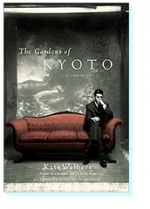
The Gardens of Tokyo by Kate Walbert

“Kate Walbert’s fine, delicate prose captures voices that we don’t hear much anymore…The Gardens of Kyoto is a ghost story, a mystery, a love story.” – Amy Bloom

I read about The Gardens of Kyoto by  Kate Walbert on a ‘Top Ten’ list and chose it for my book club a couple years ago. Many of the members of my book club weren’t enamored with the book, but I was smitten from the book’s opening line: “I had a cousin, Randall, killed in Iwo Jima.”

The story seems simple enough. The novel’s narrator, Ellen, comes of age around the time of World War II and recalls her life and her relationship with Randall some forty years later. Her story makes for compelling reading. But it isn’t just Ellen’s story to tell– she inherits Randall’s diary and a book called The Gardens of Kyoto and we get a glimpse of several other lives.

Walbert’s book is marked by gorgeous prose and a fully realized sense of place. I found the book wholly satisfying, heartbreaking, and emotionally resonant.