Shiver by Nikki Gemmell

The first book I read by Australian author Nikki Gemmell was The Bride Stripped Bare. I fell in love with the way she writes and so I found myself looking for other novels by her. Shiver is her first novel and it’s worthy of praise.

I can catalogue Antarctica by touch.

The touch of air sucked dry on my cheek, the fur of a day-old seal pup, the touch of an iceberg, a blizzard, a lover, the touch of sweat at minus twenty-three, of a camera stuck to the skin on my face, of cold like glass cutting into my skin, of a snowflake, of a dead man, of a doctor’s fingers on my inner thigh, of a tongue on my eye.

Fin is a twenty-six year old Sydney-based radio journalist who gets the opportunity to travel to Antarctica to “capture noises.” The trip down and her subsequent stay at the Australian station would be a compelling enough read all on its own  because of how alien the landscape is and the weird subculture of scientists and others who  make the journey. But Fin does something she isn’t supposed to do– she falls in love.

Her relationship with 38-year-old biologist, Max, is – of course- intense because of where they are, their lack of privacy, the rules surrounding fraternization. Fin is buoyed by her feelings– not the first relationship of her adult life, but certainly the most important. She and Max share an unquenchable thirst for each other physically and are, in other ways, perfectly suited.

Of course, something tragic happens and even though you know it’s coming, it’s still horrible.

Gemmell herself spent time in Antarctica and says that this is her most autobiographical novel. Knowing the circumstances of her inspiration adds an extra layer of meaning to the book– but I suggest you wait to read about her real-life experiences until after you’ve finished the novel.

The Story of My Face by Kathy Page

An elegantly compelling story of how a young girl’s obsession forever changes the lives of those around her…a disciplined exploration of the complexity of human motivation and our need for redemption. – Lynne Van Luven, Vancouver Sun

Kathy Page’s The Story of My Face is at once compelling and confounding. Page is a skilled enough writer that you are pulled into the mysterious events surrounding Natalie’s disfigurement– the cause and extent of which you learn little about until the book’s final pages– from the beginning. But the central event of Natalie’s life is buried in adult-Natalie’s search for meaning and understanding.

We meet Natalie Baron as an adult on her way to Finland to research Tuomas Envall, the leader of a strict religious sect. Natalie’s own connection to the cult comes in the form of Barbara Hern, her husband, John, and son, Mark. These three people have important roles to play, particularly Barbara for whom Natalie has a possessive affection.

Page weaves past and present together, but for me– the story was at its most compelling during the time Natalie is with the Herns on a retreat with other members of this religious sect.

The story of what happens to her face is actually not as startling as how she impacts the lives of the Hern family, most specifically Barbara.

Taming the Beast by Emily Maguire

A thought-provoking and searing first novel. -The Age

Sarah Clark is a smart kid. That’s what we’re told, anyway. By the time she turns fourteen she’s read every one of Shakespeare’s plays and sonnets, and then the works of Donne, Marlowe, Pope and Marvell. At fourteen she meets the English teacher, Daniel Carr, who will change her life.

“For the entire forty minutes of his first class he spoke about why Yeats was relevant to Australian teenagers in the year 1995. In the second class, Sarah put up her hand to make a comment on something he said about ‘Hamlet’. When he called on her to speak, she started and could not stop. She stayed in the classroom all through lunch, and when she re-emerged into the sunlight and the condescending stares of the schoolyard cliques, she was utterly changed.”

It’s not a huge leap to believe that a meeting of the minds turns to a meeting of the flesh. But their sexual affair is not quite the same as the poetry they’ve discussed– it’s raw, aggressive often brutal. The obvious questions to ask would be: is this abuse? (Clearly he’s breaking the law based on his position and the difference in their ages.) But Sarah has a penchant for this sort of sex, it seems.

And when Carr is forced to choose between Sarah and his wife and children, he chooses the latter– leaving Sarah to drift through the next eight years of her life in a haze of alcohol, drugs, and sex with hundreds of men.

Until Carr re-enters her life.

This is not a love story. Watching Sarah move through her days (and nights) is like peering through the windows of a car wreck. The characters are almost despicable– and so as I was reading, even when things were particularly horrible, I kept thinking –you know what, you guys deserve each other.

Saturday by Ian McEwan

I am not a McEwan newbie. Saturday is the 4th of his books I have read and, thus far, my least favourite. But even though I didn’t love this book, I would still have to praise McEwan’s ability to write. If I have a criticism of Saturday it’s that it’s over-written. That may be the fault of McEwan’s decision to set the novel in one day in the life of neurosurgeon, Henry Perowne.

Saturday is Henry’s favourite day. He plays squash, does some shopping and on this particular Saturday– anticipates the homecoming of his daughter, Daisy. But, of course, this Saturday isn’t going to be like all the others. He awakens in the middle of the night and watches from his bedroom window as a plane– streaming fire, cuts across the sky to (crash, he assumes) land at Heathrow.

This event wouldn’t be the cause of so much concern if this story wasn’t set post 9/11 and on the very day when hundreds of thousands on people are set to march in London’s streets to protest the war against Iraq.

As Henry sets out to accomplish his long list of things to do before his daughter arrives he gets into a minor fender bender that will propel (although not quickly) the book towards its denouement. Whether or not you find the ending, or the book for that matter, satisfying, will depend on how much you care for Henry and the minutia of his Saturday.

Sweetness in the Belly by Camilla Gibb

British born, Canadian-raised writer Camilla Gibb’s stunning new novel Sweetness in the Belly divided my book club. I was among those who loved it. The book tells the story of Lilly, born to hippie parents and brought up as a Muslim, after their death, in the city of Harar. Her story is told by layering her young years in a politically charged Ethiopia with her life as a nurse in London. It’s a fascinating picture of a world torn apart by poverty and prejudice and by Lilly’s own beliefs. It is also a love story as we wait with Lilly to learn the fate of her lover, Aziz.

I know nothing of the politics of Ethiopia under Emperor Haile Selassie. I know very little about the Muslim religion, but Gibb’s beautiful prose and attention to detail (she conducted fieldwork in Ethiopia for her PhD in social anthropology) makes this book a page-turner. The characters are complex and interesting and the day-to-day struggles of the women, in particular, are riveting. I was both gutted and elated by book’s end.

The Lake Dreams the Sky by Swain Wolfe

I don’t know how Swain Wolfe’s novel The Lake Dreams the Sky ended up on my bedside table. Somehow I managed to score an advanced reading copy of it and it has been in my ‘to-read’ pile forever. I finally picked it up and couldn’t put it down.

The Lake Dreams the Sky
tells the story of Elizabeth, a high-powered something or other who returns to the lake of the title to visit her elderly grandmother and reacquaint herself with the Montana landscape of her youth. What follows is a beautiful love story prompted by Liz’s discovery of a picture she’d admired as a child.

Liz’s story isn’t anywhere near as interesting as the story the picture has to tell. Ruth, a white woman raised by the Red Crow and Cody, a drifter who arrives in town when his truck breaks down, meet and fall in love. They are both good people who got dealt a shitty hand and their relationship fuels the jealousy of the small-minded people who live in the town. Their only allies are the owner of a local business, who is also an outsider of sorts, and Rose’s Red Crow mother.

Theirs is a story of passion and hope and it is beautifully told. If you aren’t rooting for them to make it by the book’s end, you have a hole where your heart should be.

The Fifth Child by Doris Lessing

The Fifth Child by Doris Lessing has been on my to-read list for quite some time, but I had a difficult time finding it. I finally happened upon it at a second-hand book store. It’s a short book, only 159 pages, but it took forever to read because Lessing writes dense, intense prose. Every single word counts.

About The Fifth Child, Newsday said: “I’d be willing to wager that if she never wrote another word, it would be The Fifth Child– and not, say, her famous The Golden Notebook– that ultimately confirmed Lessing’s stature as a writer.”

Harriet and David meet at a party, fall in love, buy a house that is too big for them and immediately start to fill it up with children. Theirs is a seemingly happy family- extended at holidays with parents and siblings and over the years more children. Each of Harriet’s first four pregnancies are without difficulty. She seems one of those natural mothers, perfectly content to waddle around feeding whoever happens to be sitting around the table, doting and content.

But then she gets pregnant for the fifth time. Understandably, with four small children to cope with, Harriet is upset by this unexpected pregnancy- but it is more than that.

…she could not sleep or rest because of the energy of the foetus, which seemed to be trying to tear its way out of her stomach.

“Just look at that,” she said as her stomach heaved up, convulsed, subsided. “Five months.“

The arrival of the fifth child, Ben, throws the Lovatt family into turmoil. The aftermath of his birth, his otherworldliness and Hariett’s attempts to cope make up the remainder of this book.

I can’t say that I loved The Fifth Child. As a mother, I certainly understood Harriet’s feelings, first of antipathy, later of remorse and finally of acceptance does get under your skin- but Lessing writes from a sort of detatched point of view and I never felt completely settled in Harriet’s world. Or maybe that was the point.

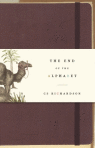
The End of the Alphabet by CS Richardson

Richardson’s first novel is a slim 139 page contemplation on how one would spend the remaining days of a relatively uneventful life. Ambrose Zephyr is diagnosed with an unnamed incurable disease on his 50th birthday. After the initial shock wears off he embarks on a whirlwind trip with his wife, Zipper. (Don’t even ask about the ridiculous names.) He decides to visit one place for each letter of the alphabet. A is for Amsterdam and so on.

My book club was divided down the middle on this one. Some of the women really loved it. They thought Richardson’s pared down, choppy prose suited the story- giving it an urgency which was mirrored by Ambrose’s desperate attempt to pack as much into his remaining days as he could. Others, like myself, thought the book failed to connect the reader with Ambrose. How can you care about someone you know so little about?

Before publishig this first novel, Richardson was an award-winning book designer.

Come Closer by Sara Gran

I dunno. Margot Livesey said “Come Closer ought to carry a warning to readers. It’s impossible to begin this intense, clever, beautifully written novel without turning every page.” And Stewart O’Nan said: “Sara Gran has created a sly, satisfying novel of one young woman possessed not only by a demon but also by her own secret desires.”

I quote these two reviews because I have read both Livesey and O’Nan and admire their writing. Believing their assessment of this book is sort of like reading fic recced by an author you like. You sort of hope they’ll point you in the direction of the good stuff.

And while Gran’s novel isn’t exactly what I’d call the good stuff- it wasn’t rotten, either.

Amanda is an architect who lives with her wonderful husband, Ed, in an unnamed American city. We don’t get any real insight into Amanda’s life before weird things start to happen: funny noises in her home, strange and troubling dreams, black outs, missing time she can’t account for.  These events transpire in little snippets. Things happen, we hear about them and then we’re on to the next thing. I never really felt connected to Amanda. I didn’t fear for her or care for her and if the novel has a failing for me, that’s probably it. As Amanada says herself: “What we think is impossible happens all the time.” And sometimes those impossible occurrences are horrific.

Just not in this book.

Which is apparently being made into a flick.

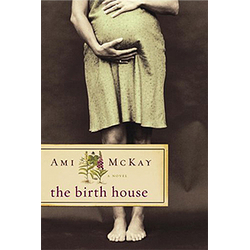
The Birth House by Ami McKay

One of the first books I read this year and easily the best novel I encountered in 2006, this account of a midwife in turn-of-the-(20th)-century Nova Scotia is everything a novel should be: funny and tragic, joyful and sorrowful, filled with rich, carefully drawn characters and experiences that linger long in the mind.

The Birth House
spent most of the year on bestseller lists and marked the arrival of a splendid new talent. I can’t wait to see what Ami McKay does next.
– Robert Wiersema, for the Vancouver Sun.

Ami McKay’s book The Birth House is a natural selection for book clubs. Set in rural Nova Scotia circa the First World War, it tells the story of Dora Rare, the “only daughter in five generations of Rares.” Dora is a smart girl who spends much of her time with Miss B, the area midwife. Miss B is part-healer and part-witch and Dora learns much under her tutelage.

Truthfully, it took me a while to get settled into Dora’s quiet world, but the book’s charms are undeniable. For one thing, Dora is utterly likeable. She is kind and sensible and although she is young, she is no shrinking violet. McKay does a wonderful job of creating a world far removed from technology and the horrors of the war, but certainly not immune to either. For example, Dora’s faith in midwifery is tested (as is the faith of all the women of her community) when Dr. Thomas arrives in the area and sets up a hospital, offering women pain-free births. And when the Halifax Explosion of 1917 happens, Dora rushes off to help and is forever changed by the experience. Scots Bay isn’t modern and McKay paints a riveting picture of poverty and backwoods thinking.

But the book isn’t without a sense of humour either. Dora’s marriage to town hunk, Archer, necessitates a visit to Dr. Thomas where he diagnoses her with “neurasthenia” and prescribes treatment using the Swedish Movement Health Generator. I dare you to keep a straight face.

The Birth House isn’t a flashy book, but it’s a book that will resonate with readers, particularly women, and I heartily recommend it.