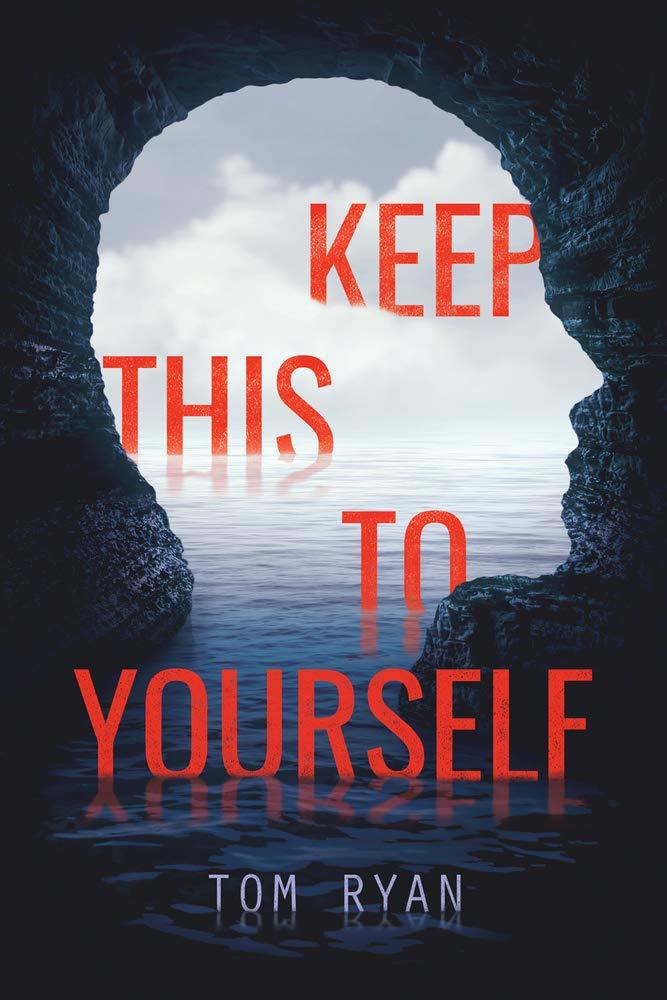
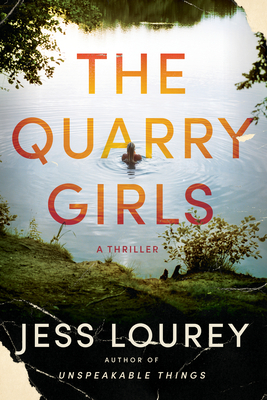
True Crime Story – Joseph Knox

Joseph Knox’s novel True Crime Story capitalizes on the public’s insatiable appetite for, well, true crime stories. I have to admit, I can never scroll past any of the true crime videos that pop up on my social media feed.

For a hot minute, I thought True Crime Story was actually true. The novel opens with a note from the publisher claiming that this second edition “includes wider context on the previously undisclosed role of Joseph Knox in the narrative.” Knox inserts himself into the narrative based on his relationship with Evelyn Mitchell, a writer who reaches out to Knox to ask for advice on this story she is writing about the disappearance of Zoe Nolan, a nineteen-year-old University of Manchester student who leaves a party and is never seen again. In his note at the beginning of the book, Knox references his previously published novel Sirens — which, in fact, is a real book – thus my initial confusion.

True Crime Story is not based on a real person or crime. “I don’t think I used any one young woman as inspiration–if only because I was more interested in the milieu of a murder/missing person,” Knox said. “The press–good and bad–the grieving families and friends, and the ones who clearly see it as the start of their 15 minutes. There’s a lot of opportunity attached to tragedy–a grotesque kind of fame–and I think that’s what I was more interested in than anything.” (Shelf Awareness for Readers)

This novel is structured as a series of statements made by Zoe’s friends, family and other people associated with the case. Think Daisy Jones but more stabby. There is also an exchange of emails between Mitchell and Knox and a limited amount of multi-media posts and photos. Sometimes events are recollected differently by various people; therefore, we are reading the observations and memories of a group of unreliable narrators. It makes for interesting reading as you try to untangle an individual character’s motivation and perspective.

Zoe also has a twin sister, Kim, who is – by her own account – the polar opposite of Zoe.

She was the most invincible of us all, everything-proof and stunning, wearing this luminescent red jacket, ultrahot red all over. Matching red lipstick and a slightly visible red bra. Zoe was busy being noticed.

Everyone has secrets in True Crime Story. I found this novel thoroughly engaging even though the ending isn’t necessarily 100% satisfying.

The Secret History – Donna Tartt

Published in 1992, Donna Tartt’s debut novel The Secret History is an astounding accomplishment. I read it for the first time shortly after it was published and I remember it making such a huge impression on me. It was a book that sort of stuck in my brain even though, over the years, I forgot the details of what it was about. I often recommend it to students and this summer my son Connor – who read the book, at my urging, when he was 13 or 14 – suggested we do a re-read. I did; he did not.

The book’s narrator, Richard Papen, recalls his time at Hampden College, a small liberal arts college in rural Vermont. (Many critics say it’s based off Tartt’s alma mater, Bennington.) The novel opens dramatically

The snow in the mountains was melting and Bunny had been dead for several weeks before we came to understand the gravity of our situation. He’d been dead for ten days before they found him, you know.

Richard has come to Hampden from Plano, California a place which has “created for [him] an expendable past, disposable as a plastic cup.” After beginning college in California, a fight with his parents leads him to Hampden where he hopes to study Greek, a subject for which he has an affinity. The only Greek tutor, Julian Morrow, is reluctant to accept Richard into his class. Julian tells him, “I have limited myself to five students and I cannot even think of adding another.”

Those five students soon become central to Richard’s life. There’s Edmund “Bunny” Corcoran, the twins, Charles and Camilla Macauley, Francis Abernathy and Henry Winter.

All of them, to me, seemed highly unapproachable. But I watched them with interest whenever I happened to see them: Francis, stooping to talk to a cat on a doorstep; Henry dashing past at the wheel of a little white car, with Julian in the passenger’s seat; Bunny leaning out of an upstairs window to yell something at the twins on the lawn below.

A chance encounter in the library offers Richard an invitation to this insular group and from there a front row seat to their complicated dynamics. The novel traces the shifting alliances, the pretentious ponderings and the copious drinking of this group of young academics. Oh, and there’s a murder and other dark deeds.

The Secret History is considered the grand dame of dark academia, although it wasn’t even really a thing when the book was published. Dark academia became a thing on Tumblr in 2015 and “is a genre of literature that literally revolves around academia or learning. Therefore, you will see that it is mostly set in educational institutions and follows the lives of students.” (Medium) TikTok has a trend for the aesthetic subculture of dark academia. (NY Times) For me, dark academia is a story that takes place on a college campus or at a boarding school, where students are concerned with the study of literature but there are also dark forces (not of the supernatural variety) at play. Wikipedia has a pretty good overview here.

When I read The Secret History the first time, dark academia didn’t exist, so it was interesting to read it this time and see all the qualities that I recognize now as being hallmarks of the category: an isolated, insular campus setting, a preoccupation with academia, toxic relationships, corrupted morality. I think inherent in dark academia is bildungsroman. It is certainly true that Richard is changed by the novel’s end – and not necessarily for the better.

My memory of my first reading of Tartt’s book is that it was exceptional. This is a literary novel which I would now describe as overwritten, but that is a stylistic choice. Tartt has penned two other novels, The Little Friend and The Goldfinch, which won the Pulitzer in 2014 and they all have this in common: Tartt loves language and she is a master of her craft.

This reading of The Secret History was a little bit more of a slog than the first time around considering I was waiting for the “big” things to happen. I also found the characters just a little bit precious and not of this world. For a book that is set in the 1980s – granted a lot more years ago now than it was when first written – Richard and company seem just a tad foolish. They dress in “starchy shirts with French cuffs” and Richard sometimes observes to his delight, Francis wearing pince-nez. I mean, really. Sometimes they speak as though they are from another planet. But perhaps all the pretention is the point. These are students in their early 20s, trying to make sense of their world but they are, perhaps, too clever for their own good.

If you haven’t yet read The Secret History, I highly recommend it. And if you are already a fan of dark academia, check out these titles:

If We Were Villains – M.O. Rio

Bunny by Mona Awad

The Girls Are All So Nice Here – Laurie Elizabeth Flynn

Babel – R.F. Kuang

Never Let Me Go – Kazuo Ishiguro

One of Us Is Lying – Karen M. McManus

The Broken Girls – Simone St. James

Vladimir – Julia May Jonas
See What I Have Done – Sarah Schmidt

“Lizzie Borden took an ax and gave her mother forty whacks. And when she saw what she had done she gave her father forty-one.”

I have been fascinated with the story of Lizzie Borden since I was a kid and saw a movie where the rhyme about Lizzie was sung by schoolchildren. (Unfortunately, I can’t remember the name of the film.) Years later, I read Evan Hunter’s novel Lizzie. I can’t imagine there’s anyone out there with zero knowledge of this famous true crime case from 1892, but you can easily go down the rabbit hole by searching her name on YouTube.

Sarah Schmidt’s 2017 novel See What I Have Done reimagines the infamous case through the eyes of four characters: Lizzie; her sister, Emma; the Borden’s maid, Bridget; Benjamin, a mysterious man hired by the sisters’ Uncle John. 

The novel opens with the discovery of Mr. Borden.

I looked at father. I touched his bleeding hand, how long does it take for a body to become cold? and leaned closer to his face, tried to make eye contact, waited to see if he might blink, might recognize me. I wiped my hand across my mouth, tasted blood.

It is clear early on that things are not “normal” in the Borden household. Lizzie has a prickly relationship with her stepmother, Abby, whom she often calls Mrs. Borden. Emma is away from home so she is not there to act as a buffer between Lizzie and the senior Bordens. There seems to be a love/hate relationship between the sisters; both of their dreams have been thwarted by their overbearing father and their own petty jealousies. Bridget wants desperately to return to Ireland and has been squirreling money away, planning her escape. Schmidt lets us see into the interior lives of these characters, and the stifling house they inhabit.

As for the fourth character, Benjamin — he comes into the picture after a chance encounter with Uncle John. As far as theories are concerned, having another suspect in the mix isn’t necessarily a bad thing.

What I admired most about this version of Lizzie Borden’s story was the writing and Schmidt’s ability to make all these characters sympathetic. None of them are particularly reliable and whether or not you believe everything they have to say, is up to you.

Borden was acquitted of the actual crimes and See What I Have Done doesn’t offer any definitive resolution in terms of her guilt or innocence. That said, I think Miss Borden might have gotten away with murder.

A great read.

The Whistling – Rebecca Netley

Rebecca Netley’s debut novel The Whistling has all the necessary ingredients for an old-fashioned ghost story: an isolated location, a crumbling manor, unexplained occurrences, and plenty of things that go bump in the night.

It is 1860 and 24-year-old Elspeth Swansome arrives on the remote Scottish island of Skelthsea. She has been hired by Miss Gillies to look after her niece, Mary.

Iskar, Miss Gillies’ home, sits on the top of a hill. It is “a house larger than the others” remote and casting “a long shadow beneath which gorse and scrub shivered in the autumn chill.” Iskar was once beautiful, but is now showing signs of age and disrepair. It feels, to the reader and surely to Elspeth, dark and claustrophobic.

Elspeth’s young charge, Mary, has not spoken in months – not since the death of her twin brother William. There was also some scandal with the last nanny, Hettie, who ran off in the night with her lover. In addition, Mary’s mother – Miss Gillies’ sister – has recently died. All these tragedies strike a chord with Elspeth as she has also had some personal tragedy in her own life.

It doesn’t take long for things to get going. There are the requisite menacing characters, including Greer, a maid in the house who seems to hate Elspeth on sight and Ailsa, a woman from town who tells her that “All is not well at Iskar.” She’s got that right.

Elspeth hears humming in the halls, finds weird stones wrapped in human hair, sees shadows. Sometimes she finds Mary staring off into space and muttering to herself in a language no one can understand – even though she doesn’t speak to anyone else. Things get so creepy for Elspeth that she decides she is going to go back to the mainland, but in the end she can’t do it because of her growing affection for Mary.

Things get creepy for Mary, but unfortunately things didn’t get creepy for me. I mean – I guess I like my “horror” a little more horrific. This is an atmospheric book and might actually make a good movie, but it’s not scary.

There is a mystery at the centre of The Whistling. Although it’s not really my type of book, it was easy to read and entertaining enough for the kind of book it was. I suspect people who like their horror a little on the “lite” side, will likely really enjoy this book.

My version of the book, published by Harper Collins, has 377 pages…but the margins are wide and the font is huge – not sure what that was about. In addition, Netley had a writing quirk that drove me a little batty: “As I studied her features”; “As we walked”; “As I explained in my correspondence”. This is, I understand, a 100% personal pet peeve, but it did drive me a little batty. Otherwise, the writing is fine.

Easy to read, but nothing new.

The Rose Petal Beach – Dorothy Koomson

I was a big fan of Dorothy Koomson’s novel The Ice Cream Girls, but The Rose Petal Beach? Not so much.

Told from multiple perspectives and bouncing from the present back to different points in the past, this is mainly the story of Tami and Scott, a married couple with two young daughters, who live in Brighton. Tami, who is Black, and Scott, who is white, have known each other since they were children. Scott is a Challey and “everyone knew the Challey family.”

Whenever Mum or Dad saw one of the Challeys in the street they’d talk about them quietly afterwards but not so quietly we didn’t hear. We knew they were people you crossed over the road to avoid. But you had to pretend that wasn’t why you crossed the road – they’d do you over if they thought you’d done that.

A chance encounter between Scott and Tami when they are eleven changes their lives. Tami tells Scott he can be whoever he wants — wise words from an eleven-year-old. Fast forward to present day and the couple are — at least from the outside — happily married and living the dream. Until the police arrive and arrest Scott. From that point on, Tami’s life spirals out of control.

The other two women in this story are Beatrix and Mirabelle, two women who live on the same street at the Challeys, and both of whom are friends with Tami. Mirabelle also works with Scott. Although Mirabelle isn’t one of the novel’s narrators, we do get to know quite a lot about her life. Later on in the story — and it’s a long one, clocking in at over 600 pages — we also meet Fleur.

The main problem with The Rose Petal Beach is that these people were ridiculous. The characterization was all over the place, especially with Scott. Is he a good guy? Is he an asshole? Is he a criminal? Well, yes and he can be all of those things in a single paragraph. The reveals seemed to come out of nowhere and felt less like legitimate twists and more like wtf?!

Although this novel is well reviewed – some even calling it a “masterpiece”, I found it kind of ridiculous. I know that we have to be willing to suspend disbelief a little bit when we read this kind of domestic thriller, but I at least want to care about the characters and I didn’t — not even a little bit.

The Family Remains – Lisa Jewell

Lisa Jewell has always been a dependable writer for me. I know I am going to get a well-written, page-turning, thrill of a book, usually with multiple narratives that somehow all dovetail together in a satisfying way.

The Family Remains is a stand-alone sequel to The Family Upstairs, a book that I absolutely flew through when I read it during the height of Covid. I honestly do not think that you could read this one without having read its predecessor, though, and truthfully I don’t think this one is necessary.

Siblings Henry and Lucy Lamb are the adult survivors of a traumatic childhood — their parents, Henry and Martina, fell under the spell of a con man, David Thomsen and a woman called Birdie Dunlop-Evers. I won’t say much more about that because that’s the story you really want to read. Lucy is the mother of three children, Libby, whom she had when she was a kid, Marco and Stella. Currently they live with Henry until they can move into the huge new house she’s recently purchased with her share of a giant windfall. Libby is about to head to Botswana to meet, for the first time, her father Phin (who just happens to be David Thomsen’s son and also lived in the house when all the shit went down in the first book.) Henry has always been obsessed with Phin, but hasn’t seen him in years, so he decides to tag along. Except Phin leaves Botswana and heads stateside, so Henry drops everything to chase after him. Honestly, it’s all sort of unbelievable and ridiculous. (And I hate to say that because I really do love this author.)

Seemingly unconnected to that narrative is another character called Rachel, a struggling jewelry designer who meets, randomly, Michael. After a whirlwind romance, the two marry and then that all goes to hell in a handbasket. Could not have cared less about her.

Finally, there’s Detective Inspector Samuel Owusu, the man tasked with finding the identity of a human skeleton which washes up onto the banks of the Thames. This discovery is the catalyst that is meant to kickstart this new chapter in the lives of these characters.

This story depends, I think, on an understanding of what came first because without it, this all feels like telling. In her acknowledgments, Jewell thanks the readers who begged her to write a sequel to The Family Upstairs. Perhaps some people felt like they needed to know what happened after the final pages of that book, but I was not one of them. I mean, I never feel like I waste my time when I read this author because I do really like her, but this book just didn’t work for me.

Try these ones instead: The Night She Disappeared, Invisible Girl, Watching You, I Found You, The Girls in the Garden

All the Sinners Bleed – S.A. Cosby

I am not really a reader that jumps on the hype train and I think at least 75% of my time is spent reading backlist books. Even when I do buy a popular title when it comes out, there’s no guarantee that I am going to read it straight away.

S.A. Cosby has been on my reading radar for a while and I own a copy of his novel Blacktop Wasteland, but it’s been languishing on my tbr pile for months despite its rave reviews. His newest book All the Sinners Bleed is all over the place and lots of people are talking about it, so on my most recent visit to the bookstore, I picked it up. Then I read it…in about 48 hours and when I wasn’t reading it, I was thinking about when I could get back to it.

Titus Crown is Charon County’s first Black sheriff. He’s recently returned to his hometown after some time in the FBI and he’s going to need those skills to uncover the identity of a serial killer.

When the novel opens, Titus is called to the local high school where there is an active shooter. The shooter is the son of one of his friends from high school and one of the victims is a beloved teacher, Mr. Spearman. It’s hard to make sense of the crime, but as it turns out it’s just the beginning of the horror that will grip Charon.

I love a good thriller/mystery. And I love a main character who can look after himself. Titus is 6’2″ and a former football player, so I am guessing he cuts a pretty imposing figure. He’s a no-nonsense, take-charge kind of guy, but he also has some demons of his own. There’s an incident from his days with the FBI that he alludes to, there’s a strained relationship with his younger brother, Marquis, and then there’s his love life. It’s complicated.

What makes All the Sinners Bleed so propulsive is its straight-forward plot. Cosby doesn’t waste any time igniting the powder keg, but there are other interesting things going on too. There’s the white supremacists who want to march during a town festival and the Black leader of one of the local churches who wants to prevent that march. Small town politics means that the white chairman of the board, Scott Cunningham, thinks Titus answers to him. There’s religious fanaticism and confederate apologists. And bonus: the writing is really solid. It doesn’t get in the way of the plot; it’s muscular when it needs to be but also, at times, poetic.

But there were moments like today when the true nature of existence was revealed to him. Moments when the ephemeral curtain of divine composition was pulled away and entropy strode across the stage. For all his attempts at control, days like today, when he’d seen a boy he’d known since infancy get his chest cratered, reminded him that chaos was the true nature of things.

All the Sinners Bleed is a well-written, violent, dark novel and I loved every minute of it.

Everything We Lost – Valerie Geary

Valerie Geary (Crooked River) is definitely an auto-buy author for me. Although Everything We Lost wasn’t what I was expecting, I still found the book well-written and thoughtful.

Lucy Durant was just 14 when her older brother, Nolan, 16, disappeared. Although life wasn’t particularly easy for the siblings (their father left and their mother turned to alcohol), they have always been close, that is until Nolan’s former best friend, Patrick, starts paying attention to Lucy and she decides that Nolan and his interest in the stars and UFOs is just too uncool.

After Nolan goes missing, Lucy goes to live with her father and that’s where we find her, ten years later, with a stalled life. Her father, Robert, is about to remarry and he feels that it’s time for Lucy to get on with her own life.

They were kicking her out. She had seen this coming, was surprised it hadn’t happened sooner, like after she dropped out of college her freshman year, but still her eyes blurred with tears that she quickly blinked away. She wasn’t ready. She would never be ready.

At loose ends, Lucy returns to Bishop, the small California town where she grew up. She feels as though she might finally be able to unravel the tangled truth of what happened the night that her brother disappeared. That means she’s going to have to talk to her mother, from whom she’s been estranged for the past decade. It also means that she is going to have to try to remember what happened on that last night she and Nolan were together.

Lucy and Nolan take turns telling the story of what happened leading up to the night Nolan goes missing. Nolan’s narrative illustrates his growing isolation, and fascination with outer space. He is convinced of the existence of life on other planets and extraterrestrials. He spends all his time watching the sky and taking notes about what he sees. When he meets a strange and beautiful girl called Celeste, he is sure that she is from another planet.

Everything We Lost is really a coming-of-age story, even though Nolan’s disappearance is an intriguing mystery. Geary writes Lucy and Nolan’s story as believer and non-believer. From the outside looking in, it is easy to dismiss Nolan’s increasing paranoia as just that: the men in the black cars are watching him; the lights in the sky are from space ships; he imagined Celeste before she miraculously appeared in his life.

Although I have my suspicions about what happened to Nolan — and I think the clues are in the story — Geary doesn’t offer any easy answers, and I am okay with that. Everything We Lost isn’t a quick read, but I enjoyed the book.

Only Love Can Break Your Heart – Ed Tarkington

The whole time I was reading Ed Tarkington’s debut novel Only Love Can Break Your Heart, I was having this weird deja vu. I don’t know whether it was specific plot points – although the story isn’t particularly original – or just the book’s general vibe. In any case, it was very reminiscent of M.O. Walsh’s My Sunshine Away or any number of Thomas H. Cook’s mysteries. This is high praise, trust me.

The narrator of Tarkington’s novel is Richard “Rocky” Askew. He’s telling this story from some distant point in the future, but when the book opens he is seven and lives with his father, “the Old Man”, mother, Alice, and his older-by-eight-years step brother, Paul, who “had a reputation around town as a “bad kid.””

Rocky worships Paul, hangs on his every word, and follows him around like a puppy. He is equally smitten with Leigh, Paul’s girlfriend, daughter of the town’s judge. When the novel opens, Paul suggests a visit to Twin Oaks, the huge unoccupied mansion with a violent history near the Askew’s property. Turns out, someone (Brad and Jane Culver) has purchased the house and Paul is shot on the property. This incident sets off a strange chain reaction of events – perhaps too many for one book – that includes a failed business deal, a romantic tryst between a teenaged Rocky and the Culver’s adult daughter, Patricia, and a double homicide. This murder comes late in the novel and propels the novel’s final chapters forward to its tidy conclusion.

Only Love Can Break Your Heart is not a story which is driven by plot. This is a story about family, love, regret. The novel takes place, for the most part, in the 70s and 80s. Paul introduces to Rocky to music, including Neil Young, whose song “Only Love Can Break Your Heart” provides the title of book. This is a novel that is very much steeped in a time and place. That’s one of the novel’s admirable traits. Actually, there is a lot to like about this book even though sometimes I felt like I wanted more of one thing (why did Paul “kidnap” Rocky; where did Paul disappear to and why?) and less of another (the choice of Equus as the high school play felt a little too on the nose).

Still, I enjoyed my time with Rocky and although there wasn’t a huge emotional payoff at the novel’s conclusion, this was still a great read.

You Let Me In – Camilla Bruce

Camilla Bruce’s debut You Let Me In is quite unlike anything I have ever read before and although it was odd, it was also strangely compelling.

Eccentric and reclusive romance writer Cassandra Tipp has disappeared….or died…no one is really sure. Her life has been a strange one which has included the death of her husband and then the apparent murder-suicide of her brother and father. In her will, she leaves everything to her sister’s children, but first they have to read the manuscript she’s left them.

Cassandra’s life has been difficult. Her mother was “a stern woman, maybe not too happy.” Her father was “a big man with fleshy lips and cheeks like a basset hound.” She had a younger brother, Ferdinand, and a younger sister, Olivia. By her own account, Cassandra was a bad girl and

No one keeps an eye on the bad girl. The peculiar daughter is left on her own. So easy to slip away then, fall into the twilight places of the world. To be taken and lost. Preyed upon.

This is how Cassandra comes into contact with Pepper-Man, a twilight figure who would “appear at the end of [her] bed and sit there cross-legged, grooming his hair with a comb made of bone.”

Cassandra’s relationship with Pepper-Man is an intimate one. He feeds on her; sometimes Cassandra wakes up with “his deep buried deep in [her] throat.” It’s difficult for readers to know if he is real or whether, like Cassandra’s psychiatrist believes, a manifestation of childhood trauma because sometimes “something happens that is so horrible, so painful and confusing our brains take charge and rewrites.”

Dr. Martin writes a whole book about Cassandra: Away with the Fairies: A Study in Trauma-Induced Psychosis. This book tries to explain an alternate view of Pepper-Man. Its publication doesn’t do anything to make Cassandra and the strange circumstances of her life any more palatable, and it sure as heck won’t help the reader determine what the heck is really going on in Bruce’s novel.

I do have my own theory, but I won’t spoil the book by offering it up. You Let Me In wasn’t at all what I was expecting, but it was – I was going to say enjoyable, but that’s not the right word- definitely a fascinating read.