Alone – Cyn Balog

Cyn Balog’s YA novel Alone is the story of sixteen-year-old Seda who lives with her mother and four younger siblings in Bismarck-Chisholm House or, as she calls it, Bug House. Seda’s mother is a former Boston College professor who is currently writing a book, her father is MIA and her siblings are two sets of twins aged six and four. Seda was a twin, too, but her brother Sawyer was absorbed into her own body in the womb, or so says family lore.

For years Bug House was run as a “Murder” house, where patrons could stay in one of eighteen guest rooms and had the daylights scared out of them. It’s an isolated spot; the nearest store is twenty miles down the mountain. Seda, our narrator, laments the isolation, the loss of her life in Boston, her father’s disappearance from her life, her mother’s kookiness, the fact that there’s no cell service, and just the general creepiness of Bug House.

All that changes though when a freak snow storm ushers in a handful of strangers, three boys and two girls.

The other members of his group are beautiful, yes, but he – with his thick mop of hair spilling out of the openings of the hockey mask and big heavily-lidded brown eyes – is godly. He’s the kind that always gets it last and worst in slasher films, just before his smart and sassy girlfriend-heroine saves the day.

Alone amps up the creepy house narrative with an unreliable narrator, a house full of secrets and a scavenger hunt game that quickly goes off the rails. There’s enough twists and turns and things that go bump in the night to make any fan of horror movies or scary stories happy. I did find that it got off to a slow start, but once it got going it was an enjoyable page-turner.

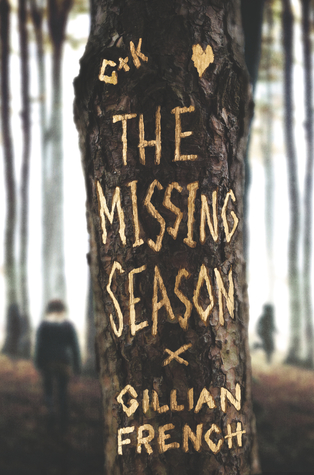
The Missing Season – Gillian French

My first novel by YA writer Gillian French was The Lies They Tell and I loved it. The Missing Season was also a great read, especially the last third or so when the action ramped up.

Clara and her parents move to Pender, Maine, where her father has been hired to help with the demolition of the town’s paper mill. Clara is used to being the new girl, but she’s a senior now and hoping that maybe they could stay put.

Pender is a hick town, but it’s also a town with a seam of darkness running through it. For one, several teens have gone missing. Then, there’s the “Mumbler” a legendary boogey man.

Clara meets Bree and Sage, who introduce her to some other people who hang out at the local skate park including Sage’s boyfriend, the larger-than-life, Trace, and Kincaid, who has “the most incredible face.” It seems that life in Pender might be okay, until the attraction she feels for Kincaid turns out to be mutual and Bree’s feelings get hurt.

The Missing Season is really a teen drama wrapped up in a creepy All Hallows’ Eve package. Clara and her new friends get up to no good, but these are mostly harmless pranks. Clara tries to navigate the tricky waters of being the new girl, wanting desperately to be a part of something bigger than herself. Kincaid is secretive and despite their attraction, Clara never really knows what he’s really thinking. Ahhh, high school relationships.

When a girl on the periphery of their group goes missing, though, things start to get real. Maybe the warnings to “Fear Him” actually have some validity. About two thirds of the way in, when Clara suddenly finds herself in danger and another girl goes missing, The Missing Season really takes off. Clara is a likable heroine who demonstrates grit when needed, making her someone readers will surely root for.

The Night She Disappeared – Lisa Jewell

It takes a skilled writer to successfully plot a novel with a million moving parts and Lisa Jewell (The Girls in the Garden, I Found You, Watching You, The Family Upstairs, Invisible Girl ) always makes it seem so easy. Her latest novel, The Night She Disappeared flips back and forth in time, and between characters and tells the riveting tale of one mother’s desperate search for her nineteen-year-old daughter, Tallulah.

Tallulah and her boyfriend, Zach, and their baby son, Noah, live with Tallulah’s mom, Kim. Zach has only recently become a part of the family again; when Tallulah told him she was pregnant he didn’t believe her, but now they are trying to make a go of it. When the novel opens, Zach and Tallulah are heading out for a much-deserved break to celebrate the end of term for Tallulah’s college course and, unbeknownst to her, a surprise proposal. But they don’t come home.

A year later, Sophie Beck and her partner, Shaun Gray, move into a little cottage on the grounds of Maypole House, the private school where Gray is to be the new headmaster. They’ve given up their London lives, but Sophie hopes that this change will suit them. She’s a writer of cozy crime novels and the last thing she is expecting is to discover a mystery in her own back garden, but that’s what happens. Someone has left a sign “Dig Here” and when she does, Sophie finds an engagement ring and, putting her detective skills to work, she discovers that the ring was purchased by Zach.

Then there’s Scarlett Jacques, the enigmatic girl from Tallulah’s school. She was the last person to see Tallulah and Zach alive. They’d been with her and some other friends at Dark Place, her family’s home. The house is

a hodgepodge of disparate architectural styles, blended almost seamlessly together across three wings, set around a central courtyard. The sun sparkles off the diamonds of leaded windows on the left wing and larger Victorian casement of sash windows on the right. It should be a mess, but it’s not; it is exquisitely beautiful.

It seems as though Tallulah and Zach have vanished into thin air, a notion Kim simply cannot accept. They would never leave their son, but it isn’t until Sophie discovers the ring that some new information shakes loose. All the while, Jewell reveals the secrets characters have been keeping, revealing complex interior lives.

Like all Jewell’s novels, The Night She Disappeared is twisty-turny, well-written and loads of fun to read. I always keep a stock of unread novels by her on my shelf because nothing beats a book slump like Lisa Jewell.

Tall Oaks – Chris Whitaker

Earlier this year I read Chris Whitaker’s We Begin at the End, a novel that might not have even been on my radar if it weren’t for Twitter. If you haven’t read it, I can highly recommend it; there are characters in that book you will never forget. A Litsy friend sent me Whitaker’s debut Tall Oaks, which won the CWA John Creasey New Blood Dagger Award – no idea what that is, but it sounds impressive.

Tall Oaks begins with the disappearance of three-year-old Harry, stolen from his bed in the dead of night by someone dressed as a clown. His mother, Jess, is devastated by the loss; Harry is her world. She and her husband are separated and now, with Harry gone, she spends her days asking questions and hanging missing posters and her nights drinking and having blind-drunk sex with strangers.

This is the mystery that informs Whitaker’s novel, but it is really only a fraction of what the novel is about – and maybe not the most interesting thing about it anyway. Whitaker’s skill is with creating character, a skill that he uses to full and brilliant effect in We Begin at the End. The town of Tall Oaks (apparently somewhere in the States, although there were things in the book that made it feel sort of British to me) is full of oddball characters and getting to know them is the real pleasure of the novel.

My favourite character is definitely Manny, the seventeen-year-old son of single mom, Elena. Manny reckons himself a gangster and, despite the heat, hangs around wearing a woolen three piece suit, a too-small fedora and black wingtips. He and his best friend, Abe, have decided to offer their “protection” services to the businesses in town and it’s quite comical.

“I’m here to offer you my services. A lot of shit has been going down around here lately. Graffiti, trash cans being turned over, cars being scratched. Real bad for business.”

“We haven’t noticed anything,” Stan said, eyeing the parking lot nervously.

Manny frowned, realizing he had forgotten to tip the crash cans over the previous night. Thalia had asked him to help her build a fort.

Roger and Henrietta are a married couple who have suffered a devastating loss. Jerry, 35, lives with his elderly mother who is dying from a brain tumour. At 6’9″ and almost 500 pounds, with a voice like he’s just sucked on a helium balloon, Jerry is ridiculed and shunned. Jared, a car salesmen, is also hiding something. He bounces from town to town, never settling, that is until he sells Elena a car and something sparks between them. Finally, there’s Jim, the police chief, who never gives up looking for Harry even after the case goes cold.

All of these characters intersect and, I suppose, might be considered suspects in Harry’s disappearance. As the novel went on though, what happened to Harry was less interesting to me than the daily lives of these characters, which is a tribute to Whitaker’s skill at writing characters, even minor ones, that you care about.

This is a novel that examines the private grief people carry (lost children, lost parents, lost relationships), the ways in which small acts of kindness can transform someone’s life and, ultimately, how we can never really know what goes on in anyone else’s life. In that respect, Tall Oaks is less a “crime” novel and more a terrific drama.

Whitaker is a writer worth being on your reading radar.

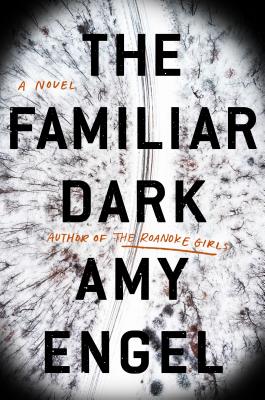
The Familiar Dark – Amy Engel

Last year I read Amy Engel’s novel The Roanoke Girls and I really loved it. Her novel The Familiar Dark is equally compelling and I read it in one sitting.

The Familiar Dark opens with a double homicide. When small town cop, Cal, comes to the diner to tell his sister Eve that her daughter, twelve-year-old Junie and her best friend Izzy have been murdered, Eve is bereft. Junie is Eve’s whole world. They are a team; only Cal has ever been invited into their private world.

Cal and Eve’s childhood is something they have worked their whole lives to escape. The siblings were raised “in a double-wide that stank of men and meth burners…strange faces and too much laughter, most of it jagged and mean. All of it nestled in the armpit of the Ozarks.” Their town is a backwater, where everyone knows your business and Eve wonders if the inept sheriff will ever find out who killed her daughter, so she takes her mother, Lynette’s advice: “You find him, Eve. Whoever did this. You find him. And you make him pay.”

Engel travels some pretty dark roads in The Familiar Dark. Although Eve has worked hard to live a different kind of life and raise her daughter away from the negative influences she’d had, including her mother, who she’s mostly avoided for the past decade, her questions necessarily suck her back into the “familiar dark” of her past.

For example, she must confront her former boyfriend (and I use the term loosely) Jimmy Ray, a local meth dealer.

I’d known what he was because I wasn’t blind. But I’d still fallen for the dark hair and green eyes, the lopsided grin, the tiger tattoo curled around his neck. The scent of danger he wore like cologne. When I was with him, I felt like the old Eve, the one who had flirted with disaster and never cared about how much something might hurt.

The Familiar Dark is almost un-put-down-able. Eve’s past has hardened her; Junie was the person who had smoothed out her rough edges. Engel leads the reader and Eve down a dark path, where Eve is forced to ask questions she may not want the answers to. There are some true surprises along the way and the ending is devastating.

Highly recommended.

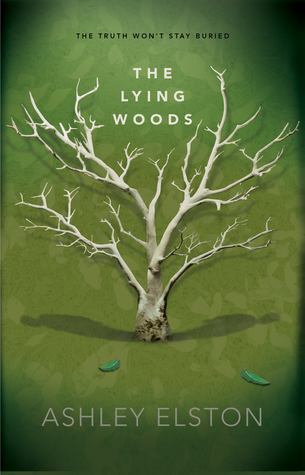
The Lying Woods – Ashley Elston

Owen Foster has it all going on. He’s a high school senior at an exclusive private school in New Orleans and his parents are loaded. His life has been pretty sweet. That is until his mother shows up one day to tell him that he has to come home to Lake Cane because his father has been accused of stealing from the very company that provided Owen with his privileged life and also, he’s missing.

This is just part of the story in Ashley Elston’s compelling YA mystery The Lying Woods. The second narrative happens twenty years in the past when nineteen-year-old Noah arrives in Lake Cane looking for work at Gus Trudeau’s pecan farm. Noah hasn’t had an easy life, but he’s hoping to turn things around and despite Gus’s warning that he’ll put a bullet in him if he steps out of line, Noah is convinced that he can make something of himself here. When he meets Maggie, he’s sure of it.

Readers will have a great time trying to figure out how these two timelines are related, but the best thing about Elston’s novel is that both stories are interesting all on their own. For Owen, he’s trying to figure out if the things that his father is accused of are true. The company his father ran, Louisiana Frac, employed a lot of people in the small town, and what his father did has left a lot of them without a job, or worse, without their life savings. People are suspicious of Owen’s mother, convinced that she knew what her husband was up to and even has some of the missing money. When Owen has to finish his senior year at the local high school he discovers that he doesn’t really have any friends with the exception, perhaps, of Pippa, his best friend when he was a kid. She, at least, seems willing to give him the benefit of the doubt.

Noah is the proverbial kid from the wrong side of the tracks. As his relationship with Maggie develops, he is not unaware of the complications their relationship presents. But he is willing to do whatever it takes to make a life with her. But it seems Noah can’t catch a break. I was really rooting for things to go his way, too.

Although this is classified as YA, it actually has a lot to offer adult readers. The writing is as good as any you’d find in an adult mystery; the characters are believable and sympathetic; the mystery is twisty enough to keep you guessing. I haven’t ever read this author before, but I would certainly like to read more.

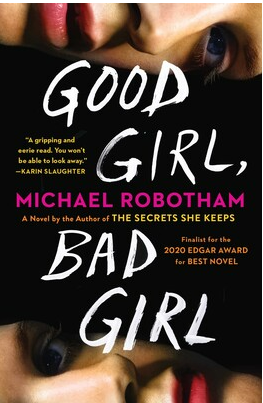
Good Girl, Bad Girl – Michael Robotham

I was expecting great things from Michael Robotham’s novel Good Girl, Bad Girl, which was a 2020 finalist for the Edgar, and named Best Thriller of the Year by both Kirkus and Publishers Weekly.

Cyrus Haven is a psychologist who has been called in to determine whether or not Evie Cormac should be allowed to leave the secure children’s home where she has been living ever since she was discovered hiding in a secret room in a house where a rotting corpse is found six years previous. Very little is known about Evie – not her real name or her exact age or what happened to her because she either can’t remember or she isn’t willing to disclose the information. It’s Haven’s job to figure out whether Evie is a danger to herself or society.

As if that wouldn’t keep Haven busy enough, when the body of a teenage girl is discovered on a footpath by a woman walking her dog, his help is needed to determine who is potentially withholding info. The lead detective on the case, Lenny Parvel, is important to Haven because she was “the first police officer on the scene when [his] parents and sisters were murdered.” So, yeah, Haven has some issues of his own.

So, as he works this case and tries to get to the bottom of Evie’s trauma and shove his own PTSD to the back, you can imagine – it all gets to be a little complicated. Is Haven up to the task? Well, it would appear so. Things get even more convoluted when Evie is released and goes to live with Haven. I can’t imagine that that is a thing that could ever really happen, but it does.

My problem with Good Girl, Bad Girl is that I felt like I never really understood these characters. For example, we never do learn who Evie is or why she was hiding in a secret room, or who the dead guy was beyond his name. That’s apparently going to be revealed in the novel’s sequel When She Was Good, which I won’t be reading. Haven’s own family tragedy is also never really explored. It’s a horrific crime, perpetrated by Haven’s older brother, who is now in a facility for the criminally insane. And although we do discover what happens to Jodie Sheehan, the girl found on the footpath, it’s not that thrilling of a mystery. Evie inserts herself into the investigation in a wholly unrealistic way, too. I kinda got the feeling that Haven was a crap psychologist – which is sort of awkward because I think we’re supposed to be rooting for him. And Evie. And I just didn’t care about wither of them. Maybe if the book had focused on just one of these stories and dedicated its energy in making these characters into flesh and blood people things might have turned out differently, but when Evie turns out to be a card shark, wins thousands of pounds at a game she happens to know about, then gets robbed and ends up in the trunk of a car – well, how much are we supposed to believe can happen to one person and not have them be a raving lunatic?

It was a miss for me.

Bloodline – Jess Lourey

I read Jess Lourey’s Unspeakable Things a few months ago and really enjoyed it so I was looking forward to reading Bloodline. It wasn’t quite the same reading experience, but it was a quick, enjoyable read nonetheless.

Joan Harken, a journalist, moves to Lilydale, Minnesota with her boyfriend, Deck. The impetus for trading big city life for small town living was a recent mugging, which left Joan shaken up and afraid, especially since she’s pregnant. Deck assures Joan that “Lilydale was peaceful, friendly. Everyone knows everyone, looked out for one another, The world outside might scream and swirl like a tornado, but Lilydale floated in a bubble, outside of time, as safe as a smile.”

It won’t take readers very long to figure out that Lilydale has some seriously creepy Stepford-vibes. We’re seeing things through Joan’s eyes – and let’s not forget she’s trained to be observant and ask questions. First there are the people who live on Mill Street, the street where Deck and Joan are to live in Deck’s childhood home. The town Mothers and Fathers give off definite cult-vibes. Then there’s the fact that everyone in Lilydale seems to know her business. As Deck’s father tells her “You have to understand how a small town works. We’re a big family here. You don’t keep secrets from family.”

Well, it turns out, you can keep some secrets and there are a lot of them in Lilydale. Some of those secrets have to do with Paulie Aandeg, a little boy who disappeared from his kindergarten class on his first day. Although it happened decades ago, the child was never found and later his mother’s house burned to the ground and she disappeared, too. When someone claiming to be Paulie turns up in Lilydale, Joan feels like she’s landed on the story of a lifetime. Unfortunately, she discovers, people in Lilydale aren’t all that forthcoming with information. As Joan’s investigation heats up, she feels more and more like people are watching her – not watching out for her as you might reasonably expect in a small town, but literally spying on her. When she starts to feel as though her life and the life of her unborn baby might be in danger, she becomes even more paranoid.

It’s interesting reading a story set in the sixties. Joan’s doctor allows for four cigarettes a day and that reminded me of an old Dr. Spock pregnancy book I found years ago. His recommendation: limit drinking to two cocktails a day and cigarettes to half a pack. Imagine. There are jellied salads, crème de menthe and Peter Pan collars galore.

Bloodline is a super-quick read. It’s straight-forward, page-turning fun.

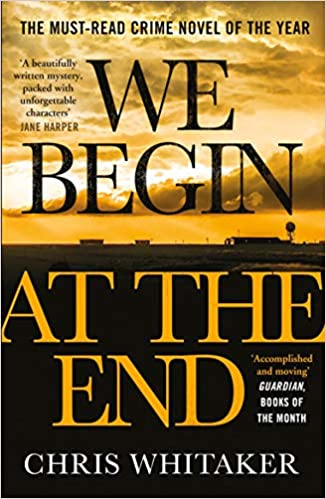
We Begin at the End – Chris Whitaker

Chris Whitaker’s novel We Begin at the End was all over my Twitter feed and the praise was copious, so I did what any booklover does, I ordered the book. Regular readers will know that having possession of a book doesn’t necessarily mean it’s going to land on my bedside table (which is where my currently-reading books live), but this one called to me. I needed to know what all the fuss was about. I needed to know if it was deserving of the fuss.

Hell, yeah.

Whitaker’s mystery/coming-of-age/noir novel concerns the fates of a whole cast of characters. It starts in the past as the town of Cape Haven, California, including Walk and his best friend Vincent King, are out looking for the body of Sissy Radley, younger sister of Vincent’s girlfriend, Star. Flash forward thirty years: Vincent’s been languishing in prison, Walk is now the town sheriff, and Star’s the messed-up mom of 13-year-old Duchess and 5-year-old, Robin.

Walk has made it his mission to look out for Star and her kids. Star’s a bit of a hot mess. She and her kids live in poverty, and Star spends a lot of time self-medicating with booze and pills. Duchess thinks part of her mom’s difficulty stems from what happened to Sissy all those years ago. “Duchess had got the bones of the story over the years, from Star when she slurred it, from the archive at the library in Salinas.”

When Vincent is released from jail he returns to Cape Haven and sets about restoring his family home, which just happens to be on a prime piece of waterfront. Dickie Darke, the local badass and sometime consort of Star, wants Vincent’s land badly, but Vincent isn’t interested in selling. He mostly just wants to be left alone. Vincent’s freedom is short lived though, and he’s soon back in jail for another crime, and this crime is the mystery which threads itself through the novel. Vincent insists on Martha May, another childhood friend and Walk’s old girlfriend, to represent him even though she’s not a criminal lawyer. That brings Martha back into Walk’s orbit after a long absence.

There are lots of surprises in Whitaker’s novel and some of the best ones are saved for the end, but it isn’t really the mystery that kept me turning the pages, it’s the characters.

Walk is loyal and dogged, and he’s spent his whole life in Cape Haven, where he knows everyone, Cape Haven is a quiet coastal town and he’s never even really had occasion to draw his gun. Vincent is taciturn and patient. Star is a hot mess. Even Dickie Dark is complicated. Minor characters, Milton, the town butcher and head of the local neighbourhood watch, Cuddy, the guard at the prison where Vincent has spent the last thirty years of his life, and Hal, the children’s grandfather, are compelling. But it’s Duchess who draws you in

If Duchess is perhaps a tad too precocious, she’s to be forgiven. She’s been dealt a rotten hand. And when circumstances land her and Robin in Montana with the grandfather they don’t know, her life is upended again. It takes every ounce of energy she has to rein herself in, and she’s really only willing to do that for her little brother. She doesn’t let people get close; it takes patience and perseverance to get past her defenses. Luckily, there are people in her life willing to keep trying. I loved her. She reminded me of Turtle, the protagonist of Gabriel Tallent’s stellar debut My Absolute Darling. This is a compliment, trust me.

There are a lot of moving pieces in Whitaker’s novel, and a lot of characters, too. There has been some criticism of his prose and the short hand he uses. I don’t read westerns and while much of this novel feels like a western, I chalked Duchess’s odd vernacular up to bravado: “I am the outlaw Duchess Day Radley” she tells more than one adversary. Perhaps odd coming from a kid from California, but not necessarily from a smart kid looking to build a protective shield around herself and those she loves. As for the novel’s prose, once I settled into Whitaker’s world, the writing just seemed spare. I think it suited the story, laid it bare.

This is a great book on so many levels. Read it for the mystery. Read it for the characters. Read it for the gut punch at the end. But read it!

The Cousins – Karen M McManus

Milly, Aubrey and Jonah Story have been invited to spend the summer on Gull Cove Island by their grandmother, Mildred. That might not be an out-of-the-ordinary invitation for some people, but it is for these three teens. For one thing, they’ve never met their grandmother. For another, they haven’t seen each other for years and their parents (Milly’s mom and Aubrey and Jonah’s dads) are also estranged. So, it’s a weird request all-around.

Gull Cove Island was a little-known haven for artists and hippies when Abraham Story turned it into what it is today: a place where rich and semifamous people spend ridiculous amounts of money pretending they’re getting back to nature.

Milly’s mother, Allison, is anxious for her daughter to go. Twenty four years ago, she and her brothers (Adam, Anders and Archer) had each received a letter from their mother which said “You know what you did.” With that, they were cut out of their mother’s life both personally and financially and none of them really understood why. Milly’s mom thinks this invitation may be the opportunity to mend fences and for the cousins to get to know each other.

This is the set up for Karen M. McManus (One of Us is Lying, One of Us is Next) latest novel The Cousins. The novel is told from multiple perspectives during two different time-lines, so you get to see the parents as young adults and then their offspring who arrive on Gull Cove Island to a less-than-warm reception. Clearly there is something strange going on, and Milly is determined to figure it out, with or without her cousins’ help.

Like her previous novels, McManus manages to keep all the plates of a compelling mystery spinning. Each of the three teens are intelligent and likeable. The real mystery is rooted deep in their parents’ past and some of those characters aren’t so nice, particularly Jonah and Aubrey’s dads. Readers will have a lot of fun trying to figure out what the heck is going on, but like with her previous novels, McManus will always be one step ahead of you.