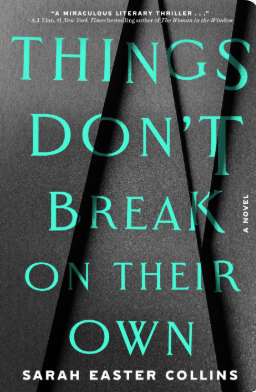
Things Don’t Break on Their Own – Sarah Easter Collins

Although Things Don’t Break on Their Own is touted as a “miraculous literary thriller”, I think that’s doing Sarah Easter Collins’ debut a disservice. While the book is definitely literary and it’s definitely a page turner, I don’t think I would call it a “thriller”. But maybe that’s nitpicking and it really doesn’t matter.

Robyn and her wife, Cat, have invited some friends and family round for dinner. There’s Robyn’s older brother, Michael, and his girlfriend, Liv. There’s Nate, Cat’s brother, and his new girlfriend, Claudette, and then there’s Willa and her boyfriend, Jamie. Robyn and Willa have history; when they were 17 and in boarding school together they were roommates and then lovers, but it ended badly. That was years ago, now, though and the two women are friends. It wasn’t a particularly happy time for Willa. Her younger sister, Laika, disappeared when she was just 13 and nearly 22 years later, the family still doesn’t know what happened to her.

The story changes perspectives and doesn’t follow a straight line. As Robyn anticipates Willa’s arrival, she remembers the summer she took her back to Tea Mountain, the remote place she calls home. It is a transformative experience for Willa, whose own family is a dysfunctional mess. Robyn’s father is a potter, and as he repairs a broken bowl using the Japanese method of kintsugi, he assures Willa (without even knowing her all that well) that “You can fix anything, given the right tools.”

There is no fixing Willa’s fractured family though. Her father, Bryce, has a successful business, so money is not an issue, but he is a horrible and abusive bully, especially to Willa’s mother and Laika. In fact, Bryce never touched Willa, and perhaps some of her guilt stems from that. About Laika, Robyn says

I tried to keep her safe. I really did. I told her, keep your head down, don’t bring unnecessary attention to yourself, just do what you’re told, all the things that just came naturally to me. But I was so busy keeping her safe from herself that I forgot to warn her about the outside world. I should have told her that there were people out there, men, women even, who could harm her.

So much was my fault.

Robyn and Cat’s dinner party proves to be revelatory, but by the time you get to the “twist” (maybe that’s why they call this book a thriller), you’ll be so invested in these characters that –well, I don’t want to say it hardly matters, but it was honestly the least interesting part of the book.

I really enjoyed Things Don’t Break on Their Own. The writing was great, the characters were compelling, and the mystery surrounding Laika’s disappearance was intriguing. It’s a solid debut and I highly recommend it.
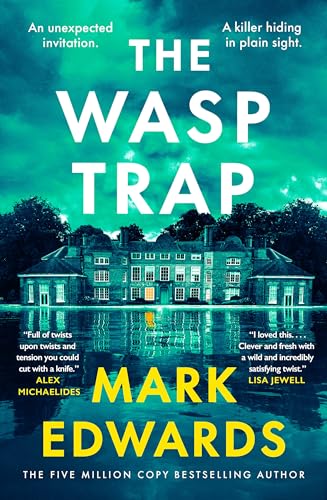
The Wasp Trap – Mark Edwards

I whipped through Mark Edwards’ thriller The Wasp Trap in a couple sittings (helped along by two storm days), but it wasn’t really because the book was anything particularly special.

Twenty-five years ago, Professor Sebastian Marlowe assembled his “revolutionaries”, six 20-somethings with particular skills, and invited them to come to Thornwood, a stately country manor, to develop a dating app based on years of his own research.

At the end of the summer, after a party-gone-wrong, the six were shipped off to their homes in various parts of England and with the exception of Theo and Georgina, who had fallen in love and subsequently married, they don’t speak to each other until after Marlow has died and Theo and Georgina invite them to a dinner party in their former employer’s honour.

This is one of those locked room mysteries where you are meant to be suspicious of everyone’s motives. The story is mostly told through Will’s eyes. He’d been hired to write the web site’s copy, so it makes sense that he’s the observant one, the one who tries to piece things together when things go sideways. Which they do.

Once all the gang’s back together, someone in the house turns out not to be who they said they were…well, more than one someone, actually. Suddenly, the revolutionaries find themselves unwilling participants in a deadly game of “tell me your secret”.

The Wasp Trap toggles between the summer at Thornwood and the present day and reveals to the reader that, Lily, the genius of the group was also working on a separate project, an app that could figure out whether or not someone is a psychopath. As Will notes when Lily broaches the idea

The genius. The lothario. The salesman. The affluent couple, the joker and the local girl. Finally me, the wordsmith, whose role was to write it all down.

If any of us were a psychopath, I already had a good idea who it would be.

This is one of those books that will appeal to a lot of readers. It’s fast-paced, there are clearly stakes, lots of twists and cliffhangers that will make you turn the pages. It was just okay for me, but that’s just me. I didn’t really care for any of the characters that much and I wasn’t a huge fan of the ending.

Mileage will definitely vary.

Razorblade Tears – S.A. Cosby

Razorblade Tears is my second book by S.A. Cosby (All the Sinners Bleed). It’s a straightforward revenge thriller that grabs you by the throat immediately and shakes the living daylights out of you until the end.

Ike Randolph and Buddy Lee Jenkins have very little in common with each other except for the fact that Ike’s son, Isiah, fell in love with Buddy Lee’s son, Derek. Neither man had a solid relationship with their son for reasons that are more complicated than their sexual orientation. Ike spent several years in prison when Isiah was younger. Buddy Lee also spent time in prison. Ike has been out for a few years now, and has built a successful lawncare business; Buddy Lee lives in a rundown trailer and drinks too much. Ike is Black and married to his high school sweetheart; Buddy Lee is white and divorced.

Then their sons are murdered. And when it doesn’t look like the police intend to solve the crime, Ike and Buddy Lee join forces to find out what happened to them and make it right. And by make it right, I mean cause bodily harm to anyone involved.

It is often the case, and certainly true for Ike and Buddy Lee, that we only realize how much we love someone when they are gone. I mean, sure, these fathers loved their sons, but they also couldn’t abide the fact of their homosexuality. Their deaths stir up all sorts of unresolved feelings and also calls into question the validity of those feelings. Buddy Lee gets there a little quicker than Ike:

Derek was different. Whatever rot that lived in the roots of the Jenkins family tree had bypassed Derek. His son was so full of positive potential it had made him glow like a shooting star from the day he was born. He had accomplished more in his twenty-seven years than most of the entire Jenkins bloodline had in a generation.

Once the men start to ask questions about their sons, they find themselves in the crosshairs of a gang of bikers, and someone powerful further up the food chain. Ike and Buddy Lee are not without skills and they find themselves in some truly terrifying situations. Their partnership grows from wary colleagues to something like friendship as they take a wrecking ball to the mystery surrounding their sons’ deaths.

Razorblade Tears is violent, funny, heartfelt and a total page turner. It asks a lot of questions, not the least of which is what happens to a person who is not allowed to be their authentic selves. You will be rooting for these middle-aged men from start to finish.

The Safest Lies – Megan Miranda

Seventeen-year-old Kelsey and her mother live in a fortress of a house; it even has a safe room in the basement. Kelsey has always felt safe there and, in fact, “The black iron gates used to be [her] favorite thing about the house.” She acknowledges that her life isn’t like the lives of her classmates. For starters, her mother hasn’t left the house in 17 years. For another, she has to meet with Jan.

Seeing Jan was part of my mother’s deal to keep me. Jan was assigned by the state. I’ve come to rely on her, but I also don’t totally trust her, because she reports to someone else, who decides my fate. My mother relies on her even more, and trusts her even less.

Although previously homeschooled, Kelsey now attends high school and on her way home one day she has a car accident. Ryan, classmate and local volunteer firefighter, is first on the scene and “saves” her from certain death. His heroism lands the pair in the paper and that’s when Kelsey’s life starts to unravel.

She does something she shouldn’t and sneaks out of the house one night to see Ryan receive a medal for saving her life. When she returns home, she discovers the gate at the front unlocked, and when she makes her way inside, her mother is missing. It’s a big deal because, remember, mom hasn’t been outside in 17 years.

Megan Miranda’s YA thriller The Safest Lies is pretty much what you’d expect from a book of this type. A plucky heroine, a solid love interest, a couple red herrings, a mystery and enough action to propel the plot forward. I was pretty invested when there seemed to be stakes (who are the shadowy figures lurking around and I guess that safe room will come in handy after all, eh?) It doesn’t necessarily wrap up as satisfactorily or as believably as I might have hoped, but as a seasoned thriller reader, that’s to be expected.

Teens probably won’t be able to turn the pages fast enough.

Shattering Glass – Gail Giles

Although Gail Giles is now a well-known name in the world of YA, she had to start somewhere and that somewhere was with her 2002 debut Shattering Glass.

Young Steward, so named due to a complicated family tree, narrates the story of what happens when his best friend, Rob, decides to elevate class doofus, Simon Glass, from zero to hero.

Simon was textbook geek. Skin like the underside of a toad and mushy fat. His pants were too short and his zipper gaped about an inch from the top. And his Fruit of the Looms rode up over his pants in back because he tucked his shirt into his tightey-whiteys. He had a plastic pocket protector, no joke, crammed with about a dozen pens and a calculator.

Rob is the most popular guy in their Texas high school. “He wore confidence like the rest of us wore favorite sweatshirts.” When he decides to make a bit of a project out of Simon, none of the members of their group including the handsome Bobster and star football player Coop raise an objection. Coop, in particular, seems to form an authentic relationship with Simon, but Young has a different view because “Simon Glass was easy to hate.” Young can’t say no to Rob though, although he does wonder why Rob is so eager to change Simon’s social standing.

The novel follows Simon’s gradual metamorphosis from nobody to somebody and how this act also changes the dynamic between the friends. It is clear from the beginning that something awful has happened. Each chapter begins with a short comment from some other secondary character, which allows readers to anticipate an event that the main narrative builds towards. Let’s just say that the book’s title is not merely figurative.

The book examines bro culture to a degree. Why do people follow others even when their conscience tells them they shouldn’t? Young is sympathetic, but also frustrating as he makes one bad choice after another. Even his decision at the novel’s expected but startling climax does nothing to redeem him.

Shattering Glass is a solid book. It’s well written and there’s lots to talk about.

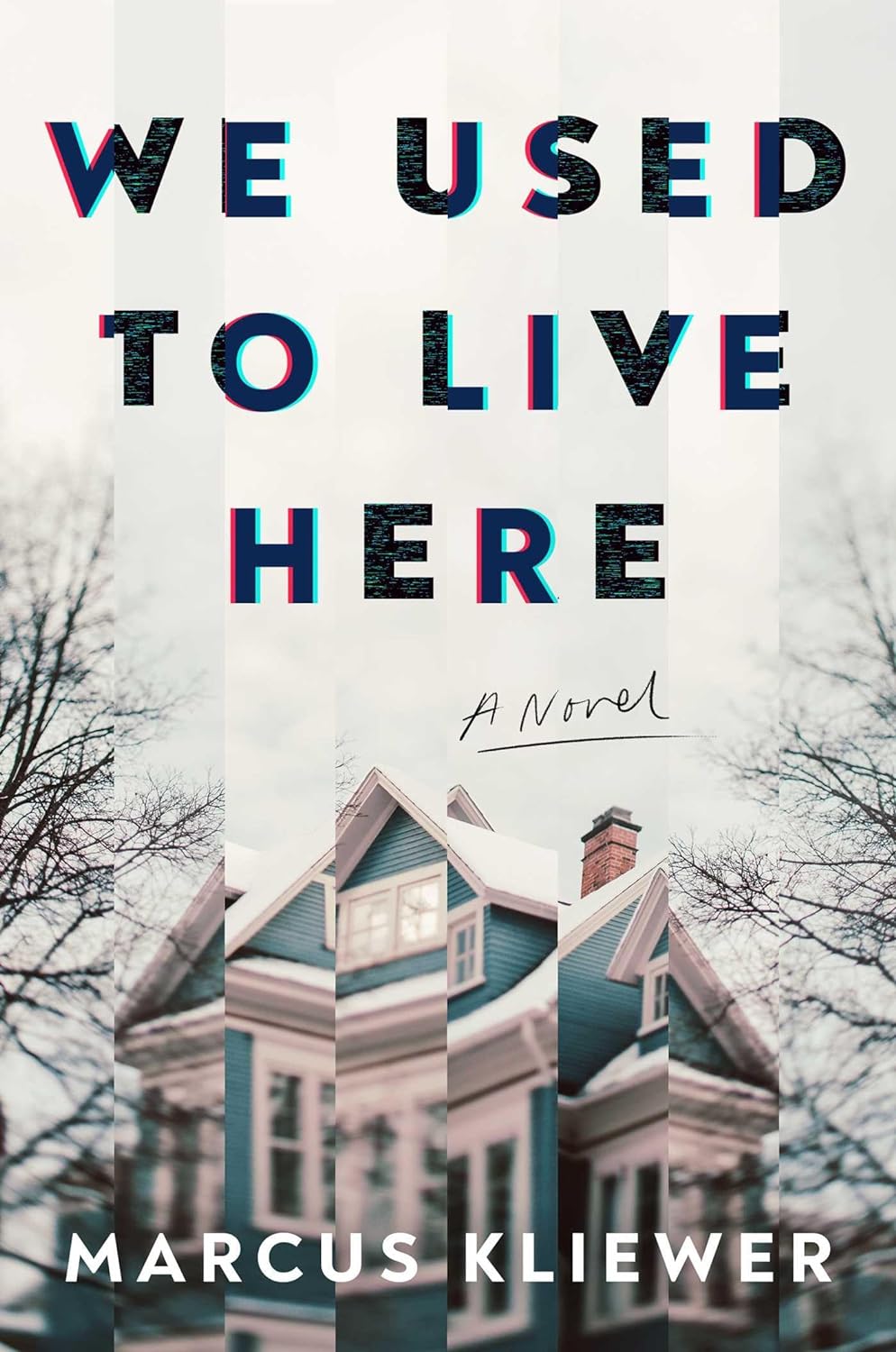
We Used to Live Here – Marcus Kliewer

Years ago, I started to watch the movie The Strangers and I couldn’t make it past the first twenty minutes. Totally creeped me out.

While I eventually did make it through the whole thing, I don’t think I’d ever be looking to repeat the experience. Except maybe in book form.

Marcus Kliewer’s novel We Used to Love Here began its life on Creepypasta. I have only had one other experience with a book with the same starting point: Pen Pal. Like that book, this one started off with a bang and ended with a bit of a whimper.

Eve and Charlie have recently purchased an old fixer-upper in a secluded location with the intent of either renovating or demolishing and rebuilding. Eve is home alone one evening when the doorbell rings. There’s a family on her doorstep and Eve concludes

All in all, they seemed the kind of brood that would cap a Sunday-morning sermon with brunch at Applebee’s. Eve was more than familiar with this crowd.

The father wants to know if he can bring his family in because he used to live in the house. Weird, right?

Eve is reluctant to let them in and so she plays the only card she has: she’ll check with her girlfriend because

The distant alarm bells of her subconscious rang out. She vaguely remembered hearing stories. Stories of strangers showing up at houses, claiming they had lived there once, asking to take a quick look around. Then, when the unsuspecting victims had let down their guard: robbery, torture, murder.

What starts as a relatively straightforward domestic thriller soon morphs into something completely unhinged. The family starts to seem less “off” and Eve starts to feel way more unreliable. And the house, yeah, the house is changing, too. “”The basement’s bigger that you’d think,”” Thomas tells Eve. “”Lots of nooks, crannies, places to hunker down.”” Similarly, the attic is labyrinthine. But this discovery, like the basement, is new to Eve – discovered only after the arrival of the family.

We Used to Live Here was certainly easy to read – but I found it sort of disjointed, especially as things went along. It wasn’t scary, although there were certainly some creepy moments. I didn’t finish it feeling satisfied, mostly because I wasn’t 100% sure I understood exactly what had happened. That may be my own fault rather than the book’s – so your mileage might vary.

Count My Lies – Sophie Stava

Time is running out on my summer break; I head back to my classroom on August 25. So it’s back-to-back thrillers for me.

Sloane Caraway is a compulsive liar. Always has been from the time she was a kid and when her life (single mom, constant moves) didn’t suit her, she just made up a better version for herself. Now she’s in her early 30s living in a two bedroom apartment with her mom in Brooklyn, working as a nail technician. One day in the park, she rushes to the aid of a father whose daughter has been stung by a bee. She starts by telling the father, Jay Lockhart, that she’s a nurse. Then, she adeptly handles the crisis, earning the father’s gratitude. When he asks her name, she lies about that, too.

The first part of Sophie Stava’s debut, Count My Lies, follows Sloane as she finds herself pulled into the Lockhart’s orbit. Jay’s wife, Violet, is perfect and Sloane finds herself wanting to be like her. Their daughter, Harper, it turns out, is in need of a nanny and suddenly Sloane finds herself with a new job and, she hopes, a new friend.

But, of course, things are not as they seem. Sloane outs herself as unreliable from the get go, but about half way through, the book switches perspectives and we find ourselves seeing things from Violet’s point of view. It turns out, Violet is lying, too.

Count My Lies isn’t exactly original, but let’s face it — with so many domestic thrillers on the market these days, you’d be hard pressed to find one that doesn’t remind you of something else. I don’t think my issues with this book have anything to do with the plot, I mostly just didn’t care about the characters. I think we’re supposed to like Sloane and Violet, but I didn’t really understand what motivated either of them. Well, we’re told why Violet makes the choices she does, but none of it felt real. By the time we get to her part in the story, the narrative feels more like plot points being clicked together like Lego pieces.

As for Jay, he gets his own section of the book too, but generally he is a non-entity – just a dude who is “handsome in an obvious, teenage heartthrob sort of way.”

Look – if you don’t read a ton of thrillers, you would probably have a good time with this book. It was just okay for me.

Don’t Let Him In – Lisa Jewell

Pretty much any book by British author Lisa Jewell is a guaranteed slump buster. While I haven’t always loved every book I’ve read (and I’ve read several: None of This is True, The Family Remains, The Night She Disappeared, Invisible Girl, The Family Upstairs, Watching You, I Found You, The Girls in the Garden), every single one of them has been an entertaining, fast-paced read. Jewell’s latest novel, Don’t Let Him In, is no exception.

Ash Swann’s life has taken a bit of a turn. Her father has recently died, she’s had a bit of trouble at work, and she’s moved back home to recover from both of these traumatic events. That’s when Nick Radcliffe enters her life– well, her mother’s life. He reaches out to the Swanns after her father’s death and before you can say “to good to be true” he has insinuated himself into their lives.

Martha and her husband Alistair live a quiet life with their three children. Martha has a thriving florist business, and Al has a busy job in the hospitality industry where “Sometimes he’s home all the time, other times they call him in at the last minute and he’s away for days.” Martha forgives him time and again because she never imagined that as a forty-four-year-old divorcee she’d meet someone like Al.

There’s a third voice in the book, this one belonging to a male character and set four years in the past. He’s very forthcoming about his marriage to an older woman, Tara, whose adult children disapproved of the union. Tara’s daughter, Emma,

doesn’t like me at all. Neither of Tara’s children does. I don’t care too much about that. I can’t say I particularly like them either. I don’t need to like them, and they don’t need to like me. The most important thing, the key to everything, is that my wife trusts me. And she does. Implicitly.

Careful readers will have no trouble figuring out how these three separate narratives and timelines connect. The fun in this story is really in watching women band together – spearheaded by Ash – to out a snake in the grass. Does it strain credulity? Yes. Did that matter? No. Don’t Let Him In is a fun time and I gobbled it up in just a couple sittings.

The House of Ashes – Stuart Neville

When Sara and her husband Damien move into their new house in Northern Ireland, she almost immediately begins to feel uneasy. For one thing, there’s a stain on the flagstone in the kitchen that no amount of scrubbing seems to remedy. For another, a strange woman shows up one morning and yells at Sara to get out of her house. As if this weren’t disconcerting enough, Damien is clearly controlling and emotionally abusive and it’s clear that he’s gaslighting Sara.

Stuart Neville’s novel The House of Ashes unspools the story of the horrific history of “The Ashes” (as the house is called) in several different voices. There’s Sara’s, of course, but there are other voices too, including Mary, a little girl who lived at the house sixty years ago, and Esther, another girl who comes to The Ashes. It is clear early on that The Ashes is not a happy place. Mary says

I always lived in the house. I never knew any different. Underneath, in the room down the stairs. In the dark. That’s what I remember most, when we were telt to put the lamps out. They locked the door at the top of the stairs and that was that. Dark until they opened it again. I still don’t like the dark.

Neville’s book is about abuse. Sara’s husband is abusive – the kind of domestic abuse that might be familiar to modern day audiences, abuse that is couched as a love so deep the person just can’t help themselves. The abuse at The Ashes in Mary’s story is something completely different. Mary and Mummy Joy and Mummy Noreen are at the mercy of the Daddies: Ivan, Tam, and George. Although many of the details are spared, your imagination will have no trouble filling in the blanks.

As Sara digs deeper into the dark secrets of The Ashes, she also finds her own voice, and it all makes for a compelling read.

This Book Will Bury Me – Ashley Winstead

On the plus side, Ashley Winstead’s latest novel This Book will Bury Me is a page turner. On the negative side, the book doesn’t hang together and I didn’t finish it feeling satisfied. This is the fourth book I have read by this author. I had similar feelings about her debut, In My Dreams I Hold a Knife, and then I really liked The Last Housewife and Midnight is the Darkest Hour.

Janeway Sharp, a college student, receives horrible news: her father has died. She returns home to be with her mother and try to process this unexpected and devastating loss. She doesn’t quite know how to manage her grief and then one night she stumbles upon an online group of armchair true crime detectives and gets sucked down the rabbit hole.

Soon she is helping a small group of people (Mistress, Citizen, Lightly, and Goku) solve a murder, an activity that provides both satisfaction and distraction. Jane earns the title of “savant” because she can apparently see things/details that others miss. That’s lucky for her, I guess.

When a terrible crime takes place in Idaho, the group immediately jumps on it, eventually deciding to meet up there so they can be boots on the ground. Lightly, a former cop, has a connection in the FBI and suddenly they find themselves special consultants. If Idaho seems like a very specific place for a murder, that’s because this case is essentially the Idaho college murders which took the lives of four students and for which Bryan Kohberger was recently sentenced to life without parole.

Suddenly Jane finds herself sharing a house with people she had only known online and they become a family of sorts — just a family with a shared true crime obsession. They follow the clues, turn over rocks, and insinuate themselves into the lives of people connected to the case. All of this is ethically grey, of course, but Jane isn’t so naive as to not realize it is. Still, she’s determined to find out what happened.

The book is not without its controversy because of its similarity to the Idaho murders. All of this makes for a quick narrative and I didn’t really have a problem with it. My issues had more to do with the subplot of Jane’s father. Jane decides to do some digging, to find out about the person she felt the closest to, but whom she doesn’t feel she knows anything about. There were some things about her father that were revealed that didn’t really go anywhere and felt more like a distraction than a meaningful part of the novel’s narrative.

I also questioned some of the things that happened at the end of the book, as the narrative wrapped up. It seemed sort of implausible to me and left me feeling sort of meh about the whole thing when all was said and done.

Still, for anyone who has ever found a community online, or true crime junkies – you’d probably enjoy this book.