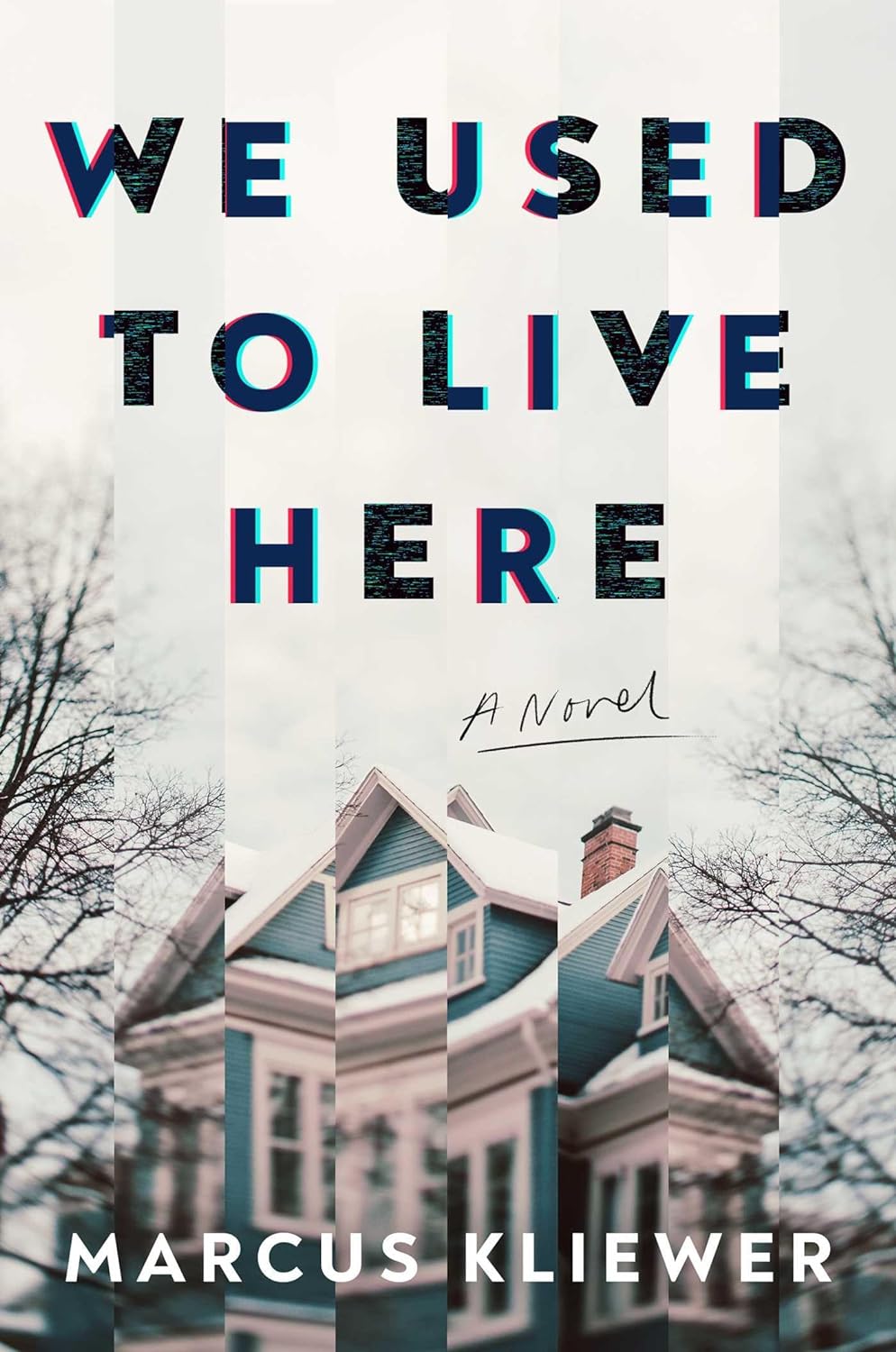
This Book Will Bury Me – Ashley Winstead

On the plus side, Ashley Winstead’s latest novel This Book will Bury Me is a page turner. On the negative side, the book doesn’t hang together and I didn’t finish it feeling satisfied. This is the fourth book I have read by this author. I had similar feelings about her debut, In My Dreams I Hold a Knife, and then I really liked The Last Housewife and Midnight is the Darkest Hour.

Janeway Sharp, a college student, receives horrible news: her father has died. She returns home to be with her mother and try to process this unexpected and devastating loss. She doesn’t quite know how to manage her grief and then one night she stumbles upon an online group of armchair true crime detectives and gets sucked down the rabbit hole.

Soon she is helping a small group of people (Mistress, Citizen, Lightly, and Goku) solve a murder, an activity that provides both satisfaction and distraction. Jane earns the title of “savant” because she can apparently see things/details that others miss. That’s lucky for her, I guess.

When a terrible crime takes place in Idaho, the group immediately jumps on it, eventually deciding to meet up there so they can be boots on the ground. Lightly, a former cop, has a connection in the FBI and suddenly they find themselves special consultants. If Idaho seems like a very specific place for a murder, that’s because this case is essentially the Idaho college murders which took the lives of four students and for which Bryan Kohberger was recently sentenced to life without parole.

Suddenly Jane finds herself sharing a house with people she had only known online and they become a family of sorts — just a family with a shared true crime obsession. They follow the clues, turn over rocks, and insinuate themselves into the lives of people connected to the case. All of this is ethically grey, of course, but Jane isn’t so naive as to not realize it is. Still, she’s determined to find out what happened.

The book is not without its controversy because of its similarity to the Idaho murders. All of this makes for a quick narrative and I didn’t really have a problem with it. My issues had more to do with the subplot of Jane’s father. Jane decides to do some digging, to find out about the person she felt the closest to, but whom she doesn’t feel she knows anything about. There were some things about her father that were revealed that didn’t really go anywhere and felt more like a distraction than a meaningful part of the novel’s narrative.

I also questioned some of the things that happened at the end of the book, as the narrative wrapped up. It seemed sort of implausible to me and left me feeling sort of meh about the whole thing when all was said and done.

Still, for anyone who has ever found a community online, or true crime junkies – you’d probably enjoy this book.

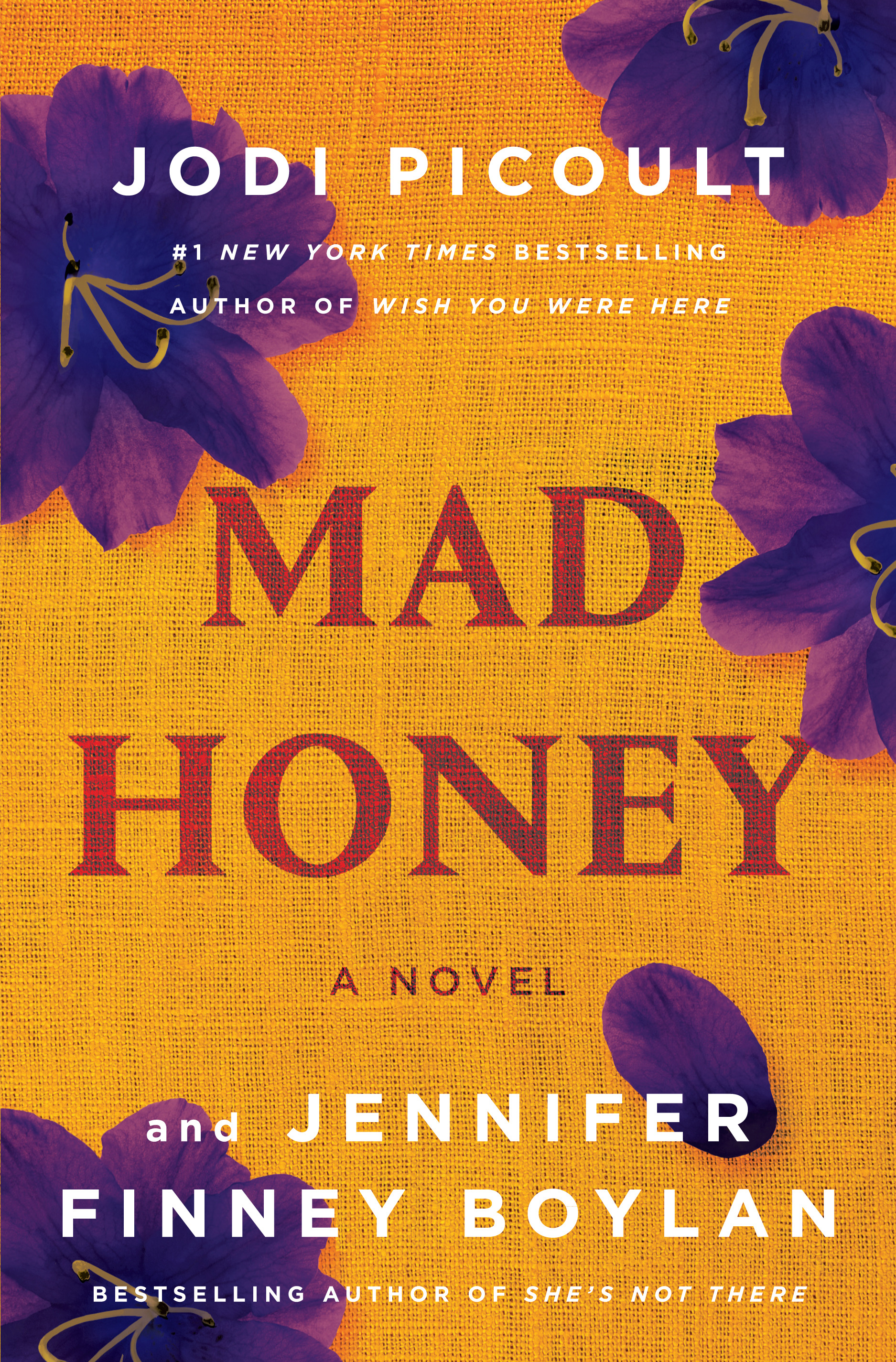
Mad Honey – Jodi Picoult & Jennifer Finney Boylan

Although I have read several books by Jodi Picoult (The Pact, Nineteen Minutes, The Tenth Circle, My Sister’s Keeper), I read them pre-2007, which is when I started this blog. I loved The Pact, but I remember feeling manipulated by My Sister’s Keeper, which is probably when I stopped reading her. I had never heard of Jennifer Finney Boylan. I can’t really tell you why I picked up Mad Honey, but I can tell you that I loved it.

This is the story of Olivia, who lives with her teenaged son, Asher, a star hockey player, in the house she grew up in in rural New Hampshire. She’d left her life as the wife of a cardiothoracic surgeon when Asher was six, well, she’d fled her life, really, because her ex was abusive. Now she does what her father did before her: she is a beekeeper. There’s loads of interesting things about beekeeping in this book.

This is also the story of Lily, who has recently moved to this same small town with her single mother, Ava. Lily is beautiful and fragile and shy, but when she and Asher meet, through Asher’s childhood bestie, Maya, something clicks and the two are soon inseparable.

This novel is told from these two perspectives and it is really a story about love: the love a mother has for their child, romantic love and self love. It is also a story about secrets, the ones we keep from others, but the truths we keep from ourselves, too. It is also a page-turning courtroom drama because– this is not a spoiler; it is revealed in the blurb– at the end of the first chapter we learn that Lily is dead.

The story toggles back and forth to the beginning of Lily and Asher’s relationship, to their growing feelings for each other (as seen through Lily’s eyes, but also what is witnessed by Olivia), but also reaches further back to provide some insight into how Lily and her mother ended up in New Hampshire. Olivia also reflects on her marriage to Braden, the giddy beginning and the incident that finally caused her, after many other incidents, to flee. She and Asher are close, and so when he is charged with Lily’s murder there is no question of believing he is innocent. But then: maybe Asher has something of his father in him after all.

There is a plot twist in this book that I did not see coming — although I probably should have since Picoult is very much known for her topicality. Anyway, it was a surprise and it definitely added a whole new layer to this story. These characters felt real to me and their struggles also felt nuanced and authentic. I was wholly invested in the outcome of the trial and I absolutely could not wait to get back to the book after I set it down. Mad Honey is provocative, thoughtful, and timely.

If you have never read Picoult before this would be a great place to start, and if you’ve read her but, like me, given her a break, I highly recommend this one.

Keeping 13 – Chloe Walsh

True to my word, after finishing Binding 13 I immediately went out to Indigo and purchased Keeping 13 which continues Johnny and Shannon’s story. I headed for the YA section, only to discover that the books were not there. Someone had moved them to the Romance section, which is absolutely where they should be, despite the ages of the main characters.

Keeping 13 is another brick of a book – 651 pages – but I knew what I had signed up for and I ripped through it in just a couple days. When we left our characters at the end of the first book, Shannon’s brother Joey was asking his mother to make a choice, a choice that she seems incapable of making. I won’t say much more about that here because…spoilers…but let’s just say that Keeping 13 starts extremely dramatically.

The main part of this story concerns Johnny and Shannon’s growing feelings for each other, Johnny’s recovery from an injury that happened before the start of the first book, but which hasn’t healed properly, the domestic abuse that is happening in Shannon’s house and which causes the return of the oldest Lynch sibling, Darren, and the requisite trash talk by Johnny’s BFF, Gibsie. Johnny’s ex-girlfriend Bella is also intent on making Shannon’s life miserable.

I read this because I genuinely cared about Johnny and Shannon and when I got to the end of the first book I had to keep going to find out what happened. Obviously at 600+ pages, there were some instances of repetition: a lot of instances where one character or another needs to be reassured (but for reasons that make obvious sense.) There was also a lot more sex in this one because as Johnny and Shannon grow closer and admit their feelings to each other, clearly they are driven by hormones and want to get nekkid. I actually appreciated how respectful Johnny was about Shannon’s innocence and even when he blabbed to Gibsie, I could sort of forgive him for his lack of discretion because he is, after all, still young. I loved Johnny’s parents a lot and I loved how I could hear the Irish lilt in the character’s voices.

There were some truly pulse-pounding moments in this book, too. I read one scene in particular with my heart in my throat. And, of course, lots of swoony moments as these two crazy kids try to figure out themselves, their lives, and their feelings for each other.

I was all in, but with the same caveats: a lot of swearing and a lot of sexist comments made about the girls in the book, still tropey (helpless, fragile girl saved by massive, hulking dreamboat), just way longer than it needed to be.

Now, there are more books in this Boys of Tommen series, but I won’t be carrying on. Nothing against the other characters (all of whom I have met in these first two books, I am guessing), but I feel like I would just be getting more of the same and I am pretty happy with what I got.

If there was a series, though, I would 100% watch it.

Binding 13 – Chloe Walsh

Here is something that you may not know about me: I love YA romance way more than I love adult romance. I don’t know why. Maybe it’s because when I was a teenager I was always in love (and out of love and then in love again). Maybe it’s because that’s as far as I ever got on the romantic maturity scale. Whatever the reason, adult romances rarely ever hit for me, but YA often does. (There are exceptions to this rule, of course. I love Talking at Night and The Paper Palace and everything by David Nicholls.)

I am all in for shows like The Summer I Turned Pretty and To All the Boys I Loved Before and Maxton Hall. Books like Perfect Chemistry and Easy and The Do-Over are way more palatable to me than books by Emily Henry (I’ve tried two and DNF either.)

So, that brings me to Binding 13 by Chloe Walsh, a book that I picked up and put down a million times at the bookstore. Then it was recommended by a couple reviewers that I like, and it was on sale, so I bought it. It’s long, just over 600 pages, but I read it in just a couple of days.

Fifteen-year-old Shannon has endured a life time of bullying and not just at school; her father is abusive, too. She lives with her parents, one older brother, Joey, and three younger brothers, on a council estate in Ballylaggin, Ireland. Finally, her mother decides to send her to Tommen, a private school, where she hopes her daughter will be safe from the students who have tormented her her whole life. (She mostly conveniently ignores the fact that her husband is physically abusive, too.)

On the first day of school, while crossing the sports field, Shannon gets hit with a rugby ball, which knocks her down, cracking her head off the ground and causing a mild concussion. This is how she meets Johnny Kavanagh, captain of the rugby team and all around super stud.

Okay, you know how these things go. Girl who doesn’t know how beautiful she is meets boy who totally knows how beautiful he is try to ignore their feelings, can’t, and eventually <<insert 600 pages of Irish slang, rugby talk, longing looks, expletives>>….yeah, apparently I will have to read the gosh darn sequel Keeping 13 to find out what happens – even though, of course, I know what happens.

Although Binding 13 is shelved in the YA section at my local Indigo and even though the main characters are all teenagers, I wouldn’t actually consider this to be YA. And neither, apparently, would the author. On her website, Walsh says “Please note that all of Chloe’s books are intended for mature readers of 18 years and above. Chloe’s self-published work has always been categorized as new adult and contemporary. The topics of conversation in these stories are NOT suitable for younger audiences. The first four books in the Boys of Tommen series were self-published and marketed for adult readership only.”

I don’t believe in censorship, but I probably wouldn’t put this book in my classroom library. To be fair, though, I would be happier with my students reading this than I would be if they were reading Colleen Hoover. That’s saying something.

There’s lots to like about Binding 13. I really grew to love both Shannon and Johnny. There are a lot of great secondary characters, too. The book is often laugh-out-loud funny. I wouldn’t say that there is swoon-level romance, but Johnny proves himself early on to be protective and not above throwing a fist if he needs to. I was definitely invested in these characters and their individual struggles: Shannon’s safety and the pressure Johnny puts on himself to be an elite athlete. How will these crazy kids ever get together?

There are also some things I didn’t like. It is tropey, for sure. Shannon is teeny, child-like and Johnny is a 6’3″ wall of muscle. Shannon falls down a lot – she is constantly running into Johnny’s muscular chest and landing on her ass. I didn’t like the way the boys talked about the girls sexually. Their conversations are far more graphic than anything the characters might have gotten up to. Sometimes the conversations between Johnny and Shannon seem to do a complete 360 out of nowhere, which I guess you can explain away by their ages. And much is made of their ages, although there is really only two years between them: Shannon turns 16 in the book and Johnny will turn 18. They read a lot older, although I guess you could explain that away by their life experiences.

Look, I know that I am certainly not the audience for this sort of book, but I will be purchasing Keeping 13 and reading it straight away and that is something I never do.

There. That’s my endorsement.
Nestlings – Nat Cassidy

When Reid and Ana win an apartment lottery they are thrilled that they can leave their crappy Brooklyn apartment and their crazy landlord, Frank. The Deptford is a swanky building overlooking Central Park. It’s almost too good to be true, but Ana and Reid could use a break.

They’ve recently had their first baby, Charlie, but the birth wasn’t without its complications and Ana has been left in a wheelchair. She isn’t sure living on the 18th floor of the Deptford is the right decision, but she has to admit that the apartment is fabulous even though her first thought upon viewing the space is “We don’t belong here.”

Nat Cassidy’s novel Nestlings is very much a riff on Rosemary’s Baby with less devil worshippers and more…well, I’ll leave that for you to figure out. Reid settles into the space relatively easily, but Ana is trapped in the apartment with Charlie, who never seems to stop crying.

Things are weird in the apartment almost immediately: goopy stuff around the window in her daughter’s bedroom, the sounds of crying from the apartment next door, the strange concierge and even stranger elevator operator, staircases that go nowhere. No one will actually come into the building to deliver food; Reid has to run across the street to collect it when the delivery guy shows up. But, yeah, sure, small price to pay for living in a place that under other circumstances they could never afford.

As the story moves along and as Ana (and the reader) begin to understand just what this building and the assortment of eccentric people who live in it are all about, the stakes get a little higher. This couple is dealing with a whole lot–post partum depression, grief, marital discord, a disability. It makes them sort of the perfect victims but, of course, a mother’s love should not be underestimated.

Lots of creepy (and a few campy) moments in Nestlings. It wasn’t outright scary, though. The first two thirds were pretty slow moving, then things ramped up towards the end. If horror’s your cup of tea, I think you will probably enjoy this one.

Await Your Reply – Dan Chaon

Here’s a weird reading situation: I started and finished Dan Chaon’s novel Await Your Reply without really understanding what I was reading. The novel follows three different stories, all of them compelling enough to keep me reading but when I turned the last page my reaction was “huh?”

In one story, recent high school graduate, Lucy, runs off with her handsome history teacher, George Orson. It makes sense for her to go; her parents are dead and she isn’t close to her older sister, Patricia. “And so: why not? They would make a clean break.” George has promised her a remarkable life, but first a stop in Nebraska, where George becomes secretive and evasive.

In another story, Miles is on the hunt for his twin brother, Hayden, who has been missing for a decade. Hayden’s most recent letter to Miles is filled with dire warnings about “the police, and any government official, FBI, CIA, even local government.” Miles knows his brother has had some mental health problems, and he could just ignore the letter when it comes, but he can’t do that, especially when Hayden tells him that he “may never hear from [him] again.”

Finally, there’s Ryan and his father, Jay. The novel opens with the two of them traveling to the hospital.

On the seat beside him, in between him and his father, Ryan’s severed hand is resting on a bed of ice in an eight-quart Styrofoam cooler.

Ryan has only recently been reunited with his father and that reunion caused Ryan to give up the life and parents he once had. Jay is kind of a dope-smoking deadbeat who makes his living by stealing people’s identities and drags Ryan into this life, too.

So, what do these stories have to do with each other? It feels like absolutely nothing, yet my brain kept trying to fit the pieces together. The book’s unique structure makes it almost impossible to discern whether or not these narratives are running concurrently or one after the other. The book has a lot to say about identity and whether or not we should be content to live just one version of ourselves. I dunno. I found this book flummoxing, but I kept reading and I would still say I enjoyed the read even if most of it flew over my head.

Moon Road – Sarah Leipciger

Kathleen and Yannick, the protagonists in Sarah Leipciger’s 2024 novel Moon Road, haven’t spoken to each other in almost twenty years. Their marriage

lasted only a few years, but they remained good friends over two decades because of Una, their daughter. And because they never stopped being fond of each other. So, a lasting friendship, but then one day, they had an argument. The argument was bad enough that they didn’t speak for nineteen years. Not a card, not a text message, not an email.

Another momentous thing happened all those years ago, too: Una, who had left Ontario and moved to the West Coast, disappeared. In the intervening years, Kathleen keeps track of how long Una has been missing by marking the days in a notebook (over 7000 of them by the time the novel starts) and hosting an annual party in her honour. Now 65, she grows flowers to sell to local businesses. Yannick, 73, is on wife number four and has three sons and a daughter. Now Yannick is back in Birchfield because he has “received some unexpected news” and “it’s about time they saw each other again.”

The news concerns Una, of course. It is her disappearance that has driven Kathleen and Yannick apart, as grief sometimes does, but it is also the thing that pulls them back together. Yannick has decided that he will drive to Tofino and he wants Kathleen to come.

This is a road trip novel, but only marginally. As Yannick and Kathleen set off on their cross-country drive, they talk and bicker and reminisce, weaving together the past and the present. They’ve both dealt with their grief and their guilt separately and neither knows for sure what they are going to find when the arrive on Vancouver Island.

The novel also provides a glimpse of Una and her time in BC, living rough, working odd jobs and trying to figure out what her life is meant to be. These sections are strung out throughout the novel and it isn’t until the very end that we learn what actually happened to her. The mystery of her fate, the subsequent searches, and the leads that go nowhere definitely keep the pages turning.

But what I loved about this novel was Yannick and Kathleen and how connected they were despite the intervening years. Their marriage didn’t work, but they have a child and that is a bond that sticks. (Unless it doesn’t and I have first-hand knowledge of that scenario.) It was wonderful to read a book featuring mature characters who have lived a life, suffered a terrible loss, and then made an effort to keep moving forward.

The book is also beautifully written – not quite a travelogue, despite the road trip, but Canada is a gorgeous country, and anyone who has even driven from coast to coast (I have!) will likely recognize some of the descriptions of the vastness of the prairies and the majesty of the mountains.

Highly recommended.

Just Like Home – Sarah Gailey

Despite the fact that they have been estranged for several years, when 30-something Vera Crowder’s mother, Daphne, asks her to come home because she is dying, Vera packs up her less-than-stellar life and heads home to the house that was both heaven and hell.

Her father, Francis Crowder, had built the house long before she was born, back when his marriage to Vera’s mother was new. Back before everything else happened, before everyone knew his name. He’d built it with his two strong hands, built it right in the middle of his square patch of green land, built two stories above the ground and dug one below.

It is really Vera’s complicated feelings for her father that drive her back home, “that, and the impossible reality of her mother’s voice on the phone, rippling with sickness.”

Home is now a bit of a circus. In order to make ends meet, Daphne has been renting out the garden shed to artists, writers, and lookie-loos hoping to be inspired by Francis Crowder’s madness. The latest inhabitant is James Duvall, an artist who feels he has a special right to be there because his father had written the definitive book about Francis’s crimes. Vera hates him on sight.

As a child, Vera was convinced that something nefarious was happening in Crowder house, particular in the basement where she was often awoken by “wet slapping noises” coming from down there. Francis kept the basement locked and Vera was given strict instructions to never go down there.

Generally speaking, her relationship with her father is easier than her relationship with her mother.

He’s a big wall of clean soap with curly brown hair that’s thinning in back, a crooked smile with a chipped tooth in front, big ropy muscles in his arms from cutting lumber all day. He’ll scoop Vera up close into a hug after he’s checked the bed and the closet and the curtains and the corners. He’ll tell her that no monsters are there. He’ll check twice.

Just Like Home is a novel about family as much as it’s about anything. And I was wholly invested in watching the family dynamics play out; Vera’s growing understanding (but strangely not horror) of what her father was up to, the erosion of her relationship with her mother. It also examines the weird cult of leeches who feed off the misfortune of others. Vera isn’t particularly likeable, although she is somehow sympathetic.

Then there’s that ending. I was all in until that. Still, worth a read.

Believe Me – JP Delaney

Claire Wright wants to be an actress and that’s why she’s moved from the UK to NYC where she makes ends meet by working for a lawyer who is trying to catch husbands who cheat on their wives. Claire is the lure and she’s damn good at it; she can be whoever you want her to be.

Then she is tasked to entrap Patrick Fogler. His wife, Stella, seems overly concerned for Claire’s safety, telling Claire that Patrick “Is like no man you’ve ever met.”

Claire’s not worried though. When she “bumps” into Patrick at a bar she describes him as “Good looking, in a quiet, intellectual way.” He doesn’t seem to be the kind of guy who would cheat, but Claire acknowledges that the likable, charming guys “tend to be the ones who cheat most.”

Patrick, though, doesn’t take the bait. And that might have been the end of it, except that Stella turns up dead and Claire finds herself a suspect, which is how she comes to be in the crosshairs of Detective Frank Durban and Forensic Psychologist Kathryn Latham. They have a very special job for her. They think Patrick is responsible for Stella’s death, and perhaps a string of other murders, too, and they want Claire to infiltrate his life.

The set up for this book was terrific. I was wholly invested in Claire and the seedy world of depravity she suddenly finds herself in (although that doesn’t really go anywhere.) Somewhere in the middle of the book, though, things started to fall apart a little bit for me. And, then, I guess the ship rights itself towards the end. It’s not an altogether satisfying thriller because of all the red herrings and characters air dropped into the narrative to aid with the plot.

The novel seems to want the reader to “believe” and then spends all its effort in misdirecting us. I read a lot of thrillers, and this was okay.

A Step Past Darkness – Vera Kurian

It’s 1995 in the small Pennsylvania town of Wesley Falls when six classmates (but not friends) are grouped together for a summer Capstone project. There’s Jia Kwon, whose mother owns the local gem and astrology store and who has the gift of sight; Padma Subramanian, the only other Asian in the small town; Maddy Wesley, beautiful, popular and mean; Kelly Boyle, relatively new at the school and trying to fit in; James Curry, Kelly’s childhood bestie and perpetual outsider, and Casey Cooper, superstar football player.

While there are some alliances in the group, there are also some animosities. Nevertheless, they decide to head to the long abandoned Devil’s Peak coal mine for a school-wide party. James has been in the boarded-up mine several times and when there’s a cave-in, he tries to lead them to safety. But on the way to the Heart of the mine, the group witnesses something horrific – something horrific enough that they swear each other to secrecy and which, in fact, causes them to go their separate ways. They don’t see each for twenty years, when a murder in Wesley Falls reunites them.

Vera Kurian’s novel A Step Past Darkness is, in the author’s own words “an homage to Stephen King’s IT— I have always been taken with its focus on friendship, kids being in over their heads, and the return to a place that both is and isn’t home.” Before I read this in the acknowledgments, I was certainly getting those Derry, Maine vibes. There’s no Pennywise in Kurian’s book, but there is the creepy Pastor Jim Preiss of Golden Praise, the town’s mega church.

Priess is a much beloved figure in the church, an enigmatic character who worked his flock into a lather when he delivered his sermons. From Casey’s point of view, he was the only thing worth paying attention to during the church services. “On more than one occasion, Casey had seen someone pass out. He had to admit, that was kind of badass.”

Golden Praise is a strange place, though. Cult-like. Maddy belongs to the group Circle Girls, “An elite corps of girls who floated through the halls of school, each wearing a small silver circular pin inset with a gem. […]Being a Circle Girl had to do with some combination of popularity in Golden Praise’s Youth Fellowship and a purity promise.” Certain members of the Wesley Falls community are elders at the church. And the church has eyes everywhere.

I was wholly invested in these characters (and some, but not all, parts of their story.) It’s a long book, but I eagerly returned to Wesley Falls and had no trouble turning the pages. It’s not IT, a book I read when it first came out and which holds a special place in my heart, but it’s definitely worth the investment of time and I would certainly read more from this author.