Razorblade Tears – S.A. Cosby

Razorblade Tears is my second book by S.A. Cosby (All the Sinners Bleed). It’s a straightforward revenge thriller that grabs you by the throat immediately and shakes the living daylights out of you until the end.

Ike Randolph and Buddy Lee Jenkins have very little in common with each other except for the fact that Ike’s son, Isiah, fell in love with Buddy Lee’s son, Derek. Neither man had a solid relationship with their son for reasons that are more complicated than their sexual orientation. Ike spent several years in prison when Isiah was younger. Buddy Lee also spent time in prison. Ike has been out for a few years now, and has built a successful lawncare business; Buddy Lee lives in a rundown trailer and drinks too much. Ike is Black and married to his high school sweetheart; Buddy Lee is white and divorced.

Then their sons are murdered. And when it doesn’t look like the police intend to solve the crime, Ike and Buddy Lee join forces to find out what happened to them and make it right. And by make it right, I mean cause bodily harm to anyone involved.

It is often the case, and certainly true for Ike and Buddy Lee, that we only realize how much we love someone when they are gone. I mean, sure, these fathers loved their sons, but they also couldn’t abide the fact of their homosexuality. Their deaths stir up all sorts of unresolved feelings and also calls into question the validity of those feelings. Buddy Lee gets there a little quicker than Ike:

Derek was different. Whatever rot that lived in the roots of the Jenkins family tree had bypassed Derek. His son was so full of positive potential it had made him glow like a shooting star from the day he was born. He had accomplished more in his twenty-seven years than most of the entire Jenkins bloodline had in a generation.

Once the men start to ask questions about their sons, they find themselves in the crosshairs of a gang of bikers, and someone powerful further up the food chain. Ike and Buddy Lee are not without skills and they find themselves in some truly terrifying situations. Their partnership grows from wary colleagues to something like friendship as they take a wrecking ball to the mystery surrounding their sons’ deaths.

Razorblade Tears is violent, funny, heartfelt and a total page turner. It asks a lot of questions, not the least of which is what happens to a person who is not allowed to be their authentic selves. You will be rooting for these middle-aged men from start to finish.

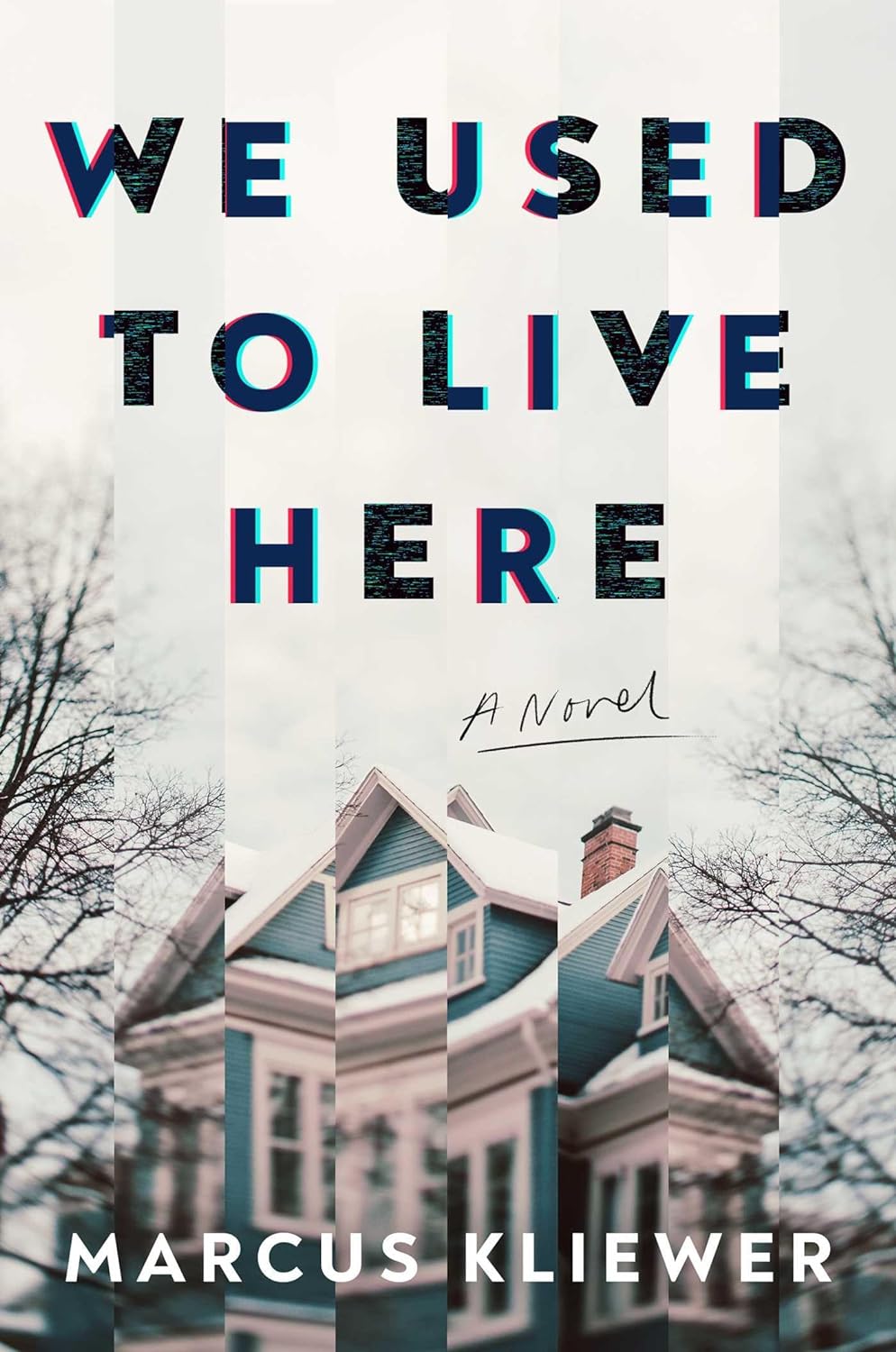
We Used to Live Here – Marcus Kliewer

Years ago, I started to watch the movie The Strangers and I couldn’t make it past the first twenty minutes. Totally creeped me out.

While I eventually did make it through the whole thing, I don’t think I’d ever be looking to repeat the experience. Except maybe in book form.

Marcus Kliewer’s novel We Used to Love Here began its life on Creepypasta. I have only had one other experience with a book with the same starting point: Pen Pal. Like that book, this one started off with a bang and ended with a bit of a whimper.

Eve and Charlie have recently purchased an old fixer-upper in a secluded location with the intent of either renovating or demolishing and rebuilding. Eve is home alone one evening when the doorbell rings. There’s a family on her doorstep and Eve concludes

All in all, they seemed the kind of brood that would cap a Sunday-morning sermon with brunch at Applebee’s. Eve was more than familiar with this crowd.

The father wants to know if he can bring his family in because he used to live in the house. Weird, right?

Eve is reluctant to let them in and so she plays the only card she has: she’ll check with her girlfriend because

The distant alarm bells of her subconscious rang out. She vaguely remembered hearing stories. Stories of strangers showing up at houses, claiming they had lived there once, asking to take a quick look around. Then, when the unsuspecting victims had let down their guard: robbery, torture, murder.

What starts as a relatively straightforward domestic thriller soon morphs into something completely unhinged. The family starts to seem less “off” and Eve starts to feel way more unreliable. And the house, yeah, the house is changing, too. “”The basement’s bigger that you’d think,”” Thomas tells Eve. “”Lots of nooks, crannies, places to hunker down.”” Similarly, the attic is labyrinthine. But this discovery, like the basement, is new to Eve – discovered only after the arrival of the family.

We Used to Live Here was certainly easy to read – but I found it sort of disjointed, especially as things went along. It wasn’t scary, although there were certainly some creepy moments. I didn’t finish it feeling satisfied, mostly because I wasn’t 100% sure I understood exactly what had happened. That may be my own fault rather than the book’s – so your mileage might vary.

Count My Lies – Sophie Stava

Time is running out on my summer break; I head back to my classroom on August 25. So it’s back-to-back thrillers for me.

Sloane Caraway is a compulsive liar. Always has been from the time she was a kid and when her life (single mom, constant moves) didn’t suit her, she just made up a better version for herself. Now she’s in her early 30s living in a two bedroom apartment with her mom in Brooklyn, working as a nail technician. One day in the park, she rushes to the aid of a father whose daughter has been stung by a bee. She starts by telling the father, Jay Lockhart, that she’s a nurse. Then, she adeptly handles the crisis, earning the father’s gratitude. When he asks her name, she lies about that, too.

The first part of Sophie Stava’s debut, Count My Lies, follows Sloane as she finds herself pulled into the Lockhart’s orbit. Jay’s wife, Violet, is perfect and Sloane finds herself wanting to be like her. Their daughter, Harper, it turns out, is in need of a nanny and suddenly Sloane finds herself with a new job and, she hopes, a new friend.

But, of course, things are not as they seem. Sloane outs herself as unreliable from the get go, but about half way through, the book switches perspectives and we find ourselves seeing things from Violet’s point of view. It turns out, Violet is lying, too.

Count My Lies isn’t exactly original, but let’s face it — with so many domestic thrillers on the market these days, you’d be hard pressed to find one that doesn’t remind you of something else. I don’t think my issues with this book have anything to do with the plot, I mostly just didn’t care about the characters. I think we’re supposed to like Sloane and Violet, but I didn’t really understand what motivated either of them. Well, we’re told why Violet makes the choices she does, but none of it felt real. By the time we get to her part in the story, the narrative feels more like plot points being clicked together like Lego pieces.

As for Jay, he gets his own section of the book too, but generally he is a non-entity – just a dude who is “handsome in an obvious, teenage heartthrob sort of way.”

Look – if you don’t read a ton of thrillers, you would probably have a good time with this book. It was just okay for me.

Don’t Let Him In – Lisa Jewell

Pretty much any book by British author Lisa Jewell is a guaranteed slump buster. While I haven’t always loved every book I’ve read (and I’ve read several: None of This is True, The Family Remains, The Night She Disappeared, Invisible Girl, The Family Upstairs, Watching You, I Found You, The Girls in the Garden), every single one of them has been an entertaining, fast-paced read. Jewell’s latest novel, Don’t Let Him In, is no exception.

Ash Swann’s life has taken a bit of a turn. Her father has recently died, she’s had a bit of trouble at work, and she’s moved back home to recover from both of these traumatic events. That’s when Nick Radcliffe enters her life– well, her mother’s life. He reaches out to the Swanns after her father’s death and before you can say “to good to be true” he has insinuated himself into their lives.

Martha and her husband Alistair live a quiet life with their three children. Martha has a thriving florist business, and Al has a busy job in the hospitality industry where “Sometimes he’s home all the time, other times they call him in at the last minute and he’s away for days.” Martha forgives him time and again because she never imagined that as a forty-four-year-old divorcee she’d meet someone like Al.

There’s a third voice in the book, this one belonging to a male character and set four years in the past. He’s very forthcoming about his marriage to an older woman, Tara, whose adult children disapproved of the union. Tara’s daughter, Emma,

doesn’t like me at all. Neither of Tara’s children does. I don’t care too much about that. I can’t say I particularly like them either. I don’t need to like them, and they don’t need to like me. The most important thing, the key to everything, is that my wife trusts me. And she does. Implicitly.

Careful readers will have no trouble figuring out how these three separate narratives and timelines connect. The fun in this story is really in watching women band together – spearheaded by Ash – to out a snake in the grass. Does it strain credulity? Yes. Did that matter? No. Don’t Let Him In is a fun time and I gobbled it up in just a couple sittings.

This Book Will Bury Me – Ashley Winstead

On the plus side, Ashley Winstead’s latest novel This Book will Bury Me is a page turner. On the negative side, the book doesn’t hang together and I didn’t finish it feeling satisfied. This is the fourth book I have read by this author. I had similar feelings about her debut, In My Dreams I Hold a Knife, and then I really liked The Last Housewife and Midnight is the Darkest Hour.

Janeway Sharp, a college student, receives horrible news: her father has died. She returns home to be with her mother and try to process this unexpected and devastating loss. She doesn’t quite know how to manage her grief and then one night she stumbles upon an online group of armchair true crime detectives and gets sucked down the rabbit hole.

Soon she is helping a small group of people (Mistress, Citizen, Lightly, and Goku) solve a murder, an activity that provides both satisfaction and distraction. Jane earns the title of “savant” because she can apparently see things/details that others miss. That’s lucky for her, I guess.

When a terrible crime takes place in Idaho, the group immediately jumps on it, eventually deciding to meet up there so they can be boots on the ground. Lightly, a former cop, has a connection in the FBI and suddenly they find themselves special consultants. If Idaho seems like a very specific place for a murder, that’s because this case is essentially the Idaho college murders which took the lives of four students and for which Bryan Kohberger was recently sentenced to life without parole.

Suddenly Jane finds herself sharing a house with people she had only known online and they become a family of sorts — just a family with a shared true crime obsession. They follow the clues, turn over rocks, and insinuate themselves into the lives of people connected to the case. All of this is ethically grey, of course, but Jane isn’t so naive as to not realize it is. Still, she’s determined to find out what happened.

The book is not without its controversy because of its similarity to the Idaho murders. All of this makes for a quick narrative and I didn’t really have a problem with it. My issues had more to do with the subplot of Jane’s father. Jane decides to do some digging, to find out about the person she felt the closest to, but whom she doesn’t feel she knows anything about. There were some things about her father that were revealed that didn’t really go anywhere and felt more like a distraction than a meaningful part of the novel’s narrative.

I also questioned some of the things that happened at the end of the book, as the narrative wrapped up. It seemed sort of implausible to me and left me feeling sort of meh about the whole thing when all was said and done.

Still, for anyone who has ever found a community online, or true crime junkies – you’d probably enjoy this book.

Mad Honey – Jodi Picoult & Jennifer Finney Boylan

Although I have read several books by Jodi Picoult (The Pact, Nineteen Minutes, The Tenth Circle, My Sister’s Keeper), I read them pre-2007, which is when I started this blog. I loved The Pact, but I remember feeling manipulated by My Sister’s Keeper, which is probably when I stopped reading her. I had never heard of Jennifer Finney Boylan. I can’t really tell you why I picked up Mad Honey, but I can tell you that I loved it.

This is the story of Olivia, who lives with her teenaged son, Asher, a star hockey player, in the house she grew up in in rural New Hampshire. She’d left her life as the wife of a cardiothoracic surgeon when Asher was six, well, she’d fled her life, really, because her ex was abusive. Now she does what her father did before her: she is a beekeeper. There’s loads of interesting things about beekeeping in this book.

This is also the story of Lily, who has recently moved to this same small town with her single mother, Ava. Lily is beautiful and fragile and shy, but when she and Asher meet, through Asher’s childhood bestie, Maya, something clicks and the two are soon inseparable.

This novel is told from these two perspectives and it is really a story about love: the love a mother has for their child, romantic love and self love. It is also a story about secrets, the ones we keep from others, but the truths we keep from ourselves, too. It is also a page-turning courtroom drama because– this is not a spoiler; it is revealed in the blurb– at the end of the first chapter we learn that Lily is dead.

The story toggles back and forth to the beginning of Lily and Asher’s relationship, to their growing feelings for each other (as seen through Lily’s eyes, but also what is witnessed by Olivia), but also reaches further back to provide some insight into how Lily and her mother ended up in New Hampshire. Olivia also reflects on her marriage to Braden, the giddy beginning and the incident that finally caused her, after many other incidents, to flee. She and Asher are close, and so when he is charged with Lily’s murder there is no question of believing he is innocent. But then: maybe Asher has something of his father in him after all.

There is a plot twist in this book that I did not see coming — although I probably should have since Picoult is very much known for her topicality. Anyway, it was a surprise and it definitely added a whole new layer to this story. These characters felt real to me and their struggles also felt nuanced and authentic. I was wholly invested in the outcome of the trial and I absolutely could not wait to get back to the book after I set it down. Mad Honey is provocative, thoughtful, and timely.

If you have never read Picoult before this would be a great place to start, and if you’ve read her but, like me, given her a break, I highly recommend this one.

The Wedding People – Alison Espach

Phoebe’s life has fallen apart and one last kick to her heart is the final straw, so she books a one way flight to Newport, Rhode Island and makes a reservation to stay at Cornwall Inn. Just a one night stay because Phoebe intends on killing herself.

Phoebe and her husband Matt had always intended to shake up their vacations and come to this amazing hotel, but they always ended up defaulting to the same old same old, and then one day he just up and left her.

But now Phoebe stands before a nineteenth-century Newport hotel in an emerald silk dress, the only item in her closet she can honestly say she still loves, probably because it was the one thing she had never worn.

Phoebe isn’t expecting the hotel to be full, but it is. There’s a wedding and all the wedding people are here for the entire week leading up to the nuptials. When Phoebe meets the bride, Lila, in the elevator, she blurts out that she intends to kill herself in an attempt to explain to Lila that she is not, in fact, one of the guests.

Alison Espach’s novel The Wedding People is really a book about connections and how sometimes a random and seemingly inconsequential meeting can change the trajectory of your life. Although Phoebe is clearly in emotional pain, she recognizes it in others.

…Phoebe is starting to understand that on some nights, Lila is probably the loneliest girl in the world, just like Phoebe. And maybe they are all lonely. Maybe this is just what it means to be a person

It will be no surprise that Phoebe does not, in fact, kill herself. Instead she finds herself embroiled in the wedding drama, propositioning the wrong man, standing in as the maid of honour, and working through her own trauma. The book is funny, sentimental, and life-affirming because as Phoebe starts to remind herself “I am here.”

Beats the alternative.

The Paris Apartment – Lucy Foley

Jess needs to get out of Dodge (Dodge being London) and so she reaches out to her older half-brother Ben to see if she can come stay with him in Paris. But when she arrives in Paris, he’s not responding to her buzzing up to his flat, nor is he answering her calls. Jess is desperate because she’s broke, doesn’t speak the language, and doesn’t know anyone in Paris.

Lucy Foley’s novel The Paris Apartment has a similar structure to the only other Foley novel I’ve read The Guest List. In both novels, multiple characters have an opportunity to share their insight or, as is often the case, misdirect the reader. In The Paris Apartment, Jess encounters Sophie and her husband Jacques, the owners of the building who live in the penthouse. Then, there’s Nick, Ben’s university friend and the reason Ben was able to land such swanky digs. Mimi, an artist, lives with her roommate Camille; Antoine lives with his wife, Dominique, on the first floor. And then there’s the Concierge, an older woman who lives in a tiny cabin in the corner of the courtyard, tasked with keeping an eye on the building, and its inhabitants.

It becomes clear to Jess that these people are hiding something and her determination to find out what happened to Ben outweighs any fear she has for her safety. Ben is the only family she has and although a part of her resents his success (they share a mother, who died when they were quite young and both children were fostered out; Ben fared a little bit better than Jess and has had a more successful life), she also loves him.

There’s lots of misdirection and red herrings in Foley’s book and your level of enjoyment will depend on how much you care for Jess and finding out what exactly happened in the Paris apartment. The story is okay, albeit a little slow, particularly at the beginning. If you haven’t read a lot of this type of story before, this would be an okay place to start. Otherwise, I wouldn’t bother.

Believe Me – JP Delaney

Claire Wright wants to be an actress and that’s why she’s moved from the UK to NYC where she makes ends meet by working for a lawyer who is trying to catch husbands who cheat on their wives. Claire is the lure and she’s damn good at it; she can be whoever you want her to be.

Then she is tasked to entrap Patrick Fogler. His wife, Stella, seems overly concerned for Claire’s safety, telling Claire that Patrick “Is like no man you’ve ever met.”

Claire’s not worried though. When she “bumps” into Patrick at a bar she describes him as “Good looking, in a quiet, intellectual way.” He doesn’t seem to be the kind of guy who would cheat, but Claire acknowledges that the likable, charming guys “tend to be the ones who cheat most.”

Patrick, though, doesn’t take the bait. And that might have been the end of it, except that Stella turns up dead and Claire finds herself a suspect, which is how she comes to be in the crosshairs of Detective Frank Durban and Forensic Psychologist Kathryn Latham. They have a very special job for her. They think Patrick is responsible for Stella’s death, and perhaps a string of other murders, too, and they want Claire to infiltrate his life.

The set up for this book was terrific. I was wholly invested in Claire and the seedy world of depravity she suddenly finds herself in (although that doesn’t really go anywhere.) Somewhere in the middle of the book, though, things started to fall apart a little bit for me. And, then, I guess the ship rights itself towards the end. It’s not an altogether satisfying thriller because of all the red herrings and characters air dropped into the narrative to aid with the plot.

The novel seems to want the reader to “believe” and then spends all its effort in misdirecting us. I read a lot of thrillers, and this was okay.

I Died on a Tuesday – Jane Corry

Janie White, 18, is just about to move to London to start a job in publishing when she is run down while biking home from the beach. “On the day I died, the sea was exceptionally flat,” she recalls. So, clearly not dead then. Twenty years later, an arrest is made in this horrific hit and run and the culprit appears to be pop sensation Robbie Manning. He surrenders without argument because “the past has finally caught up with him.”

Jane Corry’s novel I Died on a Tuesday is an overly long (465 pgs), overly complicated, not-very-well-written thriller. Besides these two narratives (well, Janie can’t speak anymore, but she can sing) we also hear from Vanessa, a widow who works at the local courthouse as a witness service volunteer, who comes into Janie and Robbie’s orbit through the trial.

Things might have been a little more palatable if Corry had focused on just one story, but everyone gets in on the action. For example, Vanessa’s marriage is harbouring a huge secret and her friend, Richard, a local judge (and whom she cleverly refers to as Judge) has a secret, and Janie’s mother went missing around the time she had her accident. But did she though? And Robbie’s rise to fame is suspicious. And all these threads, somehow – and mostly unbelievably – tie themselves into a neat little bow by the time we get to the end of the book. Some people might (and did) say that this book was full of twists. Honestly I just felt like yelling “squirrel” every time I turned the page.

None of these characters were remotely believable to me. None of their motives sufficiently explained their decisions. None of the dialogue felt real to me. It was all tell. I knew by about page 50 that I wasn’t going to like it, but I slogged through hoping that where the writing suffered, there might be a pay off in the plot. I will happily read a book with mediocre prose if the story is a banger.

Nothing to see here.