I’m Thinking of Ending Things – Iain Reid

Um. WTF? So, I saw I’m Thinking of Ending Things at the book store. Sounded good. Bought it. Read it straight through. Listened to author Iain Red talk about it on CBC Radio. You were no help at all, by the way, Iain, so I am going to work on the premise that I know what happened. Kinda. Sorta.
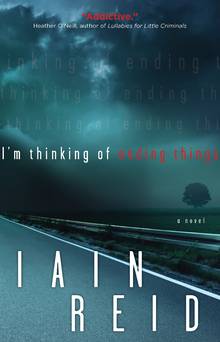
Im+Thinking+of+Ending+ThingsThe unnamed narrator and her boyfriend, Jake, are on their way to visit Jake’s parents for the very first time. Their relationship is new, but already the narrator is “thinking of ending things.”  It’s not that she doesn’t like Jake. They met at a party and she tells us “He wasn’t the first guy I noticed that night. But he was the most interesting.”

On the long, snowy drive to Jake’s family home Reid’s characters exchange awkward conversation about, among other things,  secrets, space, and memory. She remarks, “Part of everything will always be forgettable. No matter how good or remarkable it is. It literally has to be. To be.”

The journey also gives her an opportunity to catalogue her relationship with Jake. She mentions the way he chews, the toothpaste lingering on the corner of his mouth, his “jagged cheekbones.”  The narrator comments that “Individually, we’re both unspectacular.” But that isn’t exactly true.

When the narrator and Jake finally arrive at the family farm, it’s isolated and creepy. A tour of the outbuildings reveals dead lambs “Limp and lifeless, stacked  up outside against the side of the barn.” They visit empty pigpens and the chicken coop before the narrator catches a glimpse of a “gaunt figure, standing, looking down at us.” Don’t go in that house is probably what you’re thinking. You wouldn’t be wrong because from this point on I’m Thinking of Ending Things takes a turn off awkward street onto sinister avenue.

Jake’s parents are strange. His dad is “reserved, borderline standoffish.” Jake’s mom smiles a lot and is wearing “so much makeup I find it unsettling.” Dinner conversation is bizarre. Jake contributes nothing; “I have never seen Jake so singularly focused on his plate of food.”

A surreptitious tour of the house reveals a basement that Jake had claimed was not used, but which the narrator reveals is “not true at all.”  She discovers a disturbing painting and a bookshelf filled with pages and pages of equally disturbing drawings.

And all this would be enough to make your skin crawl, but Reid’s novel is not nearly as straightforward as this. For instance, the narrator has been receiving strange phone calls from someone she refers to as “The Caller.”  When she doesn’t answer, he leaves her strange, cryptic messages: “I feel a little crazy. I’m not lucid” says the first. The narrator also refers to a childhood memory of being watched through her bedroom window. Trying to figure out how these elements play into Reid’s narrative is half the fun of this puzzle of a book. Or half the frustration, depending on how you look at it.

By the novel’s conclusion, I thought I’d figured out what was going on. I actually thought I’d figured it out by page 88. If I’m right, I’m Thinking of Ending Things is a trippy, creepy thriller that pushes lots of suspense-thriller boundaries. It also has something to say about  identity and memory. Even if I’m not right – and we’ll never know because, hello – spoilers – it’s still a great book.

Highly recommended.
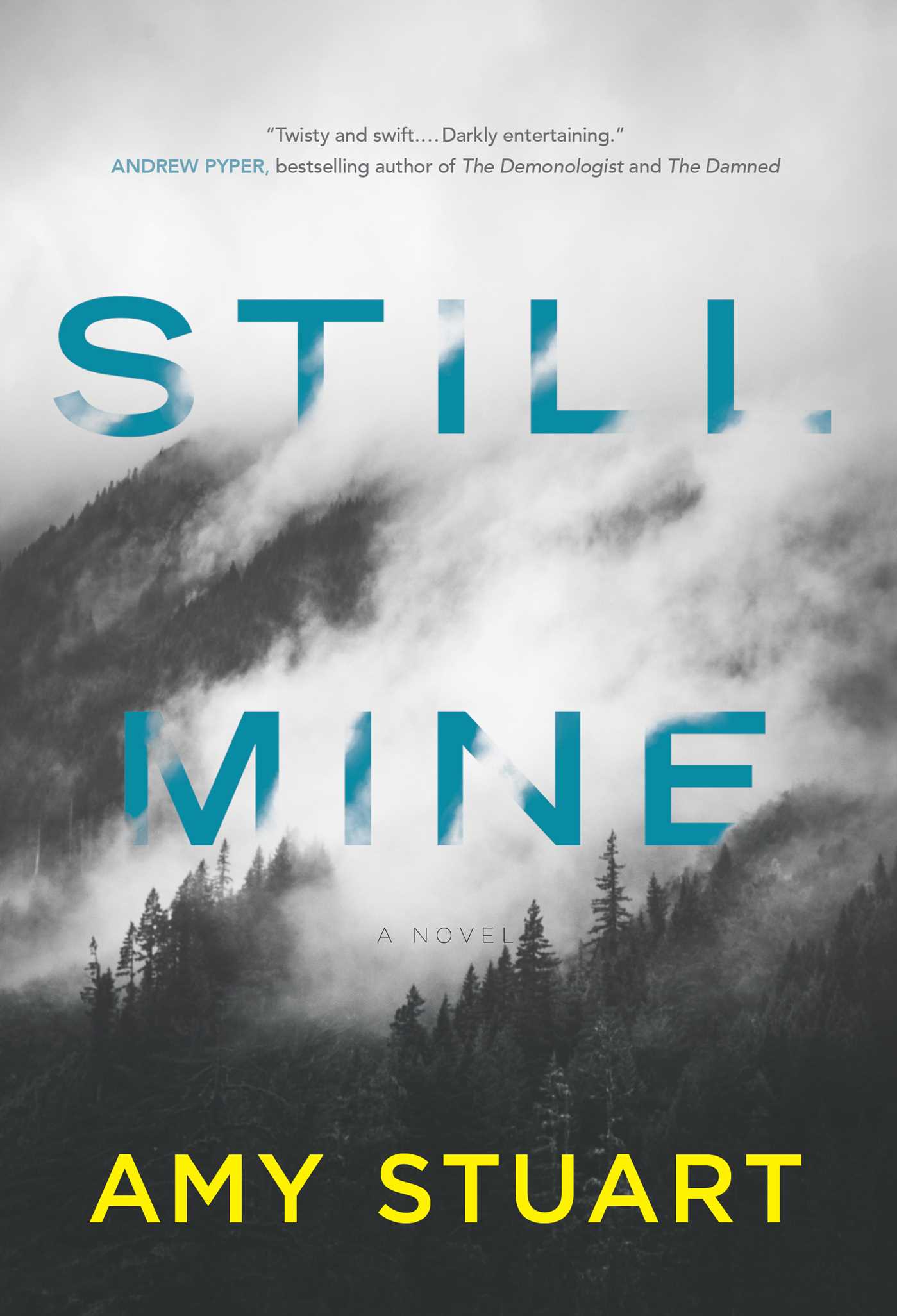
 

Still Mine – Amy Stuart

I haven’t read a book quite as weird as Amy Stuart’s Still Mine  in a long time and I still can’t decide whether it was good weird or just weird. It reminded me a little of Go With Me – a quirky, but affecting novel by Castle Freeman Jr.

still-mine-9781476790428_hrClare O’Dey has run away from her abusive husband, Jason. In an unusual twist, the man Jason sends to find her, Malcolm Boon,  hires Clare to go to Blackmore, a remote mining town in the mountains, to look for another missing woman, Shayna Fowles.  For reasons that won’t be immediately clear, Clare invests wholeheartedly in the search for Shayna, a woman whose past is as tricky and messed up as Clare’s.

Blackmore is a shriveled up nothing of a town. “A blast at the Blackmore Coal Mine five years ago killed thirty-two men and trapped  eighteen others underground for three weeks,”  Malcolm’s notes tell Clare. She pretends to be a photographer in town to take pictures, but it’s a ruse no one buys. The only hotel in town is closed and so Clare rents a trailer on Charlie Merritt’s property. Charlie is the town drug dealer and his property (his father and brothers were killed in the mine) butts up against Shayna’s parents’ place.  Clare figures it will be a good place to snoop.

Blackmore is filled with broken people: Jared, Shayna’s ex-husband; Sara, her friend; Derek, the town’s only doctor and Shayna’s parents, Louise (who is suffering from early onset Alzheimer’s) and Wilfred, her father, the man responsible for saving the eighteen men who did make it out of the mine alive (but also the man Charlie holds responsible for the deaths of his father and siblings). None of them seem to know what happened to Shayna and with no police in town, no one is looking for her.

As Clare attempts to find out what has happened and which of the town’s odd assortment of outcasts might be responsible for Shayna’s disappearance, her own past is revealed; her own frailties are exposed. Like Shayna, Clare has a penchant for drugs and alcohol, making Charlie particularly dangerous to her. She also finds herself strangely attracted to Shayna’s ex-husband, Jared. She forges a bond with Louise, replacing the mother she recently lost to cancer. In many ways, Clare steps into the life Shayna has abandoned. Even so she realizes

These people in Blackmore, they are not Clare’s friends. Derek and Jared and Sara and Charlie. They are not even one another’s friends. They are only characters in Shayna’s story and Shayna is not here.

Still Mine is an unusual, albeit strange, psychological mystery. Apparently there is a sequel on the way, but I was quite content with how the book ended.

Definitely worth checking out.


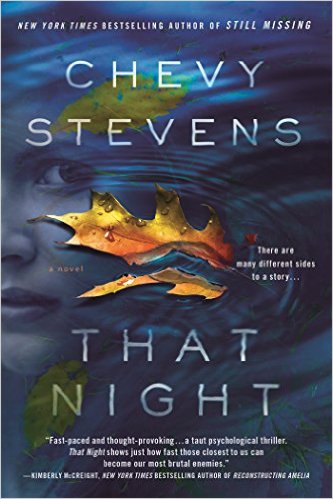
That Night – Chevy Stevens

I suppose that some fans of psychological suspense might call BC-based Chevy Stevens the Canadian Gillian that nightFlynn – except that, in my opinion, Flynn takes the prose prize and the plotting prize and, well, all the prizes, really. Sorry, Chevy.

This is the second novel I’ve read by Stevens. The first, Still Missing, won the International Thriller Writers Award for Best First Novel in 2011. I liked Still Missing, actually, though – if memory serves – I wasn’t keen on its ending. I didn’t like anything about That Night, although I wanted to. I didn’t abandon it to my Book Graveyard, though,  and I guess that’s saying something. Maybe it’s because Stevens is Canadian.

Toni Murphy and her boyfriend, Ryan Walker,  are in prison for the murder of Toni’s younger sister, Nicole. They maintain their innocence and while the evidence against them is circumstantial at best, they’ve both been locked away for fifteen years. (Not in the same institution, obviously.) The novel weaves between the events leading up to Nicole’s horrific murder, Toni’s incarceration and ultimate release (after serving her full sentence) and her attempts to reintegrate herself into society in her hometown of Campbell River, a town on Vancouver Island.

Toni is the problem child and Ryan is the son of a drunken criminal – so a bad boy by blood. Everyone seems to be waiting for them to get into trouble even though Toni seems more like a victim than a victimizer. She and Ryan are just waiting for high school to be over so they can get on with their lives together. Toni is especially anxious to get out of Dodge because of Shauna McKinney. “Most of the girls in our class either feared her or desperately wanted to be her friend, which I guess was kind of the same thing in the end,” Toni observes. Toni and Shauna used to be friends, but a misunderstanding over a boy changed all that and now Shauna does whatever it takes to make life living hell for Toni. Clearly, Toni is not as bad-ass as people think she is.

Nicole is the golden girl, the  mom’s favoured daughter because of her grades and sunny disposition. Until she starts hanging out with Shauna and her hench-women. Then she’s sneaking out of the house, coming home drunk and acting all weird.

Stevens’ first person narration allows us to see Toni’s journey through her final months in high school and then a sped up fifteen years in the big house where we watch Toni negotiate her way through a system that is bound to fail her. She makes friends; she makes enemies, and finally she is paroled. One of the conditions of her parole is that she has no contact with Ryan, who has also been released and who has also headed back to Campbell River. Despite the no contact rule which, if broken, has the potential to send them back to jail,  Toni and Ryan are determined to find out what really happened to Nicole.

Mostly I didn’t like That Night because I didn’t care about any of the characters. Toni’s parents were particularly irksome. Yes, it’s true that they’ve lost one daughter at, supposedly, the hands of another. But she swears she didn’t do it. How about a little faith, people?

When the true story of what happens is finally revealed, all the pieces click into place with precision, but ultimately this is less a mystery and more a story (sort of) of redemption. I found the writing a bit clunky – lots of exposition – and the characterizations superficial. For me, That Night wasn’t all that.


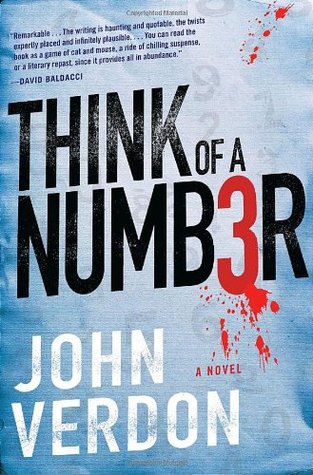
Think of a Numb3r – John Verdon

numberJohn Verdon’s debut novel Think of a Numb3r introduces readers to retired NYC detective Dave Gurney, the man responsible for catching several well-known serial killers. Now he lives a quiet life in Walnut Crossing with his second wife, Madeleine. He spends his time “enhancing, clarifying, intensifying criminal mug shots” which he sells through gallery owner Sonya Reynolds, a woman he spends just a tad too much time thinking about.

Out of the blue he receives a message from an old college classmate, Mark Mellery. Mellery is ” the director of some sort of institute in Peony and he did a series of lectures that ran on PBS.” Mark needs Dave’s help. He’s received a cryptic note:

Do you believe in fate? I do, because I never thought I’d see you again – and then one day, there you were. It all came back: how you sound, how you move – most of all, how you think. If someone told you to think of a number, I know what number you’d think of. You don’t believe me? I’ll prove it to you. Think of any number up to a thousand – the first number that comes to your mind. Picture it. Now see how well I know your secrets. Open the little envelope.

The note is creepy; the fact that the envelope contains the very number that Mark thought of, creepier still. Mark claims that the number he thought of –  658 – “has no particular significance to me.” The note also asks Mark to send $289.87 to  a post office box in Connecticut.  Mark has sent the money, but the check has not been cashed. It’s a perplexing situation and Mark is looking for some guidance.

Think of a Numb3r is a well-written mystery but I found it just a tad slow. Even after the bodies start to pile up, I felt like the same evidence was being recounted  too often. A lot of names to remember- DAs and other detectives and such. As for Dave, he just seems pissed off all the time. Okay – yes, there’s been  tragedy in his life which may explain some of it away, but then the reconciliation with Madeleine at the end seems a little trite. We get to hear just a little too often how famous Dave is and , yeah, we get it – he’s caught some monsters.

As far as the mystery – it’s good enough. There are certainly some compelling elements – footsteps in the snow which vanish into thin air, clues left for the police which are clearly meant to demonstrate how smart the villain is. I just wish it had all unfolded a teensy bit quicker.

The Grownup – Gillian Flynn

Gillian Flynn is best known for her smash hit Gone Girl , but her two other novels Dark Places and Sharp Objects are also excellent. Flynn is a masterful writer and her protagonists are generally prickly women with dark pasts.

The Grownup is Flynn’s latest literary offering, a slender little story you could polish off over a cup of tea and a biscuit. (Literally – it’s 62 pages long.) She thanks George R.R. Martin (author of Game of Thrones) for asking her to “write him a story.” This particular story actually won an Edgar, a prestigious award given by the Mystery Writers of America.grownup

“I didn’t stop giving hand jobs because I wasn’t good at it. I stopped giving hand jobs because I was the best at it,” says our narrator. Now she has painful carpal tunnel syndrome and needs to find another way to make money. She’s been a grifter her entire life, learning at her now-absent mother’s hem.

“I came to my occupation honestly,” she tells us. Raised by her mother “the laziest bitch I ever met”, the narrator now guarantees satisfaction at Spiritual Palms: tarot readings in the front, hand jobs in the back.

One day Spiritual Palms’ owner, Viveca asks the narrator if she’s clairvoyant and before she can say poltergeist, the narrator is giving readings to the public. That’s where she meets Susan Burke, a harried woman who proclaims “my life is falling apart.”

Wanting to help, imagining a life where she does, the narrator goes to Susan’s home, Carterhook Manor, and there things take a decidedly creepy turn.

I can’t say much more than that, really. After all, in the time it would take you to read this review, you could be half way through The Grownup. What are you waiting for? Go on.


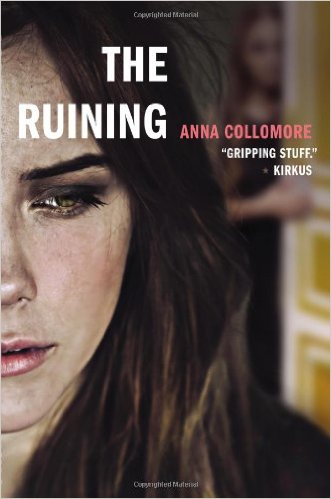
The Ruining – Anna Collomore

ruiningEighteen-year-old Annie Phillips, the first person narrator of Anna Collomore’s YA novel The Ruining,  is desperate to escape her trailer trash world outside of Detroit, Michigan and begin a new life. When she’s offered the opportunity to become a nanny on Belvedere Island, located about six kilometers north of San Francisco, she jumps at a chance. The gig sounds perfect: she’ll care for three-year-old Zoe and baby Jackson and take classes at San Francisco State University.

Libby and Walker Cohen are not like anyone Annie has ever met and it doesn’t take very long before Annie feels “a sudden, desperate urge to please Libby, to do everything right, to be the most exemplary nanny the Cohen family had ever had.”

In the beginning, life seems too good to be true. The Cohen’s house is “more like an estate or a castle” and  Libby seems more like a girlfriend than an employer, offering Annie wine, shared confidences and a chance to raid her closet. It’s heady stuff for Annie, who comes from nothing and is dragging the baggage of a personal tragedy from her past.

The reality of my life in Detroit, a reality I’d spent almost every day wishing to escape, was gone. Disappeared, like I’d never been a part of it at all. And in order to leave it in the past, I couldn’t let myself worry about leaving my mother behind.

It won’t take the reader long to see the cracks, though, even if Annie is a little bit slow on the uptake. I cut her some slack because she’s young and damaged and trying so hard to make something of her life. However, Annie seems determined to ignore the signs that something is not quite right in the Cohen house. Libby is like Dr. Jekyll and Mr. Hyde: solicitous and kind one day, passive aggressive the next.  Walker is gregarious and friendly, but  mostly absent. There are no grandparents, no extended family – Annie is isolated until she meets Owen, the literal boy next door.

The Ruining races along at a good pace, traversing the line between suspenseful and ridiculous with aplomb. Collomore manages to make it just possible for the reader to believe that Annie might be more damaged from her past than even she realizes; however, there can be no mistaking who the villain of the piece is.

The Ruining was fun to read, well-written and definitely recommendable; I know my students will gobble it up. Can’t say I was a huge fan of the ending, though. For me it was contrived and way too tidy given the complicated nature of Annie’s circumstances.

The Girl on the Train – Paula Hawkins

girlontrainSo, you know how everyone and their dog was reading and talking about Gone Girl when it was released? The Girl on the Train, Paula Hawkins’ debut novel, is this summer’s version of that book. I talked about books with buzz  last week on Information Morning and this book most definitely had buzz. Is it worthy, though? That’s the question.

Rachel takes the same trains from Ashbury, a tiny suburb outside of London, every day –  into the city on the 8:04 and home from the city on the 17:56. From her seat, she can see into the gardens of the homes she passes and one garden in particular captures her interest. That’s the house where Jason and Jess live.

They are a perfect, golden couple. He is dark haired and well built, strong, protective, kind. He has a great laugh. She is one of those tiny bird-women, a beauty,  pale- skinned with blonde hair cropped short. She has the bone structure to carry that kind of thing off, sharp cheekbones dappled with a sprinkling of freckles, a fine jaw.

Every day when Rachel’s train shudders to a stop at the red signal, Rachel imagines the life Jason and Jess must share (imagining is all she can do because she doesn’t really know them, not even their real names).  But  there is another reason that Rachel is fixated on this house and that’s because for five years she lived just down the road with her husband, Tom. Tom still lives in their old house, only now with his new wife, Anna, and their infant daughter, Evie.

It won’t take the reader very long to figure out that Rachel is an unreliable narrator and the reason for that will be obvious: Rachel is a drunk. She drinks in the morning, in the evening, mostly alone. She throws up, passes out and often doesn’t remember what has happened to her. She calls her ex-husband at all hours. She admits

I am not the girl I used to be. I am no longer desirable, I’m off-putting in some way. It’s not just that I’ve put on weight, or that my face is puffy from the drinking and the lack of sleep; it’s as if people can see the damage written all over me…

Then one day Jess (whose real name is Megan) goes missing and Rachel is sure that she has seen something that will help the police to find her. The problem is, of course, that once she pulls on the thread of what she thinks she saw, a whole lot of things start to unravel.

As messed up as Rachel is, it’s difficult not to empathize with her; her life has gone to hell in a hand basket in a variety of ways and she isn’t quite sure how to right herself.  Hers is not the only viewpoint Hawkins allows the reader, though. We also spend time with Megan and Anna and each woman has their own suspect relationship with the truth.

The Girl on the Train is an entertaining read. I can certainly see what all the fuss is about and given that it only took me a few hours to read, I certainly can’t say that I didn’t like it. But I didn’t love it.

Off the shelf – Books with buzz

Listen here.

There are always books which are hotly anticipated by the reading public. Avid readers know, for example, when their favourite authors will be releasing their next book. Publishers generate a lot of pre-publishing buzz and of course books that win major literary awards also garner extra attention. I think book buying has changed a lot in the forty years I’ve been buying books with my own money. I remember when the Scholastic book flyer was my only real opportunity to purchase books – and then all you had was this teensy picture of the cover and the equivalent of a tweet’s worth of description. When you could actually go into a book store and hold the books, well, that was heaven. I have books on my shelf that literally cost 60 cents. Can you believe that? Social media wasn’t even a twinkle in someone’s eye – so word of mouth or checking out top ten lists was really the only ways to hear which books were hot and which books were not.

goldfinchThen you have to wonder if all books with buzz are created equal. Even books that have won big prizes are often mired in controversy. A huge portion of my summer reading time was taken up with reading Donna Tartt’s Pulitzer Prize winning magnum opus The Goldfinch. That book is close to 800 pages long and, for me at least, was thrilling and infuriating in equal measure. Not everyone agreed that it should have won the Pulitzer. In fact, The Washington Post called it “the disappointing novel that just won a Pulitzer”  Lady Vowell Smith, a professor of literature and book blogger, wondered about the book’s merits in her post “Did the Goldfinch Deserve the Pulitzer?” The UK’s Sunday Times said “”no amount of straining for high-flown uplift can disguise the fact that The Goldfinch is a turkey”. Newsweek’s review said that “The Goldfinch neither sings nor flies.”  Ouch.

I am not much of a follower when it comes to reading, but I have read both of Tartt’s previous novels: The Secret History, which is my favourite and The Little Friend. Plus, my son, Con, read this book and really liked it – so I had to give it a go.

Okay – so what’s this book about?

Theo Decker is thirteen and lives with his mother in New York City. They are on their way to a meeting at Theo’s school when they duck into the Metropolitan Museum of Art to take a look at an exhibit of Dutch paintings, including that of The Goldfinch. Theo’s mom wanders off to the gift shop; Theo is entranced by a girl of about the same age, who is in the museum with her grandfather…and then there’s an explosion and Theo’s life is irrevocably altered. The old man, as he’s dying, encourages – insists – that Theo make off with the painting of the goldfinch and that’s certainly central to the book’s story – but that’s really only a part of it. Tartt wrestles with a lot of themes here: family – both biological and the family you choose, art, beauty, addiction. Theo isn’t necessarily the most likable character, even though lots of bad things happen to him he also makes a lot of poor decisions. This book is chock-a-block with characters – Boris, the friend Theo meets while living in Vegas; Hobie, a furniture restorer, the Barbours, family friends who care for Theo when his mom first dies. A lot of people, lots of stuff happens and it’s up to the reader to decide whether any of it matters. Does it add up to something worthy of praise in the form of the Pulitzer – that is if you think prizes matter at all. It probably mattered to Tartt to the tune of $100,000.

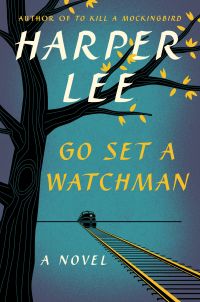
Another book that everyone is talking about is Harper Lee’s Go Set a Watchman. When this manuscript was “discovered” it Watchmanexploded the publishing world – but really: discovered? Everyone knows Harper Lee for To Kill a Mockingbird. Other than Mockingbird she is best known for helping Truman Capote (her childhood friend) with research for his book In Cold Blood. She published a handful of essays – but that’s it. She’s notoriously private and always maintained she’d never publish another book. So, it’s  kinda suspicious that this one turned up after all these years. It’s essentially an early draft of Mockingbird. Lee is 89, lives in assisted care and I think the publication of this book has something to do with the fact that her sister, Alice, sort of her gatekeeper, passed away. There’s an awesome series of articles about the discovery of Watchman and a look back at Mockingbird in The New Republic. The first article, “The Suspicious Story Behind Go Set a Watchman” is particularly interesting for anyone who wants to read the whole story behind the birth of Watchman.

Personally, I’ve resisted buying the book. I love Mockingbird. I’ve read it multiple times. Since I believe I know the story of how Watchman came to be, I’m reluctant to hand over my $30 for a book which has pretty much been panned. And of course it has – it’s unedited because Lee is blind and deaf and perhaps even the teensiest bit senile. The book’s a cash grab. I hate that.

In any case – if you are looking for something to read, something that will guarantee you something to talk about at the water cooler or dinner or with your book club, it’s easy to find those books.

If you are interested in  books that generated buzz, check out some of these titles.

girlontrain

The Girl on the Train – Paula Hawkins

This is this year’s Gone Girl. It’s on my tbr shelf, but I haven’t read it yet. I’m probably just about the last person who hasn’t.

purity

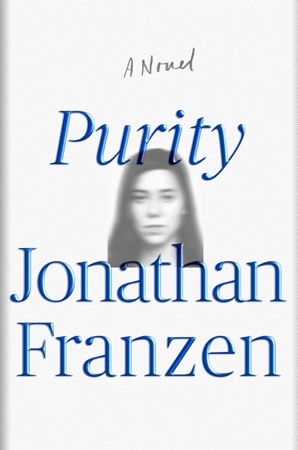
Purity – Jonathan Franzen

Famous for dissing Oprah, there’s no arguing with Franzen’s talent. His newest book hits the shelves Sept. 15.

Euphoria

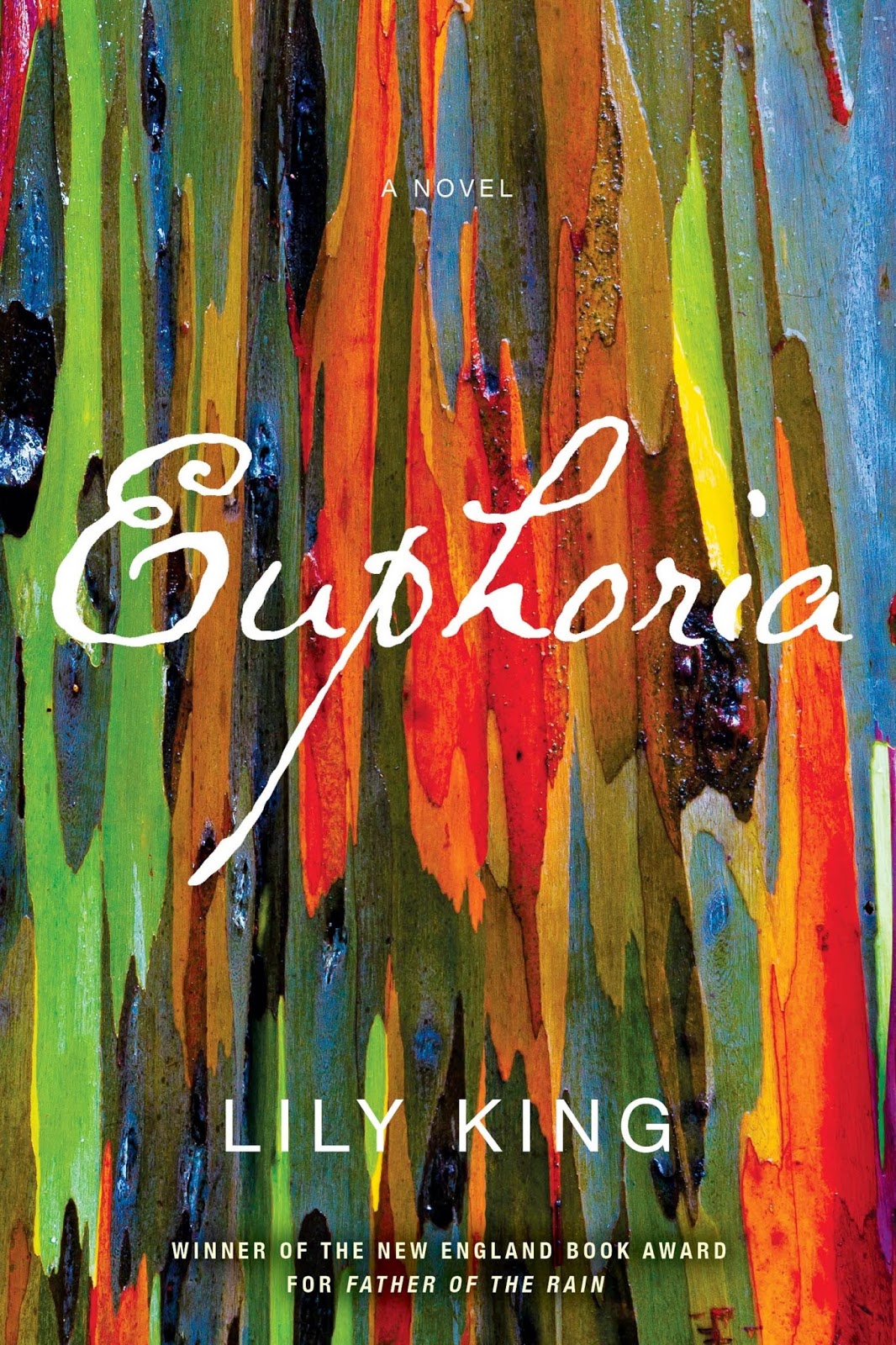
Euphoria – Lily King

Inspired by the life of Margaret Mead and almost universally praised.

troop

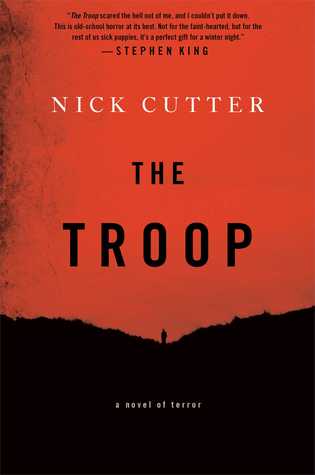
The Troop – Nick Cutter

Unless you love horror novels, you might not have heard of this one…but trust me, everyone was talking about it.

spider

The Girl in the Spider’s Web – David Lagercrantz

Stieg Larsson, the creator of the Millennium series, died of a heart attack in 2004, but that apparently won’t stop Lisbeth Salander, the series’ prickly computer genius. Hotly anticipated and hitting the shelves Sept 1st.

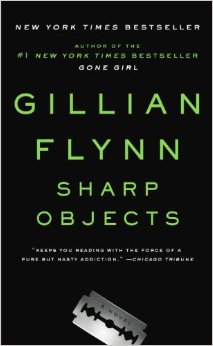
Sharp Objects – Gillian Flynn

sharpMy son Connor recently purchased Sharp Objects and zipped through it in a couple days. I had the same reading experience and now I’ve read all three of Flynn’s novels. Of the three I liked Dark Places the best, though I know Flynn is most well-known known for Gone Girl. One thing I can say for sure, she sure does like damaged female protagonists.

Camille Preaker is a reporter for a third-rate Chicago paper, the Daily Post. Mostly she covers “slice-of-life” pieces, stuff her curmudgeonly editor Frank Curry hates. Then, when a young girl goes missing in Camille’s home town, Wind Gap, Missouri, Curry suggests Camille head home and see what’s the what. Camille isn’t all that fussy about going back to Wind Gap, a town she describes as “one of those crummy little towns prone to misery,” but she can’t say no to Curry, a man whose always looked out for and believed in her.

Wind Gap truly is a backwater, though, and it’s been eight years since Camille has visited. Her mother, Adora, and step-father, Alan, still live there. So does, Amma, her half-sister who is just thirteen. Then there’s the ghost of Marian, Camille’s baby sister who died many years ago.  Camille’s arrival back at the family home, “an elaborate Victorian replete with a widow’s walk, a wraparound veranda, a summer porch jutting toward the back, and a cupola arrowing out of the top” is fraught with polite tension. When Camille rings the doorbell and her mother answers, Adora actually asks if everything okay and “didn’t offer a hug at all.”

Small towns don’t change and secrets are hard to keep, but as Camille works the few connections she has in Wind Gap, another girl goes missing and Camille struggles to keep her equilibrium. Wind Gap, it seems, is filled with old ghosts, ghosts she has worked extra hard (including a stint in a psychiatric hospital) to keep at bay.

Camille is not dissimilar to the main character in Dark Places, Libby. Both are women with troubled pasts. Both are prickly and anti-social. Both are smart and resilient.  I think, ultimately, I liked the mystery in Dark Places better than the one in Sharp Objects but if you are looking for a well-written psychological page-turner, Flynn won’t disappoint, no matter which book you read.

Bird Box – Josh Malerman

birdboxIt seemed like everyone was talking about Josh Malerman’s debut novel, Bird Box, but it was still a surprise when it was chosen as our April read for book club. In the 15 years we’ve been together we’ve never read anything even resembling a horror story. I was really looking forward to this one because I love a scary book.

Malorie lives alone in a house in a Detroit suburb with two children she calls Boy and Girl. The house used to be nice but now she notices the “rusted utensils and cracked dishes. The cardboard box used as a garbage can. The chairs, some held together by twine.” Clearly, it’s not situation normal and Malorie’s musings allude to “older stains,”  for which there are “no chemicals in the house to help clean.”

Malerman doesn’t waste any time with preamble. That’s probably a good thing because Bird Box relies on a heavy dose of the unknown to make it tick. Something has happened to the world. The “Internet has blown up with a story people are calling ‘the Russia Report.'” People are behaving monstrously, attacking strangers and family members in gruesome ways (a mother buries her children alive) before ending their own lives. It’s a “the whole world’s going crazy” scenario, but it spreads from Russia to North America (and who knows where else) like wildfire. The only way to prevent doing harm to others and yourself is to prevent yourself from seeing whatever is out there. People hole up in their houses, windows covered, and if they must venture outside, they wear a blindfold.

Bird Box bounces between Malorie’s perilous journey down the river in a boat (she’s heard that there is a safe community and after four years alone, she longs for something more for herself and her children who she laments “have never seen the sky. Have never looked out a window.” ) and her time in the house with a group of strangers she discovered through an advertisement in the paper.

I can’t say I was fussy about the beginning or the ending of Bird Box, but I was seriously creeped out in the middle. There’s a scene when members of the house have to go out into the backyard to get water from the well. They have to be blindfolded, of course, and a rope is tied around their waist. The person whose job it is to go to the well must make the journey three times. On this occasion, it’s Felix’s turn. On the third and final trip from the house to the well he hears a sound.

But now he can tell where it is coming from.

It is coming from inside the well.

He releases the crank and steps back. The bucket falls, crashing against the stone, before splashing below.

Something moved. Something moved in the water.

It’s moments like these when Bird Box is at its best. Like Malerman’s characters, we are blind and we realize that the scariest thing in the world is what we can’t see.