A Family Secret – Eric Heuvel

family secretEric Heuvel is a Dutch comic book artist, so A Family Secret, a story which takes place in Amsterdam during the second world war, is perhaps a topic especially close to his heart.

Jeroen is looking for items to sell at a flea market held on Dutch Queen’s Day. He decides to head over to his grandmother’s house, hoping to score some good stuff without actually have to visit with his grandmother. Snooping through the attic, he comes across a scrapbook filled with items marking the German occupation of Holland.

“I”ll tell you why I started this scrapbook,” his grandmother tells him. Jeroen is thinking: I hope this doesn’t take long. It turns out, though, that her story is riveting.

When I was twelve or thirteen I read Anne Frank’s Diary of a Young Girl. It was one of those turning point books for me, as I am sure it was for many other young people. Here was a real teenager, coping with typical teenage problems but under extraordinary circumstances. Decades later, while visiting Amsterdam, I was priviledged to visit the house where she and her family were hidden away. I can’t begin to explain to you the feeling of stepping behind the hidden door and heading up the stairs to the annex where she spent just over two years of her short life.

A Family Secret tells another one of the, I suspect, hundreds of thousands of personal stories about that horrific time in history. Jeoren’s grandmother tells of her father, a Dutch police officer, forced to make choices she doesn’t understand until years later, about her brothers, one who joins the resistance and one who joins the Nazis and of her childhood friend, Esther, a  German Jew who fled with her parents to the safety of the Netherlands…only to discover there was no safe place for them.

The graphic novel format of this particular story makes it a perfect read for reluctant readers, but all readers should get something meaningful out of the personal choices the characters are forced to make in times of great distress.

These atrocities continue to be written about, as they should. We should never be allowed to forget.

Borderline – Allan Stratton

borderlineAllan Stratton’s YA novel Borderline wouldn’t necessarily be something I’d pick up on my own, but I am trying to read more ‘boy’ books, especially those that might appeal to reluctant readers. I’ve inherited a class this semester and the majority of them are boys and many of them wouldn’t exactly put reading at the top of their to-do lists. I always think the key to reading success is to find just one book that they like. Borderline could be that book for someone.

Sami Sabiri is almost sixteen. He’s a pretty average teenager; he lives in an American suburb, crosses swords with his strict father,  and tries to stay out of the way of bullies at the expensive private school he attends. He’s also Muslim.

At first, Borderline doesn’t seem like anything more than the pretty standard YA fare. Sami is likeable and relatable and his life is just ‘other’ enough to be intriguing. The fact that he is Iranian offers plenty of opportunities to discuss today’s headlines, too, because suddenly Sami finds himself in the middle of an FBI investigation.

The agents grill me to a crisp. Questions about Dad, his work, who he knows, what he does. I hardly hear a word….”We’re Americans,” I blurt out. “Mom and Dad – you can’t put them on a plane. You can’t send them off to be tortured.”

Sami’s journey to discover the truth about his father’s supposed terrorist activities is also a journey of self-discovery. Suddenly he has a reason to stand up and be counted. As his loyalty to his father wavers, he finds hidden reserves of strength and courage. If the resolution is, perhaps, a little too convenient, it won’t really matter to the majority of young readers. Sami is a character worth rooting for.

As to whether my reluctant readers would like this book – I think they would. The writing is accessible with a minimum of flowery prose. It’s pretty much straight-up plot and I think most of the boys in my current class would enjoy it.

Bliss – Lauren Myracle

blissBliss Inthemorningdew (no, I’m not joking!) is new at Crestview Academy. It’s tough enough to be the new girl, but Bliss’s life is further complicated by her unusual last name and the fact that her parents are hippies. Bliss has spent her entire fourteen years living in unusual places: a tent, the basement of a college and, most recently, a commune. Now she lives with her very formal maternal grandmother in Atlanta, dumped there by her parents who have run off to Canada to protest the Vietnam War. Or Nixon. Something, anyway. They’re sort of non-entities, in a very strange way.

This is a situation neither Grandmother not I would have chosen, but Grandmother is nothing if not morally upright, which made it impossible for her to turn me away. She’s also uptight, and it seems that often the two go together.

Although life with her Grandmother is odd (at least in the beginning), Bliss is looking forward to having something she hasn’t ever had before: a friend. Soon is she is navigating the impossibly complicated world of teenage drama and it’s a world about which she knows very little.

Lauren Myracle’s novel Bliss isn’t really a coming-of-age story, though. It’s sort of part mystery, part ghost story, part thriller. On some levels it works very nicely; I had no trouble turning the pages as I raced along to the book’s conclusion. In other ways, the book is perhaps a bit bloated. There’s commentary on racism, mentions of the Klan and many of the characters in this book are concerned with Charles Manson and the now infamous murders which took place during the summer of 1969.  Myracle opens chapters with quotes from Manson and quotes from the Andy Griffith Show, perhaps as a way of balancing extreme good and extreme evil. For my money, Bliss might have benefited from a little judicious editing and more of a focus on what was really intriguing:  new girl tries to fit in and gets caught up in creepy hi-jinx.

Bliss is a likable character. I’m not sure I understand why her parents dumped her. She’s smart and kind and open-minded. It was easy to be with her and to fear for her safety. I’m certain teens will find lots to like about this book

I Am Not Esther – Fleur Beale

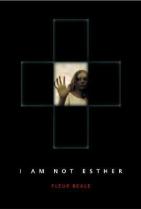
i-am-not-estherDespite the praise Fleur Beale’s YA novel, I Am Not Esther has received (Kirkus called it “an engaging and credible survival story of an unusual nature”), I wasn’t particularly moved or invested. Perhaps the story was just geared a little young for me or perhaps I just felt that the story – which was intriguing, for sure – was just a tad superficial.

Kirby is 14 and has spent much of her young life looking after her  “dizzy flake of a mother” mother. Just after Christmas, Kirby’s mum announces that they are leaving Auckland (New Zealand) and moving to Wellington. Everything happens so suddenly, Kirby doesn’t even have an opportunity to process this before everything changes again. Kirby’s mum announces that she is going to do missionary work in Africa and Kirby is going to be staying with relatives she didn’t even know she had. Worse, her uncle and aunt and cousins are members of a strict religious sect.

They’re religious. They all are. They’re called Children of the Faith. They threw me out when I was sixteen because I…because…

So, lickety-split Kirby is dropped off at her Uncle Caleb and Aunt Naomi’s house and expected to adapt to an alien and strict way of life. There is no radio or television. The family prays and works. Punishment for disobedience, Kirby learns quickly, involves long hours on your knees or seclusion in a windowless room learning bible verses. Uncle Caleb changes Kirby’s name to Esther.

Caleb and Naomi aren’t horrible people; they just believe in something Kirby doesn’t. And, clearly, neither does her mum. So one of the problems with the book is why Kirby wasn’t dropped off with to live with the brother (she has five of them and three sisters) who also left the church. It seems non-sensical to me that she would leave her daughter to a life that she had trouble living herself.

Kirby adapts as best she can; what choice does she have? She never even hears from her mother, it’s like she drops off the face of the earth.  She finds a friend in her older cousin, Daniel, and the guidance counsellor at school. When the resolution comes it isn’t all that compelling because it’s not like Kirby’s life was ever in danger. And although Kirby is a likeable character, the book itself was only just okay. That said, I suspect younger readers would really enjoy it.

Between – Jessica Warman

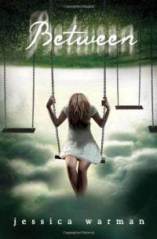
Elizabeth Valchar has it all: looks, popularity, a boyfriend who loves her, a best friend who is also her step-sister. On the night of her eighteenth birthday, Liz wakes up to a new reality: she’s dead. That’s not a spoiler, by the way – we find know this by page 6.

Jessica Warman’s YA novel Between is a curious hybrid. It’s part mystery (I really found myself flipping those pages to see what had happened to Liz), part social commentary, part ghost story  and part teen drama.

When Liz ‘wakes up’ and realizes that she is between life and death she also discovers that she is not alone. Her companion is a former classmate, Alex, a boy who had been involved in a hit and run a few months previously. Alex is her guide in this strange new space Liz finds herself.

By placing her hand on Alex, Liz can revisit moments in her life and she isn’t all that happy with the things he has to show her because, as it turns out, Liz  Valchar wasn’t that nice.

My stomach feels hollow with guilt and shame as I watch my younger self, and all my friends, giggle while Topher torments Frank.

“But it’s not like I really did anything…I mean it was mostly Topher-”

“You’re fight,” he interrupts, you didn’t do anything. You never did anything to help him. You wouldn’t have dared; it might have made you less cool.”

As Elizabeth comes to terms with who she’d been in life, we also see how many of the people in her orbit cope with her death. Her ability to listen in on conversations and revisit significant moments in her life gives her insight and ultimately makes her a better person. Although I figured out one of the novel’s central mysteries relatively early on, it didn’t hinder my enjoyment of this book.

I think teens will really see themselves in Liz and her friends. They’ll certainly root for her redemption.

Things Change – Patrick Jones

When sixteen-year-old Johanna accepts a ride home from a meeting with Paul, even she is surprised when she boldly asks him to kiss her. Paul is sort of a well-known figure at their high school, not because he’s an athlete or a particularly good student, but because he is funny and good-looking. People want to be around him. Johanna, on the other hand, is studious and  not very popular. Her one and only friend, Pam, calls her “Books” and the two girls have a standing date at the local bookstore on Saturday.

Patrick Jones’ debut novel Things Change will appeal to fans of realistic fiction. Johanna will be immediately recognizable to young girls; they will either see themselves or someone they know in her. Like many teenage girls, Johanna tries to please her parents, tries to balance school and life and falls head over heels in love with a boy who is fighting his own demons. Because one thing Things Change is not is a straight up love story.

Paul and Johanna eventually hook up and it’s all sunshine and roses – except for when it’s not. Paul is possessive and jealous and has a temper that causes him to lash out at Johanna, inflicting physical and emotional pain for which he is almost immediately contrite. But that’s the pattern, right? And Johanna – young and inexperienced – does what many much older women in her situation might do: she makes excuses, tries to be perfect, forgives.

Although the third person narration is mostly limited to Johanna’s point of view, Jones does something smart,  giving the reader a glimpse of Paul’s psyche by letting us read letters he writes to his dead father. I say it’s smart because it prevents Paul from being a one dimensional monster and the book from being a one-note cautionary tale. Paul’s demons in no way excuse his deplorable behaviour, but it does make him human and somewhat sympathetic.

Patrick Jones used to be a Young Adult librarian and Things Change certainly demonstrates that he’s listened to and observed teens carefully. This book doesn’t preach nor talk down to his target audience. It’s not overly graphic, but there is some sexual content and bad language. That said, I will happily be recommending it to readers in my classroom – both those students who claim they don’t like to read and those who want to read compelling and realistic fiction.

Chasing Boys – Karen Tayleur

Chasing Boys is the story of Ariel, El for short, who has moved from her swanky school and big house to a new school and an apartment with her older sister, Bella, and her mom. Dad – whereabouts unknown, but clearly he’s left a void in Ariel’s life which she is in desperate need of filling. So, there’s this boy. His name is Eric and he’s a star basketball player and practically the most perfect boy at school. Everyone has a crush on him, but he has a girlfriend. And not just any girlfriend, but the popular and pretty (and, as it turns out, decent and nice) Angelique.

So, is Karen Tayleur’s first YA novel anything more than your standard girl chases boy teen romance? Well, no and yes. For starters, El is a likeable character and the first person narration is swiftly paced and often quite funny. El is smart and attractive, but doesn’t really feel like she fits in anywhere other than with her two best friends, Desi and Margot. She’s also trying to work through abandonment issues and for that she meets with a therapist, Leonard, once a week. The thing is, she can’t actually talk to Leonard.  “If I was talking to Leonard,”  she muses, “which I am not, I would ask him a question.”

Eric isn’t the only boy orbiting El’s life. There’s also Dylan.

Dylan slumps in the seat and glances at me. I realize he’s the newest guy at school and I give him my catatonic stare – the one I use when I want the other person to look away. It’s usually pretty effective. He has a thin white scar, almost invisible, that travels from his bottom lip and disappears under his chin, and just for a moment I wonder how it got there. His lips curl into a sneer and I look straight ahead.

El tries to balance school and home and her crush on Eric and Dylan’s passive-aggressive interference in her life with varying degrees of success.  For the teen reader who is looking for a book that is entertaining and not particularly challenging, Chasing Boys will likely fit the bill.

The Day I Killed James – Catherine Ryan Hyde

People die of love.

Eighteen-year-old Theresa believes this to be true, or at least she claims she does in Catherine Ryan Hyde’s YA novel, The Day I Killed James. We meet her at the beginning of her therapy sessions with Dr. Grey. She doesn’t like him very much.

I’ve thought about dumping him and getting  somebody else, but that would be the easy way out, which I’m not entirely sure I deserve.

So why is Theresa in therapy? Well, James, the buff boy next door – who has been trying to get her attention forever – ends up dead after she takes him to an end-of-year party in an effort to make her boyfriend, Randy, jealous. It isn’t until weeks after his death that Theresa can admit to perhaps liking him…just a little bit.

If I had felt it any more strongly, I might have cracked like a china cup. It was like a pressure inside me, like an old steam boiler, and I just lay there hoping it would hold. Hoping I would hold.

Theresa isn’t a horrible person and taking James to the party to make Randy jealous isn’t the worst thing she could have done, but the aftermath of that event sends Theresa off on a journey of self discovery that is actually long overdue.  Theresa has some things to work out and while James might be the catalyst, some of her problems pre-date him.

I didn’t like the beginning of The Day I Killed James very much. The story is told mostly as a series of journal entries prescribed by Dr. Grey. Things improve a little bit in the novel’s second part. Theresa is now Annie and she’s left home not so much to sort out her life, but to escape it. She soon discovers that it’s almost impossible to avoid all human contact. Her sudden ‘relationship’ with a precocious eleven-year-old girl named Cathy ups the ante a little – but also seems slightly forced.

However, when all is said and done, I think teens will quite like the story of what it means to love and how important it is to take care of each others’  heart.

Drowning Anna – Sue Mayfield

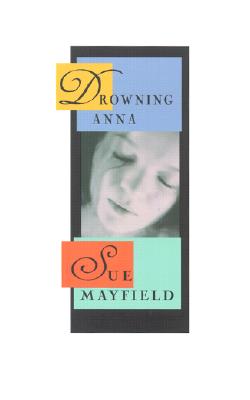
When Anna Goldsmith moves to Yorkshire from the south of England, she finds the transition difficult – that is until Hayley Parkin, the most popular girl at school, takes Anna under her wing. Sue Mayfield’s YA novel Drowning Anna unspools the story of Anna’s relationship with Hayley, which deteriorates almost as quickly as it began.

As Melanie explains:

Hayley Parkin goes off people. I don’t know why. Perhaps she gets bored with them. Perhaps she runs out of things to buy them. Perhaps she can’t stand competition. She doesn’t seem to need a reason. She drops people.

Drowning Anna combines third person narration with Melanie’s reflections and entries from Anna’s journal. From all these different points of view, we come to understand what has driven Anna to such a commit such a drastic act. Anna is a very relateable character. She’s smart, athletic, musical and attractive – but she’s also 14 when the story starts and given to bouts of self-doubt. Hayley Parkin is not the only thing wrong with her life: her teacher-mother is stressed out and moody, her doctor-father is never home; her older brother, Tom, is busy with his own life and doesn’t always live up to expectations – meaning there is extra pressure on Anna.

None of that explains, however, why Hayley decides to focus so much malevolent energy on Anna. She starts small by ignoring her, but it doesn’t take long for the harassment to extend to mimicking her accent (which, granted, means less in a Canadian context but having lived for a time in the UK, I understood this as a tool of torture), isolating Anna and actually physically hurting Anna.

Hayley, it seems, has a lot of charisma. The other students want to be in her orbit, but it feels sort of like, “keep your enemies closer.” We don’t ever get a clear understanding of why Hayley is so hateful, but it hardly matters. At the end of the day, Hayley will have to live with her choices.

Mayfield really captures the very particular cruelty of teenage girls. Anyone who has ever been bullied will see themselves in Anna Goldsmith.

The Returning – Christine Hinwood

I read a lot more Young Adult fiction.  I do it so that I can have conversations with students in my classroom. I read some YA because it sounds interesting to me. Recently, I volunteered to help review some books for the Dept of Education, books which have been selected for possible inclusion on the sanctioned reading list and thus destined for English classes in middle and high school. That’s how I came to read Christine Hinwood’s debut novel, The Returning.

The Returning, a Printz Award winner, is the story of how the aftermath of a domestic war between the Uplanders and Downlanders affects a disparate group of people including Cam Attling (a returned soldier), Pin (his younger sister), Graceful (Cam’s fiance) and Lord Gyaar (the man who saved Cam’s life). It’s alternate historical fiction – which reads like fantasy because the world is sort of, well, otherworldly. Is it the past? Future?

While not without its merits, Hinwood’s book didn’t appeal to me. The story is elliptical in nature, jumping around in time and place – never settling with one character long enough to allow the reader to really get to know them.

Cam is the only man from his village to return from the war and he’s having a difficult time adapting to life back on his father’s farm. Other villagers always want him to talk about what happened to their husbands and sons and brothers, but Cam just wants to forget. But it wasn’t just Cam’s war  – the world has changed for everyone. Da explains the war to Pin as a rock that has been:  “thrown and done, but the ripples do take longer to spread and flatten. That’s what this is, the ripples.”

I understand why Hinwood didn’t want to focus entirely on Cam – the war has affected many other people (including those from the winning side) – but I just couldn’t seem to keep everyone straight. Perhaps it was all the strange names: Diido, Hughar, Acton. Maybe it was the unusual way the characters spoke – although the writing was often quite beautiful. Maybe Hinwood was too ambitious, trying to capture the aftermath of war for too many players.

I just didn’t  feel like I truly knew any of the characters and so, for me, The Returning just didn’t have the emotional impact I had hoped it would