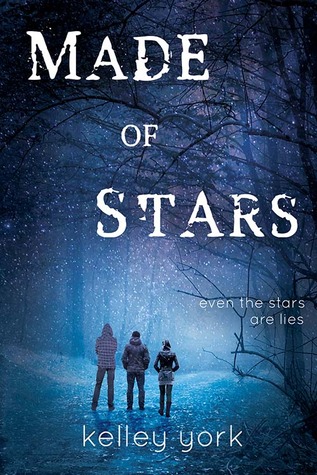
Made of Stars – Kelley York

madeofstarsHalf-siblings Hunter and Ashlin have been friends with Chance since they were kids and first started to spend summers in Maine with their father. Chance is the glue that bonds the three together, despite the fact that Hunter and his sister don’t really know all that much about him.
I knew all the things about Chance that mattered most. Chance was strangeness and whimsy in human form.

Chance was our summer.

We didn’t see him or talk to him through the winter, but when we arrived for summer vacation, the three of us came together like we’d never been apart.

This year things are different, though. Hunter and Ashlin have decided to take a gap year and spend it with their father, who is still recovering from a workplace accident (he’s a cop and was shot; Hunter and his sister were kept with their mothers and away from their dad for a couple years).

So, now they’re back in Maine with their dad and each other…and with no way to contact Chance. When they finally do track him down,  they discover that Chance hasn’t been 100% honest with them.  For one thing, his house “is nothing like what Chance described.”  His parents are clearly not glamorous jetsetters, either. Instead, his mother looks “like she cuts [her own hair], and her face is gaunt and tired. She’s wearing a gray men’s bathrobe over a nightgown and pink slippers that have seen better days.” Chance’s father is “broad-shouldered and stone-faced, with a jaw that hasn’t seen a razor in a few days.”

But Chance is the same. And not the same.

Kelley York’s YA novel Made of Stars captures that time between innocence and experience. These three teens have a shared history made more complicated by an unexpected love triangle. But Made of Stars isn’t a straight-up love story.  When someone turns up dead, Chance is implicated and Hunter and Ashlin set out to prove his innocence. Turns out, even that is more complicated and dangerous than the siblings could have imagined.

Enjoyable read.

The Ruining – Anna Collomore

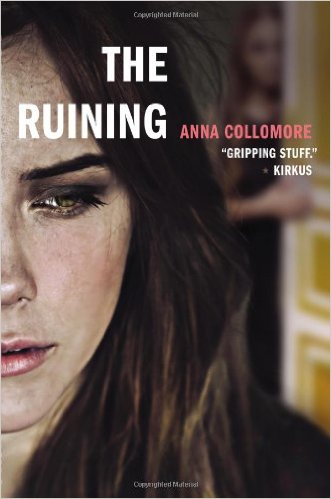
ruiningEighteen-year-old Annie Phillips, the first person narrator of Anna Collomore’s YA novel The Ruining,  is desperate to escape her trailer trash world outside of Detroit, Michigan and begin a new life. When she’s offered the opportunity to become a nanny on Belvedere Island, located about six kilometers north of San Francisco, she jumps at a chance. The gig sounds perfect: she’ll care for three-year-old Zoe and baby Jackson and take classes at San Francisco State University.

Libby and Walker Cohen are not like anyone Annie has ever met and it doesn’t take very long before Annie feels “a sudden, desperate urge to please Libby, to do everything right, to be the most exemplary nanny the Cohen family had ever had.”

In the beginning, life seems too good to be true. The Cohen’s house is “more like an estate or a castle” and  Libby seems more like a girlfriend than an employer, offering Annie wine, shared confidences and a chance to raid her closet. It’s heady stuff for Annie, who comes from nothing and is dragging the baggage of a personal tragedy from her past.

The reality of my life in Detroit, a reality I’d spent almost every day wishing to escape, was gone. Disappeared, like I’d never been a part of it at all. And in order to leave it in the past, I couldn’t let myself worry about leaving my mother behind.

It won’t take the reader long to see the cracks, though, even if Annie is a little bit slow on the uptake. I cut her some slack because she’s young and damaged and trying so hard to make something of her life. However, Annie seems determined to ignore the signs that something is not quite right in the Cohen house. Libby is like Dr. Jekyll and Mr. Hyde: solicitous and kind one day, passive aggressive the next.  Walker is gregarious and friendly, but  mostly absent. There are no grandparents, no extended family – Annie is isolated until she meets Owen, the literal boy next door.

The Ruining races along at a good pace, traversing the line between suspenseful and ridiculous with aplomb. Collomore manages to make it just possible for the reader to believe that Annie might be more damaged from her past than even she realizes; however, there can be no mistaking who the villain of the piece is.

The Ruining was fun to read, well-written and definitely recommendable; I know my students will gobble it up. Can’t say I was a huge fan of the ending, though. For me it was contrived and way too tidy given the complicated nature of Annie’s circumstances.

Jacob Have I Loved – Katherine Paterson

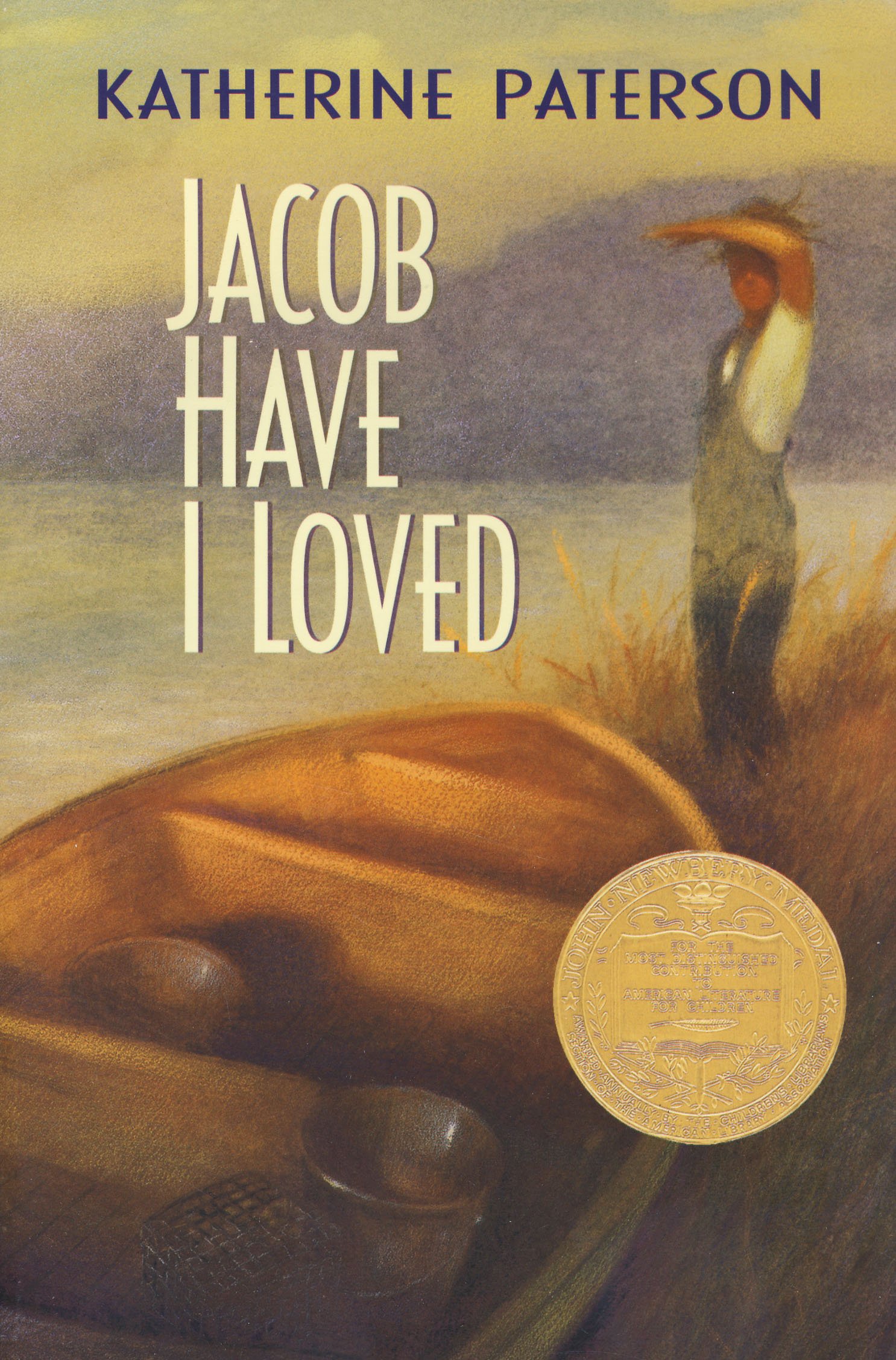
jacobKatherine Peterson’s novel Jacob Have I Loved was a Newberry Medal winner in 1981. Although this book has been on my radar for many years, I was perhaps just a teensy bit too old for it when it was published in 1980, so I didn’t read it then. It is a pretty famous book though, and I figured I should read it. So I did.

The title of the book comes from the bible, Romans 9:13: “As it is written, Jacob have I loved, but Esau have I hated.” The quote refers to the story of siblings Jacob and Esau and the novel tells the story of siblings Sara Louise and her twin sister, Caroline. The girls live on Rass Island, off the coast of Maryland. Their father is a fisherman; their mother a former school teacher. Their crotchety paternal grandmother also lives with them.

Sara Louise, or Wheeze, is the narrator. She is an adult when the novel opens, returning to Rass Island where her mother still lives. “…it is a pure sorrow to me,” she says, “that, once my mother leaves there will be no one left with the name of Bradshaw. But there were only the two of us, my sister, Caroline, and me, and neither of us could stay.”

The bulk of the story takes place in 1941 and the years that follow. Wheeze, 13, and her best friend, Call, 14, spend their days hunting for crabs. Their little island is isolated and days there are marked by routine – fisherman out on the water early and home late, school and church, the occasional ferry trip to the mainland. Paterson deftly creates a world that will be – for most of its young readers –  a place long ago and far away.

While readers may not recognize the time or place, they will most definitely recognize the friction between Wheeze and her sister, the beautiful and musically talented, Caroline. A sickly baby, Wheeze feels that Caroline has been coddled all her life and that in “the story of my sister’s life…I… was allowed a very minor role.”

There is a rare snapshot of the two of us sitting on the front stoop the summer we were a year and a half old. Caroline is tiny and exquisite, her blonde curls framing a face that is glowing with laughter, her arms outstretched to whoever is taking the picture. I am hunched there like a fat dark shadow, my eyes cut sideways toward Caroline, thumb in my mouth…

Wheeze is resentful and jealous, even though Caroline never really seems to give her any reason to be. It’s one of the lovely things about this book, which is remarkable in its stillness. Wheeze isn’t particularly likable, but you grow to love her just the same.

Jacob Have I Loved is without the bells and whistles that marks much of the YA fiction out there today. I would suggest that this is a book better suited to middle school readers, but I think anyone who has ever shared close quarters with a sibling would enjoy this story.

Aristotle and Dante Discover the Secrets of the Universe – Benjamin Alire Sáenz

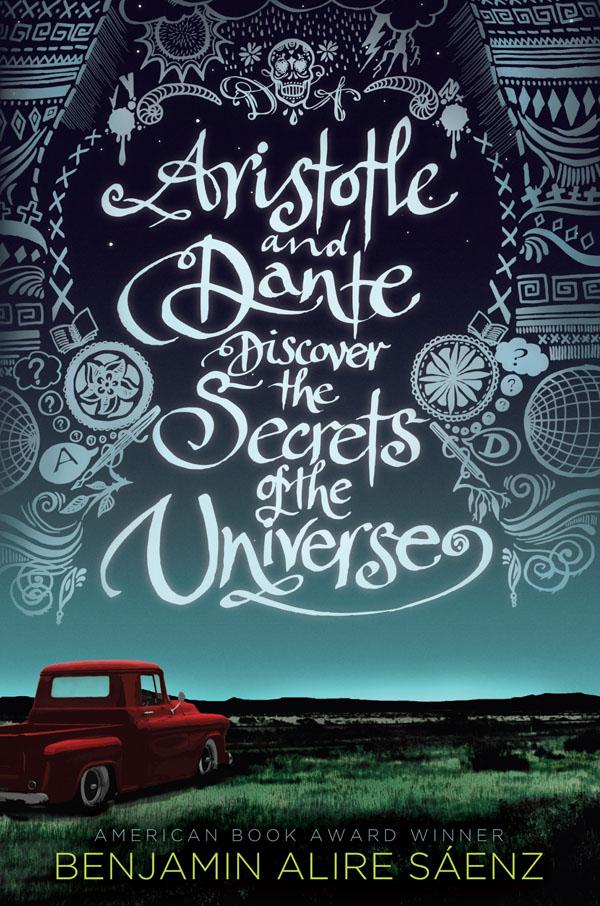
aristotle_and_dante Aristotle (Ari for short) is a 15-year-old Mexican American living in Texas in 1987. He’s bored and miserable and pretty much hates his life.

Dante is also 15, and also Mexican-American, but he’s “funny and focused and fierce.” Ari says “there wasn’t anything mean about him. I didn’t understand how you could live in a mean world and not have any of that meanness rub off on you. How could a guy live without some meanness?”

Aristotle and Dante meet at the local pool where Dante offers to teach Ari how to swim. “All that summer, we swam and read comics and read books and argued about them.” It’s the beginning of beautiful friendship, something that Ari seems to desperately need.

Feeling sorry for myself was an art. I think a part of me liked doing that. Maybe it had something to do with my birth order. You know, I think that was part of it. I didn’t like the fact that I was a pseudo only child. I didn’t know how else to think of myself. I was an only child without actually being one. That sucked.

Ari has older twin sisters and an older brother who is in prison. He was born after his father returned from serving in Vietnam.

Sometimes I think my father has all these scars. On his heart. In his head. All over. It’s not such an easy thing to be the son of a man who’s been to war.

Aristotle and Dante Discover the Secrets of the Universe is a coming of age story. It’s a story about fathers and sons and mothers and sons. It’s about sacrifice and loyalty. It’s a story about friendship.

I wanted to tell them that I’d never had a friend, not ever, not a real one. Until Dante. I wanted to tell them that I never knew that people like Dante existed in the world, people who looked at the stars, and knew the mysteries of water, and knew enough to know that birds belonged to the heavens and weren’t meant to be shot down from their graceful flights by mean and stupid boys. I wanted to tell them that he had changed my life and that I would never be the same, not ever. And that somehow it felt like it was Dante who had saved my life and not the other way around. I wanted to tell them that he was the first human being aside from my mother who had ever made me want to talk about the things that scared me. I wanted to tell them so many things and yet I didn’t have the words. So I just stupidly repeated myself. “Dante’s my friend.

It’s a love story.

I was the age of these characters somewhere around 1976. I didn’t know anyone who was gay. Okay, looking back – of course I did, but we didn’t talk about it. It wasn’t acknowledged. As far as I know, they weren’t out. I am profoundly grateful as a teacher and a parent, just as a human being, that books like this exist. Alire Sáenz has written a story about boys who are smart and fragile and flawed. I admit it – I got teary a few times reading this book.

What are the secrets of the universe? As Ari discovers “we all fight our own private wars.”

This is a beautiful book and I highly recommend it.

The Watcher – James Howe

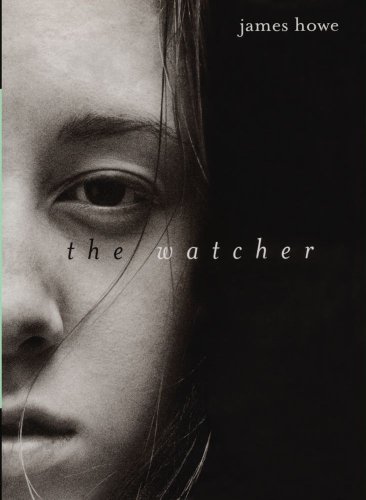
watcherThe Watcher was published in 1999 to much critical acclaim. James Howe is the well-known author of the over 90 juvenile and YA books including Bunnicula and The Misfits series. ( I read Totally Joe and was a big fan.)

There are three main characters in The Watcher: Chris, the golden-boy lifeguard, Evan, the fourteen-year-old on vacation with his younger sister and parents, and the girl who sits at the top of the steps leading down to the beach, watching.

The truth is, though, that they are all watching each other. For example, Chris notes that “he didn’t know how he knew she was watching only him and  not them. He could just feel it.” She’s watching him; he’s watching her.  Evan thought Chris was “the coolest guy on the beach” and secretly wished he could be just like him. The girl watched the families, “not pieces of families with only a mother or a nanny, but what she thought of as complete families with two parents and at least two children, preferably a girl and a boy.”

All three of these characters are on Fire Island, a popular beach resort near New York City. There is no reason to think they will ever cross paths, but they eventually do.

Howe is a straightforward wordsmith, and he creates compelling back stories for Chris and Evan. We know that Chris is at a crossroads, unsure of what to do now that he has graduated from high school. He feels the weight of his parents’ expectations, although we don’t understand exactly how much pressure he feels until much later in the book. As for Evan, he adores his little sister Callie and is doing his best to be a good big brother because he senses that there are things going on behind the scenes which might spell the end of his happy family.

As for the girl, we know nothing at all about her except that as she sits on the steps surveying the beach she is imagining a much different life for herself, one where she is a princess who has been separated from her true family.

I read The Watcher in one sitting. I can only imagine that when it was first published it would have caused quite a sensation. It’s easy to see why. Each of these characters is called upon to do something brave and Howe handles their stories without sensationalism or preaching. Young readers would certainly recognize themselves in these pages.

The Girl in the Park – Mariah Fredericks

parkRain, the compelling narrator if Mariah Fredericks’ YA mystery, The Girl in the Park, attends the prestigious Alcott School in Manhattan’s Upper West Side. “At our school,” she says. “everybody is the child of a somebody.” Rain’s somebody is her mom, an opera singer and “if you’re into opera, you probably know her.”

Rain is a watcher, a listener. Mostly it’s because she was born with a cleft palate, and although speech therapy has smoothed out some of the T’s and S’s, Rain’s still self-conscious. She hates how she sounds, “mushmouthed and nasal.”  That is, until Wendy starts school and tells her “Big deal. Okay, maybe you sound a little funny. But you need to forget about that and speak up girl.”

Wendy is larger than life. Although she’s rich, she comes from Long Island and doesn’t have the right kind of money or pedigree. The students at Alcott are snobbish and clique-ish, but that doesn’t stop Wendy from trying to make inroads. It’s when Rain tells her that she’s approaching it all wrong that the two girls become friends.

We only ever really see Wendy through Rain’s eyes because when the novel begins, Rain discovers that her friend has been found dead in Central Park. At this point, Rain and Wendy were friendly but no longer really friends. Wendy’s blatant disregard for the prep school rules and her reputation as a “skank” have caused Rain to distance herself from the girl who once told her that “You. Other the other hand. Listen. And you think. So when you do speak? You’re brilliant. So, give up the silence, okay”

Rain can’t stand the thought that something so horrible has happened to Wendy. Worse, the night it happened Rain was at the same party as Wendy and she feels she may have seen something that could help the police – she just doesn’t know what it is.

The Girl in the Park is a fast-paced mystery with enough suspects to keep readers engaged and guessing whodunit. It’s also a story that peers into the nasty, and sometimes heartbreaking, world of teenagers. I couldn’t put it down.

Kiss Crush Collide – Christina Meredith

kisscrushcollideJust once I’d like to see a girl go on a journey of self-discovery that isn’t instigated by the boy she meets. But essentially that’s what happens to Leah Johnson, youngest of a trio of golden girls in Christina Meredith’s YA novel Kiss Crush Collide. These are girls whose futures have all been mapped out by a cliché of a mother and a doting but passive father. Yorke, the eldest, is in college and planning a wedding to her boyfriend, Roger; Freddie is graduating from high school and heading off for a year in France; Leah is about to start her last high school summer before she, too, becomes (like her sisters before her) valedictorian and then on to bigger and better things.
But that all changes when Leah meets Porter at her family’s country club (yes, they’re that kind of family; they go to the country club on Friday night).

When he wrapped his fingers around mine, a warm current of electricity flowed through me. I felt suddenly solid, as if my world had been rolling past me and it had stopped right now, amazingly sharp and in focus as if I had just taken off my roller skates. I didn’t want to let go.

That’s the boy: green eyes, beautiful brown hair, penchant for stealing cars. He pushes/pulls Leah in ways that Shane (her perfect high school boyfriend) never has, so of course she wants him. She sneaks off with him on the very night she meets him and then can’t stop thinking about him.

I suspect that lots of girls in my class will like Kiss Crush Collide and that’s okay.  There are lots of girl meets boy books out there, and this one sits pretty much in the middle of the pack. What has Leah learned from her seventeenth summer? How to drive her car (finally) and her life. Too bad it was a boy who taught her how to do both.

Long Lankin – Lindsey Barraclough

longlankin When I was a kid, they used to air these British films about kids on TV. They all would have been set in the 60s (it was probably the early 1970s when I watched them) and although I don’t really remember what any of them were about, I do remember that I wanted a British accent more than anything. I was also a fan of Enid Blyton’s books — especially the ones set in boarding schools.

Lindsey Barraclough’s debut novel Long Lankin doesn’t take place in a boarding school, but it did make me think of those movies. The language, in particular, was reminiscent of that particular time. Things in Barraclough’s novel are “smashing” and words like  “blimey,” “cheerio” and “crikey”  pepper the novel. The whole story unspooled in my head like one of those movies. I loved it!

Long Lankin is inspired by the English ballad “Lamkin” which tells the story of a woman and her infant son who are murdered by a mason who seeks revenge for not having been paid. The original ballad can be found here.

Said my lord to my lady as he rode away:/ Beware of Long Lankin who lives in the hay.

In Barraclough’s intelligent and creepy re-telling, Long Lankin is a sinister, slithering man who steals children in the small English town of Bryers Guerdon. When Cora and her little sister Mimi go to  Guerdon Hall to live with their great-aunt Ida, Cora soon discovers that her aunt’s crumbling home is full of secrets and her aunt doesn’t seem all that pleased about their arrival. It’s 1958 and Cora and Mimi’s father has sent his children to Ida as a last resort. Their mother is ‘away.’

The story is told from the perspectives of Cora, Aunt Ida and Roger, a local boy. Cora is smart and inquisitive and soon becomes interested in what she knows her aunt is not telling her. Something strange is going on in the isolated little town and it has to do with the church which Aunt Ida tells her she is “absolutely not — under any circumstances…it was completely forbidden” to visit. Of course, that makes it the first place Cora wants to go.

Long Lankin is atmospheric and smart. It’s filled with Latin warnings, menacing shadows, whispers and more secrets than you can shake a stick at. Readers will have to work a little to keep the characters and the story straight, but it’s totally worth the effort.  As with the best ghost stories, this one has a beating heart at its centre and it takes Cora and Roger quite a while to uncover the town’s secret. It’s worth the wait. The novel’s conclusion is terrific, too.

Highly recommended.

The Coldest Girl in Coldtown – Holly Black

Thank goodness for Holly Black – she’s put the bite back into vampire fiction.coldest  If you’ve been playing the home game, you’ll know that Stephenie Meyer pretty much took fangs and sex out of the vampire equation with her hugely popular Twilight series.  I didn’t hate the first book, but it went downhill fast afterwards. I loved The Coldest Girl in Coldtown. The prose sparkles, but the vampires don’t, so it’s win-win for lovers of vampire fiction.

Tana woke lying in a bathtub.

It doesn’t take very long for Tana and the reader to realize that something just isn’t right. Tana had been attending a sundown party and had locked herself in the bathroom to avoid her ex boyfriend, Aidan. Exiting the bathroom the morning after, Tana is aware of the quiet.

She’d been to plenty [of sundown parties], and the mornings were always full of shouting and showers, boiling coffee and trying to hack together breakfast from a couple of eggs and scraps of toast.

What Tana finds instead, as she moves through the house which smells of spilled beer and “something metallic and charnel-sweet,” are the bodies of her classmates “their bodies pale and cold, their eyes staring like rows of dolls in a shop window.”  And we’re only on page five, people!

The Coldest Girl in Coldtown takes the best parts of standard vampire mythology and ups the ante. The vampires in this book are rock stars, revered and coveted.  Black builds a mythology that is believable. Patient zero in Black’s world is Caspar Morales, a vampire who decided that he wouldn’t kill his victims, he’d infect them instead. Essentially, you’re bitten by a vampire, you’re infected, or Cold.

If one of the people who’d gone Cold drank human blood, the infection mutated. It killed the host and then raised them back up again, Colder than before. Cold through and through, forever and ever.

Pretty soon, the government has no choice but to barricade the infected people (and the wannabes) in places called Coldtowns. People who suspect that they are infected must,  by law, turn themselves in. And once you’re in a Coldtown, there’s no getting out.

As Tana comes to terms with the fact that her friends are dead, she discovers that Aidan is, in fact, not. He’s been bungee corded to a bed and chained beside him is a vampire boy, a boy who “must have been handsome when he was alive and was handsome still, although made monstrous by his pallor and her awareness of what he was.”

This is Gavriel. He is everything a vampire should be: dangerous, cunning, tortured and impossible to resist. (Okay, maybe I am just a little bit fixated on my personal notion of a vampire here, but Gavriel ticks all the vampire ticky boxes for me. )

The Coldest Girl in Coldtown is so good. Tana is smart and resourceful and brave. The book builds a world that is believable and terrifying. It is a world that just is. The book isn’t scary, but it is definitely a page-turner. The descriptions of vampirism are bloody and sensual (without being over-the-top, so there’s nothing sexually graphic).

I raced to the end, concerned for all the characters and their fates.  Should there be a sequel?  Black had this to say on her website:

Coldest Girl in Coldtown was written as a stand-alone. That said, I know what happens next, and maybe someday you will too. Right now, as with Curse Workers, I’m happy with where I left everyone. I’m sure they’ll be fine. Right?

I’m good with that.

Highly recommended.

Off the Shelf – CBC Radio

So I did my second book column on CBC Radio this morning.

Listen to it here.

Here’s what I prepared for the talk about scary books.

Literary historian J. A. Cuddon defines the horror story as “a piece of fiction which creates an eerie and frightening atmosphere. Horror is usually supernatural, though it can be non-supernatural. Often the central menace of a work of horror fiction can be interpreted as a metaphor for the larger fears of a society.” One of the first horror novels was The Castle of Otranto by Horace Walpole, 1764 – probably not going to get too many young people reading that one today.

R.L. Stine is probably the best known writer of horror novels for the middle grader. He’s the author of all the Goosebumps books and then went on to write Fear Street, a series of over 150 titles for older teens. To date he’s sold over 400 million books, so I guess the proof is in the gloopy pudding.

Teenagers love to be scared. No one knows that better than Stephen King, who’s made a career out of scaring us. King said: “horror stories allow us to safely vent our “uncivilized emotions…lifting a trap door in the civilized forebrain and throwing a basket of raw meat to the hungry alligators swimming around in that subterranean river beneath. In addition, for some young people, reading a scary story can be a rite of passage, a way of earning bragging rights: “That didn’t scare me!”

Heart-pounding, palms-sweating, doors locked, lights on – who doesn’t love a good scare? It’s like riding a rollercoaster, thrilling, scary, but ultimately safe. A really good book can creep you out way more than a movie – where the scary stuff is often in your face and you become desensitized. A good scary book can be way more unsettling.

So – in honour of Halloween, here’s a list of my favourite scary books.

I’m going to talk about some of the books in the genre geared for Young Adults – plus one.

First off – here’s a quick guide:

If you want to read a book about vampires – definitely check out Holly Black’s The Coldest Girl in Cold Town.

If you want to read a book about werewolves, check out NB writer Kathleen Peacock’s novel Hemlock.

If you want to read a book about zombies, I highly recommend Ilsa J Bick’s series, Ashes.

If you want to read a book about a ghost hunter, check out Anna Dressed in Blood by Kendare Blake

Now for a closer look at some of my recent scary reads.

Nevermore – Kelly Creagh

It sounds like your typical good girl, bad boy set up…but this book is awesome and super creepy. Isobel is a popular cheerleader who gets partnered up with Varen the goth kid (of course he’s a goth kid with a name like that!) to work on a project about Edgar Allan Poe. There’s your clue right there that things are going to take a seriously gothic turn and they do. I mean Poe’s the granddaddy of creepy and Creagh makes good use of his personal story. Fans of Poe will eat this book up, but even if you’re not a fan or know very much about him, you’ll get gooseflesh reading about the truly nightmarish world and Pinfeathers, the character who inhabits it. There’s a sequel, too, called Enshadowed.

Through the Woods – Emily Carroll

I just read this one last week. It’s a collection of short stories written by Canadian author and illustrator, Emily Carroll. I don’t know anything about art, but I can say that the art in this book is really striking, the colours are kind of menacing. Can you say that about a colour? Anyway – these are stories about dark places and strangers and people who are not whom they seem. The first story is about three girls who live with their father in the woods and one day he leaves them to go hunting and tells them, if I’m not back in three days, head to the neighbours. Of course he doesn’t come back, and then the narrator’s two sisters disappear and the ending will just give you goose bumps. You could certainly read the five stories contained in this volume in one sitting, but I think it’s the sort of book you’ll want to revisit again and again – especially at this time of year.

Miss Peregrine’s Home for Peculiar Children – Ransom Riggs

Fifteen-year-old Jake Portman has a special relationship with his grandfather, who has always been a teller of tales. Thing is, his tales are pretty fantastic and concern children who could fly or make themselves invisible. When his grandfather is killed, Jake goes to Wales to visit the orphanage that his grandfather was sent to during the war and finds out the stories might actually be true. The book is full of pretty dang creepy pictures culled from private collections, but the story itself is magical with a side of monsters.

Plus one.

I had a student a couple of years ago who insisted he’d never been frightened by a book. I promised him that I could remedy that and gave him Stephen King’s novel, It. Okay, anyone around in the 1970s will remember the miniseries starring Richard Thomas aka John Boy Walton and that clown, Pennywise. “They all float down here.” Stephen King is the king (pun intended) of making everyday things scary. He’s also really excellent at tapping into childhood fears – something all great horror fiction does – and nobody captures adolescence quite like he does. I don’t love everything King has written, but I loved It and so did my student.

Read something scary for Halloween. With the lights on, of course!