The Quarry Girls – Jess Lourey

Jess Lourey (Unspeakable Things, Bloodline) has written another fast=paced thriller ripped straight from the headlines. Literally. In her Author’s Note, Lourey says of her childhood home in Minnesota: “Three killers were on the loose in Saint Cloud when I was growing up. Only two have been caught.”
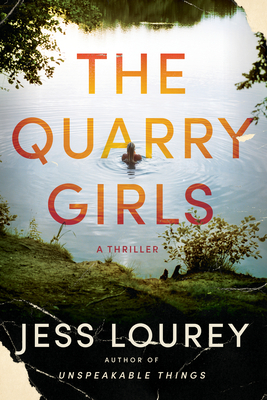
In The Quarry Girls, best friends Maureen, Brenda and our narrator, Heather, are coming of age in Pantown, a suburb of Saint Cloud, in 1977. Pantown was

built by Samuel Pandolfo, an insurance salesman who in 1917 decided he was going to construct the next great car manufacturing plant in good old Saint Cloud, Minnesota. His twenty-two-acre factory included fifty-eight houses, a hotel, and even a fire department for his workers. And to be sure they made it to work come sleet or snow, he ordered tunnels dug linking the factories and the houses.

One day, while playing hide and go seek in the tunnels, Heather and Brenda see something they aren’t supposed to see. When a local girl who is just a little bit older than they are goes missing, the teens begin some sleuthing of their own. It turns out that not everyone in Pantown is to be trusted.

There are all sorts of nefarious characters in this book including local boys Ricky and Ant and a new guy, Ed who

was way too old to be hanging out with high school kids, even a brain-fry like Ricky. […] Ed was exciting and terrifying and so out of place. His greased black hair and leather jacket against the soft, pastel Pantowners shopping behind him reminded me of a sleek jungle cat let loose in a petting zoo.

Even Heather’s parents, a mother who spends most of her time in bed and whose moods are unpredictable and a father, the local D.A. who is hardly never home, don’t seem all that reliable. Heather’s story is as much about the journey to adulthood as it is about what dark deeds are happening in Pantown.

And – an added bonus – so many references to the 1970s, the period of time in which I was coming of age. Heather’s friend Claude looks like Robby Benson. Getting dolled up meant an extra slick of Kissing Potion. Phones operated on a party line. Smokie and the Bandit was on the big screen. All these little nods to the period were just so much fun.

The story itself is fast-paced, well-written and I couldn’t put it down.

The Last House on Needless Street – Catriona Ward

Catriona Ward’s novel The Last House on Needless Street is a Russian doll of a novel and if you haven’t read it yet, you should do your very best not to be spoiled before you start.

Ted lives with his sentient cat, Olivia, on a dead end street near the woods. Sometimes his daughter, Lauren, also lives with them. The house is boarded up and triple locked and Ted rarely leaves. Certainly he has no visitors. Ted was implicated in the disappearance of a six-year-old girl eleven years ago. He calls her Little Girl With Popsicle. In the end though, he wasn’t charged because on the day she went missing he “was at the 7-Eleven all afternoon and everyone says so.”

Dee moves in next door. Her sister, Lulu, went missing at a nearby lake, and she was never found. She is convinced that Ted is responsible for her disappearance and she is determined to prove it.

Based on this rather cursory synopsis, you might be inclined to think that Ward’s book is a rather straightforward thriller, but you’d be wrong. And not just because Olivia the cat is one of the book’s narrators.

I was busy with my tongue doing the itchy part of my leg when Ted called for me. I thought, Darn it, this is not a good time. But I heard that note in his voice, so I stopped and went to find him. All I had to do was follow the cord, which is a rich shining gold today.

There is nothing straightforward about this narrative. It flips back and forth through time, revealing its secrets slowly, which makes it almost impossible to put down. Just when you think you might have things figured out, well, you won’t. Okay, maybe you will. I didn’t.

Ted is a complicated character. He says “When I have a bad day, now and then get slippery.” He sometimes records his memories with a cassette player so “they won’t disappear, even if I do.” Even though his parents have been dead for years, he often feels his mother in the room with him, her hand “cool on [his] neck.”

Maybe she is spending a while in one of the memories that lie around the house, in drifts as deep as snow. Maybe she is curled up in the cupboard beneath the sink, where we keep the gallon jug of vinegar. I hate it when I find it there, grinning in the dark, blue organza floating around her face.

The Last House on Needless Street is a beautiful puzzle of a book that is confounding and creepy, but also – strangely – heartwarming. I could not put it down and highly recommend it.

We Spread – Iain Reid

Canadian novelist Iain Reid is an auto-buy author for me. A few years back I read and loved his debut I’m Thinking of Ending Things. Then I read his equally compelling novel, Foe.

Oh, Iain – your mind is a strange and wonderful place.

In We Spread, readers are introduced to Penny, a woman left alone after the death of her long term partner.

I am near the end now, and I am alone. Very old and very much alone. I have been both for some time. surrounded by the listless stacks and heavy piles of a life already lived: vinyl records, empty flowerpots, clothing, dishes, photo albums, magazines about art, drawings, letters from friends, the library of paperback books lining my shelves. It’s no wonder I’m stuck in the past, thinking about him, our days together, how our relationship started, and how it ended.

Penny leads an insular life. She has no children or extended family. She has lived in the same apartment for over fifty years, surrounded by the detritus of a life that is winding down, things that at one time “wasn’t just stuff. It all meant so much to [her]. All of it. Marrow that has turned to fat.”

After a fall, Penny is taken – by a pre-arrangement she and her partner made but that she does not remember – to Six Cedars Residence, a special care home out in the country. There are only three other residents, Pete, Ruth and Hilbert, and – as far as Penny can tell – two employees, Shelley and Jack. Shelley tells her that she will “feel at home in no time.”

And, at first, it is nice. Her room is beautiful.

I can almost feel a weight lifted off my shoulders, not having to think about objects. No debris. All that stuff that comes with obligation and duty. It hits me that I won’t be the responsible one here. No upkeep or cleaning. No laundry. No shopping. No bills or light-bulbs to change. No decision-making.

But then things start to get weird. When she has a shower, Shelley gets in the stall with her. There’s a weird rule about not being allowed outside. She starts losing time. The story’s structure, and the way the words appear on the page – short paragraphs with big gaps between – add to the breathlessness of Penny’s narrative and contribute, I think, to the reader’s own sense of unease. Holy unreliable narrator, Batman!

I read We Spread in just a few hours. I vacillated between theories about what the heck was going on, but at the end of the day – it doesn’t really matter. Reid seems to love ambiguity and I am there for it. He’s way smarter than me and that’s okay by me.

Great read.

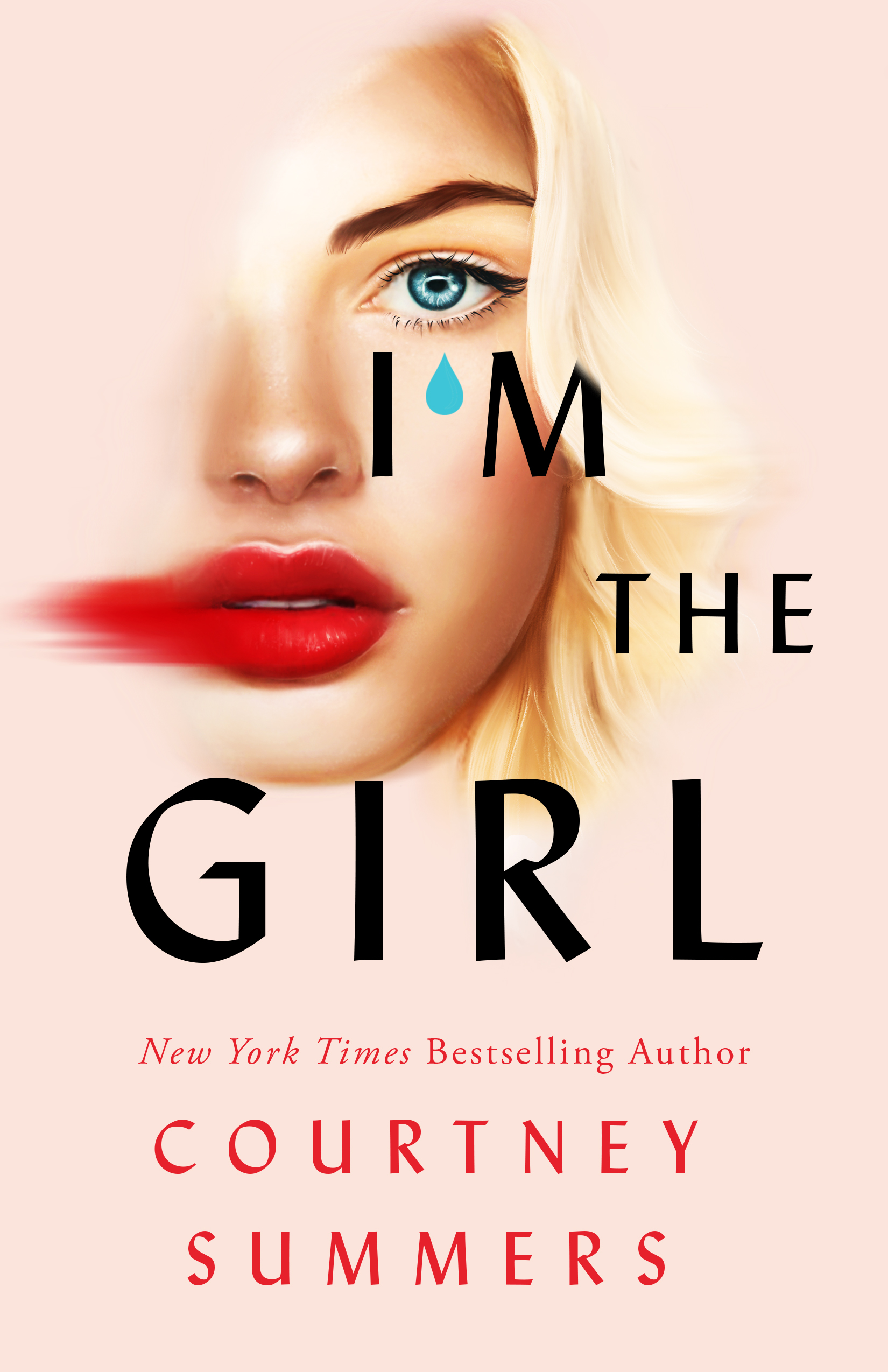
I’m the Girl – Courtney Summers

Canadian author Courtney Summers is an auto-buy for me. I know that I am guaranteed a terrific story with compelling, albeit often prickly, characters and excellent writing. I’m the Girl is Summers’ latest novel and the story treads somewhat familiar ground, but as always Summers scratches beneath the surface offering up a timely story about power, abuse, and privilege.

Sixteen-year-old Georgia Avis is untethered. She lives with her brother Tyler in a rinky-dink town called Ketchum. Their mother has died of cancer and Tyler, 30, has moved home to take care of her.

At the beginning of the novel, Georgia is hit by a car. When she comes to, her eye catches a flash of pink in the field beside her. It’s the body of 13-year-old Ashley James, daughter of a local deputy sheriff. “At first I wonder if we both got hit by the same car.” But it is clear that something much worse has happened to Ashley.

The accident happens out near Aspera, a private members-only club. It is actually Cleo Hayes, owner with her husband Matthew, who finds her on the side of the road. For as long as Georgia can remember, she’s wanted to be an Aspera girl, “moving through the resort, turning heads like I was meant to”. Instead, when the Hayes’ agree to hire Georgia, despite the fact that her mother, who had worked at Aspera before her death, had betrayed them, she discovers that she is going to be nothing more than a “glorified fetch.”

Aspera values beauty and Georgia is beautiful, but she doesn’t quite believe it. That makes her a target. There is something decidedly unsavoury, sinister even, about Aspera, although Georgia doesn’t see it as quickly as readers will.

As Georgia tries to navigate her new reality at Aspera, she begins a tentative friendship with Ashley’s older sister, Nora. Nora is determined to find out who killed her little sister and all the clues seem to point back to Aspera.

I’m the Girl is a thriller, for sure, because you’ll certainly turn the pages in an effort to discover who killed Ashley. But this is also a book that explores our relationships to our bodies and image. Georgia comes to understand that she is beautiful enough to wield a certain power over the men she encounters even though, as she tells Matthew, “I like girls.” But Georgia is too young not to realize when she is being manipulated and the consequences of her naiveté are often brutal and heartbreaking.

Highly recommended.

Other books by Courtney Summers: This is Not a Test, Cracked Up to Be, The Project, Sadie, Fall For Anything, All the Rage, Some Girls Are

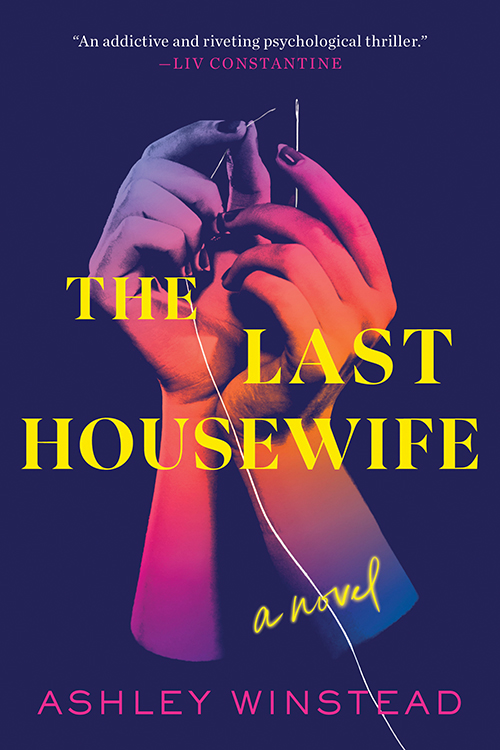
The Last Housewife – Ashley Winstead

The Last Housewife, Ashley Winstead’s follow-up to her debut In My Dreams I Hold a Knife, fulfills the promise of that book and then some. Although I enjoyed some of the ride when I read her first book, ultimately I felt let down. That was definitely not the case with The Last Housewife, which was riveting from start to finish.

Shay Evans lives in luxury in Texas with her husband, Cal. She’s recently quit her job so she can concentrate on writing her book, but it isn’t going so well. When her favourite true crime podcaster, Jamie Knight, introduces his latest subject, it catapults Shay back eight years to her time as a student at Whitney College. The victim of the crime is Laurel Hargrove, Shay’s best friend from college. She’d been found “hanging from a tree on the edge of the De Young Performing Arts Centre.”

Shay and Jamie were childhood friends, but they’d lost touch over the years. Now Shay hears Jamie reaching out to her through his podcast because she “has dropped off the face of the planet.” Why? Because Laurel isn’t the only person from Shay’s past who has been found dead and Jamie sees a pattern.

Shay makes her return to the Hudson Valley and the Whitney campus and there is just no way to stop the floodgate of memories. Seeing Jamie for the first time in eight years brings back even more memories.

The last time I’d seen Jamie was senior year of college, when there’d only been a glimmer of the man who walked toward me now.

Laurel’s death forces Shay to confront some deeply traumatic memories. She agrees to tell her story to Jamie in an effort to find out the truth about what happened to Laurel. The secrets she’s been keeping for all these years are difficult and painful and concern the father of one of her roommates.

I thought he was the most beautiful man I’d ever seen. And then immediately I felt guilty because he was Rachel’s father. But he looked nothing like her. He was tall, and so…solid. His shoulders were so broad they spanned the width of the chair. He was wearing a suit, a dark one, and he was just…powerful.

Don’s power extends beyond the physical, though. Soon, Shay and her roommates, Laurel and Clem, are spending all their time with Don, listening as he expounds on the way college is not empowering young women. He encourages them to take their power back, but at the same time – as an outsider – you can see how he is manipulating the girls. And this manipulation exerts a terrible power over Shay and her friends. Unpacking it for Jamie forces Shay to see the ways she was manipulated, but even she doesn’t realize how deep and dark Don’s power and control extends. That is until she and Jamie start to investigate Laurel’s death, an investigation which takes them to a series of underground BDSM clubs.

The Last Housewife comes with all sorts of trigger warnings for suicide, rape, physical and sexual violence etc. Sensitive readers might be shocked by the book, but I wasn’t. Considering the subject matter, you might expect the book to be more graphic, but it really isn’t gratuitous at all. It’s definitely dark and uncomfortable, but it also asks lots of intriguing questions about power dynamics, the patriarchal society we find ourselves living in, and control and giving that control up – both willingly and without realizing we are doing it. It is a page-turner that is well-written, fast-paced and smart.

Highly recommended.

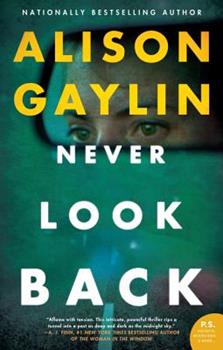
Never Look Back – Alison Gaylin

I love a good thriller – a book that keeps me turning the pages long after my bed time. There are certain things I look for in a thriller: believable characters that I can root for, plausible plot, good writing, a few twists and turns to keep me guessing, suspense. It’s not too much to ask is it?

Alison Gaylin is a new-to-me writer and for my first outing I chose Never Look Back. This is the dual-timeline story of April Cooper, a teenager who is on the run with her boyfriend Gabriel LeRoy. Together they are known as the Inland Empire killers. In the present day, Quentin Garrison is a podcast producer pursuing a story about these killers because his mother’s sister was one of their victims. His podcast series is called Closure, and that is what he is looking for.

April and Gabriel were thought to have died in a fire at the Gideon compound (a doomsday cult), but a phone call from a source leads Quentin to Renee and Robin Diamond, a mother and daughter on the East Coast.

What do all these people have in common? Secrets. There are loads of them in Never Look Back.

Gabriel is keeping secrets from everyone, including his husband Dean. Renee is keeping secrets from her daughter. In letters to her unborn baby, April reveals secrets she is keeping from Gabriel.

Gaylin’s book is inspired, in part, by Charles Starkweather, 18, and Carol Ann Fugate, 13. In 1958, Charles and Carol Ann killed eleven people, including Carol Ann’s stepfather and mother and then went on the run. This crime was made into a popular movie called Badlands, starring Martin Sheen and Sissy Spacek. I remember watching it as a teenager and really loving it.

Although Never Look Back doesn’t quite add up to the sum of its parts, I was wholly invested in the story and if you are looking for a page-turner with lots going on, you could certainly do a lot worse.

Messiah – Boris Starling

Boris Starling’s debut, Messiah, is a straight-ahead police procedural about a team of Scotland Yard detectives tasked with finding the person responsible for a series of gruesome murders.

Detective Superintendent Red Metcalfe has a reputation for being able to get into the minds of killers and so he’s in charge of putting together a team of officers to figure out whodunnit. Red “wants people who spark off each other because they think in different ways,” and that’s how he comes up with Clifton (who’s “good enough to be Red’s successor one day”), Beauchamp (“because going into one of these cases without a female point of view is like having one hand tied behind your back”), and Warren whom he picks with the flip of a coin.

It soon becomes apparent that Red and his team are not hunting your garden-variety serial killer. Although there is one similar detail between the crimes (the killer cuts out the victim’s tongues), the cops can’t find any other link between the victims and as the bodies pile up, Red gets frustrated. Worse, there is a total lack of physical evidence at the crime scenes.

The investigation in present days is supplemented with details about Red’s past, which includes a terrible decision Red had to make as a university student. The flashbacks provide some context and help us to understand Red’s single-mindedness.

I haven’t read enough police procedurals to know how Messiah compares. (Heck, I am not even sure if this is a police procedural except that it really is all about these cops trying to catch the killer.) Still, I really enjoyed this book. It was unfussy, gory, and straight ahead entertaining (if messy crime scenes and psychopathic killers are your jam.) Apparently there’s a television series and I bet it would be awesome…even knowing whodunit.

Behind the Red Door – Megan Collins

I discovered Megan Collins when I read her novel The Winter Sister a few months ago. I was very much looking forward to reading Behind the Red Door, but unfortunately it just didn’t land as well.

This is the story of Fern Douglas, a social worker who lives with her husband Eric, a physician, in Boston. When her father enlists her to come help pack up her childhood home because he’s moving to Florida, she does so reluctantly. Her childhood was complicated and her relationship with her parents is fraught.

Fern’s arrival back in New Hampshire coincides with the disappearance of Astrid Sullivan, a girl who had been kidnapped twenty years ago and then left, drugged and disoriented but otherwise unharmed, on a curb a month later. When Fern sees Astrid’s photograph, she feels like she knows her, but she can’t figure out how. Fern is prone to obsessing, or “spiraling” as Eric calls it. Her therapist likens it to needle stuck on a record; her anxiety ratchets up and her mind keeps “telling you that you have to stay on this thought. But it’s a lie.”

When Fern gets back to her childhood home, she starts to read the memoir Astrid wrote about her time in captivity. There are details in Astrid’s book that unlock memories in Fern’s mind and she soon becomes obsessed with finding Astrid, something that not even the police have been able to do because there are no clues.

Her time at home is strange. Her father, a man who has spent his entire career researching the qualities of fear, seems more interested in tapping into Fern’s growing anxiety about Astrid than he does in helping his daughter alleviate this stress. Her parent’s marriage has crumbled and her mother has already moved out.

Then there is the cast of creepy characters: the strange man dressed all in black who walks up and down the country roads; Brennan, her father’s former colleague, Father Murphy, a priest who seems to know more than he’s telling and Cooper, her childhood bestie’s older brother, who used to terrorize her when she was a kid.

Behind the Red Door moves along at a brisk pace, but unfortunately I had a difficult time believing any of it. Fern was a sort of insipid character, even as she started (bravely or foolishly) digging into Astrid’s life. Her parents are reprehensible. Cooper, even at 40, sounds like a frat boy. I had no trouble turning the pages, but it wasn’t nearly as good as The Winter Sister.

His & Hers – Alice Feeney

I had high hopes for Alice Feeney’s thriller His & Hers, probably because somewhere I read that it was un-put-down-able and I have had a difficult time settling into any book these days. (I blame A Little Life , and not in a good way.)

Feeney’s story is narrated by Anna Andrews, a newsreader who has just been demoted and sent back to the field when the woman for who she was filling in returns from her maternity leave, and Detective Jack Harper, a cop in a small British town in Surrey, which is south of London.

When a woman shows up dead in the woods in, Anna is sent to cover the story and Jack is sent to investigate it. It’s clear from the very beginning that neither of them is a reliable narrator; neither of them is particularly subtle about the fact that they are withholding information. Jack is the first to crack, announcing that he has “never worked on the murder of someone I knew before. And I knew this woman well. I was with her last night.”

The dead woman isn’t the only relationship Jack wants to keep on the down-low. Turns out he and Anna have history, too, and it makes it hard for either of them to get on with the job. What follows, unfortunately is a lot of silliness and implausibility and people acting like idiots.

It takes a lot for a thriller to impress me. I often spot the twists coming from a mile away and although figuring things out before they are revealed doesn’t always mean that I won’t like the book, I just found Anna and Jack grating and between them and the clunky exposition (and ridiculous ending) I just can’t say this thriller is a must read.

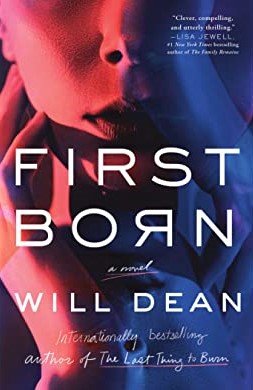
First Born – Will Dean

I discovered Will Dean on Twitter and a few months ago I nabbed a copy of his well-reviewed novel The Last Thing to Burn, which I thoroughly enjoyed. I recently picked up First Born and although I read it in just a couple of sittings, I didn’t enjoy it nearly as much.

First Born is the story of 22-year-old identical twins Molly and Katie “KT” Raven. Molly tells us “I don’t use the term identical twin because it’s a blatant lie. A travesty. Our base DNA is identical, sure, but that’s about all that is. We were once one person. We are not anymore.”

When the novel opens, Molly is working in an office in London, while KT is studying in New York City. KT is the risk taker; Molly spends her time assessing threats and preparing for the worst. Molly sees danger everywhere and she is always prepared, even going to far as to making homemade weapons out of pound coins and a sock.

The twins’ parents have been visiting KT in New York and when Molly arrives, they spend their time eating toast and drinking tea and waiting for the police to give them information about just what happened to KT. There’s very little to go on, and Molly feels that it is her duty to help the investigation along. She tracks down KT’s best friend, boyfriend, investigates the creepy son of the landlord and uncovers some things about her sister she did not know.

First Born does offer a couple of excellent twists, and Molly’s voice is definitely singular. The action clips along, for sure. For me, though, it wasn’t believable and I wasn’t sure I understood character motivations at all. By about a third of the way in the prose started to grate a little bit and there was something sort of ‘lazy’ about it. Like, suddenly a character has a gun which she pulled out of nowhere, but we’re told she’d purchased before. That sort of thing. The shenanigans were all a bit over-the-top.

Still – if that sort of thing doesn’t irk you, you’ll probably have a lot of fun reading this book – if you are willing to suspend disbelief and don’t mind the crazy.