Blood Innocents – Thomas H. Cook

Blood Innocents is American crime writer Thomas H. Cook’s first novel. Published in 1980, it tells the story of NYC police detective John Reardon who, returning to work after the death of his wife, is given a strange case involving the slaughter of two deer in the Children’s Zoo in Central Park.

Yep – deer. Not people.

The deer had been gifted to the zoo by one of New York City’s most prominent businessmen, Wallace Van Allen. When Reardon balks at the assignment, his lieutenant, Piccolini tells him

“…this is a big case. One of the biggest. Some real big people are looking in on this one, interested in it, if you know what I mean. I know you’re in homicide, but this is bigger than a homicide right now, and the people downtown want top people on it all the way.”

Reardon has made a reputation for himself by following his instincts and so despite the strangeness of the case, he starts digging. Then, when the bodies of two young women turn up in their apartment with almost identical injuries as the deer, Reardon redoubles his efforts to solve the crimes.

I have been a Thomas H. Cook fan for many years. He’s a prolific writer, with more than 30 books to his credit, and yet many people have never heard of him. The first book I ever read by him is called Breakheart Hill (1995) and it had such an amazing twist that I was keen to read more by him. Except it was almost impossible to find his books anywhere. Over the years I have managed to track down and read Evidence of Blood, Peril, Mortal Memory, The Interrogation, The Fate of Katherine Carr, Master of the Delta, The Cloud of Unknowing, Instruments of the Night, Red Leaves, Places in the Dark, The Chatham School Affair and I have one more book on my tbr shelf, Night Secrets, which I will not read until I track down at least one more.

If Blood Innocents had been the first book I’d ever read, I am not sure I would have become the super fan I am now. It’s not that the book wasn’t any good, it’s just that it lacked the layers I’ve always found in his novels: complicated father/son relationships (although Reardon does have a son, and they are certainly not close), a clever twist (this novel is really just a straight-forward detective story), philosophical underpinnings (although Reardon is certainly at a thoughtful point in his life after the loss of his wife.)

It was definitely cool to go back to the very beginning, but I am glad it’s not where I started.

In Pieces – Danielle Pearl

THIS REVIEW CONTAINS A LOT OF SWEARING. You’ve been warned.

Fucking nineteen-year-old Beth Caplan (also known as ‘kid’, ‘Bits’ and ‘Bea’) and fucking twenty-one-year old David March have known each other their whole motherfucking lives because David is fucking Sammy ‘Cap’ Caplan’s bestie. These fuckers are players, but fucking David has secretly fucking yearned for fucking Beth for fucking-ever. The feeling is fucking mutual. Back in high school when she was dating Brian fucking Falco, David told Cap he was interested in Beth, but that was never going to fucking fly because Cap knew exactly what kind of fucking fucker David was. A fist-fight ensued and that was the fucking end of that. Until it wasn’t. Because now Beth is at the same fucking college and David is tasked with looking out for her fucking ass – and it’s a fine ass, trust me. Beth/kid/Bits/Bea is fragile because of Brian fucking Falco, and when he shows up on some sports scholarship, and some other dude from her Abnormal Psychology class seemingly starts to stalk her, well, fucking David loses his fucking shit and before you can say “hot porn sex” these two are having, well, hot porn sex.

Yeah. That’s annoying, right?

I actually started highlighting how many times the characters in Danielle Pearl’s NA novel In Pieces said the word fuck. (And it’s not NA really because this isn’t about navigating that slippery period between being a teenager and an adult as much as it is about having sex.) It was a lot. I stopped counting at 500. So much swearing that it distracted from everything else that was going on. I read a previous novel by Pearl, In Ruins, and I had the same complaint. Too much swearing. And I say this as someone who enjoys a well-placed f-bomb. It was grating, distracting and it made these characters, particularly David, sound like idiots.

Other things make these characters sound way older than they chronologically are. For example, David says “I’m a single, red-blooded, relatively good-looking guy who’s never been in a relationship. Who’s never even considered one. Relationships are for guys who want marriage and a mortgage and a nine-to-five.” Um, not sure there are many 21-year-old dudes like that out there. Is this supposed to count as character development, a reminder of how Beth is changing him?

These two crazy kids consummate their relationship while intoxicated. Remember, David is supposed to have feelings for Beth. What does he say to her?

“Fuck, you feel amazing,” David rasps, his words resonating in every part of me – even the one place it really shouldn’t – and I silently scold my heart and demand it make itself scarce. “So fucking tight,” he marvels. “So wet. Goddamn, beautiful girl…”

There are no words. Although post coitus, Beth decides that David is the smooth talker of her dreams and that even if he doesn’t have feelings for her, she definitely enjoys seeing him naked because he’s hawt, perhaps they could have a friends with benefits sort of arrangement.

After all sorts of stoo-pid miscommunications and other contrived plot twists, these star-crossed lovers end up together because of course they do. They’re a match made in fucking heaven.

Yuck.

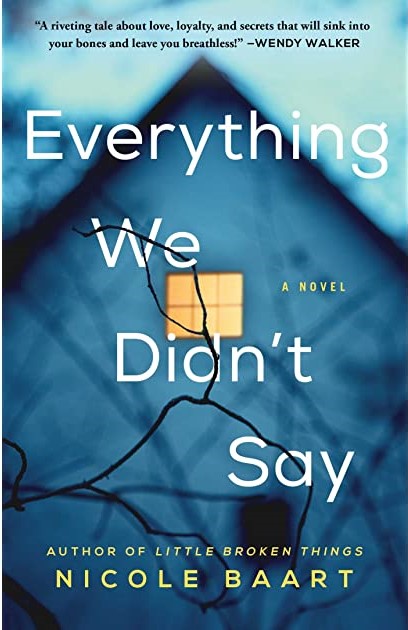
Everything We Didn’t Say – Nicole Baart

There’s a certain type of book I really like. It’s a dual timeline, family secrets, coming-of-age, angsty hybrid that, if well-written, makes my reading heart happy. Everything We Didn’t Say by Nicole Baart ticked all the boxes for me.

Juniper (June) Baker has returned to Jericho, Iowa after 15 years of exile. She’s come home to help an old friend in the town library, but this is also an opportunity to repair some relationships, particularly with her brother, Jonathan, and her 13-year-old daughter, Willa, who has been living with Juniper’s parents since she was born.

Why are these relationships damaged? Well, that part of the story happened fifteen years ago, when June had just graduated from high school. She was flirting with Sullivan, the youngest son of the town’s richest farmer, when Beth and Cal Murphy, a middle-aged couple who live in the farm across the lake from Juniper and her family, are brutally murdered, a crime for which Jonathan is suspected but never convicted.

One of the reasons that Juniper is anxious to return to Jericho is because someone on the WWW is talking about a podcast aimed at proving, after all these years, that Jonathan is, in fact, responsible for the Murphys’ deaths. Juniper aims to prove the opposite, but doing so means revisiting that long-ago summer when everything seemed to change, particularly between her and her brother. Once their sibling bond seemed like “a tangible thing, a thread woven from shared experiences,” but as the summer lengthens, Jonathan becomes secretive and moody.

There’s a lot of moving parts in Baart’s story. Of the two timelines, I liked the one set in the past the best. June is heading off to college at the end of the summer, and she knows she is leaving this life behind. Her best friend, Ashley, is crazy about Sullivan, but June finds herself impossibly attracted to him and it appears the feeling is mutual. That’s a disaster waiting to happen. There are other things happening at home, too, things June doesn’t understand.

All of that seems uncomplicated, though, when compared to the present day. Shortly after she arrives, Jonathan – who seems about to share a long-held secret – is in a life-threatening accident. She bumps into Sullivan, and that’s confusing. And a local cop seems to be digging into the Murphy’s cold case. Oh, and her daughter seems to hate her – which stands to reason since she all but abandoned her.

Everything We Didn’t Say has lots to recommend it and although I did guess one significant plot twist, I enjoyed my time in Jericho, and looked forward to reading this book, which I haven’t said about a book for a while.

Two thumbs up.

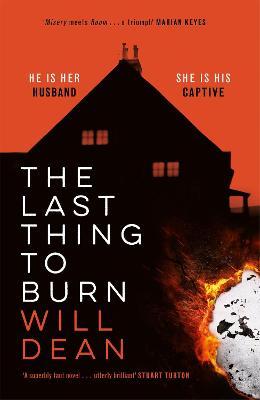
The Last Thing to Burn – Will Dean

Coming on the heels of a really disappointing read, made Will Dean’s novel The Last Thing to Burn extra terrific. I probably would have felt that way about it no matter when I read it though. I discovered this book via Twitter, which is the same way I came across Chris Whitaker’s amazing novel We Begin at the End. Twitter, keep up the good work.

The Last Thing to Burn opens with our first-person narrator hobbling across a field, her “right ankle the size of a fist.” Her voice is so distinct and her anxiety so palpable that I was immediately sucked into the story. It is only when a Land Rover appears on the track and the man driving comes for her, that we realize this person is a captive.

He holds me with no force. His power is absolute. He needs no violence at this moment because he controls everything the eye can see. I can feel his forearm at the back of my knees and he’s holding it there as gently as a concert violinist might hold a bow.

His name is Lenn. Her name is Jane. Except that’s not her name. She’d come to England from Vietnam with her younger sister, Kim-Ly. They’d been told there would be jobs waiting for them and that they’d be earning enough money to send home. First, though, they would have to pay back the people who’d arranged for their travel. This debt is endless. At first, Jane and Kim-Ly work on a farm where they are fed and have one day off. Then, Jane is sold to Lenn and Kim-Ly is sent off. That was seven years ago.

Jane’s life is one of captivity. There are cameras everywhere in the little farmhouse she shares with Lenn. Every day when Lenn comes back from tending to the fields, he watches the tapes. Her responsibilities are to keep the house just as his mother, also called Jane, did and to cook his meals, the same rotation every week, exactly as his mother did. She wears his mother’s old clothes, uses her cloth sanitary napkins. One week a month, Jane is allowed to sleep in the back bedroom. Three weeks a month,

I lie on the bed and pull the thin cotton sheet over myself. I adjust it so the sheet’s covering me from the navel and higher. This is, in some ways, the worst of it. The waiting. because it drives the truth home like a hammer would drive a nail through a plank of rotten wood.

When Jane misbehaves, Lenn throws one of her precious belongings into the fire. All these years later, all that remains are her ID with her true name on it, letters from her sister (who is working in a Manchester), a picture of her parents and a copy of Of Mice and Men.

The Last Thing to Burn is really one of those books that you read with your heart in your throat. I flew through it in two sittings because I had to know what was going to happen. Jane is an unforgettable character, but so is Lenn. He’s clearly a monster, a psychopath, and “even though he’s not a violent man, not usually, […] he’ll take what he wants in his own horrifically gentle way.” Dean wisely avoids being too graphic, but it won’t matter, the implied is enough.

Although the ending was a teensy bit abrupt, The Last Thing to Burn is a solid, well-written, propulsive page turner, and I doubt you’ll soon forget Jane.

Highly recommended.

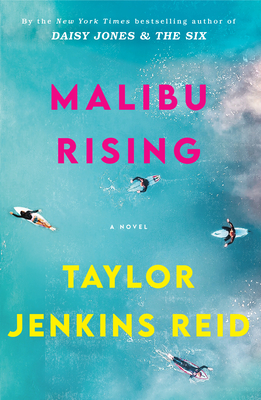
Malibu Rising – Taylor Jenkins Reid

Oh dear.

I loved Daisy Jones and the Six. Loved loved it. I was convinced that Taylor Jenkins Reid and I were going to be book besties. Then I bought One True Loves. Okay, I thought, well that was one of her earlier titles – a book she wrote way before the juggernaut success of Daisy Jones. Malibu Rising came after Daisy Jones and so it was bound to offer up the same sort of fast-paced, character-driven narrative right?

Right?

The Riva siblings, Nina, Jay, Hud and Kit, come from Hollywood royalty. Their father is Mick Riva — who makes an appearance in Daisy Jones — a superstar musician. He’s also a philandering dead-beat, who leaves his wife, June, when she is pregnant for Kit. I mean, I guess he’s charming in the beginning, which is why June — a young girl who works at her parent’s Malibu take-out falls for him. But his pretty promises don’t amount to much and June turns to alcohol to numb the pain.

It’s Nina, the eldest Riva child, who steps in when her mother can no longer keep it together. It’s because of her that her younger siblings are successful. Then, someone sees her surfing and she’s so beautiful she gets some sort of contract and suddenly she’s everyone’s poster-girl. That’s how she ends up married to tennis pro Brandon Randall. One year later, she’s been dumped.

The action of Malibu Rising takes place over the course of one day — the biggest day of the year: the Riva’s annual party. If you know where it is, you’re invited. But simmering beneath all the party excitement are all these secrets and resentments and lost dreams, and you best be sure those things are all going to come to the surface and burn that fucker to the ground. Literally and figuratively because as metaphors go, the fire in this book is not subtle.

Through flashbacks, Reid unspools June and Mick’s romance and marriage and Mick’s rise to fame. We watch June’s disintegration when Mick leaves her, her renewed hope when he returns. Then, of course, he leaves her again. We learn about the children, their unbreakable bond, their surfing prowess (because that’s what you do at Malibu, you surf, right?) We learn about Nina’s struggle to keep it together, the sacrifices she makes. Her quick-fire romance. Her separation. All of this in an effort to help us understand – I dunno – the familial bonds that nothing can break?

This book is long. Like almost 400 pages long. And I didn’t give a hoot about a single character. Early on, when it was June and Mick’s story I was, like, okay. This isn’t what I thought it was going to be, but it’s readable. But like with One True Loves, Malibu Rising is all tell. And all the tell is supposed to get us to the big, I dunno, party? So that when it all comes to a head we’re going to actually care. Yeah, no.

Suddenly we’re introduced to all these new characters, who have had sweet FA to do with the Riva story: best friends out of the wood work, actors (some made up, some real names air dropped in) who show up for colour, I guess. The woman Brandon ran off with, Carrie Soto (who is apparently getting a book of her own), makes a crazy appearance on the Riva lawn, someone who might be a sibling arrives; there are models and producers and the people who work at the family diner. It’s chaos. Cocaine is passed around like hor d’oeuvres, gun shots are fired, plates are being thrown like frisbees and people are literally swinging on chandeliers.

And what are the Riva children doing? Why, they’re down on the beach with Papa Riva, whom they haven’t seen or heard from in years, having a “come to Jesus” share session.

It’s, frankly, ridiculous.

I would say thus ends my short-lived love affair with Reid, but apparently The Seven Husbands of Evelyn Hugo is worth the read, so I may bite the bullet and give it a go.

This book, however, was a colossal waste of my precious reading time.

The Kiss Quotient – Helen Hoang

Stella Lane is a task-oriented, intelligent, wealthy single 30-year-old. If it weren’t for her mother badgering her about settling down, Stella might have been content to focus on her career as an econometrician. (Yeah, I’d never heard of it either. It’s a person who uses “statistics and calculus to model economic systems.”) Stella has had exactly three sexual encounters in her life, each more disappointing than the last.

Her latest sexual experience had been with one of her mother’s blind dates. He’d been good looking – she had to give him that – but his sense of humor had confused her. […] When he straight-out asked her if she wanted to have sex with him, she’d been caught completely off guard. Because she hated to say no, she’d said yes. There’d been kissing, which she didn’t enjoy. He’d tasted like the lamb he’d had for dinner. She didn’t like lamb.

Stella figures she needs practice in the sex department, and so she hires an escort, Michael Phan, a Vietnamese-Swedish hunk, to teach her the ropes — so to speak. For Stella, Michael is “by far the finest male specimen she’d ever laid eyes on.” For Michael, Stella is quite unlike anyone he’s ever met.

The hook for Helen Hoang’s The Kiss Quotient is that Stella is on the autism spectrum. She doesn’t like loud noises, strong scents, any disruption to the routine that makes her feel safe. She says what she thinks and has trouble reading social cues. Career-wise, she’s respected and successful, but as she tells Michael on their first date “I’m awful at…what you do. But I want to get better. I think I can get better if someone would teach me.”

I doubt you will ever meet two characters as sweet and wholesome as Stella and Michael and yet the sex in this book is on the face-fanning steamy side. Turns out, Michael is extremely good at his job, but more than that, he genuinely likes Stella and as their relationship morphs from a pay-for-sex gig into friendship things start to get complicated for the both of them. Suddenly, Michael is taking Stella home to meet his family and revealing his private life in a way that is very unprofessional. I’m not sure the complication at the end was necessary (after all, everyone and their dog could see these two were CRAZY for each other) but it hardly matters because at that point you’ll be all-in.

The Kiss Quotient is smut with two delightful central characters and if that’s your thing, enjoy.

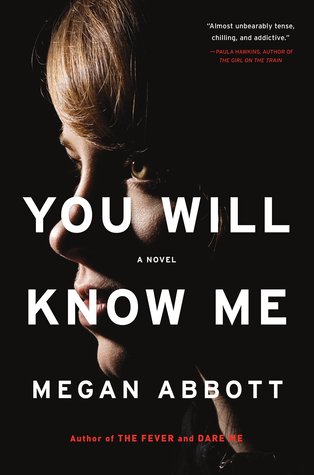
You Will Know Me – Megan Abbott

Eric and Katie Knox know their daughter is special and so they spend all their energy on helping her achieve her (their) dreams of Olympic gold. That’s the premise of Megan Abbott’s 2016 novel You Will Know Me. This is my third novel by Abbott (Dare Me, The End of Everything), but I can’t say that I liked it all that much, although it was on everyone’s Best Book list when it was published.

There is nothing Devon’s parent’s won’t do for her: get a second mortgage on their house, rack up debt on their credit cards, neglect her younger brother Drew. All of this and more in an effort to fulfill Devon’s gymnastic promise.

Just after her tenth birthday, Devon’s coach, Coach T, shows her parents “The Track, which lays out the next few years of Devon’s life on her way to the Olympics. But, as Coach T tells the Knoxes, “It takes a family to make this happen. And it takes action. Devon needs to be here at least thirty hours a week, maybe more.”

The whole trajectory is remarkable since a childhood accident had left Devon with two missing toes, her foot now referred to affectionately as the Frankenfoot. Devon is as determined as her parents, though, and nothing stands in her way. That’s not something I can relate to, really. Neither of my children were ever involved in competitive sports. The closest I ever came was my daughter’s commitment to ballet; she danced 12 hours a week, sometimes more and perhaps at one time thought about pursuing it more seriously. I do understand that desire to support a child’s dreams; however, these parents are single-minded.

When someone with ties to the gym is killed, Katie’s world starts to implode. She discovers that the people closest to her have been keeping secrets and she understands that her capacity to prevent anyone from getting in Devon’s way is full-on mama bear. So, I guess, You Will Know Me is meant to be, among other things, a thriller. Except – not so much with the thrilling.

I just didn’t like or care about any of these people. Everyone just seems so single-minded and shrill and, frankly, Eric and Katie are bad parents. Poor little Drew. He’s an after thought at all times.

Just meh for me.

Saint X – Alexis Schaitkin

When the Thomas family, eighteen-year-old Alison and her seven-year-old sister, Claire, visit Saint X with their parents, they have no idea how this Caribbean holiday will irrevocably alter their lives. On the last night of their vacation, Alison disappears, and then turns up dead on a nearby cay.

This event sets Alexis Schaitkin’s debut novel Saint X in motion.

Looking back, the things I remember most clearly from the days after Alison went missing and before she was found are strangely inconsequential. For example, I remember the hunger I experienced on that first day when my parents forgot about breakfast and lunch, and how I felt sorry for myself in that banal way any child feels sorry for herself when she finds herself overlooked in a flurry of attention devoted to her older sibling.

Although Clive and Edwin, two men who work on the resort, are questioned about Alison’s disappearance, they are never charged and the circumstances of Alison’s death remain a mystery. Many years later, Alison is working at a publishing house in NYC when she gets into a cab driven by Clive and that chance encounter sends her spiraling into the past, desperate to connect to the sister she didn’t really know.

While not a thriller, Saint X does read like one in many ways. Alison contrives a way to meet up with Clive again and then essentially starts stalking him until she orchestrates yet another chance encounter. She is convinced Clive can answer all her questions about Alison. Her obsession with her sister’s death and with Clive himself takes over her life. She cuts herself off from her friends, loses focus at work and spends her time listening to the audio diaries her sister kept as a teenager.

Schaitkin layers Claire’s journey with Clive’s story – one of abandonment and longing. We learn of his early life on Saint X, and his childhood friendship with Edwin, who grows into a gregarious man who knows how to flatter the tourists at the resort and make double the amount in tips. We see Alison through Clive’s eyes, a skewed portrait of a teenager on the cusp of understanding her tremendous power.

While the novel is certainly about Claire’s quest for understanding, this is also a book about privilege, fate, grief and family. When Clive finally reveals what he knows (or doesn’t know) about Alison, Claire realizes that the details “had very little to do with me.” That’s one of the brilliant observations in Schaitkin’s novel. You can’t possibly know everyone’s story – not even the people closest to you.

This is a beautifully written book, one to savor, and I highly recommend it.

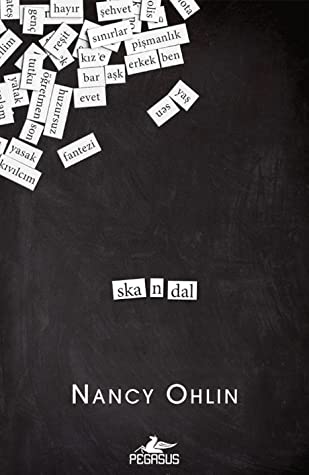
Consent – Nancy Ohlin

When Nancy Ohlin’s YA novel Consent opens, seventeen-year-old Bea is in an interrogation room at the local police station. Her goal is to “Stay as close to the truth as possible.”

The truth is a grey area, though.

Bea and her best friend Plum attend Andrew Jackson High School, a “Campus for Baccalaureate and Performing Arts”. The two girls are over-achievers with “the two highest GPAs in school.” They have their lives mapped out: graduation and then Harvard. That is, until Bea meets Dane Rossi, the new AP Music History teacher.

Mr. Rossi turns from the blackboard and scans the class. Oh my God, he’s cute. Chiseled features and sexy stubble…Are teachers allowed to be that good looking?

Mr. Rossi is more than cute, though. He sees Bea, and recognizes her talent, a talent she has kept hidden from everyone. For reasons. He encourages her to join two other students in an ensemble; he hooks her up with an audition at Julliard; he deflowers her. Because, of course he does.

Consent is problematic, but not for the reasons that you might think. Yes – it’s all sorts of wrong that a teacher enters into a sexual relationship with a student, but it’s more the way that it happens. None of the characters feel fully fleshed out. Bea’s father, a lawyer, is basically absent –until he isn’t. Her older brother is a non-entity. Dane is too good to be true, and their insta-attraction to each other just doesn’t seem realistic. Before you can Schumann they are planning their lives together. Just, y’know, after she turns eighteen. When they get caught, Bea convinces Plum and another boy to lie for her.

It was easy to read, but I never truly felt invested in these characters. It was hard to see Bea as a victim or Dane as a predator and although there was certainly potential for something a bit more dramatic, it never really happened.

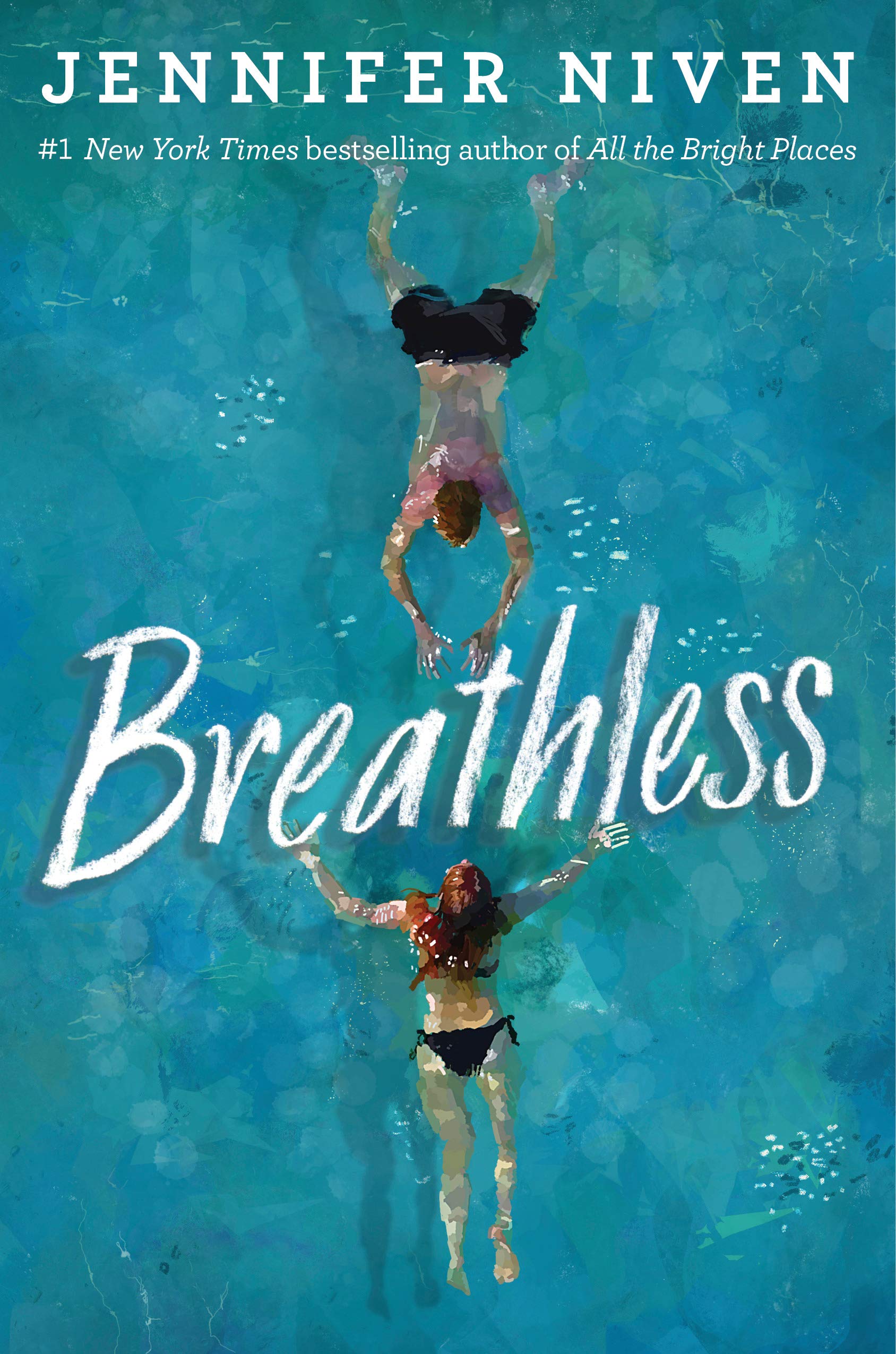
Breathless – Jennifer Niven

Oh, young love.

Jennifer Niven’s (All the Bright Places ) novel Breathless took me back, way back, to a very particular time in my life. You know, that time when you fall in love and you’re filled with both dread and delight.

Claudine Henry’s life is pretty sweet. She lives with her mother (an acclaimed writer) and her father (works at the local college) in small-town Ohio. She and her best friend, Saz, are about to graduate from high school and embark on a post-graduation road-trip before they head off to their respective colleges. Then her father drops a bombshell: “…your mom and I are separating, and she asked me to tell you because it’s not her idea; it’s my idea.”

Claude is devastated by the news, and it upends her plans and her life. Instead of heading off with Saz, she and her mother make their way to an island off the coast of Georgia. The island has ties to their family and Claude’s mom is going to use the time to do some research and some writing. Claude is going to spend her time being miserable.

That is until she meets Jeremiah Crew. He has a “resting wiseass face” and an easy charm that is almost irresistible. The island is small and it’s impossible for Miah and Claude to avoid each other and it’s clear pretty early they don’t want to anyway. He’s always around, barefoot and ready with some witty or caustic remark. I think I fell in love with him almost as quickly as Claude did.

As Miah and Claude start to spend more time together, Claude also starts to come to terms with her own life. Being away from Saz (there’s limited WiFi/cell service on the island) causes some tension, and miscommunication. And how is she supposed to navigate this new family dynamic? Her father was her person, the parent she shared morning rituals with, her protector, and now she doesn’t know who he is or how she’s supposed to feel about him. We forget at that age, that our parents are just trying to figure it out, too. Sometimes we get caught up in our own feelings and we forget that our parents have their own stuff to get through. Both Claude’s parents seemed like real people – which is often not the case in YA fiction. I loved Claude’s coming-of-age journey.

Ultimately, though, this is Claude and Miah’s story – and it is swoon worthy. They are eighteen, so this is slightly more NA than YA (and while the sex scenes aren’t particularly graphic, there are some in the book). Their banter is ::chef’s kiss:: awesome. I loved Miah so much.

“Here’s the thing,” Miah tells Claude. “I don’t want you getting too crazy about me, because I’m only here for the next few weeks.”

Trust me, resistance is futile.