
Ten years ago, Kate spent a week in the French countryside with five of her friends from Oxford. That’s where they meet Severine, the girl next door.
Severine, slim and lithe in a tiny black bikini, her walnut brown skin impossibly smooth in the sun, one hip cocked with the foot pointing away as if ready to saunter off the moment she lost interest. Severine, who introduced herself, without even a hint of a smile to soften her devere beauty, as “the mademoiselle next door,” and who disappeared without a trace after the six of us left for Britain.”
Her disappearance has remained a mystery. Until now.
Lexie Elliott’s novel The French Girl ticks a lot of boxes for me. First of all, I am a sucker for books about groups of friends whose loyalties shift and erode over time. Kate’s circle includes Lara, her bestie; Seb, her beautiful ex-boyfriend; Tom, Seb’s cousin and best friend; Caro, the ice queen of the group and Theo, whose parents owned the French farm where the group stayed. When Tom calls to tell Kate that Severine’s body has been found on the farm property, and that the French police will be wanting to speak to them all again, it exposes the cracks in Kate’s relationships with these people.
Elliott wisely chooses to set her novel in the present and make Kate our first person guide through these events. First, her reunion with Tom — returned from Boston after a break-up with his fiancé. Then, more fraught, a reunion with Seb, whom she has not really seen since their break-up at the French farm. Suddenly, the former friends are thrust back into each other’s orbits, trying to align their memories about the last time they saw Severine and speculating about what actually might have happened to her.
Ever since the discovery of Severine’s body, Kate has sensed “a presence that rests on my consciousness just out of reach of my field of vision.” Kate sees Severine’s bones “bleached white, and neatly stacked in a pile with the grinning skull atop” and on other occasions as “a fleshed-out version of walnut-coloured skin, secretive eyes and a superior lack of smile.” As the investigation progresses, Severine insinuates herself more and more into Kate’s life. Is she a manifestation of guilt or memory or something even more sinister?
I really enjoyed The French Girl. Kate is a smart and likable character and even though we only see the other characters through her eyes, I trusted her assessment of them and their shared events because she was constantly readjusting her own perspective as new information revealed itself. This is a clever mystery and would certainly appeal to anyone who enjoys character-driven plots. I look forward to reading more by this author.
 There’s no nuance in Karen Hamilton’s debut novel The Perfect Girlfriend. The narrator, Juliette (aka Lily. aka Elizabeth) is crazy. For reasons. She’s on a mission: to reclaim Nate, the man who dumped her seven months ago, unceremoniously kicking her out of his swanky Richmond (near London) flat.

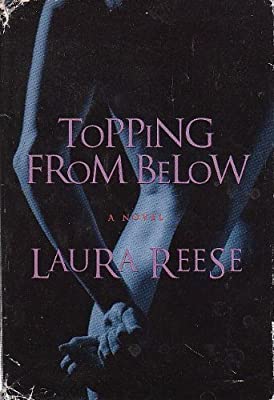 trying to control the scene, aka control the top (dominant person). That’s exactly what Nora Tibbs is attempting when she pursues a relationship with Michael (referred to as M.) the music professor she’s convinced murdered her younger sister, Franny, in Laura Reese’s novel Topping From Below.
 I don’t know how much readers actually care about the awards books win, but Elizabeth Strout’s novel Olive Kitteridge won the Pulitzer in 2009 and the book has been languishing on my tbr shelf since about then. It was June’s #bookspin choice on
  it was too cute to pass up. And, let’s face it, I probably do judge people by their bookshelves – well, I am more likely to judge people who don’t have any.
 The Washington Post named Lauren Grodstein’s novel A Friend of the Familyone of the best books of 2009. In fact, just about every major media outlet lauded this tale of Dr. Pete Dizinoff who lives in suburban New Jersey with his wife, Elaine and their son, Alec.
 Soon, Bob is hopping the bus with James to to head to Covent Garden, where he busks daily. Bob turns out to be a real draw and the first day Bob is with him while he busks, James triples the money he normally made.
 Leo Demidov is a member of MGB, Russia’s State Security Force under Stalin. It’s 1959 and everyone is suspicious of everyone else. Leo has arrived at his position by way of a decorated stint in the army. He’s good at his job. He
 and have watched straight through on more than one occasion.) Still, Natalie Bloom’s story resonated on so many levels for me. It shot me straight back to my university days; not the rose-coloured view I have now, but the awkward, muddled, feeling-my-way experiences I actually lived.
