
One of my all-time favourite childhood movies is The Railway Children. I don’t remember 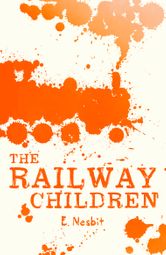 specifically when I first watched it, but it came out in 1970 and I probably saw it shortly after that. I have it on VHS somewhere, but no longer have a VHS machine. I did, however, have the book.
E. Nesbit’s story, first published in 1906, tells the story of siblings Roberta (Bobbie), Peter and Phyllis who live with their well-to-do parents “in an ordinary red-brick-fronted villa.” Their father works in government and their mother was always “ready to play with the children, and read to them, and help them to do their home-lessons.”
One evening, out of the blue, two men arrive at the villa and the father is “called away on business.” Afterwards, the children and their mother leave London and head out to the countryside where they will live in a “ducky dear little white house.” Although they seem to be destitute they get by. The mother is a writer and when she sells a story, the children get a treat of buns.
The children occupy their days with adventures, including making friends with the porter at the local railway station and an old gentleman who waves at them from the window of the 9:15 train they nickname the Green Dragon. There is pretty much nothing sweeter than what these three kids get up to. They are thoughtful, resilient, and kind. Revisiting their story was like being wrapped in a warm hug and Bobbie’s sentiments seemed particularly poignant given the circumstances in which we find ourselves at this point in history:
I think everyone in the world is friends if you can only get them to see you don’t want to be un – friends.
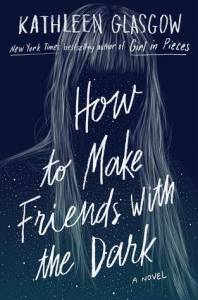 How to Make Friends with the Dark is the story of fifteen-year-old Grace “Tiger” Tolliver. She lives with her single mother, June, a kind but ineffective parent.
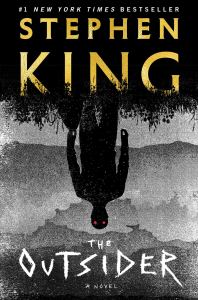 Eleven-year-old Frank Peterson has been found dead in the woods. The crime is unspeakable – so I won’t speak of it here, you’ll get enough of it in the book – and Detective Ralph Anderson is determined to catch the psycho who committed the crime posthaste.
 That’s what Scott and Cath do in Michael Kun and Susan Mullen’s epistolary novel We Are Still Tornadoes. Cath has gone off to Wake College in North Carolina, but Scott has stayed home. He’s currently working in his father’s men’s clothing store — a job that is the subject of much derision until it’s not.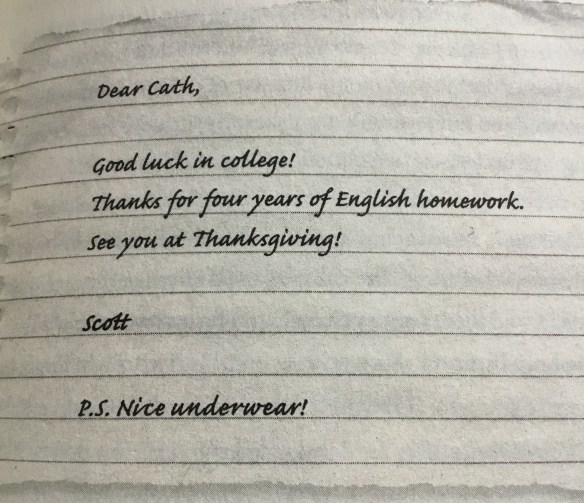
 who lives in Harlem with her twin brother, whom she calls ‘Twin’) and her Dominican immigrant parents. She’s a good girl; she has no choice. Mami’s rules are law, and Xiomara wouldn’t dream of breaking them. But there are some things Xiomara can’t control. For example, she is “unhide-able”
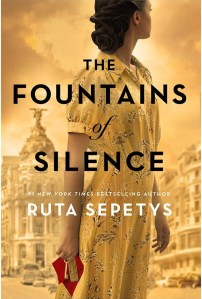 I was very excited to read Sepetys’s latest book, The Fountains of Silence, because I just knew that I was going to meet a new cast of characters to fall in love with, and I wasn’t wrong.
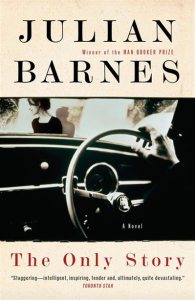 read it eight years ago. (Yikes!) I can’t say that my experience with The Only Story was quite as enjoyable; however, we had a fantastic chat about it at book club.

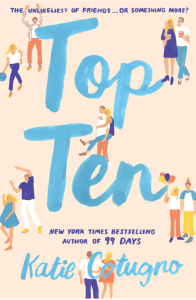 kinda awkward because Gabby isn’t really a party-goer; she’d much rather be holed up in her bedroom with her snacks and a good book. When she discovers Ryan barfing in her bathroom, though, it’s the beginning of a beautiful friendship. That’s the premise of Katie Cotugno’s YA novel Top Ten.
