Wuthering Heights – Emily Brontë & “Wuthering Heights” – Emerald Fennell

Just before my daughter and I went to see Emerald Fennell’s movie “Wuthering Heights”, I decided to re-read Emily Brontë’s one and only novel, Wuthering Heights. The novel was published in 1847, just one year before Emily, a reclusive spinster, died at the age of 30. Critic V.S. Pritchett said “There is no other novel in the English language like Wuthering Heights“. Indeed, the novel has endured for 179 years and, if nothing else, might expect an uptick in readers based on Fennell’s movie. New readers, however, are likely to be flummoxed.

I read Wuthering Heights for the first time when I was in high school, so 50 years ago. My memories of it going into this re-read were of Catherine and Heathcliff, tortured lovers on the moors of Yorkshire. I always credit this novel for setting up my romantic expectations/aspirations, which may explain why I have always been drawn to angsty love affairs: couples who love each other but can’t be together, or lovers who shouldn’t love each other but do, are totally my romantic jam. Probably also explains why I am single. My romantic expectations were skewed at an early age.

In my memory, Catherine and Heathcliff were passionately in love with each other, but he wasn’t the right guy for her socially; she needed to marry up the social ladder. Enter Edgar Linton. What I didn’t remember was that Catherine was dead by page 200 and for the rest of his miserable life, Heathcliff tries to ruin the lives of everyone around him including his son, Linton, and Catherine’s daughter, Cathy.

As a teenager, I saw Wuthering Heights as a tragic but ultimately romantic love story, but upon re-reading I discovered it’s slightly more complicated than that.

Catherine and Heathcliff’s story is told to Mr. Lockwood, a lodger at Thrushcross Grange, who falls ill and convalesces under the care of Ellen “Nelly” Dean, housekeeper at both Thrushcross and Wuthering Heights, Catherine Earnshaw’s family home. She tells Mr. Lockwood about how Mr. Earnshaw, in an act of benevolence, plucks Heathcliff from the streets and brings him back to Wuthering Heights, “a sullen, patient child; hardened, perhaps to ill-treatment”, ill-treatment which he further endures at the hands of Catherine’s older brother, Hindley, the most odious of characters.

Catherine takes an immediate shine to Heathcliff. “”She was much too fond of Heathcliff,” Nelly tells Mr. Lockwood. “”The greatest punishment we could invent for her was to keep her separate from him””. They pass their childhoods running wild on the heath.

Catherine has a willful streak and a fiery temper; she is no shrinking violet. In fact, even Mr. Earnshaw favoured Heathcliff over his own daughter “who was too mischievous and wayward for a favourite.”

Certainly, she had ways with her such as I never saw a child take up before; and she put all of us past our patience fifty times and oftener in a day: from the hour she came downstairs till the hour she went to bed, we had not a minute’s security that she wouldn’t be in mischief. Her spirits were always at high-water mark, her tongue always going–singing, laughing, and plaguing everybody who would not do the same. A wild, wicked slip she was–but she had the bonniest eye, the sweetest smile, and the lightest foot in the parish; and, after all, I believe she meant no harm.

When Edgar Linton asks Catherine to marry him, she tells Nelly “I’ve no more business to marry Edgar Linton than I have to be in heaven […] It would degrade me to marry Heathcliff now; so he shall never know how I love him: and that’s not because he’s handsome, Nelly, but because he’s more myself than I am. Whatever our souls are made of, his and mine are the same.”

So, she does marry Edgar and moves to the palatial Thrushcross Grange to live with him and his sister, Isabella. Heathcliff disappears and when he reappears, three years later, he is much changed.

He had grown a tall, athletic, well-formed man; beside whom my master seemed quite slender and youth-like. His upright carriage suggested the idea of his having been in the army. His countenance was much older in expression and decision of feature than Mr. Linton’s; it looked intelligent, and retained no marks of his former degradation. A half-civilized ferocity lurked yet in the depressed brows and eyes full of black fire, but it was subdued; and his manner was even dignified: quite divested of roughness, though too stern for grace.

His reappearance shakes up everyone. To Edgar Linton, Heathcliff was nothing more than “the gypsy–the ploughboy” but, well, we know what Catherine thought of him. Surely, this will not end well.

And, of course, it doesn’t.

The vitriol against Emerald Fennell’s adaptation of what she says is her favourite book of all time is both deserved and undeserved. “Wuthering Heights” is Wuthering Heights adjacent; it is not a faithful adaptation of the book. My daughter, who is 28, loved the movie. She sobbed for the last fifteen minutes. She has never read the book.

Fennell encountered the book when she was about 14, so a similar age to my first exposure. I think she saw something similar to what I saw when I first read it: a great love story. Her movie is fanfiction, really, because it imagines (in a kind of annoying music video montage), a lot more sex than exists in the novel. In fact, Heathcliff and Catherine are never physically intimate in the book. The on-screen sex is not graphic, despite one of my friends calling it “porny.” As an avid consumer of fanfiction back in the day, I know how graphic writers can be when describing what they ‘imagine’ happens when the source material fades to black–and truthfully, that’s what Fennell is doing here–but what we see on screen is pretty tame; nary a breast or a butt.

It also portrays Nelly as the villain of the piece; she deliberately coaxes from Catherine the confession that she can’t marry Heathcliff because he is beneath her when she knows that Heathcliff will hear, but he doesn’t hear when Catherine says she loves him or see how tortured she is about the decision. Hindley doesn’t exist in this version. Isabella is played for laughs and as a submissive in a bizarre scene where she is chained up in Heathcliff’s house and barks like a dog.

Another criticism of the movie is the casting. Margot Robbie is 35; Catherine was 18 or 19 when she died in childbirth. Jacob Elordi is not by any stretch (and at 6’5″ there’s a lot of stretching to be done) a “dark-skinned gipsy”. But I didn’t care too much about that because both of these people can actually act and they are beautiful to look at and since the movie isn’t *really* Wuthering Heights, I was content to let the whole thing play out. Yes, I understand this is problematic whitewashing, but it was clear to me that Fennell was making a version, her 14-year-old wishful thinking version, of the book. For example, the actor who plays Edgar Linton is played by Shazad Latif, who is by no means the insipid Edgar I imagined. In the book he is described as light-skinned, blue-eyed, and slender. So, make of that what you will.

The whole movie is beautiful, really, but certainly not the Wuthering Heights of my teenage imagination. (In fact Wuthering Heights, the house, looked like it was made of plastic. It was weird.) The costumes, the landscape, the overall aesthetic was easy on the eyes. But the movie doesn’t demand anything of you beyond your belief that Heathcliff and Catherine love each other. That’s what I believed at 15.

Maybe now I think their relationship is more obsessive, complicated, and toxic, but I will not deny that I still find the tale hopelessly romantic even though Catherine and Heathcliff are not especially likeable and are certainly, on occasion, horrible to each other and others. The movie doesn’t portray anything beyond Catherine’s death, but the book still has 200 pages to go after she dies and in those pages we see Heathcliff destroy everything in his path. Does he do it because of grief? Eighteen years after her death, he admits to Nelly that he bribed a sexton to open her coffin, and when he saw her face again “it was hers yet.”

…she has disturbed me, night and day, through eighteen years–incessantly–remorselessly. […] I felt Cathy was there: not under me, but on the earth. A sudden sense of relief flowed from my heart through every limb. I relinquished my labour of agony, and turned consoled at once: it remained while I refilled the grave, and led me home.

Emily Brontë’s novel is a masterpiece of mood, passion, and tension. In her introduction to the Modern Library edition of the novel, Diane Johnson writes: “In their rage and frustration at the impediments that society and conventional morality impose on them, preventing the perfect expression of the erotic life force they embody, the two lovers symbolize the ultimate tragedy of man’s earthly condition.”

Emerald Fennell’s movie is Wuthering Heights for the TikTok generation. I enjoyed watching it, but I enjoyed my re-read far more.

Deep Cuts – Holly Brickley

I think your enjoyment of Holly Brickley’s debut novel Deep Cuts will very much depend on how much you love music…and not just in a casual way but in an all-consuming, possessive, nerdy way.

Percy and Joe meet at a campus bar in Berkeley in 2000. They are both students and peripherally known to each other “in that vague way you can know people in college, without ever having been introduced or had a conversation.”

Then “Sara Smile” comes on while they are both waiting for drinks and it kicks off a conversation about the difference between a perfect track and a perfect song. Apparently, there is a difference. Percy explains:

“A perfect song has stronger bones. Lyrics. Chords. Melody. It can be played differently, produced differently, and it will almost always be great. Take ‘Both Sides, Now,’ if you’ll excuse me being a girl in a bar talking about Joni Mitchell–any singer who doesn’t suck can cover that song and you’ll be drowning in goosebumps, right?

[…]

“Now, ‘Sara Smile’–can you imagine anyone besides Daryl Hall singing this, exactly as he sang it on this particular day?”

Joe is an aspiring musician and Percy a writer and their meet cute morphs into a decade long will they/won’t they, should they/shouldn’t they relationship. Joe has a girlfriend, Zoe, “a tasteful punk”. Joe describes their relationship to Percy as “a perfect track [because you] need the context–family, friends, our hometown.” Soon, the three are hanging out together, although it’s clear that Percy has a thing for Joe.

Joe asks for Percy’s advice about some of his music and Percy is nothing if she isn’t honest. She tells him his song “is over-written [and] kind of forced” but that his singing is “magical.” Joe comes to depend on this honesty as he starts to chase a professional musical career.

When Zoe and Joe break up and Zoe gives Percy her blessing to make her move, things are further complicated because Joe, it seems, doesn’t want to mess up this musical partnership the two have going. Thus the will they/won’t they. Their lives pull them in different directions after college, but they are besties (without the benefits) until one night at a wedding when they suddenly aren’t.

I enjoyed Deep Cuts well enough. I did find all the song references tedious, but that didn’t stop me from making a playlist. I found Joe and Percy sort of tedious, too, but only in that way many kids in their 20s are – especially as seen from the viewpoint of someone in their 60s. I suspect that had I read this book in my 20s, I would have enjoyed it a lot more. That is not to say that I didn’t enjoy this. I loved the angst; I enjoyed some of the secondary characters. The dialogue felt authentic and so did the 20-something navel gazing.

Life itself provides some deep cuts of its own. Mistakes are made. Feelings are hurt. Friendships ebb and flow. By the end of the book I was trying to decide if Percy and Joe actually should or shouldn’t be together. They hurt each other, but they love each other, too. Like any great song, they are a sum of all their parts.

Prince of Lost Places – Kathy Hepinstall

Prince of Lost Places is my second book by this author; the first book I read by her was The House of Gentle Men over 15 years ago. Yikes. This book has been languishing on my bookshelf for ages. (Trust me, it’s not an outlier, buying more books than I could ever possibly read is a thing.)

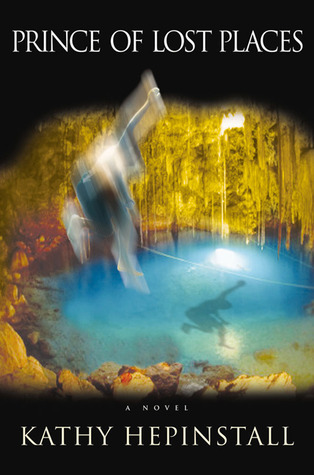
Martha Warden has kidnapped her six-year-old son, Duncan. She has her reasons. Her husband, David, tells the detective he’s hired to find her that “She’s sick. […] Her mind has left her. She is in no condition to be wandering around somewhere.”

Martha takes Duncan to a cave someone told her about. It’s on the Rio Grande, isolated, and although Duncan misses his father, the two sort of settle into a life in the wild. Martha has planned well, packing as many of the necessities as she could manage and setting her car on fire in the desert before she and Duncan set off in a rubber raft down the river.

We know something has happened, but Martha is slow to reveal exactly what that something is. Early on she tells us about Duncan’s friend, Linda, and then she tells us that “Linda has been dead for nearly three weeks.” Is Duncan responsible for her death? David? Why have they run away?

Then Andrew arrives on the scene.

The man I saw was tall and lanky, wearing tattered, faded jeans, desert boots and a T-shirt with a plaid shirt thrown over it. A knapsack was strapped to his back. He had a narrow, friendly face and tousled light hair, and as he knelt down he paused to scratch at a full beard.

Who is this man? He claims that he, too, is trying to figure some things out and while Martha doesn’t trust him at first, he turns out to be a good listener. Soon, they become a trio.

Prince of Lost Places is a quiet and thoughtful book about motherhood, love, guilt and grief. I suppose some people will be unhappy with the end, but I thought it was terrific.

A Year to the Day – Robin Benway

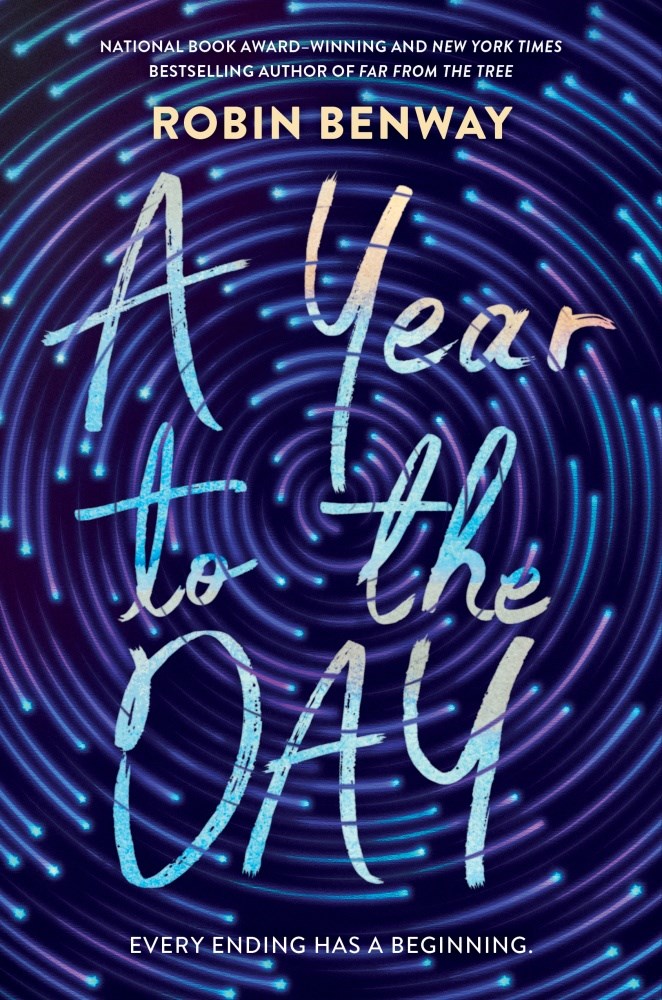
Robin Benway’s novel A Year to the Day is a love letter to sisters. The novel starts on the one year anniversary of the car accident that killed Nina, Eleonora aka Leo’s older sister. Leo and Nina’s boyfriend East were also in the car when they were struck by a drunk driver. Leo doesn’t remember what happened, not really.

Benway takes an unusual route to tell the story by working backwards from the one year anniversary to the day before the accident and it’s an effective structure to let us see how grief permeates the lives of the people in Nina’s life and also how time really does offer some modicum of relief. On the one year anniversary of Nina’s death, Leo thinks

about how sometimes things are gone, just like that, even as their absence still takes up space in your heart, their place carved out forever, reminding you of what has been and what will never be again.

Leo’s mother lives in a little cocoon of grief, where she watches HGTV and doesn’t always wash her hair. Leo feels like ‘that girl’, all eyes on her as she attends school. Her father and his new wife, Stephanie, are expecting their first baby. Although her parents aren’t really friendly, they are certainly united in their grief and Stephanie is kind and thoughtful. So, the adults in her life certainly prop Leo up. She also becomes closer to East, not in a romantic sense, but when the book opens we see that she is hanging with him and his friends and as the narrative unspools backwards we learn how much this relationship sustains them both.

We only ever see Nina through Leo’s eyes. She “always made sure that you knew her, that you knew what she was doing, where she was going, what she liked and hated. Nina wasn’t shy about any of that, about being herself.” She was someone Leo greatly admired and depended on. She was her favourite person, the “compass in our family, the rudder, the North star.”

I loved Benway’s novel Far From the Tree (I didn’t write a review of that book, but I talked about it here). I also found this book well written and thoughtful, but just a bit slow. The final few pages of the book were very effective though.

The Hollow Kind – Andy Davidson

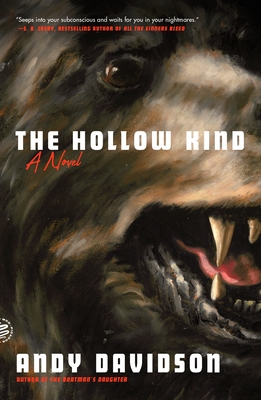
Body/cosmic/folk horror isn’t really my thing, I don’t think, but Andy Davidson’s The Hollow Kind is still an entertaining, albeit slow (until the last 50 or so pages) read.

Nellie and her young son, Max, have fled their lives and headed for Georgia, to the rural property left to her by her grandfather, August Redfern. Nellie’s husband, Wade, is abusive and Nellie was desperate to get away, so even though the property is dilapidated, Nellie is certain they can be quite happy there.

What Nellie doesn’t really understand is the property’s dark history, which began in 1917 when August, not a native southerner, meets George Baxter and then his daughter, Euphemia, who becomes August’s wife. Euphemia’s dowery is 1000 acres of woodland. George tells August:

Roots go deeper here than you ight imagine, August. Appease them and you’ll recoup your money soon enough. I promise you that. In these woods, there’s no end to the riches a man can now.

Unfortunately, August doesn’t know the half of it.

Davidson’s novel moves back and forth between Nellie and Max in 1989 and August and his young family in 1917-23. We are also privy to a short period of time that Nellie spent with her grandfather at Redfern Hill when she was a teenager, which I guess helps us to understand why he would have left the property to her. Although it is clearly obvious that the property is not quite right and any sane person would not even consider staying there, Nellie is between a rock and a hard place. She has no place else to go.

There is menace at every turn for Nellie and Max. Wade is still out there. George Baxter’s grandson, Lonnie, is desperate to get the property back and he is a nasty piece of work, and then there’s the house and property. The first sight of the house fills Max with dread.

…the old house rearing up before them has teeth, claws, is a thing alive. A dragon in the midst of a long slumber. It sees us. A fresh sweat springs out beneath his clothes. Above the roof, bats loose themselves like stones from slings.

The history of Redfern Hill is complicated and gruesome. It takes a long time to get where it’s going, but if you don’t mind the meandering pace, there’s lots to like about this book.

Atmosphere – Taylor Jenkins Reid

I hope that my first read of 2026 is not an indication of how the rest of my reading year is going to go because Taylor Jenkins Reid’s novel Atmosphere was just not for me. My first experience with Reid was Daisy Jones and the Six and I loved it. I was so sure that she was going to be a favourite author for me, and so I started with her backlist and read One True Loves and it was a no from me. Since it came before Daisy Jones though, I thought I would read something after, so I tried Malibu Rising. Also a no. I would not have picked up Atmosphere for that reason alone, but a book about lady astronauts was of zero interest to me anyway. Then it got selected for my book club.

Joan Goodwin has a “PhD focusing on the analysis of magnetic structures in the solar corona” but she is “spending her expertise teaching eighteen-year-olds the definition of a parsec.”

Vanessa Ford is an aeronautical engineer who is also a pilot. She is “tall and straight, her shoulders broad.” The first time Joan lays eyes on her, she thinks “That’s an astronaut.”

These two woman are astronaut candidates in 1979. Historically, Sally Ride was the first woman in space. She went to space in 1983. Fictionally, Joan and Vanessa count themselves among “The Six.”

“The Six” became part of NASA Astronaut Group 8, a selection of 35 candidates tapped to begin training at Johnson Space Center in Houston in 1978. And the women weren’t the only ones making history. The class of astronauts in training was also NASA’s first to include people of color — three African Americans and one Asian American.” – CNN

Joan and Vanessa become friends, and then more than friends, a relationship that they keep secret for a variety of reasons. I found the whole love story part of this book super cringey. You want me to believe that two women, smart enough to be tapped as astronauts, are sneaking around and having inane conversations about how the sky now makes sense because of the other person. I mean, you wanted to be an astronaut, right? You never wanted to know anything about the sky until you looked into the eyes of a beautiful astronomer? Yikes.

Beyond the cringe, I just found the writing pedestrian. Loads of people on the WWW were calling Atmosphere a six star read, a book that made them bawl their eyes out. It made me want to tear my hair out. I didn’t particularly care about any of these characters. Joan’s sister, Barbara, is selfish and miserable (until she finds a rich man). Barbara’s daughter, Frances, is precocious and meant to be a surrogate daughter for Joan because they are way closer than mother and daughter. Even that relationship felt inauthentic.

This one’s a dud.

Stoner – John Williams

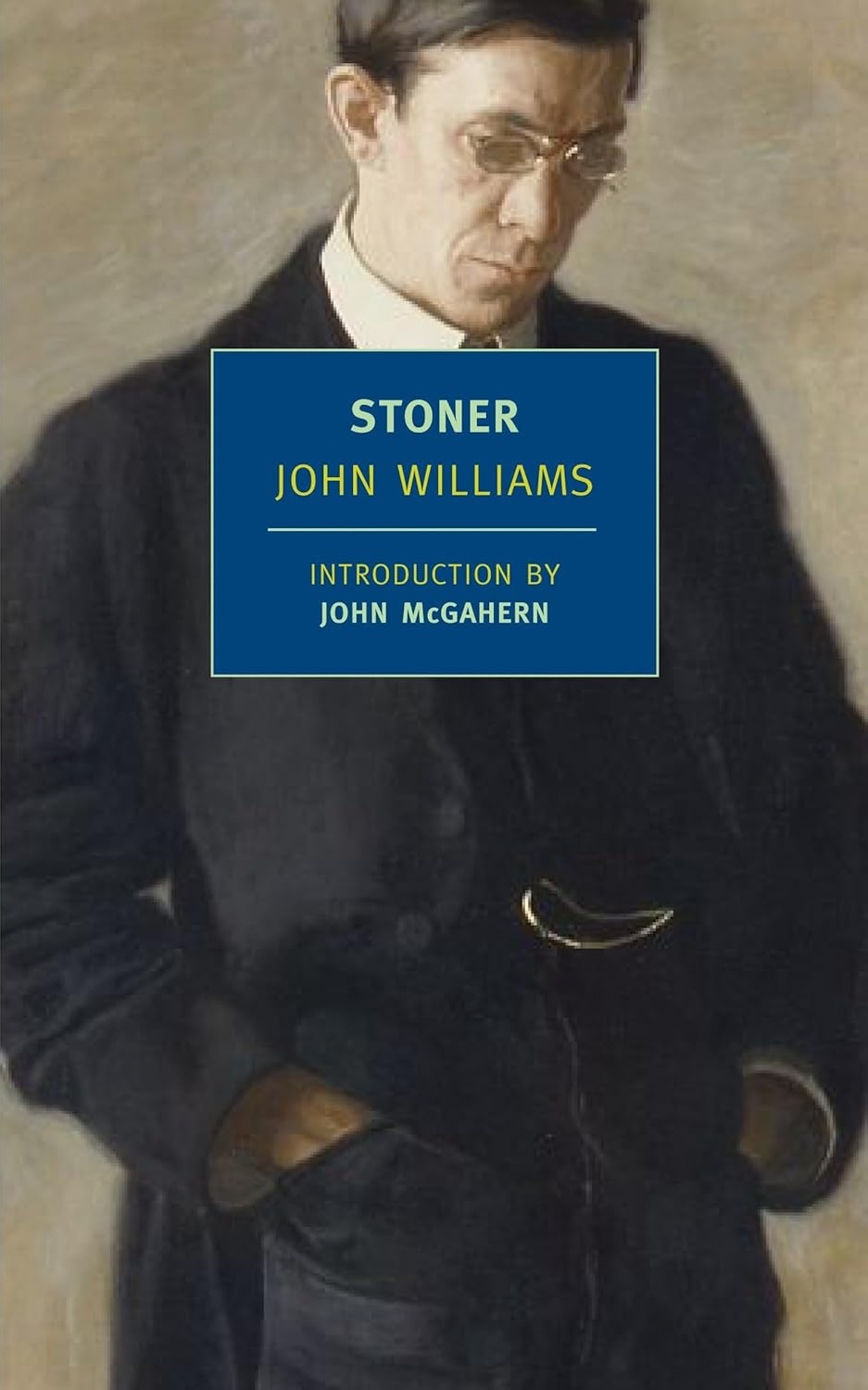
John Williams’ 1965 novel Stoner probably would not have been on my reading radar without booktube. It seemed as though many young readers (people in their 20s and 30s – and yes, those are young people to me now) were reading it and talking about it and so I added it to my physical tbr pile, figuring that I would get to it eventually.

Back in November when my friend (and former student) Luke and his wife, Lauren, were making their plans to come home for a visit over the holidays, they suggested a book club of three. Whenever we see each other, we always spend a lot of time talking about books and so this seemed like a good idea. I perused my shelves and suggested five titles, Stoner among them, and so that is where we landed.

Stoner is the story of William Stoner, son of impoverished Missouri farmers, who goes off to college ostensibly to take an agriculture degree, but who ends up taking a different path altogether. When the professor, Sloan, reads a sonnet and says “Mr. Shakespeare speaks to you across three hundred years, Mr. Stoner; do you hear him?”, Stoner falls in love. I also fell in love… with this book.

The novel follows Stoner through his undergraduate degree, his post graduate work, his early marriage to Edith, academic politics, the birth of his daughter, his affair. Williams doesn’t spend an inordinate amount of time at any of these road stops in Stoner’s life and yet somehow we come to know him very well.

Anybody who loves literature would find touchstones in this book and, indeed, in Stoner’s own life.

Sometimes, immersed in his books, there would come to him an awareness of all that he did not know, of all that he had not read; and the serenity for which he labored was shattered as he realized the little time he had in life to read so much, to learn what he had to know.

Luke, Lauren, and I could all relate to the feeling of anxiety at how little we will actually be able to read over the course of our lives, and Williams managed to capture that exact feeling. I think Luke and Lauren read far more deeply that I ever did at their age. (Luke is enrolled in a PhD of Philosophy and is currently reading Proust; Lauren is a research scientist at Harvard, about to start her own PhD. You might wonder what they are doing giving up precious family time to hang out with me; I wonder the same thing myself. :-)) Even if I have read upwards of 2000 books over the course of my life, lots of them were crap.

I also had another point of intersection with Stoner, and that was his feelings about teaching.

Always, from the time he had fumbled through his first classes of freshman English, he had been aware of the gulf that lay between what he felt for his subject and what he delivered in the classroom.

Sometimes Stoner feels like he is doing a great job and sometimes he feels like everything he does is crap and that is a feeling I have experienced over the course of my career. Of course, he is teaching at university and I am a high school teacher, so there’s that.

We had quite a lively discussion about Edith’s role in Stoner’s life, too. Lauren was a lot more sympathetic about her; Luke and I hated her. She never seemed like the right person for Stoner, and she did a lot of damage to his relationship with his daughter. It was hard to see anything positive about her at all. Did she redeem herself at all in the end? Not in my opinion.

Stoner is a book that gets you thinking about so many things, ‘what makes a life?’ chief among them. In the end, all three of us agreed that it was a fantastic book and a made for a great first book club of three discussion.

Highly recommended.

If He Had Been With Me – Laura Nowlin

Several of the female students in my Young Adult Lit class have read and raved about Laura Nowlin’s debut novel If He Had Been With Me. They all told me that they bawled their eyes out and I do love a good tear-jerker, so I decided to give it a go.

Autumn and Finny have been best friends forever. Partly it has to do with the fact that their mothers are best friends, practically sisters. (In fact, the kids call each other’s mother aunt.) Partly it has to do with proximity; they live next door to each other.

Then, at the end of middle school the two, for reasons that are not really clear – but probably make sense to 12 years olds – the two stop speaking. In high school, Finny morphs into the most popular and beautiful guy in school and Autumn, ousted by the cheerleaders, finds herself sitting on the steps to nowhere with a group of outliers, one of whom, Jamie, ” a dark-haired Adonis, a Gothic prince” becomes her boyfriend.

The novel follows this cast of characters for all four years of high school, which seems like a bit much since they don’t really do anything. Jamie tries to convince Autumn to do the deed, but she puts him off. Her parents’ marriage falls apart. She and her mom continue to spend time with Finny and his mom even though it is AWKWARD. Finny starts dating Sylvie, a super popular girl. It’s all pretty melodramatic – kind of just like high school is.

We know from the very beginning that there is some sort of catastrophic accident and so we are hurtling (well, not really hurtling because this book is L-O-N-G) towards this event. I guess I can see how teenagers would find this story and this relationship between Finny and Autumn romantic and heart-breaking.

Sadly, it didn’t work for me. The book needed a really good editor, someone to tell Nowlin to strip away all the repetition. The main characters are tropey to the max: the manic pixie dream girl and the hot soccer star who shouldn’t love each other, but do love each other, but despite the fact that they have known each other their whole lives, can’t find the words to have a meaningful conversation. I didn’t particularly like Autumn, if I am being honest. Finny was a non-entity. Other characters were interchangeable and one-dimensional.

Apparently there’s a sequel where we see this whole story play out from other points of view. Why?

No tears were shed.

Razorblade Tears – S.A. Cosby

Razorblade Tears is my second book by S.A. Cosby (All the Sinners Bleed). It’s a straightforward revenge thriller that grabs you by the throat immediately and shakes the living daylights out of you until the end.

Ike Randolph and Buddy Lee Jenkins have very little in common with each other except for the fact that Ike’s son, Isiah, fell in love with Buddy Lee’s son, Derek. Neither man had a solid relationship with their son for reasons that are more complicated than their sexual orientation. Ike spent several years in prison when Isiah was younger. Buddy Lee also spent time in prison. Ike has been out for a few years now, and has built a successful lawncare business; Buddy Lee lives in a rundown trailer and drinks too much. Ike is Black and married to his high school sweetheart; Buddy Lee is white and divorced.

Then their sons are murdered. And when it doesn’t look like the police intend to solve the crime, Ike and Buddy Lee join forces to find out what happened to them and make it right. And by make it right, I mean cause bodily harm to anyone involved.

It is often the case, and certainly true for Ike and Buddy Lee, that we only realize how much we love someone when they are gone. I mean, sure, these fathers loved their sons, but they also couldn’t abide the fact of their homosexuality. Their deaths stir up all sorts of unresolved feelings and also calls into question the validity of those feelings. Buddy Lee gets there a little quicker than Ike:

Derek was different. Whatever rot that lived in the roots of the Jenkins family tree had bypassed Derek. His son was so full of positive potential it had made him glow like a shooting star from the day he was born. He had accomplished more in his twenty-seven years than most of the entire Jenkins bloodline had in a generation.

Once the men start to ask questions about their sons, they find themselves in the crosshairs of a gang of bikers, and someone powerful further up the food chain. Ike and Buddy Lee are not without skills and they find themselves in some truly terrifying situations. Their partnership grows from wary colleagues to something like friendship as they take a wrecking ball to the mystery surrounding their sons’ deaths.

Razorblade Tears is violent, funny, heartfelt and a total page turner. It asks a lot of questions, not the least of which is what happens to a person who is not allowed to be their authentic selves. You will be rooting for these middle-aged men from start to finish.

The Safest Lies – Megan Miranda

Seventeen-year-old Kelsey and her mother live in a fortress of a house; it even has a safe room in the basement. Kelsey has always felt safe there and, in fact, “The black iron gates used to be [her] favorite thing about the house.” She acknowledges that her life isn’t like the lives of her classmates. For starters, her mother hasn’t left the house in 17 years. For another, she has to meet with Jan.

Seeing Jan was part of my mother’s deal to keep me. Jan was assigned by the state. I’ve come to rely on her, but I also don’t totally trust her, because she reports to someone else, who decides my fate. My mother relies on her even more, and trusts her even less.

Although previously homeschooled, Kelsey now attends high school and on her way home one day she has a car accident. Ryan, classmate and local volunteer firefighter, is first on the scene and “saves” her from certain death. His heroism lands the pair in the paper and that’s when Kelsey’s life starts to unravel.

She does something she shouldn’t and sneaks out of the house one night to see Ryan receive a medal for saving her life. When she returns home, she discovers the gate at the front unlocked, and when she makes her way inside, her mother is missing. It’s a big deal because, remember, mom hasn’t been outside in 17 years.

Megan Miranda’s YA thriller The Safest Lies is pretty much what you’d expect from a book of this type. A plucky heroine, a solid love interest, a couple red herrings, a mystery and enough action to propel the plot forward. I was pretty invested when there seemed to be stakes (who are the shadowy figures lurking around and I guess that safe room will come in handy after all, eh?) It doesn’t necessarily wrap up as satisfactorily or as believably as I might have hoped, but as a seasoned thriller reader, that’s to be expected.

Teens probably won’t be able to turn the pages fast enough.