The Rosie Project – Graeme Simsion

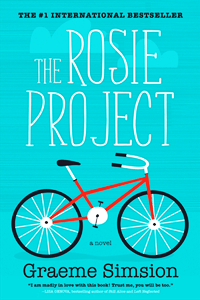
rosieIt’s easy to see why Graeme Simsion’s debut novel The Rosie Project was such a huge hit with readers all over the world. It’s one of those books with easy to like characters, a straightforward story and just enough quirk to make it stand out from the pack.

Don Tillman is a scientist in the Genetics department at an unnamed university in Melbourne, Australia. It’s clear from the book’s opening pages that while Don clearly has a super-sized brain, he also has some issues which have prevented him, thus far, from finding a suitable partner. Thus, the Wife Project.

Don’s two friends Gene and Claudia try to help with Don’s project, but Don felt their assistance was lacking. Their approach “was based on the traditional dating paradigm, which I had previously abandoned on the basis that the probability of success did not justify the effort and negative experiences.”  He eventually writes a sixteen-page questionnaire that he hopes will sort the wheat from the chaff.

Don describes everyone he meets by telling us their Body Mass Index and by the time he tells us that he is “thirty-nine years old, tall, fit and intelligent, with a relatively high status and above-average income” and that he should be “attractive to a wide variety of women. In the animal kingdom, I would succeed in reproducing” we know for sure that Don is somewhere on the Autism spectrum.

According to Autism Canada

Autism Spectrum Disorder (ASD) is a complex neurobiological condition that can affect the normal function of the gastrointestinal, immune, hepatic, endocrine and nervous systems. It impacts normal brain development leaving most individuals with communication problems, difficulty with typical social interactions and a tendency to repeat specific patterns of behaviour. There is also a markedly restricted repertoire of activity and interests. Individuals on the autism spectrum tend to have varying degrees and combinations of symptoms

All things considered, Don does pretty well in the world. Where he struggles is with human interaction. So when Rosie blows into his life, ostensibly looking for someone to help her discover the identity of her biological father, Don’s ordered world is thrown completely off-kilter. That’s when the fun really starts.

There are several laugh-out-loud moments in The Rosie Project, and it is fun to watch socially challenged Don and prickly Rosie work their way towards each other. It’ll make a great movie.
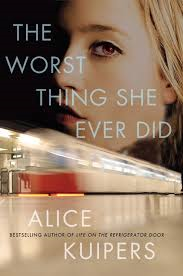
 

The Worst Thing She Ever Did – Alice Kuipers

worstthing Sophie releases the details of the worst thing she ever did through journal entries and this turns out to be a blessing and a curse in Alice Kuiper’s second YA novel, The Worst Thing She Ever Did. It’s a blessing because we get to hear Sophie’s authentic teenage voice and a curse for the same reason. Teenagers are, by definition, insular and of course no where is this made more apparent than in the pages of a teenager’s diary.

Sophie is keeping this journal at the request of her therapist, Lynda, who tells her that “Writing in here will help you remember.” Sophie doesn’t want to remember, though, and The Worst Thing She Ever Did  takes its own sweet time revealing what it is Sophie is so desperately trying to forget. I’m not suggesting that Sophie’s tragedy is not worth the effort, just that Sophie often teeters on the edge of coming across more like a petulant child than the survivor of a horrific act of violence.

But maybe that is part of what would make this story so compelling to young adults. I think they will recognize themselves in the pages of Kuiper’s novel. Here is a girl who is living her life. Her sister, Emily, is home from art school and Sophie doesn’t varnish their sibling relationship. Sometimes Emily really pisses her off. Sometimes Sophie feels like Emily is the favourite child. Mostly though, Sophie misses her older sister and it is clear that something horrible and unspeakable has happened.

Sophie’s mother is coping with the loss as badly as Sophie is, but the two of them don’t talk about it. In fact, sometimes they “circled each other like cats.” Sophie pretends not to hear her mother crying. There is no joy in the house they share.

There’s no joy for Sophie at school, either. Everything is different. “Everything going on around me – the others, the noise, the ring of the bell to get to class – was so loud it gave me a headache.” Sophie’s best friend, Abigail, has moved on.  Sophie tries to navigate the aftermath of the tragedy (which is only alluded to until almost the end of the novel) and work her way through being a teenager with varying degrees of success. There’s school to contend with and fractured friendships and boys – one boy in particular – and her mother. All of these elements would have been enough for a YA novel and a half, but Kuipers ups the ante here.

If some of the reconciliations seem a tad trite at the novel’s end (I wasn’t really fussy about the subplot concerning Abigail), they don’t really detract from the story’s larger theme: healing takes time. Kuiper’s is a lovely writer and although my feelings about The Worst Thing She Ever Did are similar to my feelings about 40 Things I Want To Tell You, I still think Kuipers is worth checking out.


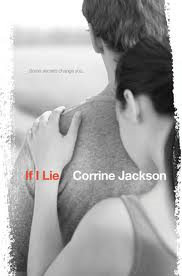
If I Lie – Corrine Jackson

ifilieQuinn, Carey and Blake, the teenagers at the centre of Corrine Jackson’s debut novel If I Lie, seem ill-equipped to deal with the troubles life throws at them. Childhood friends, things begin to unravel in their senior year when Carey and Quinn break up (briefly)  and Quinn discovers she has feelings for Blake. All of this is complicated by the fact that they live in a military town and Carey has enlisted. When the novel opens, the story has already been set in motion and Carey is MIA. Quinn has been shunned by everyone, including her Lieutenant Colonel father because while she and Blake were sharing a private moment under the bleachers, someone snapped a picture and posted it on Facebook. Even though no one knew who the guy was, everyone knew Quinn was the girl.

If it seems complicated – it is. But, then, isn’t high school a complicated time? A time where you often like people who don’t like you back. A time where all your feelings sit like little bombs around your heart, ready to go off any second. A time where friendships splinter over silly things. A time of secrets. And Quinn is carrying around a big secret – one she promised she wouldn’t tell and although it makes her a target she sticks to her word.

If I Lie has a lot going for it – perhaps a little too much. Not only do we have what is happening between Carey, Quinn and Blake – but we also have Quinn’s complicated relationship with her father. Her mother left when Quinn was eleven. Well, she more than left actually; she ran off with her father’s brother – never to be heard from again. Until she shows up. There’s also Quinn’s relationship with George, a veteran she has been charged by her father to help; a punishment that turns out to benefit Quinn in ways too numerous to mention. Really, I think, Jackson was offering up a little lesson about war veterans here and I don’t mean to imply that it’s not a lesson worth learning. It just seemed one more element in an already overstuffed story.

Quinn’s voice is compelling, though. And I liked how the novel navigated her feelings for all the people in her life, without offering up any trite answers. Because if there’s one thing you learn in high school it’s that you don’t have all the answers and that relationships are complicated and the people you care about are worth fighting for.

Saturday Sum Up – May 3

I know, I know – I haven’t summed on a Saturday in ages. It’s been busy!

I am fascinated with zines and am playing with the idea of having my students make one as part of our study of Romeo and Juliet. I found a terrific link for How to Make a Zine and the simple instructions allowed me to build a zine in about two minutes  without the need for glue or staples or anything! IMG_0400

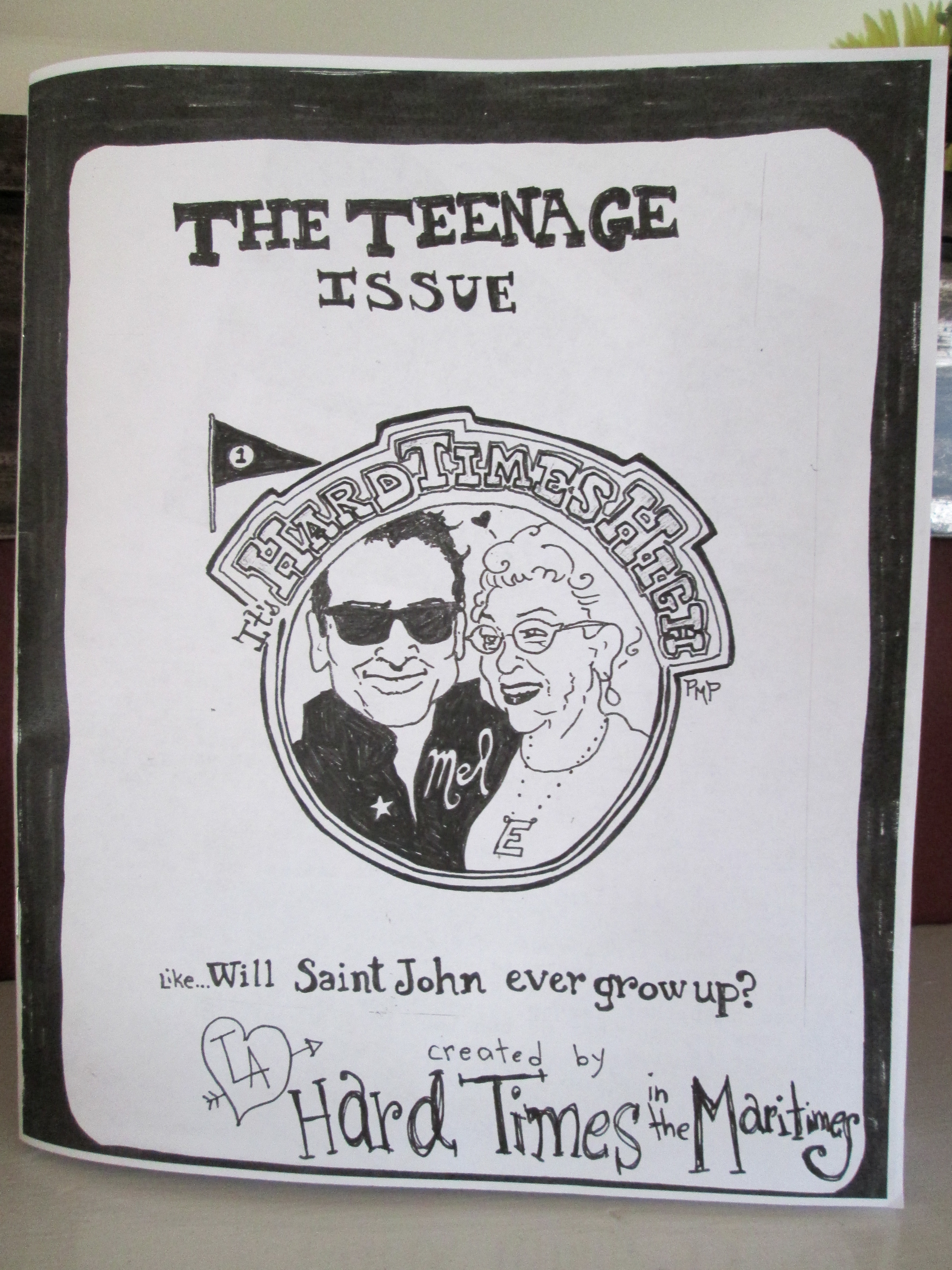
By a strange coincidence, my 14-year-old son was invited to an event last night hosted by a zine produced here in Saint John, Hard Times in the Maritimes. He had a ball and came home with a copy of the zine, which will be an excellent example to show my students.

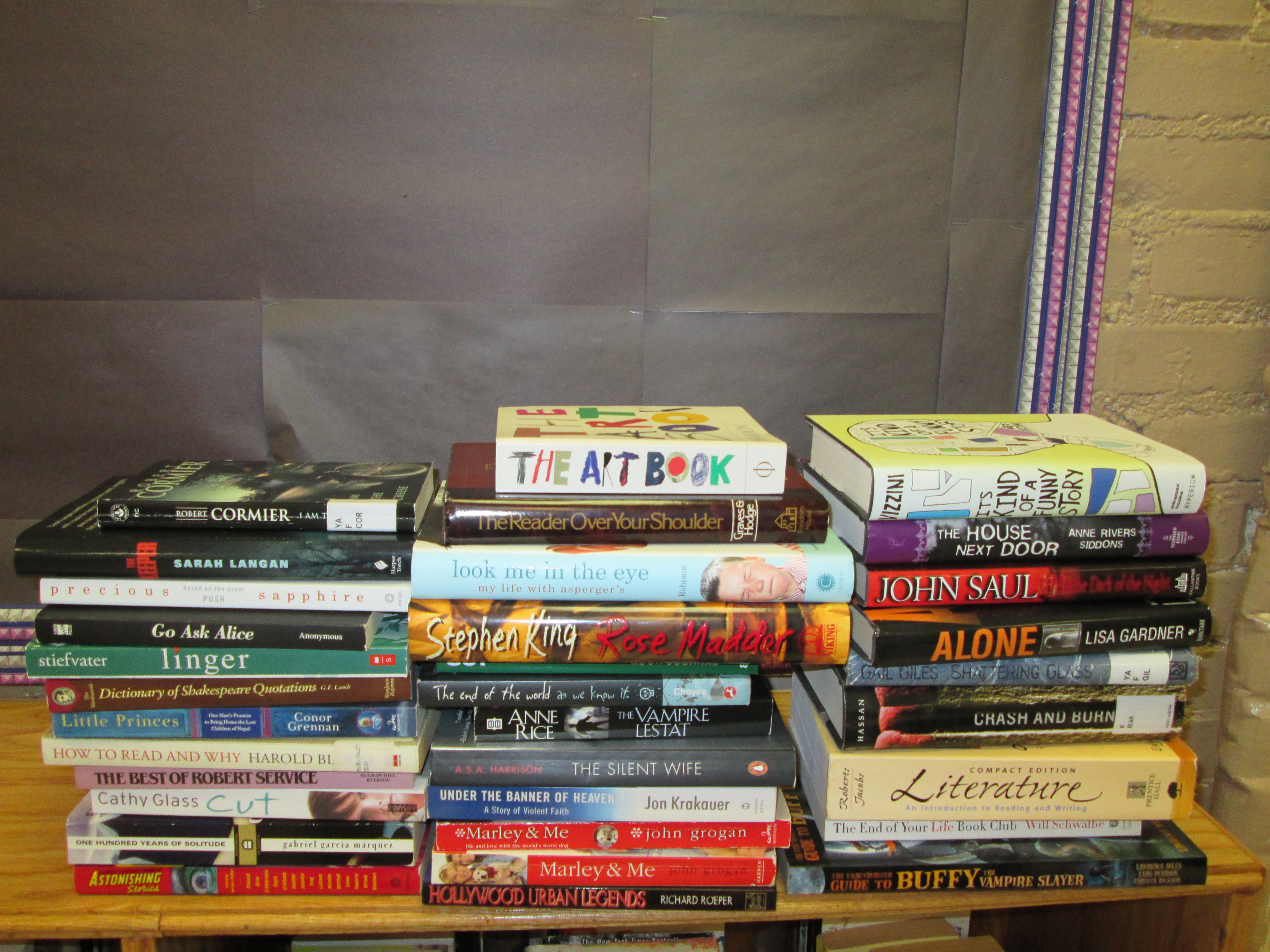
Today is the second and last day of the library’s annual book sale, an event which I love. I didn’t find quite as many treasures as I usually do – oh who am I kidding. I lugged home three big bags full of books including some which were actually on my tbr list. I also nabbed a couple dozen new books for my classroom library. If you live here in Saint John, check it out today at Market Square until 3pm. Here’s my haul – well part of my haul because I was there first thing yesterday morning and then went back with my son after school. All those books cost me just $27.IMG_0397

This is hilarious: the Ottawa public library was asked to remove Dr. Seuss’s book Hop on Pop from its shelves because it apparently condones, promotes even, violence against fathers. What other strange requests for censorship has the library had? Read about them here.

Speaking of censorship, F. Scott Fitzgerald’s stories are being published without censorship for the first time.


Breathless – Jessica Warman

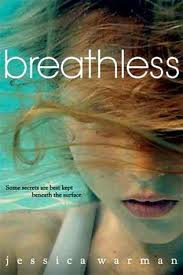
breathlessA few months back I read Jessica Warman’s novel, Between, and although I didn’t love it straight off it definitely grew on me. A student in my writing class saw Breathless on my bookshelf and told me that I had to read it next. All I can say is that I kept reading for her because there’s really nothing to recommend this book.
Breathless was written when Warman herself was just out of high school and sadly, that’s how it reads. The novel is apparently semi-autobiographical and tells the story of Katie Kitrell, a fifteen-year-old championship swimmer with an alcoholic mother, workaholic father and psychopathic older brother.  When her brother, Will, goes off the deep end again, Katie’s parents make the decision to send her off to boarding school. Breathless ends up cramming every possible teenage trope into its 331 pages: friendship, drinking, religion, sex, drugs, wealth, first love, jealousy, mean girls and damaged girls etc etc.

The characterization is all over the place, too. At the beginning of the novel Katie seems to almost idolize her brother. They spend hours on the roof of their house smoking and talking, but Katie can always sense “his emotional axis shifting a little, off-kilter. It’s something I’ve come to call privately the kaleidoscope pf crazy- shimmering and beautiful in certain lights, paisley and horrifying in others.”

Her parents seem unable to cope. Her father, a doctor, just works more and her mother paints and drinks. In no way is Katie’s family functional.

Once she goes off to school the focus shifts away from her family and we are forced to endure 1) the bitchy pretty girl with whom everyone wants to be friends and her 2) nice but kowtowing friend and 3) Katie’s MIA roommate who suddenly shows up but barely says a word and 4) the most perfect boy in the world who just happens to fall in love with Katie.

Nothing happens, though. This is a coming-of-age story and there are some lovely moments here (it’s clear that Warman has talent) but Breathless  is in desperate need of an editor. It’s biceps not bicep and the glaring error in this sentence almost made me shut the book for good “…all of our hands, white gloves pulled taught  and flawless over out fingers-” Who is editing books these days anyway?

Warman clearly had a story to tell and even at a young age, she had the ability to tell it, but the novel’s uneven characterization and bloodless plot made this a miss for me.

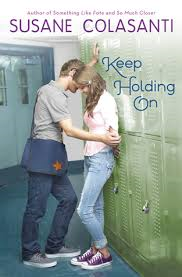
Keep Holding On – Susane Colasanti

keepholdingonNoelle, the narrator of Susane Colasant’s YA novel Keep Holding On,  is just trying to make it through high school so that she can get the hell out of Dodge. (Dodge isn’t actually the name of the town where she lives; Noelle actually calls it “Middle of Nowhere, USA.” ) Every day Noelle wishes she could “be transported to another school in an alternate universe where required learning doesn’t have to involve this traumatic test of survival skills.” Noelle doesn’t stand out, not really, but nevertheless she’s an outsider. Mostly she’s a target because she’s poor; her lunch and clothes are often cause for ridicule. There’s also some stuff following her from her middle school days – a misunderstanding that was blown out of proportion and hangs over her like a dark cloud. The biggest problem in Noelle’s life, besides the jerks at her school who make her life miserable, is her mother.

This one time last year, she came home really late and woke me up when she slammed the front door. Then she whipped my door open. I could see her glaring at me, the light from the hall illuminating the hate in her eyes. She didn’t say anything. She just slammed my door.

Noelle’s mom isn’t abusive per se, but she is neglectful. Noelle can’t remember a time when her mother really looked at her, but it’s certainly been since her stepfather, her mom’s second husband, died of cancer. This was clearly a traumatic event for mother and daughter and yet it’s hard to feel any empathy for Noelle’s mom; she’s just awful.  “There are plenty of days,” Noelle observes,” when mother says less than ten words to me.” Noelle’s biological father isn’t in the picture at all. Then there’s Matt, the boy Noelle likes who seems to like her back at least enough to make out with her – although the fact that they make out is top-secret. Even though you can see the reason for Matt’s need for secrecy a mile away, it still a believable situation for Noelle. Keep Holding On treads familiar teen ground, but the book separates itself from the pack in part because Noelle is immensely sympathetic. She wants, more than anything, to fit in, but what she eventually figures out is that fitting in isn’t nearly as important as finding your own place to belong.

Good People – Ewart Hutton

goodpeopleD.S. Glyn Capaldi, the protagonist of Ewart Hutton’s debut Good People, is a Welsh cop who got into a bit of trouble in Cardiff and had been reassigned to a dinky town in the middle of nowhere, a place where the higher-ups figure he can’t get into any more touble.

The reader doesn’t get to learn very much about Capaldi. He’s divorced. He’s smart. He’s got good instincts, but isn’t really a team player and he’s very much an outsider in Carmarthen. Detective Chief Superintendent Galbraith describes him as ” someone who used to be a good cop,” which is why Galbraith has rescued him so he isn’t “wearing a rinky-dink security uniform and patrolling the booze aisle in some shanty-town supermarket.” Capaldi is getting another chance, but he’s on a short leash.

Which is why no one wants to give him the time of day when Capaldi is suspicious about Carmarthen’s latest crime. Six men coming home from a soccer game in England, disappear into the woods with a young girl. Their abandoned mini-bus is found on the side of the road, but hours later when the party is found, not everyone is accounted for.

Police who are familiar with the men believe their story – convoluted as it is – but Capaldi isn’t as convinced.

Good People is a relatively straightforward mystery that is fast-paced and intriguing. Capaldi certainly grows on you and the story is not your standard whodunit. Instead, Good People is about  the underbelly of a town that, on the surface at least, seems quaint and shiny and  our capacity for deception.

12 Years A Slave – Solomon Northrup

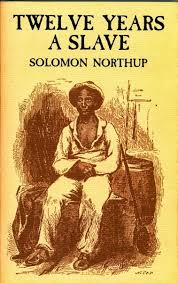
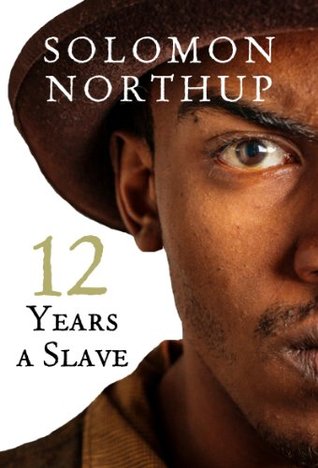
12 years I can’t say that I was thrilled when 12 Years a Slave, Solomon Northrup’s true-life account of slavery, was chosen for book club. I haven’t seen the much-lauded film because I’ve heard it’s quite violent and my tolerance for violence seems to be on the decline these days and I didn’t really have any desire to read this book either. I understand its importance but, truthfully, this isn’t a book that I’d ever pick up.

“Having been born a free man,” Northrup writes, and having “been kidnapped and sold into slavery, where I remained, until happily rescued in the month of January, 1853, after a bondage of twelve years – it has been suggested that an account of my life and fortunes would not be uninteresting to the public.”

Northrup intends to offer up “a candid and truthful statement of the facts: to repeat the story of my life, without exaggeration, leaving it for others to determine, whether even the pages of fiction present a picture of more cruel wrong or severer bondage.”

And factual it is — which I think might be part of the problem.

My first and most powerful experience with the subject of slavery came in 1977. I was in high school and there was a television event known as Roots. This mini-series was really must watch television and it had a profound impact on me. The story, based on the life of author Alex Haley’s grandmother, was shocking and horrific to me — a middle-class white girl from Eastern Canada. My experience with people of African-American descent was really limited; I could count the number of Black kids at my school on one hand. I distinctly remember watching Roots and being ashamed of the colour of my skin. I still remember the characters Kunta Kinte and Chicken George. Such is the power of fiction.

Northrup is married with three small children when he is duped by a couple of white men and taken from his life in New York to a plantation in Louisiana.  His account of the  journey and his time spent as a slave is  — I don’t know — instructive. Once in New Orleans he is purchased by a relatively kind man, William Ford. Northrup describes him as “kind, noble, candid, Christian.”

The influences and associations that had always surrounded him, blinded him to the inherent wrong at the bottom of the system of slavery. He never doubted the moral right of one man holding another in subjection. Looking through the same medium with his fathers before him, he saw things in the same light. Brought up under other circumstances and other influences, his notions would undoubtedly have been different. Nevertheless, he was a model master…

Unfortunately, he is sold again to a less charitable master, Mr. Epps, a man whose manners are “repulsive and coarse.” When drinking, Epps’ chief delight was “dancing with his “niggers,” or lashing them about the yard with his long whip, just for the pleasure of hearing them screech and scream.” It is with Epps that Northrup spends the bulk of his incarceration. 12 years_a

Perhaps modern readers have been spoiled by today’s memoirs, which often read like fiction. Northrup’s motivation for writing this book was, I believe, to instruct — and while I understand the merits of his tale, I felt it was missing a key ingredient: character. Yes, Northrup was clearly a good, intelligent, brave man, but there was something distancing about the very formal language of this tale. I think in his effort to report the facts, the story loses some of its impact. For example, when Eliza (someone else who has been kidnapped) is separated from her young children Northrup remarks “never have I seen such an exhibition of intense, unmeasured, and unbounded grief.” Imagine how that scene might have played out in fiction.

I am not sorry that I read Northrup’s story, but is it great literature? Is it a book I would press into the hands of my friends and say “you’ve got to read this.” No.


Friends with Boys – Faith Erin Hicks

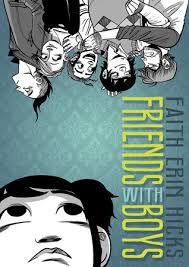
friends I didn’t know that the author and illustrator of the graphic novel Friends with Boys, Faith Erin Hicks, was  from Halifax until I finished the book. I am not going to let the fact that we are practically neighbours (well, by Canadian standards we actually are!) influence my thoughts about Friends with Boys.

…which overall I liked (although I am by no means an authority on graphic novels and have really only started to read them in any number since I started building my classroom library.) I did feel the novel missed some great opportunities and had some structural problems – but, yeah, liked it.

So, Maggie is starting grade nine. This is a pretty big deal because she has been homeschooled her whole life. She’s super nervous about it. When her dad asks how she’s feeling she says  “It’s only my first day of high school. Nothing to be nervous about. I’m not nervous. I’m not.”

Maggie’s three older brothers, twins Lloyd and Zander and Daniel have already made the transition to high school and as Daniel admits to Maggie, he likes being at school better than learning at home. Of course he’s been there a few years, and is well-known and liked.

School isn’t the only thing complicating Maggie’s life – her mother has left home. Her father says “It’s exactly seventeen years since your mom started homeschooling you lot,” to which her brother Zander replies “Yeah and to celebrate she took off.” There is all sorts of unspoken angst in this situation, which is never satisfactorily dealt with.

And she has a ghost. An actual ghost that she met when she was a kid and whom occasionally follows her around. We never quite find out what the deal is there, either.

Then there’s Lucy and Alistair, the brother and sister who befriend Maggie.  At least we learn why Alistair is a social piranha.

That’s a lot of stuff on the plate of a fourteen-year-old and any of it would could have made a rich and compelling story on its own. I was intrigued by the ghost, loved Maggie’s older siblings and wondered what had happened to the mom. Ultimately, though, I felt like Hicks only scratched the surface of all these stories.


Saturday Sum Up

Here’s what I found bookish & interesting around the Internet this week:

Anyonw who loves books already knows the truth of the matter:
Bookworms Do It Better

I am a long time Stephen King fan, but maybe you have to be of a certain age to really understand how Mr. King changed the horror landscape. In the 1970s, he was pumping out books a mile a minute – and I read them as fast as he wrote them. I don’t know what it is about horror and teenagers – they’re sort of a match made in creepy-heaven. I evenually stopped reading King, though, and hadn’t read anything by him in yeras until a few weeks ago when I read Joyland, which I loved. I’d forgotten how masterful King is at evoking a forgotten time and place. If you are just getting started with King’s massive catalogue, here’s a list of eleven books you should start with. I haven’t read eveything on this list – but I’ve read the vast majority. These are mostly old-school titles and all of them are terrific.

Essential Stephen King

Here’s something worth considering: is owning books as good as reading them? I was happy to read about someone who has even more books than I do on my TBR shelf! I’d love to hear about your TBS shelf? Do you buy more books than you’ll ever read? I have to admit – I don’t feel even remotely guilty about it.

Feel like taking a quiz? (I am not even going to tell you how badly I did on this one.)

Literary Beginnings.

Enjoy your day.