Yrsa Sigurðardóttir is a big deal in Iceland and I Remember You is the winner of the Icelandic Crime Fiction Award. It sounded like a book that I would really enjoy and I am always game to try new-to-me authors. The thing that I keep forgetting is that nine times out of ten translations are often disappointing, and this was no exception.
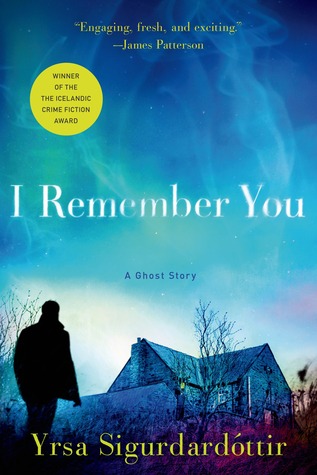
I Remember You is two stories, really. In one, three friends Garðar, his wife Katrín and their widowed friend, Líf, have decided to travel to Hesteyri, a deserted village “way up north in the middle of nowhere.” The reason for this journey? It’s really Líf’s dead husband Einar’s fault.
He had spun them the story of a village at the end of the world, beauty and peace, and endless hiking trails in an unforgettable setting. Garðar had been inspired – not by the lure of nature, but by the fact that Einar hadn’t been able to rent a room in Hesteyri, since the only guesthouse there had been full. Katrín couldn’t remember which of them had gone on to suggest they see if any of the other houses there were for sale and transform one into a guesthouse, but it didn’t matter: once the idea had been mooted there was no going back.
So, these three crazy kids head out to this remote place, in the winter, to begin refurbishing the house that is without electricity, running water, heat and, oh, yeah, there’s no one else around for miles. The captain of the boat who takes them to Hesteyri tells them they can return with him, free of charge, but they’re keen on this adventure. Lord knows why.
In the parallel story, Freyr, a psychiatrist, is helping Dagný, a police detective, discover who had broken into a primary school and caused a lot of damage. Freyr still isn’t over the loss of his son, Benni, who disappeared three years ago. His marriage is done, and he has thrown himself into his work. At first it appears that Freyr’s story has nothing to do with what’s happening on Hesteyri, but the more digging Freyr does the more coincidences start to reveal themselves.
I wish I could tell you that all of this is super creepy, but it’s not. It takes f-o-r-e-v-e-r to get anywhere until the very end, when things seem to unravel super quickly. And, of course, the dialogue – especially near the end – is as clunky as hell. I understand this is a translation, but I always think it would be better to have someone go over dialogue after the translation is done to try and make people sound more natural. Given the circumstances these people find themselves in, you’d think they’d spend less time explaining and more time reacting.
There were a couple of creepy moments, but overall, it was a lot of fuss and bother for nothing.



 It’s hard to wrap my head around gun violence as it exists in the U.S. My dad had a couple hunting rifles when I was a kid, but I don’t recall ever seeing them. No one I know has a gun in their bedside drawer…just in case. When I wrote a review for
 Leila Slimani’s novel The Perfect Nanny was one of The New York Times
 nature of grief. This is a quiet novel, and so I would caution readers not to expect histrionics or very much action. Instead, LaCour focuses on the protagonist’s interior life, which has been altered by loss.
 never read Margaret Atwood’s novel The Handmaid’s Tale. I haven’t watched the series, either. I know, I know. I figured that I could rectify that by reading Renee Nault’s stunning graphic novel of Atwood’s book.

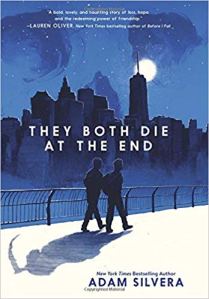 In a not-too-distant future universe- or I don’t know, maybe it’s way in the distance – Mateo Torrez gets the call everyone dreads:
 difficult than I remember my adolescence. There was no social media back then. We hung out, gathering at someone’s house on Friday night to play Trivial Pursuits and drink Pop Shoppe soda. We had dances where you’d just pray not to be asked to slow dance with some geeky guy, especially for the last dance, which was always “Stairway to Heaven” – longest song on the planet. My locker was covered with pictures of Robby Benson. The drama happened in the girls’ bathroom and the bullying happened in person. We talked for hours on the phone…which was in the kitchen, so your end of the conversation could be heard by pesky brothers and eavesdropping moms.