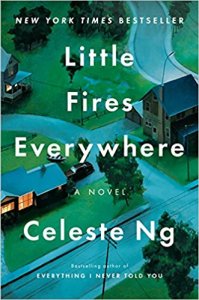
 “Sometimes you need to scorch everything to the ground and start over,” Mia tells Izzy in Celeste Ng’s second novel Little Fires Everywhere. I read Ng’s first novel Everything I Never Told You a couple years ago and I love that book. So much. Little Fires Everywhere is also excellent. There is no doubt that I will buy and read whatever Ng writes going forward.
Shaker Heights, Ohio is America’s first planned community with rules determining what colour your house can be painted and where schools are placed so that children don’t have to cross any major streets.
The underlying philosophy being that everything could – and should – be planned out, and that by doing so you could avoid the unseemly, the unpleasant, and the disastrous.
Elena Richardson believes in the defining principles of Shaker Heights and, in fact, that’s the way she runs her household and her life. Her three oldest children Lexie, Trip, Moody seem to tow the family line. Her youngest, Izzy, is more of a problem child and when the novel opens “Everyone was talking about […] how Isabelle, the last of the Richardson children, had finally gone around the bend and burned the house down.”
What would compel Izzy to commit such an act? Meet Mia and Pearl. They’ve just moved into the Richardson’s rental property. Mia is an artist and Pearl her intelligent fifteen-year-old-daughter. When Pearl and Moody become friends, the two families’ lives intersect. In the Richardsons, Pearl sees “a state of domestic perfection” and in Mia Izzy has someone who understands her and listens to her.
Little Fires Everywhere is a book about motherhood and it asks important questions about what it means to be a mother. Are you a mother because you’ve given birth? Is it a choice? Is a relationship between a mother and their child automatic or is it something that must be cultivated beyond mere biology? What happens if you give up a child? Do you have the right to change your mind?
Free-spirited Mia worries that her daughter is perhaps being unduly influenced by the Richardsons and wonders “if it was right for her daughter to fall under the spell of a family so entirely.” She and Pearl have always been vagabonds, moving from place to place in search of inspiration for Mia’s photography. Now she has promised Pearl that they will stay put.
In Mia, Izzy finds a sort of surrogate mother, someone who listens to her complaints about the state of her world and asks her what she intends to do about it. “Until now her life had been one of mute, futile fury” but Mia encourages her to consider her options.
This is a book that is very female-centric. We don’t spend a lot of time with the men, but that’s okay, the women are fascinating. Their hopes and dreams, some derailed by circumstance, others by choice, are worthy of close inspection. I loved my time in Shaker Heights. Little Fires Everywhere is filled with stymied, passionate, damaged, beautiful and complicated characters, and like Everything I Never Told You there is something about the way Ng tells a story that just keeps you turning the pages to get to the end. Then, you want to start all over to spend more time with her magnificent characters.
Highly recommended (and not just by me. The accolades are endless.)
 decided to have a detoxifying sauna. After only eight minutes, she recalls in Design Your Next Chapter, she was “deathly bored with my own company.” In an effort to distract herself, she started reading a paperback someone had left behind. It was about finding personal happiness.
 You, by new-to-me author Joanna Briscoe, is the elliptical story of two families, the Bannans and the Dahls, whose lives first intersect in Dartmoor, England in the 1970s.
 ghosts. The ghosts haunting 1980s Niagara Falls (and man, did I love this novel’s setting – from the actual seedy city itself to the allusions to super specific Canadian touchstones like The Beachcombers) are personal.
 I am SO glad I am not in my 20s anymore. That’s the takeaway from Carola Lovering’s novel Tell Me Lies. This is the story of Lucy Albright and Stephen DeMarco, East coasters who are both on the West Coast attending Baird, a small college in Southern California.
 meaning that women are afforded the same privileges as men: personal, economic, social, and political equality. It’s hard to look at the state of the world and think that we’re actually there, though.
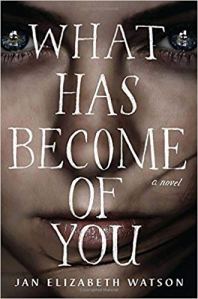 the protagonist of Jan Elizabeth’s compelling thriller What Has Become of You. She’s pushing forty and has just accepted a maternity leave position at a private school in Dorset, Maine. Although Vera is well educated – she earned her master’s degree at Princeton – she is also somewhat awkward, and although being at the front of a classroom doesn’t come naturally to her she has “come to appreciate certain aspects of teaching.”
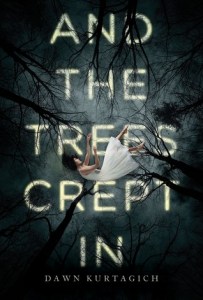 and afraid. They’ve run away from home and come to the only place they thought they might be safe. But La Baume is not safe.
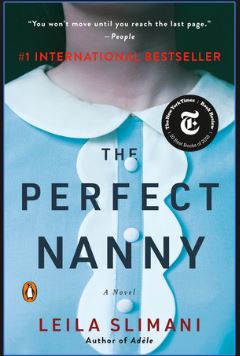 Leila Slimani’s novel The Perfect Nanny was one of The New York Times
 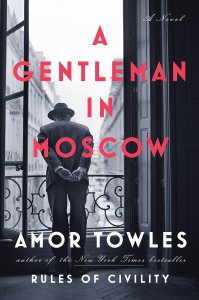 divided our group. It’s the long-winded story of Count Alexander Rostov, an aristocratic Russian in Moscow, who is sentenced to house arrest for writing the long poem Where Is It Now? which is deemed by the authorities as “a call to action”. The tribunal determines that Rostov has “succumbed irrevocably to the corruptions of his class – and now poses a threat to the very ideals he once espoused.”
 The Ludic Reader