The Only Story – Julian Barnes

I very much enjoyed Julian Barnes’ novella The Sense of an Ending when my book clubonly read it eight years ago. (Yikes!)  I can’t say that my experience with The Only Story  was quite as enjoyable; however, we had a fantastic chat about it at book club.
Would you rather love the more, and suffer the more; or love the less, and suffer the less? That is, I think, finally, the only real question.

It’s the 1960s. Paul is an only child and has a relatively distant relationship with his parents who are solidly middle-class.  Home from university, Paul is “visibly and unrepentantly bored.” His mother looks for a diversion for him and hopes Paul might find a “nice blonde Christine, or a sparky, black-ringleted Virginia” at the tennis club. Instead he meets Susan Macleod, a middle-aged, unhappily married mother of two daughters who are older than our protagonist. Paul recalls “Who would have thought it might begin there?” The whole novel is a rambling recollection of their affair and the way such relationships are framed by memory, which is a theme Barnes visited in The Sense of an Ending.

Barnes wants the reader to believe, perhaps because Paul does, that this relationship is one for the ages. “Most of us only have one story to tell,” Paul tells us. “This is mine.”

I didn’t really like anything about this book and it pains me to say it because on the surface it seems like this book would be 100% up my angsty alley. Instead, I had a hard time connecting with either of these rather dull characters, who fumble their way through sex, and living together, and life in general. In the beginning, Paul spends a lot of time at Susan’s house; sometimes his university friends stay over, too. Paul is so self-involved that he doesn’t understand why Susan’s husband, Gordon, doesn’t seem to like him. Um, you’re sleeping with his wife! Under his own roof! Not that Gordon is at all sympathetic and he and Susan haven’t done the deed pretty much since the birth of their daughters.

Once they move in together – into a little house Susan buys in London – she (I thought) out-of-the-blue becomes a raging alcoholic, and things between the lovers start to deteriorate.

At first, Paul tells their story in the first person, but as things between him and Susan start to fall apart, he switches to the second person and then, finally, the third person. I liked this because I know how I view things from my past: sometimes it feels as though they’ve happened to someone else.

But for a story about love, the ‘only’ story – this one just didn’t work for me. No question Barnes is a master craftsman, and others in book club really liked it, but I found it a bit of a slog.

The Winters – Lisa Gabriele

Last night I dreamt I went to Manderley again.

The opening line of Daphne du Maurier’s brilliant novel Rebecca will be instantly recognizable, likely even to readers who have never read it. In that book, the unnamed protagonist meets Maxim de Winter and embarks on a whirlwind courtship. They marry and he brings her home to Manderly, his estate on the Cornish coast. It is there that the narrator’s troubles begin because Manderley is haunted by Rebecca, Maxim’s first wife, who was (apparently) beloved by all. Rebecca is a riveting read.


Lisa Gabriele treads…tromps…through du Maurier’s landscape in her novel The Winters and although I am in the minority, I am sure, I feel as though this book suffers by any comparison to its source material. But you have to compare them because Gabriele’s story is “inspired” by du Maurier’s.

In The Winters the unnamed narrator is a dog’s body for a boating company in Grand Cayman, where’s she’s grown up with her parents who were “disillusioned Americans who chose to live and work on a small fishing trawler.” Now both her parents are gone, and she is still working for Laureen, the brash Australian who owns the charter boat company.

Our plucky narrator tells us that

My features are even, my body trim, hair, eyes and skin compatible with each other in ways that make sense. Even my character, self-sufficient and serious-minded, watchful and earnest, doesn’t draw attention to itself. Men do not clamour after me.

Enter Max Winter. He’s older. Handsome. Rich. And immediately smitten with the narrator. Cue whirlwind courtship and suddenly she’s being whisked off to Asherley, Max’s Long Island version of Manderley. Instead of Manderley’s menacing housekeeper Mrs. Danvers, there’s Dani, Max’s troubled fifteen-year-old daughter.

Even though the former Mrs. Winter has been dead for almost two years, the house is still full of reminders and our narrator has trouble finding her footing. Dani, when she finally returns from Paris, takes an immediate dislike to her, and the narrator doesn’t have any experience with teenagers anyway. Dani mostly holes up in her old mother’s turret bedroom, smoking weed and (seemingly) plotting ways to make the narrator’s life miserable.

My issues with The Winters don’t really have anything to do with the story. I mean, if you’ve never read Rebecca I think you’ll probably find the plot of this one engaging enough. I was frustrated reading this book, though. I think my main problem was with the characters themselves; I just didn’t believe them. I certainly didn’t believe the way they spoke to each other. There wasn’t any real chemistry between the narrator and Max and the denouement, when it arrived, had wayyyy too many contrivances.

It’s a beach book. It doesn’t ask anything of you, and I suspect many readers will find it diverting and entertaining. For my money, though, Rebecca is a much more satisfying read.


The Damned – Andrew Pyper

223C2A3B-A2C4-455F-AEFE-1A58DF3297B0Canadian writer Andrew Pyper is often compared to Stephen King and I can see why.  Both writers skillfully find the scary in the every day, and in relationships which should be sacrosanct. Pyper mined that territory in his novel The Guardians  and he does it again in The Damned which hooks you in pretty much from page one.

Danny Orchard has come back from the dead on more than one occasion. He wrote about the experience in a memoir called The After a book that, many years later, keeps him busy at “dentists’ conventions and service club fundraisers” where he talks about what’s at the end of the long tunnel. Danny’s experience has inspired a group known as The Afterlifers, “a community for those who’ve traveled to the other side and returned.”

When Danny was sixteen he and his fraternal twin, Ashleigh (Ash), were killed in a house fire. Well, Ash was killed; Danny was saved. If saved is what you want to call it. I guess Danny would have a different opinion about it since he’s been haunted by his sister ever since. Although on the surface, it looked like Danny and his family had it all

My father, mother, and I were aware that a monster lived with us, however photogenic, however scholarship-guaranteed. And because she was only a girl, because she was one of us by name, because we feared her, there was nothing we could do about it.

Ash is clearly a psychopath and death doesn’t change that, so Danny’s life is pretty solitary until he meets Willa and her ten-year-old son Eddie.  He believes that he can keep them safe, but Ash isn’t about to let go that easily and Danny soon realizes that he is going to have to face her on her terms. If heaven is reliving the best day of your life over and over, hell is quite the opposite.

Pyper has created a compelling and nightmarish hellscape and, in Danny, a character readers will actually want to root for. At first he thinks that Ash just wants him to solve the lingering questions about her death. (Why was she in that abandoned house and what happened to the three friends she was supposedly with that day?) But Ash’s motives are far more sinister and when Danny returns to Detroit looking for answers he finds far more than he bargained for.

The Damned would make a terrific movie, but I’ve got a great imagination and Pyper is a great writer. I could see everything just fine, thanks very much. If you don’t mind white-knuckling it through a book, this is the story for you.

Before We Met – Lucie Whitehouse

86364353-FF33-4875-B41D-4A13891EA2B3When Hannah’s husband, Mark, doesn’t arrive home from a business trip as planned, Hannah is sent down a rabbit hole of lies. Sounds like every other thriller, right? I can happily say that Lucie Whitehouse’s novel Before We Met is a cracking good read that had me turning the pages way past my bed time.

Mark and Hannah met in NYC where Hannah had been living and working for an advertising agency. Mark was there on business, but when the relationship headed into serious territory they made the decision to return to London, the home base for Mark’s successful IT company.

When Mark doesn’t get off his flight and doesn’t answer his phone, Hannah starts to panic, but not in the ridiculous way some heroines in thrillers do. Even though she and Mark have only been married for eight months, she knows him. The novel flashes back to their introduction, via friends, and their courtship. Hannah had really believed that she’d spend the rest of her life in New York, perhaps alone, but Mark changes all that. Now, although she’s unemployed, she’s married to a charming, wealthy and handsome man.

When Mark finally does contact Hannah, with a story that is so crazy it’s almost plausible, Hannah does believe him. Kind of, sort of. But something just doesn’t add up for her and she starts poking around. She wants to make sure that “he hadn’t hidden [anything] to conceal evidence of money spent on hotels and dinners and presents for someone else.”

What I appreciated about Before We Met is that it was full of twists and turns that kept me changing my mind about what was going on, and I love that. I hate it when you can see the plot twist coming from a mile away and when the characters behave in a way that just isn’t realistic.  Hannah is no dummy and she doesn’t take  crazy risks to figure out what in the heck is going on. I was right there with her every step of the way.

So, if you are looking for a well-written page turner with an intelligent, sympathetic main character and a plot that’ll keep you on your toes, I highly recommend Before We Met. It’s a perfect book to curl up with on a cold winter’s night.

A Brief Lunacy – Cynthia Thayer

Jessie and Carl have been married for many years, happy years from the sounds of things. They are spending some time at their isolated cottage in the woods in Maine. Their lives together have fallen into a rhythm that will be recognizable to most people; they have a shorthand. But things for the pair are about to become complicated.

Cynthia Thayer’s novel A Brief Lunacy examines the fault lines in a marriage. 15CE5884-6960-432B-8415-E41334905966Sometimes those cracks don’t appear until something remarkable happens and the catalyst in this novel is the arrival of  Jonah, a mysterious young man who turns up at their cottage, claiming to have had all his camping gear stolen. Carl insists Jonah head up the road to the highway, but Jonah finagles his way into a dinner invitation and crashing on the couch for the night. In the morning, all hell breaks loose.
It turns out that Jonah isn’t exactly who he says he is. In fact, he’s Jessie and Carl’s daughter Sylvie’s boyfriend. Earlier that day, they’d received a call from the care facility where Sylvia has been living as a psychiatric patient to inform them that she’d gone missing. Jonah’s arrival is no coincidence. He’s come to get to know Carl and Jessie and his arrival forces them to reveal things about themselves to each other that they never expected to divulge. Carl, in particular, has been harbouring a dark secret for decades.

Despite the fact that I found the way that Carl and Jessie spoke to each other rather stilted, I still found A Brief Lunacy a compelling book. The whole encounter between the couple and Jonah lasts under 24 hours, but it’s pretty intense. Bad things happen. Jonah, it won’t take readers long to figure out, is completely unhinged.

A Brief Lunacy has lots to say about survival and what we are willing to do to save ourselves and those we love.


White Fur – Jardine Libaire

2A9B3047-F747-494D-9D63-8CA23DE73869Funny, or maybe not, that the book I read right after Normal People was also about a love affair between two young people. Jardine Libaire’s novel White Fur shares a couple similarities with Sally Rooney’s novel; both books concern couples who are from very different social classes and both pairs of lovers have fraught relationships.
Jamey Hyde is a student at Yale when he meets Elise Perez. She lives next door to Jamey with Robbie, the guy who rescued her from sleeping in a parked car. Jamey and Elise couldn’t be more different, and you know what they say about opposites attracting.

“Is she frightening? Is she pretty?”

That’s what Jamey and his roommate, Matt, think when they first meet Elise and the truth is she is both. She’s run away from a messy home life, and she doesn’t suffer fools lightly.

She didn’t leave home last summer with a plan. Twenty years old, she never finished high school, she was half-white and half-Puerto Rican, childless, employed at the time, not lost and not found, not incarcerated, not beautiful and not ugly and not ordinary. She doesn’t check any box…

In some ways she is almost too tough, but something about her exerts a magnetic pull for Jamey. He’s heir to a vast family fortune and has never really had to work for anything in his life. Instead of making him a spoiled brat, though, he’s actually a decent guy. Before he even meets Elise, his life is sliding sideways. He and Elise shouldn’t work, but they actually make a strange kind of sense.

When the novel opens, Elise is holding a shotgun to Jamey’s chest and from there the novel flashes back to unravel the tale of their meeting, their tremendous sexual attraction, and their crazy summer in New York City.  Because you want to know how they ended up in a motel in Wyoming with a gun, it’s easy to turn the pages and Kirkus called this book one of “11 Thrillers for Summer.” But this isn’t really a thriller.

This is a book about love, about making your own way in the world in spite of the odds against you and in spite  of the privileges you’ve been given. The writing is beautiful and these are characters you won’t soon forget.

White Fur probably would have meant something different to me if I had read it 40 years ago, back when all my relationships felt a little bit like this one. I could relate, on many levels, to the crazy intensity these two felt for each other. But that’s not to say that I didn’t enjoy this book as a woman of a certain age because I enjoyed it a great deal.


Normal People – Sally Rooney

normalpeopleYou know you’re getting old when…

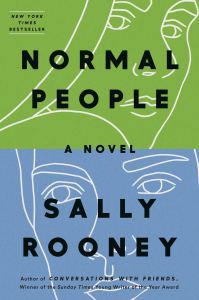
That’s my main take away from Irish writer Sally Rooney’s second novel Normal People. The story follows the on again – off again – on again relationship between Marianne and Connell, a couple 18-year-olds (when the novel begins) who strike up a friendship of sorts when Connell arrives at Marianne’s house to pick up his mother, who is the housekeeper there.

The two would never have said a word to each other at school where Connell is “so beautiful” that Marianne liked to imagine “him  having sex with someone; it didn’t have to be her, it could be anyone. It would be beautiful just to watch him.”  Marianne herself is awkward and “has no friends and spends her lunchtimes alone reading novels.” The two of them just happen to be the smartest kids at school and so somehow, despite their awkwardness,  (because Connell,  despite his beauty, is awkward), the two form a relationship that shapes the next few years of their lives.

The thing with these two, though, is that they never seem to be playing the same game at the same time. Their attraction turns out to be mutual, but Connell suggests they keep their relationship a secret and when he finally betrays her, the two go their separate ways. It doesn’t matter, though, they are drawn to each other – moths to flame – and in that respect, I could so relate to their story. The two meet up again at Trinity College in Dublin, where suddenly Connell is the fish out of water and Marianne seems to have found her people. Rooney deftly handles the strange dance that happens when two young people desperately want to be together, but keep fucking it up.

So, is Normal People a book for an old doll like me? Am I the novel’s intended reader? Probably not, and I have a feeling that the ladies in my book club (for which this was our January 2020 pick) are likely going to pan the book. They’ll take exception to the lack of quotation marks for dialogue (and I knew that was going to bug me  – but ended up not being as annoying as I thought it might be) and they’ll probably dislike the melodrama inherent in a story about young love,  but I liked this book.

I was always falling in love at that age and I could see myself in both of these characters. Their need for connection, their disillusionment, their constant search for themselves was reminiscent of my own journey, and will likely ring true to anyone who has ever felt like an outsider. I found the book eminently readable, elliptical and troubling. When I finished the book – and I whipped through it in just a couple sittings – I found myself really trying to wrap my head around what I’d just read, and I think that’s the sign of something special.


Peril – Thomas H. Cook

My first finished book of 2020 is Thomas H. Cook’s 2004 novel Peril. Unlike most of the perilother books I’ve read by  Cook, which have generally focused on one narrator, Peril lets the reader see the same set of circumstances through a variety of lenses.

Sara Labriola is hoping to disappear. After nine years of marriage to Tony, she can’t go on and so one day she packs her clothes, leaves her wedding ring and takes the bus into Manhattan.

Tony is devastated when he discovers Sara missing, but his father, Leo, is furious. Leo is a thug who berates everyone around him, including Tony who has never had the nerve to stand up to him. Leo tells his guy Caruso to find Sara and Caruso leverages the help of Mortimer Dodge because he owes Leo money. Dodge works for a guy named Stark, a guy whose job it is to find people.

Need a chart yet? Let’s recap.

Sara runs away from Tony.

Tony wants to find his wife before his father does because he knows that if Leo finds her first the consequences will be grim. He tasks his employee and friend Eddie with helping him.

Leo gets Caruso on the job. Caruso gets Mortimer on the job. Mortimer gets Stark on the job.

Sara is in NY and thinks she has found a job singing in a night club owned by Abe, who happens to know Mortimer.

It all sounds way more complicated than it is and it’s actually way more compelling than this, too, and that’s because, well, Thomas H. Cook wrote it.

You know how you can read some thrillers or mysteries and they’re just straight ahead books that are driven by plot but not much else? Yeah, that’s not Cook. There is not a character in this novel who doesn’t have a totally believable backstory that makes them, even when they are not particularly likeable, sympathetic. (The exception here is Leo Labriola, who is a misogynistic asshat.) And I mean every character, even characters we only meet a couple times, like the mother of Sara’s neighbour, Della.

And if you think all this backstory is going to bog down the plot – which would be bad, too – forget about it. You’ll turn the pages lickety-split because, well, Thomas H. Cook. He balances character and story and even if some of what happens here seems a tad too coincidental, you won’t care. At all.

There’s something old school about Peril. It’s like a noir film, peopled with shadowy gangsters in crumpled hats, a beautiful, fragile heroine who earns the good will of the men she meets, and a bunch of guys who ultimately, turn out to be loyal and decent.

You will NEVER be wasting your time reading a Cook book. (Couldn’t resist.)

We Could Be Beautiful – Swan Huntley

beautifulCatherine West wants a family — which is sort of funny once you get to know her. The narrator of Swan Huntley’s novel We Could Be Beautiful is vain, spoiled, and selfish. It’s hard to imagine  she’d ever be selfless enough to have kids. Plus, she’s pushing the biological envelope: Catherine’s 43.

She thinks she has everything it would take to be a mother, but when she categorizes her success, it feels like having a baby would be just one more accessory.

I was rich, I owned a small business,  I had a wardrobe I replaced all the time. I was tones enough and pretty enough. I moisturized,  I worked out. I looked younger than my age. I had been to all the countries I wanted to see. I collected art and filled my West  Village apartment with it. My home was bright and tastefully bare and worthy of a spread in a magazine.

The only problem is that Catherine’s single. She’s had lots of boyfriends (and a girlfriend), and two broken engagements, but now she’s alone. Her most significant relationship is with Dan, the massage therapist who comes to her house to rub her neurosis away.

Then she meets William Stockton, a “stunning, square-jawed man with gentle eyes and elegant gray hair, full and parted to the side.” There’s something familiar about him, and as it turns out William’s parents and Catherine’s parents used to be great friends. Catherine is several years younger than William, so her memories of him are vague.

Almost immediately, Catherine is smitten and too-good-to-be-true William is moving in. On paper, he seems like a great guy (he’s educated, has a good job in banking, he’s charming and attentive), but readers will clue in that there’s something not quite right. Catherine isn’t so swift on the uptake.

We Could Be Beautiful is billed as a thriller, and it certainly reads like one.  I mean, you’ll certainly figure out pretty quickly that William is up to something, even if you’re not sure what it is. When Catherine mentions William to her mother, who is suffering from dementia, Mrs. West’s reaction is visceral. Then Catherine finds a box of old ephemera, including a letter from a long-ago nanny which alludes to some event that she hadn’t protected Catherine from.

Probably the more interesting aspect of this book, though,  is Catherine’s journey. I found her vapid at the beginning of the book. She doesn’t need to work because her father left her and her sister a pile of money. She owns the West Village house she lives in. She owns a little store called Leaf, which sells — tellingly — beautiful art cards, with nothing printed inside. Her one friend, Susan, is as superficial as she is. She has a strained relationship with her only sibling, Caroline. On the surface it’s a beautiful life, sure, but it’s style over substance. Her relationship with William forces Catherine to do some recalibrating, and that’s interesting to watch.

I enjoyed this book. It’s well-written, the pages turn themselves, and even if it’s less ‘thriller’ and more ‘drama’, it’s still entertaining.

The Visitors – Catherine Burns

Marion Zetland lives with her older brother, John, in a house that’s seen better days in a visitorscoastal town in Northern England. The siblings, now in their 50s,  have never been especially close, but now that both their parents have died, they have to rely on each other and their relationship is a sort of co-dependent nightmare. There is something very odd going on in their house, a house filled with the bric-a-brac of a childhood spent in some luxury (the Zetlands owned a textile mill), and now the domain of a couple hoarders.

Catherine Burns’s debut novel The Visitors focuses the story on Marion. She is mostly friendless, surrounds herself with stuffed animals, and spends her days watching sappy television movies, remembering events from her past, and imagining a future which she surely never had access to. She’d learned at a young age that she was plain, and spent most of her life living in John’s considerable shadow. He, after all, had gone off the Oxford, and she had limped through school, barely able to understand the most basic things.

When the novel opens, Marion has just been awakened by a scream, a sound that “flapped its wings against the inside of her skull.” She knows where the scream is coming from, and she even knows, although perhaps only subconsciously, why someone might be screaming inside her house, but she tamps down the feeling by calling forth her mother’s voice, which she knows would tell her that “John is doing the very best for them; you have to trust him – he is your brother and a very clever person.”

Slipping easily between the past and the present, we learn about the extremely dysfunctional Zetland family, about how Marion was bullied by her peers, and John’s own perverse personality, which is alluded to many times.  The only time we aren’t closely watching Marion, we are reading emails to someone called Adrian. The first time they appeared, I thought there’d been some sort of printing error, but it’ll all make sense in the end.

I really enjoyed The Visitors. I found Marion to be quite a sympathetic character, someone who clearly had been dealt a crappy hand in the family department, but was also dealing with some mental illness, too. Turns out, though, the lens through which the story is told is just a tad unreliable. Although this story is not told in the first person, we are really only privy to Marion’s thoughts, and there’s no question – she’s an odd duck.

Although I wasn’t 100% sold on the ending, I still recommend giving this one a go. It’s well written and you’ll totally keep turning the pages.