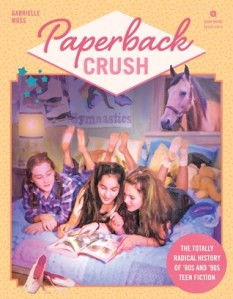
 I couldn’t resist picking up Paperback Crush, a colourful, sometimes snarky look at the Young Adult fiction published in the 1980s and 90s. Author Gabrielle Moss say that the book is “here to honor the young adult lit published after Judy Blume but before J.K. Rowling.” Those decades produced more YA than the previous decades, but the quality, I suspect, wasn’t what we’ve come to expect from modern YA. And I read a lot of YA.
It’s a hotly debated subject (okay, maybe not hotly): what’s the first YA book?
…experts don’t agree on exactly when [YA] dawned. Books from the original 1930s Nancy Drew stories to Laura Ingalls Wilder’s 1932 book Little House in the Big Woods to the 1936 novel Sue Barton, Student Nurse by Helen Dore Boylston have all been held up as the first-ever YA novel
I like to think that S.E. Hinton’s The Outsiders is the first true example of YA, a story written expressly for young people, but according to Young Adult Library Services Association president Michael Cart YA “all started with Maureen Daly’s Seventeenth Summer.” I actually have vague memories of reading that book, but my memories of reading The Outsiders and Hinton’s follow-up That Was Then, This is Now are seared into my adolescent memory.
Moss tracks the trends in YA, everything from first love and love-gone-wrong to sick lit and paranormal romance. She examines teenage jobs (babysitters and camp counselors); friendships (bffs and frenemies); family (siblings and cousins and evil step-parents). She looks at specific books and authors, flagging the more famous titles with passive-aggressive admiration (Wakefield twins!)
I wasn’t reading a lot of YA lit in the 80s and 90s, but I am a reader, so I was at least familiar with 80% of the literature Moss mentioned. I mean, you would have had to be living on another planet not to know Sweet Valley High or The Baby-Sitters Club [sic]. I enjoyed reading about these books, and often found Moss’s commentary laugh-out-loud funny.
Literature from this time period was not without its issues. As Moss points out “a lot of these books centered on the stories of white rich thin heterosexual women with naturally straight hair.” But no matter. For better or worse “They validated girls’ stories by putting them to paper….”
I came of age in the 1970s, but as a teacher I enjoyed Paperback Crush. It is pure nostalgia. Although I am just a bit older than the book’s target demographic, I too remember the joys of the Scholastic flyer, and the thrill of choosing my own books to read. Many of the titles mentioned caused a flood of memories. If books were a part of your life, this one will give you all the feels.
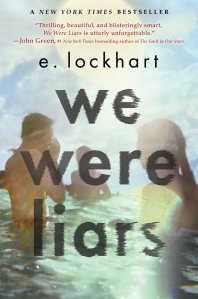 Cadence Sinclair, the narrator of E. Lockhart’s riveting YA novel We Were Liars, lives a seemingly charmed life. The eldest of the Sinclair grandchildren, she summers with her cousins Johnny, Mirren, Liberty, Bonnie, Will and Taft on Beechwood Island, a private island off the coast of Massachusetts, somewhere near Martha’s Vineyard. Her grandparents, Harris and Tipper, have a created a sort of kingdom on Beechwood. Each of their three daughters has their own house on the island, but everything revolves around the patriarch. There is a lot of drinking and in-fighting, all of it held together by Tipper. When she dies, the daughters and their children, who are used as pawns to secure Harris’s favour, go a little off the rails.
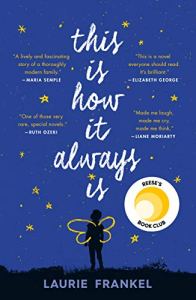 Penn is a writer-cum-stay-at-home- dad. They have five sons: Roo, Ben, the unfortunately named twins, Rigel and Orion, and finally, Claude. In almost every way the Walsh-Adamses seem to have life figured out.
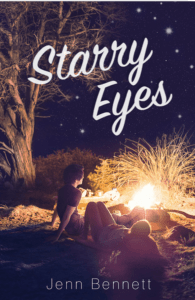 Starry Eyes ended up being a sweet love story with believable main characters.
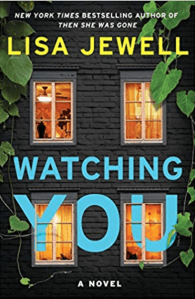 The current flavour-of-the-month in book stores these days seems to be duplicitous nannies or wives, unreliable narrators of all stripes, characters and plots that simply can’t be trusted. In my experience, books like this come with varying degrees of pedigree. But then there’s Lisa Jewell.
 write about – not only because the subject matter is contentious, but because I don’t have an adequate vocabulary to express just how truly astounding this novel is. (I guess he gets the extra ‘l’ in his last name because when they were handing out talent, he got more than his share. Seriously.)
 Seventeen-year-old Ruth Carver has a nickname on the show-riding circuit: Ruthless. She earned the name by being single-minded when it comes to competitions, but it’s more than that. At the ranch, it’s “sink or swim” and Ruth lives by that motto. Ruth also understands that her success in the ring will benefit her parents’ struggling ranch. She’ll do whatever it takes to win, even if that means pushing other people away from her. That includes Caleb, the boy who loves her.
 novel One Day in December. It’s a book that depends on the chemistry of the central characters, Laurie and Jack, and our willingness to believe that a fleeting eye-lock might actually change the trajectory of someone’s life.
 Although I teach high school English and although Chris Lynch is a prolific writer of award-winning YA literature, his novel Inexcusable is the first of his books I’ve read. This particular novel was a National Book Award finalist, as well as top of many other “Best of” lists. School Library Journal called it “A finely crafted and thought-provoking page-turner.”
 compelling novel The Boy Who Drew Monsters. I mean, sure, I could follow the story’s claustrophobic narrative, but at the end of the day I was still shaking my head and going WTF.
