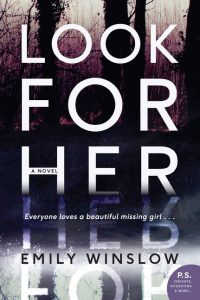
Look For Her – Emily Winslow

Look-for-Her-cover-200x300I have a feeling that I am going to be in the minority here, but I didn’t really groove to Emily Winslow’s Look For Her. This is the fourth book in a series featuring British detectives Morris Keene and Chloe Frohmann, but I didn’t know that going in and I don’t think it really matters in terms of your enjoyment (or in my case lack of) when reading the novel.

Back in 1976, Annalise Wood disappeared. Years later, another Annalise brings her up in a therapy session with Dr. Laurie Ambrose.

…she went missing when she was sixteen. My mother was the same age when it happened. Annalise was lovely, much prettier than my sister and I ever became. She was the kind of girl you look at and think, Of course someone would want to take her.

The body wasn’t found until 1992 and DNA didn’t yield any results at the time, but now there’s been a break in the case.  Keene (who is no longer an active detective) and Frohmann (who has recently had a baby) reunite to follow the trail of new evidence. The pair are prickly with one another; they have clearly had a falling out in a previous installment of the series.

You’d think that all the elements for a compelling mystery would be there, right? Decades old mystery. New evidence. Unreliable narration. So what didn’t work?

Look For Me lacked momentum. Told through transcribed therapy sessions and multiple points of view (the detectives, the therapist, e-mails), I just couldn’t settle into the narrative. (Trust me, multiple narratives aren’t usually a problem for me.)  There are a lot of characters to keep track of (also generally not a problem), and complicated family relationships. Perhaps I would have been more inclined to try to untangle the threads if I had cared one iota for any of the characters, but I didn’t.

So it’s weird that I didn’t like this book because it had all the right ingredients and it should have added up to a big win for me. To be fair, because I didn’t read it in one breathless gulp (as is often the case with books like this) I found the story way too convoluted. Part of what was unsatisfying to me was how neatly all these disparate threads were woven together at the end: perhaps just a little too neatly.

My dissatisfaction aside, Winslow can certainly write and I suspect that fans of the series and the majority of the readers who enjoy twisty mysteries will like this book.

Thanks to TLC Book Tours and Harper Collins for the opportunity to review this book.


The Vanishing Game – Kate Kae Myers

vanishingJocelyn’s twin brother Jack is dead. At least that’s what she thinks until she receives a letter from him that sends her on a wild chase. First stop: Noah Collier.
Noah becomes a reluctant participant in Jocelyn’s search after her car and belongings are stolen. She’s come to Noah looking for help because Noah had been Jack’s best friend. They’d both worked for the same computer programming company, ISI.

Kate Kae Myers’ YA novel The Vanishing Game is a twisty turny mystery novel that follows Jocelyn and Noah as they race around following Jack’s complicated clues. (Complicated enough that I stopped trying to figure them out, but I was wayyy distracted when I was reading this book.)

Jocelyn, Jack and Noah spent their adolescence at Seale House, a foster home run by Hazel Frey, a drug addict who locked kids in the basement as punishment. Jocelyn is convinced that there are clues in the ruined remains of the place she once called home. (Half the building had burned down.) It’s the first stop on her journey to finding out exactly what happened to her brother and if he is actually really dead.

Jack leaves a series of puzzles for Jocelyn and Noah to solve, puzzles reminiscent of the games they used to play as kids at Seale House. But the clues aren’t they only mystery: Seale House has some ghosts to give up and someone is following the pair as they try to get to the bottom of Jack’s death.

The Vanishing Game will intrigue careful readers


The American Girl – Kate Horsley

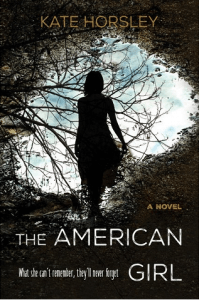
american girlMeet Quinn Perkins, a seventeen-year-old American exchange student spending a semester in the small French town of St. Roch.

Meet the Blavettes, Quinn’s host family. Sixteen-year-old Noemie, her nineteen-year-old brother, Raphael, and their mom, Emilie.

Meet Molly Swift, an American reporter for American Confessional, an podcast series that takes on “stories of police incompetence or just general incompetence, and find[s] the real story.”

When Quinn wanders out of the woods “barefoot and bloodied” only to be hit by a car (the driver of which doesn’t stop) and left in a coma, Molly and her journalistic muse, Bill, think Quinn would make a perfect story, something about “a young American girl coming of age, going into the world on her own only to encounter the unkindness of a stranger.”

Quinn’s story is slightly more complicated than that, though. Through a series of flashbacks, readers are introduced to the toxic Blavette household: father Marc  has left the family after an incident at the local school (which is attached to the house the family lives in and has subsequently been closed). Madame Blavette now takes exchange students as a way of making ends meet.

First thought to be away on a holiday, it is soon revealed that the Blavette family has disappeared without a trace. When Quinn wakes up in the hospital after her accident, she has no memory. Good thing, too, since Molly feels like the best way to get close to Quinn is to pretend to be her aunt. (Quinn’s father back home in America, is too busy with his much-younger pregnant wife to make the trip to France after Quinn’s accident.)

Kate Horsley’s The American Girl would make a terrific Netflix mini series. It’s populated with a cast of characters who all seem to have ulterior motives making it impossible to decide who is telling the truth. There are subplots galore including threatening Snapchat messages, sinister caves, locked doors and menacing strangers.

If this seems like a lot – it’s really not. The book was a lot of fun to read.


Pretty Baby – Mary Kubica

pretty babyHeidi Wood seems to have it all going on. She’s happily married to Chris, successful dude (mergers and acquisitions), and mother to twelve-year-old, Zoe. They live in a spectacular condo in Chicago. But Mary Kubica’s novel Pretty Baby wants you to believe that Heidi’s life is precariously perched on a knife’s edge and all that it takes to set it off is Willow and her infant daughter, Ruby.

The first time I see her, she is standing at Fullerton Station on the train platform, clutching an infant in her arms….The girl is dressed in a pair of jeans, torn at the knee. Her coat is thin and nylon, an army green. She has no hood, no umbrella….The baby is quiet, stuffed inside the mother’s coat like a joey in a kangaroo pouch.

Heidi can’t get the girl and her baby off her mind. Partly it’s because she “work[s] with people who are often poverty stricken.” But there’s another, deeper reason. In any case, Heidi can’t stop thinking about the girl and when fate brings them into each other’s path again, Heidi acts. Before you can say, wtf, Heidi has moved Willow and Ruby into the condo with her family.

If I can say one thing about Pretty Baby, it’s that it’s overstuffed. So, first there’s Heidi and her fascination with this young girl and her baby, despite the fact that she has a (largely ignored) daughter at home. Then there’s Chris, who despite loving the woman he’s spent almost half his life with, finds himself wondering what the comely Cassidy Knudsen (new to his team) might wear to bed. Then there’s Willow, who tells her tale to the decidedly unpleasant Louise Flores, and it’s quite a story. Pull any one of these threads and you’d have enough for a novel, but Kubica tries very hard to weave them together and I can’t say that it was altogether successful.

Just a ‘meh’ for me.


Salt to the Sea – Ruta Sepetys

salt-to-the-sea-bigcoverA couple years ago I read Ruta Sepetys’ novel Between Shades of Gray with my grade nine students and we all really loved it. Salt to the Sea treads familiar ground, telling the story of four very different young adults fleeing their homes to escape advancing Russian troops during World War Two.

There’s Joana, a Lithuanian nurse, who had fled her homeland four years earlier for the relative safety of East Prussia and who is now on the run again.

There’s Florian, a talented Prussian artist who had been working for the Nazi cause  as an art restorer.

There’s Emilia, a pregnant fifteen-year-old from Poland.

And there’s Alfred, a self-aggrandizing sailor for Hitler’s navy.

Joana, along with an old shoe-maker, a little boy and a tall woman named Eva,  is already making her way towards Gutenhafen where she hopes to board a ship that will take her to safety.

Germany had invaded Russia in 1941. For the past four years, the two countries had committed unspeakable atrocities, not only against each other, but against innocent civilians in their path. Stories had been whispered by those we passed on the road. Hitler was exterminating millions of Jews and had an expanding list of undesirables who were being killed or imprisoned. Stalin was destroying the people of Poland, Ukraine and the Baltics.

Emilia and Florian meet by accident in the woods. They don’t speak the same language, but Emilia sees Florian as a white knight, a title Florian does not want or even believe he deserves. They soon meet up with Joana and her group. They are all heading in the same direction and it is at the port where they meet Alfred.

The novel’s short chapters and alternating points of view make it a perfect novel for younger readers, although the subject matter is quite often upsetting. As happened with Between Shades of Gray, I fell in love with these characters (well, not Alfred) and I so wanted to see them find their way to safety.

Salt to the Sea, while a work of fiction, is based on the real life sinking of the Wilhelm Gustloff,  “the deadliest disaster in maritime history, with losses dwarfing the death tolls of the famous ships Titanic and Lusitania.” In her author’s notes, Sepetys tells us that in 1945, it is estimated that 25,000 people lost their lives in the Baltic Sea.

I think one of Sepetys’ gifts is her ability to create flesh and blood characters, giving voice to the thousands of innocent children and men and women whose lives were irrevocably changed by the horrors of war.

I loved the time I spent with these brave young people, and only wish that the ending hadn’t felt so rushed. This was the one little niggle I had with Between Shades of Gray, too. I would have happily read another fifty pages just to have a little more time with these characters.


I Found You – Lisa Jewell

IFoundYouIn present day, Lily Monrose’s husband is missing. Newly married, Lily is frantic to find the man she loves, the man who came “home with gifts, with ‘two-week anniversary’ cards, with flowers.” Her husband, Carl, is “certainly never more than a minute late,” but he’s seemingly just vanished.
Alice Lake is a single mom with three kids who lives in a ramshackle cottage by the sea in Ridinghouse Bay. One day, from her window, she spies a man sitting on the beach.

He’s been there all day, since she opened her curtains at seven o’clock this morning, sitting on the damp sand, his arms around his knees, staring and staring out to sea.

Finally, Alice goes out to see if the man is okay and he admits “I think…that I have lost my memory…Because I don’t know what my name is. And I must have a name.”

Alice invites him in to her home and together they try to uncover who he is and where he came from.

In 1993, we meet Gray, 17, and Kirsty, 15, who are staying Rabbit Cottage in Ridinghouse Bay with their parents. They are on holiday, enjoying their family time when they meet Mark, a boy just a little older than Gray and for whom Gray takes an immediate dislike.

When Mark stops to chat to the family on the beach, Gray notes that the

smile on his face [looked] to Gray suspiciously like triumph. As though this ‘spontaneous’ conversation with his family was not just a passing moment of friendly human interaction, but the first brilliant stroke of a much bigger master plan.

Gray is right to be wary.

From these seemingly unconnected threads, British writer Lisa Jewell weaves an often riveting account of family, love and obsession. Although I was less interested in Lily’s situation – something about her irked me – I was wholly invested in Gray and Kirsty.  Their relationship was really believable and their part in the story provided the most heart-pounding moments.

As for Alice and her mystery man, well, obviously I don’t want to spoil anything. Alice is a likeable character, kind-hearted  and slightly reckless. As they work to peel back the layers of missing memory, the threads of this story start to come together. I found some of the machinations a bit clunky, but overall I Found You had me turning the pages way past my bedtime.

Nutshell – Ian McEwan

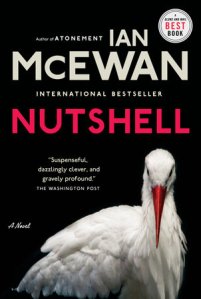
nutshellThere’s no arguing with the fact that Ian McEwan is an astoundingly good writer. I have read enough of his books over the years to know that I like him, even when he’s hard work. (I have read Saturday, On Chesil Beach, and The Children Act   Predating this blog I’ve read First Love, Last Rites, The Comfort of Strangers, The Cement Garden and my favourite McEwan novel, the devastating Atonement. I have a couple more on my tbr shelf.) McEwan is astonishingly prolific and you really never feel like you are reading the same book over and over. He has lots to say about a variety of topics and he says it well.
That’s the saving grace of Nutshell, which was chosen as our book club selection this month. I did a little inward grown when Sylvie revealed this book. Not because it was McEwan – clearly that wouldn’t bother ne – but because I already knew about the novel’s conceit and I wasn’t really interested in reading this book. At all. But then: it’s McEwan. In less capable hands, this book would be a dog’s breakfast and instead it was, while not exactly enjoyable, an easy read.

So here I am, upside down in a woman. Arms patiently crossed, waiting, waiting and wondering who I’m in, what I’m in for. My eyes close nostalgically when I remember how I once drifted in my translucent body bag, floated dreamily in the bubble of my thoughts through my private ocean in slow-motion somersaults, colliding gently against the transparent bounds of my confinement, the confiding membrane that vibrated with, even as it muffled, the voices of conspirators in a vile enterprise. That was in my careless youth.

That’s the opening of Nutshell. If it’s not obvious, the narrator of McEwan’s book is an unnamed fetus. He’s sentient and trapped inside his mother’s womb. I say trapped because instead of biding his time until he’s born, he must listen to his mother, Trudy, plot with her lover, Claude, to kill Trudy’s husband, John. Matters are further complicated by the fact that Claude and John are brothers. If any of this sounds familiar, you know your Shakespeare. That’s all I’ll say about that.

Although the conceit of having the story narrated by a fetus might have proven problematic in less capable hands, Nutshell, is totally readable. Of course it is. Our narrator relates overheard conversations and imagines others to which he is not privy. Through him we see the adults in this story – none of them particularly likeable.  For example, he describes Claude as “a man who prefers to repeat himself. A man of riffs….This Claude is a property developer who composes nothing, invents nothing.” As for Trudy, “my untrue Trudy, whose apple-flesh arms and breasts and green regard I long for”, our narrator both loves and hates her. John, his father, was “Born under an obliging star, eager to please, too kind, too earnest, he has nothing of the ambitious poet’s quiet greed.”

As the narrator contemplates his mother and her lover’s plans to kill John, he also waxes poetic on a variety of topics including philosophy, poetry, and the best wine. He might be stuck where he is, but remarkably (or maybe not remarkably: this is McEwan, after all) the plot moves along at the pace of a good page-turner. Careful readers will love the allusions and readers smarter than me will likely find the overall reading experience intellectually satisfying.

Nutshell  is classy fan fiction by a writer whose talent and intelligence are undeniable, but I wouldn’t have ever picked this book up on my own.


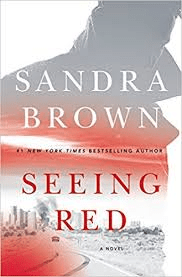
Seeing Red – Sandra Brown

seeingredBack when Stephen King was writing a column for Entertainment Weekly, he recommended Sandra Brown’s novel Hello, Darkness as a must-read book for that year.  It was part of a Top Ten list and I thought, okay, I’ll give it a go. I bought it; I read it, and I was sort of ‘meh’ about the whole thing. Thus, when Brown’s newest suspense thriller Seeing Red was chosen as the first selection for my book club’s 2017-18 year I was not overly excited. Perhaps it’s unfair, but after reading only one book I sort of considered Brown a grocery store author….not that that means anything really: she’s written 68 novels, sold 80 million copies and been on the New York Times Bestseller list 30 times.
But I gotta say – Seeing Red was just bad. Like, laugh-out-loud bad.

Kerra Bailey is a rising-star journalist about to land the biggest interview of her life. She’s convinced The Major to go on national television and talk about the day he’d heroically saved lives when a hotel was bombed twenty-five odd years before. One of the lives he’d saved was Kerra’s, so interviewing him isn’t the only big deal; she’s outing herself as a survivor, too.

The interview is over and while Kerra is using the restroom she hears shots fired. At first she thinks The Major has discharged the shotgun he’d been showing her, but then she hears voices and realizes they’re not alone in the house. Trapped in the bathroom, she makes her escape out the window and all that happens by page six.

Six days earlier…that’s where the story begins with Kerra meeting John Trapper, a former ATF agent (I had to look that up because I had no idea what that was, but apparently it’s a specially trained member of  law enforcement who deals with alcohol, tobacco, firearms and explosives), and estranged son of The Major. Kerra’s been having trouble getting The Major to speak to her and she’s reached out to Trapper (he goes by his last name because of course he does) for help. The problem is that Trapper is “the last person on the planet who could convince [the Major] to do anything.”

This is the meet cute, of course, because we already know from the prologue that Kerra got her interview and now she’s been witness to attempted murder. Trapper is convinced his father was shot as part of an elaborate conspiracy that he’s been chasing for years, the very same conspiracy that got him fired from the ATF.

But none of that matters because Trapper and Kerra have chemistry…of the you-can- smell-it-coming-from-a-hundred-paces variety.  Kerra describes Trapper as “everything bad-boy wrong, which makes you everything desirable, and, yes, even knowing better than to fall for the sexy charm, I did.”  And it’s not just Trapper’s incredible sex appeal, he’s also a wounded bird, having had to live his entire life in The Major’s considerable shadow. Boo. Hoo.

So, while  Kerra  and Trapper chase around for answers to who tried to kill The Major (and Kerra) they also chase each other because, y’know, they’re hot and that’s what hot people do.

Some of the descriptions were literally snort-inducing.

“The wedge of damp, softly curled hair over his pecs tapered to form a sleek, yummy trail. The landscape beneath the towel was so well defined it was decadent.”

Yummy is used twice to describe Trapper’s treasure trail and I laughed both times because um, ew. And, trust me, I am not a prude. I love well-written sex scenes. Well-written being the operative words.

When these two crazy kids finally do get it on, I literally had to put the book down.

“As he worked his jeans down, a drop of escaped semen slicked his thumb. He was that close.”

“She came long and lusciously.”

Well, of course she did. Trapper had wanted “this to be the fuck Kerra remember[ed] for the rest of her life.” He’s good like that.

I could go on, but I won’t.

I bought my copy of Seeing Red at the Superstore. It was 40% off and I had enough points that it only cost me $2.00. That was $2.00 too much.


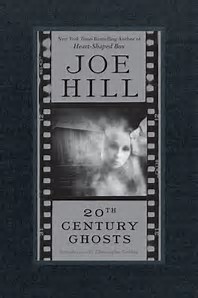
20th Century Ghosts – Joe Hill

Yikes! It’s been a month since I’ve written about the books I’ve been reading. I blame school and other work and life in general. To be honest, I’ve had a lackluster reading life of late and I’m not even sure I understand the reason why. I am still reading, but I can’t remember the last time I was head-over-heels in love with a book. Yes – I am experiencing the proverbial book slump. I guess I need to find that one book that kick starts my reading libido.

But, I do need to tell you about a handful of the books I’ve plowed through over the last 20th centuryfew weeks and I’ll start with Joe Hill’s collection of short stories, 20th Century Ghosts. I bought this book eons ago and it languished on my tbr shelf forever. During the summer I thought that maybe reading some short stories would cure me of my reading lethargy.  I was a big fan of Hill’s novel Heart-Shaped Box and his short stories didn’t disappoint, either, although not all of them would fall into the horror vein.

The first story in the collection, “Best New Horror” tells the story of  Eddie Carroll, jaded editor of the anthology America’s Best New Horror. He’s sixteen editions in and “he didn’t finish most of the stories he started anymore, couldn’t bear to. He felt weak at the thought of reading another story about vampires having sex with other vampires.”

Then, out of the blue, he receives an unsolicited story by way of an English professor named Harold Noonan. Noonan insists that the story “Buttonboy: A Love Story” is “a remarkable, if genuinely distressing, work of fiction.” Noonan himself had published it in the literary journal True North and the reaction had been immediate. And not in a good way. Carroll reads the story and admits that it is “cruel and perverse and he had to have it.”

When he decides to track down the story’s author, things take a turn for the truly horrifying.

Another story, “You Will Hear the Locust Sing” begins with the sentence “Francis Kay woke from dreams that were not uneasy, but exultant, and found  himself an insect.”

“Better Than Home” is a melancholy story of fatherhood and baseball.

All the stories in the collection are slightly reminiscent of Stephen King, which is unsurprising since Hill is his son. It makes one wonder if the ability to write is a genetic trait that can be passed from parent to child, but the thing is, it’s clear that Hill has crafted his stories with care, and all the stories in this collection are wildly imaginative and often as tender as they are creepy. I didn’t like them all, but all of them are admirable.


The Hate U Give – Angie Thomas

I cannot remember the last time I fell so hard for fictional characters. I just wanted to hatescoop Starr Carter and her family up and hug them forever. Starr’s the sixteen-year-old narrator of Angie Thomas’s debut novel The Hate U Give, and her story might have been ripped from recent headlines. It feels especially timely now, given what is happening in the U.S.A and around the world. I would like to think Canada is immune to racism, but I know it’s not true.

Starr lives with her parents, Lisa, a nurse, and Maverick, an ex-con who now owns and runs the neighbourhood grocery store in Garden Heights, an inner-city neighbourhood prone to violence and crime. Starr straddles two worlds; she lives in Garden Heights, but she and her older brother, Seven, and younger brother Sekani attend a “bougie private school” across town. Starr realizes at a young age that “Williamson is one world and Garden Heights is another, and I have to keep them separate.”

Driving home from a spring break party, Starr and her childhood best friend, Khalil, are pulled over by the police and Khalil is shot and killed by the cop. (Not a spoiler – honest!) It is a horrifying moment in the book, and for Starr the beginning of personal journey which changes her life and the lives of those around her.

Let’s just establish some context for me as a reader. I live on the East Coast of Canada, in a small blue collar town of about 75,000 people. I can count on one hand the number of black kids who attended my high school back in the 70’s. I knew them; I was friendly with them; I don’t recall them being treated any differently, but how would I know? Fast forward almost 40 years and now I teach high school – same city, different school. There is certainly more racial diversity at my school of about 900 kids, but it is still predominantly white. My city has had an influx of Syrian refugees in the last couple years, but still, mostly white. I would like to think that I am not racist, but honestly, sometimes I say things that are probably not PC and my kids – who are 20 and 18 –  say “Mom, you can’t say that.”  I have never been the minority, but as a woman I have encountered – I am sure – instances of discrimination or harassment that I have likely joked about or glossed over.

Starr agrees to testify in front of the grand jury to determine whether or not the officer who shot her friend should be indicted for the crime, but she has already come to understand how the world works. She sees it first hand every day – on her own streets where gangs and drug lords run the show and the potential for violence is simmering on the surface. She’s seen it her private school  where

Williamson Starr doesn’t use slang – if a rapper would say it, she doesn’t say it, even if her white friends do. Slang makes them cool. Slang makes her “hood.” Williamson Starr holds her tongue when people piss her off so nobody will think she’s the “angry black girl.”  Williamson Starr is approachable. No stank-eyes, side-eyes, none of that. Williamson Starr is nonconfrontational. Basically, Williamson Starr doesn’t give anyone a reason to call her ghetto.

I can’t stand myself for doing it, but I do it anyway.

Starr tries to keep her two lives separate and she doesn’t tell her school friends that she’s the witness in the shooting death of her friend. There’s a lot of pressure on her from all sides – to maintain the status quo and to stand up for what’s right. Finally, Starr decides to choose differently in all aspects of her life, telling her Chinese friend, Maya, “We let people say stuff, and they say it so much that it becomes okay to them and normal for us. What’s the point of having a voice if you’re gonna be silent in those moments you shouldn’t be?”

How can that not resonate with people? How long will we let the  Donald Trumps of the world trash talk  – well – just about everyone? Because if The Hate U Give taught me one thing (and trust me, it taught me way more than one thing) it’s that we need to stand up and call people out when they are speaking derogatorily about others.

The Hate U Give ripped back the curtain and exposed a world I knew nothing about and as a reader and an educator, that’s a good thing. I often say that books are a great way for young readers to see themselves reflected back at them, but I think it’s equally important for them to see into the lives that are not like theirs. How else will they ever understand someone else’s point of view if they are never exposed to it? There is beauty to be found in our differences, people.

I loved every second spent with Starr and her amazing family. The Hate U Give is hopeful, heart-breaking,  beautiful and important and highly recommended. Read it and then get everyone you know to read it, too.