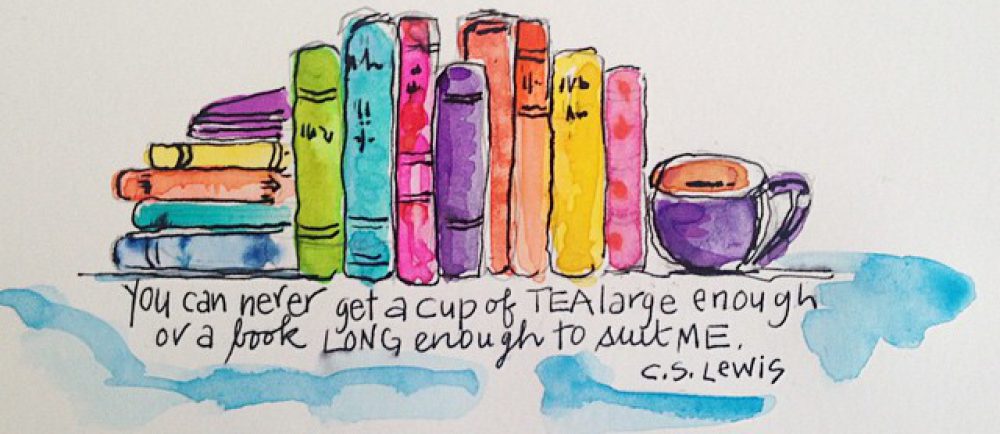
Books to distract you…

When it comes to reading these days,  I am looking for books that are total page turners. I want to be entertained and distracted without it being too labour intensive…so I thought I would offer up a few titles that might fit the bill.

First off, I HIGHLY recommend everyone check out Thomas H. Cook. If you tend to read via kobo or kindle you can probably get a hold of his stuff and he’s definitely on Audible. Cook is mystery writer I discovered probably 20 years ago. Since that first book, Breakheart Hill, I have been a massive fan.

I recommend Master of the Delta, which is the story of young teacher who gets in way over his head with a student whose father is a serial killer.

Another great book by Cook is Instruments of the Night which is the story of a writer who is asked to imagine what might have happened to a young girl who disappeared 50 years ago. Paul is not without some demons of his own and it makes for white-knuckle reading.

But, really, no matter what you pick, it will be worth reading.

Another total page-turner is Peter Swanson’s book The Kind Worth Killing. It’s the storykindworth of a man and woman who meet by chance at Heathrow airport. Over a drink, the man reveals that he thinks that his wife is having an affair and he wants to kill her – which may be a bit of an extreme reaction, but there you go. The woman offers to help the man’s fantasy become a reality and the novel does not let up from there.

Lots of readers will be familiar with Gillian Flynn because of the massive success of Gone Girl, but I actually liked Dark Places better. It’s the story of Libby Day, an angry, damaged woman who survived the murders of her mother and two older sisters. Her older brother, Ben, has been in jail for the crime for the past 24 years. But did he actually do it?

Other writers who consistently deliver books with a pulse include Lisa Jewell  (I recently read The Family Upstairs and I couldn’t put it down) and Tim Johnston (Descent is one of the best books I’ve ever read.)

My-Sunshine-AwayOne last book you should add to your tbr pile is M.O. Walsh’s debut My Sunshine Away. This is a coming-of-age novel about a boy obsessed with a neighborhood girl who is raped. Readers will not be able to turn the pages of this book fast enough.

Moving away from the thrillers a little bit, but still talking about books that will immerse you in a world that is not this one, I may as well include a book about people who are trapped together in one place. In Ann Patchett’s novel Bel Canto, a group of people are at a gala in South America when terrorists storm the building and take everyone hostage. That’s the plot in a nutshell – but this book is SO much more than that. Riveting and heartbreaking and life affirming.

Another book that will drop you into another world is John Connolly’s masterful novel The Book of Lost Things which follows young David as he journeys  through a twisted fairy tale world in search of a way to rescue his mother from death’s clutches.

Finally, if you haven’t yet read Everything I Never Told You by Celeste Ng now would be the perfect time. This story about a family growing up in Ohio in the 1980s has it all: characters you want to hug, complicated relationships between parents and their children, siblings and spouses and a mystery. The book’s opening line is “Lydia is dead.” and it really doesn’t let up from there.

Let’s not forget young adult readers. As a teacher I would really be thrilled if my students would just spend 30 minutes a day reading. I know it’s not possible to visit the book store these days, but Bookoutlet.ca and Indigo both deliver. 🙂

Here are some awesome titles for your teen.

We Are Still Tornadoes  by Susan Mullen and Michael Kun The story follows besties Cath and Scott during the first year after high school. It’s 1982 and so way before technology, so the pair write letters back and forth. This is a feel-good novel that made me laugh out loud.

For fans of Ruta Sepetys (Between Shades of Grey and Salt to the Sea)  check out her latest novel The Fountains of Silence, which takes a look at Spain under Franco’s dictatorship. Sepetys is fantastic at making history and people come alive and this is a great step up for older teens.

If your teen hasn’t yet discovered Canadian YA writer Courtney Summers, now would be the perfect time. She’s written a terrific, page-turning zombie novel This Is Not a Test and her latest novel, Sadie, is a wonderful hybrid novel that follows a young woman on the hunt for her sister’s killer. There’s a podcast you can listen to, as well. I haven’t yet met a Courtney Summers novel I haven’t loved.

Finally,A Short History of the Girl Next Door  by Jared Reck is a beautiful coming -of-age story about a boy in love with the girl who lives across the cul de sac from him. They’ve been besties, nothing more, since they were little kids…and things are about to get complicated. This is a terrific book for anyone.

I know these are trying times…but a good book really can help pass the time, and I hope you’ve seen something here that makes you want to read.


The Roanoke Girls – Amy Engel

Sometimes I can’t resist the three for $10 bargains at Indigo. Just because a book finds its way onto the bargain shelves doesn’t mean it’s a dud. Case in point: My Sunshine Away  I managed to snag a handful of bargain copies for my classroom library and I was thrilled to be able to offer it as a choice for my grade 12 students this year. That is an amazing book.

RoanokeAnd then there’s The Roanoke Girlsby Amy Engel. Can’t remember when I bought it or how long it’s been languishing on my tbr shelf, but I started reading it and finished reading it in just a few hours because it has ALL THE THINGS I love in a book.  (Lots of other reviewers loved all the things, too, because this book received lots of well-deserved praise.)
Lane Roanoke is fifteen when a terrible tragedy brings her to small-town Kansas to live with her grandparents, Yates and Lillian, and her cousin, Allegra, who is also fifteen.  She knows very little about these people. Her mother left the family home as a teenager and never returned because her life there was a “nightmare.”

Lane is mesmerized by the family home

Roanoke had clearly started out as something resembling a traditional farmhouse – white clapboard, wraparound porch, peaked dormers. But someone had tacked on crazy additions over the years, a brick turret on one side, what looked like an entirely new stone house extending from the back, more white clapboard, newer and higher on the other side. It was like a handful of giant houses all smashed together with no regard for aesthetics or conformity. It was equal parts horrifying and mesmerizing.

The house is symbolic of the labyrinthine Roanoke secrets.

Her cousin Allegra is alternately  moody and loving, and Lane is never quite sure which version she’s going to get. Her grandmother is mostly distant. Her grandfather “was fiercely handsome. …If charisma was power, my grandfather was king.”

The Roanoke family has a long history of loss. Yates’s two sisters are gone, so are his daughters. Until Lane returns to Kansas, Allegra has been the only Roanoke girl. It is a special designation, Lane comes to discover.

The novel toggles back and forth between ‘Then’ (Lane’s fifteenth summer) and ‘Now’, which happens eleven years later when Lane gets the call that Allegra is missing. Yates begs Lane to return to Roanoke. Despite her reservations, the pull of family is strong and Lane finds herself back in Kansas. Her return puts her back in contact with Tommy, Allegra’s on again – off again teenage boyfriend, now a cop, and Cooper, “still the most beautiful person” Lane has ever seen. It’s a toxic mix and makes for absolutely riveting reading.

What happened to Allegra? What happened to all the Roanoke girls? That’s the central mystery in the book. Actually, you’ll learn  the what pretty early on and it’s an explosive family secret.

This book had all the things I loved: great writing, a compelling main character who is damaged, but fierce and smart, a never-ending air of menace and unease, a hot, broken guy and a lot of twists.

LOVED it.


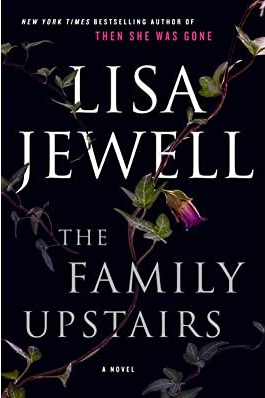
The Family Upstairs – Lisa Jewell

familyupstairsJust when I thought nothing was going to really distract me from this Covid-19 craziness, I dove into Lisa Jewell’s novel The Family Upstairs. I am a Jewell fan to begin with and I usually have a couple unread books by her on my shelf…you know, in case of a reading emergency. I think this pandemic qualifies and, Holy Smokes, did this book ever deliver.

There are three separate narratives in this novel. There’s Libby, a twenty-five-year-old kitchen designer who lives in St. Albans, a commuter suburb just north of London. On her birthday, she receives notice that she has inherited a house in Chelsea, an extremely desirable London neighbourhood. (And by desirable I mean the house is worth millions…of pounds.) The thing is, the house comes with some baggage…including three dead bodies.

That’s Henry Lamb’s story to tell. He grew up in that house with his parents and younger sister. His father was “the sole beneficiary of his own father’s fortune” and his mother was “a rare beauty.” When Henry is eleven and his sister nine, their lives begin to unravel. First of all, Mr. Lamb has squandered the family fortune and then Birdie Dunlop-Evers and her partner, Justin,  arrive.

It all happened so slowly, yet so extraordinarily quickly, the change to our parents, to our home, to our lives after they arrived. But that first night, when Birdie appeared on our front step with two large suitcases and a cat in a wicker box, we could have never guessed the impact she would have, the other people she would bring into our lives, that it would all end the way it did.

The third story belongs to Lucy, a woman we meet in Cote d’Azure where she is living rough with her two young children, Marco and Stella. With no money, and no passport, Lucy must make a difficult choice to protect her children and save herself.

What do these three very distinct and separate stories have to do with each other? Obviously I am not going to tell you, but let’s just say this…I literally could NOT put this book down. Jewell’s trademark is writing twisty plots filled with secrets dying to be revealed. The added bonus is that she’s a great writer and her characters are always believable. Sometimes with books that depend on plot twists, characters get short shrift. Not when Jewell writes them. I happily followed the three separate story threads, trying to race ahead to see if I could figure out how they all belonged together.

The Family Upstairs has everything I love in a book: great writing, an unreliable narrator, sinister characters, secrets galore and a not-too-tidy ending. Story perfection – pandemic or not.

Highly recommended.

Where the Crawdads Sing – Delia Owens

Delia Owens’s debut novel Where the Crawdads Sing has the distinction of being the where+the+crawdads+singbook we discussed at my book club’s first ever virtual meeting. It was chosen for our March meeting, but of course those plans were canceled due to Covid 19. I had started the book and then put it aside. When we decided to meet virtually, I picked up the book again and read it straight through. It’s kinda un-put-downable.
The novel opens in 1969 with the death of Chase Andrews beloved son of one of the town’s most influential families, and although this death (was there foul play?) is significant, this is really Kya’s story, which begins in 1952.

Kya Clark is the ‘Marsh Girl’. She lives in a rundown shack outside of Barkley Cove, a small town on North Carolina’s coast. Kya, just six when the novel opens, lives with her older siblings and her parents. Hers is a life filled with the wonders of the natural world, a joy she shares with her brother Jodie, who is 13. One day “she saw her mother in a long brown skirt, kick pleats nipping at her ankles, as she walked down the sandy lane in high heels.” Her mother has left the marsh before “But she never wore gator heels, never took a case.”  Her mother doesn’t return, and “over the next few weeks, Kya’s oldest brother and two sisters drifted away too, as if by example.”  Then Jodie, her closest companion, unable to endure their father’s drunken rages any longer, leaves, too.

From a very young age, out of necessity, she learns how to live in harmony with the world around her and the isolation doesn’t bother her until one day she meets Tate Walker out on the water. Tate proves to be a balm to her loneliness and over the years, as he teaches Kya to read and they explore the coastline, they fall in love. Even though it might not seem realistic because Kya lives alone in a shack without running water or electricity – she is, in fact, a wild child in every sense of the world – it’s actually a relationship that makes sense. Tate, too, cares deeply about the natural world, and sincerely cares about Kya.

Kya proves herself to be a resilient, resourceful and incredibly sympathetic character. Owens takes her time with Kya, allowing us to understand her life. Tate, too, is well drawn. Chase is little more than a caricature, which I suppose doesn’t really matter in the whole scheme of things.

Owens writes beautifully about the natural world, which makes sense considering she is a wildlife scientist. It’s impossible not to be totally immersed in Kya’s secret world. Kya understands that “Marsh is not swamp. Marsh is a space of light, where grass grows in water, and water flows into the sky.” Her observations about nature and her place in it are downright beautiful.

Some readers will likely be thrilled by the novel’s final twist. I wasn’t so fussy about it, but who cares, really. There’s a reason everyone and their dog has been talking about this novel. It’s pretty damn awesome.

Highly recommended.


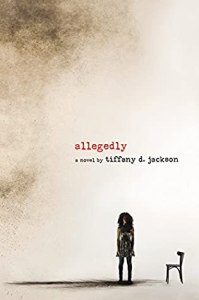
Allegedly – Tiffany D. Jackson

allegedlyFifteen-year-old Mary, the protagonist of Tiffany D. Jackson’s debut YA novel Allegedly, lives in a group home in Brooklyn. She has a tracking device on her ankle, no friends except for her boyfriend, Ted, and a reputation for being ‘psycho.’ How did she earn that reputation? When Mary was nine she killed a three-month-old baby named Alyssa who was in Mary’s mother’s care. Well, she allegedly killed Alyssa.
Everyone in the house knows what I did. Or thinks they know what I did. No one asks though, because no one really wants to hear how I killed a baby. They don’t even want to know why I killed a baby. They just want to pretend they know for knowing’s sake.

Before she came to live in the group home, she was in a state facility with adults. She was mostly mute and mostly locked up in solitary confinement. Now, with a little more freedom, she is desperate to make something of herself. She wants to write the SAT, not as ridiculous as it sounds because she is extremely clever – everyone says so. Although she doesn’t really have any positive adults in her life (the two women who look after the group home are awful, as are the other girls who live there; her mother is self-centered zealot and has mental health issues; the court appointed counselor who visits once a week is ineffective ), Mary is determined to get an education.

This is a novel that looks at all the ways that the system fails young people who might find themselves on the fringes of society. Mary tells her own story (one of physical, emotional and sexual abuse)  without self-pity. Too young to articulate what might have actually happened on the night Alyssa died, Mary did as her mother instructed and kept her mouth shut. When she finds herself pregnant, and realizes that there is no way that the state will allow her to keep her baby, she has something to fight for.

When Mary finally finds a couple champions for her corner including a lawyer willing to investigate her claims that she’s not guilty and a teacher willing to help her prepare for the SATs, it’s hard not to root for Mary. And it’ll be hard not to turn the pages either despite the often gruesome subject matter.

Allegedly is my second novel by Tiffany D. Jackson. I read and enjoyed her book Monday’s Not Coming last year. Her work is definitely worth checking out.

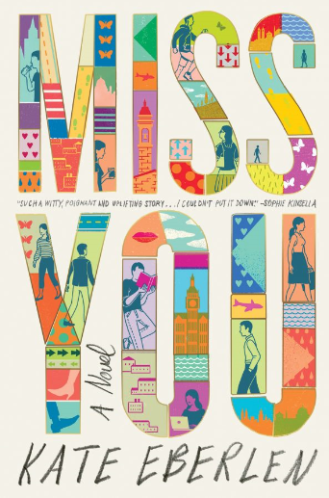
Miss You – Kate Eberlen

Well, one positive side effect of  Covid-19 (or ‘the ‘rona’ as we call it in my house) is that I missingyouactually have the time to tackle some of my longer books — you know, the ones that you keep putting off reading because it feels like such a time commitment and time is definitely at a premium during the school year. And, really, what do we have right now besides loads of time?
Miss You is British writer Kate Eberlen’s debut novel and it tells the stories, in two first person narratives, of Tess and Gus. The novel opens in  Florence; Tess is with her best friend, Doll, and Gus with his parents. They are both 18. They have a couple teensy encounters, but the sort of casual meetings you would have with a stranger. Their paths do not cross again for sixteen years. The story is really about what happens in those sixteen years.

Tess returns from her holiday excited to attend university in London. A family tragedy prevents this, and she has to ditch her plans to look after her fourteen-years-younger sister, Hope. Gus returns from his holiday and does, in fact, head off to university in London. He looks at the opportunity to escape the crushing weight of his parents’ expectations (they want him to be a doctor) and grief (Gus’s older brother, Ross, had died in a skiing accident at Christmas.)

Miss You is really a book about all the little things that can happen to you over the course of a lifetime (or part of a lifetime, at least.) We watch Tess and Gus morph from slightly awkward teens to adults in their twenties. They make mistakes in their personal lives and relationships that have consequences, and in that way they are incredibly relatable. I actually really liked both of them and spending time in their worlds was a true pleasure.

And that makes the next bit hard to say: I wasn’t a real fan of the ending. I mean, we know all along that Gus and Tess are meant to end up together — even though their initial meeting didn’t even allow them to exchange names or seem all that significant. Perhaps we are expected to buy into the notion that Gus and Tess weren’t ready for each other at eighteen. Fair enough. Their individual experiences over the next sixteen years shape them into stronger, more compassionate people, sure. My issue doesn’t really have anything to do with that. Nor does it have to do with the fact that it’s essentially fate that brings them back into each other’s orbit in, you guessed it, Italy. I think my problem was that from the moment they figure out who the other is, they’re both ALL IN. And, of course, if it’s fate, it’s fate. There’s no fighting it. And I have a romantic’s bleeding heart, trust me. It’s just, Eberlen took such care with their individual stories that their reunion should have been  — I don’t know  — something more than it was.

Nevertheless, I thoroughly enjoyed this novel. I love Italy, and time spent there was a delight. I loved these characters. They were human and impulsive and delightful. Probably everyone else on the planet would find their eventual union deserved and perfect. Not disagreeing. I just wish it had been allowed a little bit more breathing room.

Still, a perfect book to settle into.


My Dark Vanessa – Kate Elizabeth Russell

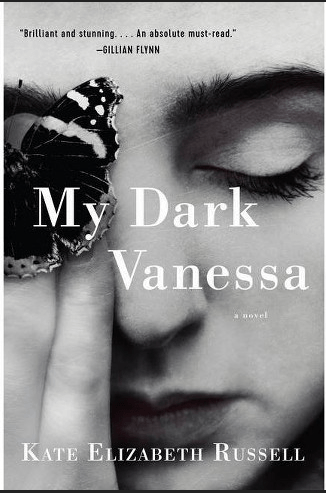
vanessaI finished Kate Elizabeth Russell’s debut novel My Dark Vanessa a couple days ago, but I had to let it sit with me before I made any attempt to write about it. It tells the story of a relationship that develops between fifteen-year-old Vanessa and her English teacher, Jacob Strane, who is 42.
Jacob Strane is an imposing teacher at Browick, a boarding school in Maine, “gleaming white clapboard and brick.” When the novel opens, Vanessa is returning to Browick for her sophomore year. Her freshman year was a disaster, ending in a shattered relationship with her best friend and roommate, Jenny.

A bit of a loner, Vanessa is immediately taken with Mr. Strane. It’s kind of hard to miss him.

He has wavy black hair and a black beard, glasses that reflect a glare so you can’t see his eyes, but the first thing I notice about him – the first thing anyone must notice – is his size. He’s not fat but big, broad, and so tall that his shoulders hunch as though his body wants to apologize for taking up so much space.

Encouraged by her faculty adviser, Vanessa joins the creative writing club and starts spending more and more time with Strane. He encourages her writing, talks to her like an adult, shares books and poetry with her (including, unsurprisingly, Lolita) and begins the slow and careful grooming process, which ultimately leads to their sexual relationship.

My Dark Vanessa is a difficult book to read on a lot of levels. For one, I am a teacher and Strane’s abuse of Vanessa’s trust is despicable. He manipulates her in ways that are apparent to us, but not to her. At one point he tells her “I want to be a positive presence in your life…Someone you can look back on and remember fondly, the funny old teacher who was pathetically in love with you but kept his hands to himself and was a good boy in the end.”

In some ways, Vanessa is aware of her own power over Strane. After this admission she “becomes someone somebody else is in love with, and not just some dumb boy my own age but a man who has lived an entire life, who has done and seen so much and still thinks I’m worthy of his love.” But even this seeming self-awareness is coloured by the fact that he has groomed her; it would take a very mature and confident person to see through Strane’s flattery and gaslighting.

The novel jumps back in forth covering the period of time when Vanessa is at Browick, in 2000, and then seven years later and seventeen years later. Vanessa revisits her relationship in light of allegations that Strane had been inappropriate (to put it mildly) with another student, possibly more than one.  It’s the beginning of the #MeToo movement, after all. The book captures how this relationship has completely derailed her life and coloured all her subsequent relationships. Even though Strane is repulsive, Vanessa seems unable to disconnect.

I wouldn’t say My Dark Vanessa was an enjoyable read, but it is compelling. It’ll make you feel squicky,  and it will frustrate you, but I don’t think you will be able to stop turning the pages. I think it’s a very accomplished debut.

There is some controversy surrounding the book. This article in The Guardian offers a comprehensive look at some of it.

The Railway Children – E. Nesbit

One of my all-time favourite childhood movies is The Railway Children.  I don’t remember the-railway-children-26specifically when I first watched it, but it came out in 1970 and I probably saw it shortly after that. I have it on VHS somewhere, but no longer have a VHS machine. I did, however, have the book.
E. Nesbit’s story, first published in 1906, tells the story of siblings Roberta (Bobbie), Peter and Phyllis who live with their well-to-do parents “in an ordinary red-brick-fronted villa.” Their father works in government and their mother was always “ready to play with the children, and read to them, and help them to do their home-lessons.”

One evening, out of the blue, two men arrive at the villa and the father is “called away on business.” Afterwards, the children and their mother leave London and head out to the countryside where they will live in a “ducky dear little white house.” Although they seem to be destitute they get by. The mother is a writer and when she sells a story, the children get a treat of buns.

The children occupy their days with adventures, including making friends with the porter at the local railway station and an old gentleman who waves at them from the window of the 9:15 train they nickname the Green Dragon. There is pretty much nothing sweeter than what these three kids get up to. They are thoughtful, resilient, and kind. Revisiting their story was like being wrapped in a warm hug and Bobbie’s sentiments seemed particularly poignant given the circumstances in which we find ourselves at this point in history:

I think everyone in the world is friends if you can only get them to see you don’t want to be un – friends.


How to Make Friends with the Dark – Kathleen Glasgow

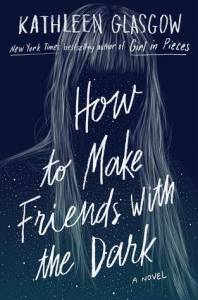
I started reading Kathleen Glasgow’s YA novel How to Make Friends with the Dark at school last week…and then all hell broke loose. On Friday March 13 (how appropriate, eh?) the government of New Brunswick closed all schools in the province for a two week period (minimum) in an effort to slow down the spread of Covid-19. So, that’s me, home for at least two weeks. These are weird times, people.

Luckily, I have enough unread books in my house to last a least five years and so I am going to to look at social-distancing as a gift of time. If nothing else, reading will distract me  from this new world. I am a naturally optimistic person and I hope that when we come out on the other side we will be kinder to each other, and gentler to the planet.

darkHow to Make Friends with the Dark is the story of fifteen-year-old Grace “Tiger” Tolliver. She lives with her single mother, June, a kind but ineffective parent.

We’re what my mom likes to call “a well-oiled, good-looking, and good-smelling machine.” But I need the other half of my machine to beep and whir at me, and do all that other stuff moms are supposed to do. If I don’t have her, I don’t have anything.

On the day Tiger and Kai, a boy from school, finally kiss (something Tiger has been dreaming about for a long time), the unthinkable happens: Tiger’s mother dies.  (Not a spoiler, the blurb tells you as much.) The aftermath of her mom’s death, and Tiger’s grief is what Glasgow’s very affecting book is about.

You feel skinned. Like whatever held you together has been peeled away. You half expect to look down and see your heart hanging out, a slow-beating, nearly dead thing.

Your legs wobble and your mouth tastes dry and your mother is dead.

Because Tiger has no other family member available to take her, she is placed into the foster system (which is shocking given that her best friend’s parents are willing to look after her, but rules.) Her first foster placement is not great; her second placement is better.

The book traces Tiger’s journey down into the dark sinkhole of grief.  There is very little light down there and Glasgow  doesn’t shy away from the ugly places grief sometimes takes us. If you think you’re in for an unremittingly grim read, you’re not totally wrong, but there is some light in the darkness. Tiger  is a sympathetic character and anyone who has ever lost someone dear to them will recognize her struggles, her small victories and her grief.