Instruments of Night by Thomas H. Cook

There’s a really great interview with mystery writer, Thomas H. Cook, in the September ’09 issue of January Magazine. In the article Ali Karim asks the very question that puzzles me every time I finish one of Cook’s novels. Why is this man not enormously famous? I mean, perhaps he is famous in mystery circles – but even if you’re not a fan of the genre, I think you should still give Cook a go.

I picked up Instruments of Night on Friday night and read about 30 pages. It was late when I started and so eventually my eyes gave out. On Saturday I picked it up again and didn’t put it down until I finished – with a gasp, I must add – the book.  I stumbled on Cook totally by accident three or four years back. I picked up, at a second hand bookstore, his novel Breakheart Hill and read these lines: “This is the darkest story I ever heard and all my life I have labored not to tell it.” Hooked. 

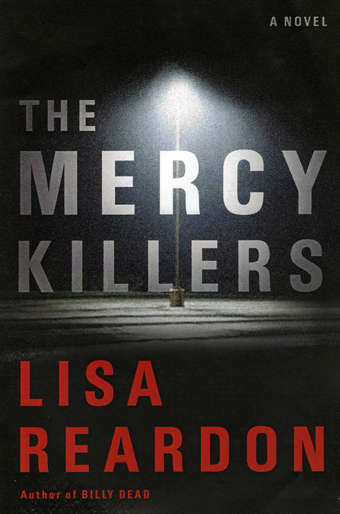
Instruments of Night is the fifth novel I’ve read by Cook. It’s the story of writer Paul Graves, a man who has spent his career writing about the horrible dance between serial killer and sadist Kessler (and his accomplice, Sykes) and the man who has spent his career chasing him, Detective Slovak. Instruments of Night operates on more than one level, though. Graves has almost completed the 14th installment of his series when he is invited to upstate New York to meet with Allison Davies, mistress of an estate known as Riverwood. Fifty years ago, Allison’s best friend, Faye, was murdered on the grounds and now Allison wants Paul to “imagine what happened to Faye. And why.”

But that’s not all. Paul Graves is a tortured man. His own past is filled with ghosts, horrible ghosts. He is a beautifully nuanced character and I particularly admired the glimpse we got into his head as a writer. Perhaps Cook was revealing a little bit about himself there, I don’t know, but Paul’s imagination allowed him to write scenes, and adjust them as needed, on the fly. Using this technique, he attempts to solve the question of who killed Faye.

The way Cook juggled the three threads of this story: the mystery of Faye’s death, the stand-off between Kessler and Slovak and the past that is creeping up on Paul is nothing short of amazing. But Cook is an accomplished writer. And this is literature. Truly. Page-turning, white-knuckling, horrifying literature. In every book I’ve read by him, I’ve been amazed at how complex his characters are and Paul is no exception.

If you haven’t read Cook yet, I beg you to give him a go. He’s fabulous!

Talking to the Dead by Helen Dunmore

talkingdead

The events of Helen Dunmore’s beautifully written novel Talking to the Dead take place during a blazing summer on the Cornwall coast. Nina has come to spend time with her sister, Isabelle, who has just given birth to Antony. It is a difficult labour and delivery and Isabelle is having a slow recovery.

You don’t look very alike, Susan said yesterday. I wouldn’t have guessed you were sisters. (29)

Susan has been hired to care for Antony while Isabelle recovers from the complications of Antony’s birth. Although the sisters are, as Susan notes,  unalike physically, they share the bond of family: an emotionally distant mother who worked as a potter, a drunkard father and the crib-death of their little brother, Colin.

They also share knowledge, perhaps suppressed, about the death of their little brother. It is during the hot days that follow that a family secret is revealed and Nina begins an illicit affair that sends shrapnel through the house Isabelle and her husband, Richard, have leased for the summer.

I’m a Dunmore fan. She’s a beautiful writer and much of the prose in this slim volume is breathtaking. So I am going to attribute the fact that I didn’t tear through this  novel (only 214 pages!) to the fact that I’ve had a serious case of book lethargy over the last few weeks. After all, like all of the Dunmore novels I’ve read – as literary as they are – this one has an element of psychological suspense. The pace isn’t fast though; information is revealed slowly, like veils pulled back one at a time. Under normal circumstances, this wouldn’t be a problem for me…like I say, I was in a bit of a slump.

If you haven’t yet read Dunmore, you really should.  She’s quite remarkable.

Testimony by Anita Shreve

Testimony

Explosive… Shreve flawlessly weaves a tale that is mesmerizing, hypnotic and compulsive. No one walks away unscathed, and that includes the reader. Highly recommended. – Betty-Lee Fox, Library Journal

Pretty much everyone has raved about Shreve’s latest novel, Testimony. I’ve been a Shreve fan since Eden Close, so I was looking forward to reading this book. The novel opens when Mike Bordwin, headmaster of Avery Academy, a private New England boarding school, views a tape depicting three of the school’s top basketball players having sex with  a female student who is clearly underage. While the story opens with Mike’s point of view, the novel flips back and forth allowing us to see how this event and its aftermath affects everyone concerned: the so-called victim, the three boys, their families and even members of the press called upon to report the event once the story is leaked from the school’s hallowed halls.

Shreve is  a talented writer and she manages to make individual characters come alive in this novel by employing third, first and even second person points of view. When the young girl speaks, she seems every bit like a fourteen year old, both naive and culpable. One  boy’s mother speaks in the 2nd person – perhaps to distance herself from the news that her son has done something reprehensible, inexplicable.

It may seem odd that the story’s inciting action is revealed in the novel’s opening pages, but as it turns out, the story unravels to reveal another event which contributes to at least one of the boy’s bad decisions. Silas’s story is heartbreaking and, for me at least, he  carried much of the story’s emotional weight on his shoulders.

We had an excellent discussion about this novel at Indigo’s book club. The ripple effect this event sends through the school and community- upsetting lives and relationships- was immensely powerful. In less confident hands, the novel might have slipped into tabloid sensationalism. Not for Shreve; she’s far too good a writer and Testimony is far too good a book.

Red Leaves by Thomas H. Cook

redleavesI’ve gotta say- Thomas Cook hasn’t disappointed me yet. Red Leaves is the fourth novel I’ve read by this terrific mystery writer and it was excellent. Not my favourite so far, but still a great read. Let’s face it, there are only so many mystery stories to tell: murders committed by psychopaths, depraved sex crimes, crimes of passion, greed or power run amok. Cook is the cream of the crop of writers in this genre for a couple of reasons. First of all, the man can turn a phrase. Secondly, his characters are complicated people with messy human lives. Cook does a terrific job, in every book I’ve read, of turning them inside out and exposing their frailties, fears and darkness.

Red Leaves tells the story of the Moore family: Eric (owner of a camera shop), Meredith (teacher at a small community college) and Keith (their teenage son). They live in a small New England town and live, what Eric believes, is a perfect life. That is until eight-year-old Amy Giordano goes missing and the last person to have seen her is Keith, who’d been babysitting her that evening.

As Eric struggles to come to terms with his failed relationship with his son and his growing suspicions that Keith might actually have had something to do with Amy’s disappearance, other cracks in his life start to appear. What follows is a terrific page turner as Eric races to protect Keith and shore up his own life against the damage secrets and lies cause.

I’ve said it before about Cook, he is a wonderful observer of human nature and he writes about the things that we love and fear as well as any other popular writer I’ve ever read. If you haven’t given him a try, I’d encourage you to check him out.

On Chesil Beach by Ian McEwan

chesil1

Unlike the female protagonist of McEwan’s novel, On Chesil Beach I am not a virgin when it comes to McEwan’s work. This is the sixth book I’ve read by this author (Saturday, First Love, Last Rites, The Comfort of Strangers, The Cement Garden, Atonement), but I’d have to say it’s my least favourite.

Like his novel Saturday, McEwan compresses time and shows us Edward and Florence, a young couple dining together in a hotel on Chesil Beach on the evening of their wedding. They haven’t yet consummated their union and they are both approaching the idea of the event-to-come from vastly different vantage points. Florence is horrified at the thought of sex and Edward is both patient and anxious.

McEwan fills in the blanks in their personal stories as well as their history as a couple and does it well enough that you come to understand Edward and Florence very well. Whether or not you have any sympathy for them will depend on your patience.

As inexperienced as Florence is, I was left with the distinctly uneasy impression that her aversion to sex (and she really is repulsed by it: her description of a kiss made me reconsider kissing my husband ever again!) was the result of some traumatic event- although nothing is ever explicitly stated.   Edward’s own inexperience has its own unfortunate consequences and the repercussions are devastating.

But then McEwan does something I sort of hate in a novel- he flash forwards a few years and then many years and tells us what these people have been up to. That sort of ending never works for me.

No question, McEwan is a fabulous writer. This same story, in lesser hands, would be unbearable. As it was, I felt like I was laughing where I shouldn’t be and the climax, no pun intended, was a rather soggy affair.

Places in the Dark by Thomas H. Cook

placesinthedark

This is third book I’ve read by mystery writer Thomas H. Cook and I have to say that I continue to be impressed. The critics seem to adore Cook and have described Places in the Dark as “a serpentine tale of long-buried secrets leading to murder and betrayal” (The Orlando Sentinel) and “complex, multi-layered and haunting” (Romantic Times).

The story concerns brothers William and Cal who grow up in an idyllic seaside town in Maine in the 1930s. They are as different as night and day: William an energetic dreamer who rushes through life filled with hope and enthusiasm and Cal, the older more pragmatic brother. Still, despite their differences, they are close. Then Dora March comes to town.

It gives nothing away to say one brother ends up dead, but the book’s mystery isn’t so much a whodunit as a what are the circumstances surrounding the death.

Cook’s skill comes from his ability to create character. His mysteries unfold slowly, but I don’t mean to say that his books aren’t page turners. You’ll turn the pages, but I think you’ll also linger over Cook’s beautiful writing. Cook is a master of layering his character’s motives, of giving them real interior lives. He’s also pretty good at leading us on and this is particularly true in Places in the Dark where things are not always what they seem.

If you like a well-written mystery, I highly recommend Thomas H. Cook. I haven’t been disappointed yet.

Ice Cream by Helen Dunmore

Helen Dunmore is a prolific and talented British writer, whose work I discovered several years ago when I picked up her novel With Your Crooked Heart in the bargain bin. She began her writing career as a poet but has written short stories and books for children as well. Her novel A Spell of Winter won the first-ever Orange Prize.

The fact that Dunmore is a poet is obvious in her collection of short stories, Ice Cream. Her use of language is spare and precise. But the thing that makes this collection of stories resonate is the subject matter: death, friendship, regret. And even more interestingly, I couldn’t name one story in this collection that has a tidy ending. So if you like a short story that wraps everything up in a neat bow- this volume will likely disappoint you.

I don’t know that many writers, though (Alice Munro excepted because she can write a short story about anything!) who could dedicate a few hundred words to the tale of a man driving at night who really, really wants a cigarette. Or tell the deeply affecting tale of a man watching his young wife die. Or the slightly creepy tale of a world where women have their babies through artificial means and what happens to one couple who chooses the natural route.

For the short time you spend with the characters in Dunmore’s stories, you are entranced, mystified and troubled. And even though we don’t always learn their ultimate fate, the stories are enough because of the writer telling their tale.

The Chatham School Affair by Thomas H. Cook

I read my first Thomas H. Cook novel last year when I discovered, by accident, Breakheart Hill. I really liked that book; I liked The Chatham School Affair even  more.

I am not a mystery connoisseur by any stretch, although I admit that I’ve read a fair amount of suspense thrillers in my day. Cook belongs in another category altogether- sort of in the same way that King belongs in his own special category (and I mean that as a compliment because at the top of his game, there’s no one better than King.)

The Chatham School Affair
is a richly realized mystery which unfolds as the book’s narrator, an elderly lawyer named Henry Griswald, recalls the events which transpired the year he was 15. In 1926, Henry is a student at Chatham School where his father is the director. He’s an intelligent boy, given to daydreaming and reading rather than socializing with his peers. The arrival of the new art teacher, the beautiful and well-traveled Elizabeth Channing upends Henry’s world in ways impossible to relate without revealing important plot points. Suffice to say that this book is a wonderful examination of love found and lost, of regret and honour, of sacrifice. It’s also a great mystery with a kick-ass ending.

The Chatham School Affair
is not told at breakneck speed: the reader is expected to spend a little time with the characters…but it’s worth it. Cook’s writing is often lyrical – not all that common in ‘crime fiction.’ In fact,  I have a hard time with that label. Henry is a wonderful narrator, sympathetic even, but what I admired most of all about this book is how Cook walked that wonderful tightrope- never vilifying any character, allowing each of them their motivations and mistakes, their dreams and, ultimately, their fates.

Two thumbs up.

Your Blue-Eyed Boy by Helen Dunmore

Your Blue-Eyed Boy is my second novel by Helen Dunmore. I read her book With Your Crooked Heart a couple years back. Dunmore is a poet and although it’s not always the case, her skill with language translates beautifully to prose. She creates captivating and complicated characters, with interior lives that are filled with wreckage and hope.

Your Blue-Eyed Boy is, I think,  about ghosts. Simone is a District Judge, married to an unemployed architect, mother to two young sons. Her story is told by layering all the bits of her life: her childhood, her young adulthood and her married life. When the story starts Simone describes herself as being “in that stage of youngishness which seems as if it’ll go on forever”.

And then, out of the blue, Simone receives a letter from someone from her past. If you were to take the novel’s prologue at face value, you would think that this book was about blackmail. “There are things you should know about blackmail…” Simone says.

But Your Blue-Eyed Boy is not as simple as that. This is a novel about reconciling who you are now with who you were when. It’s easy enough to pretend that each section of your life is complete and separate, but this is a novel that asks us to question our past choices, our past loves and our place in the here and now.

It’s a gorgeous book that reads like a thriller.

The Kiss by Kathryn Harrison

Appalling but beautifully written…jumping back and forth in time yet drawing you irresistibly toward the heart if a great evil. – Christopher Lehmann Haupt, The New York Times

Memoirs are all the rage these days and I have read a few– but I’ve never read anything like The Kiss by Kathryn Harrison. I’ve read a couple other books by Harrison and I now more fully understand some of the recurring themes in her novels (dysfunctional families, issues of love and the withholding of it, estrangement, emotional blackmail) after finishing The Kiss.

This is a well-known book, I think, despite having been published ten years ago. It received copious praise and, despite its difficult subject matter, I can see why. In fandom, we often write incest fic and consider it to be hot– but Harrison’s story of her affair with her father is never titillating. Instead, it’s a breathtaking and gut-clenching examination of how her seemingly unrequited love for her mother manifested itself into an all consuming and ultimately devastating sexual affair with her estranged father.

Harrison’s father left the family (at his in-law’s request) when the author was six months old. Until she was twenty she only saw him twice. Her father, a well-educated preacher, drew her into an affair with a kiss.

The book is frighteningly honest – Harrison doesn’t spare herself or her part in the relationship. She turns a keen, intelligent (but very emotional) eye on her life, the important relationships she had (or desperately wanted to have) and her father– who is one of the vilest characters I have ever met.

I couldn’t put this book down and when I was done I felt such a great sadness for her.