The Southern Book Club’s Guide to Slaying Vampires – Grady Hendrix

I was introduced to vampires at an early age. My mom used to take my younger brothers and me to the community centre where they offered Saturday matinees of movies like Count Dracula and Taste the Blood of Dracula starring Christopher Lee. I mean, they’re campy now, but back when I was a kid of 11 and 12, they were scary. Although I probably didn’t understand the sexual component of the thrall as a kid, I knew that vampires were powerful opponents and you wouldn’t want to be running into them in a dark alley. So, I have always loved vampires, but I guess I love the romantic version of them, the beautiful, tortured versus the ugly creepy. David Boreanaz as Angel rather than Gary Oldman as Dracula, if you know what I mean.
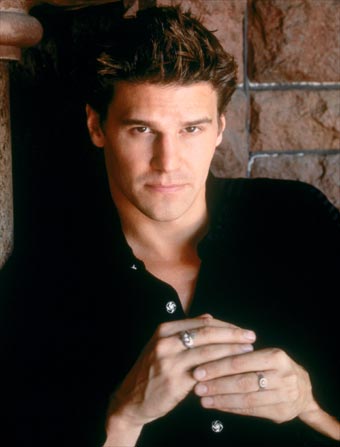
The vampire in Grady Hendrix’s novel The Southern Book Club’s Guide to Slaying Vampires lands somewhere between Angel and Dracula. He’s charming, handsome and a skilled predator. When he arrives in Old Village, an enclave of Charleston, South Carolina, he causes a stir amongst the women who live there. These are women who are expected to look after the children, the house, the pets, their appearance and not much more.

The novel opens with a funny scene. Patricia, the protagonist, is getting ready to host book club. There are very strict rules about this book club: Marjorie Fretwell chooses thirteen “appropriate” titles from the Western canon, and the members of the book club vote for the eleven they would like to read. Tonight, Patricia is supposed to lead a discussion about Cry, the Beloved Country and that’s a problem because she didn’t manage to read it. Turns out, Patricia is just in the wrong book club and when she and some other women band together to read things like Helter Skelter and Psycho, things turn around for her.

When James Harris shows up in Old Village, though, things become decidedly weird. First, Patricia discovers Mrs. Savage, an old woman from down the street (and James Harris’s aunt), in her alley eating a raccoon, “one gory hand [in] its open belly [scooping] up a fistful of translucent guts.” This scene is an early reminder that this is indeed a horror novel. There are many other totally squicky scenes: rats and bugs and all manner of yuck – which is, gross, yes, but also awesome. Then, Miss Mary, her mother-in-law, who now lives with Patricia and her family, claims she knows James Harris from decades before – although surely that can’t be, and besides, Miss Mary has dementia. Fans of vampire lore will have fun spotting the tropes, and seeing the ways Hendrix has upended them, too.

It takes a while for Patricia to figure out what’s going on and even then it’s unbelievable and impossible and, by then, James Harris has made himself a part of the community. When children start disappearing, though, Patricia is determined to do something about it.

Patricia is a wonderful character. At the beginning, she’s a southern housewife who is unable to assert herself. She gave up her nursing career to marry her psychiatrist husband, who is a jackass, and raise her children, Korey and Blue, and her life is now monotonous; she is a shadow of who she was. James Harris shakes her out of her stupor.

I loved The Southern Book Club’s Guide to Slaying Vampires. It’s funny, horrifying, nostalgic and smart. If you like horror novels, I can highly recommend this one. I have also read My Best Friend’s Exorcism, which is also excellent.
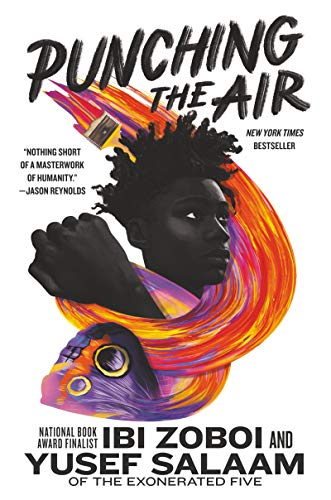
Punching the Air – Ibi Zoboi & Yusef Salaam

I try to remember what I privileged position I inhabit when I read books like Punching the Air by Ibi Zoboi and Yusef Salaam. What can I, a white, middle-aged (I know, it’s a stretch to call me middle-aged), middle-class woman from Eastern Canada, really know about what it is to live in this world as a BIPOC? Nothing. It would be a stretch to even say that I have been discriminated against because I am female because if I have been, I haven’t really been aware of it.

I do think I have a responsibility, as an educator – sure – but also as a human being, to educate myself and expose myself to experiences that are unfamiliar to me. It’s not enough to hope that our children will be better humans than we are; we all have to do better.

Punching the Air is a novel-in-verse that tells the story of sixteen-year-old Amal Shahid, an artist and poet, who finds himself in the wrong place at the wrong time and ends up in jail for a crime he didn’t commit, although he does admit that he “threw the first punch.” Turns out “…it wasn’t about/who threw the first punch/ It was about courts, turf, space/ Me and them other boys/ were just trying to go home”.

Jeremy, the white boy who gets hurt in the altercation is in a coma, and Amal ends up in a juvenile detention facility. He tries to work through his confusion and anger, but it isn’t easy. “I went from/kid to criminal to felon/to prisoner to inmate” and despite a supportive family he must navigate his new reality on his own.

Punching the Air tracks Amal’s time in the facility where he vacillates between hopelessness and hopefulness. Although he is not doing hard time with hardened criminals, juvie is still an unpleasant place. Amal tries to keep his head down. He goes to school. He does what is asked of him – mostly. But he’s a kid and the system is stacked against him and the weight of all those bricks of discrimination weigh heavy on him.

I read Punching the Air in an afternoon. Amal’s voice is clear as a bell. This experience, while fictional, comes from a place of truth. Yusef Salaam himself was convicted of a crime he did not commit when he was just fifteen. (Central Park Five) His experiences with a justice system that is clearly stacked against people of colour – and there is no one in their right mind who could dispute this – adds a layer of authenticity to Amal’s story. But even without Salaam’s experiences, this novel has much to contribute to the discussion and is a worthy addition to classroom and personal libraries. I will certainly be recommending it to my students.

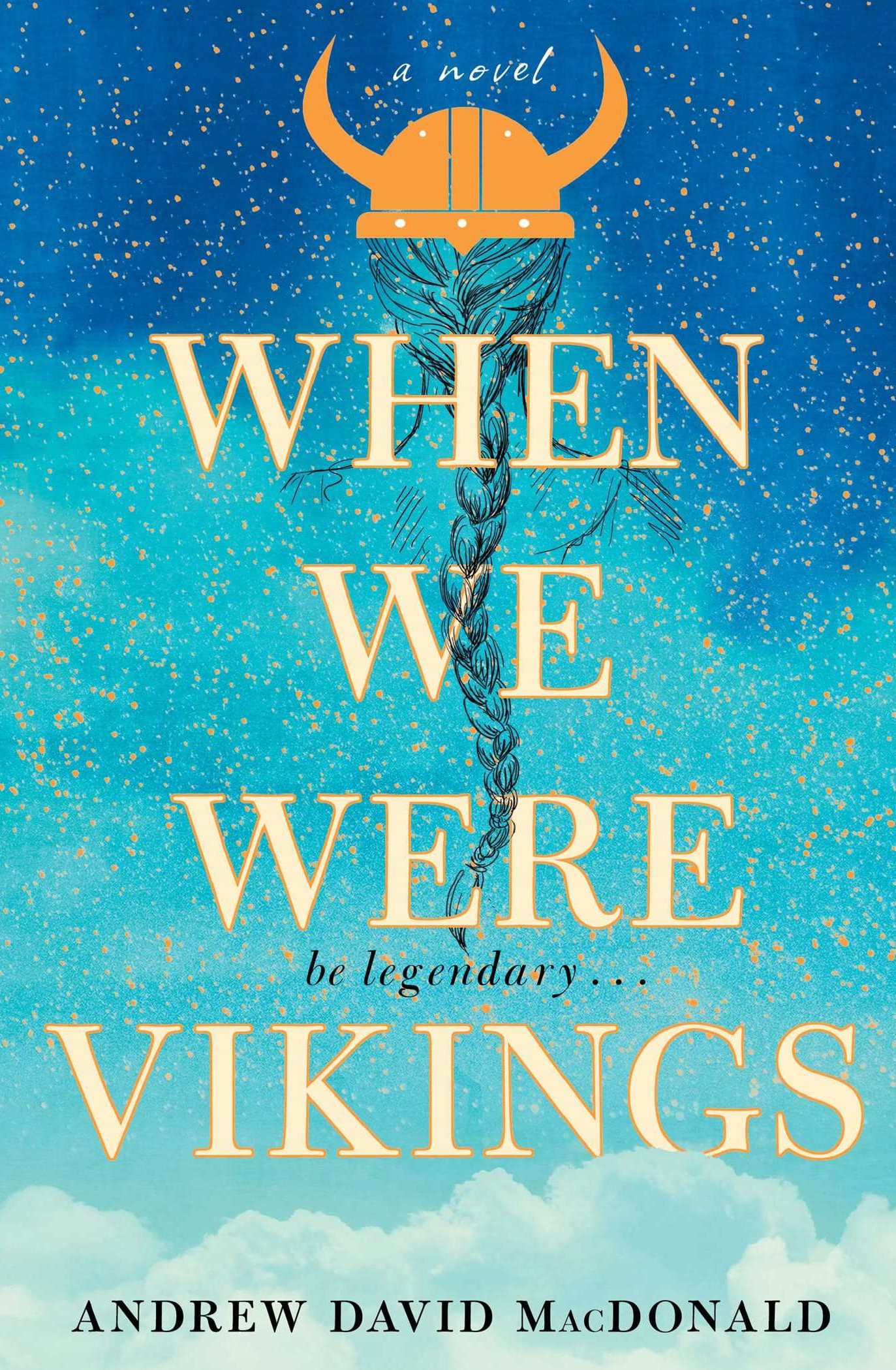
When We Were Vikings – Andrew David MacDonald

Zelda MacLeish, the protagonist of Andrew David MacDonald’s debut When We Were Vikings, was born with Fetal Alcohol Syndrome, “an umbrella term describing the range of effects that can occur in an individual prenatally exposed to alcohol. These effects may include physical, mental, behavioral, and/or learning disabilities with lifelong implications.” (https://nofas.org/) Some of the common developmental disabilities found in people with FAS include “decreased IQ and deficits in motor skills, attention, executive function (working memory, problem solving, planning, and response inhibition), language, visual perception, adaptive functioning (skills necessary for everyday living).” (https://nofas.org/)

Now 21, Zelda lives with her older brother Gert. The siblings live a life dictated by schedules and rules that have been put in place to make Zelda feel secure. Gert is attending college on a scholarship and he does his best to look after his sister, but the truth is that he is only a couple years older and life isn’t easy.

Zelda is fascinated by Vikings. For her 21st birthday, Gert hires a stripper dressed as a Viking. Zelda remarks “Even if you were not an expert on Vikings and had not read Kepple’s Guide to Vikings, you would say, that is a Viking.” But Zelda is an expert and she notices several things about the stripper which are not historically accurate including the fact that his sword isn’t made of metal, his outfit is plastic, and his blonde hair isn’t natural. Zelda follows the Viking code, dividing the people she meets into members of her tribe: Gert, AK47 (also known as Annie, Gert’s ex-girlfriend), Marxsy (Zelda’s boyfriend), Dr. Laird (her therapist) and villains (most of the people Gert associates with).

Once Dr. Laird asked me why I liked Vikings. I told him three reasons:

One, they are brave,

Two, they are strong and people have to think twice before trying to hurt them.

Three, Viking heroes stand up for people who can’t defend themselves.

I told Dr. Laird that I wanted to be all of those things. People look at me and do not think that I am brave or strong and that I am the one who needs protection. My legend will show people that, even if you are not gargantuan, you can still be strong and brave and help others in your tribe.

Zelda will have her chance to prove that she is a Viking when Gert’s extra-curricular activities land him in hot water. She is so much more than meets the eye and I loved every single second of my time with her. One of the things I most love in a book is a strong voice…and Zelda’s is just perfection.

When We Were Vikings is funny, and heart-breaking (often at the same time). This is a novel about found family, but also about the unbreakable bond between siblings. Gert is a deeply flawed human being, but he loves Zelda. This is definitely a coming-of-age story, and watching Zelda navigate the tricky waters of her life is a marvelous journey to take.

Highly recommended.

The Paper Palace – Miranda Cowley Heller

On July 22, 2022 I discussed The Paper Palace on CBC Radio. Listen here.

I read Miranda Cowley Heller’s debut novel The Paper Palace sitting on the porch at my best friend’s “farm.” (I put farm in quotation marks because it’s not a farm anymore, just a peaceful retreat in a beautiful spot at the top of a hill looking over rolling pastures, and the river. It’s magic.) I read for hours because I couldn’t stop. If there’s a list of things I love in books, I’d say The Paper Palace ticks them all.

Elle Bishop, 50, (there’s a thing I loved right there; Elle is 50.) is at her family’s compound in the Back Woods on Cape Cod. She has been coming here her whole life, and it is here where she first met Jonas when he was eight and she was eleven. For the next few summers, Elle and Jonas are inseparable, but then something happens that changes everything, and the two go their separate ways. They meet intermittently, but somehow find their way back into each other’s lives as adults. They are BFFs. Or, at least, that’s the boat they’re trying to float. They’ve managed, until this summer.

The novel takes place over twenty-four hours, but really spans a life time, flipping back and forth between then and now. Elle cherry picks the stories she tells: her mother’s failed marriages, her father’s abandonment, the history of “The Paper Palace” (the name of the place where they summer), her complicated relationship with her older sister, Anna, her friendship with Jonas.

In the here and now, the story begins with a betrayal. It’s not a spoiler to say that Elle and Jonas consummate their relationship; the blurb on the back tells us that much.

I could look at him and nothing else for eternity and be happy. I could listen to him, my eyes closed, feel his breath and his words wash over me, time and time and time again. It is all I want.

What Elle has, though, is a pretty amazing husband, Peter, and three kids. Jonas, too, is married to Gina whose “petite, perfect little bee-sting of a body” makes Elle wonder: “That’s what he wanted?” Elle and Jonas’s shared act is a powder keg with the potential to blow up many lives.

So, those of you who know me or read this blog regularly know that I love angst. LOVE it. Chuck an obstacle in front of people who love each other and I will be swooning before you can say, “hell, yeah!” Wanna stick a literary dagger in my heart? Yes, please. Heller wisely avoids making any of the players villains, which ups the ante for Elle. She’s our narrator; this is her story to tell. And the fact that she has invested in her marriage and it has been a happy one, makes her decision about what to do post-coitus, even more compelling. Then Heller reveals all the details of Elle’s life and the whole concoction is

I truly loved everything about this book. Some people have complained about all the time jumps: didn’t bother me in the least. If I had any complaints it would be 1) there are a lot of names and sometimes I was like “who’s that, again?” and 2) I love you, Reese, and I hope your production company is going to turn this puppy into a limited series *pretty please*, but I hate that your “Reese’s Book Club” sticker is not actually a sticker that I can take off and mars an otherwise gorgeous cover.

That said, The Paper Palace is a beautifully-written, page-turner about a woman who has to make a decision at a point in her life where she’s actually lived a life and has some real skin in the game.

Highly recommended.

Tin Man – Sarah Winman

Sarah Winman’s novel Tin Man is the story of Ellis, a quiet middle-aged man who has spent his adult life working nights in the paint shop at the local car plant in Oxford, England. “He was forty-five years old, and every night he wondered where the years had gone.”

Every day is much like the day before for Ellis, but his life wasn’t always so predictable. First there was Michael. Then there was Annie.

In the front bedroom, propped up among the books, is a color photograph of three people, a woman and two men. They are tightly framed, their arms around one another, and the world beyond is out of focus, and the world on either side is excluded. They look happy, they really do. Not just because they are smiling but because there is something in their eyes, an ease, a joy, something they share.

The “something they share” is the subject of Tin Man, a story that unravels like a beautiful dream. The ribbon that runs through Ellis’s story is a painting of Van Gogh’s sunflowers. Ellis’s mother, Dora, won a reproduction of the painting in a raffle and, to her, it represented “Freedom. Possibility. Beauty.”

When, as an adolescent, Michael meets Dora, they share an appreciation for the painting and what it represents. She tells Michael and Ellis, “Men and boys should be capable of beautiful things.”

Ellis’s relationship with Michael shape-shifts, and when they are nineteen they travel to Van Gogh’s France and consummate their relationship. A choice they make there altars the course of their lives, and a few years later Ellis meets Annie and marries her. Ellis’s marriage is another decision that changes the trajectory of their lives. Winman’s book is really about those choices, big and small, which can have an impact on our lives.

Tin Man is also a book about the kindness of strangers, and of how sometimes a moment of grace can allow the light to get into the darkest corners of our lives. A shared meal. A bed to sleep in. The opportunity to tell our story. Forgiveness when you need it most.

This is a beautifully written book. There are no villains here, only human beings hopeful to live worthy lives. I think the novel suggests that what’s worthy are the quiet moments, the moments of homecoming.

Highly recommended.

Mirrorland – Carole Johnstone

When Cat’s identical twin sister El goes missing, Cat returns to Edinburgh to be with her husband, Ross, while they wait for news. She hasn’t seen or spoken to El or Ross for twelve years, but the reason for their estrangement takes a long time to reveal itself. Don’t worry: you’ll be riveted to the pages of Carole Johnstone’s debut Mirrorland for reasons far beyond why the sisters stopped speaking.

Growing up, El and Cat lived at 36 Westeryk Road, a “gray flat-stoned house with Georgian-bar windows” with their mother and maternal grandfather. Now El and Ross live there, and when Cat arrives she is astounded by how unchanged it is; “the hallway walls are crowded with familiar mounted plates…The tall oak telephone table and grandfather clock are exactly where they used to be as well…The smell is exactly the same….”

This house is filled with old ghosts for Cat. When she re-discovers the papered-over “door to Mirrorland” in the pantry, it unlocks fragments of memories. Mirrorland was

a magic place. Because, whatever else, I can’t deny that. This might once have only been a tradesman’s entrance, a means to a supercilious end; it might now be forgotten – only empty, drafty space and stone – but in between it was something else. Once upon a time, it was rich and full and alive. Gloriously frightening and steadfastly safe. Exciting beyond measure. Hidden. Special. Ours.

Cat and Ross refuse to believe that El is dead. Things get even creepier for Cat when she starts receiving anonymous cards at the house, and then, worse, emails from someone (Cat is convinced it is El; who else could it be?) providing her with clues for a treasure hunt. The clues lead to pages from a diary that El kept, and as Cat discovers them, she also starts to unlock the secrets of what happened in that house when she and El were children.

Mirrorland is like that hall of mirrors in a fun house. The rooms have names like Clown Café, and Donkshop. Then there’s Bedroom 3, a room that even as an adult Cat is afraid to enter because she hears “El shriek in [her] ear, Don’t go in! We can’t ever go in!” The twins’ childhood was filled with stories of pirates and make-believe, and as Cat deals with El’s disappearance, her complicated relationship with Ross, and the sharp edges of her childhood memories, it’s hard to know what is real and what is not.

I really enjoyed this book. It’s well-written, has several excellent twists and Stephen King himself says it’s “plotted with a watchmaker’s precision.” Not gonna argue with the master.

Highly recommended.

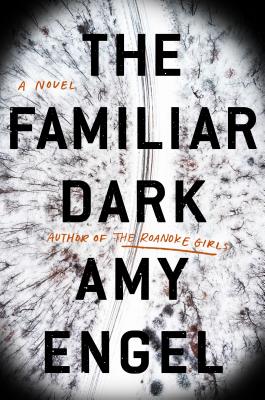
The Familiar Dark – Amy Engel

Last year I read Amy Engel’s novel The Roanoke Girls and I really loved it. Her novel The Familiar Dark is equally compelling and I read it in one sitting.

The Familiar Dark opens with a double homicide. When small town cop, Cal, comes to the diner to tell his sister Eve that her daughter, twelve-year-old Junie and her best friend Izzy have been murdered, Eve is bereft. Junie is Eve’s whole world. They are a team; only Cal has ever been invited into their private world.

Cal and Eve’s childhood is something they have worked their whole lives to escape. The siblings were raised “in a double-wide that stank of men and meth burners…strange faces and too much laughter, most of it jagged and mean. All of it nestled in the armpit of the Ozarks.” Their town is a backwater, where everyone knows your business and Eve wonders if the inept sheriff will ever find out who killed her daughter, so she takes her mother, Lynette’s advice: “You find him, Eve. Whoever did this. You find him. And you make him pay.”

Engel travels some pretty dark roads in The Familiar Dark. Although Eve has worked hard to live a different kind of life and raise her daughter away from the negative influences she’d had, including her mother, who she’s mostly avoided for the past decade, her questions necessarily suck her back into the “familiar dark” of her past.

For example, she must confront her former boyfriend (and I use the term loosely) Jimmy Ray, a local meth dealer.

I’d known what he was because I wasn’t blind. But I’d still fallen for the dark hair and green eyes, the lopsided grin, the tiger tattoo curled around his neck. The scent of danger he wore like cologne. When I was with him, I felt like the old Eve, the one who had flirted with disaster and never cared about how much something might hurt.

The Familiar Dark is almost un-put-down-able. Eve’s past has hardened her; Junie was the person who had smoothed out her rough edges. Engel leads the reader and Eve down a dark path, where Eve is forced to ask questions she may not want the answers to. There are some true surprises along the way and the ending is devastating.

Highly recommended.

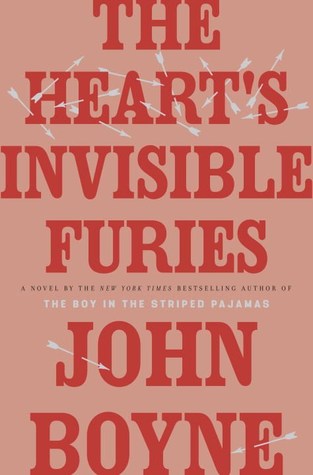
The Heart’s Invisible Furies – John Boyne

According to some scientists, the body replaces itself every seven years. (There are actually differing opinions on this, but for the sake of argument, let’s just say it’s true: every seven years you essentially become a new you.) This may or may not have been something John Boyne gave any thought to when he structured his 2017 novel The Heart’s Invisible Furies. The novel opens in 1945, and then advances every seven years until 2015.

The book begins quite dramatically when Father John Monroe “stood on the altar of the Church of Our Lady, Star of the Sea, in the parish of Goleen, West Cork, and denounced my mother as a whore.” Catherine Goggin, 16, is pregnant with the narrator, and the priest (who it has not yet been revealed has fathered two children of his own) has humiliated her in front of the entire congregation. She will not reveal her baby’s father; her parents and older brothers will not come to her rescue, and she has no choice but to leave her tiny village and head for what she hopes will be a better life in Dublin.

Flash forward seven years and this child, Cyril, lives with his adoptive parents Charles and Maude Avery. That’s what he’s to call them, not mom and dad because, as Charles often reminds him, he’s not a real Avery. The Averys are quite well-off, although Charles is in a bit of trouble for not paying his taxes, and that’s how Cyril meets Julian Woodbead, seven-year-old son of Max Woodbead, the soliciter who is going to try to keep Charles out of prison. This meeting with Julian is significant for Cyril and causes Cyril a great deal of heartache, over the next few years, when he realizes that his feelings for Julian are romantic. Flash forward seven years, and the boys are now sharing a room in boarding school – a circumstance which causes Cyril quite a lot of sexual anxiety.

This is one of the novel’s central themes because homosexuality in a country ruled by the church isn’t just against the law, it’s a sin.

It was a difficult time to be Irish, a difficult time to be twenty-one years of age and a difficult time to be a man who was attracted to other men. To be all three simultaneously required a level of subterfuge and guile that felt contrary to my nature

But lie Cyril must, and these lies cause him all sorts of trouble. It’s difficult to imagine any of this happening in my lifetime, and watching Cyril gratify himself with anonymous partners in alleys and dark corners was really depressing, actually. It was worse, though, to watch him try to ignore his feelings for Julian, who turns out to be a complete womanizer. Eventually, Cyril makes a catastrophic choice which separates him from Julian for many years. Their reunion, when it comes, is quite – I was going to say healing, and it is, but it’s more than that, too.

The Heart’s Invisible Furies is a sweeping, funny, sad picaresque (although I wouldn’t necessarily say that Cyril is rough, and his dishonesty is borne of necessity.) I am usually someone who hates great leaps forward in time, but this was certainly not the case with this novel. I loved being with Cyril and his family every seven years. (Unbeknownst to Cyril, he keeps crossing paths with his biological mother over the years and I kept crossing my fingers hoping that this was the moment that they reconnected.) This is a brick of a book – 580 pages – but I turned the pages without difficulty. It is full of pop culture and political references, I could hear all the accents as the characters spoke, and it is a book that will certainly stay with me for a long time.

Highly recommended.

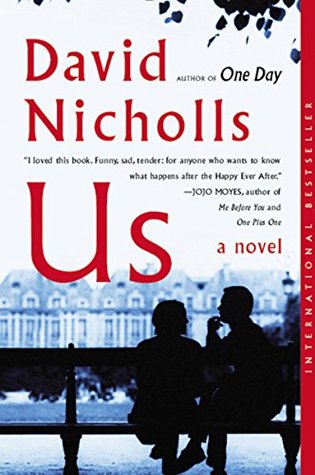
Us – David Nicholls

David Nicholls (One Day, Such Sweet Sorrow) is a master at peering into all the hidden corners of relationships. In Us, he tells the story of Douglas and Connie and their seventeen-year-old son, Albie. One night, Connie wakes Douglas up and drops a bombshell: “I think I want to leave you.”

Douglas and Connie have been married for two decades, a happy marriage, Douglas (our narrator) tells us, but certainly not without its problems. Connie’s news comes just as the family is about to set off on a “Grand Tour” of Europe in advance of Albie heading off to university. They decide to go anyway, and Douglas takes this as a hopeful sign; perhaps he will be able to win back his wife’s affection and repair his slightly wobbly relationship with Albie.

The fact was I loved my wife to a degree I found impossible to express, and so rarely did. While I didn’t dwell on the notion, I had presumed that we would end our lives together.

Douglas, a scientist, and Connie, an artist, seem like an unlikely pair, really. Douglas’s narrative mines their origin story (they met at a dinner party thrown by his younger sister) for all the details which will help the reader understand their relationship and Douglas, wisely, doesn’t gloss over the fact that he is often pedantic and, perhaps, less empathetic than others. Maybe it is the scientist in him, but Douglas doesn’t always see the value in throwing caution to the wind. For him, everything is a teachable moment, and it’s caused some friction with his family over the years. I could certainly see how living with him, especially given that Connie is much more free-spirited, could wear one down.

So the family go off on their tour of the great museums of Europe and it’s a bit of a bust from the get go. Douglas has the whole thing planned down to the minute, but of course it’s impossible to plan for every contingency. Still, he tries.

1. Energy! Never be ‘too tired’ or ‘not in the mood.’

2. Avoid conflict with Albie. Accept light-hearted joshing and do not retaliate with malice or bitter recriminations. Good humour at all times.

3. It is not necessary to be seen to be right about everything, even when that is the case.

Poor Douglas. He really can’t help himself. But he’s not a jack ass. He’s actually quite a lovely guy and he really does try, but it doesn’t take long before the trip goes sideways. His willingness to do whatever it takes to fix things, including his marriage, (often leading to quite comical incidents) is one of the great joys of Us.

The other joy is watching this family – all of whom love each other deeply but imperfectly – try to figure things out. The potential dissolution of a family – all that history – isn’t easy, and watching Douglas bare his scientific soul to the idea of being without Connie and having damaged his relationship with Albie beyond repair is really quite magnificent. I read one review that suggested that Douglas was too reticent about sharing personal details, often times the scene fades to black before too much is revealed, but I think this is exactly the reason Connie felt she had to leave him.

Us is funny (although there were instances when I felt it was trying just a tad too hard to get a laugh), and well-written. I loved visiting these European cities. The characters felt like real people. The ending was – well, you decide.

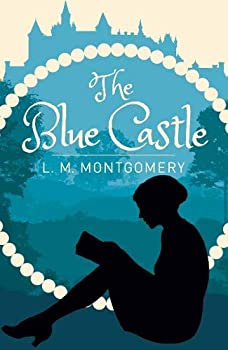
The Blue Castle – L.M. Montgomery

I haven’t read a Lucy Maud Montgomery book for probably 50 years – and, sadly, that’s not an exaggeration. Of course, like many Canadian women, I read and fell in love with Anne of Green Gables when I was a kid, but I haven’t ever revisited Anne’s island. The Blue Castle is the only novel Montgomery wrote which is not set in her beloved Prince Edward Island, and it’s only one of two adult novels she wrote.

Valancy Stirling lives with her widowed mother and Cousin Stickles in Deerwood, Ontario. Her life is joyless, and her mother, cousin and extended family are overbearing and critical. Every day is like the day before, and there is no hope that anything will ever change. What stings most of all is that “she had never had a chance to be anything but an old maid. No man had ever desired her.”

There is one bright spot in Valancy’s life and that is her “Blue Castle”.

Valancy had lived spiritually in the Blue Castle ever since she could remember. She had been a very tiny child when she found herself possessed of it. Always, when she shut her eyes, she could see it plainly, with its turrets and banners on the pine-clad mountain height, wrapped in its faint, blue loveliness, against the skies of a fair and unknown land. Everything wonderful and beautiful was in that castle.

A trip to the doctor changes everything for Valancy. Suddenly she stops allowing her family to bully her and their reaction to her spirited responses is quite comical. She packs her bags and moves out to Old Abel Gay’s, the local handyman and town drunk, whose daughter, Cissy, a former classmate of Valancy’s, is dying. No one can quote believe it. They think she’s gone quite mad. But Abel is kind to her and Valancy finds a friend in Cissy. Suddenly the whole world opens up to Valancy, and truthfully, almost 100 years after The Blue Castle was published, her journey to independence is a delight.

If, like me, you haven’t read Montgomery in forever, I highly recommend this one. It’s charming, it’s funny, it’s sweet and, in many ways, Valancy is a modern heroine. I loved my time with her.