How Reading Changed My Life – Anna Quindlen

Anna Quindlen’s (Every Last One) essay How Reading Changed My Life is an essay every book lover will enjoy. I call it an essay because it’s just 70 pages long, but maybe reading memoir is more appropriate. Quindlen recounts her early days as a reader, the value books have had in her life, and (given that this was published in 1998) a look at the future of books in the digital age.

Reading has always been my home, my sustenance, my great invincible companion. “Book love,” Trollope called it. “It will make your hours pleasant to you as long as you live.” Yet of all the many things in which we recognize some universal comfort – God, sex, food, family, friends – reading seems to be the one in which the comfort is most undersung, at least publicly, although it was really all I thought of, or felt, when I was eating up book after book, running away from home while sitting in that chair, traveling around the world and yet never leaving the room.

Quindlen’s essay sings the praises of being a book drunkard and is critical of the notion that we should be reading solely as “a tool for advancement.” Of course I read to learn things, but I am mostly a pleasure reader, a ludic reader. I have piles of books everywhere and hundreds of unread books on my bookshelves because I will get to them some day. I swear.

Quindlen, too, reads for pleasure. She shares her memories of the first book that “seized [her] completely by the throat”, so much so that she read it and reread it, believing that it was “the best book ever written.” Of course, now she admits it’s probably — critically speaking, at least — not very good, but still finds it “a good read, but no longer a masterwork.” All readers have a book like this in their personal canon. Mine is probably Velocity. I mean, that book probably isn’t high art, but I’ve read it more than any other book and it still guts me. Quindlen allows for reading that is personal; there is no room for snobbery, and I appreciate that.

…if readers use words and stories as much, or more, to lesson human isolation as to expand human knowledge, is that somehow unworthy, invalid, and unimportant?

Preach!

How Reading Changed My Life tackles censorship (“It is difficult not to think of that clarion call, of the notion of forbidden fruit, looking at the list of America’s banned books.”), assigned reading (“In fact, one of the most pernicious phenomena in assigned reading is the force-feeding of serious work at an age when the reader will feel pushed away, not from the particular book being assigned, but from an entire class of books, or even books in general.”) and books in the digital age (“It is not possible that the book is over. Too many people love it so.”)

This book is a delight. Highly recommended.

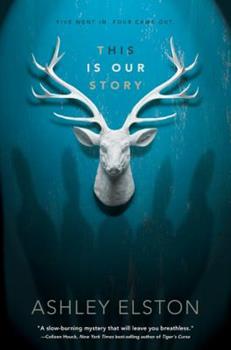
This Is Our Story – Ashley Elston

I read a fair number of thrillers and mysteries. I love the propulsive nature of the plot, the twists and turns, and the hero/heroine in danger. It’s hard to write a thriller that keeps you guessing, unless the writer makes a complete 360 that leaves you shaking your head. Behind Her Eyes springs to mind. I love books with sinister underpinnings like Unspeakable Things or The Roanoke Girls.

Ashley Elston’s YA mystery This Is Our Story puts a lot of adult mysteries to shame, really. It’s the story of five best friends: Grant, Shep, Logan, Henry and John Michael. After a wild night of partying at John Michael’s father’s hunting lodge (these boys are all from wealthy families), Grant is dead.

One of us pulled the trigger, but we all played our own part in his death. They will find marks on Grant that don’t fit with an accidental shooting. They will find marks on us that shouldn’t be there either. The last twenty-four hours will have them talking about more than what happened during this early-morning hunt.

The remaining boys, known collectively as the River Point Boys, leave their fancy private school and enroll in the local public school, but Belle Terre, La is a small town where everyone knows everyone anyway.

Kate Marino attends this school and she is quietly devastated by Grant’s death as the two had been texting each other for weeks and had planned to meet at a party the night before Grant was killed. As part of her senior year, she’s interning at the District Attorney’s office, a job that mostly consists of boring filing, until her mother’s boss tasks her with taking photos, a skill she has honed during her time working for the school’s paper and yearbook.

The powers that be might have a vested interest sweeping this incident under the rug, but Kate is determined to get to the bottom of who killed her friend/potential more than friend. And then she discovers that maybe she didn’t know Grant at all.

I literally couldn’t put This Is Our Story down. Kate is a smart, mature narrator and she keeps digging through the clues, determined to get to the truth even when it seems like her personal safety might be at risk. The novel also uses an anonymous third person perspective – one of the River Point Boys – to give us some insight into what the group might be thinking. It’s impossible to work out which of the remaining four boys might be the culprit, though.

There are lots of twists and a few real surprises, too, and I took the book home with me so I could read the last 75 pages because I HAD TO KNOW.

This well-written, YA mystery is really awesome and I will certainly be looking for more books by this author.

I Capture the Castle – Dodie Smith

I Capture the Castle has been on my physical book shelf for at least twenty years. I have always meant to read it because it’s just one of those books that I felt like I should read. In her article “Why I Capture the Castle has gained a secret cult of book lovers”, Constance Grady writes “I Capture the Castle is that kind of book. It’s not quite famous, even among Smith’s works (her most famous title would be 101 Dalmatians), but for a certain kind of reader — mostly women, mostly bookish — it is perfect. Once you read it, you fall in love with it, and from then on you’re part of a secret club, self-selecting and wildly enthusiastic.” (Vox)

The novel’s narrator, 17-year-old Cassandra Mortmain, lives with her family (her father, his much younger second wife, Topaz; older sister, Rose; younger brother, Thomas, and Stephen, son of their deceased housekeeper) in a crumbling old castle in rural England. They leased the castle – crumbling though it was – when they weren’t quite so financially destitute. Cassandra’s father had written a successful book, Jacob Wrestling, a “mixture of fiction, philosophy and poetry.” The book was very successful, “particularly in America, where he made a lot of money by lecturing on it, and he seemed likely to become a very important writer indeed.” Then he stopped writing and with no income, the family fell on hard times.

The novel takes the form of Cassandra’s journal, which she writes in a short hand that no one can read but her. In it she recounts encounters with people from the village, the Vicar and Miss Marcy, the local school teacher/librarian, chief among them. She talks about her relationships with her siblings and father and stepmother. She writes about food – or lack thereof. She struggles with the awareness that Stephen has developed feelings for her.

He grows vegetables for us and looks after the hens and does a thousand odd jobs – I can’t think how we should get on without him. He is eighteen now, very fair and noble looking but his expression is just a fraction daft. He has always been rather devoted to me; father calls him my swain.

The minutiae of Cassandra’s daily life is not as dull as you might think. It’s the 1930s and it’s wonderful to read about a much simpler time and place. The castle itself, though falling down and without modern conveniences, is as romantic as you might imagine. And things don’t stay bucolic for long, anyway. Simon and Neil Cotton, American grandsons of the deceased owner of the castle, arrive and shake things up for the Mortmains.

Dodie Smith is probably best known for writing 101 Dalmatians, and while everyone has certainly heard of that story, it feels lovely to now be among the special group of women who have spent time with Cassandra. She is intelligent, kind and self-deprecating and watching her negotiate her growing feelings for one of the Cotton brothers is sheer delight. I Capture the Castle is charming, beautifully written and well worth your time. Make a cup of tea, eat a scone and sink into its myriad pleasures. It will not disappoint.

It Sounded Better in My Head – Nina Kenwood

Nina Kenwood’s YA debut It Sounded Better in My Head wasn’t even on my radar when I recently picked it up at the bookstore. It was a William C. Morris Debut finalist and had excellent reviews from School Library Journal and Bookpage (I trust those sort of endorsements over author plugs, tbh) so I bought it. It might have languished with all the other unread books in my class library, but I picked it up to read and honestly couldn’t put it down.

Eighteen-year-old Australian, Natalie, is waiting for her university admission results and planning her future with her besties Zach and Lucy, when her parents announce that they are separating. Worse, they knew this was coming and had neglected to tell her for ten months. Some almost-adults might take this in their stride, but it knocks Natalie sideways because she likes solid plans and the status quo. That’s how her world works.

Or that’s how it has worked ever since she hit puberty and her body betrayed her.

I went from being a straight up-and-down stick figure to a scribble of hips, stomach, breasts, thighs and stretch marks. I didn’t even know stretch marks were a thing.

[…]

But the stretch marks were nothing compared with the pimples. A regular scattering of pimples at first, and then more, and more. Then pimples that turned, almost overnight, into deep, cystic acne. […] It’s gross. I was gross. I woke up thinking that every day for a long time.

I suspect we can all remember the awkwardness of being a teenager, of comparing yourself to others, and Natalie spends most of her early teens friendless and hiding out. At thirteen, she becomes “Reluctant Natalie. Anxious Natalie. Bitter Natalie. Neurotic Natalie.” At fifteen, though, after medication clears up her skin a little and her mother convinces her to attend a creative writing camp, she meets Lucy and Zach.

It’s still hard for Natalie to put herself out there, but all that is about to change when Zach’s older brother, Alex, and his friend, Owen, invite her to a party and Natalie surprises herself by accepting. When Alex and Natalie find themselves in a dark alley because of a game of Spin the Bottle, Natalie finds herself in uncharted water.

And the whole thing is sheer delight. Honestly, I loved Natalie. Let’s face it, it’s only as an adult looking back that your teen years seem even mildly awesome. The best years of your life, my ass. I suspect Natalie speaks for a whole bunch of teens who breathe a sigh of relief when Friday night rolls around. For Natalie it meant that she didn’t “have to go outside or see anyone other than [her] parents for the next two whole days.”

Over the course of just a few days, Natalie’s life is upended, but sometimes that’s what needs to happen in order to get the life you want.

Highly recommended.

Shuggie Bain – Douglas Stuart

Douglas Stuart’s debut Shuggie Bain won the 2020 Booker and was nominated for many other prizes and awards. For good reason. Stuart’s novel traces the life of Hugh “Shuggie” Bain from childhood until he’s sixteen and it’s a doozy.

Shuggie’s mother, Agnes, is central to this story. She’s thirty-nine and lives in a flat with her parents and “to have her husband and three children, two of them nearly grown, all crammed together in her mammy’s flat, gave her a feeling of failure.” Agnes’s endless struggles with men and alcohol are central to Shuggie’s story. His older brother and sister, Leek and Catherine, are far more jaded about their mother’s problems than Shuggie, who is much younger and much more hopeful that Agnes will get better.

When Big Shug, a philandering cab driver, finds a house for them outside of Glasgow, Agnes swells with hope. But when she sees their new home, surrounded by “huge black mounds, hills that looked as if they had been burnt free of life […] the plainest, unhappiest-looking homes Agnes had ever seen” she no longer views the move as a step in the right direction for her marriage. She and her children are isolated from the support system of her parents, and Big Shug essentially walks out on them, too.

Agnes is one of the most fascinating characters I have encountered in a long time. While it is certainly true that she is a hopeless drunk, she is also charming and intelligent. Despite the ways in which she neglects her children, particularly Shuggie, she loves them. Douglas’s novel gives readers plenty of reasons to admire Agnes, even as we watch her sink further and further into the bottle. It is much easier to hate Big Shug because he deliberately abandons his family and does it in such a way as to cause the most damage.

The novel is bookended with Shuggie at sixteen, living in a bed-sit and fending for himself. If you ever want to understand how a person comes to be where they are, examine their childhood. For better or worse, there’s no escaping the influence our families have on us. Shuggie does his best to look out for his mom, especially after Catherine leaves to get married and Leek is finally put out (and can I just say for the record that I LOVED Leek. There’s a scene when he escapes to the top of a hill with his sketchbook that broke my heart.) Shuggie is too young to realize what his older siblings already know: nothing he can do will save Agnes. But that doesn’t stop him from trying.

Although you might think that a book about an alcoholic living in Glasgow (the setting for so much despair in the 1980s due to Thatcher’s economic policies) would be relentlessly grim, it isn’t. These characters are resilient and determined and so lovingly rendered, they will find a place in your heart.

Apparently, Stuart’s manuscript was turned down 32 times! Imagine. If you haven’t yet read the book, I urge you to give it a go. Stuart is a born story teller and this is clearly a story that needed to be told.

Highly recommended.

The Southern Book Club’s Guide to Slaying Vampires – Grady Hendrix

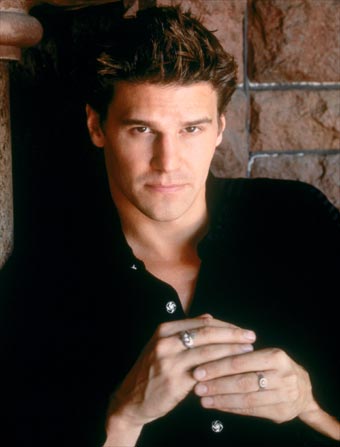
I was introduced to vampires at an early age. My mom used to take my younger brothers and me to the community centre where they offered Saturday matinees of movies like Count Dracula and Taste the Blood of Dracula starring Christopher Lee. I mean, they’re campy now, but back when I was a kid of 11 and 12, they were scary. Although I probably didn’t understand the sexual component of the thrall as a kid, I knew that vampires were powerful opponents and you wouldn’t want to be running into them in a dark alley. So, I have always loved vampires, but I guess I love the romantic version of them, the beautiful, tortured versus the ugly creepy. David Boreanaz as Angel rather than Gary Oldman as Dracula, if you know what I mean.

The vampire in Grady Hendrix’s novel The Southern Book Club’s Guide to Slaying Vampires lands somewhere between Angel and Dracula. He’s charming, handsome and a skilled predator. When he arrives in Old Village, an enclave of Charleston, South Carolina, he causes a stir amongst the women who live there. These are women who are expected to look after the children, the house, the pets, their appearance and not much more.

The novel opens with a funny scene. Patricia, the protagonist, is getting ready to host book club. There are very strict rules about this book club: Marjorie Fretwell chooses thirteen “appropriate” titles from the Western canon, and the members of the book club vote for the eleven they would like to read. Tonight, Patricia is supposed to lead a discussion about Cry, the Beloved Country and that’s a problem because she didn’t manage to read it. Turns out, Patricia is just in the wrong book club and when she and some other women band together to read things like Helter Skelter and Psycho, things turn around for her.

When James Harris shows up in Old Village, though, things become decidedly weird. First, Patricia discovers Mrs. Savage, an old woman from down the street (and James Harris’s aunt), in her alley eating a raccoon, “one gory hand [in] its open belly [scooping] up a fistful of translucent guts.” This scene is an early reminder that this is indeed a horror novel. There are many other totally squicky scenes: rats and bugs and all manner of yuck – which is, gross, yes, but also awesome. Then, Miss Mary, her mother-in-law, who now lives with Patricia and her family, claims she knows James Harris from decades before – although surely that can’t be, and besides, Miss Mary has dementia. Fans of vampire lore will have fun spotting the tropes, and seeing the ways Hendrix has upended them, too.

It takes a while for Patricia to figure out what’s going on and even then it’s unbelievable and impossible and, by then, James Harris has made himself a part of the community. When children start disappearing, though, Patricia is determined to do something about it.

Patricia is a wonderful character. At the beginning, she’s a southern housewife who is unable to assert herself. She gave up her nursing career to marry her psychiatrist husband, who is a jackass, and raise her children, Korey and Blue, and her life is now monotonous; she is a shadow of who she was. James Harris shakes her out of her stupor.

I loved The Southern Book Club’s Guide to Slaying Vampires. It’s funny, horrifying, nostalgic and smart. If you like horror novels, I can highly recommend this one. I have also read My Best Friend’s Exorcism, which is also excellent.

Punching the Air – Ibi Zoboi & Yusef Salaam

I try to remember what I privileged position I inhabit when I read books like Punching the Air by Ibi Zoboi and Yusef Salaam. What can I, a white, middle-aged (I know, it’s a stretch to call me middle-aged), middle-class woman from Eastern Canada, really know about what it is to live in this world as a BIPOC? Nothing. It would be a stretch to even say that I have been discriminated against because I am female because if I have been, I haven’t really been aware of it.

I do think I have a responsibility, as an educator – sure – but also as a human being, to educate myself and expose myself to experiences that are unfamiliar to me. It’s not enough to hope that our children will be better humans than we are; we all have to do better.

Punching the Air is a novel-in-verse that tells the story of sixteen-year-old Amal Shahid, an artist and poet, who finds himself in the wrong place at the wrong time and ends up in jail for a crime he didn’t commit, although he does admit that he “threw the first punch.” Turns out “…it wasn’t about/who threw the first punch/ It was about courts, turf, space/ Me and them other boys/ were just trying to go home”.

Jeremy, the white boy who gets hurt in the altercation is in a coma, and Amal ends up in a juvenile detention facility. He tries to work through his confusion and anger, but it isn’t easy. “I went from/kid to criminal to felon/to prisoner to inmate” and despite a supportive family he must navigate his new reality on his own.

Punching the Air tracks Amal’s time in the facility where he vacillates between hopelessness and hopefulness. Although he is not doing hard time with hardened criminals, juvie is still an unpleasant place. Amal tries to keep his head down. He goes to school. He does what is asked of him – mostly. But he’s a kid and the system is stacked against him and the weight of all those bricks of discrimination weigh heavy on him.

I read Punching the Air in an afternoon. Amal’s voice is clear as a bell. This experience, while fictional, comes from a place of truth. Yusef Salaam himself was convicted of a crime he did not commit when he was just fifteen. (Central Park Five) His experiences with a justice system that is clearly stacked against people of colour – and there is no one in their right mind who could dispute this – adds a layer of authenticity to Amal’s story. But even without Salaam’s experiences, this novel has much to contribute to the discussion and is a worthy addition to classroom and personal libraries. I will certainly be recommending it to my students.

When We Were Vikings – Andrew David MacDonald

Zelda MacLeish, the protagonist of Andrew David MacDonald’s debut When We Were Vikings, was born with Fetal Alcohol Syndrome, “an umbrella term describing the range of effects that can occur in an individual prenatally exposed to alcohol. These effects may include physical, mental, behavioral, and/or learning disabilities with lifelong implications.” (https://nofas.org/) Some of the common developmental disabilities found in people with FAS include “decreased IQ and deficits in motor skills, attention, executive function (working memory, problem solving, planning, and response inhibition), language, visual perception, adaptive functioning (skills necessary for everyday living).” (https://nofas.org/)

Now 21, Zelda lives with her older brother Gert. The siblings live a life dictated by schedules and rules that have been put in place to make Zelda feel secure. Gert is attending college on a scholarship and he does his best to look after his sister, but the truth is that he is only a couple years older and life isn’t easy.

Zelda is fascinated by Vikings. For her 21st birthday, Gert hires a stripper dressed as a Viking. Zelda remarks “Even if you were not an expert on Vikings and had not read Kepple’s Guide to Vikings, you would say, that is a Viking.” But Zelda is an expert and she notices several things about the stripper which are not historically accurate including the fact that his sword isn’t made of metal, his outfit is plastic, and his blonde hair isn’t natural. Zelda follows the Viking code, dividing the people she meets into members of her tribe: Gert, AK47 (also known as Annie, Gert’s ex-girlfriend), Marxsy (Zelda’s boyfriend), Dr. Laird (her therapist) and villains (most of the people Gert associates with).

Once Dr. Laird asked me why I liked Vikings. I told him three reasons:

One, they are brave,

Two, they are strong and people have to think twice before trying to hurt them.

Three, Viking heroes stand up for people who can’t defend themselves.

I told Dr. Laird that I wanted to be all of those things. People look at me and do not think that I am brave or strong and that I am the one who needs protection. My legend will show people that, even if you are not gargantuan, you can still be strong and brave and help others in your tribe.

Zelda will have her chance to prove that she is a Viking when Gert’s extra-curricular activities land him in hot water. She is so much more than meets the eye and I loved every single second of my time with her. One of the things I most love in a book is a strong voice…and Zelda’s is just perfection.

When We Were Vikings is funny, and heart-breaking (often at the same time). This is a novel about found family, but also about the unbreakable bond between siblings. Gert is a deeply flawed human being, but he loves Zelda. This is definitely a coming-of-age story, and watching Zelda navigate the tricky waters of her life is a marvelous journey to take.

Highly recommended.

The Paper Palace – Miranda Cowley Heller

On July 22, 2022 I discussed The Paper Palace on CBC Radio. Listen here.

I read Miranda Cowley Heller’s debut novel The Paper Palace sitting on the porch at my best friend’s “farm.” (I put farm in quotation marks because it’s not a farm anymore, just a peaceful retreat in a beautiful spot at the top of a hill looking over rolling pastures, and the river. It’s magic.) I read for hours because I couldn’t stop. If there’s a list of things I love in books, I’d say The Paper Palace ticks them all.

Elle Bishop, 50, (there’s a thing I loved right there; Elle is 50.) is at her family’s compound in the Back Woods on Cape Cod. She has been coming here her whole life, and it is here where she first met Jonas when he was eight and she was eleven. For the next few summers, Elle and Jonas are inseparable, but then something happens that changes everything, and the two go their separate ways. They meet intermittently, but somehow find their way back into each other’s lives as adults. They are BFFs. Or, at least, that’s the boat they’re trying to float. They’ve managed, until this summer.

The novel takes place over twenty-four hours, but really spans a life time, flipping back and forth between then and now. Elle cherry picks the stories she tells: her mother’s failed marriages, her father’s abandonment, the history of “The Paper Palace” (the name of the place where they summer), her complicated relationship with her older sister, Anna, her friendship with Jonas.

In the here and now, the story begins with a betrayal. It’s not a spoiler to say that Elle and Jonas consummate their relationship; the blurb on the back tells us that much.

I could look at him and nothing else for eternity and be happy. I could listen to him, my eyes closed, feel his breath and his words wash over me, time and time and time again. It is all I want.

What Elle has, though, is a pretty amazing husband, Peter, and three kids. Jonas, too, is married to Gina whose “petite, perfect little bee-sting of a body” makes Elle wonder: “That’s what he wanted?” Elle and Jonas’s shared act is a powder keg with the potential to blow up many lives.

So, those of you who know me or read this blog regularly know that I love angst. LOVE it. Chuck an obstacle in front of people who love each other and I will be swooning before you can say, “hell, yeah!” Wanna stick a literary dagger in my heart? Yes, please. Heller wisely avoids making any of the players villains, which ups the ante for Elle. She’s our narrator; this is her story to tell. And the fact that she has invested in her marriage and it has been a happy one, makes her decision about what to do post-coitus, even more compelling. Then Heller reveals all the details of Elle’s life and the whole concoction is

I truly loved everything about this book. Some people have complained about all the time jumps: didn’t bother me in the least. If I had any complaints it would be 1) there are a lot of names and sometimes I was like “who’s that, again?” and 2) I love you, Reese, and I hope your production company is going to turn this puppy into a limited series *pretty please*, but I hate that your “Reese’s Book Club” sticker is not actually a sticker that I can take off and mars an otherwise gorgeous cover.

That said, The Paper Palace is a beautifully-written, page-turner about a woman who has to make a decision at a point in her life where she’s actually lived a life and has some real skin in the game.

Highly recommended.

Tin Man – Sarah Winman

Sarah Winman’s novel Tin Man is the story of Ellis, a quiet middle-aged man who has spent his adult life working nights in the paint shop at the local car plant in Oxford, England. “He was forty-five years old, and every night he wondered where the years had gone.”

Every day is much like the day before for Ellis, but his life wasn’t always so predictable. First there was Michael. Then there was Annie.

In the front bedroom, propped up among the books, is a color photograph of three people, a woman and two men. They are tightly framed, their arms around one another, and the world beyond is out of focus, and the world on either side is excluded. They look happy, they really do. Not just because they are smiling but because there is something in their eyes, an ease, a joy, something they share.

The “something they share” is the subject of Tin Man, a story that unravels like a beautiful dream. The ribbon that runs through Ellis’s story is a painting of Van Gogh’s sunflowers. Ellis’s mother, Dora, won a reproduction of the painting in a raffle and, to her, it represented “Freedom. Possibility. Beauty.”

When, as an adolescent, Michael meets Dora, they share an appreciation for the painting and what it represents. She tells Michael and Ellis, “Men and boys should be capable of beautiful things.”

Ellis’s relationship with Michael shape-shifts, and when they are nineteen they travel to Van Gogh’s France and consummate their relationship. A choice they make there altars the course of their lives, and a few years later Ellis meets Annie and marries her. Ellis’s marriage is another decision that changes the trajectory of their lives. Winman’s book is really about those choices, big and small, which can have an impact on our lives.

Tin Man is also a book about the kindness of strangers, and of how sometimes a moment of grace can allow the light to get into the darkest corners of our lives. A shared meal. A bed to sleep in. The opportunity to tell our story. Forgiveness when you need it most.

This is a beautifully written book. There are no villains here, only human beings hopeful to live worthy lives. I think the novel suggests that what’s worthy are the quiet moments, the moments of homecoming.

Highly recommended.