The Flying Troutmans by Miriam Toews

troutmans

When Hattie gets a frantic phone call from her eleven year old niece, Thebes, to “come quick”, Hattie leaves her life in Paris and flies home to Manitoba.

“Min was stranded in her bed, hooked on the blue torpedoes and convinced that a million silver cars were closing in on her (I didn’t know what Thebes meant either), Logan was in trouble at school, something about the disturbing stories he was writing, Thebes was pretending to be Min on the phone with his principal, the house was crumbling around them, the black screen door had blown off in the wind, a family of aggressive mice was living behind the piano, the neighbours were pissed off because of hatchets being thrown into their yard at night (again, confusing, something to do with Logan) … basically, things were out of control. And Thebes is only eleven.
Thebes’s mother, Min, is Hattie’s older sister. Theirs is a complicated relationship fraught with sibling rivalry, of course, but also touched by Min’s mental illness. Their parents are almost non-existent in this story: we learn only of their father’s tragic death.  Still, Hattie loves her niece and nephew- even though she hasn’t seen them in quite a while and even if she seems ill-equipped to care for them.

What she decides to do is take them on a road trip to find their father- who has been out of the picture for several years. Hattie remembers him fondly and thinks he’d be the perfect person to care for the kids while their mother recovers in hospital.

What follows is a road trip quite unlike any other as the Troutmans travel first south and then across country to California.

These are damaged people:  fragile and angry and resilient. As they make their way closer to the kids’ Dad, they form a bond built on trust and love. They’re kooky, no question, but they’re most definitely family.

I read Toews’ novel A Complicated Kindness a couple years ago- and really enjoyed it. I liked this even better. It was laugh-out-loud funny and the ending was full of hope and these characters, particularly Thebes, were some of the most enchanting (albeit nutty) people I’ve had the pleasure of spending time with in recent memory.
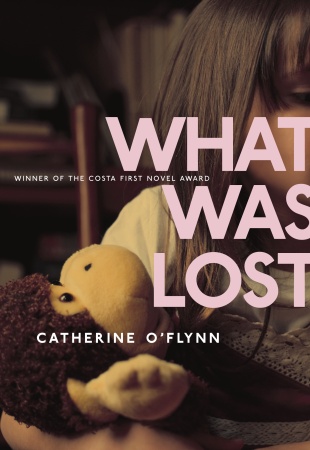
What Was Lost by Catherine O’Flynn

Catherine O’Flynn’s debut novel, What Was Lost, is as labyrinthine as the tunnels under the Green Oaks Shopping Centre. Ten year old Kate Meany is an amateur detective, raised (until his sudden death) by an older, single father. In the novel’s opening third, we travel with Kate and her stuffed monkey, Mickey, as they conduct stakeouts, deliberate over office stationary for Kate’s fledgling detective agency, and pal around with Adrian, the 22 year old son of the man who runs the store next to Kate’s house.

Flash forward almost 20 years and meet Kurt, a security guard at Green Oaks and Lisa, a manager at ‘Your Music’ a big-box music store in the same mall (and not incidentally, Adrian’s younger sister). One night, while sleepily watching the security moniter, Kurt sees Kate. It’s not possible: Kate disappeared the year she was ten and was never found. Adrian, suspected of wrong-doing, but never charged, disappeared and made no contact with his family except for a mixed tape he sent to Lisa every year on her birthday.

From these tangled threads, O’Flynn weaves an exceptionally good story about missed opportunities, luck, family and secrets. She even throws in a slightly gloomy (but fairly funny) picture of what it’s like to work in retail.

O’Flynn’s real strength is in her characters. Kate Meany is a wholly believable and totally enchanting little girl. Lisa and Kurt are flawed and likable. O’Flynn manages to tell us everything we need to know about a character with a line or two – whole back stories come to life with a few carefully chosen words. Even minor characters spring to glorious life and create a picture of small town-life which is ultimately eroded by progress aka big  impersonal malls.

The story had an extra layer of meaning for me because it took place in the West Midlands of England and I once lived there.  I am pretty sure that Green Oaks is actually Merry Hill, a huge shopping centre on the outskirts of Birmingham.

If I have one niggle about the book, it comes at the end. I didn’t like part 42- it felt extraneous to me, like an unnecessary bow on a beautifully wrapped present. Had O’Flynn quit at the end of part 41, I think this little gem of a novel would have been damn near perfect.

The Box Children by Sharon Wyse

Lou Ann Campbell is an extremely sympathetic character. She’s the eleven-year-old narrator of Sharon Wyse’s debut novel The Box Children.

“What you are reading is my diary,” Lou Ann writes. Lou Ann’s  diary is a secret she keeps from her Mother, Father and older brother, Will. She lives with her family on a farm in rural Texas and it is her diary that acts as her confessor, confidante,  and friend.

Despite the novel’s pastoral setting: “I can put my eyes just to the top of the wheat and see the world stretch out flat to the sky,” Lou Ann says, this is a coming of age novel that is, at its core, a novel about abuse and neglect.

Lou Ann’s parents are, for the most part, reprehensible. Her mother walks a fine line between disinterest and cruelty and her father is a handsome philanderer. Even the relationship between Lou Ann and her brother disintegrates (after Lou Ann rats him out over a dirty song he’s sung to her) and that leaves Lou Ann pretty much on her own.

‘The Box Children’ of the novel’s title refers to the five babies Lou Ann’s mother has lost due to miscarriage or still birth. When the novel opens, we learn that she is pregnant again. Instead of making Mother a sympathetic character, she is abhorrent. One story of how she toilet trains babies in the community is paraticularly disturbing. Additionally, it is heart-wrenching to see how Lou Ann strives to be good for her mother, to earn her love, and yet never quite manages.

The Box Children is the story of a dysfunctional family but it is not without humour or hope. Lou Ann is a smart girl with a talent for music and a kind soul and one suspects that, eventually, she’ll leave the farm and go on to great things.

This is a lovely book.

Late Nights on Air by Elizabeth Hay

“Psychologically astute, richly rendered and deftly paced. It’s a pleasure from start to finish.” – Toronto Star

Canadian author Elizabeth Hay won the Giller Prize for her novel, Late Nights on Air. Obviously, you begin a book like this- one with a certain pedigree already attached- with a little trepidation. I mean, what if you hate it?

I am happy to report that this is a beautiful book.

Set in Yellowknife in 1975, the novel tells the story of the intersecting lives of Harry (a CBC radio station manager), Dido (a beautiful announcer who has fled to the North to escape a complicated, but profound, relationship), Eleanor (the station’s secretary), Eddy (the station’s technician), Ralph (a local photographer and on-air book reviewer) and Gwen (a newcomer, who had come to the North inspired by the tragic story of an explorer named John Hornby.) Although Gwen is clearly the central character of the book, Hay deftly manages the interior lives of all the characters and, in doing so, makes us yearn to know more.

The last third of the book takes four of the characters on a tremendous canoe trip, inspired by the life of Hornby. That trip and the consequences of it forever change the lives of these characters.

I have always said that I hate a book that flashes us forward in time and shows us where the characters are now. Hay employs this device, but it seems almost organic. And at the book’s conclusion, I felt truly sad to be parting company with these people.

Ultimately, though, this book is about silence, longing, isolation, community and what love looks like.

I highly recommend it.

Sweet Ruin by Cathi Hanauer

Cathi Hanauer’s book takes an age-old theme, adultery, and turns it into a gripping page-turner of a novel. Sweet Ruin introduces us to 35 year old Elayna, a work-at-home editor who is just crawling out of a two-year depression after the death of her infant son, Oliver. Her husband, Paul, is a benign, but absent figure, someone who is clearly burying his own grief in his work as a lawyer. Their six-year-old daughter, Hazel, is intelligent and demanding.

“…that brilliant April, after rain had soaked us all March, it felt to me as if the earth and the plants, the insects and trees just couldn’t stay in their pants,” Elayna observes. And from the ruin of her life, Elayna begins to emerge and just as she does she meets, Kevin, a much younger boy-man who lives across the street.

It would be easy to find fault with Elayna- after all, she loves her husband and her daughter and has, what appears to be a perfect life. But Hanauer asks us to imagine Elayna as a woman who has lost more than a child; she’s lost, in a life filled with bossy caregivers and schedules dictated by a busy child and workaholic husband, some essential part of herself. It’s almost impossible not to relate to her.

And as Elayna’s relationship with Kevin skirts closer and closer to something from which there will be no turning back, it’s hard not to be swept along. Partly it has to do with Hanauer’s beautiful prose and partly it has to do with how carefully she builds Elayna’s world. Either way, it was impossible to put this book down because even though the it tells an age-old story, it felt new and heartbreaking to me.

Gorgeous.

The Thirteenth Tale by Diane Setterfield

“The Thirteenth Tale is a cleverly plotted, beautifully written homage to the classic romantic mystery novel… Gothic elements are skilfully re-imagined in a peculiar tale of madness, murder, incest and dark secrets…. It is a remarkable first book, a book about the joy of books, a riveting multi-layered mystery that twists and turns, and weaves a quite magical spell for most of its length.” –The Independent

Diane Setterfield’s first novel is a wonderful accomplishment. This is a book lover’s book- even the book’s cover and the weight of the pages appealed to the bibliophile in me. But beyond the aesthetics of the book, Setterfield tells a rip roarin’ tale, an old-fashioned tale filled with mystery and intrigue and personal ghosts.

Margaret Lea lives a quiet life, working with her father in their little antiquarian bookstore. We know very little about Margaret other than the fact that she is close to her father, but not to her mother. She is unmarried. We don’t know how old she is. We do learn, early on, that she is a surviving twin- a fact she stumbles upon, quite by accident when she is young, a piece of her family history which haunts her throughout her life.

Then Vida Winter, the most celebrated writer of the time, writes to Margaret inviting her to hear the truth of her life- a life which has been largely reclusive. This story is the subject of The Thirteenth Tale. And it is a tale that is Gothic, relying on the conventions of literature from the 18th and 19th centuries: ghosts and secrets and unrequited love abound in its pages. It’s a page-turner in the very best sense.

And as the story’s mystery unravels, you’ll find yourself wondering whether all the clues were there from the very beginning…and want to go back to trace the breadcrumb trail.

Ice Cream by Helen Dunmore

Helen Dunmore is a prolific and talented British writer, whose work I discovered several years ago when I picked up her novel With Your Crooked Heart in the bargain bin. She began her writing career as a poet but has written short stories and books for children as well. Her novel A Spell of Winter won the first-ever Orange Prize.

The fact that Dunmore is a poet is obvious in her collection of short stories, Ice Cream. Her use of language is spare and precise. But the thing that makes this collection of stories resonate is the subject matter: death, friendship, regret. And even more interestingly, I couldn’t name one story in this collection that has a tidy ending. So if you like a short story that wraps everything up in a neat bow- this volume will likely disappoint you.

I don’t know that many writers, though (Alice Munro excepted because she can write a short story about anything!) who could dedicate a few hundred words to the tale of a man driving at night who really, really wants a cigarette. Or tell the deeply affecting tale of a man watching his young wife die. Or the slightly creepy tale of a world where women have their babies through artificial means and what happens to one couple who chooses the natural route.

For the short time you spend with the characters in Dunmore’s stories, you are entranced, mystified and troubled. And even though we don’t always learn their ultimate fate, the stories are enough because of the writer telling their tale.

Never Let Me Go by Kazuo Ishiguro

Margaret Atwood says Never Let Me Go is “a brilliantly executed book by a master craftsman who has chosen a difficult subject: ourselves, seen through a glass, darkly.”

The Undependent (UK) called it “an exquisitely nuanced, and extremely moving process of revelation. Never Let Me Go is a novel about love and goodness and the hopes and fears of the human heart.”

Time Magazine named it one of the greatest 100 novels since 1923.

Ishiguro’s novel tells the story of Kath, Ruth and Tommy three students at an exclusive English boarding school called Hailsham. There is something odd about Hailsham and the reader comes to undertsand its secrets at just about the same time as the story’s main characters. It’s actually quite difficult to say any more without giving away plot points which are essential to the novel.

Despite the fact that there is a sense of urgency to understand just what is going on at the school, Never Let Me Go is not a mystery story. Ishiguro does a great job of stringing the reader along, sure, but the true genious of this novel is what he says about hope where there can be none and love where there shouldn’t be. And despite the fact that it does tackle larger issues- of morality and the consequences of science- the novel is also about these three friends, their triangular love affair and their hopes and dreams for the future.

It’s a remarkable novel.

But I didn’t like it very much.

I found it somehow disorganized- the narrative was choppy. The novel’s climax was mainly expository. The novel’s themes are reiterated by a secondary character. I wanted to care for Kath and Tommy and Ruth- and I did- but I wanted to care more, I guess. Still- the final scene of the novel is haunting and if the novel were to be held up as an example of the extremes (both the cruelty and kindness) of mankind- I’m sure you’d be hard pressed to find a book that does it better than this one.

So, I didn’t particularly enjoy the book, but I wouldn’t hesitate in saying that it is worth reading.

Heart-Shaped Box by Joe Hill

I didn’t know who Joe Hill was when I bought Heart-Shaped Box. I read a review, thought it sounded interesting and bought it.  The book sat on my to-read shelf for several months (yes, my to-read shelf is ridiculous!) until I had a conversation one day in the bookstore.

Customer: I’m looking for 20th Century Ghosts by Joe Hill. You probably don’t even have him.

Me: He wrote Heart-Shaped Box.

Customer: (looking surprised) Yeah. Have you read it?

Me: (sheepishly) No. But I’m going to.

Customer: He’s Stephen King’s son.

Me: (my turn to be surprised) Really? Wow.

Customer: I *loved* Heart-Shaped Box. It’s fantastic.

And now,  just this morning,  after my kids left for school and my husband left for work and before I had breakfast or started any of the things I have to do before I go to work…I finished the book. Ironically, the last time I carted a ‘horror’ novel around with me it was King’s book It. That was a long time ago. I loved that book.

I loved Heart-Shaped Box, too. As a matter of fact, before I was even half-way through the book, I hand-sold a copy to a woman who was purusing the Horror section. (I work at Indigo.)

Me: Do you like scary stories?

Customer: (looks sheepish) Yes.

Me: Have you heard of Joe Hill?

Her: No.

Me: I am currently reading Heart-Shaped Box. It’s great. (hand her a copy). He’s Stephen King’s son.

Her: (looking at picture) Only better looking. (laughs and puts book in shopping bag)

I hope Mr. Hill doesn’t think it’s a disservice to draw a comparison between him and his famous Dad. I grew up reading Stephen King. I don’t like everything he’s ever written. For example, even after several attempts I cannot get into The Stand and I know people who love that book. But the thing about King is that he writes books peopled with characters whose fate you actually care about. If you didn’t give a toss about them- the horrible things that happen to them wouldn’t matter. They’d have it coming.

Judas Coyne, the middle-aged, former rock star, slightly misogynistic anti-hero of Heart-Shaped Box, might have had it coming except for this:

“Not my hand! No, Dad, not my hand!”

Any ambivalence I felt about Jude’s fate ended right then and there. Suddenly, he was a character- fully drawn, with an aching past and a boulder the size of Mount Rushmore lodged in his heart. Hill doesn’t go over-the-top with details of Jude’s horrific childhood; I didn’t need to hear anymore anyway. Your imagination always fills in the blanks.

Besides, Heart-Shaped Box operates on a more immediate level. The book has barely begun before Jude buys a dead man’s suit and the ghost that accompanies it. Then all hell breaks loose and Jude and his goth-girlfriend-of-the-moment are running for their lives. And, thanks to Hill, they are lives we actually care about.

Of course there are some horror conventions in this book: radios that intone doom, television news reports that announce horrible endings, creepy people with scribbled out eyes.  There are no cliches here, though.

And I wonder if Jude’s flight- away from the ghost that he’s bought and towards the ghost that has haunted him for the past 34 years was intentional on Hill’s part. It must have been, I know. It adds an extra layer of depth to the book’s denouement, though, that’s for sure

Mr. King must be tremendously proud.

Prmoise Not to Tell by Jennifer McMahon

Jennifer McMahon’s novel Promise Not To Tell is a gem of a story which, as promised on its cover, once I started reading, I couldn’t put down.

Part ghost story, part whodunit, and part coming-of-age tale…[it] takes you through the twisted world of adolescent friendship, betrayal and murder
. says author, Pam Lewis. Yeah, I know these little endorsements are meant to entice readers- but Lewis is telling the absolute truth.

Kate Cypher returns to rural Vermont to care for her mother- who is showing the symptoms of Alzheimer’s. Her arrival back home coincides with the murder of a local girl; a murder almost identical to one that took place 30 years ago.

The beautiful thing about Promise Not To Tell is its gorgeous, complicated (but not convoluted) layers. Kate’s visit home forces her to recall her childhood friendship with Del, the victim of that decades old crime. Bullied and mocked by the other children, Del befriends Kate if only because Kate, too, is an outsider. (She and her mother live in a hippie commune.) Theirs is a friendship of necessity- a friendship where secrets are bartered and withheld, but I think it is also a friendship that is poignant and true. It has to be for the book to have the authentic emotional impact it has.

McMahon’s writing is perfectly pitched and the book is alternately spooky and insightful.  The characters are well-drawn, even minor-characters. More importantly, as the story unravels, you don’t feel cheated by the denouement.

I loved every minute of this book.