Clement-Moore’s novel, The Splendor Falls, contains several recognizable gothic characteristics including an atmosphere of mystery and suspense, an ancient prophecy, a heroine who experiences visions, and supernatural events (there’s ghosts galore). Sadly, the book is too long and too slow to add up to much that would be considered frightening.
Seventeen-year-old Sylvie Davis is the “youngest-ever principal dancer for the American ballet” when she suffers a freak accident which ends her dancing career forever. Dancing is all Sylvie has ever known and the fact that she no longer can sends her into a tailspin of depression which is completely understandable. What is not understandable, however, is the fact that she starts to see things that she can’t explain. She starts to doubt her sanity and her mother, who has recently married a psychiatrist, decides to send her to her deceased father’s ancestral home in Alabama.
Sylvie and her purse dog, Gigi, arrive at Bluestone Hill, a plantation house which is currently being restored by her father’s cousin, Paula. It won’t take long for the reader to recognize the bit-players: the snotty daughter of Paula’s business partner, Clara; the golden-boy president of the Teen Council, Shawn; the mysterious and handsome, Rhys.
Sylvie is petulant about her circumstances. She doesn’t really know, Paula, and knows even less about her father’s childhood. It seems, though, that everyone in the small town knows her family. To make matters worse – she starts seeing things and hearing things. The reader, by rights, should be creeped out right along with her. I can’t quite figure out why I wasn’t.
The Splendor Falls‘ biggest problem is, I think, with pacing. At just over 500 pages, there just weren’t enough thrills and chills to keep the pages turning. The novel’s denouement, when it comes, doesn’t really live up to its potential.
I’d been really looking forward to this book. I loved the title and the cover and the promise of things that go bump in the night, but at the end of the day the book was more whimper than bang.
If you’ve ever been to Provence, I suspect you’ll recognize the lush and aromatic landscape Deborah Lawrenson describes in her novel The Lantern. I’ve never been, but after reading this gothic romance, I’d love to go.
…the lavender fields, sugar-dusted biscuits, wild-flowers in meadows, the wind’s plainsong in the trees, the cloisters of silver-flicking olives, the garden still warm at midnight
The Lantern is two stories in one, stories that share Les Genevriers, an abandoned house in southern France. In one story we meet Benedicte, the youngest of three children who grows up in the house back when it was a working farm. In the other we meet Dom and an unnamed narrator, who is affectionately called ‘Eve,’ who have recently purchased Les Genevries with a view to restoring it to its former glory.
Eve is a twenty-something translator who meets Dom, a forty-something composer, in Switzerland, in a maze – which is prescient, as her life suddenly becomes a tangle of wrong turns and dead ends. She is instantly smitten with him and he seems to return the affection. When they return to London, Eve says “I tried to play it cool. So did he. But we both knew.” Their whirlwind romance eventually takes them to France and Les Genevries.
That summer, the house and its surroundings became ours. Or, rather, his house; our life there together, a time reduced in my memory to separate images and impressions: mirabelles – the tart ornage plums like incandescent bulbs strung in forest-green leaves; a zinc-topped table under a vine canopy; the budding grapes; the basket on the table, a large bowl; tomatoes ribbed and plump as harem cushions; thick sheets and lace secondhand from the market, and expensive new bed covers that look as old as the rest; lemon sun in the morning pouring through open windows; our scent in the linen sheets. Stars, the great sweep of the Milky Way making a dome overhead. I have never seen such bright stars, before or since.
Sounds romantic, eh? But it’s also isolated and when Dom starts to behave strangely and Eve starts to smell things and see things that aren’t actually there, The Lantern crosses over into gothic territory. There’s also, as it turns out, an ex-wife whom Dom doesn’t want to talk about and a real estate agent in the local town who does. The plot thickens.
Then there’s Benedicte. She lives her whole life at Les Genevries. Her story, and that of her blind sister Marthe and malevolent brother, Pierre, weave throughout Eve’s narrative and make up some of the “many stories about the place.” As an old woman living in Les Genevries, Benedicte becomes convinced that she is being haunted. She sees her brother, Pierre, “standing, waiting expectantly in front of the hearth, silent, as if his intention was perfectly clear.” And then he is gone. Benedicte has never believed in ghosts, but it is hard to deny that Les Genevries is full of spirits.
Lawrenson does a fabulous job of weaving together the stories of Eve and Benedicte, their connection to Les Genevries and of making Provence jump off the page. The novel is creepy, clever and compelling and a lot of fun to read.
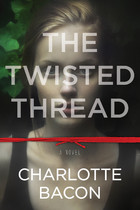
The Twisted Thread is the story of Madeline Christopher, a twenty-something teaching intern at the prestigious Armitage Academy, a New England boarding school. In the novel’s expository opening we get to hear all about Madeline’s education and lack of job prospects, her prickly relationship with her mother (who apparently suggested Madeline get some Botox), her equally prickly relationship with her older sister, Kate (an Armitage graduate and the reason Madeline has this job at all), and her thoughts about the year she’s spent at Armitage. All this while she is running during the forty-five minutes she has to herself.
Upon her return to campus, Madeline is shocked to discover the place crawling with cops and EMTs. A student in Madeline’s dorm has died. And not just any girl: Claire Harkness, a girl whose “crystalline beauty and complete disdain for the adults around her” had awed Madeline.
There is a lot going on in this novel and several subplots which add nothing to the book’s central ‘mystery’ – which is what happened to Claire? There are also a million characters, some mentioned in passing and then recalled as essential after the fact. Teachers are called upon for their expertise in French and scrutinized for strange behaviour (of which there is a lot.) Madeline’s sister Kate shows up unannounced, refuses to answer a few questions about this secret Armitage society and then stomps off in a huff – never to be seen again.
Madeline is desperate to figure out what happened to Claire. While comforting a hysterical student in clear view of Claire’s dead and naked body, Madeline realized something was not quite normal with Claire. “It was her breasts. They were full and rigid with veins…” Claire, Madeline figures, has recently given birth. OMG! Where’s the baby!?
The Twisted Thread is an okay book. The back cover calls it a “gripping and suspenseful story in the tradition of Donna Tartt’s The Secret History,” but I respectfully disagree. Although it’s been twenty years since I read The Secret History, that’s a book that has stayed with me. My 15-year-old son just finished reading it and called it “the best book he’s ever read.” I think The Twisted Thread desperately wants to be more than the sum of its parts, but at the end of the day it’s only just a pleasant enough beach read. I doubt anyone will be talking about it twenty years from now.
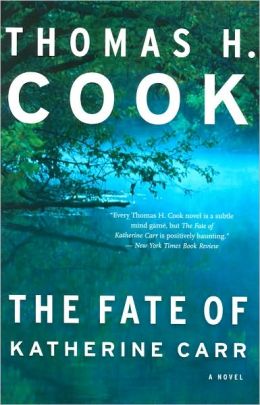
The Fate of Katherine Carr is the story of things lost and found. George Gates is a former travel writer who now writes features for the local paper and spends his evenings drinking scotch at his neighbourhood bar. He’s a broken man, but no wonder: his eight year old son, Teddy, had been taken off the street on his way home from school, murdered and the murderer had never been caught. That was seven years ago, but George hasn’t recovered. He was supposed to pick Teddy up at the bus stop and hadn’t because he’d been trying to write the perfect sentence. He’s consumed with guilt.
One night at the bar, George runs into Arlo McBride, a retired police detective. Over drinks, Arlo tells George about the one missing person’s story which has stayed with him because it was never solved. She vanished, Arlo tells George, “like she cut a slit in the world and stepped through it into another one.”
George is intrigued. Before he’d retired from travel writing, he’d spent the bulk of his career writing about places where people had disappeared. Creepy places like Saipan, where Japanese parents – fearing American soldiers – had hurled their children and then themselves from the cliffs. He suddenly finds himself investigating what might have happened to Katherine. As it turns out, Katherine was also a writer and she left behind a handful of poems and a story which Arlo provides to George.
During the course of his ‘investigation’ George meets Alice Barrows, a twelve-year-old with progeria, a disease which causes premature aging. At first, Alice is just a potential subject for a story, but their relationship quickly becomes more profound. Alice is alone in the world and so is George. She is interested in mysteries and George is soon sharing Katherine’s story with Alice.
Thomas H. Cook is one of my favourite writers. I’ve said it before and I’ll say it again – he writes literary mysteries. They’re page-turners, to be sure, but they are beautifully written, too. The characters are complicated and, more often than not, damaged. George is particularly sympathetic. As a parent, I can only imagine how horrific it must be to lose a child to a monster, but to live daily with the guilt of not being where you said you would. Cook ups the ante every single time.
The Fate of Katherine Carr works on many levels. Narratively, it’s a story within a story within a story. Emotionally, it’s hard not to be moved by George’s never-ending grief or Alice’s own sad fate. Some might argue that nothing much happens, but I respectfully disagree. While Cook might not write blood and guts thrillers, and while his endings might not leave all the loose ends tied in a neat bow – I think he writes fantastic books for careful and thoughtful readers.
Told in the alternating voices of Serena and Poppy, The Ice Cream Girls, by British writer Dorothy Koomson, is part suspense novel and part family drama. Koomson expertly weaves the story of two teenaged girls accused of murdering their history teacher, Marcus Halnsley. They’re called ‘the ice cream girls’ because of a photograph of the pair wearing bikinis and eating ice cream. Their story, and their relationship with Halnsley, is anything but sweet, though.
We meet Serena at the moment when her husband, Evan, proposes to her for the second time. We meet Poppy as she leaves prison, where she has been incarcerated for the past twenty years. These are two women, one black and one white, who might have never met if it hadn’t been for Halnsley.
We meet him through Serena first who says that “all the girls said he should be a film star because he was good-looking.” Serena doesn’t really like him at first because he was “always picking on me.” But when Mr. Halnsley starts to take a special interest in her, Serena feels singled out and special. Halnsley convinces her she could excel at History and offers to give her private lessons. It isn’t long before he crosses the line. It’s a simple (although inappropriate gesture) at first, but it’s easy to see how easily Halnsley manipulates fifteen-year-old Serena.
I walked home instead of getting the bus and along the way, I kept reaching up to touch my face. His touch had been so gentle and soft. And the way he said he wanted to take care of me made my stomach tingle upside down every time I ran it through in my head. He wanted to take care of me. That must mean I was special. Someone as clever and grown-up as him thought I was special.
Just a few short weeks after Halnsley has convinced Serena that he loves her, he meets Poppy. It’s clear, of course, that he’s a predator and that both Serena and Poppy are vulnerable despite the fact that they come from decent families. For the next couple of years the girls share the man who alternately abuses them and plays them off against each other – all the while convincing them that he loves them.
The story requires some finesse and Koomson does a terrific job of layering all the bits together. There’s a lot the reader wants to know. Why did Poppy go to prison, for example, and not Serena? Serena went on to college, met and married Evan (a doctor) and now lives in suburban bliss with her two children. Of course, behind the scenes she’s a hot mess. Every night before bed she has to hide all the knives.
The dinner knives are safe but the sharp ones, the ones that can do serious damage, seem to be missing in action. Admittedly, that’s my fault: I hid them last night, and I can’t quite remember where.
Things aren’t much better for adult Poppy, either. She arrives home to her parents only to discover that her father isn’t speaking to her, can’t even look at her and her mother
managed to sit down at the same table as me for more than three seconds. She didn’t make herself a cup of tea, so I knew she wasn’t staying, but it was a start. She actually came into the kitchen and didn’t immediately walk out again.
Poppy is intent on finding Serena and getting her to admit that she is actually responsible for Halnsley’s death and while their reluctant reunion dredges up all sorts of bad memories, it also allows the women to finally have a chance at exorcising the ghost of Halnsley, a man whose hold on them has poisoned their lives long after his death.
D.S. Glyn Capaldi, the protagonist of Ewart Hutton’s debut Good People, is a Welsh cop who got into a bit of trouble in Cardiff and had been reassigned to a dinky town in the middle of nowhere, a place where the higher-ups figure he can’t get into any more touble.
The reader doesn’t get to learn very much about Capaldi. He’s divorced. He’s smart. He’s got good instincts, but isn’t really a team player and he’s very much an outsider in Carmarthen. Detective Chief Superintendent Galbraith describes him as ” someone who used to be a good cop,” which is why Galbraith has rescued him so he isn’t “wearing a rinky-dink security uniform and patrolling the booze aisle in some shanty-town supermarket.” Capaldi is getting another chance, but he’s on a short leash.
Which is why no one wants to give him the time of day when Capaldi is suspicious about Carmarthen’s latest crime. Six men coming home from a soccer game in England, disappear into the woods with a young girl. Their abandoned mini-bus is found on the side of the road, but hours later when the party is found, not everyone is accounted for.
Police who are familiar with the men believe their story – convoluted as it is – but Capaldi isn’t as convinced.
Good People is a relatively straightforward mystery that is fast-paced and intriguing. Capaldi certainly grows on you and the story is not your standard whodunit. Instead, Good People is about the underbelly of a town that, on the surface at least, seems quaint and shiny and our capacity for deception.
I read the first 192 pages of David Bell’s novel Cemetery Girl lickety split. I couldn’t put the book down. I wondered – how come I’ve never heard of this book or this author? How come the only positive promotion is from other authors? Where has this author been all my life?
And then it all went to hell in a hand basket.
Cemetery Girl is the story of college professor Tom Stuart and his wife, Abby, and their daughter, Caitlin, who disappeared four years ago when she was twelve. Now, Abby has decided it’s time to say goodbye to Caitlin and has organized a memorial service for her daughter. It’s caused something of a rift between Tom and Abby because Tom hasn’t given up hope that his daughter will come home to them because her body has never been found. But Tom and Abby’s marriage is on the slippery slope anyway. Abby has found religion and is spending more and more time with Pastor Chris her new ‘best friend.’ Yeah, right.
For the first half of the book I was totally invested in Tom’s story and the novel’s attempt to make him a somewhat unreliable narrator. For example, he and his half-brother, Buster, have different takes on their childhood. Tom remembers his step-father, Paul, as a mean and abusive drunk; Buster claims it wasn’t like that at all.
There are a bunch of minor characters in the novel – Detective Ryan, the one and only cop still assigned to Caitlin’s case; Susan Goff, a volunteer with the police department (who is not a therapist or professional counsellor, just someone to talk to); Liann Stipes, a lawyer whose own daughter had been murdered and who has acted as an advisor to Tom; Tracy Fairlawn, a stripper who claims she saw Caitlin. Then there’s this mysterious blonde girl who keeps appearing near Caitlin’s tombstone or outside the Stuart house in the middle of the night.
Like I said, Bell kept me turning those pages for quite a long time. Then I just didn’t believe it anymore. I didn’t believe the way characters started to speak to each other. I didn’t believe the resolution of the book’s central mystery. I didn’t believe any of Tom’s interactions with anyone – they just all felt artificial. I’m a parent; I wouldn’t behave this way.
Cemetery Girl had a lot of potential, but a book like this depends on credibility and at the end of the day – it just didn’t have any.
Despite the fact that my children, my daughter in particular, are over-the-top Harry Potter fans, I have only ever read the first book, Harry Potter and the Philosopher’s Stone. When my daughter was really little, say four or five, I had tried to read the book to her and I just couldn’t do it. I did end up reading it out loud to a grade nine class a couple of years ago and they loved it; so did I.
That said, I wasn’t really looking forward to tackling J.K. Rowling’s massive post Potter novel, The Casual Vacancy, when it was one of last year’s book club selections. That book ended up being a really pleasant surprise, however, and proved once and for all (as if being one of the best-selling authors of all time wasn’t proof enough) that Ms. Rowling can write the hell out of a story.
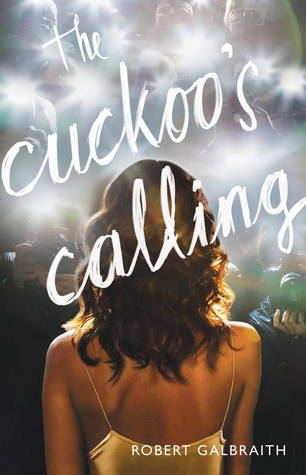
My book club recently met to discuss Rowling’s mystery novel The Cuckoo’s Calling, which Rowling wrote using the pseudonym, Robert Galbraith. (There’s an interesting article about her decision to do so here. ) By the time we got to the book, though, the gig was up and we already knew Rowling had penned the book.
Cormoran Strike, the novel’s protagonist, is a former soldier who lost a leg below the knee to a land mine in Afghanistan. Now he lives in London where he works – although not very successfully – as a private investigator. His relationship with Charlotte has just ended badly – again. He’s broke and living in his office. And then John Bristow arrives with a case for him.
Bristow is the brother of Strike’s childhood friend, Charlie, who had died when they were kids. He’s also the brother of Lula Landry, the most famous model on the planet. Landry recently committed suicide, but John believes something more sinister happened and wants Strike to investigate.
Of course, it’s really impossible to say much more about the story without giving away important plot points. Suffice it to say that as far as the ‘detective’ part of the novel goes – there’s lots to keep mystery-lovers in the game.
Rowling’s real strength as a writer is characterization. And as I tell the students in my writing class – character is the most important thing anyway; they are what drives your plot.
The Cuckoo’s Calling is chock-a-block with characters of all sorts, the most important of which is Cormoran Strike himself.
The reflection staring back at him was not handsome. Strike had the high, bulging forehead, broad nose and thick brows of a young Beethoven who had taken to boxing, an impression only heightened by the swelling and blackening eye. His thick curly hair, springy as carpet, had ensured that his many youthful nicknames had included “Pubehead.” He looked older than his thirty-five years.
Although the women at book club couldn’t agree on whether we found Strike attractive or not (trying to cast him in a movie version was hysterical), we all agreed that he was super-smart and that’s always the sexiest thing anyway.
Strike and his office temp, Robin (who is pretty smart herself) work their way through the list of Lula Landry associates, turning over rocks in an effort to understand the model and the world she inhabited. It makes for a pretty compelling tale.
The best endorsement I can offer for The Cuckoo’s Calling is this: I bet we’ll be seeing Cormoran again and since he’s a character I can’t seem to stop thinking about, I welcome the opportunity to join him on his next case.
If you are a person of a certain age, you probably have fond memories of John Hughes’ films. Even though I was already in my early 20’s when he started producing arguably the best teen movies ever – I was still young enough to see myself in the characters he committed to celluloid.
Sixteen Candles is my all-time favourite Hughes film, for reasons which will be apparent to anyone who has ever seen the film. I still watch it occasionally and it still makes me laugh and it breaks my heart a little now that Hughes has died.
Yes, you can argue that Jake Ryan isn’t perfect – he did let an underage, unlicensed driver take his very drunk girlfriend home in his father’s Mercedes, but it was the 80’s and, come on, Jake Ryan is pretty damn dreamy. Also, who didn’t see some part of themselves in the other characters on the screen: Molly Ringwald’s slightly awkward Samantha Baker, Anthony Michael Hall’s loveable dork. Everyone you ever went to high school with is lovingly represented in this flick and in Hughes’ other teen masterpieces, Pretty in Pink, The Breakfast Club, and Ferris Bueller’s Day Off.
I would posit that John Green is this generation’s John Hughes and I hope Mr. Green will consider that a compliment because it is certainly meant as one.
Last year because everyone and their dog was reading The Fault in Our Stars I did, too. That was a reading experience I will never forget – curled in the fetal position on my bed at 2 a.m., laughing then crying, then laughing again. That is the experience I want my students to have.
The only other John Green book I have in my classroom library is Paper Towns and I just finished it yesterday. (Trust me, I’ll be rectifying the lack of Green books post-haste.) Paper Towns received rave reviews and the Edgar Award (a prize awarded by the Mystery Writers of America) and it’s totally deserving of both.
Quentin Jacobsen is just weeks away from graduating from high school when his next door neighbour Margo Roth Spiegelman shows up at his window in the middle of the night. Although Quentin and Margo had been childhood friends, they’d drifted apart as they’d gotten older and now, in Quentin’s eyes at least, Margo is this exotic and beautiful creature, but not necessarily his friend.
Margo Roth Spiegelman, whose six-syllable name was often spoken in its entirety with a kind of quiet reverence. Margo Roth Spiegelman, whose stories of epic adventures would blow through school like a summer storm: an old guy living in a broken-down house in Hot Coffee, Mississippi, taught Margo how to play guitar. Margo Roth Spiegelman, who spent three days traveling with the circus – they thought she had potential on the trapeze.
…
The stories, when they were shared, inevitably ended with, I mean, can you believe it? We often could not, but they always proved true.
Quentin’s best friend, Ben, describes Margo as “the kind of person who either dies tragically at twenty-seven, like Jimi Hendrix and Janis Joplin, or else grows up to win, like, the first-ever Nobel Prize for Awesome.”
Anyway, Margo needs Quentin’s help. She also assures him that this will be the best night of his life. Quentin is a guy who generally plays by the rules, so his decision to help Margo is slightly out of character for him. Nevertheless, he helps Margo carry out a list of tasks, some of them vengeful and some of them contemplative and he is indeed changed by the experience. Which is why when Margo suddenly disappears, he is compelled to follow the breadcrumb trail of clues she’s left behind.
Paper Towns is a clever mystery for sure, but that’s not the only reason to admire the heck out of it. What I love about John Green is the way he writes dialogue. His characters are smart and funny and honest-to-goodness people. In the same way that John Hughes made his characters painfully awkward or awesome or self-deprecating or ironic, Green’s teens are whole and fragile and super smart and laugh-out-loud funny.
And they think thinky-thoughts. The fact that Paper Towns is set in Orlando, Florida (John Green’s hometown) is significant. Margo says “you can see how fake it is…It’s a paper town. I mean, look at it Q: look at all those cul-de-sacs, those streets that turn in on themselves, all the houses that were built to fall apart.”
Quentin’s journey to find Margo makes him question not only everything he thought he knew about her, but also everything he believes about himself and Green does a great service to his characters (and the young adults who will be reading this book) by not giving us pat answers.
So – read John Green. Watch John Hughes. Through their eyes you’ll see teenagers at their worst…and their best. And it’s all beautiful.
I always say Thomas H. Cook is a mystery writer and he is…but I think he is also so much more than that. Master of the Delta is my 8th outing with Cook and it didn’t disappoint, even though some of the themes were familiar. The novel has the propulsive energy of a mystery, a book with a thread of whodunit twined with a ribbon of ‘is this going to end like I think it’s going to end?’ And of course – nothing is ever quite what it seems. But Cook operates on another level and this is where I think he excels.
Master of the Delta is Jack Branch’s story. Branch is a twenty-three year old teacher who has returned to his hometown to teach at Lakeland High School. Branch has had a priviledged upbringing: he grew up at Great Oaks, one of the town’s massive plantation homes. It is 1954.
As a boy I’d sat with my father on just such a veranda, evenings that despite all that has happened since still hold a storied beauty for me. There was something calm and sure about them, and it would never have occurred to me that anything might shatter the sheer stability of it all, a father much admired, a son who seemed to please him, a family name everywhere revered and to which no act of dishonour had ever been ascribed.
Branch is a fussy young man – no, fussy isn’t the right word. He’s cocky. He believes his own hype. I don’t mean to say that he is without merit, but his youthful arrogance is partly to blame for events that haunt him for the rest of his life.
And that’s one of the cool things about Master of the Delta (and Cook’s novels in general). Cook always manages to weave past and present together seamlessly so Branch’s story is told as it unfolds, but also from the vantage point of Branch as a much older man – someone who is, from this vantage point at least, able to see his own character flaws.
Branch is teaching a course on evil through the ages and he discovers that one of his students, Eddie Miller, is the son of Luke Miller, the Coed Killer – a man who had killed a local girl and subsequently been killed in jail. Branch encourages Eddie to write a paper about his father. He feels it will help Eddie get out from under the weight of his awful heritage. So Eddie starts to research the father he barely remembers, but when this research reaches into his own life, Branch’s age and inexperience begin to show.
Really, Master of the Delta is a book about fathers and sons, about the part luck plays in how our lives turn out, about kindness and cruelty. It is a book that has something to say about teachers and books and as a teacher who loves books, I enjoyed that. I truly believe Cook is a masterful observor of human life – our weaknesses and our strengths. He might wrap it all up in a mystery, but I can’t think of anyone who does it better than he does.

 Clement-Moore’s novel, The Splendor Falls, contains several recognizable gothic characteristics including an atmosphere of mystery and suspense, an ancient prophecy, a heroine who experiences visions, and supernatural events (there’s ghosts galore). Sadly, the book is too long and too slow to add up to much that would be considered frightening.




 The Ludic Reader