The Finishing School – Joanna Goodman

An invitation novelist Kersti Kuusk receives to attend the 100th anniversary of the boarding school she went to in Switzerland coincides with the news that one of her former classmates has died after a battle with cancer. In her last letter to Kersti, Lille reasserts that their mutual friend Cressida had not fallen by accident and that incriminating evidence to prove this might be found in the Helvetians ledger.

Canadian novelist Joanne Goodman’s novel The Finishing School toggles between the present, where Kersti and her husband Jay are struggling to conceive and Kersti is also out of ideas for her next novel, and the past, where Kersti’s time at the Lycee International Suisse is unspooled.

Born to Estonian immigrants, Kersti is the youngest of four sisters. The honour of attending the Lycee had fallen to Kersti because “her sisters didn’t have the grades to earn the Legacy Scholarship,” but Kersti also suspected that “her parents are sending her away because they’re exhausted.”

Kersti’s new roommate is the beyond beautiful Cressida.

…she’s far from ordinary. She has a beautiful, unruly mane of hair, spiraling out in all directions. Her head is just slightly to big for her slender body, but she’s dazzling, with pale green eyes, exquisitely long lashes, and a prominent, arched brow […] all of it together a masterpiece of teenage magnificence.

Kersti spends the next few years of high school loving and loathing Cressida in equal measure. Cressida can be a lot, but she is also fiercely loyal and generous and her friendship affords Kersti a life she would never have had access to otherwise.

We learn early on that Cressida had fallen from the balcony of her dorm room, and Lille’s letter many years later dredges up all those old memories. When Jay suggests that there might be a new novel in this story, it is both a distraction from Kersti’s failed attempts to get pregnant (which is causing a lot of strife in her otherwise happy marriage) and also sends her down a rabbit hole in an attempt to figure out what really did happen almost 20 years ago.

The Finishing School is a real page turner and also a book about friendship, motherhood and loyalty. I could barely put it down.

None of This is True – Lisa Jewell

Lisa Jewell’s most recent novel, None of This is True, could have been ripped straight from the true-crime headlines. And just like a true-crime podcast or documentary, Jewell’s book is totally binge-able.

Alix Summer, a successful podcaster who lives a polished life with her successful husband, Nathan, and her two young children in a tony London neighbourhood, meets Josie Fair, a part-time seamstress with two adult children and a husband, Walter, who is old enough to be her father. Their meet cute happens at a local gastropub, not the sort of place Josie would normally be dining, but it is her 45th birthday and she wanted, for once, to do something special. Turns out, it is also Alix’s 45th birthday.

This incidental meeting seems momentous to Josie, so when she accidentally on purpose runs into Alix again she confesses that she doesn’t “break free of the past now, then when will [she]?” She wants to tell her story and Alix is looking for another project. Josie and her messed up life seems like the answer to her creative prayers.

It doesn’t take long for Josie to start becoming full-on obsessed with Alix’s house and the casual elegance of her life. She asks Alix to help her buy new clothes. She takes small, inconsequential things from the Summers’ home, which she visits regularly because Alix’s podcast studio is in the back garden. She captivates Alix with the story her relationship with Walter, which began when she was 13 and he was 42, and of a daughter who ran off at 16. Another daughter, Erin, never comes out of her bedroom. It is clear that Josie’s life is messed up.

Or is it?

As with all of Jewell’s really great books – you really won’t know what to believe…or in this case – who to believe. The book’s structure is comprised of podcast recordings, Netflix documentary transcripts and chapters told from both Josie and Alix’s point of view. It makes for easy reading; I read it in two days. Like the media it mimics, None of This is True is easily consumable, a big bowl of buttered popcorn that’s fun to eat but not exactly life-sustaining.

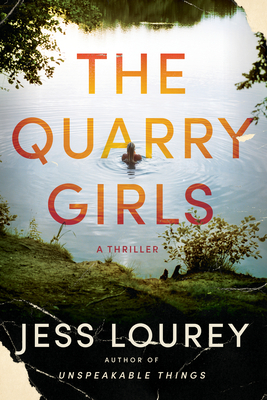
The Quarry Girls – Jess Lourey

Jess Lourey (Unspeakable Things, Bloodline) has written another fast=paced thriller ripped straight from the headlines. Literally. In her Author’s Note, Lourey says of her childhood home in Minnesota: “Three killers were on the loose in Saint Cloud when I was growing up. Only two have been caught.”

In The Quarry Girls, best friends Maureen, Brenda and our narrator, Heather, are coming of age in Pantown, a suburb of Saint Cloud, in 1977. Pantown was

built by Samuel Pandolfo, an insurance salesman who in 1917 decided he was going to construct the next great car manufacturing plant in good old Saint Cloud, Minnesota. His twenty-two-acre factory included fifty-eight houses, a hotel, and even a fire department for his workers. And to be sure they made it to work come sleet or snow, he ordered tunnels dug linking the factories and the houses.

One day, while playing hide and go seek in the tunnels, Heather and Brenda see something they aren’t supposed to see. When a local girl who is just a little bit older than they are goes missing, the teens begin some sleuthing of their own. It turns out that not everyone in Pantown is to be trusted.

There are all sorts of nefarious characters in this book including local boys Ricky and Ant and a new guy, Ed who

was way too old to be hanging out with high school kids, even a brain-fry like Ricky. […] Ed was exciting and terrifying and so out of place. His greased black hair and leather jacket against the soft, pastel Pantowners shopping behind him reminded me of a sleek jungle cat let loose in a petting zoo.

Even Heather’s parents, a mother who spends most of her time in bed and whose moods are unpredictable and a father, the local D.A. who is hardly never home, don’t seem all that reliable. Heather’s story is as much about the journey to adulthood as it is about what dark deeds are happening in Pantown.

And – an added bonus – so many references to the 1970s, the period of time in which I was coming of age. Heather’s friend Claude looks like Robby Benson. Getting dolled up meant an extra slick of Kissing Potion. Phones operated on a party line. Smokie and the Bandit was on the big screen. All these little nods to the period were just so much fun.

The story itself is fast-paced, well-written and I couldn’t put it down.

Strange Sally Diamond – Liz Nugent

Sally Diamond’s father always told her that when he died that she should put him out with the trash, so

When the time came, on Wednesday, 29th November 2017, I followed his instructions. He was small and frail and eighty-two years old by then, so it was easy to get him into one large garden garbage bag.

The first fifty pages of Liz Nugent’s novel Strange Sally Diamond flew by. I was wholly invested in Sally’s story and her peculiar personality. Her awkward interactions with the people who live in her small Irish town, the fact that she seemed so out of step with the world, her appearance — all of these things would have been interesting enough on their own. But there is so much more to her story and when a teddy bear arrives in the mail from New Zealand, Sally’s insular life explodes. Although she has always known that she was adopted, she didn’t know any of the details of the origins of her birth. Her father’s death and the arrival of this teddy bear exposes her dark past.

I don’t want to spoil the story – hers, or that of the novel’s secondary narrator, Peter – so it’s hard to really talk about without giving things away. In any case, my problems aren’t with the story itself, which certainly had lots of potential. And my problem wasn’t with Sally, either. Despite her idiosyncrasies, I quite liked her. And my problem wasn’t even with the writing itself, which was straightforward and easy to read.

Strange Sally Diamond is another case of a book that tells you things, sometimes at convenient times. The truth of Sally’s pre-adoption life is revealed to her in a series of letters. Despite Sally’s warm feelings about her father, his less-than-altruistic motives are revealed to us by her aunt, her mother’s sister. As Sally becomes less a fish out of water and more of an active member in her community, all too quickly (given the 40 years of isolation and trauma) she has a circle of friends, a social life, people looking out for her. I mean, I guess we can believe that the reason she never had any of those things is because her father was over-protective…

All the pieces fit neatly into place and perhaps that is the sign of a well-crafted novel, but for me, it was just okay.

True Crime Story – Joseph Knox

Joseph Knox’s novel True Crime Story capitalizes on the public’s insatiable appetite for, well, true crime stories. I have to admit, I can never scroll past any of the true crime videos that pop up on my social media feed.

For a hot minute, I thought True Crime Story was actually true. The novel opens with a note from the publisher claiming that this second edition “includes wider context on the previously undisclosed role of Joseph Knox in the narrative.” Knox inserts himself into the narrative based on his relationship with Evelyn Mitchell, a writer who reaches out to Knox to ask for advice on this story she is writing about the disappearance of Zoe Nolan, a nineteen-year-old University of Manchester student who leaves a party and is never seen again. In his note at the beginning of the book, Knox references his previously published novel Sirens — which, in fact, is a real book – thus my initial confusion.

True Crime Story is not based on a real person or crime. “I don’t think I used any one young woman as inspiration–if only because I was more interested in the milieu of a murder/missing person,” Knox said. “The press–good and bad–the grieving families and friends, and the ones who clearly see it as the start of their 15 minutes. There’s a lot of opportunity attached to tragedy–a grotesque kind of fame–and I think that’s what I was more interested in than anything.” (Shelf Awareness for Readers)

This novel is structured as a series of statements made by Zoe’s friends, family and other people associated with the case. Think Daisy Jones but more stabby. There is also an exchange of emails between Mitchell and Knox and a limited amount of multi-media posts and photos. Sometimes events are recollected differently by various people; therefore, we are reading the observations and memories of a group of unreliable narrators. It makes for interesting reading as you try to untangle an individual character’s motivation and perspective.

Zoe also has a twin sister, Kim, who is – by her own account – the polar opposite of Zoe.

She was the most invincible of us all, everything-proof and stunning, wearing this luminescent red jacket, ultrahot red all over. Matching red lipstick and a slightly visible red bra. Zoe was busy being noticed.

Everyone has secrets in True Crime Story. I found this novel thoroughly engaging even though the ending isn’t necessarily 100% satisfying.

The Last House on Needless Street – Catriona Ward

Catriona Ward’s novel The Last House on Needless Street is a Russian doll of a novel and if you haven’t read it yet, you should do your very best not to be spoiled before you start.

Ted lives with his sentient cat, Olivia, on a dead end street near the woods. Sometimes his daughter, Lauren, also lives with them. The house is boarded up and triple locked and Ted rarely leaves. Certainly he has no visitors. Ted was implicated in the disappearance of a six-year-old girl eleven years ago. He calls her Little Girl With Popsicle. In the end though, he wasn’t charged because on the day she went missing he “was at the 7-Eleven all afternoon and everyone says so.”

Dee moves in next door. Her sister, Lulu, went missing at a nearby lake, and she was never found. She is convinced that Ted is responsible for her disappearance and she is determined to prove it.

Based on this rather cursory synopsis, you might be inclined to think that Ward’s book is a rather straightforward thriller, but you’d be wrong. And not just because Olivia the cat is one of the book’s narrators.

I was busy with my tongue doing the itchy part of my leg when Ted called for me. I thought, Darn it, this is not a good time. But I heard that note in his voice, so I stopped and went to find him. All I had to do was follow the cord, which is a rich shining gold today.

There is nothing straightforward about this narrative. It flips back and forth through time, revealing its secrets slowly, which makes it almost impossible to put down. Just when you think you might have things figured out, well, you won’t. Okay, maybe you will. I didn’t.

Ted is a complicated character. He says “When I have a bad day, now and then get slippery.” He sometimes records his memories with a cassette player so “they won’t disappear, even if I do.” Even though his parents have been dead for years, he often feels his mother in the room with him, her hand “cool on [his] neck.”

Maybe she is spending a while in one of the memories that lie around the house, in drifts as deep as snow. Maybe she is curled up in the cupboard beneath the sink, where we keep the gallon jug of vinegar. I hate it when I find it there, grinning in the dark, blue organza floating around her face.

The Last House on Needless Street is a beautiful puzzle of a book that is confounding and creepy, but also — strangely — heartwarming. I could not put it down and highly recommend it.

If I Forget You – Thomas Christopher Greene

Coming on the heels of You Made a Fool of Death With Your Beauty, Thomas Christopher Greene’s 2016 novel If I Forget You confirmed what I already knew: I like my romance novels to be a little less fantastical. If I Forget You is my fourth novel by this author (The Perfect Liar, The Headmaster’s Wife and Envious Moon) and I think it is fair to say that he is one of my favourite writers.

This novel introduces us to Henry and Margot. Margot is as WASPish as can be (her father is a soft-drink kingpin; her mother lunches) and Henry is the son of Jewish immigrants. Their paths first cross in 1991at Bannister College, where they are both students. Margot’s father is a college benefactor; there is a building named after him. Henry arrives on a scholarship. The two meet after a poetry reading (Henry is the poet and a talented one) and are immediately smitten. More than smitten.

…she knows that tonight she will kiss him and that soon she will sleep with him and she also knows, more broadly, that if she doesn’t want to fall in love with him, she needs to decide that now.

The novel opens in 2012. Henry, a poet and lecturer at NYU, sees Margot – for the first time in 20 years – on the street in Manhattan. When their eyes meet, “the face Henry sees travels to him from a lifetime ago.” Instead of speaking to him, though, she runs away. It is from this point that their story unspools – toggling between their college days and this point in the present. Lives lived and all that.

Greene’s novel is filled with tenderness. The choices these characters make or, in some instances, are forced to make, inform their lives. Despite how young they are when they first meet, it is clear that Henry and Margot’s feelings for each other are sincere and deep, but as Henry remarks “The more you love someone, the more that person will eventually break your heart.”

Margot is also introspective. She is married to the bland but kind Chad, and has two almost adult children. Her son, Alex, causes her to get “nostalgic for the time of life he is occupying” although “part of her hates herself for this, the always looking back.”

If I Forget You is a quiet novel filled with joy and melancholy and hope. I loved both main characters and how, while their lives were filled with missteps, they managed to find each other again.

Highly recommended.

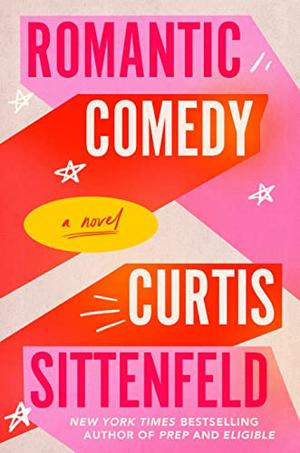
Romantic Comedy – Curtis Sittenfeld

Someone once told me that I was the most romantic person they’d ever met. That was a long time ago; life has chipped away at my notion of “romance”. Not that I ever consumed a lot of romance in literature, but I really don’t read that much straight-up romance at all now. If I do read it, I prefer a little angst (or, a lot of angst, tbh) and I like my main characters to be a little scuffed up by life. Still, the hype for Curtis Sittenfeld’s Romantic Comedy was irresistible and so I picked up a copy.

Sally Milz, 36, writes sketches for a late-night comedy show The Night Owls (picture Saturday Night Live). When the novel opens, Sally is getting ready for the crazy week ahead which includes writing sketch outlines, pitching them, fine-tuning them, taking them to rehearsal and then the live show. This week’s guest is Noah Brewster, “a cheesily handsome, extremely successful singer-songwriter who specialized in cloying pop music and was known for dating models in their early twenties.”

Noah is doing double duty this week acting as musical guest and host, a gig he claims “has been a lifelong dream, ever since [he] was a middle school misfit sneaking down to the basement to watch [the show] after [his] parents went to bed.” When he asks Sally for some help with a sketch he wants to pitch, Sally obliges and in doing so discovers that there is more to Noah than his piercing blue eyes, surfer hair and chiseled body. This is the meet cute.

While not necessarily a romantic cynic, Sally is also aware of how these things go – romantic relationships in an industry filled with beautiful people. She has written a sketch called “The Danny Horst Rule”. Danny is another writer on the show and even though he is “like a little brother” to Sally, the fact that he recently started dating Annabel Lily, “a gorgeous, talented, world-famous movie star” has sent Sally into a bit tizzy. Danny is, according to Sally, a “schlub.”

He was pasty skinned and sleep-deprived and sarcastic. And, perhaps because he was male or perhaps because he was a decade younger than I was, he was a lot less self-consciously people-pleasing and a lot more recklessly crass.

How come a guy like that ends up with a woman like Annabelle? This “was the essence of [her] fury: that such couples would never exist with the genders switched, that a gorgeous male celebrity would never fall in love with an ordinary, dorky, unkempt woman. Never. No matter how clever she was.”

There seems to be chemistry between Sally and Noah – or is he just turning on the high-wattage charisma big stars seem to have? Sally can’t tell. They definitely have banter, but it’s not vacuous banter. Then, at the after-after party there is a moment when – and Sally knows exactly when it happens – that things change.

The Covid lock-down two years later puts Noah back in Sally’s orbit and their email exchange is one of my favourite parts of the book – and that’s saying something considering I loved all the parts of the book.

Romantic Comedy is often laugh-out-loud funny, but it is also a book that examines notions of celebrity, beauty, gender and the perils of social media. I loved Sally’s insecurities and interior monologue – at one point she tells Noah that she “feel[s] like [she’s] writing dialogue for the character of [her]self.” And I loved Noah. He was self-aware and smart and patient with Sally. They are kind of perfect together.

Even if, like me, you wouldn’t necessarily consider yourself a romance reader, I can whole-heartedly recommend this book.

We Spread – Iain Reid

Canadian novelist Iain Reid is an auto-buy author for me. A few years back I read and loved his debut I’m Thinking of Ending Things. Then I read his equally compelling novel, Foe.

Oh, Iain – your mind is a strange and wonderful place.

In We Spread, readers are introduced to Penny, a woman left alone after the death of her long term partner.

I am near the end now, and I am alone. Very old and very much alone. I have been both for some time. surrounded by the listless stacks and heavy piles of a life already lived: vinyl records, empty flowerpots, clothing, dishes, photo albums, magazines about art, drawings, letters from friends, the library of paperback books lining my shelves. It’s no wonder I’m stuck in the past, thinking about him, our days together, how our relationship started, and how it ended.

Penny leads an insular life. She has no children or extended family. She has lived in the same apartment for over fifty years, surrounded by the detritus of a life that is winding down, things that at one time “wasn’t just stuff. It all meant so much to [her]. All of it. Marrow that has turned to fat.”

After a fall, Penny is taken — by a pre-arrangement she and her partner made but that she does not remember — to Six Cedars Residence, a special care home out in the country. There are only three other residents, Pete, Ruth and Hilbert, and — as far as Penny can tell — two employees, Shelley and Jack. Shelley tells her that she will “feel at home in no time.”

And, at first, it is nice. Her room is beautiful.

I can almost feel a weight lifted off my shoulders, not having to think about objects. No debris. All that stuff that comes with obligation and duty. It hits me that I won’t be the responsible one here. No upkeep or cleaning. No laundry. No shopping. No bills or light-bulbs to change. No decision-making.

But then things start to get weird. When she has a shower, Shelley gets in the stall with her. There’s a weird rule about not being allowed outside. She starts losing time. The story’s structure, and the way the words appear on the page – short paragraphs with big gaps between – add to the breathlessness of Penny’s narrative and contribute, I think, to the reader’s own sense of unease. Holy unreliable narrator, Batman!

I read We Spread in just a few hours. I vacillated between theories about what the heck was going on, but at the end of the day, it doesn’t really matter. Reid seems to love ambiguity and I am there for it. He’s way smarter than me and that’s okay by me.

Great read.

All the Sinners Bleed – S.A. Cosby

I am not really a reader that jumps on the hype train and I think at least 75% of my time is spent reading backlist books. Even when I do buy a popular title when it comes out, there’s no guarantee that I am going to read it straight away.

S.A. Cosby has been on my reading radar for a while and I own a copy of his novel Blacktop Wasteland, but it’s been languishing on my tbr pile for months despite its rave reviews. His newest book All the Sinners Bleed is all over the place and lots of people are talking about it, so on my most recent visit to the bookstore, I picked it up. Then I read it…in about 48 hours and when I wasn’t reading it, I was thinking about when I could get back to it.

Titus Crown is Charon County’s first Black sheriff. He’s recently returned to his hometown after some time in the FBI and he’s going to need those skills to uncover the identity of a serial killer.

When the novel opens, Titus is called to the local high school where there is an active shooter. The shooter is the son of one of his friends from high school and one of the victims is a beloved teacher, Mr. Spearman. It’s hard to make sense of the crime, but as it turns out it’s just the beginning of the horror that will grip Charon.

I love a good thriller/mystery. And I love a main character who can look after himself. Titus is 6’2″ and a former football player, so I am guessing he cuts a pretty imposing figure. He’s a no-nonsense, take-charge kind of guy, but he also has some demons of his own. There’s an incident from his days with the FBI that he alludes to, there’s a strained relationship with his younger brother, Marquis, and then there’s his love life. It’s complicated.

What makes All the Sinners Bleed so propulsive is its straight-forward plot. Cosby doesn’t waste any time igniting the powder keg, but there are other interesting things going on too. There’s the white supremacists who want to march during a town festival and the Black leader of one of the local churches who wants to prevent that march. Small town politics means that the white chairman of the board, Scott Cunningham, thinks Titus answers to him. There’s religious fanaticism and confederate apologists. And bonus: the writing is really solid. It doesn’t get in the way of the plot; it’s muscular when it needs to be but also, at times, poetic.

But there were moments like today when the true nature of existence was revealed to him. Moments when the ephemeral curtain of divine composition was pulled away and entropy strode across the stage. For all his attempts at control, days like today, when he’d seen a boy he’d known since infancy get his chest cratered, reminded him that chaos was the true nature of things.

All the Sinners Bleed is a well-written, violent, dark novel and I loved every minute of it.