Strange Sally Diamond – Liz Nugent

Sally Diamond’s father always told her that when he died that she should put him out with the trash, so

When the time came, on Wednesday, 29th November 2017, I followed his instructions. He was small and frail and eighty-two years old by then, so it was easy to get him into one large garden garbage bag.

The first fifty pages of Liz Nugent’s novel Strange Sally Diamond flew by. I was wholly invested in Sally’s story and her peculiar personality. Her awkward interactions with the people who live in her small Irish town, the fact that she seemed so out of step with the world, her appearance — all of these things would have been interesting enough on their own. But there is so much more to her story and when a teddy bear arrives in the mail from New Zealand, Sally’s insular life explodes. Although she has always known that she was adopted, she didn’t know any of the details of the origins of her birth. Her father’s death and the arrival of this teddy bear exposes her dark past.

I don’t want to spoil the story – hers, or that of the novel’s secondary narrator, Peter – so it’s hard to really talk about without giving things away. In any case, my problems aren’t with the story itself, which certainly had lots of potential. And my problem wasn’t with Sally, either. Despite her idiosyncrasies, I quite liked her. And my problem wasn’t even with the writing itself, which was straightforward and easy to read.

Strange Sally Diamond is another case of a book that tells you things, sometimes at convenient times. The truth of Sally’s pre-adoption life is revealed to her in a series of letters. Despite Sally’s warm feelings about her father, his less-than-altruistic motives are revealed to us by her aunt, her mother’s sister. As Sally becomes less a fish out of water and more of an active member in her community, all too quickly (given the 40 years of isolation and trauma) she has a circle of friends, a social life, people looking out for her. I mean, I guess we can believe that the reason she never had any of those things is because her father was over-protective…

All the pieces fit neatly into place and perhaps that is the sign of a well-crafted novel, but for me, it was just okay.

True Crime Story – Joseph Knox

Joseph Knox’s novel True Crime Story capitalizes on the public’s insatiable appetite for, well, true crime stories. I have to admit, I can never scroll past any of the true crime videos that pop up on my social media feed.

For a hot minute, I thought True Crime Story was actually true. The novel opens with a note from the publisher claiming that this second edition “includes wider context on the previously undisclosed role of Joseph Knox in the narrative.” Knox inserts himself into the narrative based on his relationship with Evelyn Mitchell, a writer who reaches out to Knox to ask for advice on this story she is writing about the disappearance of Zoe Nolan, a nineteen-year-old University of Manchester student who leaves a party and is never seen again. In his note at the beginning of the book, Knox references his previously published novel Sirens – which, in fact, is a real book – thus my initial confusion.

True Crime Story is not based on a real person or crime. “I don’t think I used any one young woman as inspiration–if only because I was more interested in the milieu of a murder/missing person,” Knox said. “The press–good and bad–the grieving families and friends, and the ones who clearly see it as the start of their 15 minutes. There’s a lot of opportunity attached to tragedy–a grotesque kind of fame–and I think that’s what I was more interested in than anything.” (Shelf Awareness for Readers)

This novel is structured as a series of statements made by Zoe’s friends, family and other people associated with the case. Think Daisy Jones but more stabby. There is also an exchange of emails between Mitchell and Knox and a limited amount of multi-media posts and photos. Sometimes events are recollected differently by various people; therefore, we are reading the observations and memories of a group of unreliable narrators. It makes for interesting reading as you try to untangle an individual character’s motivation and perspective.

Zoe also has a twin sister, Kim, who is – by her own account – the polar opposite of Zoe.

She was the most invincible of us all, everything-proof and stunning, wearing this luminescent red jacket, ultrahot red all over. Matching red lipstick and a slightly visible red bra. Zoe was busy being noticed.

Everyone has secrets in True Crime Story. I found this novel thoroughly engaging even though the ending isn’t necessarily 100% satisfying.

The Last House on Needless Street – Catriona Ward

Catriona Ward’s novel The Last House on Needless Street is a Russian doll of a novel and if you haven’t read it yet, you should do your very best not to be spoiled before you start.

Ted lives with his sentient cat, Olivia, on a dead end street near the woods. Sometimes his daughter, Lauren, also lives with them. The house is boarded up and triple locked and Ted rarely leaves. Certainly he has no visitors. Ted was implicated in the disappearance of a six-year-old girl eleven years ago. He calls her Little Girl With Popsicle. In the end though, he wasn’t charged because on the day she went missing he “was at the 7-Eleven all afternoon and everyone says so.”

Dee moves in next door. Her sister, Lulu, went missing at a nearby lake, and she was never found. She is convinced that Ted is responsible for her disappearance and she is determined to prove it.

Based on this rather cursory synopsis, you might be inclined to think that Ward’s book is a rather straightforward thriller, but you’d be wrong. And not just because Olivia the cat is one of the book’s narrators.

I was busy with my tongue doing the itchy part of my leg when Ted called for me. I thought, Darn it, this is not a good time. But I heard that note in his voice, so I stopped and went to find him. All I had to do was follow the cord, which is a rich shining gold today.

There is nothing straightforward about this narrative. It flips back and forth through time, revealing its secrets slowly, which makes it almost impossible to put down. Just when you think you might have things figured out, well, you won’t. Okay, maybe you will. I didn’t.

Ted is a complicated character. He says “When I have a bad day, now and then get slippery.” He sometimes records his memories with a cassette player so “they won’t disappear, even if I do.” Even though his parents have been dead for years, he often feels his mother in the room with him, her hand “cool on [his] neck.”

Maybe she is spending a while in one of the memories that lie around the house, in drifts as deep as snow. Maybe she is curled up in the cupboard beneath the sink, where we keep the gallon jug of vinegar. I hate it when I find it there, grinning in the dark, blue organza floating around her face.

The Last House on Needless Street is a beautiful puzzle of a book that is confounding and creepy, but also – strangely – heartwarming. I could not put it down and highly recommend it.

If I Forget You – Thomas Christopher Greene

Coming on the heels of You Made a Fool of Death With Your Beauty, Thomas Christopher Greene’s 2016 novel If I Forget You confirmed what I already knew: I like my romance novels to be a little less fantastical. If I Forget You is my fourth novel by this author (The Perfect Liar, The Headmaster’s Wife and Envious Moon) and I think it is fair to say that he is one of my favourite writers.

This novel introduces us to Henry and Margot. Margot is as WASPish as can be (her father is a soft-drink kingpin; her mother lunches) and Henry is the son of Jewish immigrants. Their paths first cross in 1991at Bannister College, where they are both students. Margot’s father is a college benefactor; there is a building named after him. Henry arrives on a scholarship. The two meet after a poetry reading (Henry is the poet and a talented one) and are immediately smitten. More than smitten.

…she knows that tonight she will kiss him and that soon she will sleep with him and she also knows, more broadly, that if she doesn’t want to fall in love with him, she needs to decide that now.

The novel opens in 2012. Henry, a poet and lecturer at NYU, sees Margot – for the first time in 20 years – on the street in Manhattan. When their eyes meet, “the face Henry sees travels to him from a lifetime ago.” Instead of speaking to him, though, she runs away. It is from this point that their story unspools – toggling between their college days and this point in the present. Lives lived and all that.

Greene’s novel is filled with tenderness. The choices these characters make or, in some instances, are forced to make, inform their lives. Despite how young they are when they first meet, it is clear that Henry and Margot’s feelings for each other are sincere and deep, but as Henry remarks “The more you love someone, the more that person will eventually break your heart.”

Margot is also introspective. She is married to the bland but kind Chad, and has two almost adult children. Her son, Alex, causes her to get “nostalgic for the time of life he is occupying” although “part of her hates herself for this, the always looking back.”

If I Forget You is a quiet novel filled with joy and melancholy and hope. I loved both main characters and how, while their lives were filled with missteps, they managed to find each other again.

Highly recommended.

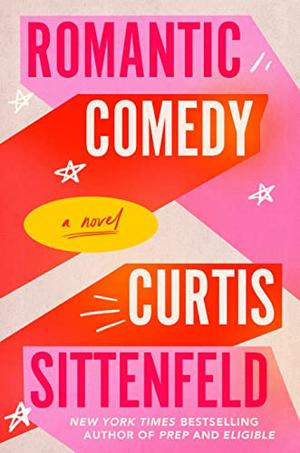
Romantic Comedy – Curtis Sittenfeld

Someone once told me that I was the most romantic person they’d ever met. That was a long time ago; life has chipped away at my notion of “romance”. Not that I ever consumed a lot of romance in literature, but I really don’t read that much straight-up romance at all now. If I do read it, I prefer a little angst (or, a lot of angst, tbh) and I like my main characters to be a little scuffed up by life. Still, the hype for Curtis Sittenfeld’s Romantic Comedy was irresistible and so I picked up a copy.

Sally Milz, 36, writes sketches for a late-night comedy show The Night Owls (picture Saturday Night Live). When the novel opens, Sally is getting ready for the crazy week ahead which includes writing sketch outlines, pitching them, fine-tuning them, taking them to rehearsal and then the live show. This week’s guest is Noah Brewster, “a cheesily handsome, extremely successful singer-songwriter who specialized in cloying pop music and was known for dating models in their early twenties.”

Noah is doing double duty this week acting as musical guest and host, a gig he claims “has been a lifelong dream, ever since [he] was a middle school misfit sneaking down to the basement to watch [the show] after [his] parents went to bed.” When he asks Sally for some help with a sketch he wants to pitch, Sally obliges and in doing so discovers that there is more to Noah than his piercing blue eyes, surfer hair and chiseled body. This is the meet cute.

While not necessarily a romantic cynic, Sally is also aware of how these things go – romantic relationships in an industry filled with beautiful people. She has written a sketch called “The Danny Horst Rule”. Danny is another writer on the show and even though he is “like a little brother” to Sally, the fact that he recently started dating Annabel Lily, “a gorgeous, talented, world-famous movie star” has sent Sally into a bit tizzy. Danny is, according to Sally, a “schlub.”

He was pasty skinned and sleep-deprived and sarcastic. And, perhaps because he was male or perhaps because he was a decade younger than I was, he was a lot less self-consciously people-pleasing and a lot more recklessly crass.

How come a guy like that ends up with a woman like Annabelle? This “was the essence of [her] fury: that such couples would never exist with the genders switched, that a gorgeous male celebrity would never fall in love with an ordinary, dorky, unkempt woman. Never. No matter how clever she was.”

There seems to be chemistry between Sally and Noah – or is he just turning on the high-wattage charisma big stars seem to have? Sally can’t tell. They definitely have banter, but it’s not vacuous banter. Then, at the after-after party there is a moment when – and Sally knows exactly when it happens – that things change.

The Covid lock-down two years later puts Noah back in Sally’s orbit and their email exchange is one of my favourite parts of the book – and that’s saying something considering I loved all the parts of the book.

Romantic Comedy is often laugh-out-loud funny, but it is also a book that examines notions of celebrity, beauty, gender and the perils of social media. I loved Sally’s insecurities and interior monologue – at one point she tells Noah that she “feel[s] like [she’s] writing dialogue for the character of [her]self.” And I loved Noah. He was self-aware and smart and patient with Sally. They are kind of perfect together.

Even if, like me, you wouldn’t necessarily consider yourself a romance reader, I can whole-heartedly recommend this book.

We Spread – Iain Reid

Canadian novelist Iain Reid is an auto-buy author for me. A few years back I read and loved his debut I’m Thinking of Ending Things. Then I read his equally compelling novel, Foe.

Oh, Iain – your mind is a strange and wonderful place.

In We Spread, readers are introduced to Penny, a woman left alone after the death of her long term partner.

I am near the end now, and I am alone. Very old and very much alone. I have been both for some time. surrounded by the listless stacks and heavy piles of a life already lived: vinyl records, empty flowerpots, clothing, dishes, photo albums, magazines about art, drawings, letters from friends, the library of paperback books lining my shelves. It’s no wonder I’m stuck in the past, thinking about him, our days together, how our relationship started, and how it ended.

Penny leads an insular life. She has no children or extended family. She has lived in the same apartment for over fifty years, surrounded by the detritus of a life that is winding down, things that at one time “wasn’t just stuff. It all meant so much to [her]. All of it. Marrow that has turned to fat.”

After a fall, Penny is taken – by a pre-arrangement she and her partner made but that she does not remember – to Six Cedars Residence, a special care home out in the country. There are only three other residents, Pete, Ruth and Hilbert, and – as far as Penny can tell – two employees, Shelley and Jack. Shelley tells her that she will “feel at home in no time.”

And, at first, it is nice. Her room is beautiful.

I can almost feel a weight lifted off my shoulders, not having to think about objects. No debris. All that stuff that comes with obligation and duty. It hits me that I won’t be the responsible one here. No upkeep or cleaning. No laundry. No shopping. No bills or light-bulbs to change. No decision-making.

But then things start to get weird. When she has a shower, Shelley gets in the stall with her. There’s a weird rule about not being allowed outside. She starts losing time. The story’s structure, and the way the words appear on the page – short paragraphs with big gaps between – add to the breathlessness of Penny’s narrative and contribute, I think, to the reader’s own sense of unease. Holy unreliable narrator, Batman!

I read We Spread in just a few hours. I vacillated between theories about what the heck was going on, but at the end of the day – it doesn’t really matter. Reid seems to love ambiguity and I am there for it. He’s way smarter than me and that’s okay by me.

Great read.

All the Sinners Bleed – S.A. Cosby

I am not really a reader that jumps on the hype train and I think at least 75% of my time is spent reading backlist books. Even when I do buy a popular title when it comes out, there’s no guarantee that I am going to read it straight away.

S.A. Cosby has been on my reading radar for a while and I own a copy of his novel Blacktop Wasteland, but it’s been languishing on my tbr pile for months despite its rave reviews. His newest book All the Sinners Bleed is all over the place and lots of people are talking about it, so on my most recent visit to the bookstore, I picked it up. Then I read it…in about 48 hours and when I wasn’t reading it, I was thinking about when I could get back to it.

Titus Crown is Charon County’s first Black sheriff. He’s recently returned to his hometown after some time in the FBI and he’s going to need those skills to uncover the identity of a serial killer.

When the novel opens, Titus is called to the local high school where there is an active shooter. The shooter is the son of one of his friends from high school and one of the victims is a beloved teacher, Mr. Spearman. It’s hard to make sense of the crime, but as it turns out it’s just the beginning of the horror that will grip Charon.

I love a good thriller/mystery. And I love a main character who can look after himself. Titus is 6’2″ and a former football player, so I am guessing he cuts a pretty imposing figure. He’s a no-nonsense, take-charge kind of guy, but he also has some demons of his own. There’s an incident from his days with the FBI that he alludes to, there’s a strained relationship with his younger brother, Marquis, and then there’s his love life. It’s complicated.

What makes All the Sinners Bleed so propulsive is its straight-forward plot. Cosby doesn’t waste any time igniting the powder keg, but there are other interesting things going on too. There’s the white supremacists who want to march during a town festival and the Black leader of one of the local churches who wants to prevent that march. Small town politics means that the white chairman of the board, Scott Cunningham, thinks Titus answers to him. There’s religious fanaticism and confederate apologists. And bonus: the writing is really solid. It doesn’t get in the way of the plot; it’s muscular when it needs to be but also, at times, poetic.

But there were moments like today when the true nature of existence was revealed to him. Moments when the ephemeral curtain of divine composition was pulled away and entropy strode across the stage. For all his attempts at control, days like today, when he’d seen a boy he’d known since infancy get his chest cratered, reminded him that chaos was the true nature of things.

All the Sinners Bleed is a well-written, violent, dark novel and I loved every minute of it.

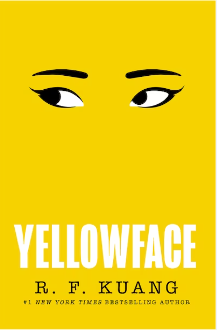
Yellowface – R.F. Kuang

R. F. Kuang’s novel Yellowface — a book about as buzzy as its possible to be right now — is the story of June Hayward, a struggling writer with one mediocre published novel under her belt. June is “friends” with Athena Liu, a celebrated Chinese-American novelist, who shot to fame after her debut novel was published and has since gone on to further acclaim and a Netflix deal. (Here’s how readers will know that this book is very much of the moment; it’s not enough to be published — you want to be nominated for awards, Internet famous, and optioned for a streaming service adaptation.)

The truth of the matter is, June doesn’t really like Athena all that much. Athena doesn’t have any friends and June is convinced that people find her as “unbearable” as she does.

She’s unbelievable. She’s literally unbelievable.

So of course Athena gets every good thing, because that’s how this industry works. Publishing picks a winner – someone attractive enough, someone cool and young and, oh, we’re all thinking it, let’s just say it, “diverse” enough – and lavishes all its money and resources on them.

June is not without some talent, but she’s just “brown-eyed, brown-haired June Hayward, from Philly.” No one is interested in stories by white female writers. When Athena dies accidentally (not a spoiler — the novel’s first line tells us this happens), June does the unthinkable: she steals an unfinished manuscript from Athena’s desk. The manuscript needs some work, but June can see that it is a “masterpiece.” The problem is that it’s the story of the “unsung contributions and experiences of the Chinese Labor Corps”, a subject about which June knows nothing. It’s barely even a draft, but June acknowledges that she can “see where it’s all going and it’s gorgeous.” It’s so gorgeous, that June feels that she should finish it.

I know you won’t believe me, but there was never a moment when I thought to myself, I’m going to take this and make it mine. It’s not like I sat down and hatched up some evil plan to profit off my dear friend’s work. No, seriously – it felt natural, like this was my calling, like it was divinely ordained.

This is a novel that is tuned into the publishing world, the social-media-famous landscape, and online bullies. When June/Athena’s novel is published to critical acclaim, June feels validated and deserving. There’s no imposter syndrome here because she feels as though she worked every bit as hard on the novel as Athena did. So what if she’s not Chinese (as some of the critics says). She did her research. When there is any criticism of the book, June can chalk it up to Athena’s contribution: she always knew Athena was a fraud. The only thing she had going for her was the fact that she wasn’t white.

This novel seems very timely given the trouble other writers have faced because they were writing from a point of view that was clearly not part of their experience. (American Dirt springs to mind.) If you are a voracious reader and pay attention to things that happen on social media, you’ll certainly get some of the references Kuang makes.

June isn’t a particularly likeable character– neither is Athena for that matter. June isn’t trying to hide her theft from herself or the reader, but she does spend a lot of time justifying it. I ripped through this book waiting for the other shoe to drop and loved every minute of it.

Brother – Ania Ahlborn

Ania Ahlborn’s novel Brother is like getting throat punched. Well, I haven’t actually ever been throat punched, but I can imagine what it’s like.

Michael Morrow is nineteen and lives with his older brother Rebel, younger sister Misty Dawn, and their parents, Wade and Claudine in a remote part of Appalachia. Another sister, Lauralynn, no longer lives at home. It is clear from the book’s opening lines that life at the Morrow house is not normal.

Michael twisted in his bed, the threadbare blanket he’d used all his life tangled around his legs. A girl was screaming bloody murder outside….Those girls usually went quiet fast. They’d yell so hard they ended up making themselves hoarse. Them’s the perks of livin’ in the wilderness, Momma had once said. You scream and scream and ain’t nobody around to hear.

It’s hard to talk about this book without spoiling the dark and sinister things that happen in this house, but I think you’ll get the idea pretty quickly. And trust me when I say – this book goes there, all the way there. And even though Michael is a part of it all, he is also an incredibly sympathetic character. His life cracks open a little bit when he meets Alice, a girl about his age who works at a local record store.

She looked like Snow White from Lauralynn’s old book of fairy tales, except a hundred times more beautiful and wearing all black, looking about as modern as the music sounded.

Meeting Alice gives Michael a sense of hope. She reminds him that the world is big and full of possibility, if he can only find a way to escape his family. But that is easier said than done. The major problem is his brother Reb, a quick-tempered drunk who is impossibly cruel and cunning. Reb easily manipulates Michael and it isn’t until the novel’s unbelievable climax that you realize just how evil he truly is.

There are no moments of levity in Ahlborn’s book; it’s as black as pitch. And that makes it sort of odd to admit that I loved it, but I really did. Despite the atrocious acts committed by Michael, I just wanted him to find a way to escape. I watched him struggle to make sense of his life and if anyone was deserving of a redemptive ending, it was certainly him.

He was starting to see how he could separate himself from the responsibility of the things he’d done in his life. The fear. The manipulation. The sense of duty that had been beaten into him.

In the sections focused on Reb, we are provided with a glimpse into how his own experiences have shaped him. It doesn’t actually make him any more likeable, though. Claudine, the book’s most reprehensible character, has a horrifying backstory, too, but I really didn’t like her.

Brother is a pulse-pounding, emotionally resonate and horrifying novel and I highly recommend it…if you have a strong stomach and aren’t prone to nightmares.

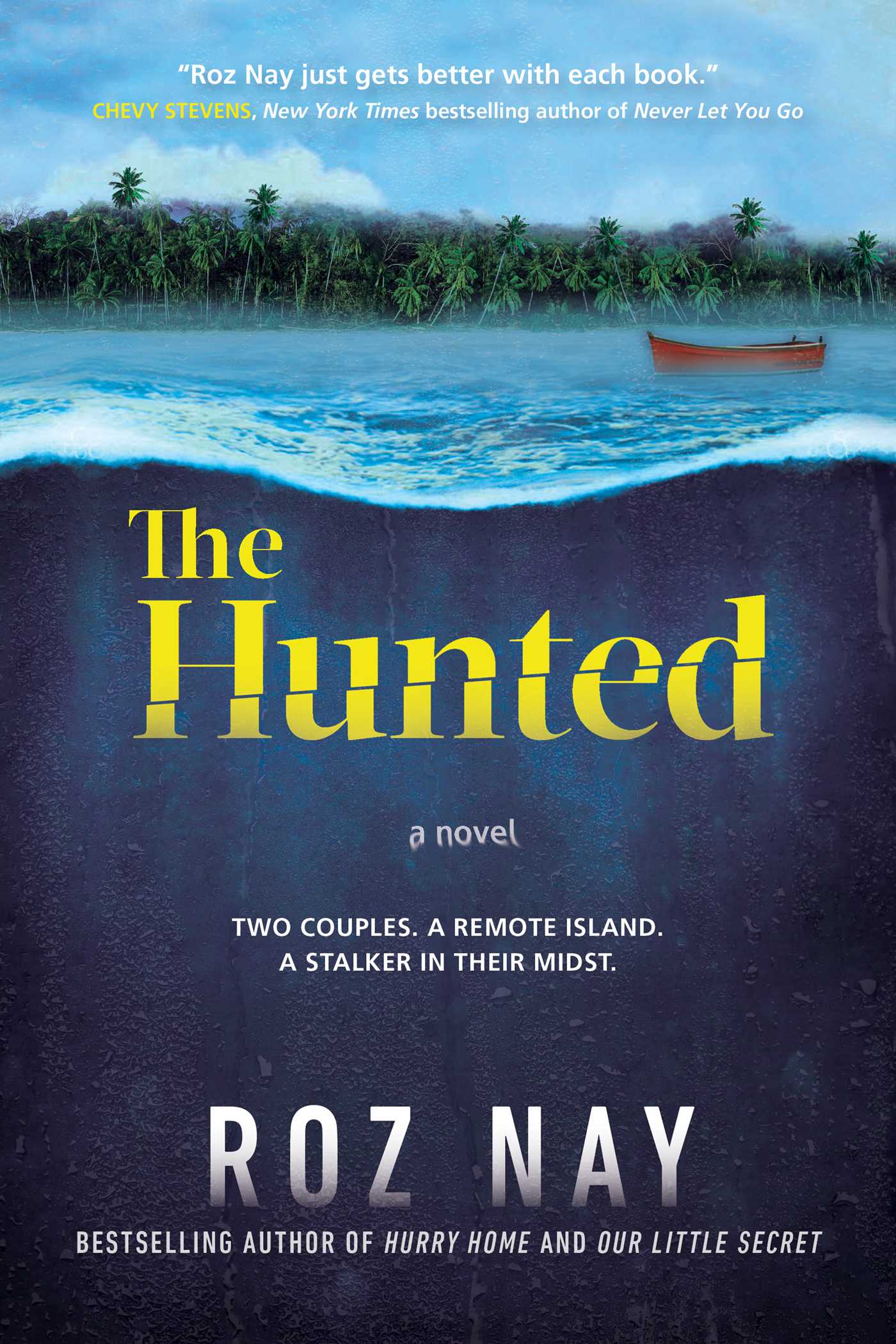
The Hunted – Roz Nay

I was hooked from the very start of Canadian writer Roz Nay’s novel The Hunted.

A hand over my mouth wakes me, the skin of it tinny with metal and salt.

“Stevie,” he whispers, his voice hoarse. “It’s not safe here. You’re not safe.”

Stevie and Jacob are high school sweethearts who have left their small-town Maine home in search of adventure and respite from the death of Stevie’s grandmother, a loss that meant that she is out of a job and a place to live. Now, at twenty-four, they’ve landed in Africa, where Jacob has taken a job as a dive instructor at GoEco, which is located on an island south of Zanzibar.

Stevie is clearly on tenterhooks and her first few days in Africa do nothing to settle her nerves. Nothing is like it is back home. On her first night at a hostel, another traveler tells her that “You can’t trust anyone.”

Then they meet Leo and Tasmin, a beautiful British couple. We know Leo isn’t to be trusted because he is the other narrator.

They seemed new. Vulnerable. I have to admit, I felt an almost immediate fondness for them both.

It’s interesting to read a cat and mouse thriller when the cat is identified so early on; you’re always waiting for the other shoe to drop. As the novel moves on, we get to learn a little bit about both Leo and Stevie — seems they both have some carefully guarded secrets.

Although things sort of fell apart for me once the foursome arrived in Rafiki and the machinations seemed a little over-the-top, I still enjoyed the read.

This is my second novel (Our Little Secret) by Nay. I will definitely continue to read what she writes.