Our Kind of Cruelty – Araminta Hall

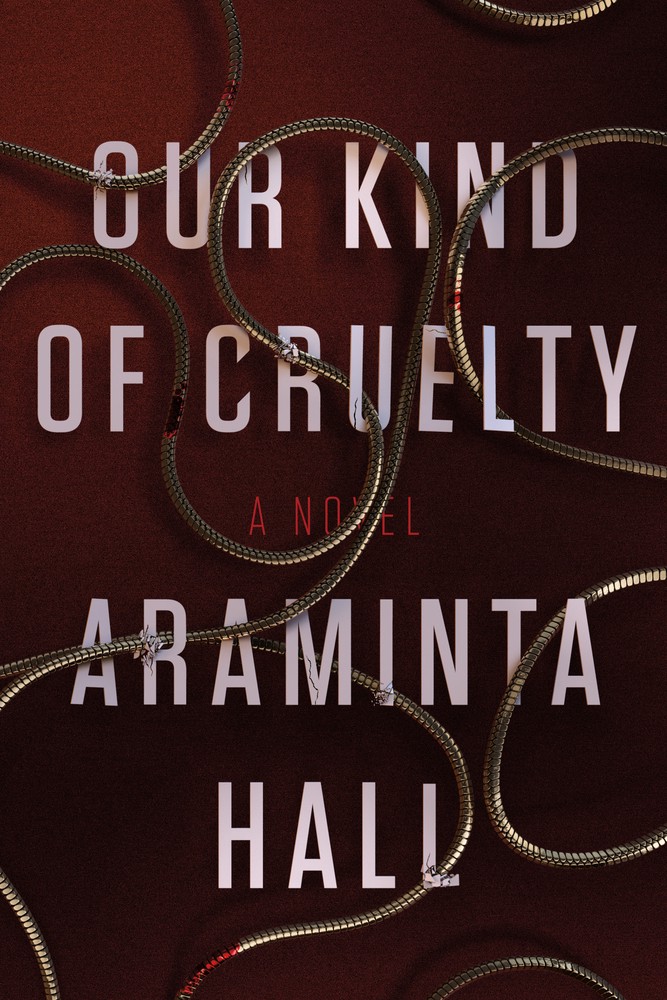
Mike and Verity spent much of their nine years together (from second year university until their late twenties) playing a game called the Crave. The two would head to a club, where Mike would hide in the shadowy corners watching while Verity waited at the bar until some poor unsuspecting guy would hit on her. When she’d had enough, she’d touch her necklace and Mike would “rescue” her.

I would push through the mass of people, pulling at the useless man drooling over her, and ask him what he thought he was doing talking to my girlfriend. And because I am useful-looing in that tall, broad way, and because V likes me to lift weights and start all my days with a run, they would invariably back off with their hands in front of their faces, looking scared and timid. Sometimes we couldn’t wait to start kissing, sometimes we went to the loo and fucked in the stalls, V calling out so anyone could hear.

Things are different now, though, for these crazy kids. Mike has just returned to London after two years in New York City. And he’s just received an invitation to Verity’s wedding. He’s pretty sure that this wedding is just a newer, more complicated version of the Crave. After all, he and Verity are end game. When he returned to London he bought a house he knew she’d like, had it decorated as she would like it, spent thousands of pounds redoing the garden. Mike knows Verity better than she knows herself.

Early on in Araminta Hall’s novel Our Kind of Cruelty, we learn that Mike is telling his story at the request of his barrister who “needs to get a clear handle on the situation.” Mike reveals his horrific childhood, living in extreme poverty with his addicted mother, and her various abusive boyfriends until he is taken into care by his loving foster parents, Elaine and Barry. Despite his past, Mike has had a successful and lucrative career as a banker but everything starts to spin out of control after he gets the wedding invitation. When it comes to Verity, Mike is not clear-headed.

Hall chooses to tell the story from Mike’s perspective; we never hear Verity’s side of things. Although Mike is clearly delusional, he isn’t unsympathetic. (Much in the same way that Joe in You, despite the fact that he is clearly a psychopath, isn’t unsympathetic.) To believe Mike is to believe that Verity took a shy, awkward, damaged young man and molded him into a physically imposing, devoted lover. And then, when she tired of the game, she abandoned him.

What’s missing, of course, is Verity’s perspective, which we never get. On top of that, Mike is an unreliable narrator. Then, in court, Verity is further punished – which hints at Hall’s political agenda. I kept thinking that the story might be slightly more interesting as a psychological thriller if, in fact, Mike had been right all along: they were still playing the Crave.

Nevertheless, Our Kind of Cruelty is well-written and moderately entertaining.
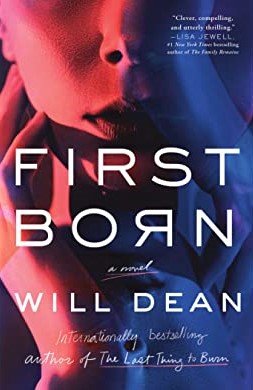
First Born – Will Dean

I discovered Will Dean on Twitter and a few months ago I nabbed a copy of his well-reviewed novel The Last Thing to Burn, which I thoroughly enjoyed. I recently picked up First Born and although I read it in just a couple of sittings, I didn’t enjoy it nearly as much.

First Born is the story of 22-year-old identical twins Molly and Katie “KT” Raven. Molly tells us “I don’t use the term identical twin because it’s a blatant lie. A travesty. Our base DNA is identical, sure, but that’s about all that is. We were once one person. We are not anymore.”

When the novel opens, Molly is working in an office in London, while KT is studying in New York City. KT is the risk taker; Molly spends her time assessing threats and preparing for the worst. Molly sees danger everywhere and she is always prepared, even going to far as to making homemade weapons out of pound coins and a sock.

The twins’ parents have been visiting KT in New York and when Molly arrives, they spend their time eating toast and drinking tea and waiting for the police to give them information about just what happened to KT. There’s very little to go on, and Molly feels that it is her duty to help the investigation along. She tracks down KT’s best friend, boyfriend, investigates the creepy son of the landlord and uncovers some things about her sister she did not know.

First Born does offer a couple of excellent twists, and Molly’s voice is definitely singular. The action clips along, for sure. For me, though, it wasn’t believable and I wasn’t sure I understood character motivations at all. By about a third of the way in the prose started to grate a little bit and there was something sort of ‘lazy’ about it. Like, suddenly a character has a gun which she pulled out of nowhere, but we’re told she’d purchased before. That sort of thing. The shenanigans were all a bit over-the-top.

Still – if that sort of thing doesn’t irk you, you’ll probably have a lot of fun reading this book – if you are willing to suspend disbelief and don’t mind the crazy.

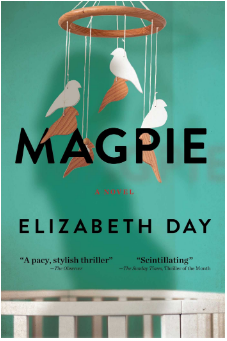
Magpie – Elizabeth Day

One of my favourite Booktubers, Jack Edwards, loved Elizabeth Day’s novel Magpie, and it was already on my TBR list anyway, so with his added endorsement, I picked it up. (Oh, who am I kidding? I don’t need anyone’s recommendation to buy more books; I just buy them.)

Anyway.

Marisa hasn’t always been lucky in love until she meets Jake.

He smelled of freshly washed laundry. No cologne. His face was uncomplicated: A defined chin and boyish cheeks. Kind eyes. A smattering of sandy-colored stubble. He had looks you could imagine aging well and at the same time you could see instantly what sort of child he had been.

Marisa moves in with Jake, and they make plans to have a family. If it all seems to be happening a little quickly, which Marisa’s friend Jas suggests, Marisa claims that “when you know, you just know.” But, as it turns out, there are things that Marisa does not know.

When Jake suggests that they take in a lodger to help pay their mortgage, Marisa agrees thinking that “it will alleviate the pressure on Jake and that, as a result, he will be more present with her. Enter Kate.

She is soft-spoken with a lively, sharp face and brown hair with an unruly fringe falling to just below her eyebrows so that the first time they meet to assess her suitability, Marisa notices that Kate keeps blowing it out of her eyes.

At first the new living arrangement works out okay. Marisa writes and illustrates custom children’s books, and she has the house all to herself during the day. But then she starts to notice something between Jake and Kate. As her uneasiness grows, so does her paranoia.

Magpie depends on subterfuge. There were lots of things I liked about this book, but there were also some things that seemed a little over-the-top and contrived. Still, it was well-written, easy to read, and I think most people will enjoy its twists and turns.

Empire of the Vampire – Jay Kristoff

Oh, vampires. Unless you sparkle, you’re my favourite fantasy creature. It’s hard to find books about vampires with any real bite, y’know. I enjoyed Grady Hendrix’s The Southern Book Club’s Guide to Slaying Vampires and Christopher Buehlman’s The Lesser Dead, but never in my wildest dreams did I think I was going to enjoy a 700+ page high fantasy novel about vampires. The first in a series, no less! Because 700+ pages. And fantasy. Not really two things that make my very-much-still-beating bookish heart pitter pat. I was gifted a copy of Jay Kristoff’s novel Empire of the Dead last Christmas and it seemed like a good time to take a crack at it because I am now on holiday.

Gabriel de Leon is a Silversaint. What’s that you might well ask? Silversaints are palebloods (half vampire) who have taken a vow to protect the church and the realm from coldbloods, full-on vampires. At fifteen, Gabriel was whisked away from his home to San Michon, a holy place where he is trained in the art of killing vampires.

I do here vow; Let the dark know my name and despair. So long as it burns, I am the flame. So long as it bleeds, I am the blade. So long as it sins, I am the saint. And I am silver.

When the story begins, Gabriel is a prisoner of Margot Chastain, Undying Empress of Wolves and Men. Chastain’s historian, Marquis Jean-Francois, has joined Gabriel in his cell to “gather all knowledge of [his] order.”

The conversation between Gabriel and Jean-Francois provides the structure for the story the Silversaint tells. It bounces back and forth in time and introduces a cast of characters, many of whom readers will fall madly in love with (including a lioness, a horse and a sword. Not joking.) As for Gabriel: he’s cynical, foul-mouthed, loyal and brave. He’s the hero of the tale, but he’s imperfect, for sure. He’s also likeable.

I wouldn’t have necessarily said that I read fantasy, but according to this definition from Book Riot, I guess I do:

The basic defining tenet of high fantasy is that a fantasy story is set in an alternative fictional world, typically with magical elements. High fantasy is sometimes called epic fantasy, and some of the hallmarks of this subset of the fantasy genre include a high page count, lots of characters, usually a quest, and, most importantly, an alternative or secondary world as opposed to the real or primary world. With high fantasy, there are usual global stakes involved—you know, good versus evil, saving the world, and all that.

In any case, I read enough to understand the world building and the mention of mythical creatures. It’s easy to spot the nods to Tolkien, Martin, Malory, Christianity, Beowulf, and even Buffy the Vampire Slayer. It is clear that Kristoff is a reader, and books and their myriad joys are mentioned on more than one occasion.

As an English teacher, I could easily identify the hero’s journey and so I was able to anticipate some of the twists. I probably don’t read enough fantasy to know whether Kristoff’s novel is cream of the crop or not though, but by my metric it’s great.

I’ve read some reviews that complained about the novel’s pacing. That wasn’t a problem for me. I read this book in a week and I very much looked forward to picking it up whenever I had the chance. There was lots of gory action and well-written fight scenes. There were lots of funny moments and also some truly heart-breaking moments.

I would suspect that when you are creating a world, lots of exposition is necessary – but I never felt as though Kristoff wasted time with backstory. Readers were dropped into a fully-realized world and I wasn’t too concerned with who everyone was beyond who is good and who is most definitely not. I have no clue how Kristoff managed to keep all the characters and the rules of this world straight, but it felt like a real enough place to me.

Books need stakes and Empire of the Vampire has them. The world has been dark for almost three decades, and part of this story is when Gabriel runs into someone from San Michon who claims they have found something that can finally bring an end to the darkness. Gabriel is on a vengeance mission, but he agrees to accompany the group. Cue the bloodshed.

If I have one niggle about the story, it’s the expletive-heavy insults like “you fuck-eyed little pig dick” and “fuck you, you little shitgrubber.” There’s a lot of swearing in this book. A lot a lot. I swear a fair bit myself, so when I notice it in fiction it’s past the annoying phase.

Still, I have to say that I had fun reading Empire of the Vampire far more than I expected I would. It’s the first book in a series and while I am generally pretty lazy about keeping up with series, I will definitely be spending more time with Gabriel de Leon.

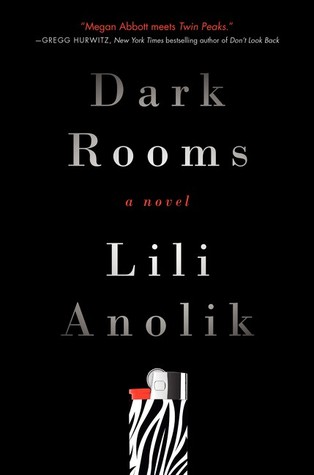
Dark Rooms – Lili Anolik

As far as metaphors go, the dark rooms of Lili Anolik’s impressive debut Dark Rooms is apt. This is the story of Grace Baker whose younger sister, Nica, is found murdered in the cemetery which borders Chandler Academy, the private boarding school the sisters attend in Hartford Connecticut and where their parents are teachers.

Nica’s death leaves Grace reeling. Over-shadowed by Nica’s vivacious, doesn’t-give-a-shit personality in life, she now buckles under the weight of her death. She just wanted to “go to sleep [to escape] that total exhaustion, where even my face was numb, and none of the talk matter[ed] anyway because she was already dead dead dead.”

Someone is quickly blamed for Nica’s death, but when Grace discovers evidence which might actually exonerate him, she begins to dig deeper into her sister’s life.

Nica’s death sends ripples into Grace’s life. Her parents’ marriage falls apart and her mother leaves. Grace’s friends – well, Nica’s friends, including her boyfriend, Jamie (for whom Grace has feelings that perhaps cross the line of friendship) – rally around Grace, yet “there was a tension, a hostility even.” Grace escapes to college after graduation, but that’s a disaster, too.

A brand-new life was settling around me. It was ugly and it was empty. but I was okay with it because, thanks to the drugs, I wasn’t really in it. Not really being in it, however, had its consequences.

When she returns home, she gets a job at Chandler and starts to unravel the story of her sister. She soon discovers that nothing in her life is as it seems.

Dark Rooms is a well-written, mystery with some interesting twists. Although the main character is barely out of high school, I wouldn’t call this YA, really, although I did read it from my classroom library. There’s a lot goin on and a lot of characters to keep track of, but I enjoyed my time with Grace (well, maybe ‘enjoyed’ isn’t the right word) and I would definitely read more by this author.

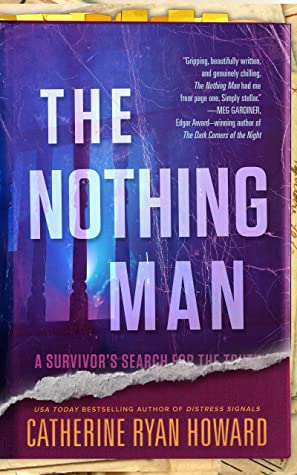
The Nothing Man – Catherine Ryan Howard

When Eve Black was just twelve, someone broke into her family home in Cork, Ireland and killed her parents and seven-year-old sister, Anna. Nearly twenty years later, she has written a book about the event and its connection to several other unsolved crimes in the hopes that perhaps the perpetrator will finally be caught. That book is The Nothing Man.

Catherine Ryan Howard uses the book within a book format to unspool the story of this “nothing man”, who torments his victims with menacing phone calls before showing up to their houses in the middle of the night. Eve’s true crime account reads exactly like that: a survivor’s story fleshed out with information painstakingly gathered from police reports, and information provided by people closest to the case.

And then there’s Jim Doyle, a just-past-middle-aged security guard who stumbles across the book at the big box grocery store where he works. The book’s existence throws Jim into a tailspin.

Once he knew the book existed, Jim could think of nothing else. It was a ring of fire around him, drawing nearer with each passing moment, threatening to torch every layer of him one by one. His clothes. His skin. His life. If it reached him it would leave nothing but ash and all his secrets, totally exposed.

The biggest secret of all is that he is The Nothing Man. (Not a spoiler.) As he reads the book — or, I should say, as we read the book, Jim becomes more and more unsettled. His crimes stopped after the Black family, but Eve’s book has awakened something in him and it’s an itch Jim has to scratch, but first he needs to know what Eve knows.

The Nothing Man is clever and fun to read, even while it makes the point that our fascination with true crime neglects the impact these events have on the victims and their families. We all know the names of the famous serial killers, but do we remember the names of any of the people whose lives they took?

Although Howard’s book isn’t really a thriller (because we know whodunnit from the beginning), it’s still a page-turner and watching Eve and Jim play their cat-and-mouse game makes for an entertaining read.

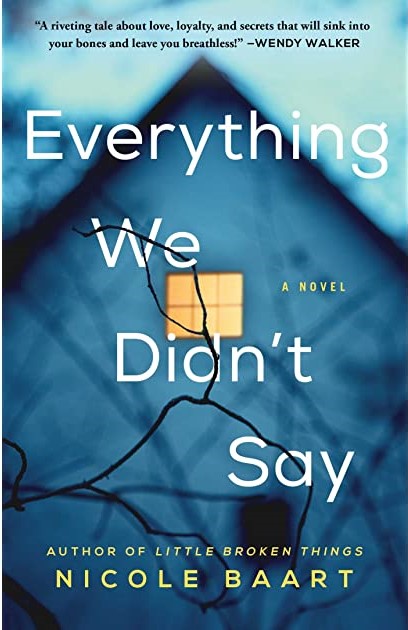
Everything We Didn’t Say – Nicole Baart

There’s a certain type of book I really like. It’s a dual timeline, family secrets, coming-of-age, angsty hybrid that, if well-written, makes my reading heart happy. Everything We Didn’t Say by Nicole Baart ticked all the boxes for me.

Juniper (June) Baker has returned to Jericho, Iowa after 15 years of exile. She’s come home to help an old friend in the town library, but this is also an opportunity to repair some relationships, particularly with her brother, Jonathan, and her 13-year-old daughter, Willa, who has been living with Juniper’s parents since she was born.

Why are these relationships damaged? Well, that part of the story happened fifteen years ago, when June had just graduated from high school. She was flirting with Sullivan, the youngest son of the town’s richest farmer, when Beth and Cal Murphy, a middle-aged couple who live in the farm across the lake from Juniper and her family, are brutally murdered, a crime for which Jonathan is suspected but never convicted.

One of the reasons that Juniper is anxious to return to Jericho is because someone on the WWW is talking about a podcast aimed at proving, after all these years, that Jonathan is, in fact, responsible for the Murphys’ deaths. Juniper aims to prove the opposite, but doing so means revisiting that long-ago summer when everything seemed to change, particularly between her and her brother. Once their sibling bond seemed like “a tangible thing, a thread woven from shared experiences,” but as the summer lengthens, Jonathan becomes secretive and moody.

There’s a lot of moving parts in Baart’s story. Of the two timelines, I liked the one set in the past the best. June is heading off to college at the end of the summer, and she knows she is leaving this life behind. Her best friend, Ashley, is crazy about Sullivan, but June finds herself impossibly attracted to him and it appears the feeling is mutual. That’s a disaster waiting to happen. There are other things happening at home, too, things June doesn’t understand.

All of that seems uncomplicated, though, when compared to the present day. Shortly after she arrives, Jonathan – who seems about to share a long-held secret – is in a life-threatening accident. She bumps into Sullivan, and that’s confusing. And a local cop seems to be digging into the Murphy’s cold case. Oh, and her daughter seems to hate her – which stands to reason since she all but abandoned her.

Everything We Didn’t Say has lots to recommend it and although I did guess one significant plot twist, I enjoyed my time in Jericho, and looked forward to reading this book, which I haven’t said about a book for a while.

Two thumbs up.

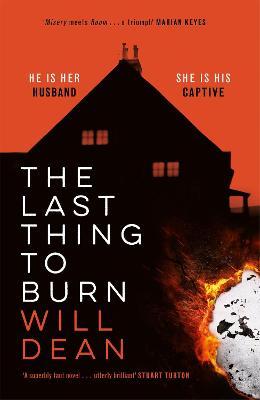
The Last Thing to Burn – Will Dean

Coming on the heels of a really disappointing read, made Will Dean’s novel The Last Thing to Burn extra terrific. I probably would have felt that way about it no matter when I read it though. I discovered this book via Twitter, which is the same way I came across Chris Whitaker’s amazing novel We Begin at the End. Twitter, keep up the good work.

The Last Thing to Burn opens with our first-person narrator hobbling across a field, her “right ankle the size of a fist.” Her voice is so distinct and her anxiety so palpable that I was immediately sucked into the story. It is only when a Land Rover appears on the track and the man driving comes for her, that we realize this person is a captive.

He holds me with no force. His power is absolute. He needs no violence at this moment because he controls everything the eye can see. I can feel his forearm at the back of my knees and he’s holding it there as gently as a concert violinist might hold a bow.

His name is Lenn. Her name is Jane. Except that’s not her name. She’d come to England from Vietnam with her younger sister, Kim-Ly. They’d been told there would be jobs waiting for them and that they’d be earning enough money to send home. First, though, they would have to pay back the people who’d arranged for their travel. This debt is endless. At first, Jane and Kim-Ly work on a farm where they are fed and have one day off. Then, Jane is sold to Lenn and Kim-Ly is sent off. That was seven years ago.

Jane’s life is one of captivity. There are cameras everywhere in the little farmhouse she shares with Lenn. Every day when Lenn comes back from tending to the fields, he watches the tapes. Her responsibilities are to keep the house just as his mother, also called Jane, did and to cook his meals, the same rotation every week, exactly as his mother did. She wears his mother’s old clothes, uses her cloth sanitary napkins. One week a month, Jane is allowed to sleep in the back bedroom. Three weeks a month,

I lie on the bed and pull the thin cotton sheet over myself. I adjust it so the sheet’s covering me from the navel and higher. This is, in some ways, the worst of it. The waiting. because it drives the truth home like a hammer would drive a nail through a plank of rotten wood.

When Jane misbehaves, Lenn throws one of her precious belongings into the fire. All these years later, all that remains are her ID with her true name on it, letters from her sister (who is working in a Manchester), a picture of her parents and a copy of Of Mice and Men.

The Last Thing to Burn is really one of those books that you read with your heart in your throat. I flew through it in two sittings because I had to know what was going to happen. Jane is an unforgettable character, but so is Lenn. He’s clearly a monster, a psychopath, and “even though he’s not a violent man, not usually, […] he’ll take what he wants in his own horrifically gentle way.” Dean wisely avoids being too graphic, but it won’t matter, the implied is enough.

Although the ending was a teensy bit abrupt, The Last Thing to Burn is a solid, well-written, propulsive page turner, and I doubt you’ll soon forget Jane.

Highly recommended.

The Return – Rachel Harrison

When Elise’s best friend from college, Julie, disappears, Elise clings to the belief that she’s not really gone. Molly and Mae, their other besties, are not as optimistic as Elise. Neither is her husband, Tristan. And then “Two years to the day after she went missing, Tristan found her sitting on the porch swing. She was wearing the same clothes she’d had on when she disappeared. She did not seem confused or disoriented, but she had no memory of where she’d been for the past twenty-four months.”

Thus begins Rachel Harris’s debut novel The Return which is a weird hybrid: part horror novel and part novel about female friendships. Elise hasn’t been as successful as her friends post college. She dropped out of her Masters program and followed her married prof to Buffalo where she has a crap job and lives in a crap apartment. Mae is a fashion stylist in NYC; Molly lives on the West Coast and before she went missing, Julie and her husband were converting a farm house in Maine into a B & B.

Now that Julie is back, Mae plans a girls’ weekend in the Catskills at the Red Honey Inn – the kind of swanky spot that is totally out of Elise’s snack bracket, but how can she say no.

When they arrive, though, the Inn seems more sinister than swanky and Julie isn’t quite the girl they remember either.

She’s emaciated. She smiles and her skin pools like melted wax. Her teeth are chipped and discolored. Her eyes are bloodshot, and the green or her irises skews yellow. Her hair is string, simultaneously greasy and dry.

[…]

Her breath is awful. So awful I gag. I play it off like a sob but have to turn my head away.

Cue rooms that don’t heat up, labyrinthine halls, strange hotel staff and shadowy figures and a formerly vegetarian bestie who now loves meat. Um. I would not be sticking around. Like, at all. But Elise is nothing if not loyal. And her need to support her friend’s return to normal keeps her and Mae and Molly in the creepy hotel with their creepy friend way, way too long.

The Return is gruesome fun.

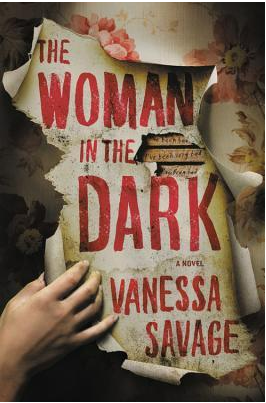
The Woman in the Dark – Vanessa Savage

Sarah and Patrick are “happily” married and have two teenage children, Mia and Joe. Sarah is just starting to emerge from a long depression, brought on by her mother’s death. She’s still fragile. Patrick thinks what they need is a fresh start and he announces that the house where he grew up is available for sale and they should buy it and move. Just one tiny problem: fifteen years ago, the family who was living in that house — all but one survivor — was stabbed to death by a crazy person. What could go wrong?

Turns out, quite a lot does go wrong in Vanessa Savage’s debut The Woman in the Dark. And, unfortunately, that’s part of the problem with the book. It’s too bad because the book had a lot of promise. If you were playing a drinking game and had to take a drink for every trope, you’d be sloshed by the novel’s halfway mark.

I don’t want to step inside that house, but Patrick doesn’t see what I see when I look at the picture. He sees the beautiful Victorian house he grew up in, with its pitched roof and gabled ends – a fairy-tale house before it became a country House of Horrors. He sees happy memories of a childhood lived by the sea. He doesn’t imagine blood on the walls or whispering ghosts. He doesn’t see the Murder House, but I do.

Unfortunately for Sarah, that early intuitive insight doesn’t sustain her. She’s an unreliable narrator surrounded by people who keep secrets. And instead of a classic haunted house story, which might have been a more successful route, Savage chucks everything she could think of at the story, hoping that some of it would stick. It’s too much and not all of it lands successfully.

There’s Sarah’s mental health issues, gaslighting, isolation, creepy gifts left on the doorstep of their new home, people who are not who they seem, people who are who they seem, and you should have known it, secrets galore — some of them which inform the story’s narrative, but should have been spilled long ago, teen angst, writing on the walls (literally), domestic violence, a creepy basement…the list goes on. I kind of felt like the book didn’t really know what it wanted to be, which was too bad because I think the writing was pretty decent, and I was certainly hopeful when I started reading, especially because the book garnered copious praise.

It was a miss for me, but I would certainly be opening to reading more from this author.